
Eliminating Consumption Tax on Food May Bring Little Economic Benefit to Japan
Economy Lifestyle- English
- 日本語
- 简体字
- 繁體字
- Français
- Español
- العربية
- Русский
GDP Boost Estimated at ¥0.3 Trillion
Prime Minister Takaichi Sanae announced at the beginning of the year her intention to suspend for two years the current consumption tax on food and beverage items, which was lowered to 8% in 2019. Soon after this announcement, her Liberal Democratic Party won a landslide victory in the February House of Representatives election. Plans call for an interim report on the temporary tax repeal to be compiled by a government advisory body by June of this year.
According to the Daiwa Institute of Research, the proposed tax repeal would lower the annual burden per household by an average of ¥88,000. However, when broken down by income level, higher-income groups, who tend to purchase more grocery items, would receive a larger benefit in terms of reduced spending. Households in the top 20% income bracket annual would receive about twice the benefit of those in the bottom 20%. The institute points out that the change would mean that “a significant amount of fiscal resources would be expended in the interests of households that require relatively little support to maintain their living standards.”
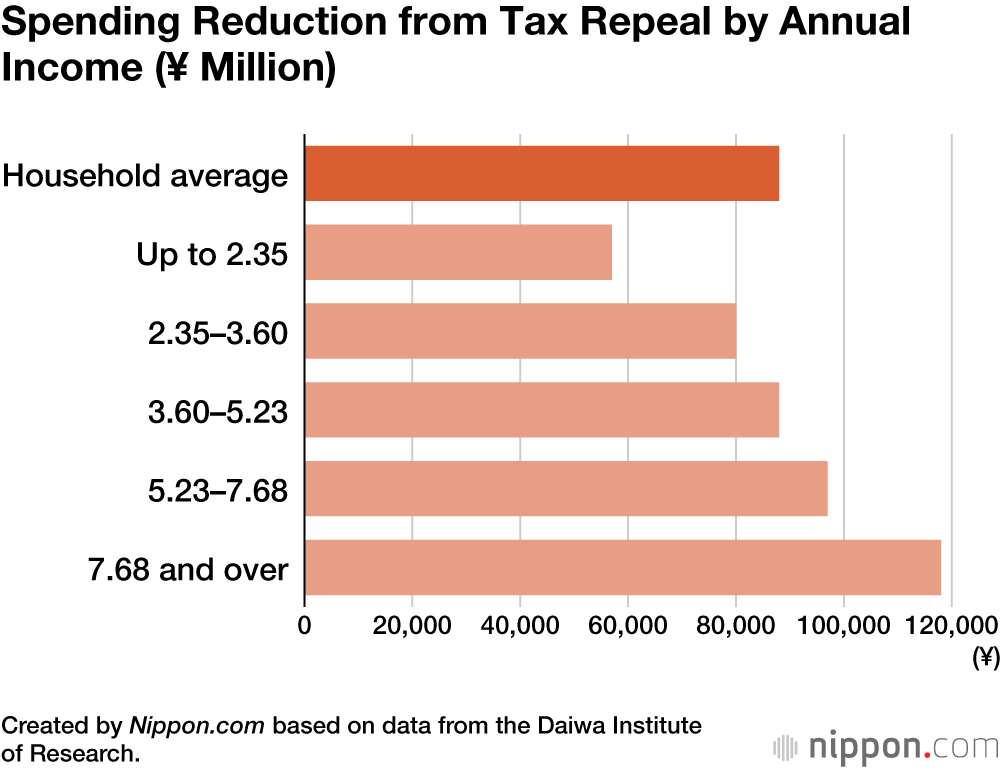
The institute also points out that eliminating the consumption tax on food and beverage items would result in an annual loss of ¥4.8 trillion in tax revenue, while only boosting consumption by ¥0.5 trillion and GDP by ¥0.3 trillion.
Meanwhile, according to a nationwide survey by Teikoku Databank, which gathered responses from 1,546 companies, only 25.7% of the survey respondents thought a reduced consumption tax on food would be “beneficial,” while 48.2% said it would have “no particular impact.”
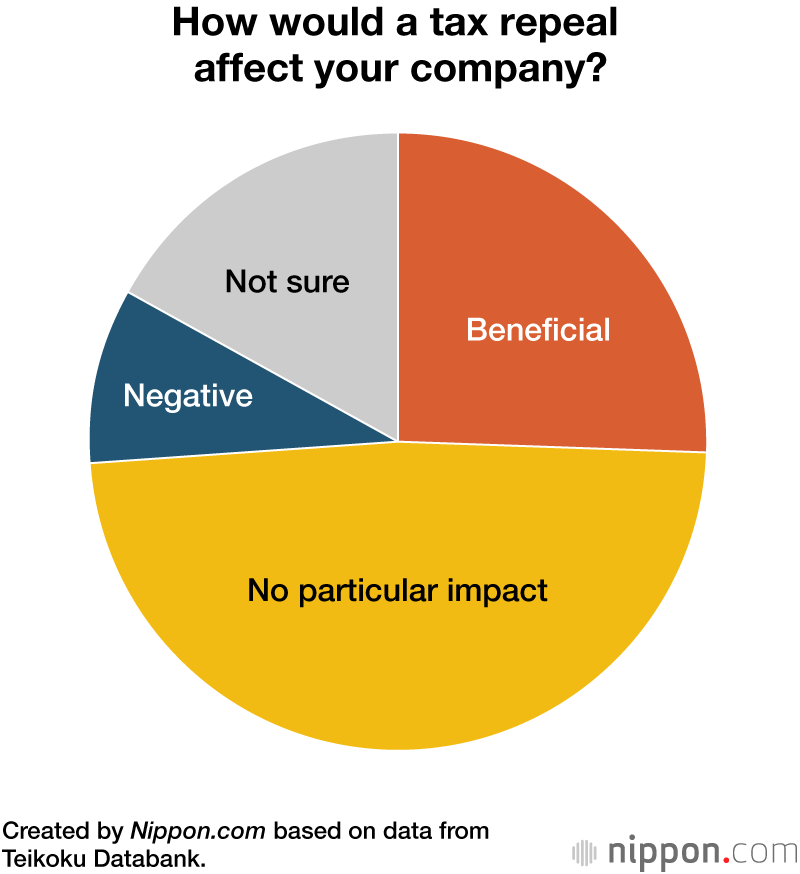
While the retail sector and other industries would welcome the tax cut, as it would boost consumers’ willingness to spend, many others are doubtful the government would be able to secure the necessary funding for such a measure. There were also some complaints about the increased administrative work required by the change. Moreover, in the restaurant industry, some are concerned about lost customers if demand shifts to prepared foods at supermarkets and other stores that would seem cheaper to consumers.
Data Sources
- Study on zero consumption tax on food and beverage items (Japanese) from the Daiwa Institute of Research.
- Survey on the impact of a consumption tax cut on companies (Japanese) from Teikoku Databank.
(Translated from Japanese. Banner photo © Pixta.)