
Despite Proposed Government Reform, Few Japanese Employees Want to Work Longer Hours
Work Economy- English
- 日本語
- 简体字
- 繁體字
- Français
- Español
- العربية
- Русский
Current Overtime Cap Is “Appropriate”
As part of its work-style reform initiative, originally launched in 2019, Japan’s government introduced a monthly cap on overtime of 45 hours to counter the problem of karōshi (death from overwork). However, last year, the ruling Liberal Democratic Party under Prime Minister Takaichi Sanae proposed a new reform that would ease some of those regulations, based on the idea that they are preventing those who want to work more from doing so. The proposed changes are also meant to address the current labor shortages in Japan.
Five years have passed since the implementation of work-style reform legislation, and last October a comprehensive survey of the laws was conducted by the Ministry of Health, Labor, and Welfare targeting 3,000 workers nationwide.
According to the results, only 10.5% said they wanted their working hours to increase, either substantially or slightly, as compared to the 30% who would prefer a decrease. A further 59.5% were content with their current working hours.
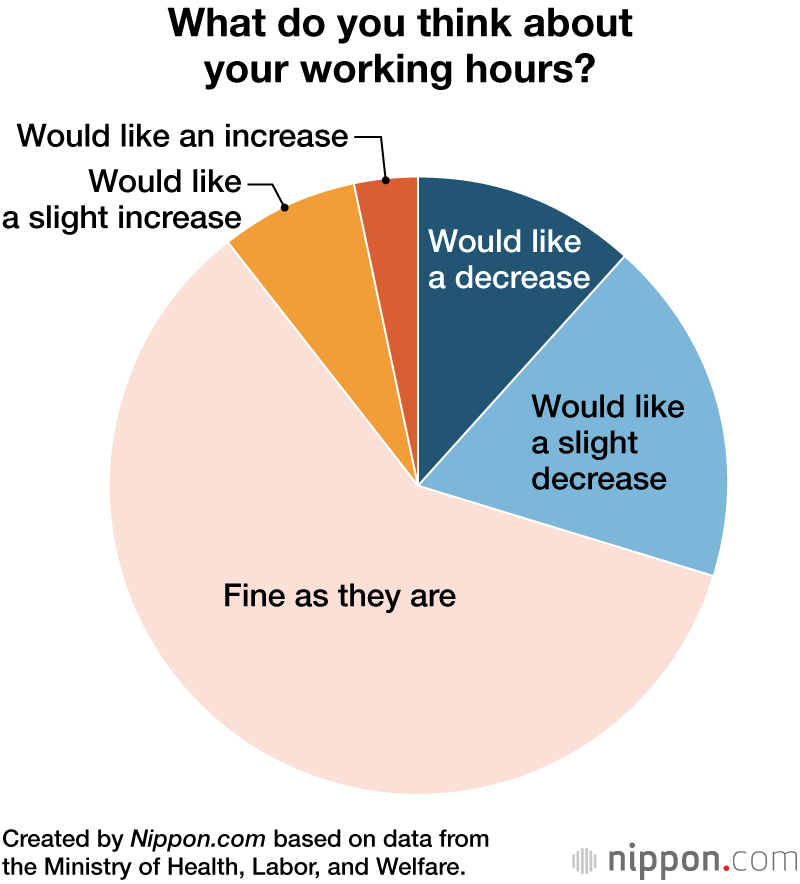
Among people who wanted to increase their working hours, the most common reasons listed were the following: “to earn more money” (41.6%), “to work at my own pace” (19.7%), and “can’t make ends meet without overtime pay” (15.6%). Multiple answers were possible.
In addition, the survey found that 65.6% of respondents considered a reasonable amount of overtime to be 20 hours or less, while 93% thought that an upper limit of 45 hours should be the legal limit for overtime work.
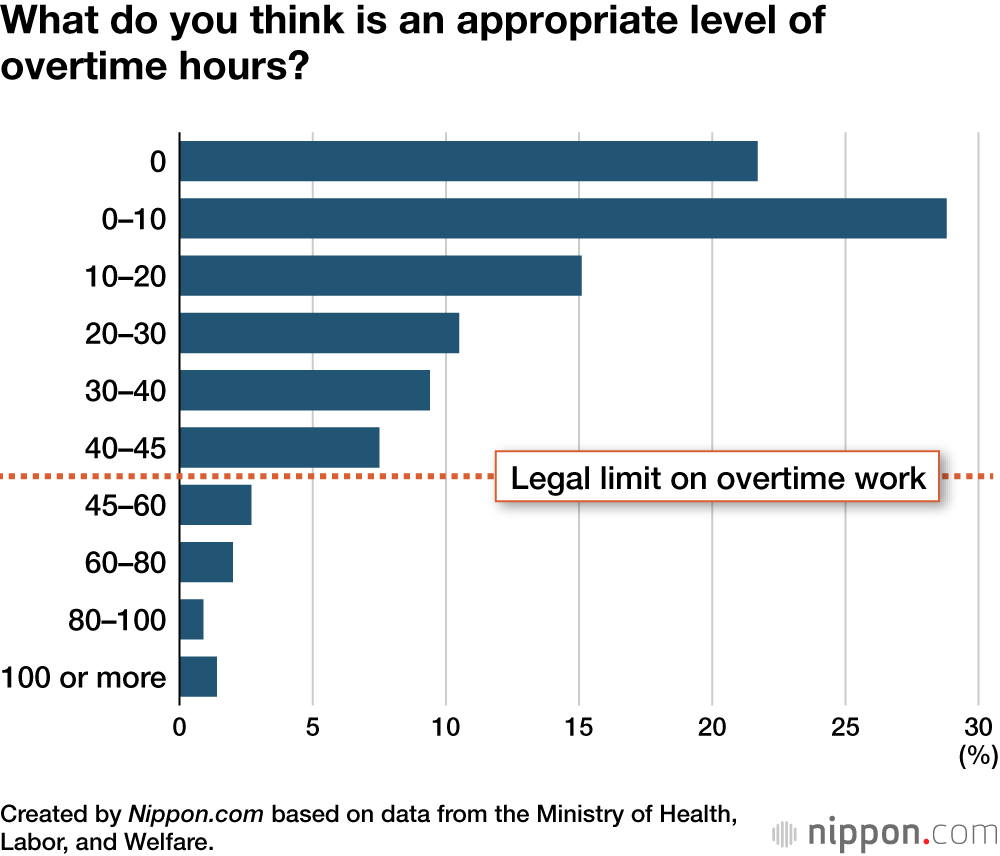
Only 7% of the respondents considered overtime exceeding the current upper limit of 45 hours to be reasonable, indicating that there is little demand among workers for relaxing the overtime restriction that is now in place.
Under the current law, there is a special exception that allows overtime to exceed the upper limit in cases of temporary, special circumstances agreed upon by labor and management. However, even in that case, overtime of more than 45 hours per month is only permitted for up to six months per year, and the average over multiple months must remain below 80 hours.
Data Sources
- Data from work-style reform survey (Japanese) from the Ministry of Health, Labor, and Welfare.
(Translated from Japanese. Banner photo © PhotoAC.)