Over 17,000 Waiting for Organ Transplants in Japan
Health- English
- 日本語
- 简体字
- 繁體字
- Français
- Español
- العربية
- Русский
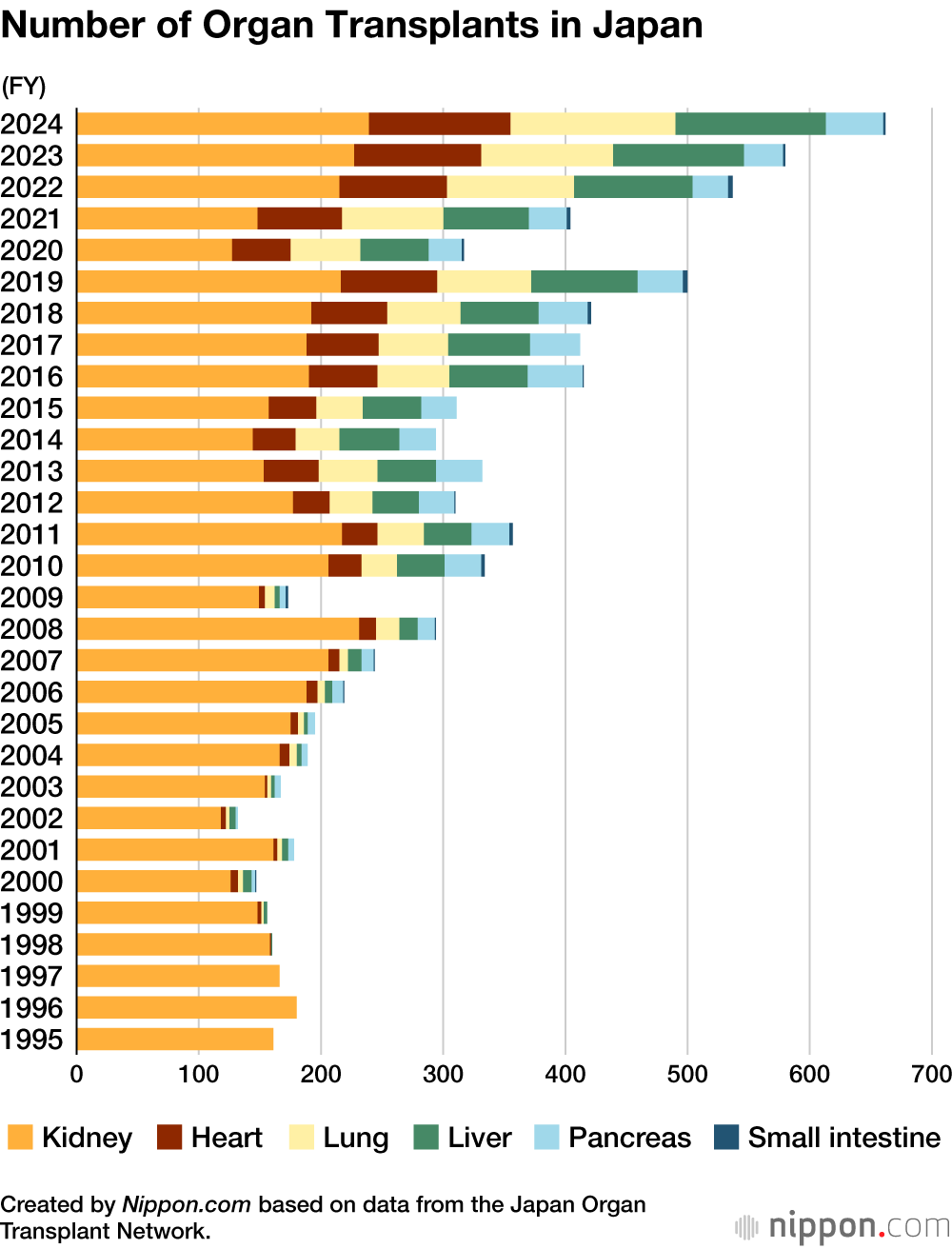
Organ transplantation is the most promising medical treatment for patients with dysfunctional organs due to illness or an accident, offering the hope for survival. Data released by the Japan Organ Transplant Network shows that the number of transplants in the country in fiscal 2024 reached 662, exceeding 600 for the first time.
In 1997, new legislation made it possible to donate organs from individuals who have been declared brain-dead. After cardiac arrest, only the kidneys, pancreas, and eyeballs (corneas) can be donated. However, after brain death, organs such as the heart, lungs, and liver can also be provided for transplants.
Initially, donors were required to have indicated in writing beforehand their intention to donate an organ in the event of brain death, through filling out an “organ donor card” or similar document. As a result, even in the years with the highest number of potential donors, only a dozen or so organs were donated. Under the revised law, enacted in 2010, organ donation has become possible with family consent, even if the person had not expressed the wish to do so. Since that change, transplants of the heart, lungs, and liver have also increased.
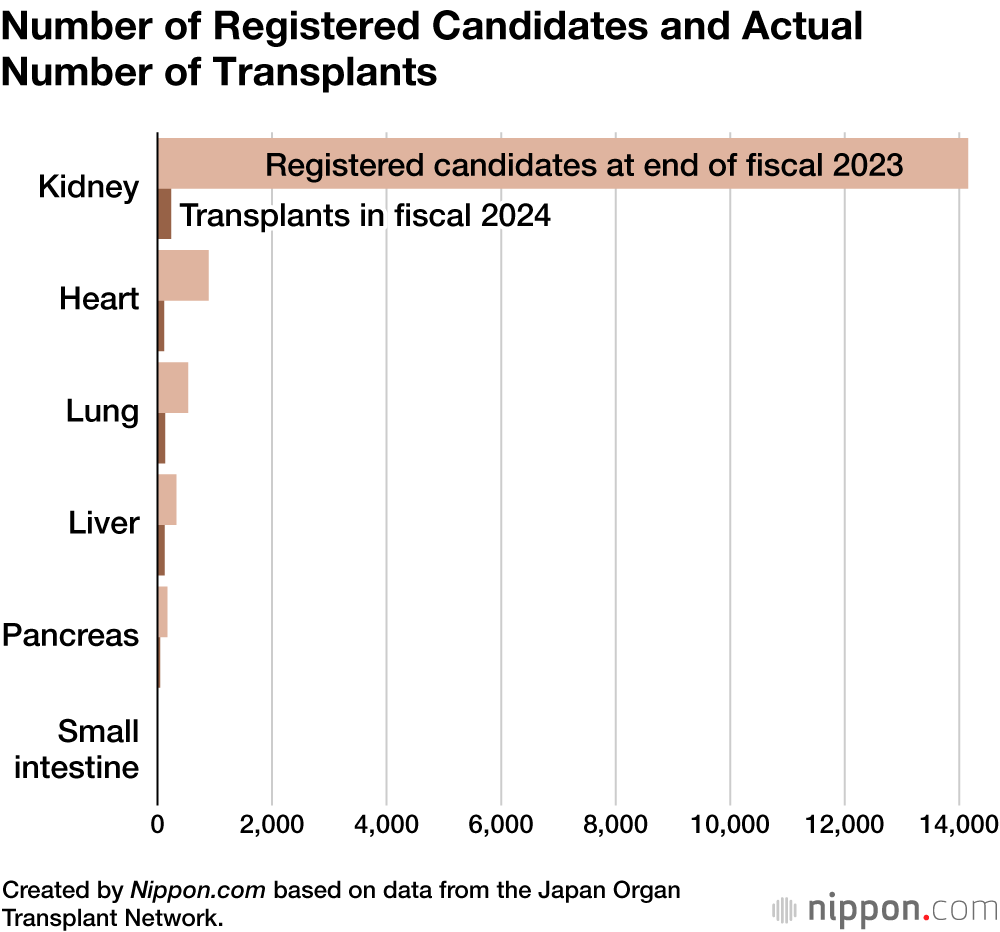
As of the end of March 2026, the number of people registering to receive an organ transplant surpassed 17,000, although the proportion of those actually being able to undergo an operation remained at less than 4%.
The graph below shows the number of registered candidates for each organ type as of the end of fiscal 2023, alongside the number of transplants performed in fiscal 2024. Although the two figures do not necessarily correspond directly, they reveal the difficult reality when it comes to fulfilling the hopes of patients.

Data Sources
- Data on organ donations/transplants (Japanese) from the Japan Organ Transplant Network.
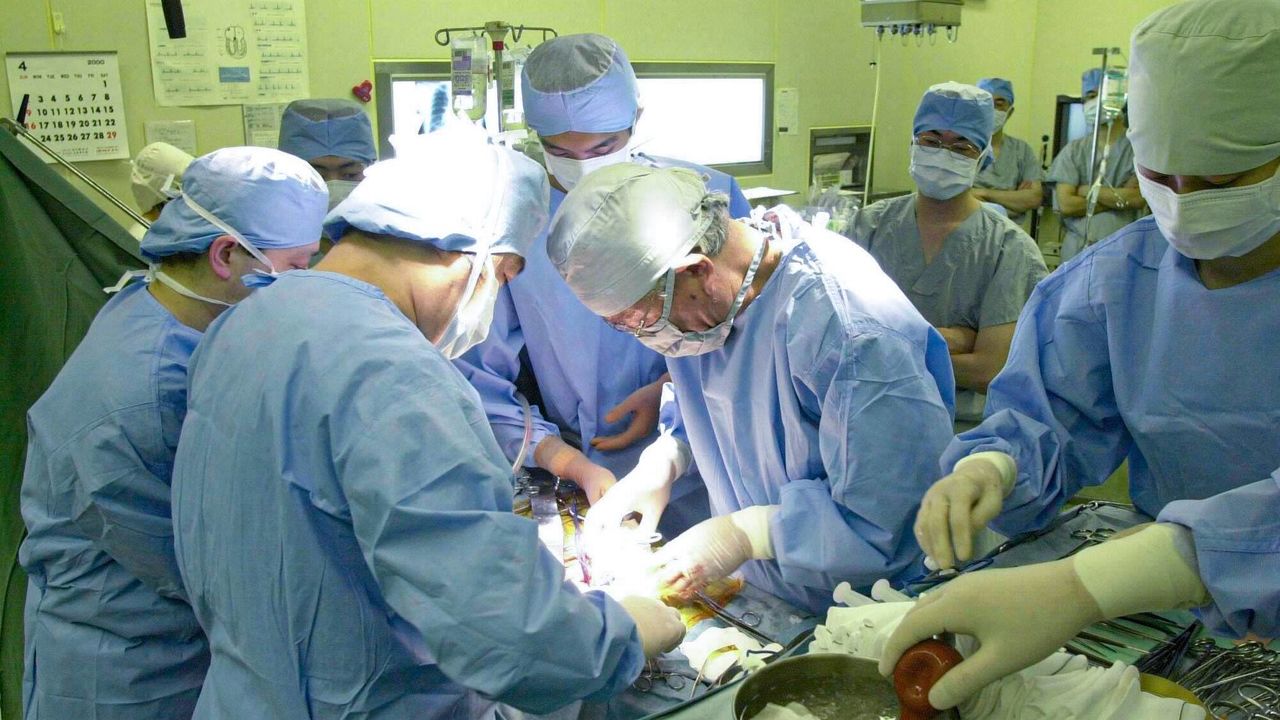
(Translated from Japanese. Banner photo: An operation to remove organs from a brain-dead patient in the city of Niigata in April 2000. © Jiji; pool photo.)