Survey of Young Japanese Shows Rising Profile of Self-Defense Forces
Education Politics- English
- 日本語
- 简体字
- 繁體字
- Français
- Español
- العربية
- Русский
Nonnuclear Principles and the SDF
The attacks on Iran carried out jointly by the United States and Israel in late February have had serious repercussions in the Middle East and in the international community as a whole. In mid-March, the Nippon Foundation conducted a survey of 1,000 young Japanese aged 17 to 19 to gauge how they perceive the security threats facing Japan.
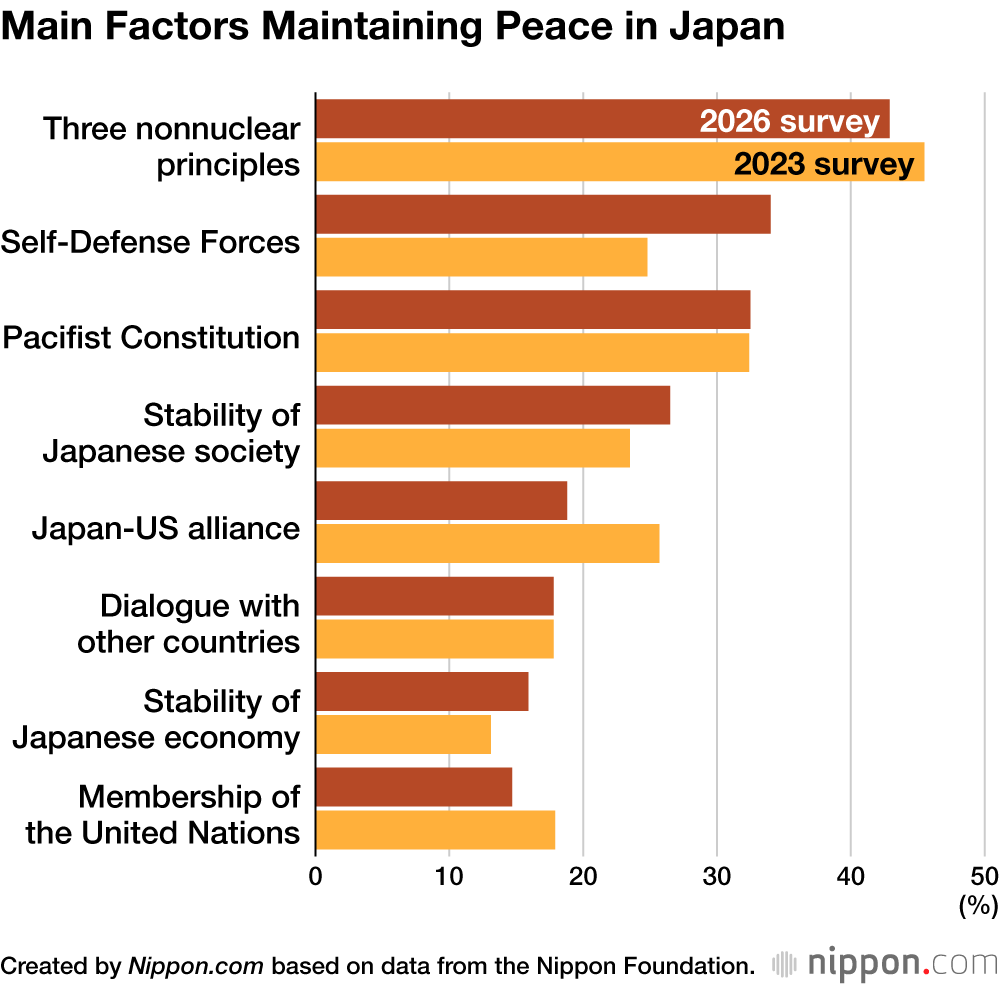
When asked what factors kept Japan in a peaceful state, the most common answer, mentioned by 42.9% of the respondents, was the country’s “three nonnuclear principles,” which was also the top answer in the previous survey (January 2023); however, there was a decrease of 2.6 percentage points. Meanwhile, the “Japan-US alliance,” which ranked third as a factor in the previous survey, fell by 6.9 points to fifth place, perhaps reflecting demands made on Japan by the administration of US President Donald Trump. One factor preserving peace that rose sharply, by 9.2 points, was the “Self-Defense Forces,” which ranked second in the latest survey.
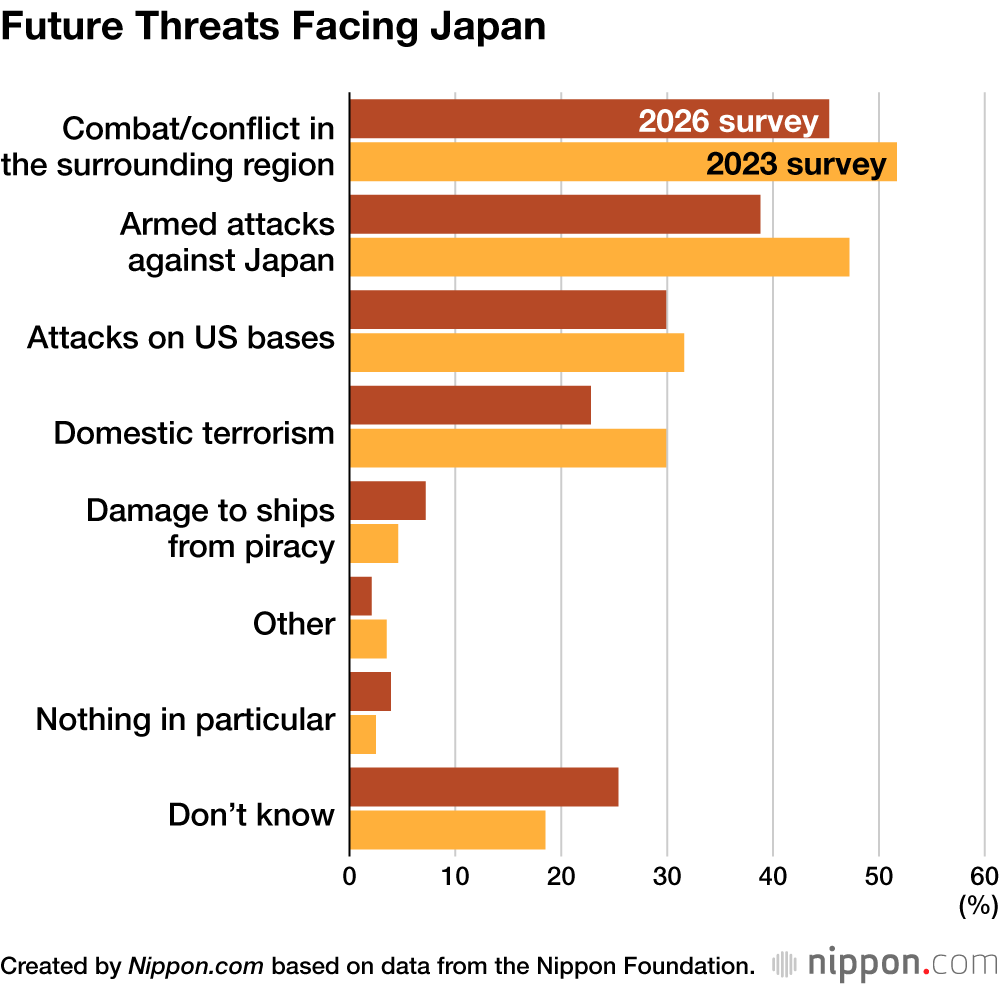
The most common choice among threats to Japan over the next five years was “combat or conflict in the surrounding region,” at 45.3%, followed by “armed attacks against Japan,” “attacks on US military bases,” and “terrorist attacks within Japan.” The ranking of these top concerns was unchanged from the previous survey, but the number of people who viewed each of the top four items as a threat had decreased.
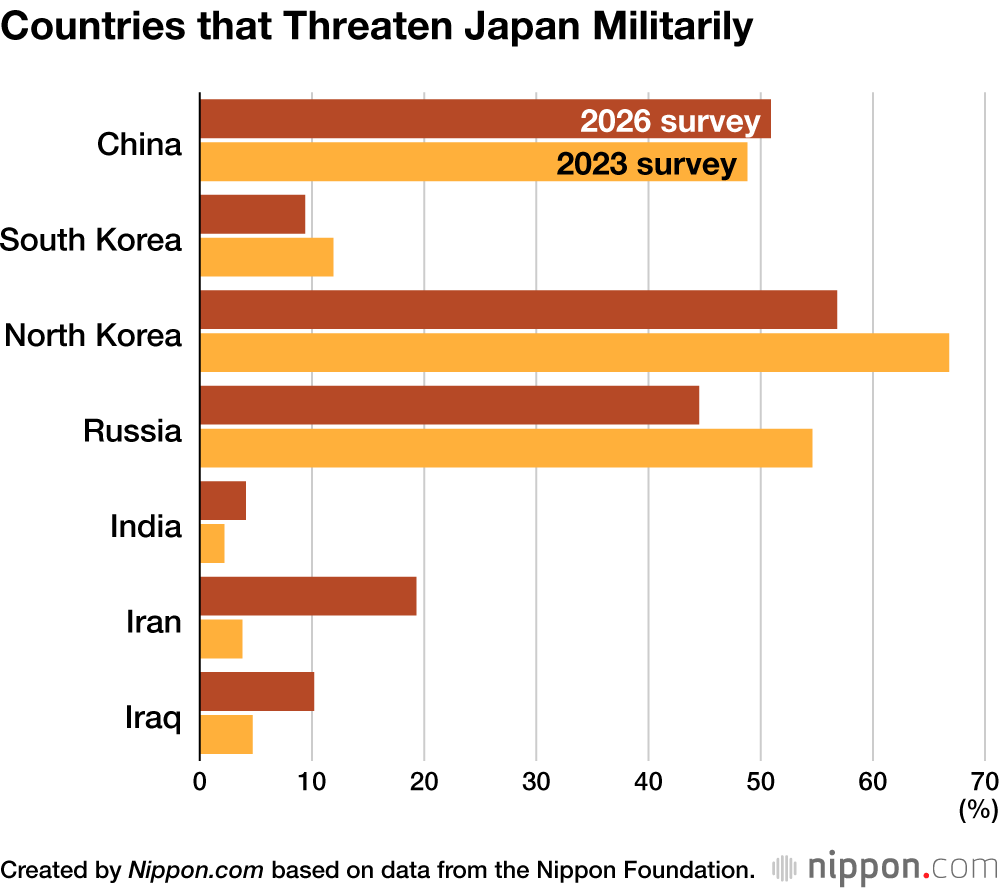
When asked which countries are perceived as military threats to Japan, North Korea ranked highest at 66.8%, but this was a decline of 10 percentage points compared to the previous survey. Russia, which had ranked second in the previous survey, also fell by 10.1 points to 44.5%. Meanwhile, reflecting the destabilization of the Middle East caused by the Iran war, the percentages for Iran and Iraq increased compared with the previous survey.
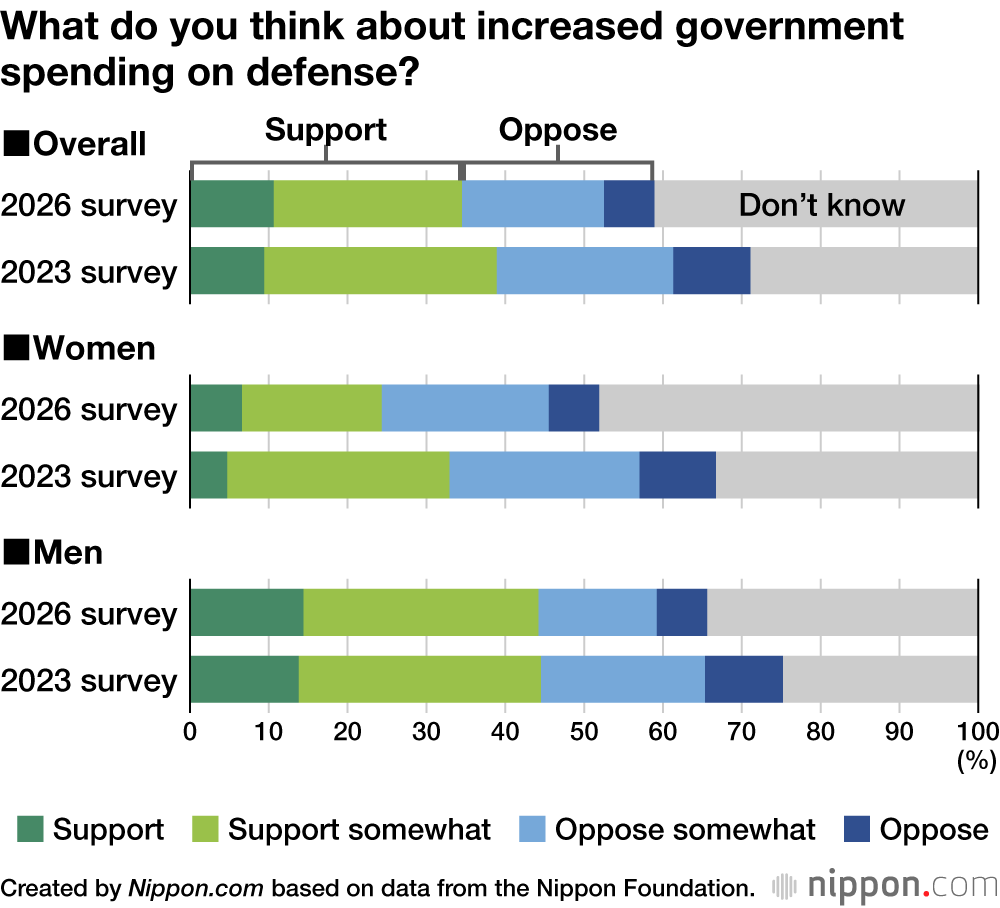
Regarding the increases in defense-related spending that have continued for more than a decade, 34.5% said they support them, including those who answered they support them “somewhat,” while 24.4% are opposed. Compared with the previous survey, both support and opposition decreased, while the percentage answering “don’t know” rose by 12.2 points, to 41.1%. In particular, the proportion of women answering “don’t know” increased by as much as 15 points, suggesting that many young people are struggling to make sense of the increasingly complex international situation.
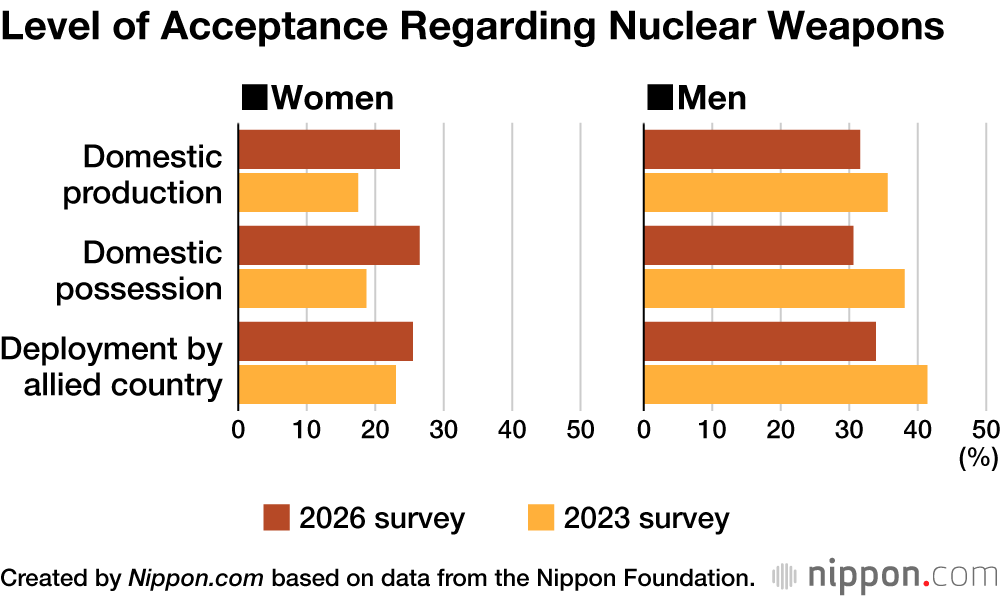
Although Japan continues to uphold its three nonnuclear principles, respondents were asked if they would approve of Japan reconsidering its stance toward nuclear weapons. The percentages remained unchanged from the previous survey, at just under 30%, for support of the following possibilities regarding nuclear weapons: domestic production, domestic possession, and deployment by an allied country. However, when broken down by gender, a notable trend was that women had become more favorable toward these options.
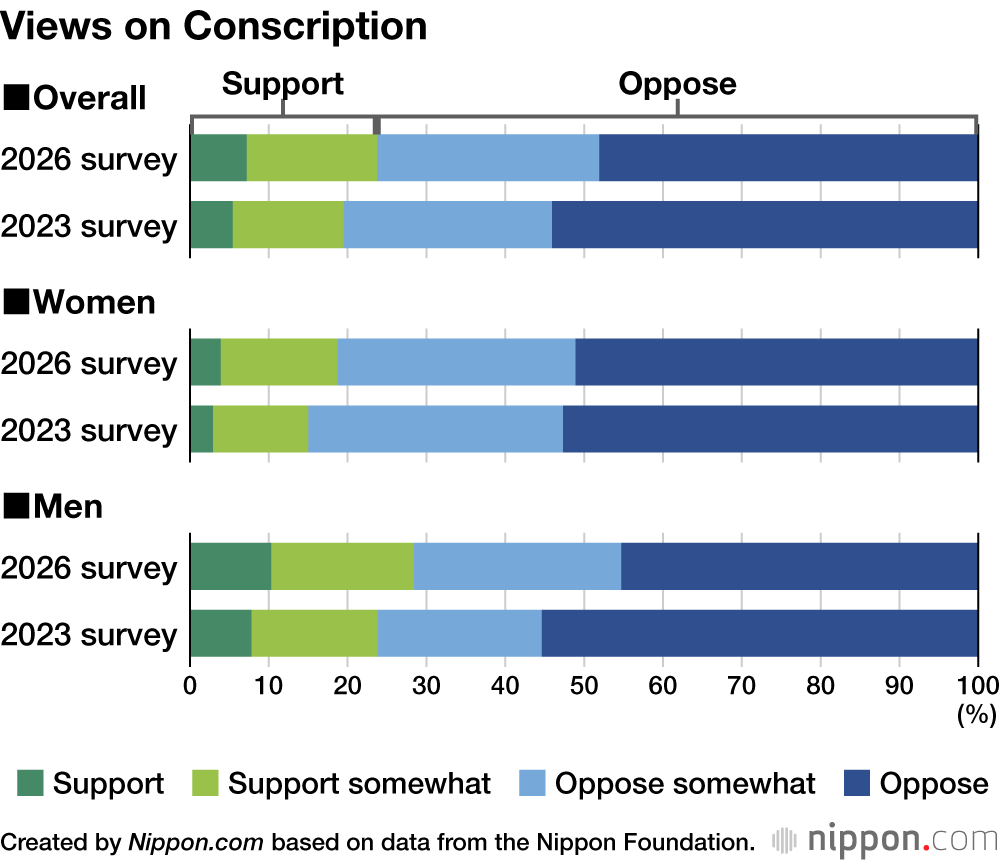
Regarding the introduction of conscription, the proportion of both women and men who said they support it (including those who supported it “somewhat”) increased slightly compared with the previous survey. Among men in particular, the percentage expressing clear opposition fell by more than 10 points, to 45.2%.
Data Sources
- Survey of teenagers about national security (Japanese) from the Nippon Foundation
(Translated from Japanese. Banner photo © PhotoAC.)