Japan Languishes at 62nd in Press Freedom Ranking
Politics- English
- 日本語
- 简体字
- 繁體字
- Français
- Español
- العربية
- Русский
Chilling Effect on Journalism
The Paris-based organization Reporters Without Borders (RSF) conducts research and shares information on the level of freedom of the press in 180 countries and territories worldwide. Each year, it scores and ranks countries according to their level of press freedom based on such factors as politics, legal systems, society, and the safety of journalists’ lives. A higher score indicates that freedom of the press is more strongly protected.
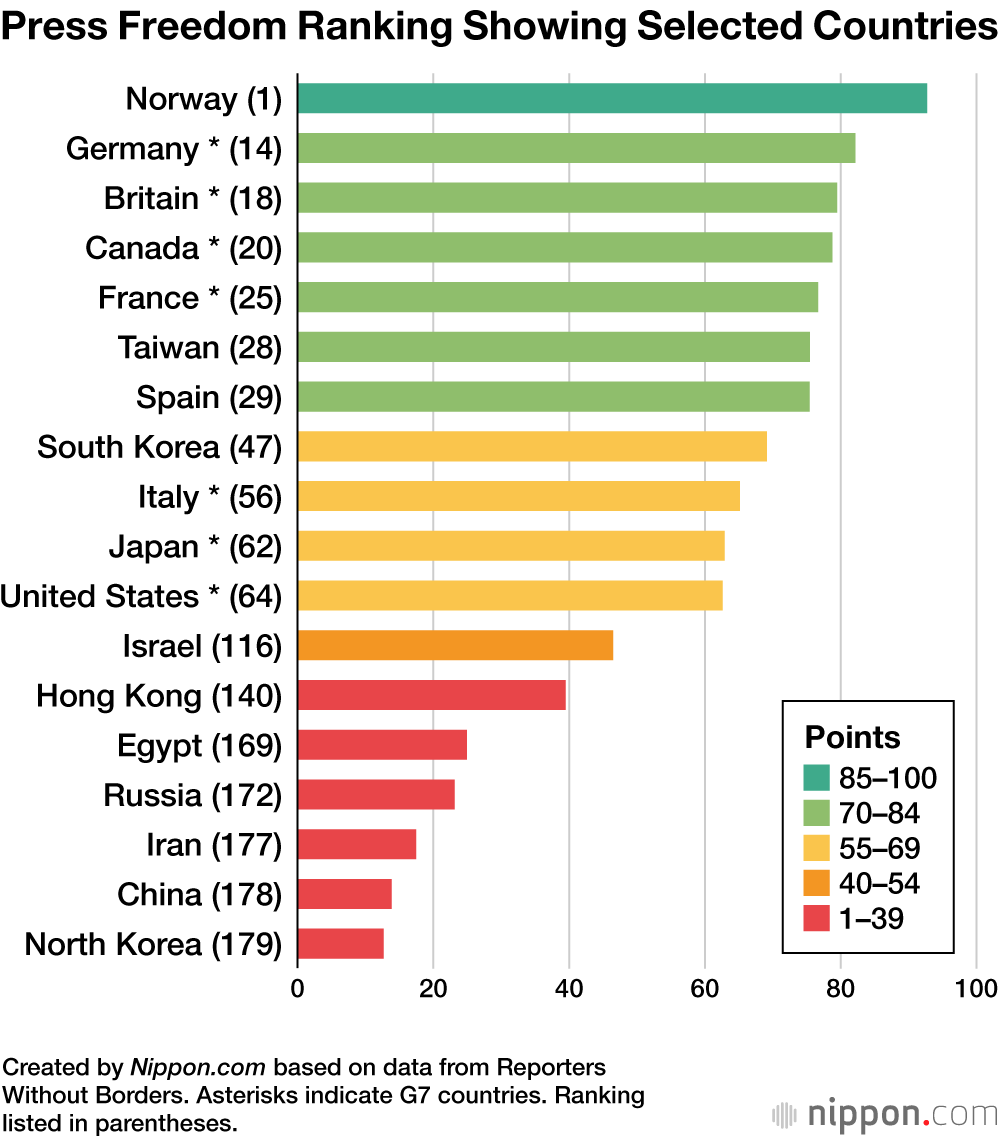
Japan was sixty-second in the 2026 ranking with a score of 62.9 points, which places it in the “problematic” category. RSF states that the Act on the Protection of Specially Designated Secrets that came into effect in 2014, aimed at preventing the leaking of security-related information, continues to have a chilling effect on journalism since there are no adequate protections for source confidentiality to act as a counterbalance. The result has been an environment that breeds self-censorship. RSF also cites as additional concerns the role of government interference, limits on the number of journalists at government press conferences, gender inequality within the media, and the closed nature of Japan’s press club systems.
Back when the survey was launched in 2002, Japan ranked twenty-eighth, and then rose to its highest ranking of twelfth place in 2010. However, after the second administration of Prime Minister Abe Shinzō was formed in 2013, the country’s ranking dropped significantly, and for the past 12 years it has remained stuck in the range of sixtieth to seventieth place.
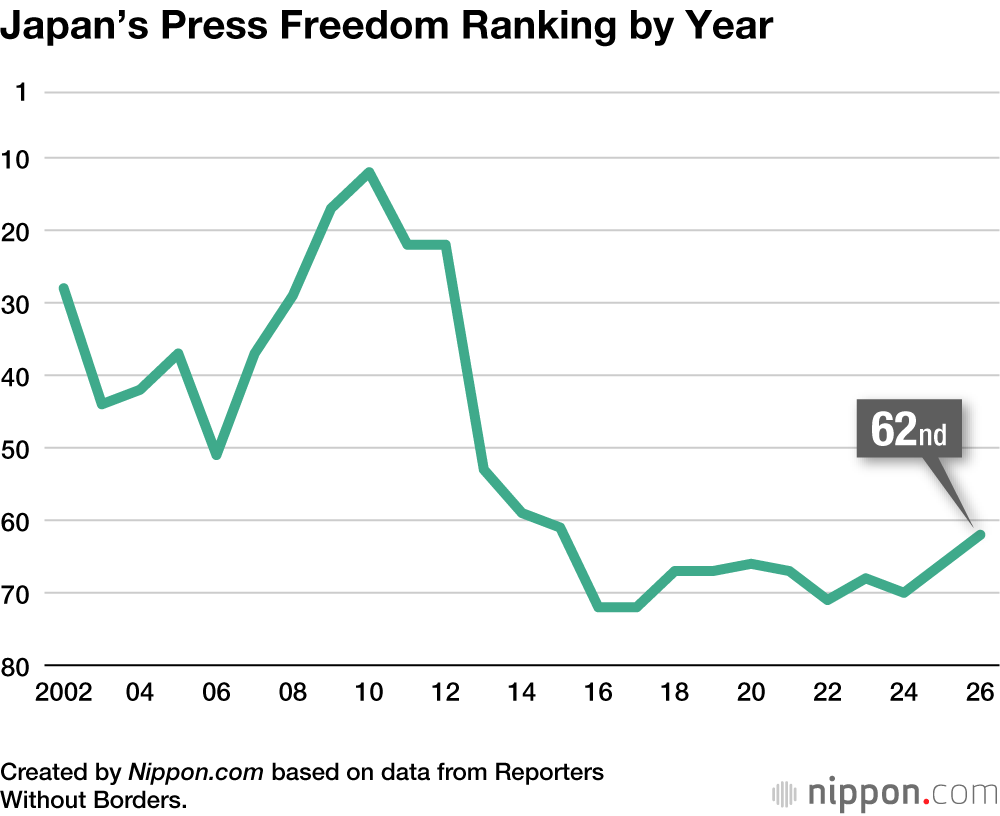
Meanwhile, Norway was first in the ranking for the tenth consecutive year. The G7 country with the lowest ranking was the United States. The report stated that “the country is experiencing a significant and prolonged decline in press freedom, with Donald Trump’s return to the presidency greatly exacerbating the situation,” citing as examples the restrictions on reporting and attacks on the media through legal means.
According to the RSF, more than half of the countries surveyed worldwide were classified as having a “difficult” (40–54 points) or “very serious” (1–39 points) situation with regard to press freedom, and the average global score fell to its lowest level since the survey began. The RSF pointed out that the expansion of increasingly restrictive legal arsenals—particularly those linked to national security policies—has been steadily eroding the right to information, even in democratic countries.
Data Sources
- Data on press freedom from Reporters Without Borders
(Translated from Japanese. Banner photo © PhotoAC.)