
Blue-Collar Wages Rising in Japan Amid Labor Shortage
Work Economy- English
- 日本語
- 简体字
- 繁體字
- Français
- Español
- العربية
- Русский
Wages in Some Sectors Lag Behind Inflation
Average annual income in Japan for 2025 (including 12 months of salary plus bonuses) reached ¥5,456,000 according to calculations by the Recruit Works Institute, based on a survey by the Ministry of Health, Labor, and Welfare. This is a 12% increase compared to the average five years earlier (2020), for which comparable data is available. However, since consumer prices rose by 11.9% over the same five-year period, real wages have hardly risen at all.
The breakdown of average salaries by sector shows the largest increase over the past five years, at 64%, was seen among field clerical workers, such as bill collectors, statistical surveyors, and meter readers. Among the top 10 sectors for wage growth, four were blue-collar occupations, including taxi drivers and automobile assembly workers. According to Furuya Shōto, a chief researcher at the Recruit Works Institute, “labor shortages in the realm of physically demanding blue-collar jobs have become particularly severe, making it more likely for wages to rise.”
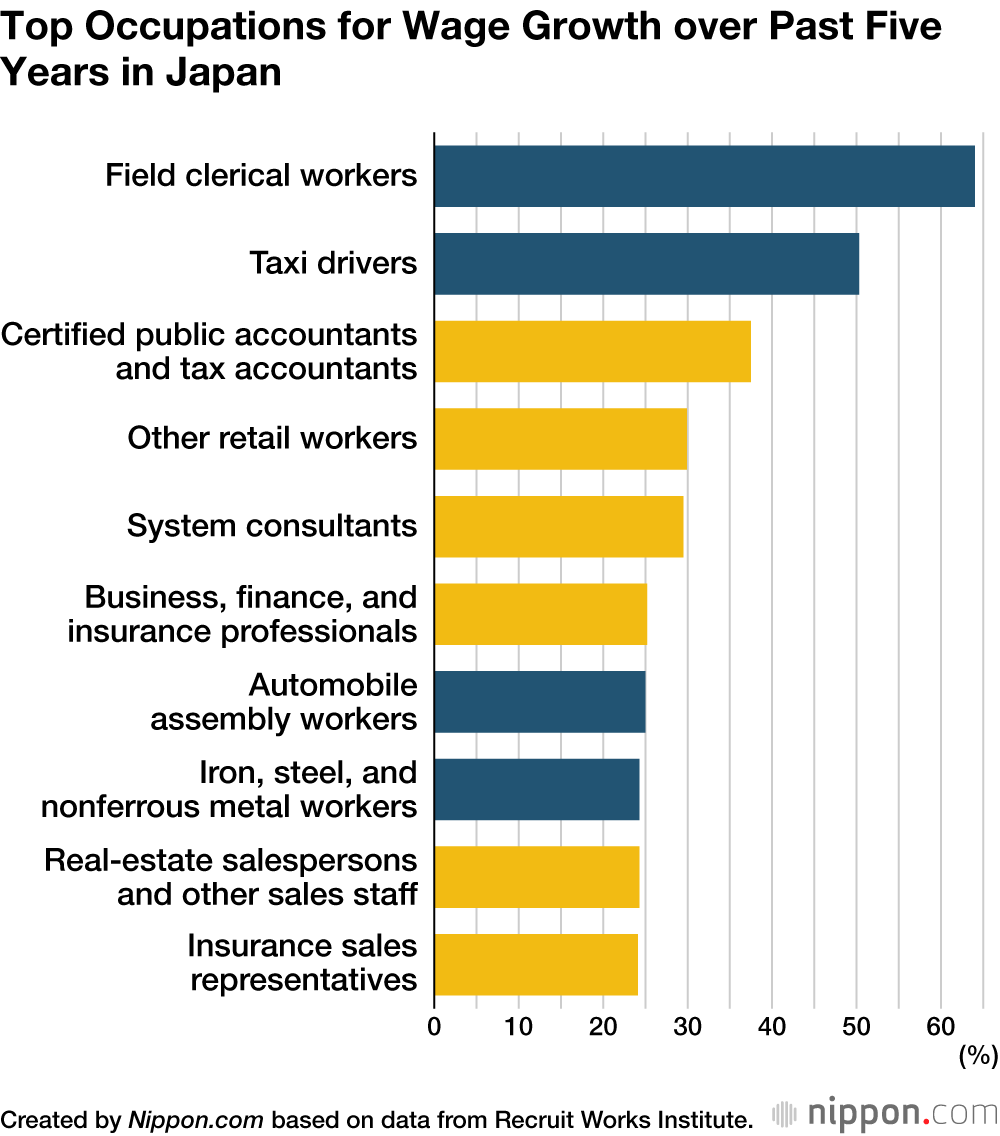
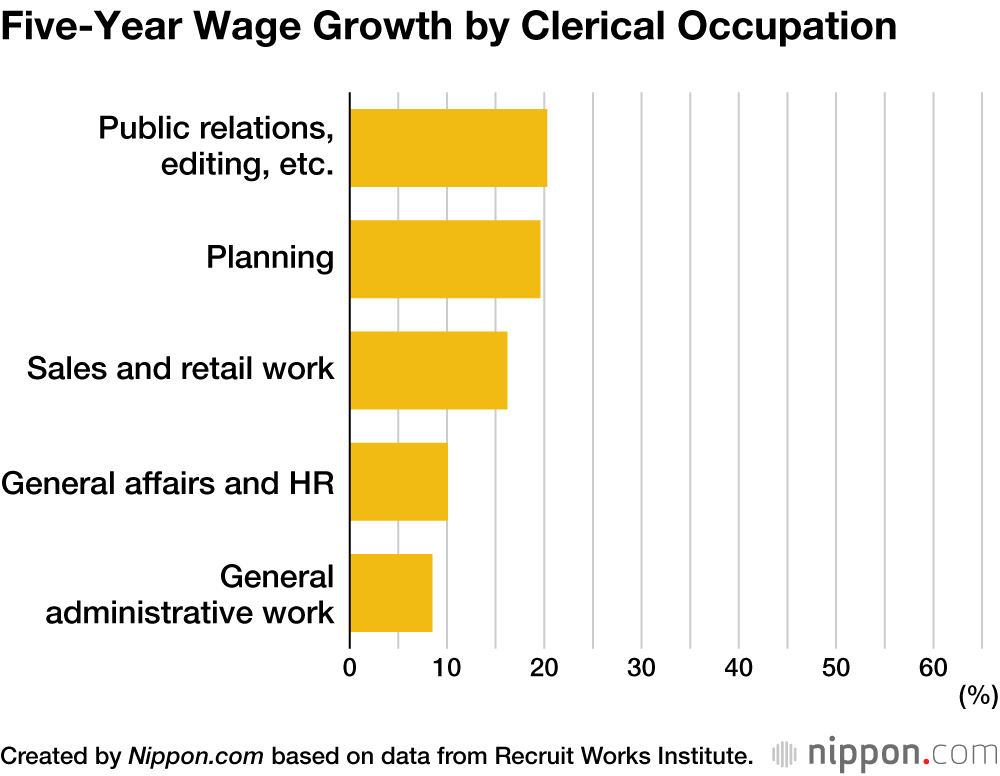
White-collar salaries rose most notably among specialized professionals, such as certified public accountants and systems consultants. However, in the case of other white-collar jobs, such as standard clerical work, wage growth was relatively low. In particular, the wages of general office clerks, whose job responsibilities are not narrowly defined, increased by only 8.5%.
Furuya noted that “generative AI has not yet ushered in a phase where demand for white-collar workers is shrinking overall,” but he added that “it is important to note that wage growth for unspecialized general clerical jobs remains below the average.”
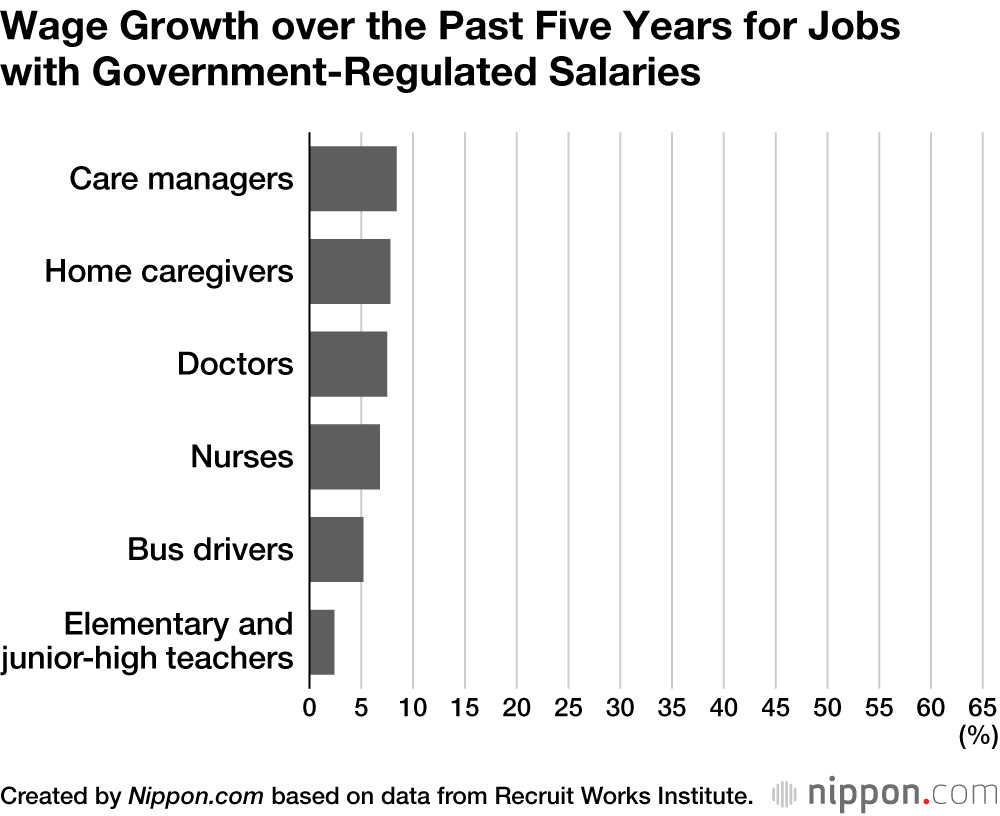
Wages have remained generally stagnant, with single-digit increases, in those sectors where wages are officially set rather than determined by market supply and demand. This includes teachers as well as healthcare and nursing-care workers, whose wages are determined according to the public insurance system, and bus drivers, whose wages depend on government-approved fares. This means that real wages in those sectors have actually declined. Furuya indicates the “risk that labor shortages will worsen further, leading to the deterioration of essential local services.”
Data Sources
- Data on changes in wages (Japanese) from Recruit Works Institute
(Translated from Japanese. Banner photo © Pixta.)