Japan’s Middle East Oil Imports Drop by Two-Thirds in April
Economy- English
- 日本語
- 简体字
- 繁體字
- Français
- Español
- العربية
- Русский
Closed to Traffic
Since US and Israeli attacks instigated war with Iran on February 28, the Strait of Hormuz, which is a chokepoint for oil transportation in the Middle East, has been effectively closed to traffic. According to the Japanese Shipowners’ Association, just five Japan-affiliated vessels have passed through the strait from March until May. As transportation by tanker takes around 20 days from the Middle East to Japan, conditions in March affect April trade statistics, which are based on goods clearing customs.
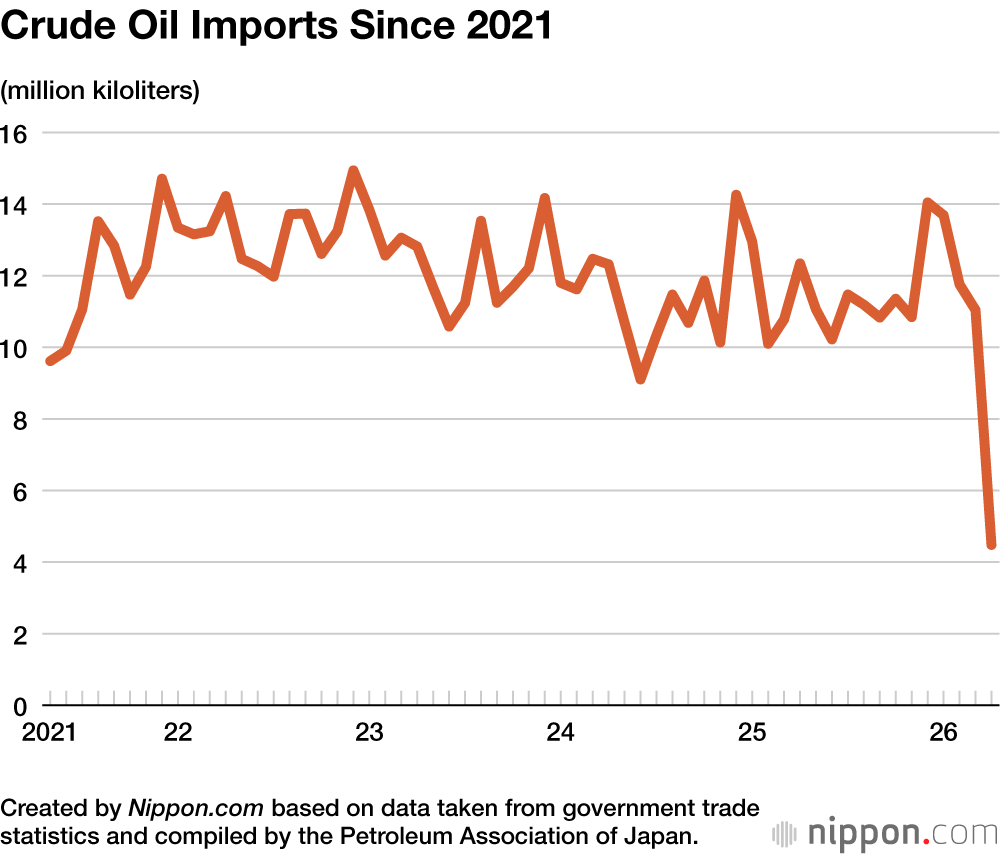
Preliminary trade statistics published by the Ministry of Finance show that the total amount of crude oil imported in April was down 63.7%, at 4.5 million kiloliters, compared with April 2025. This included 3.8 million kiloliters from the Middle East (down 67.2%). Both figures are the lowest since monthly data by product was first recorded in 1979.
While comparable data is unavailable from the times of the oil crises in 1973 and 1979, the Petroleum Association of Japan states that crude oil imports fell by 4.5% year on year in fiscal 1974 and 10% in fiscal 1980. While the April 2026 figures are only for one month, the level of the decrease is noticeably large.
Although concerns over supply led the price of Dubai crude oil to soar in March, the slumping amount of oil imported by Japan meant that imports by value fell 50% to ¥454.2 billion, thus producing no negative effect on the trade balance.
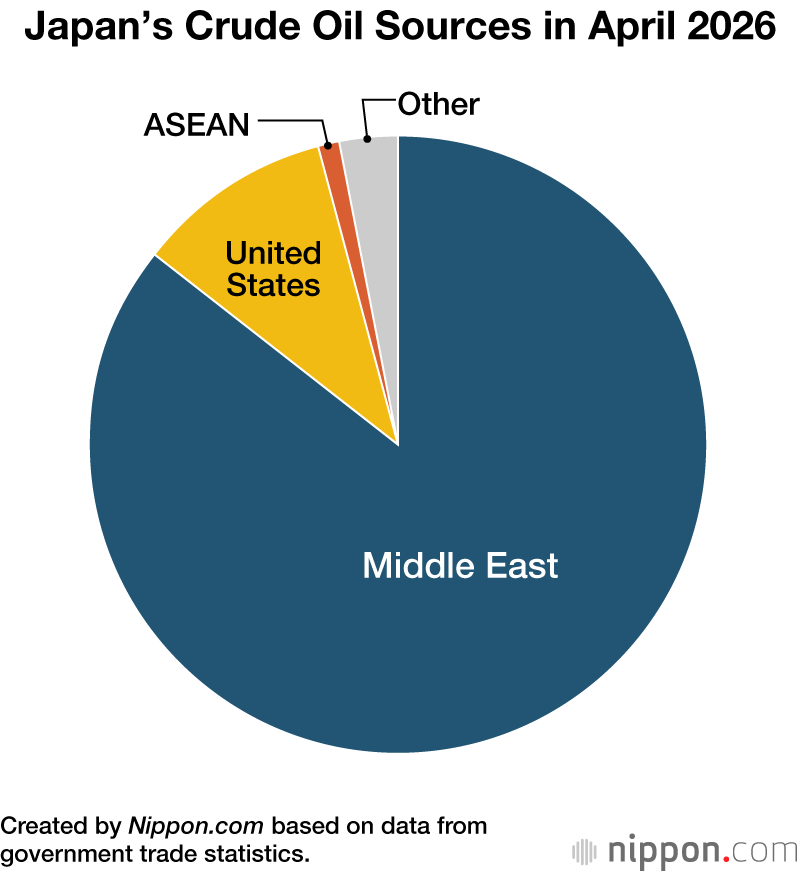
The share of oil Japan imports from the Middle East is typically over 90%, but in April it fell to 85.8%. The government sought alternative sources and released part of its reserves, with Prime Minister Takaichi Sanae stating that Japan can secure the oil it needs until the start of 2027.
Kiuchi Takahide, an executive economist at Nomura Research Institute, states in a report on the economic outlook for Japan that if the Strait of Hormuz remains closed, “shortages of oil and naphtha will lead to production cuts, which in turn will mean product shortages and price hikes.” He says that the stagflationary trend, combining high prices with low growth, will intensify.
Data Sources
- April trade statistics (Japanese) from the Ministry of Finance
- Analysis by Kiuchi Takahide (Japanese) from Nomura Research Institute
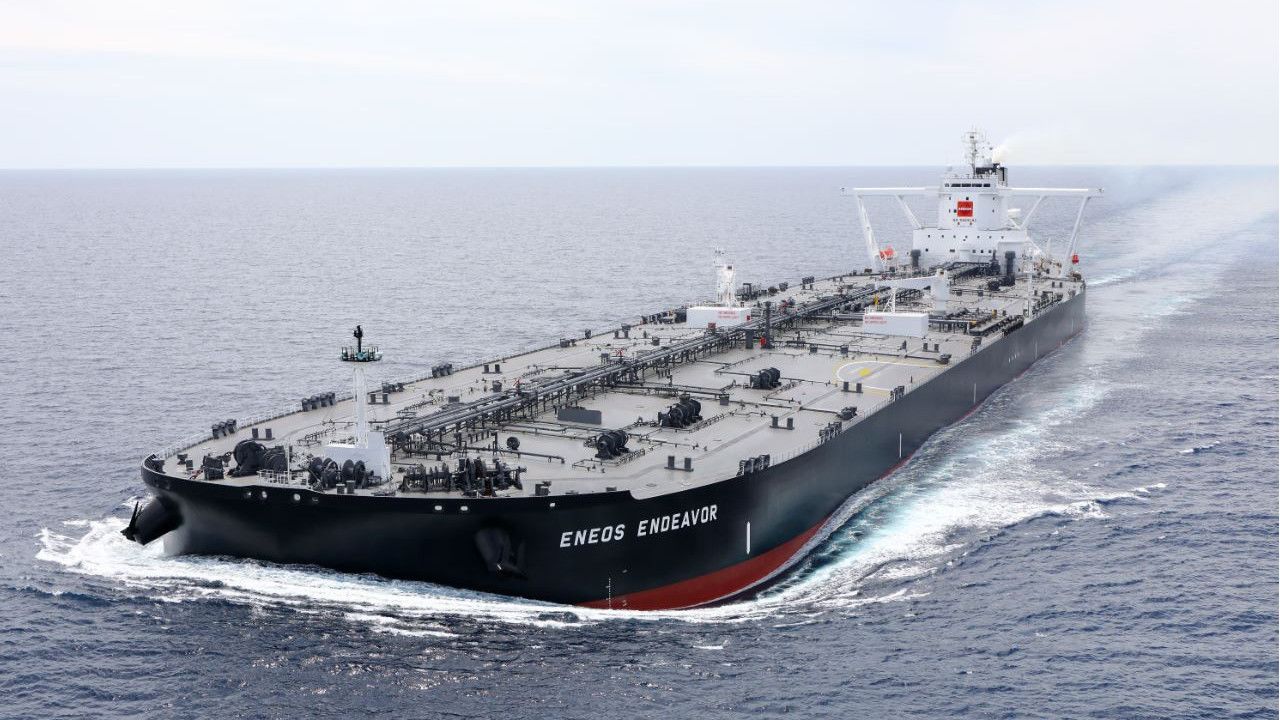
(Translated from Japanese. Banner photo: The Eneos Group oil tanker Eneos Endeavor. Courtesy Eneos; © Jiji.)