
More Japanese Companies Choose Not to Publish Earnings Forecasts Amid Oil Uncertainty
Economy- English
- 日本語
- 简体字
- 繁體字
- Français
- Español
- العربية
- Русский
Largest Number of Companies in the Chemical Sector
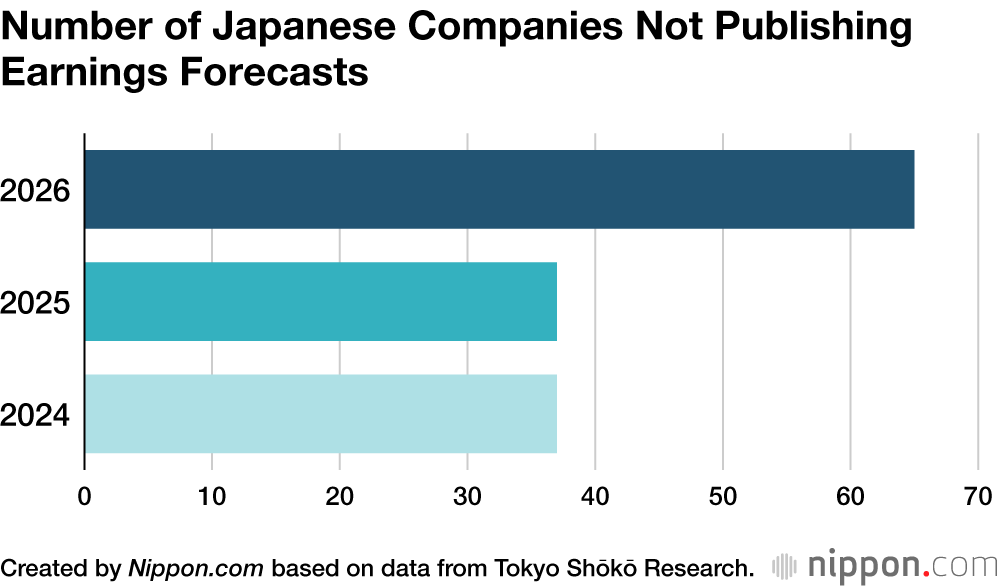
After the fiscal year ends on March 31 for listed Japanese companies, the vast majority announce the previous year’s results by the end of May. Typically, these earnings announcements are accompanied by the company’s earnings forecast for the current fiscal year. However, a survey conducted by Tokyo Shōkō Research on the earnings reports of 2,210 listed companies whose fiscal year ended on March 31 (excluding securities and commodity-futures firms), found that 65 companies did not publish earnings forecasts for the current fiscal year. This is a 75.7% increase over the 37 companies that withheld forecasts the previous year.
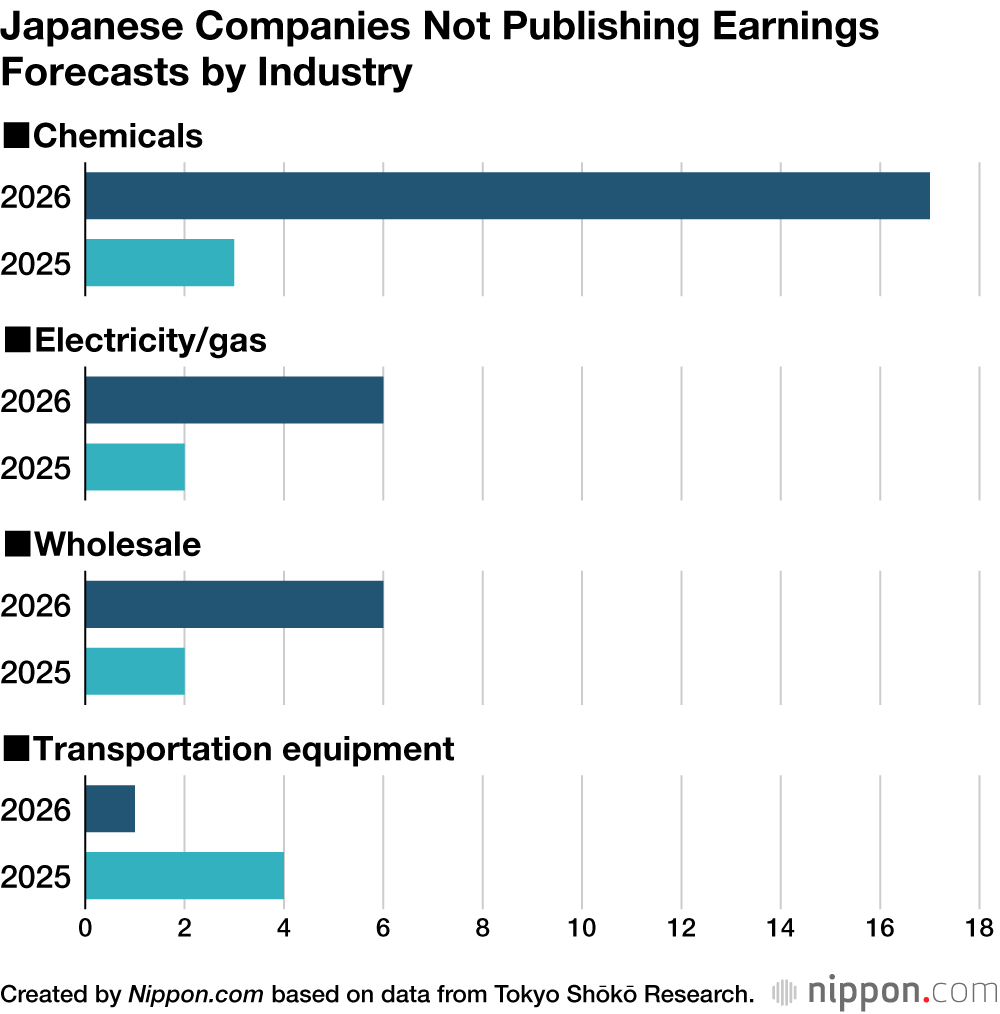
The largest number of companies not disclosing earnings forecasts was in the chemicals sector, at seventeen companies in total. This is more than five times as many as the previous year’s total of three companies. The reasons stated for not issuing a forecast included “disruptions in the supply of raw materials derived from oil and naphtha and sharp increases in their prices” (Tōyōbō) and “rising prices for naphtha and benzene, leading to sharp increases in the cost of key raw materials such as polystyrene” (food container manufacturer FPCO).
There were also six companies that withheld earnings forecasts in the electric power and gas sector, where fuel procurement and prices for crude oil and other fuels remain unstable—as compared to two companies the previous year. The wholesale sector, which has been affected by rising logistics costs, also had six companies, as compared to two last year. In contrast, the transportation equipment sector, including automobile manufacturers, had only one company that did not disclose an earnings forecast, as compared to four the previous year, when the Trump tariffs posed a major risk factor.
The US and Israeli strikes on Iran led to the effective closure of the Strait of Hormuz, which is a strategic chokepoint for crude oil exports from the Middle East. On June 17, the United States and Iran signed a memorandum of understanding as a step toward peace, which included a provision guaranteeing the “freedom of navigation” through the strait. However, negotiations toward a final agreement are still ongoing. Since the outcome depends in part on the response of Israel, prospects for reaching a comprehensive agreement remain uncertain.
According to trade statistics, crude oil imports have dropped by roughly 60% year on year since April. Related difficulties in procuring naphtha have caused a shortage in printing ink. This has impacted companies in a variety of ways, as seen in the decision by the food manufacturer Calbee to switch from color to black-and-white packaging for some of its products.
Data Sources
- Report about companies not publishing earnings forecasts (Japanese) by Tokyo Shōkō Research.
- FY 2026 financial results (Japanese) from Tōyōbō
- FY 2026 financial results (Japanese) by FPCO
(Translated from Japanese. Banner image © Pixta.)