BOJ Rate Hike Promises Asset Boosts for Elderly, Higher Housing Costs for Young
Economy Work- English
- 日本語
- 简体字
- 繁體字
- Français
- Español
- العربية
- Русский
External Pressure Prompts a Hike
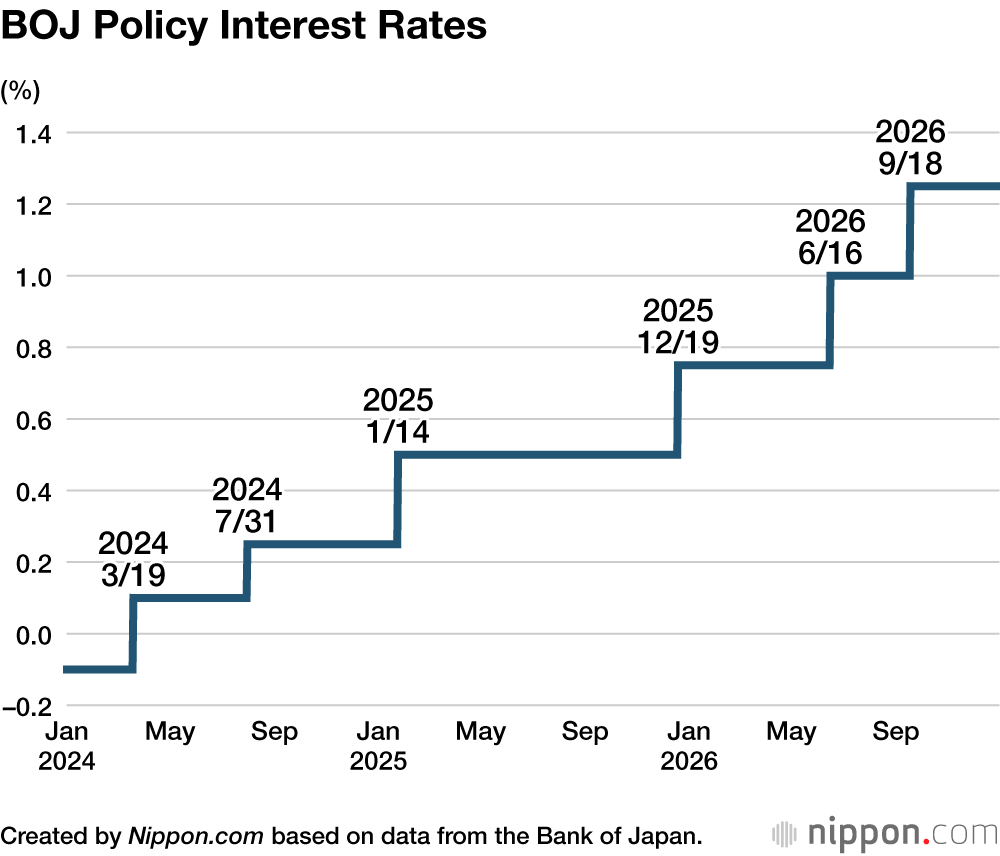
At its monetary policy meeting on September 18, the Bank of Japan decided to hike its policy rate from 1.0% to 1.25%. This marks the sixth rate increase since March 2024, when the central bank exited its policy of negative rates and aggressive monetary easing. The rate hike comes just three months after a June 2026 increase, amid pressure to counter rising inflation fueled by Middle East tensions and a weak yen.
According to estimates by Mizuho Research and Technologies, this interest rate hike is expected to raise average 10-year time deposit rates by 0.15 points to 2.13%, while variable-rate mortgage rates are projected to rise by 0.25 points to 1.45%. The new policy will bring both positive and negative financial impacts to Japan’s households, but Mizuho projects an overall positive net impact of ¥400 billion nationwide.
Projected Impacts of Rate Hike
| Before hike | After hike | |
|---|---|---|
| Policy interest rate | 1.0% | 1.25% (+0.25 pt) |
| Long-term interest rate (10-year JGB) | 2.82% | 3.04% (+0.22 pt) |
| Ordinary deposit rate | 0.40% | 0.50% (+0.10 pt) |
| 10-year time deposit rate | 1.98% | 2.13% (+0.15 pt) |
| Variable mortgage rate | 1.20% | 1.45% (+0.25 pt) |
| Fixed mortgage rate | 3.22% | 3.46% (+0.25 pt) |
Created by Nippon.com based on data from Mizuho Research and Technologies.
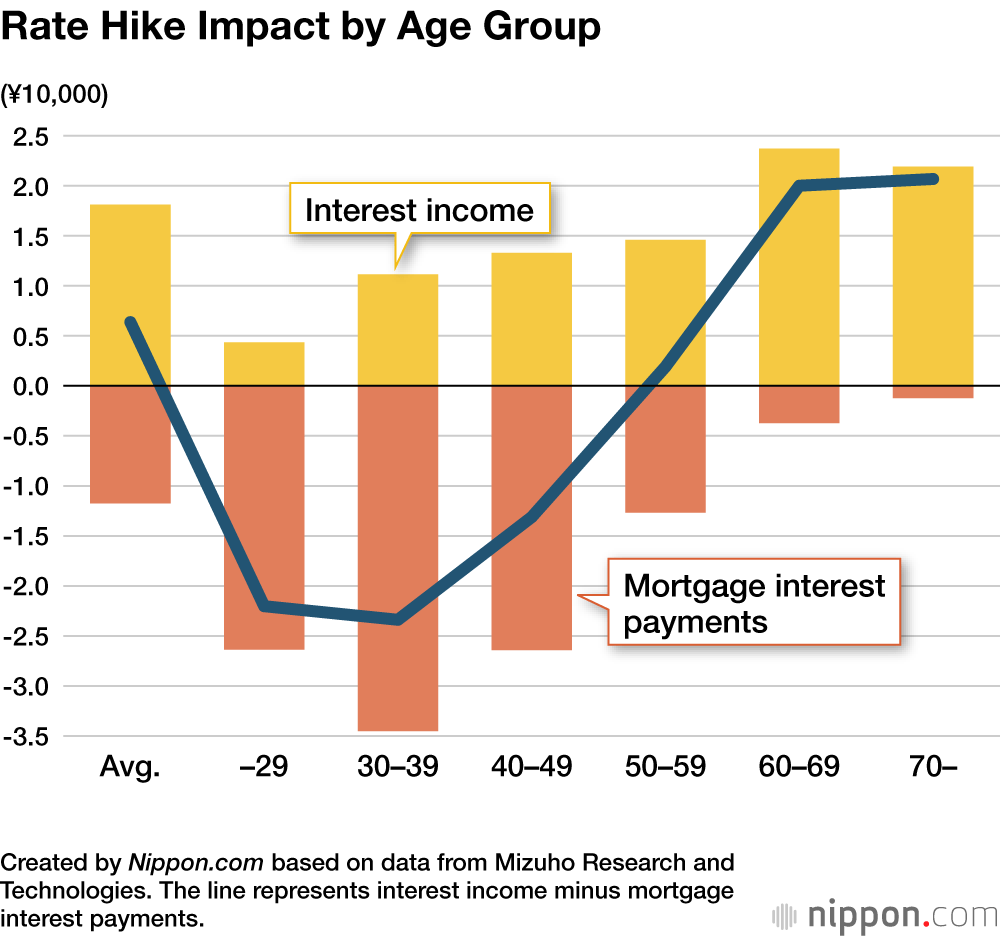
Broken down by age group, younger generations carry larger mortgage balances. Annual interest payments (as calculated for households with two or more members) are expected to rise by ¥22,000 for those in their twenties or younger and by ¥23,000 for those in their thirties. Many borrowers use repayment plans with fixed monthly payments, balancing principal and interest payments to meet the same monthly total; the periodic revisions carried out by lenders every five years are likely to take these higher rates into account, effectively raising their overall payment amounts. Conversely, older generations holding financial assets such as savings (excluding equities) will see higher interest income, with projected annual net gains around ¥20,000 for those in their sixties and ¥21,000 for those 70 and older.
The September BOJ rate hike took place under unusual circumstances, after US Treasury Secretary Scott Bessent urged Tokyo to end its reflationary policies—namely its vigorous monetary easing and fiscal expansion—and to allow interest rates to rise. Washington has been particularly concerned about rising long-term interest rates in Japan and further yen depreciation, and has called on Japan to “restore fiscal discipline” while curbing excessive inflation.
The BOJ is expected to continue exploring further rate hikes. Hattori Naoki, chief Japan economist at Mizuho Research and Technologies, notes: “Inflationary pressures remain persistent, driven partly by the weak yen, while corporate appetite for capital expenditure remains strong.” He anticipates another rate hike to 1.5% in December, adding that the rate could eventually reach 2.0% by June 2027.
Data Sources
- The impact of an additional rate hike in September on households and businesses (Japanese) from Mizuho Research and Technologies
(Translated from Japanese. Banner photo: Bank of Japan headquarters. © Reuters.)