
Japanese Companies Skeptical Over Proposed Consumption Tax Cut
Economy- English
- 日本語
- 简体字
- 繁體字
- Français
- Español
- العربية
- Русский
Few Sectors Expect Revenue Boost
With the Japanese Diet set to discuss a consumption tax cut on food and beverages this autumn, a survey by Teikoku Databank shows that companies are cautious about the economic impact.
The August 2026 survey targeted 22,060 companies, with a valid response rate of 47.9%. Asked about the potential impact on the Japanese economy of reducing the consumption tax on food and beverages from 8% to 1% for two years starting in April 2027, only 18% of respondents expected the measure to stimulate the economy, while 54.5% did not anticipate any benefit.
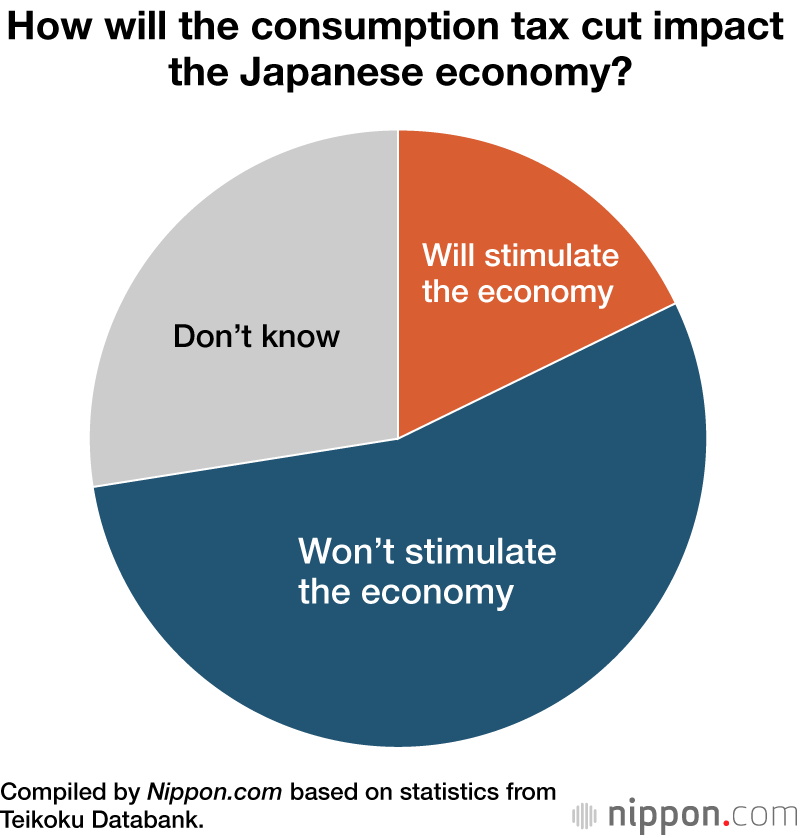
While some of the companies surveyed expressed optimism that the tax cut would give households more financial leeway and encourage spending on non-food items, there was also caution with one food manufacturer saying that even if the tax is reduced, it will not sufficiently be reflected in retail prices amid soaring material and transportation costs. Moreover, since the tax cut is limited to food and beverages and because restoring the tax rate to 8% after two years could prompt consumers to rein in spending, many believe that the benefits will be limited in their reach.
Asked about the impact of the consumption tax cut on their sales, 76.9% of the responding companies said they expected no change, far exceeding those that expected an increase (7.9%) or a decrease (3.1%). Among all companies that made a forecast, the average projected increase across all industries was just 0.16%.
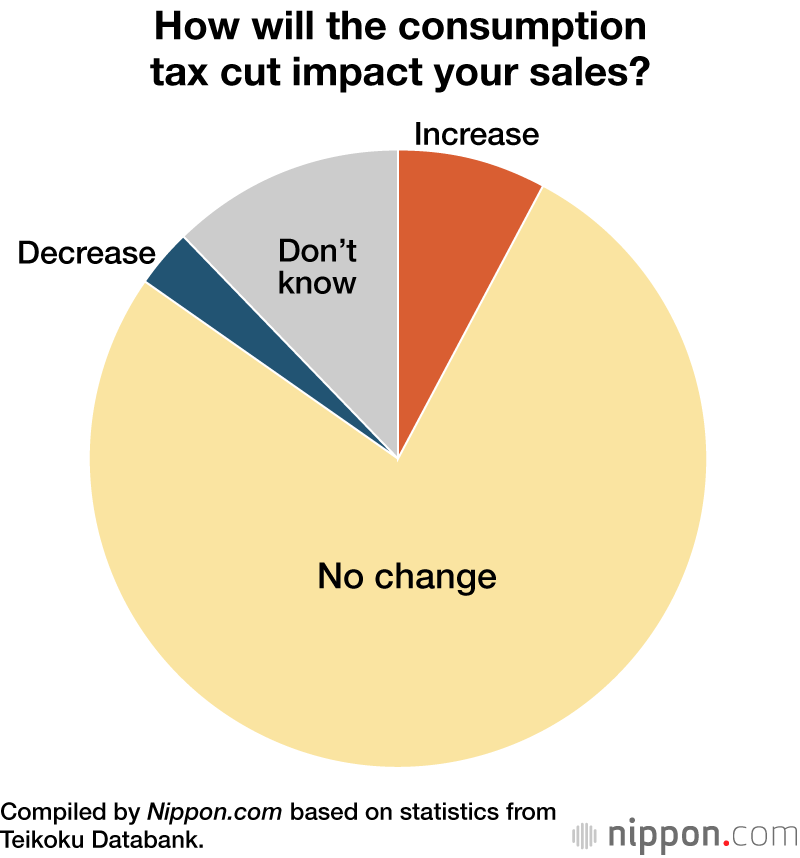
By industry, the highest proportion of companies expecting an increase in sales was in food and beverage retail (40.9%), followed by food, beverage, and animal feed manufacturing (29.9%). These companies expect the resulting reduction in food prices to stimulate consumption and boost sales.
The sectors with the highest proportions of companies expecting a decline in sales, meanwhile, were restaurants (46.9%) and hotels and other accommodation (18.4%). This reflects concerns that demand could shift from eating out to eating at home if the consumption tax rate on dine-in meals is left unchanged at 10%, widening the price gap with food for home consumption following the tax cut.
Data Sources
- Data from survey on companies’ views on the food consumption tax cut (Japanese) by Teikoku Databank
(Translated from Japanese. Banner image © Pixta.)