A Downward Trend: Vertical Writing Usage Waning in Japan
Culture Education Language- English
- 日本語
- 简体字
- 繁體字
- Français
- Español
- العربية
- Русский
A Generational Shift
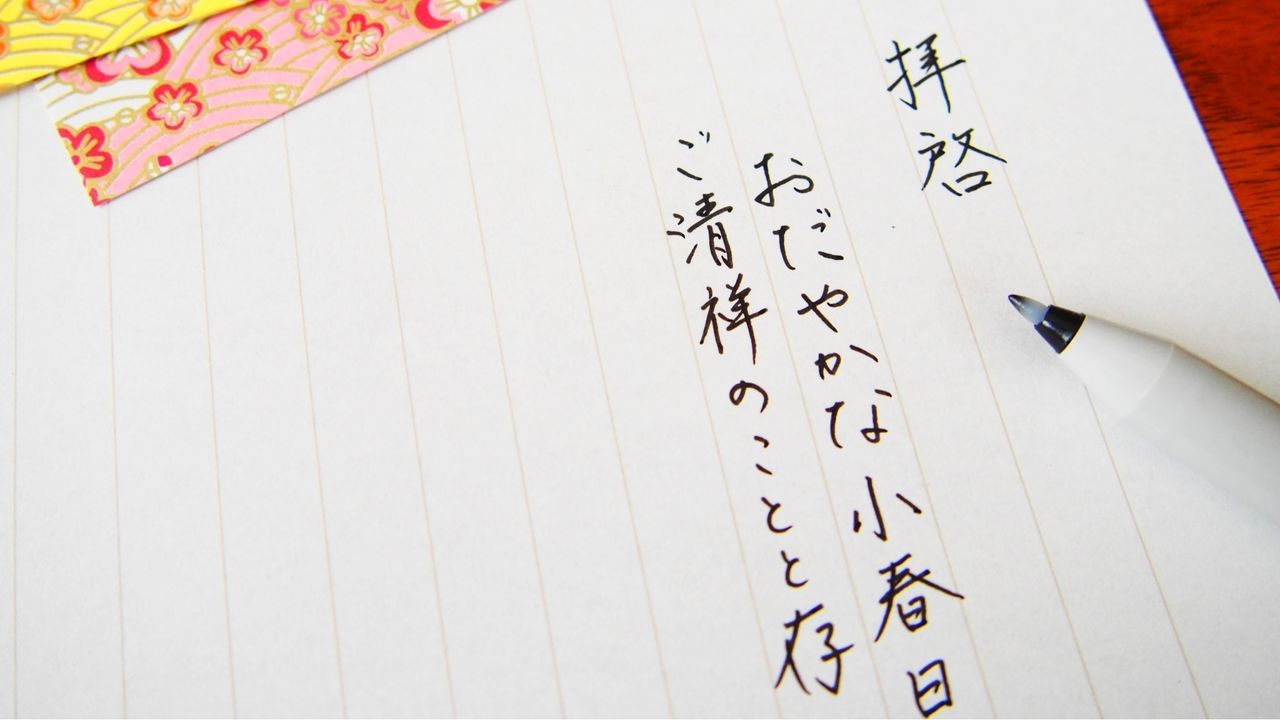
Japanese is traditionally written in vertical columns, as seen, for example, in printed books and newspapers. In this format, known as tategaki, lines of text run from top to bottom and are read sequentially from right to left. However, the digital shift has made horizontal text much more common, making vertical writing increasingly unfamiliar to younger generations.
According to a public opinion survey on the Japanese language, conducted by the Agency for Cultural Affairs in early 2026, 67.3% of respondents indicated that they either “often” or “sometimes” have the opportunity to read and write tategaki. However, 31.7% answered that they do so “not often” or “never.”
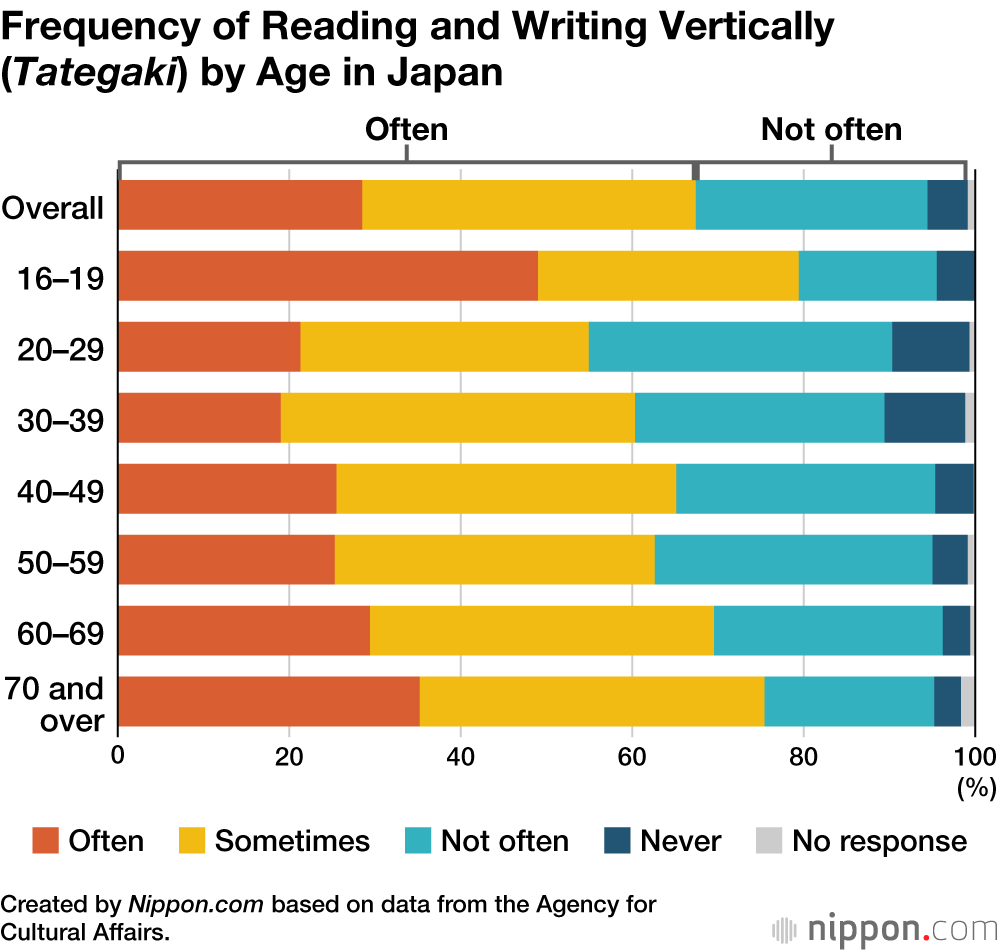
By age group, those who had the greatest exposure to vertical writing were people aged 16 to 19, at 79.5% as a combined total for “often” and “sometimes.” This is thought to be less due to personal preferences, than because the vertical text appears in the textbooks they are reading in academic settings. Among respondents in their twenties, the rate dropped sharply to 54.8%, before starting to rise again in line with age.
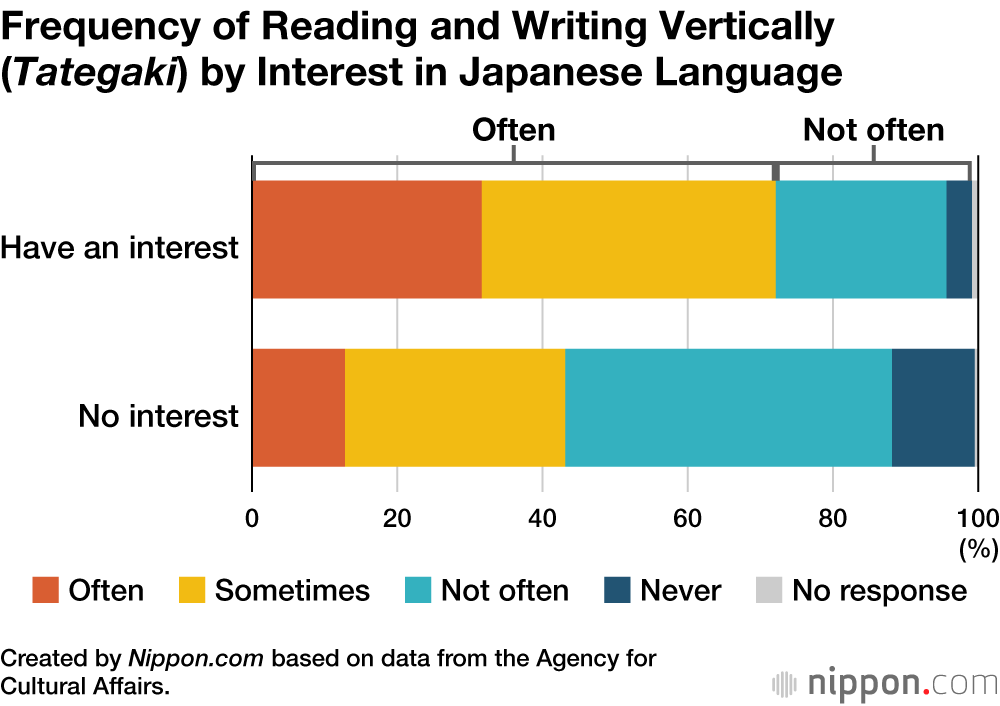
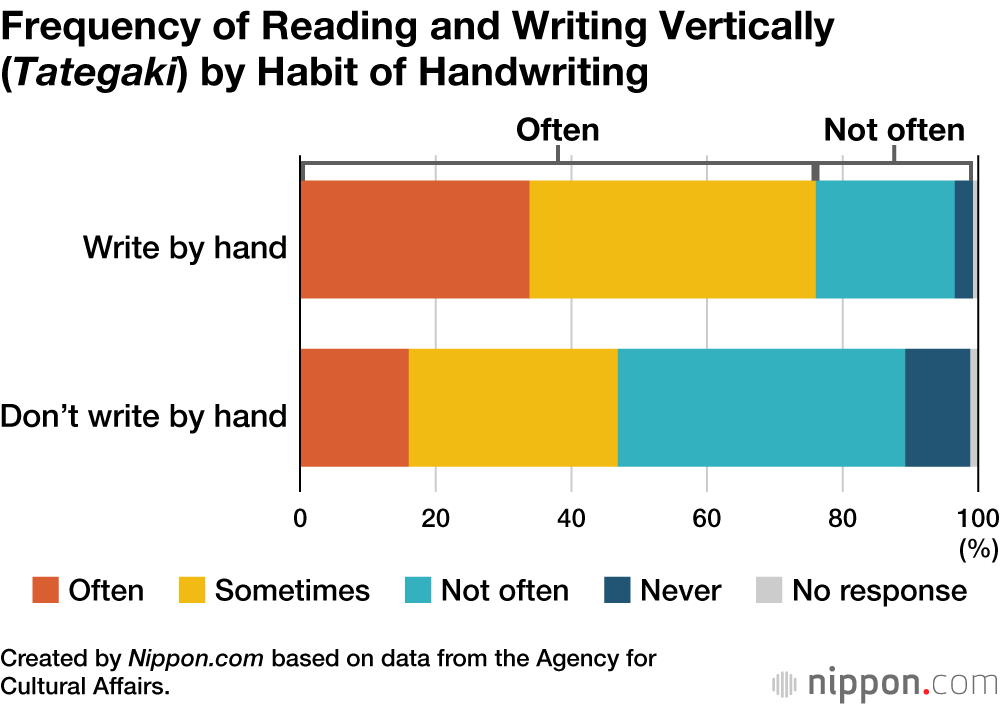
When cross-tabulated with responses to other questions in the survey, more than 70% among those who “have an interest” in Japanese language or “write by hand” in their everyday life stated that they had the opportunity to regularly see and use vertical text, while those who had “no interest” or “don’t write by hand” stayed at around 40%.
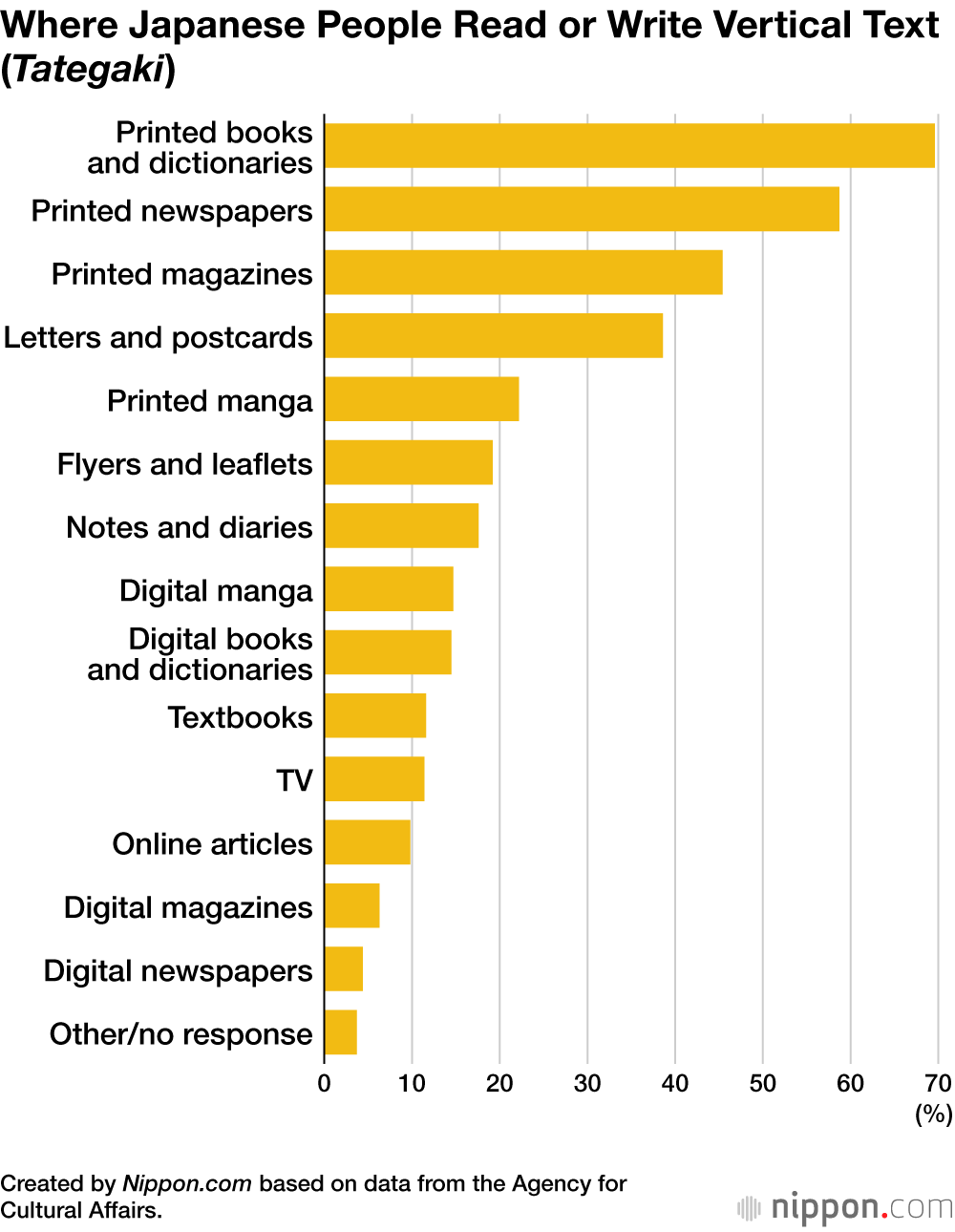
Respondents who indicated they often or sometimes read and write vertically were then asked under which circumstances, with multiple responses possible. At 69.6%, “printed books and dictionaries” was the most common way to encounter tategaki, followed by various other types of paper media, including “printed newspapers” (58.7%) and “printed magazines” (45.5%).
Looking specifically at “printed newspapers,” a significant generation gap was revealed, with only 14.6% of those aged 16 to 19 and 20.0% of those in their twenties reading them, compared to 81.6% for those aged 70 and older. There was a similar trend for “printed magazines.” As the generations continue to change and more people subscribe to digital versions of newspapers and magazines, it seems that the culture of tategaki is set to wane further.
The Japanese language opinion surveys have been conducted annually since 1995. The latest one for fiscal 2025 was sent out by post to 6,000 individuals aged 16 and over and received 3,777 responses.
Data Sources
- Data from survey on the Japanese language (Japanese) from the Agency for Cultural Affairs
(Translated from Japanese. Banner photo © Photo AC.)