The Six-Month Slump? Takaichi’s Support Drops Somewhat in April 2026
Politics- English
- 日本語
- 简体字
- 繁體字
- Français
- Español
- العربية
- Русский
No Major Moves in Monthly Numbers
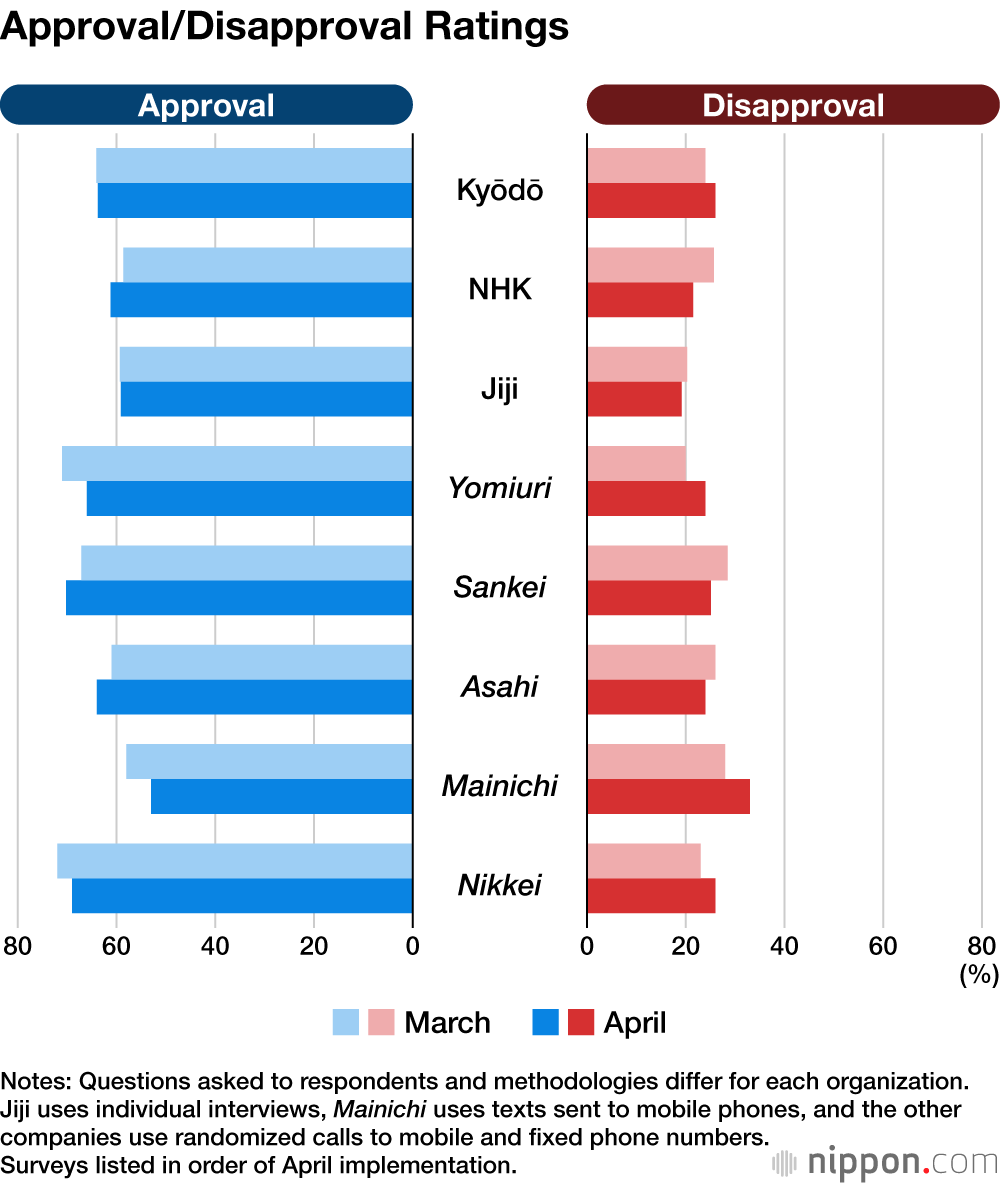
Eight major Japanese media outfits gauge public sentiment with monthly opinion surveys. The results are out for the polls carried out in April, showing mixed results for Prime Minister Takaichi Sanae in terms of her approval ratings.
Compared to the March numbers, both the Mainichi Shimbun and Yomiuri Shimbun polls showed her support figures dropping by 5 percentage points; the Nikkei poll, too, found support at 3 points lower from the previous month. These three firms carried out their March polls after Takaichi’s trip to Washington DC, where she held a summit meeting with US President Donald Trump, thus giving respondents an additional chance to cast a cooler eye on her flashy achievements there in the new polls. In its analysis, the Nikkei noted that “the boost in support she gained from her successful summit may be losing its shine.”
In the surveys being held for the first time following the March summit, Takaichi’s support held steady or climbed slightly. The Sankei Shimbun poll found her support rating climbing by 3.1 points, the Asahi Shimbun poll by 3 points, and the NHK poll by 2.6 points. The polls by the two major wire services, Kyōdō News and Jiji Press, saw minimal change in the numbers of less than a single percentage point; while Asahi noted that the prime minister’s support “remained robust,” Kyōdō described it as “holding steady.”
Staying Strong a Half-Year On
A comparison of Takaichi’s ratings in November 2025, in the first surveys following the launch of her administration, and April 2026, a half-year later, finds that her approval numbers have fallen and her disapproval numbers risen in all eight polls. Overall, her support remains undeniably strong, but negative sentiment does appear to be growing over time.
The most marked drop over this six-month span has been in the Mainichi survey, where Takaichi’s approval has dropped by 12 points, from 65% to 53%. In all other surveys, the drop has been less pronounced, in the 4-point to 6-point range.
Approval Rate Changes, 11/2025 to 4/2026
- Asahi: –5.0 points
- Jiji: –4.7 points
- Kyōdō: –6.1 points
- Mainichi: –12.0 points
- NHK: –4.4 points
- Nikkei: –6.0 points
- Sankei: –5.0 points
- Yomiuri: –6.0 points
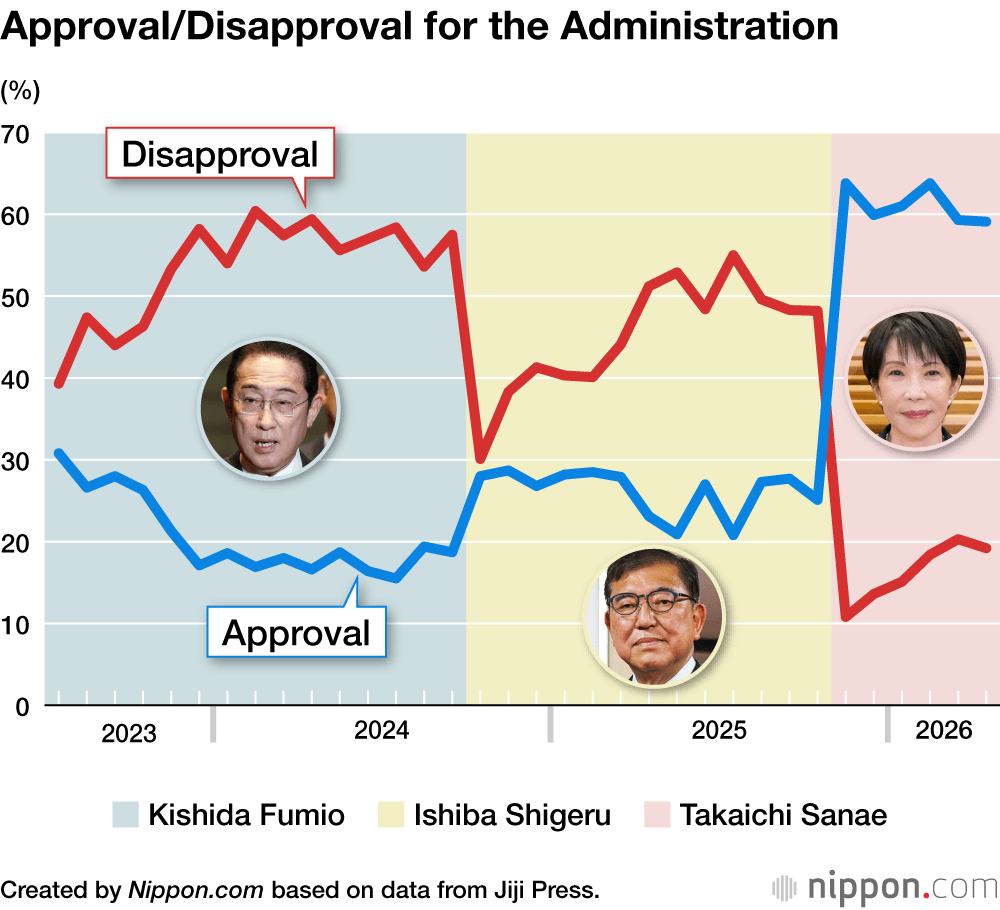
The Jiji Press survey has consistently placed Takaichi’s support rating around 60% since her government took shape last autumn. She received a high mark of 63.8% in November last year, soon after taking office; this fell to 59.9% in December, but recovered to 63.8% in February 2026, the month when the House of Representatives election was held. In the two months since then her support numbers have slipped again, but they are a far cry from the dismal 27.9% support that her predecessor Ishiba Shigeru saw in March 2025, at the same half-year point in his administration.
Rising Prices and Public Unease
In the wake of the US and Israeli attacks on Iran, the public’s attention has focused primarily on rising energy costs and prices of consumer goods. The Sankei survey asked respondents about skyrocketing fuel prices caused by geopolitical turmoil in the Middle East, finding that fully 52.2% believed the Japanese government was not doing enough about the situation. Nearly 80% of respondents to both the NHK and Yomiuri surveys listed the Iran crisis and rising oil costs as triggers for worries about their pocketbooks; the Nikkei poll, meanwhile, found that the top policy concern among respondents was measures to address rising prices.
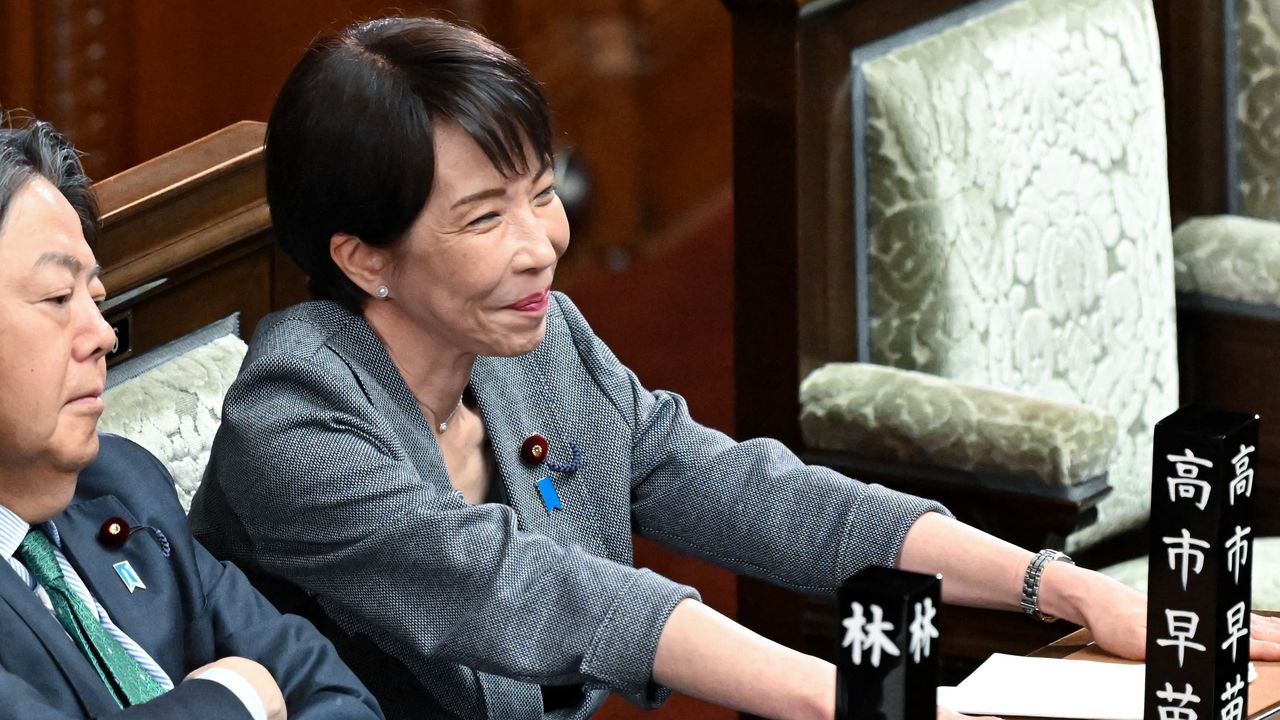
(Originally published in Japanese on May 1, 2026. Banner photo: Prime Minister Takaichi Sanae smiles during Diet proceedings on April 23 to approve a bill launching Japan’s National Intelligence Council. © AFP/Jiji.)