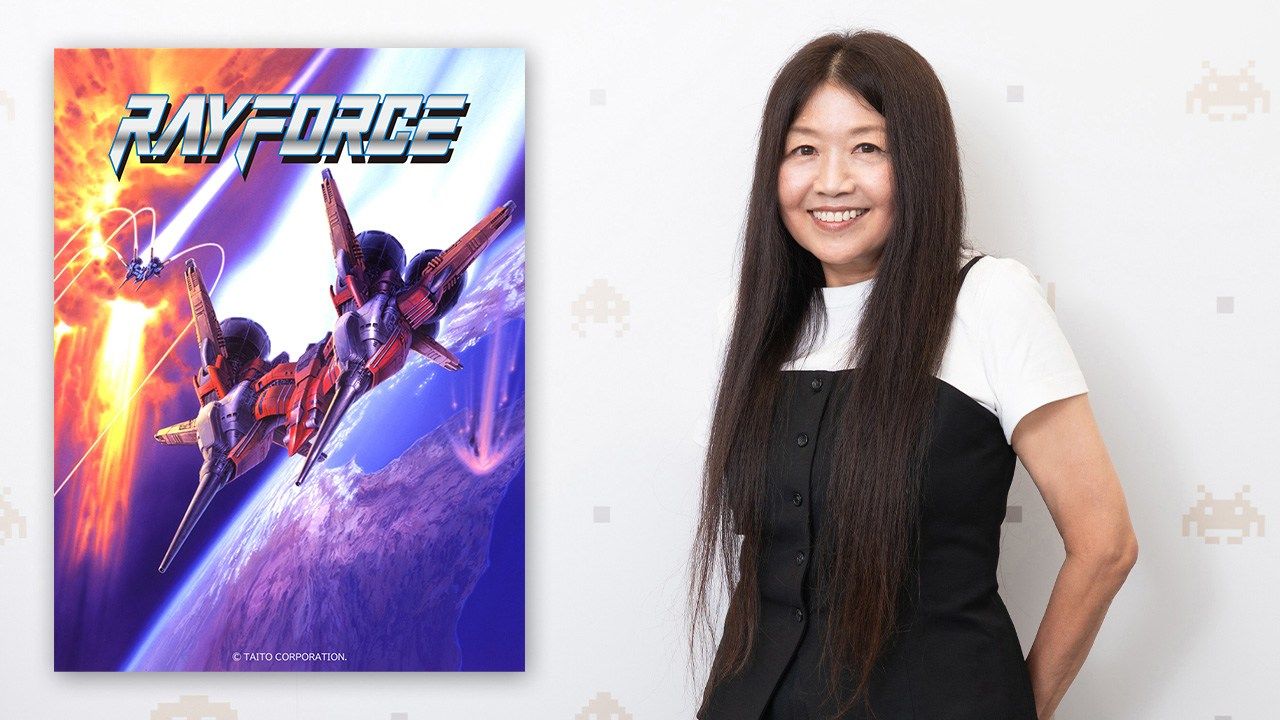
Contemporary Culture Going Global
Video Game Music Legend Tamayo: AI Cannot Replace Human Creators
Music
Kawamoto Tamayo
Video game music composer. Earned her degree from a music university in 1984 and joined game publisher Capcom, where she created soundtracks for numerous titles, including major hits like Ghouls ’n’ Ghosts. In 1990 she moved to Taitō, joining the Zuntata music creation team there and working on music for games like the 1994 RayForce. Left Taitō around a decade later and went freelance, continuing to work on soundtracks for games, anime, films, and stage performances, as well as creating music with the unit Betta Flash.
- English
- 日本語
- 简体字
- 繁體字
- Français
- Español
- العربية
- Русский
A Pioneer of Game Music
Kawamoto Tamayo, best known simply as Tamayo in the world of the music accompanying video games, is one of the composers who helped guide this genre from its earliest days. Her work includes the lively march from the 1986 Commando, the ominous, foreboding atmosphere of the 1988 Ghouls ’n’ Ghosts, and the all-out techno sound of the 1994 RayForce. These are just a few examples of the unforgettable melodies she has created, including collaborative works, that stay with listeners long after they first hear them.

(© Kodera Kei)
After graduating from university, Tamayo joined Capcom, later moving to Taitō before eventually going freelance. She has composed more than 50 soundtracks to date. Her musical activities extend well beyond games, and over the past 40 years she has left a distinctive mark on Japan’s music scene. A true legend, she remains active today and continues to work as a performing and recording musician.
A Musical Encounter
Tamayo’s encounter with music dates back to early childhood. She attended music classes and began learning to play instruments and compose at a young age. While she was exposed to classical music, she says it was not something she listened to by choice. Like many others, she grew up listening to whatever was popular at the time, from Shōwa era (1926–89) pop, folk, and “new music” from the 1970s and 1980s. Then came a decisive encounter.
“What deeply struck a chord with me was Yellow Magic Orchestra. After coming across their songs, for the first time, I actively sought out music on my own, listening obsessively and even going to concerts for the first time.”
As her musical tastes became clearer, she increasingly felt as though she was being forced to attend music classes, and studying classical music became painful. Still, with no other particular strengths to fall back on, she went on to a music university. She planned to leave music behind after graduation, and during her job search she deliberately looked for work outside the music field.
“In my final interview, I was asked, ‘You majored in composition at a music university, right? Aren’t you planning to pursue music professionally?’ For some reason, that question sounded like it came directly from God. I completely forgot how much I had disliked music up until then and ended up replying, rather rudely, ‘I’ll think about it.’”
On her way home, she happened to pick up a recruitment magazine at a bookstore and spotted a job listing from Capcom, which would later become her employer. At the time, she did not even realize it was a game company. For Tamayo, this was truly a fateful day.
Game Music as Unfamiliar Culture
In 1984, Tamayo joined Capcom and took part in creating the music for arcade games such as SonSon and Pirate Ship Higemaru. At the time, she felt unsure whether she was capable of writing music that would suit games aimed at a broad general audience.
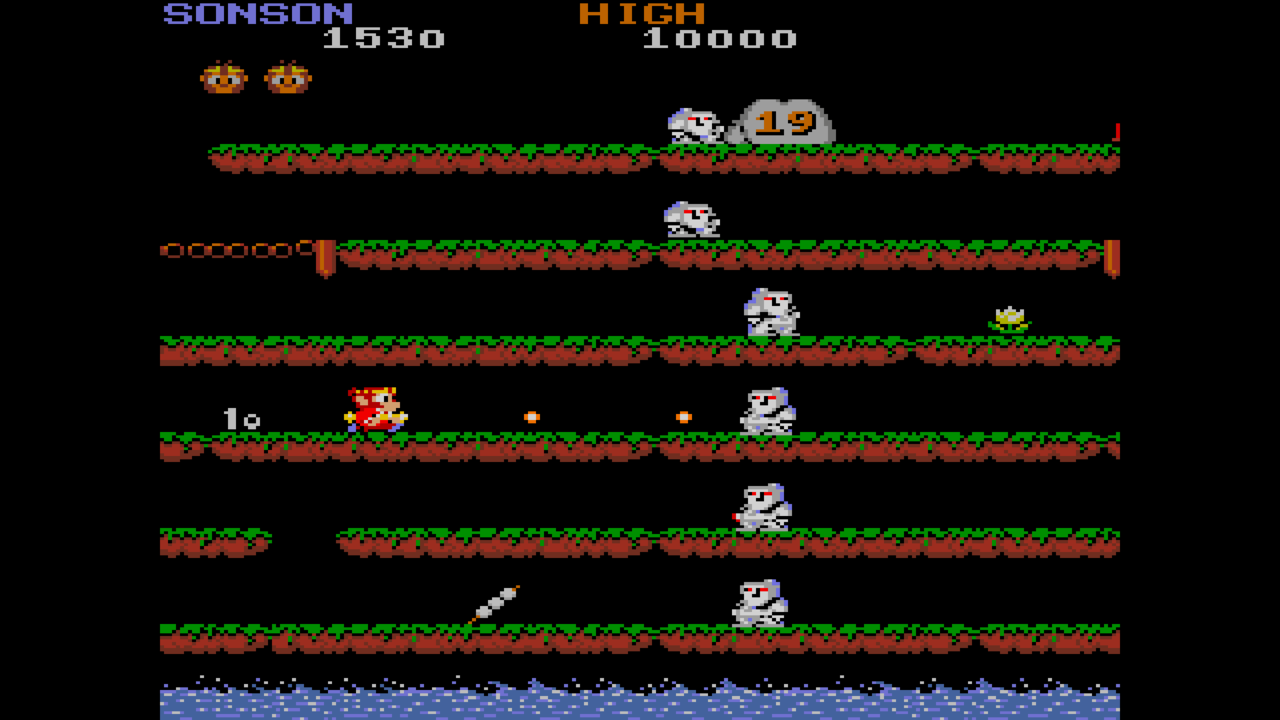
A game scene from SonSon (1984). (© Capcom)
“Back when I was a student,” recalls Tamayo, “I had some opportunities to let people hear my compositions. But those people were fellow musicians. In other words, they were people who shared the same specialized knowledge of music and could understand things implicitly.”
At a game company, however, the people evaluating her work were game designers, visual artists, illustrators, and engineers with no formal training in music.
“Their comments were extremely blunt. I kept wondering whether I could really create music that would satisfy them. It was the first time in my life that I found myself facing such a formidable wall.”
At first, all the proposals she came up with were rejected, and she eventually arrived at a “throw everything at the wall” approach, composing dozens of tracks to see what might stick and accepting one rejection after another. Through that process, Tamayo learned the importance of prioritizing the game’s story. To do so, she had to take cues from concept art and visual designs that expressed the world and atmosphere of the work in visual terms. Yet in many cases, by the time music was commissioned, the only information she was given about the story amounted to little more than a brief memo.
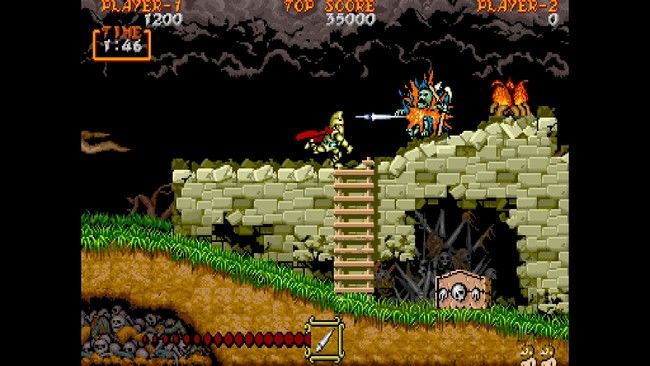
Ghouls ’n’ Ghosts (1988). (© Capcom)
“When that happens, I just go for it and make up a story that feels like it will really build excitement,” she says with a laugh. “Then I create the music based on that kind of hidden backstory.”
There were also times when she was asked to compose music before a story even existed, with only a vague sense of the mood conveyed by the planners.
“For example, they might say something like, ‘Somewhere between Asia and Europe.’ Around that time, I happened to see a Turkish town on television and thought it might be useful as reference, so I went there. I traveled around places like Cappadocia and drew inspiration from what I saw to create the music. When I later saw the finished game’s visuals, they thankfully happened to match the scenery I had visited,” she laughs.
Reaching that point, of course, took countless rounds of trial and error.
“Persistence really does pay off. After doing this for many years, I can now reliably create what I’m aiming for. When people tell me that they can sense a story in my music, or that vivid scenes come to mind as they listen, it makes me genuinely happy. Being told that my work has a distinctive outlook is encouraging as well.”
The Turning Point: RayForce
A major turning point came in 1990. Tamayo moved to Taitō and began working as a member of its in-house music team, Zuntata. The work that brought her widespread attention at Taitō was RayForce, released in 1994 to great acclaim and commercial success.
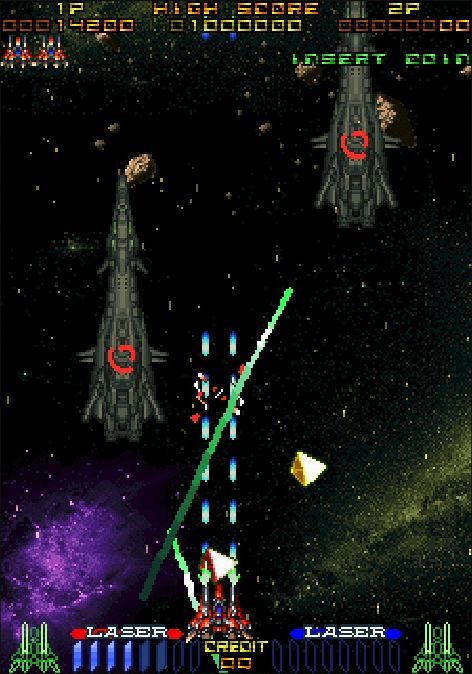
RayForce (1994). (© Taitō Corporation)
“The music for Stage 1, ‘Penetration,’ has a special place in my heart. Up until then, my approach to composition had been very inward-looking. I was focused entirely on creating music that felt original and unlike anything else, and on pursuing sounds that satisfied me personally.”
What her boss asked for, however, was “a catchy melody.”
“I struggled with what ‘catchy’ really meant. I had never seriously thought about melody lines before. In the end, I decided to treat RayForce as a message I wanted to deliver to the audience through music. ‘Penetration’ became the key track in that process, and I changed the way I composed because of it. From that point on, everything I made was no longer self-indulgent. I started composing with the intention of conveying something to others.”
The “Penetration” stage from RayForce, with music from the Zuntata team. (© Taitō Corporation)
More Important Than Technology
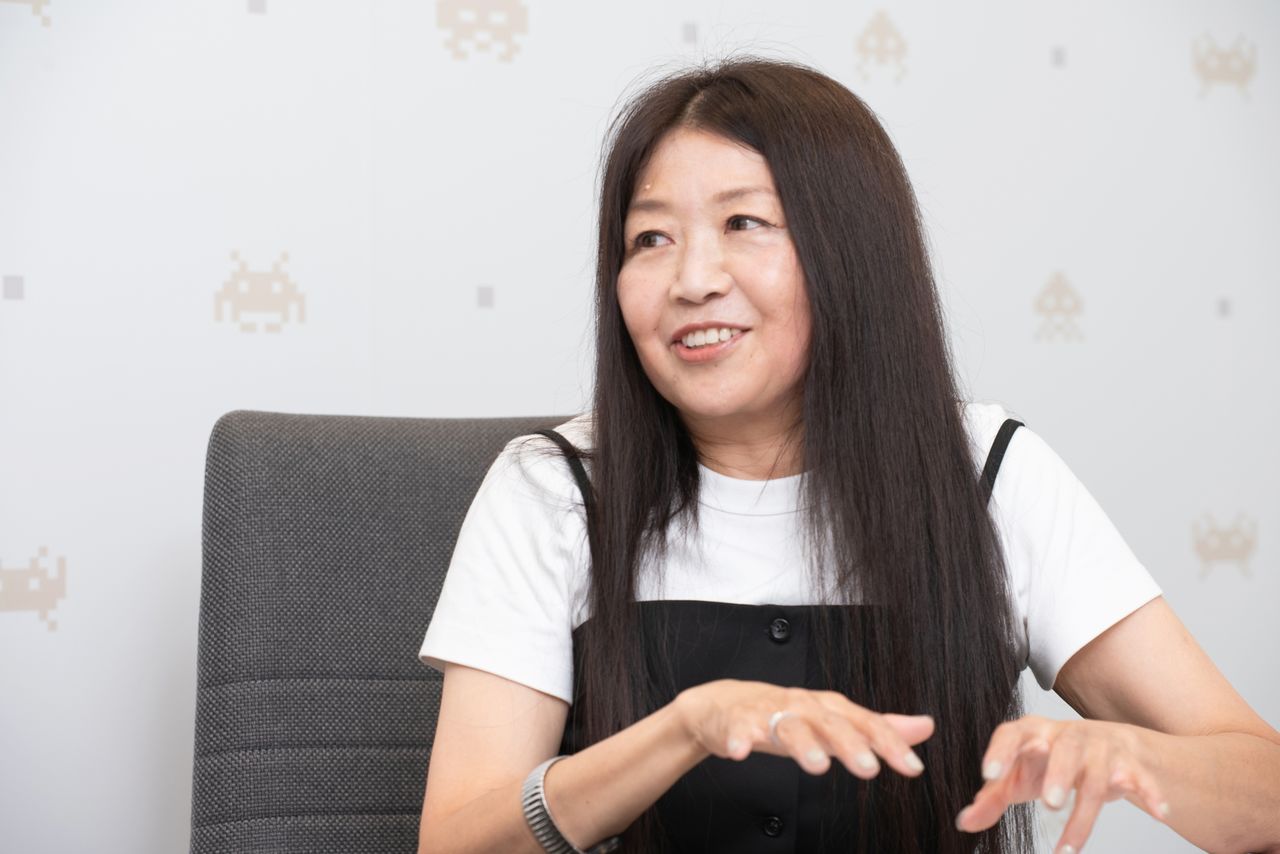
The audio sources used in game music have advanced dramatically. Today’s digital audio landscape offers a wealth of resources and tools to creators, but in the early days of programmable sound generators and limited memory available to games, composers were limited to just three simultaneous tones, and the challenge was how to create the most beautiful harmony possible within that constraint.
(© Kodera Kei)
Those technical limitations, however, also forced composers to rely on creativity, and in that sense, they may have played a role in fostering artistic growth. Now that technology has advanced by leaps and bounds, what does Tamayo think about the next generation of creators?
“Music production software and equipment have become astonishingly convenient. But in the end, what matters most is how the audience takes in the music. The younger generation is allowed to try absolutely anything. Not knowing a lot yet is a good thing. People should take on bold—even reckless—challenges that are only possible when you’re young. Those experiences will definitely pay off when you reach the middle of your career.”
Tamayo herself is still very much on that journey.
“Among younger creators, there are people who can make simple pieces work without using many notes at all. I have a habit of layering lots of sounds, so I really admire that approach. It’s something I aspire to myself.”
From the mid-2000s onward, Tamayo left Taitō and its sound team Zuntata, continuing her career as a freelance musician and taking on new challenges. In addition to composing music for new games, she has worked on soundtracks for films and anime, and remains active in the music unit Betta Flash, which she formed with the singer Cyua.
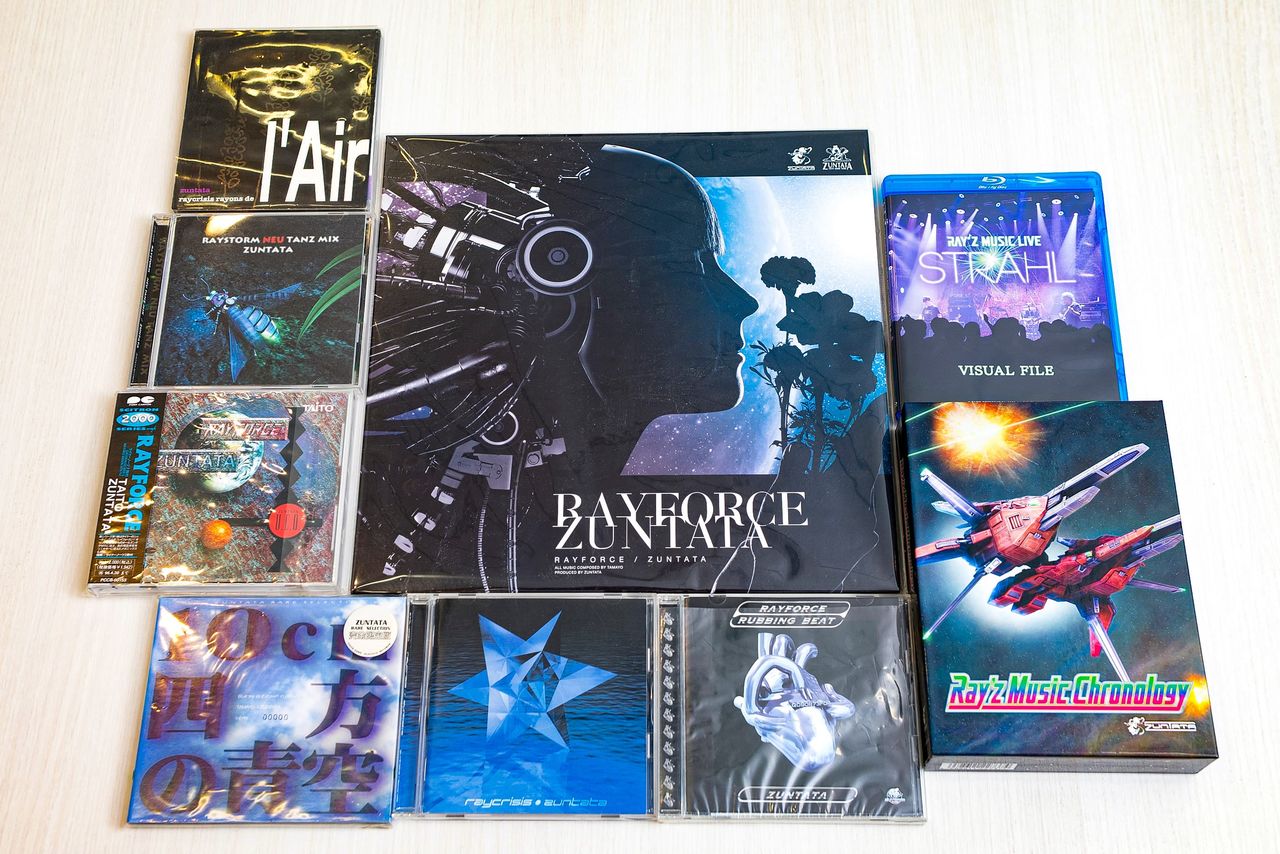
Taitō’s music production division, Zuntata, has released numerous game-derived tracks via CD, DVD, and music-distribution services. (© Taitō Corporation)
As a tireless seeker of new possibilities, how does she view the latest technologies powered by AI?
“It may be useful when the goal is to cut costs or save time. But no matter how much AI can compose music, I believe that what art ultimately requires is the human element. People are not just listening to the music itself. They’re also listening to the soul of the person who created it, and that is why it can move them to tears, or joy, sparking an empathetic response of a sort. For me, the act of making music is as much fun as playing a game. So the idea of having that part taken over by AI feels like such a waste.”
For young people who aspire to become game music composers someday, she offers this message of encouragement.
“Creating music means laying bare your own experiences. That’s why it‘s so important to develop yourself as a human being. The ability to read people’s hearts really matters. If you’re not good at dealing with others face to face, then read stories. But real people don’t always behave like characters in a story. There’s no choice but to experience setbacks and overcome them again and again. It’s better to go through not only happy moments, but also plenty of sadness and hardship. After that, the music tools will take care of the rest,” she says with a laugh.
In the still relatively short history of video games, Tamayo has been a trailblazer for much of its course. The many striking melodies she has etched into the memories of fans are a precious legacy that only a handful of composers have ever been able to achieve. One can only hope that she will continue to lead us into dream worlds with new titles in the years to come. Once again, wrapped in her music, we will set out once more on a heroic journey into the world of games.
(Originally published in Spanish. Reporting and text by Txabi Alastruey. This article was prepared with the cooperation of Taitō/Zuntata. Banner photo courtesy Taitō; © Kodera Kei.)