Learning and Loving the Japanese Language
Making a Splash: Kanji with the Water Radical (氵)
Language Culture- English
- 日本語
- 简体字
- 繁體字
- Français
- Español
- العربية
- Русский
Three Droplets
First graders in Japan learn 水, the kanji meaning “water,” among the basic group of 80 with which they kick off their study of characters. When appearing as a radical in other characters, it most commonly appears on the left in its abbreviated form 氵 called sanzui, or literally “three water” from its resemblance to three water droplets.
There are many common kanji with the 氵 radical, and meanings closely related to water. For that reason, while this article provides a broad selection of the most common characters with clear watery connections, it is not comprehensive. Before starting to look at the 氵 kanji, however, there are a couple of “water” characters using the complete character 水 instead that are worth remembering. These are 氷 (kōri), meaning “ice,” and 泉 (izumi), meaning “spring,” which is also the sen in 温泉 (onsen) or “hot spring.” (Note the appearance of the sanzui radical also in the first character, on, meaning “warm.”)
Water-Related Places and More
Watery locations make up one group, beginning with pond (池), lake (湖), marsh (沼), and waterfall (滝). Saltwater places include sea (海), bay (湾), and offshore or the open sea (沖), while there are also land areas beside the sea: harbor or port (港) and beach (浜).
Among nouns using 氵, some connected with the sea include waves (波) and tides (潮). The kanji 漁, meaning fishing, is associated with the fishing industry and people who do so for a living, rather than the leisure activity, which instead is written as 釣り(tsuri). The character 湯 is used for warm or hot water; note that 水 implies cold water, so a hot bath or kettle is full of 湯 and not 水. A related kanji is steam (汽), while 湿 means “moisture,” as seen in compounds like 湿度 (humidity). There is also liquid (液) and individual liquids like sweat (汗) and tears (涙) from the body, and oil (油), found in words like petroleum (石油) and soy sauce (醤油).
Among the kanji commonly seen in verbs are to swim (泳), bathe (浴), sink (沈), and drown (溺); 浴びる or “to bathe” is used in phrases like 風呂を浴びる (furo o abiru), “to take a bath.” Others are to wash (洗), pour (注), flow (流), leak (漏), and cry (泣). Essential characters associated with adjectives are deep (深) and shallow (浅).
Water 1
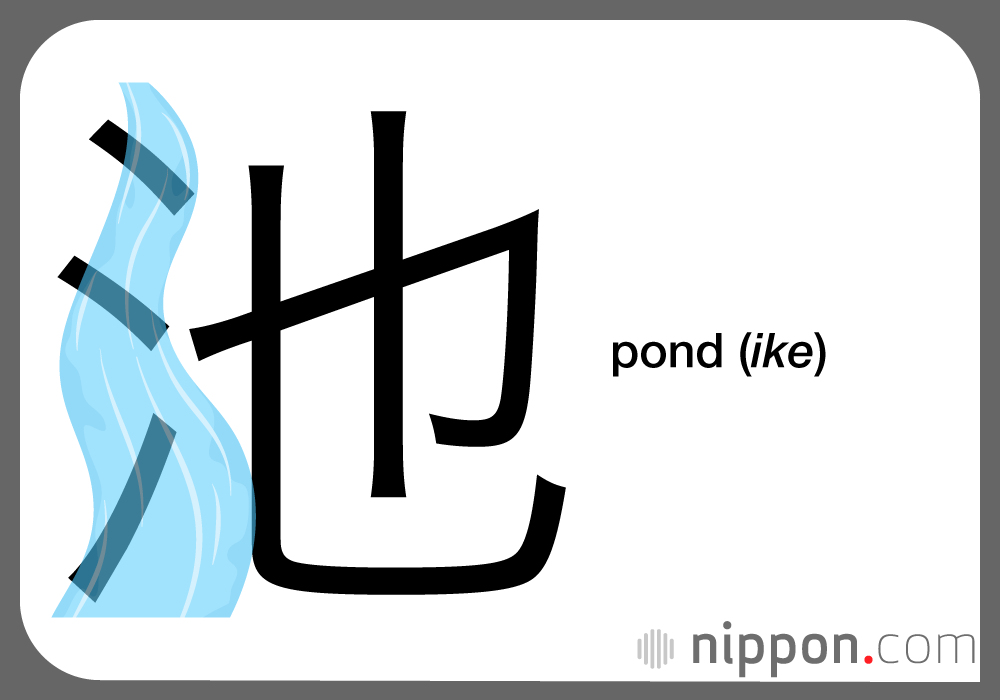
| 池 | pond (ike) |
| 電池: battery (denchi) | |
| 湖 | lake (mizuumi) |
| 沼 | marsh (numa) |
| 滝 | waterfall (taki) |
| 海 | sea, ocean (umi) |
| 湾 | bay (wan) |
| 沖 | offshore, open sea (oki) |
| 港 | harbor, port (minato) |
| 浜 | beach (hama) |
Water II
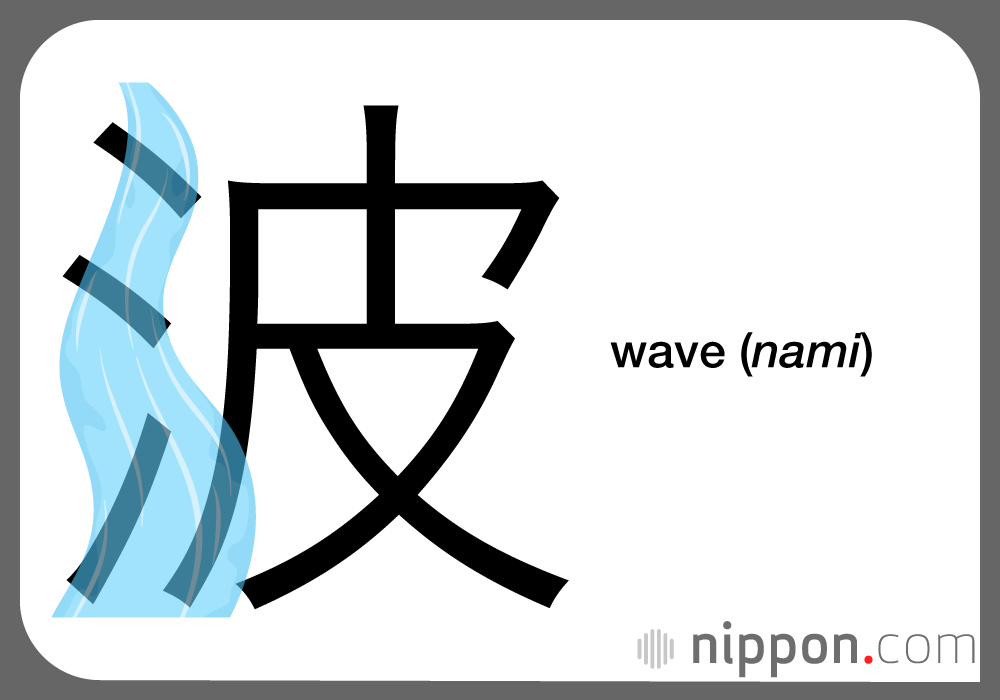
| 波 | wave (nami) |
| 潮 | tide (shio) |
| 漁 | fishing (ryō); less common as single kanji |
| 漁業: fishing industry (gyogyō) | |
| 湯 | hot water (yu) |
| 汽 | means “steam”; rare as single kanji |
| 蒸気: steam (jōki); 汽車: steam locomotive (kisha) | |
| 湿 | means “moisture”; rare as single kanji |
| 湿度: humidity (shitsudo); 湿気: moisture (shikke) | |
| 液 | liquid (eki); less common as single kanji |
| 液体: liquid (ekitai) | |
| 汗 | sweat (ase) |
| 涙 | tears (namida) |
| 油 | oil (abura) |
| 石油: petroleum (sekiyu); 醤油: soy sauce (shōyu) |
Water III
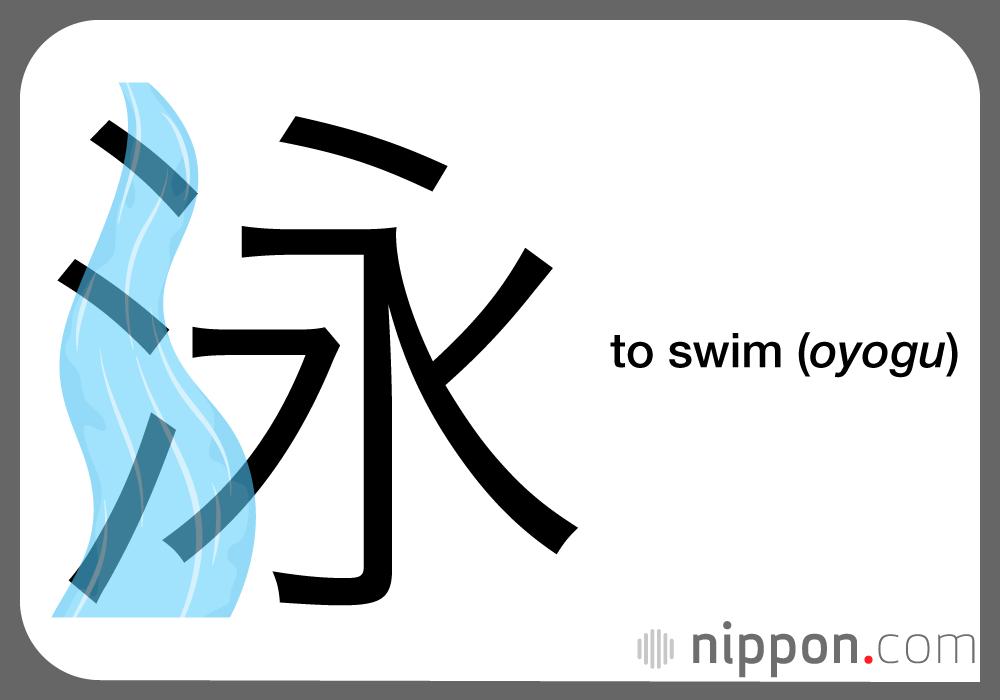
| 泳 | 泳ぐ: to swim (oyogu) |
| 浴 | 浴びる: to bathe (abiru) |
| 沈 | 沈む: to sink (shizumu) |
| 溺 | 溺れる: to drown (oboreru); note that in Japanese this verb can mean “to sink below the surface of the water,” rather than a drowning death |
| 洗 | 洗う: to wash (arau) |
| 洗濯: laundry (sentaku) | |
| 注 | 注ぐ: to pour (sosogu) |
| 注意: attention, caution (chūi) | |
| 流 | 流れる: to flow (nagareru) |
| 流行: fashion, popularity (ryūkō) | |
| 漏 | 漏れる: to leak (moreru) |
| 泣 | 泣く: to cry (naku) |
| 深 | 深い: deep (fukai) |
| 浅 | 浅い: shallow (asai) |
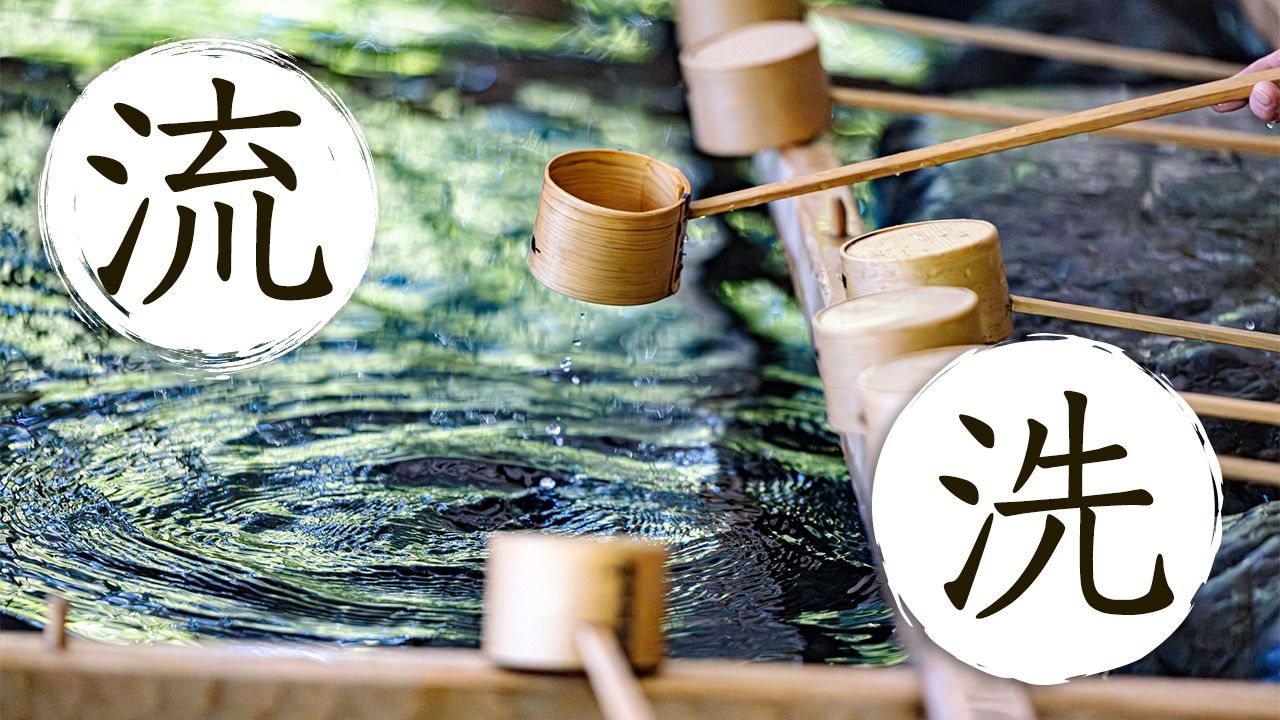
(Originally written in English. Banner photo: Visitors to Shintō shrines ritually purify themselves by washing their hands and rinsing their mouths before worship. © Pixta.)