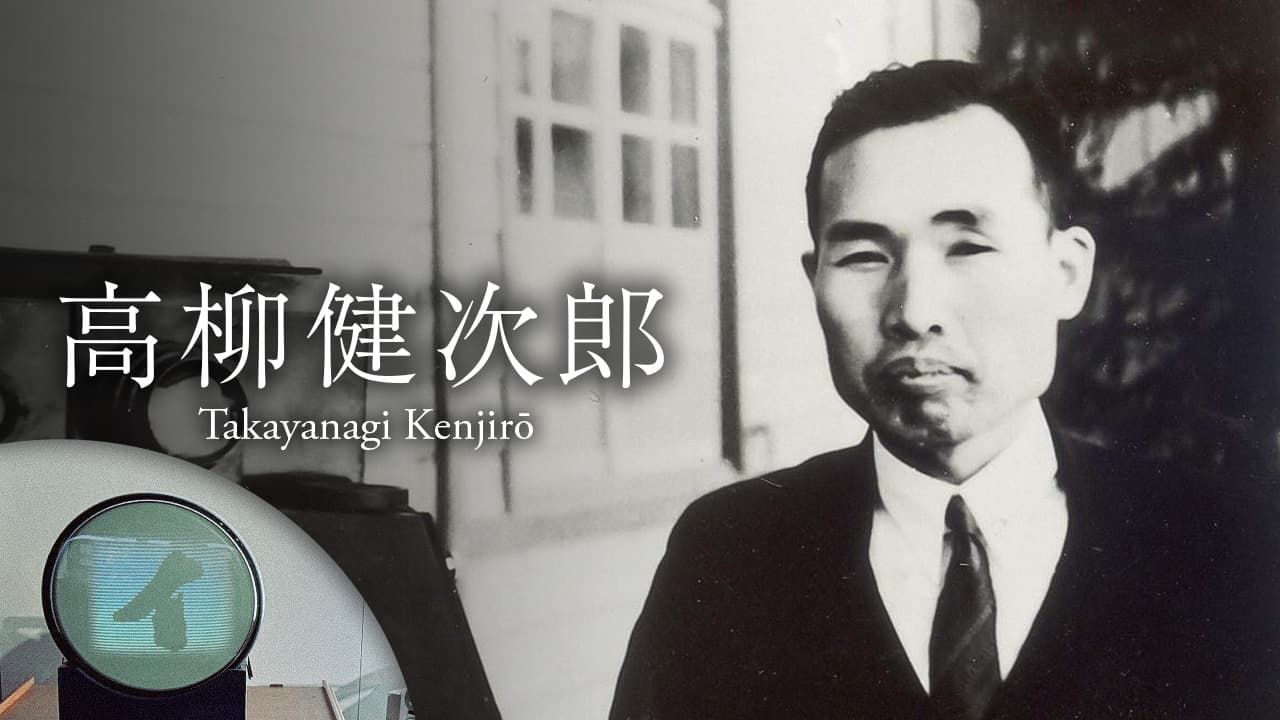
Takayanagi Kenjirō: Pioneering Engineer and “Japan’s Father of Television”
Science Technology- English
- 日本語
- 简体字
- 繁體字
- Français
- Español
- العربية
- Русский
A Defining Technology
In the early decades of the twentieth century, researchers in the West and elsewhere were feverishly chasing the dream of moving pictures delivered over the air. Japanese scientist Takayanagi Kenjirō (1899–1990) was among the throng racing to discover technologies to broadcast and receive televised images. In December 26, 1926, he succeeded in creating the world’s first practical electronic television, using it to reproduce an image of the Japanese phonetic katakana character イ (i). This and later breakthroughs helped usher in one of the defining inventions of the age and paved the way for modern display systems, establishing Takayanagi’s legacy in Japan as the “father of television.”
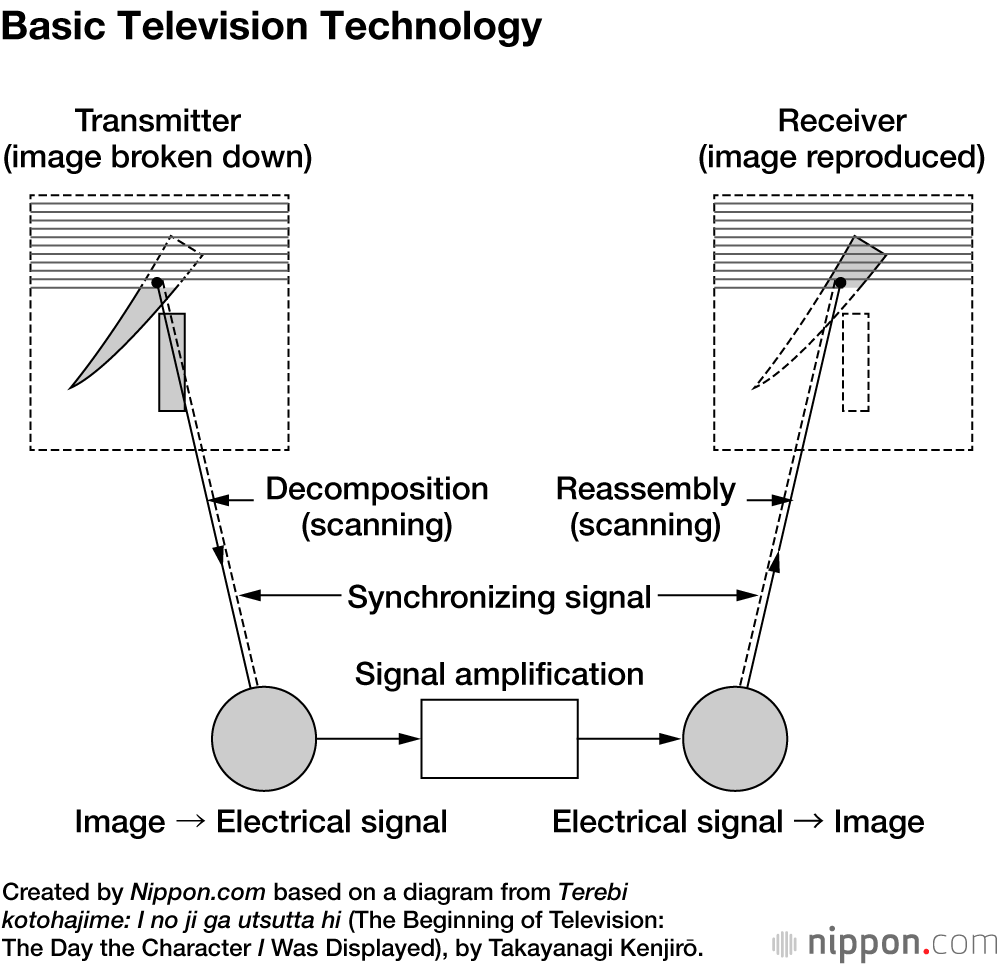
A recording device breaks an image into horizontal lines of tiny dots (pixels), which are converted into electrical signals and transmitted. A receiver converts the signal back into images, reassembling the image with an electron beam that creates those same horizontal lines as it illuminates the pixels across a screen. Motion is reproduced by refreshing this display at a rate of 25–30 frames per second—although this rate is now moving toward 50–60 frames per second as technology advances.
Electronic Scanning
Takayanagi, who in 1926 was a 27-year-old assistant professor at Hamamatsu Higher Technical School (today the Faculty of Engineering at Shizuoka University), made his breakthrough on the heels of Scottish inventor John Logie Baird, who in October 1925 successfully transmitted a recognizable moving image of a human face. Unlike Takayanagi’s electronic receiver, Baird had utilized a Nipkow disk, a specialized device created by the German inventor Paul Gottlieb Nipkow, to mechanically scan and reproduce his image. Holes in the rotating disk broke the subject into 30 lines that a photoelectric cell converted into an electrical signal. These were received and reassembled onto a screen using a synchronized Nipkow disk and a flickering light.
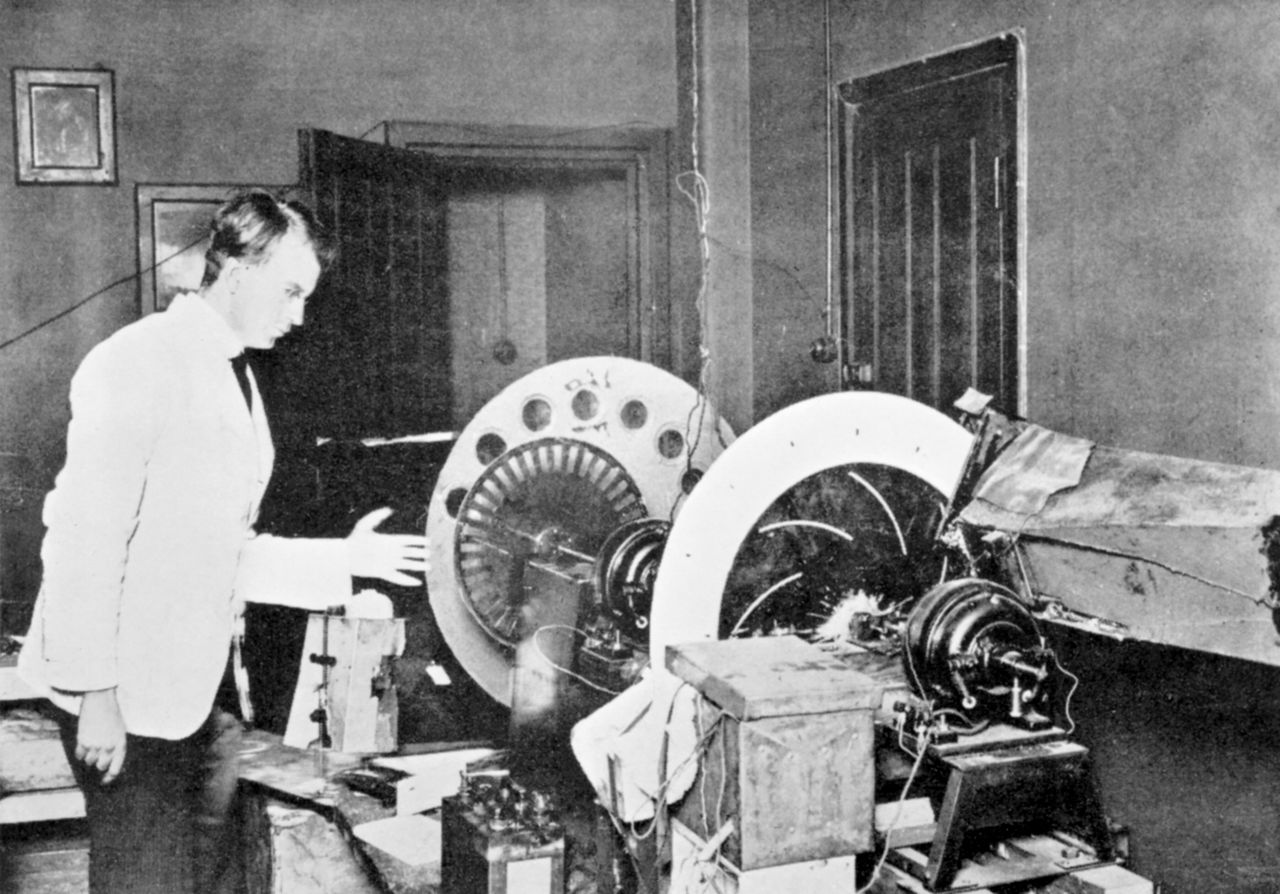
Baird demonstrates his original television model. (© Science Photo Library via Reuters Connect)
When Takayanagi started his research in 1923, he judged mechanical methods, which were the focus of leading researchers of the day, to have fundamental limitations. He chose instead to pursue an electronic approach based on the potential of cathode ray tubes to transmit and reproduce images.
A cathode ray tube, also known as a Braun tube after its German creator Karl Ferdinand Braun, is a device that utilizes vacuum discharge—a phenomenon where electrons flow through an evacuated glass tube under high voltage. The electron beam is directed through magnetic means onto a glass screen that is coated with a phosphor, which emits light when struck by electrons. Takayanagi realized that by manipulating the volume of electrons via voltage changes and deflecting the beam magnetically, he could adjust the brightness at different output points, thereby displaying images on the screen.
Takayanagi grew convinced he was on the right track when he came across a 1911 proposal by the Scottish electrical engineer A. A. Campbell-Swinton of an all-electronic television system using a cathode ray tube. The proposal, which was more of a concept paper, was short on practical research, so Takayanagi had to build the actual technical components for his television system from scratch.
He devised and developed devices like an electron gun that could emit a stable beam of particles and electrodes capable of matching the output of electrons to the brightness of an image. Through trial and error, he completed his first prototype CRT display in October 1925 in collaboration with Tokyo Electric, the predecessor of today’s Toshiba.
The television, although primitive, represented a significant advance in technology. However, it was not yet fully electronic, as Takayanagi had to rely on a mechanical Nipkow disk to scan images. To test his device, he chose the katakana characterイ (i), the first character of the ancient Japanese poem “Iroha uta,” writing it in ink on a sheet of heat-resistant mica as a precaution against the high temperatures produced by the extremely intense lighting needed to compensate for the camera’s low sensitivity.
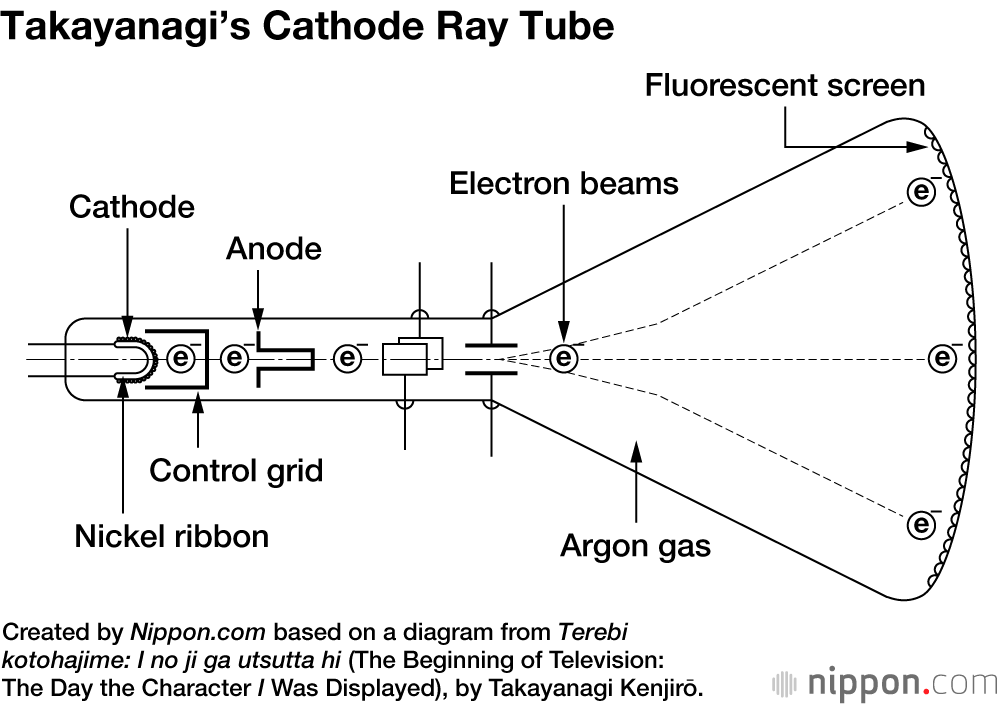
The cathode emits electrons and an anode focuses the beam of particles on the fluorescent screen, illuminating it. The beam is steered by magnetic force, with the brightness controlled by adjusting the voltage.
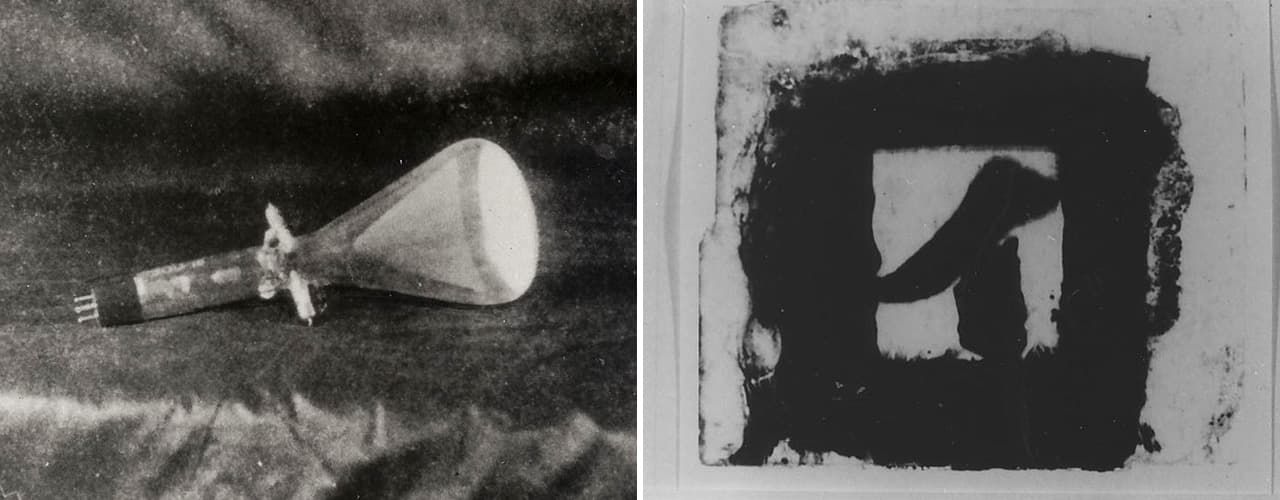
At left, the 13-inch cathode ray tube Takayanagi developed for his television produced 40 scanning lines; at right, the mica plate with the katakana character イ. (Courtesy the Kenjirō Takayanagi Foundation)
Takayanagi found that while the Nipkow disk was able to scan the image, the quality of the picture quickly deteriorated as the rotation speed increased. To address this problem, he matched the synchronized pulses used to control the direction of electrons to the disk’s rotation. This resulted in a stable, undistorted image consisting of 40 scan lines displayed at 14 frames per second.
Takayanagi had taken the first halting steps into a new age: that of the television. Exhilarated by his success, he emerged from the darkroom of his lab and called to his colleagues to witness the character emblazoned on the screen.
In achieving a stable electronic image display on a cathode ray tube, Takayanagi had preceded the pioneering work in the United States by Frank Gray at Bell Laboratories and Philo Farnsworth, both of whom in 1927 succeeded in creating fully electronic systems for both capture and display. However, the momentum of television development at the time was with mechanical systems. Trial broadcasts were in the works in Europe and the United States, and amid these and other developments, Takayanagi struggled to fund his research and faced pressure from colleagues to change the focus of his efforts.
Despite the challenges, Takayanagi held fast to his belief that electronic technology had greater promise for achieving the complex workings and speeds required of television. By 1930, his fortunes were improving. That year he developed a cathode ray tube that was 30 centimeters in diameter, significantly larger than his first model, and 1,000 times brighter. He was also made a full professor, and the Ministry of Education began to fund his research, enabling him to hire new research staff to bolster the size and expertise of his team. His achievements had even drawn the attention of the young Emperor Hirohito, who visited his labs.
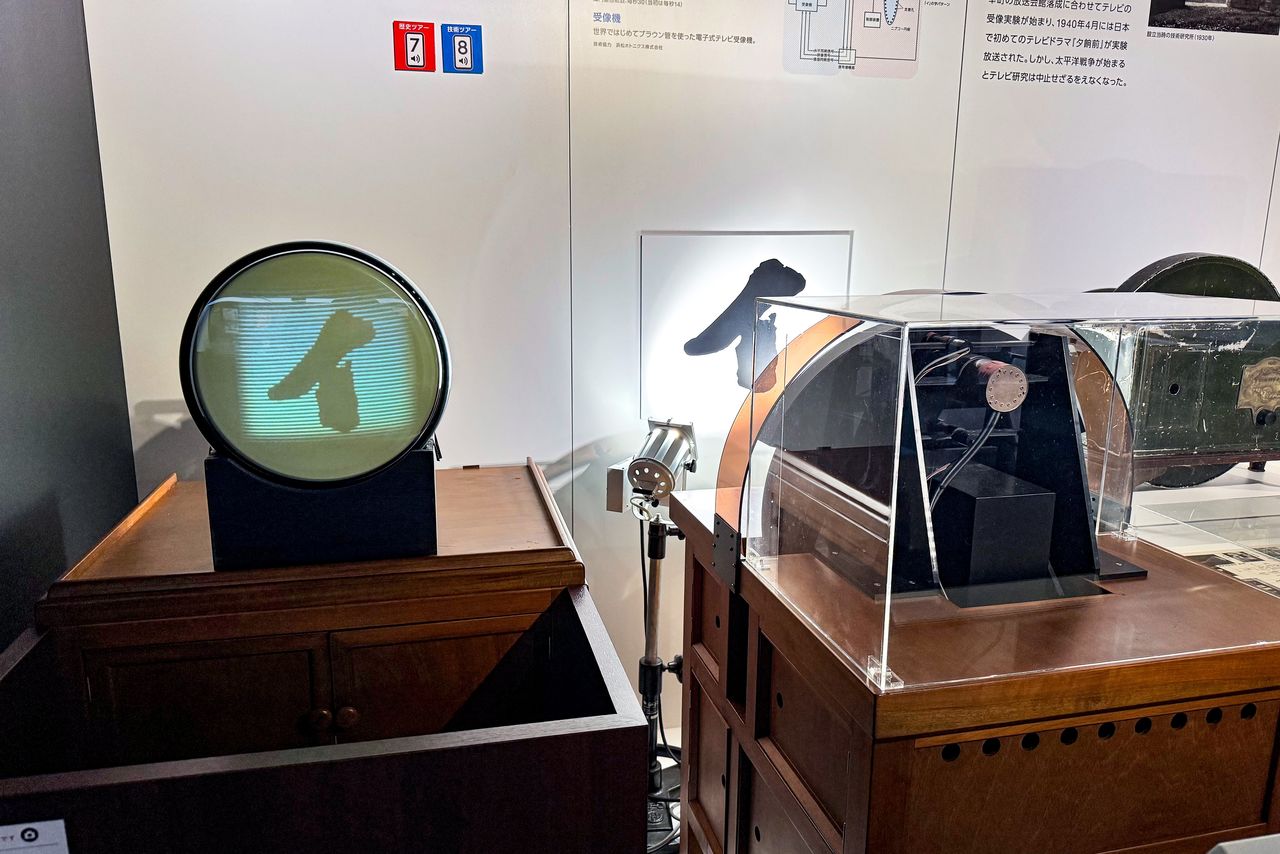
A replica of Takayanagi’s 1926 television, displayed at the NHK Museum of Broadcasting. (© Nippon.com)
The Race Toward All-Electronic Solutions
Takayanagi developed a wide-band amplifier and established methods for storing electrical charges to improve the quality and brightness of images. However, he struggled in his main ambition of creating a fully electronic camera. In late 1933, news reached him of the Russian-born American scientist Vladimir Zworykin’s iconoscope, the world’s first practical electronic camera tube. The invention converted optical images into electrical charges on a special light-sensitive plate. The charges of individual points on the surface were proportional to the brightness of light initially focused on them, and as an electron beam scanned across the plate, the varying charges produced an electrical signal corresponding to the original image.
Zworykin pursued his research largely independently while working at the American industrial giant Westinghouse. In 1930, he moved to the electronics company RCA, where company chief David Sarnoff tapped him to head the television division. RCA had founded the first nationwide radio network, the National Broadcasting Company, and used this to its advantage to invest heavily in developing television.
Takayanagi travelled to the United States in 1934 to meet Zworykin. Although it was the pair’s first meeting, Takayanagi’s reputation preceded him. Since 1927 he had filed Japanese patents for his cathode ray tubes and camera tubes, which had caused Zworykin’s own US patents for his iconoscope and other technologies to be rejected in Japan. Although rivals, the two shared a comradery arising from the common challenges and struggles in their field; they would maintain a lifelong professional relationship.
Returning to Japan, Takayanagi expressed a mixture of joy and sadness at seeing the iconoscope, having earlier envisioned a similar camera tube. Undeterred, he set to work on improving the iconoscope based on his method of storing electrical charges and succeeded in producing an original all-electronic system for both capturing and displaying images. Takayanagi also found that with an electronic camera tube he could increase the number of scanning lines of a cathode ray tube, which were thought to be limited to around 100, to more than 200.
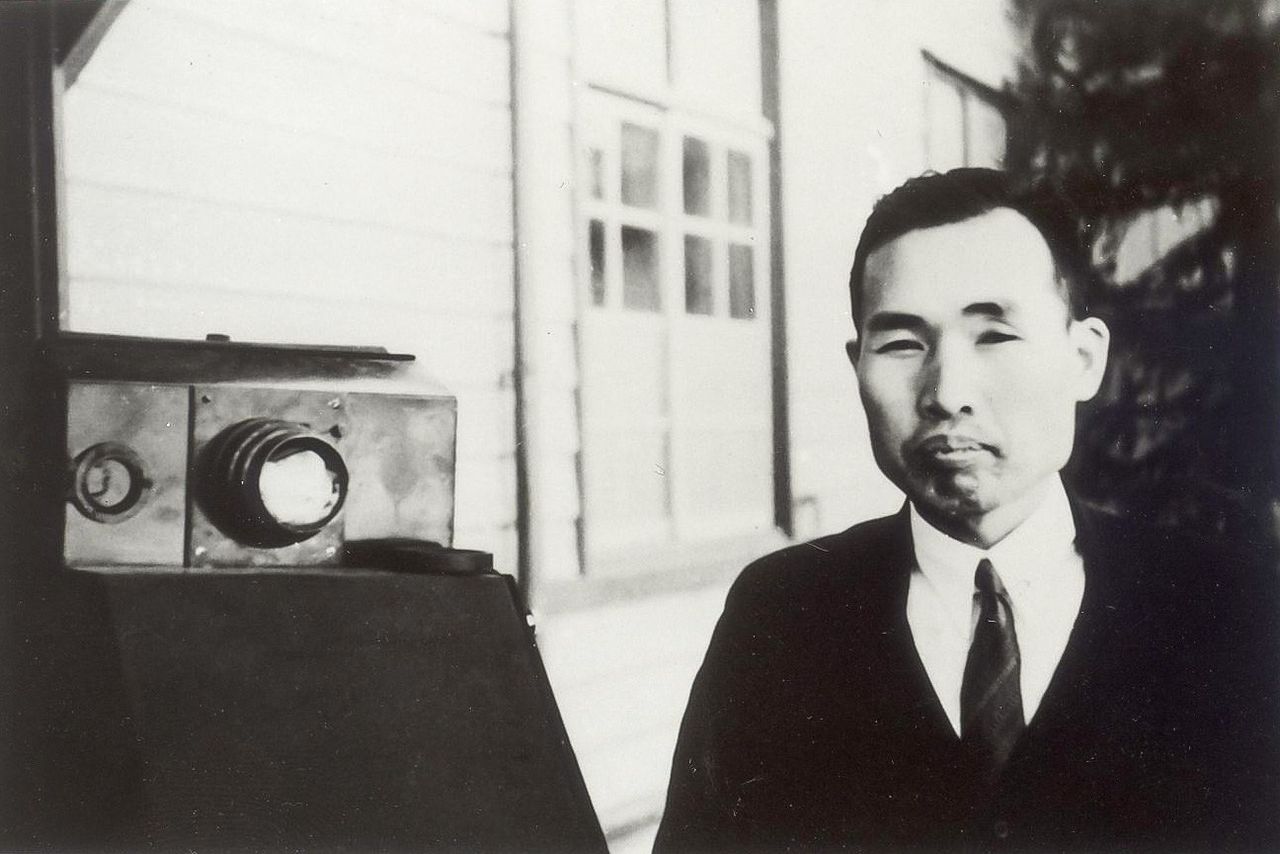
Takayanagi with his improved iconoscope in 1935. (Courtesy the Kenjirō Takayanagi Foundation)
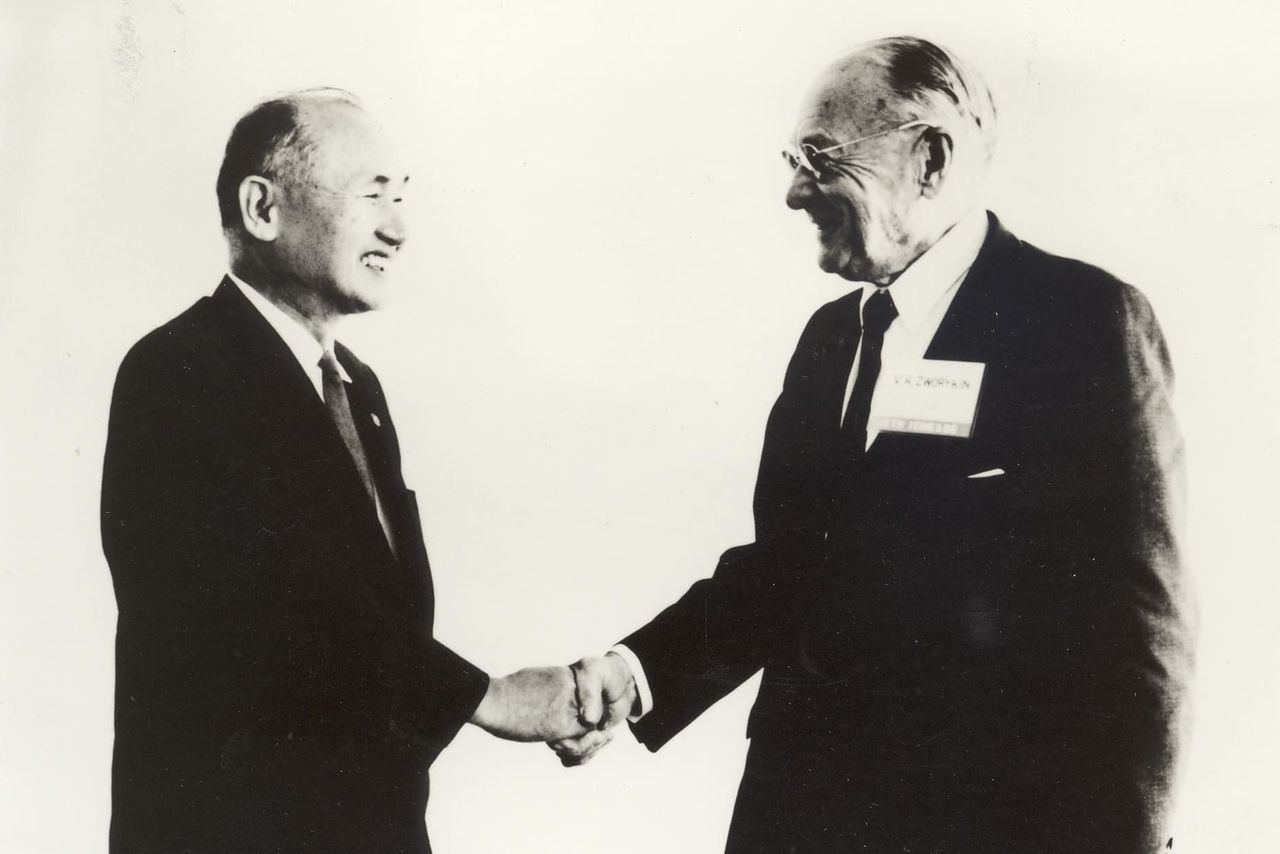 Takayanagi (left) and Zworykin later in life. (Courtesy the Kenjirō Takayanagi Foundation)
War Intervenes
In 1934, Takayanagi also travelled to Europe, aiming to see the state of television technology on the continent and to present his findings to fellow researchers working in the field. Electronic systems were fast on their way to overtaking the previously dominant mechanical methods, with RCA and European companies like Germany’s Telefunken and Britain’s Marconi-EMI were in the process of developing all-electric televisions. Soon after Takayanagi’s visit, in 1936, Germany launched its first fully electronic television broadcasts, followed in the same year by Britain (BBC) and in 1939 by the United States (NBC).
In Japan, national broadcaster NHK had decided to provide television relay broadcasting of the 1940 Olympics slated to be held in Tokyo. As part of this project, Takayanagi was made head of the network’s television research division in 1937. He was joined by his colleagues from his Hamamatsu lab and others, and the team worked feverishly to develop mobile field cameras, broadcasting vehicles, transmission devices, and other necessary equipment, along with building broadcast facilities. NHK conducted its first experimental television broadcast in 1939, successfully transmitting a signal from its Tokyo research laboratory in Setagaya to its newly built Broadcasting Hall, which doubled as the network’s headquarters, in the center of the capital, some 13 kilometers across town. This was followed by public demonstrations held between 1939 and 1940 at department stores in Nihonbashi and elsewhere, which drew large crowds.
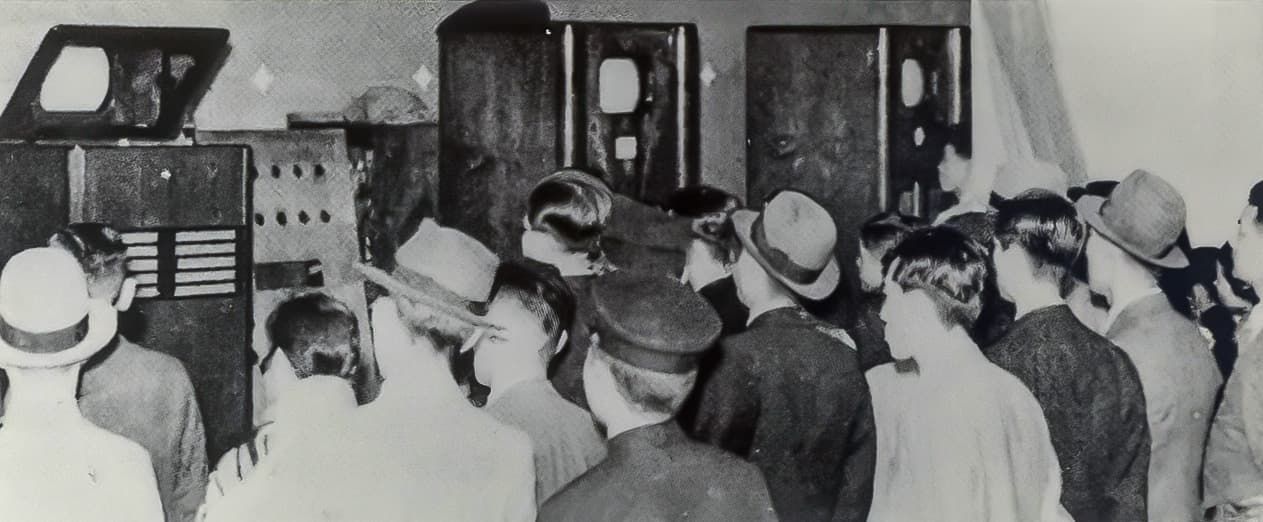
People gather at a public television broadcast demonstration in Tokyo. (Courtesy the Kenjirō Takayanagi Foundation)
The 1940 Tokyo Olympics were never to be, though. The games were cancelled as Japan, waging a war in China, grew more internationally isolated. The television project was shelved, and with the declaration of war against the United States in 1941, Japanese authorities banned the transmission of television signals and even research into the technology. Summoned by the military, Takayanagi spent the war years developing radar and other technologies for the Imperial Navy.
When the war ended, GHQ, the General Headquarters of the Supreme Commander for the Allied Powers, implemented strict controls and bans on research of radio signal and electronics technology and other activities linked to the Japanese military and wartime infrastructure. Takayanagi was excluded from working for public organizations due to his military service, preventing him from returning to NHK or resuming his teaching post. Turning to the private sector, he joined JVC, or Japan Victor Company, in 1946 and devoted himself to establishing a television broadcasting system in Japan.
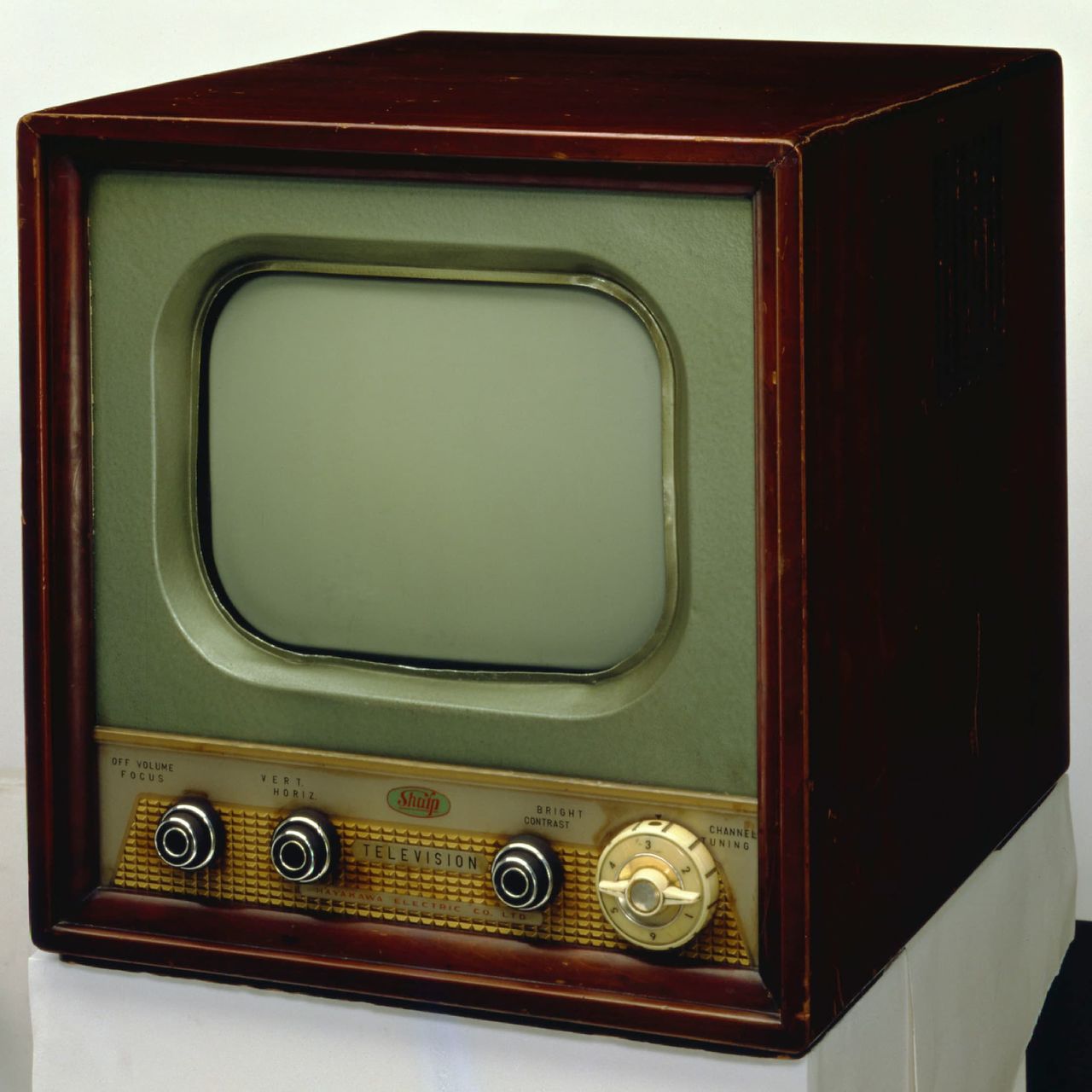
The first mass-produced Japanese television released by Hayakawa Electric (now Sharp) in 1953 utilized standards, such as a 14-inch screen, formulated by Takayanagi and other television researchers. (Courtesy Sharp; via Jiji)
The ban on telecommunication research was short, and NHK and private companies quickly resumed working on new technologies. Takayanagi remained a pivotal figure in the development of Japanese television, working closely with both the private sector and NHK in the lead-up to the first regular broadcasts in 1953 and the launch of color broadcasts in 1960. Along with his research, he worked to bring together experts in the field to exchange ideas, in the process founding the forerunner to the Institute of Image Information and Television Engineers.
Takayanagi went on to become the vice president of JVC, remaining closely involved in research and development throughout his tenure at the company. He contributed to improving television receiver performance and played a role in the spread of home video recorders with the development of the VHS format.
He earned many honors for his pioneering efforts, including recognition by the International Telecommunication Union at the world’s first international festival of television arts and science in Montreux, Switzerland, in 1961, and Japan’s Order of Culture in 1981. But perhaps the greatest is his legacy in Japan as the “father of television.”
A Lifelong Commitment to Innovation
The genesis of Takayanagi’s pursuit of television lies in advice he received early on from Nakamura Kōnosuke, his professor and mentor at the Tokyo Higher Technical School (now the Institute of Science Tokyo). Nakamura, who was head of the school’s electrical engineering department and would later serve as its president, warned his pupils against following trends and urged them instead to pursue the technologies that they saw as vital in the coming decades.
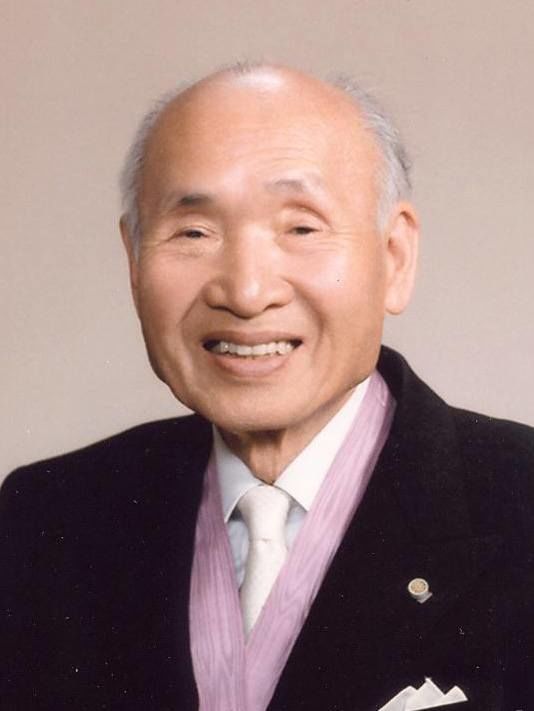
Takayanagi upon receiving the Order of Culture in 1981. He retained an eye for emerging technologies throughout his life, including pointing out in a 1970 lecture the potential of electroluminescence in creating flat panel displays. (Courtesy the Kenjirō Takayanagi Foundation)
Taking Nakamura’s words to heart, upon graduating Takayanagi set to work searching for research themes in the field of telecommunication. While teaching at a technical school in Yokohama, Kanagawa Prefecture, he met with university professors and foreign engineers, studied French and German to read foreign-published technical journals, and even spent a summer training as an electrical engineer aboard an ocean-going steamship. In 1920, the first commercial radio station went on the air in the United States, but Takayanagi kept his vision firmly on the broadcast of visual images as the next great invention.
He set off on his research path even before domestic radio broadcasting launched in Japan in 1925 after coming across an article in a French magazine showing an illustration of a television concept that closely matched his own vision. He was determined not to let Japan fall behind in this emerging field. It was his steadfast belief in the potential of electronic methods that drove him to develop an electronic image display while other researchers focused on mechanical systems.
He kept his eyes on the future throughout his career, including pointing out the limitations of the cathode ray tube displays—the very path he had pioneered—and advocating the need for new electronic display technologies. He contributed to the development of today’s LCD and OLED screens, liquid crystal and organic light-emitting diode displays, by supporting young researchers through his Kenjirō Takayanagi Foundation, which he established and ran with royalties from his patents, urging those following in his footsteps to surpass his own technological achievements.
Takayanagi’s legacy lives on in the foundational technologies of modern life, from 4K and 8K ultra-high-definition imagery to computer and smartphone displays. Exceeding the urging of his professor Nakamura to look decades into the future, Takayanagi’s innovations remain part of the information society a century after his first television triumph.
Referenced Works
- Terebi kotohajime I no ji ga utsutta hi (The Beginning of Television: The Day the Character I Was Displayed), Takayanagi Kenjirō
- Watashi no rirekisho (My Resume), Takayanagi Kenjirō
- I no ji ga utsutta: shōgai saidai no kangeki no shunkan, Takayanagi Kenjirō (Displaying I on the Screen: The Most Emotional Moment in Takayanagi Kenjirō’s Career), FMT archives of the Shinkeiei Kenkyūkai
- “Jōhō tsūshin kijutsu no kī debaisu ni hatten shita denshi eizō hyōshi: Takayanagi Kenjirō ni yoru terebijon kaitakuki no i no ji no Buraun kan denshi eizō hyōshi to sono eikyō” (A Key Device in the Development of Information and Communication Technology: The Impact of Takayanagi Kenjirō’s Pioneering I CRT Display), by Suematsu Yasuharu, in Eizō Jyōho Media Gakkaishi
(Originally published in Japanese. Banner photo courtesy the Kenjirō Takayanagi Foundation.)