
The Sunlight and Moonlight Bodhisattvas at Tōdaiji, Nara
Images Culture History- English
- 日本語
- 简体字
- 繁體字
- Français
- Español
- العربية
- Русский
These two images of the Bodhisattva of Sunlight (Nikkō/Suryaprabha) and Moonlight (Gekkō/Candraprabha) from Nara’s Tōdaiji temple form a representative masterpiece of figurative sculpture made using the sozō technique from the Tenpyō era (729–49).
The sozō technique refers to sculptures formed by building up layers of clay. First, a wooden core is constructed. Straw rope is wound around this inner framework, and clay is then applied in multiple layers. The form is shaped with a spatula, and the surface finished with a fine-grained clay. This method was brought to Japan from the continent around the seventh century, and flourished during the Nara period (710–94) before giving way to wooden sculpture in the Heian period (794–1185). These images are considered to rank among the finest Buddhist sculptures of the Tenpyō era, alongside other sozō works such as the shūkon gōshin statue of a guardian deity, also at Tōdaiji.
The images stand with their hands joined gracefully in prayer before the chest. They were relocated to the Tōdaiji Museum when it opened in 2011; before that, they stood on either side of Fukū Kensaku Kannon, the main image in the Lotus Hall at Tōdaiji. The long, narrow eyes of the main image and its two flanking bodhisattvas are strikingly similar, suggesting they were the work of the same sculptor or workshop.
Although the two images look similar at first glance, there are subtle differences between them. The robes of the Sunlight Bodhisattva are marked with numerous flowing lines, their wave-like patterns expressed with varying intensity, evoking a sense of strength and vitality. In contrast, the Moonlight Bodhisattva’s robe has fewer folds, creating an impression of calm serenity. The contrast between movement and stillness is skillfully rendered, revealing the artistry and skill of the Buddhist sculptor who made the images.
When the images were originally created, their entire surfaces would have been painted in vivid colors. Today, much of that color has worn away, revealing a translucent whiteness that enhances their pure, unadorned beauty.
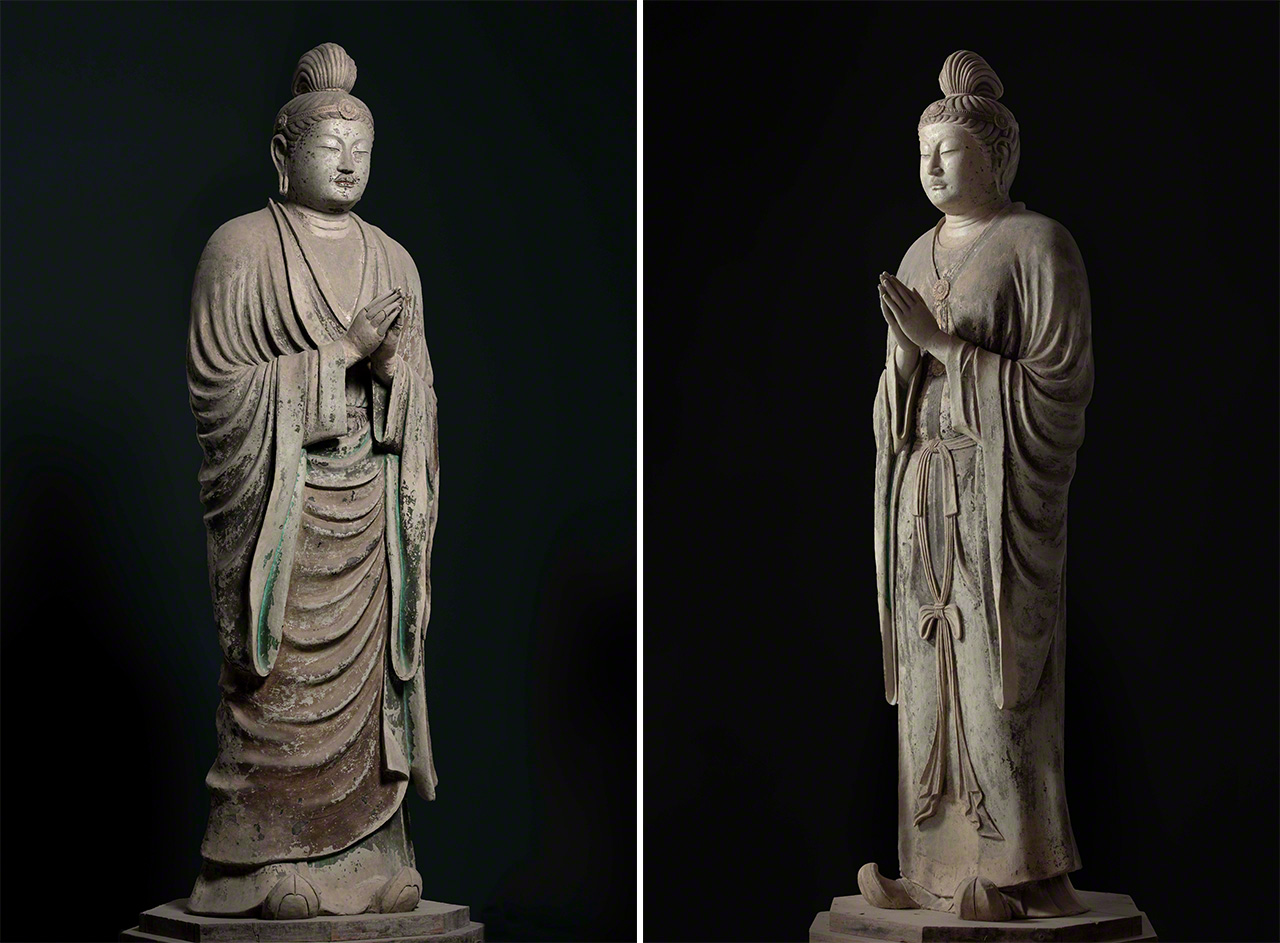
Standing images traditionally said to represent the Sunlight (left) and Moonlight Bodhisattvas. (© Muda Tomohiro)
Bodhisattvas are figures still engaged in their spiritual training toward enlightenment, and are typically depicted barefoot. However, the fact that both these images wear shoes has given rise to a persuasive theory that they do not represent bodhisattvas at all but the deities Bonten (Brahma) and Taishakuten (Indra).
The Sunlight and Moonlight Bodhisattvas are typically attendant figures to Yakushi Nyorai (Bhaiṣajyaguru), the Medicine Buddha. For Kannon Bodhisattva (Avalokiteshvara), Bonten and Taishakuten make more appropriate companions. Since another pair of images of Bonten and Taishakuten (designated National Treasures) also stood in the Lotus Hall at Tōdaiji, it may be that these two became known as the Sunlight and Moonlight Bodhisattvas to avoid confusion.
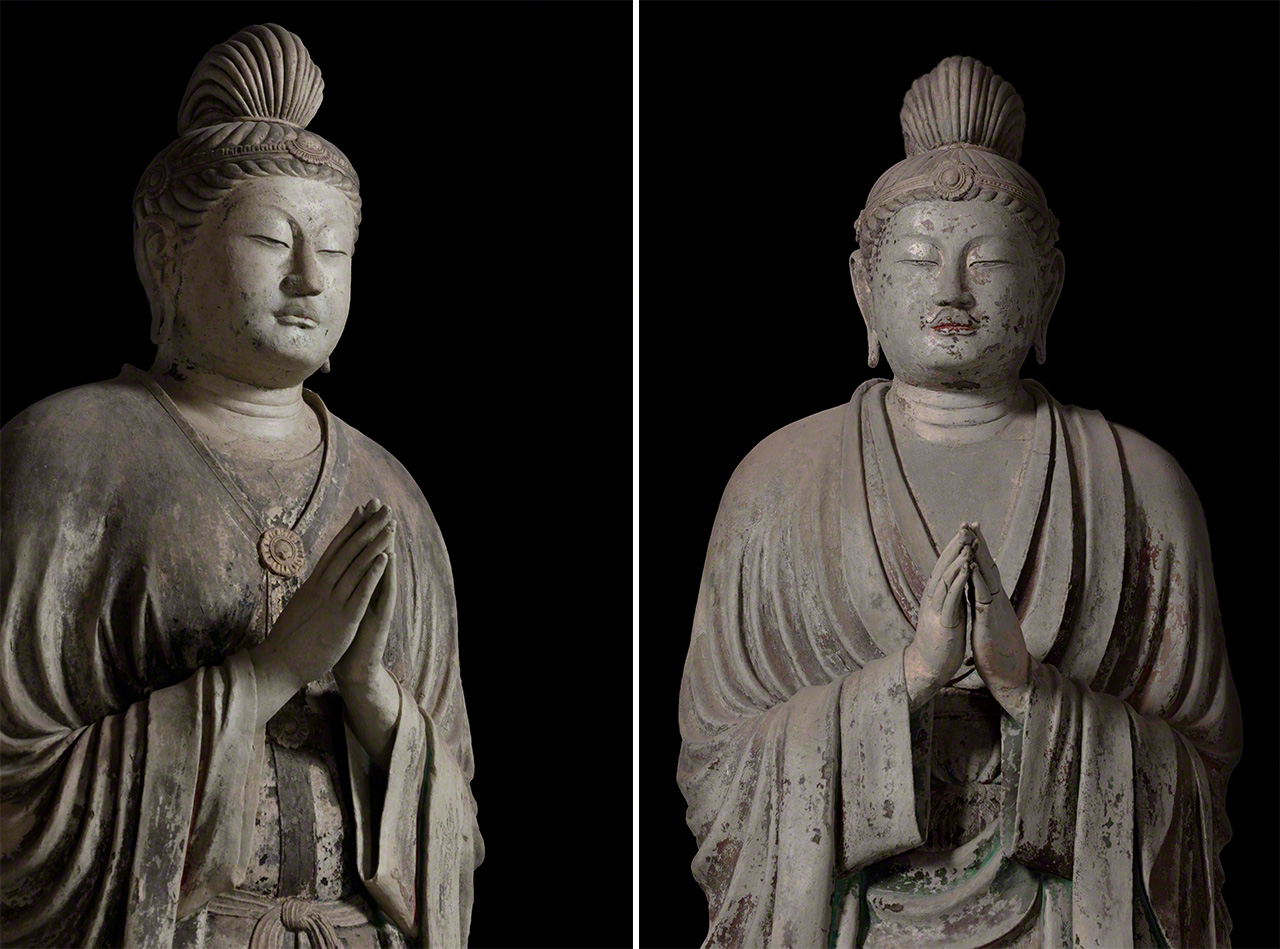
Moonlight (left) and Sunlight Bodhisattvas. (© Muda Tomohiro)
Photographer Muda Tomohiro remembers the distinctive atmosphere when the two images still stood in the Lotus Hall at Tōdaiji: “There were more than ten images crowding this dim hall, with the main image of Fukū Kensaku Kannon in the center. It was overwhelming, like stepping into another world. The main image, resplendent with gold leaf over a black base, was an image of majesty and gravitas, flanked by these two bodhisattvas in pure white, a silent presence like beams of light illuminating the universe.”
Though strongly influenced by Buddhist sculpture brought from Tang China by court emissaries, the expressions of these two images possess an individuality and strength that goes beyond mere imitation. It’s easy to understand why the critic Kamei Katsuichirō praised them so highly in his collection of essays on temples around Nara, Yamato Koji Fūbutsu-shi (Scenes from Ancient Temples of Yamato), where he wrote that “the beauty of their gesture of prayer is unmatched.”
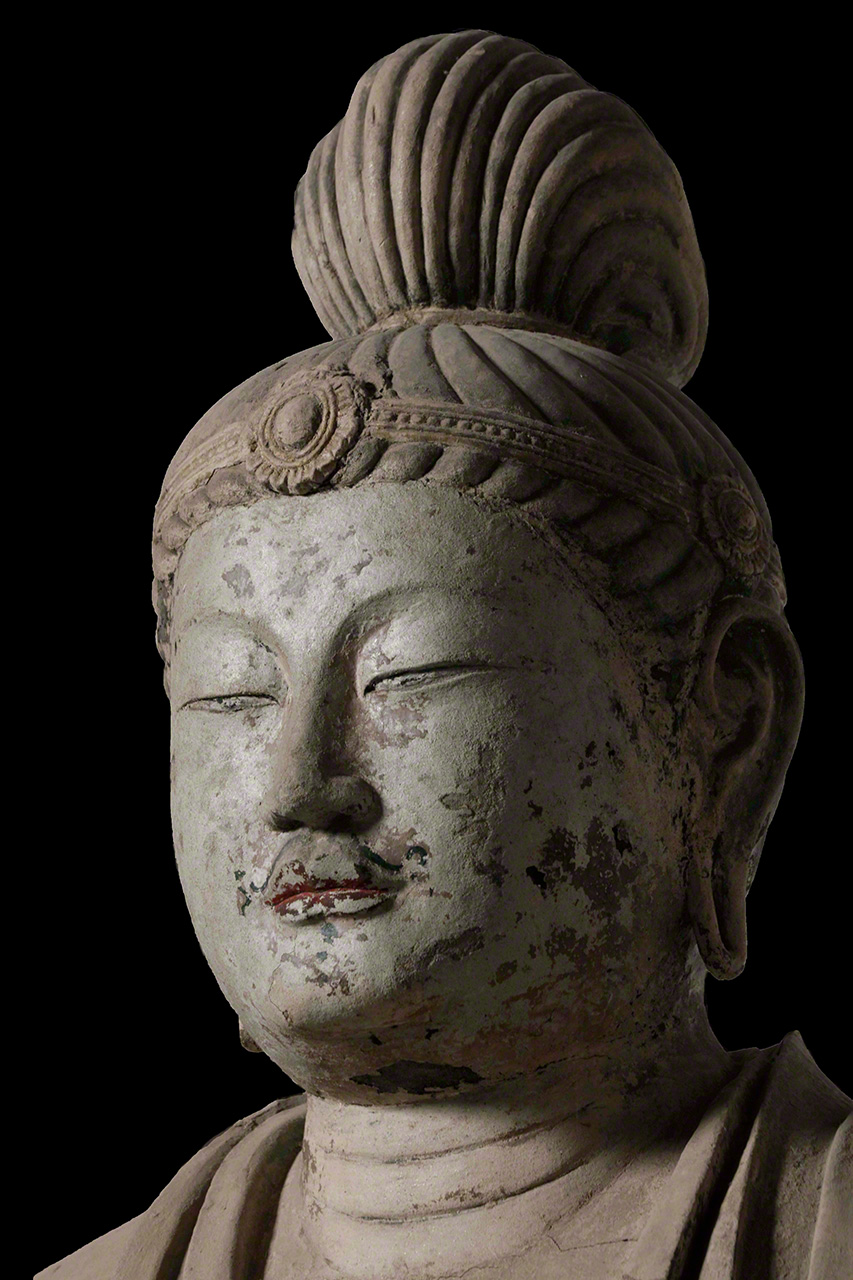
Standing image traditionally believed to represent the Sunlight Bodhisattva. (© Muda Tomohiro)
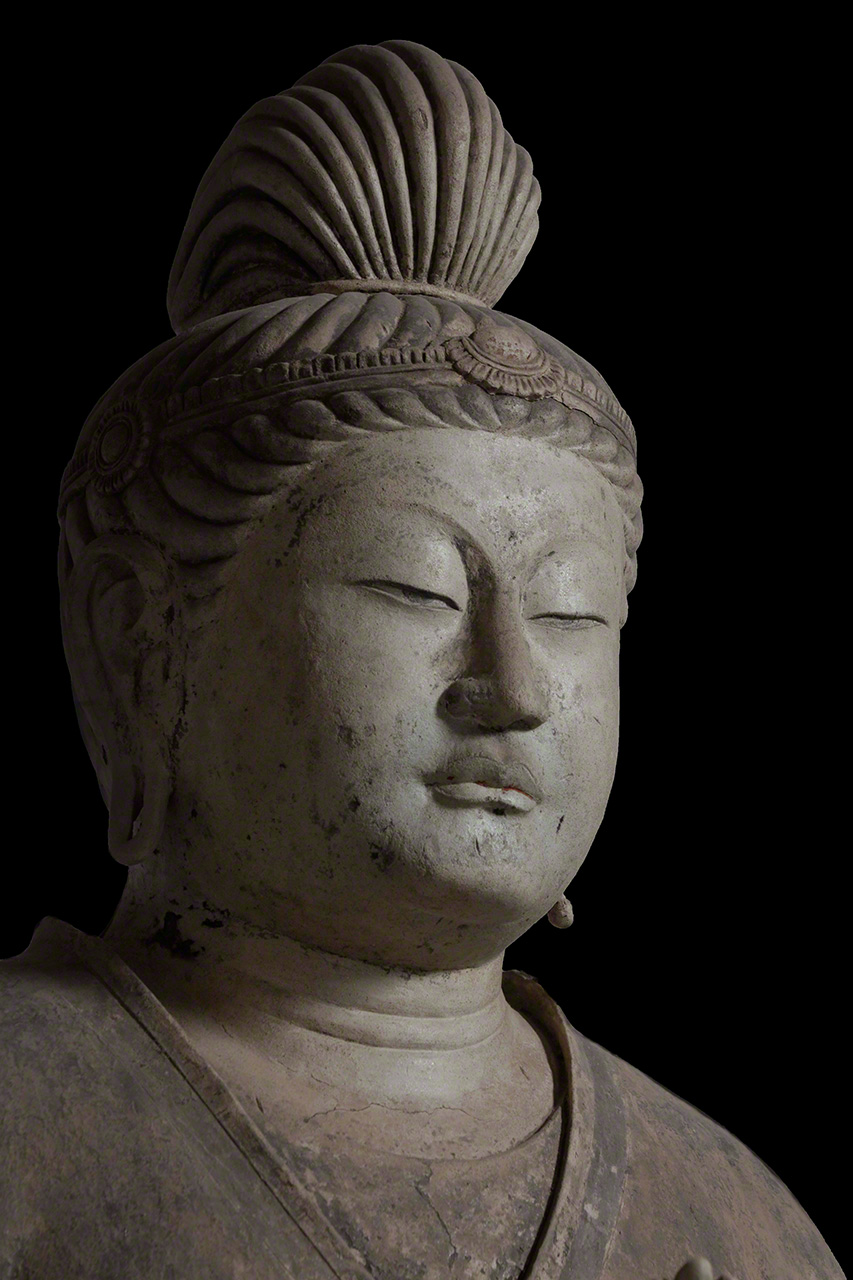
Standing image traditionally believed to represent the Moonlight Bodhisattva. (© Muda Tomohiro)
Standing Images Traditionally Believed to Represent the Sunlight Bodhisattva and the Moonlight Bodhisattva
- Height: 2.063 meters (Sunlight Bodhisattva), 2.068 meters (Moonlight Bodhisattva)
- Date: Tenpyō era (Nara Period); 729–49
- Tōdaiji (Nara Prefecture)
- National treasures
(Originally published in Japanese. Banner photo: Figures of the Moonlight (left) and Sunlight Bodhisattvas. © Muda Tomohiro.)