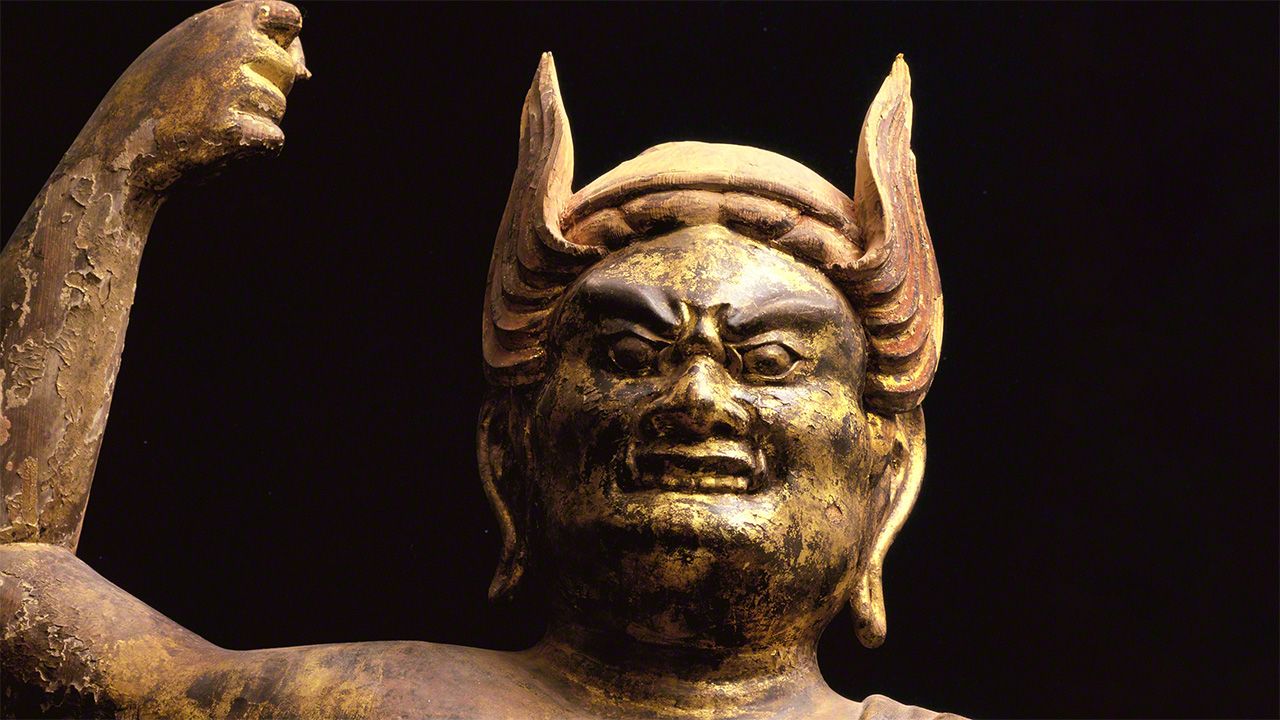
Standing Image of Zaō Gongen at Mount Mitoku Sanbutsuji
Culture History Travel- English
- 日本語
- 简体字
- 繁體字
- Français
- Español
- العربية
- Русский
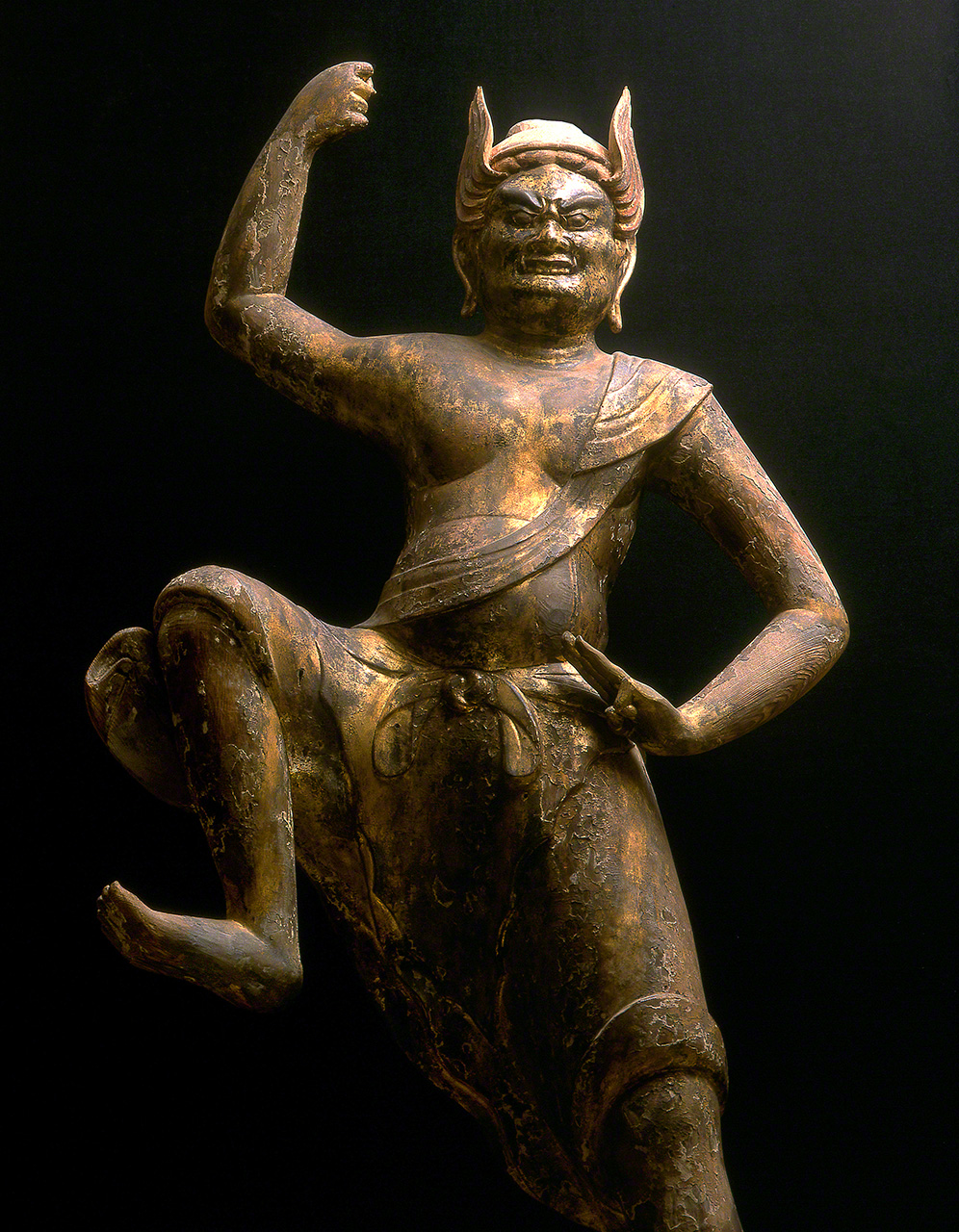
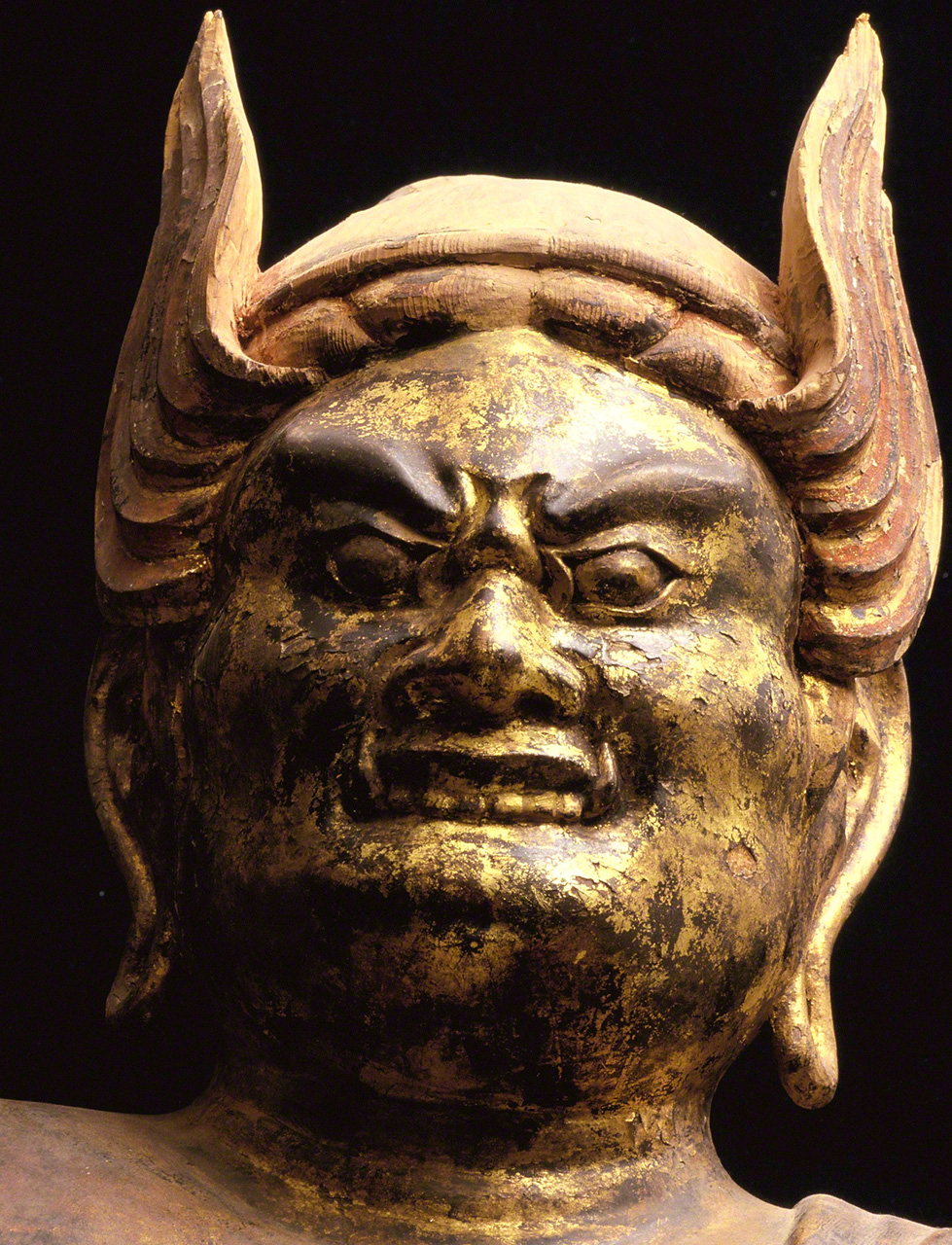
This standing image of Zaō Gongen, at Mount Mitoku Sanbutsuji temple in Misasa, Tottori, seems to lunge at the viewer with a face twisted into an expression of explosive rage.
The figure represents a gongen—a manifestation of a buddha in the form of a native deity. Zaō Gongen is particularly associated with shugendō, a syncretic tradition blending elements of mountain worship and Buddhism. According to legend, En no Gyōja, who founded mountain asceticism during the Nara period (710–94), was performing austerities and spiritual training high on the slopes of Kinpusen, one of the sacred mountains of Yoshino between Nara and the Kii Peninsula, when he witnessed Zaō Gongen flying out of a crack in a huge boulder. His hair standing on end, this image presents a wrathful form meant to subdue delusion and hindrances to enlightenment. His left hand is held to his waist forming the ken-in or sword mudra, while his raised right fist and leg form a dynamic pose brimming with movement.
(© Muda Tomohiro)
The image was once enshrined in the temple’s inner sanctuary, or okunoin, a national treasure embedded in the cliff face on Mount Mitoku. This precarious and hard-to-reach location has earned the sanctuary a reputation as the most dangerous national treasure in the country. En no Gyōja was said to have built a hall at the foot of the mountain in 706 dedicated to Zaō Gongen, and hurled it into an indentation in the cliff face using his supernatural powers. For this reason, it is known as “nageire-dō” or the “thrown-in” hall. According to tradition, in 849, Ennin (posthumously known as Jikaku Daishi) constructed a further set of temple buildings and installed images of Shakyamuni, Amida, and Dainichi, from which the temple derives its name, Sanbutsuji, or Temple of Three Buddhas.
The nage-ire hall is built using long pillars to support the floor against the sheer rock face. This style of architecture, known as kake-zukuri, makes the structure a counterpart to the famous “platform” at Kiyomizudera in Kyoto. A survey in 2001 revealed that the engawa balcony dates from around the twelfth century. It is therefore unlikely to be the original “thrown” into place by En no Gyōja, but many questions still remain with regard to this style of building and how it was constructed in such an inaccessible location.
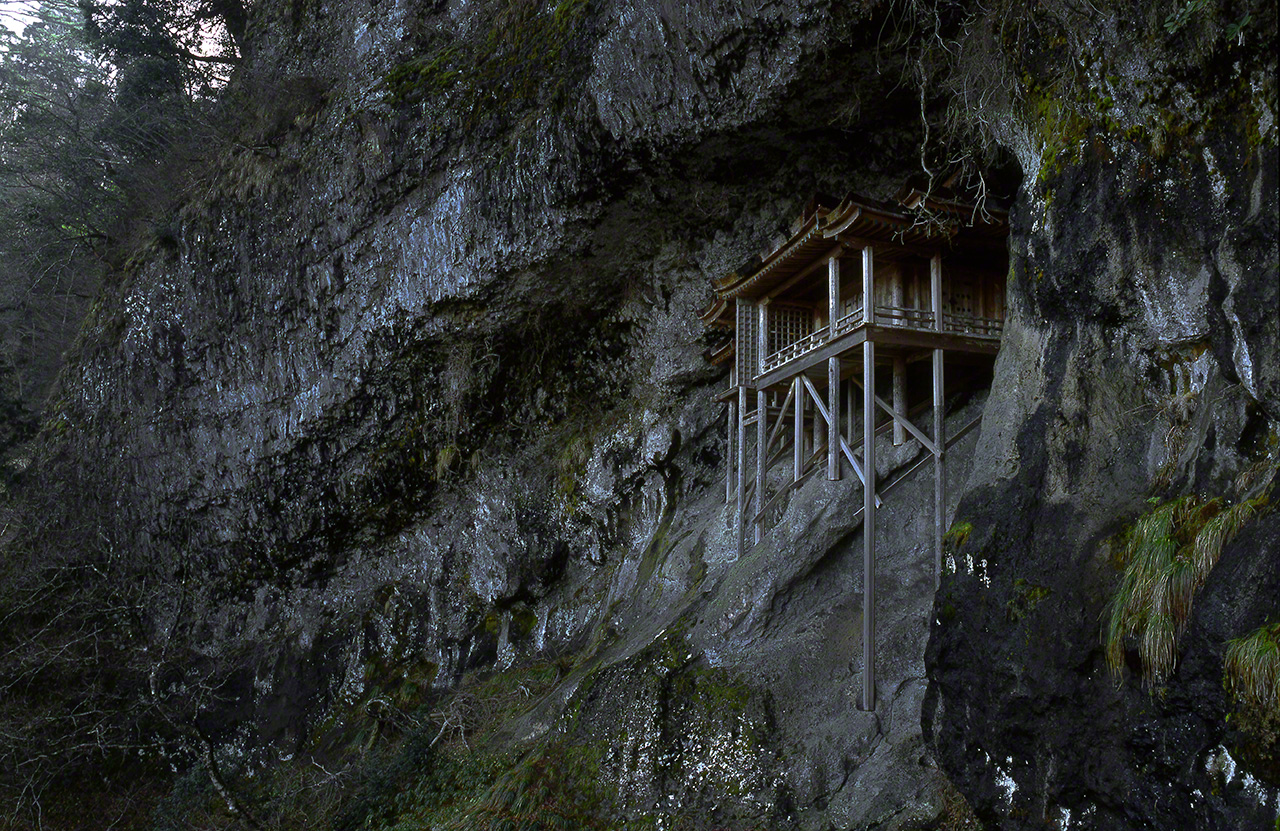
The nage-ire hall, perched precariously on a cliff face at an altitude of 520 meters. (© Muda Tomohiro)
The main image is made from hinoki (a type of cypress) using the yosegi-zukuri technique, in which the main part of the statue is constructed from two or more pieces of wood. Despite being made from a combination of several pieces of wood, the image stands with remarkable realism and stability on one leg, a testimony to the sculptor’s extraordinary skill. When the figure was taken apart for repairs in 1921, a prayer inscription was found inside dating from 1168, suggesting that the image is from around the same time as the hall. A convincing theory holds that the sculptor was Unkei’s father, Kōkei. Originally, the statue was probably painted in color over a base of white clay.
There are seven other images of Zaō Gongen at Sanbutsuji, all of them important cultural properties. They are thought to date from the same period, though they differ from the main image in being carved from a single piece of wood. Apart from one image that was designated an important cultural property in 2017, the images are all on display in the Sanbutsuji treasure museum. Together, they reflect the fervent devotion to Zaō Gongen and the rich culture of syncretic beliefs that flourished at Mitoku during the Heian period (794–1185).
(© Muda Tomohiro)
Shugendō practitioners removed themselves from the mundane world and traveled deep into the forests and mountains, undertaking rigorous austerities and spiritual training in an inhospitable terrain where one false step could mean death. Photographer Muda Tomohiro says: “Performing these austerities and feeling death close at hand was the only way to be reborn with a new sense of life. For these mountain ascetics, who chose to follow a spiritual path at the risk of their lives, the fierce image of Zaō Gongen must have felt like a protective deity. That’s the conviction that came to me through the lens as I took these pictures.”
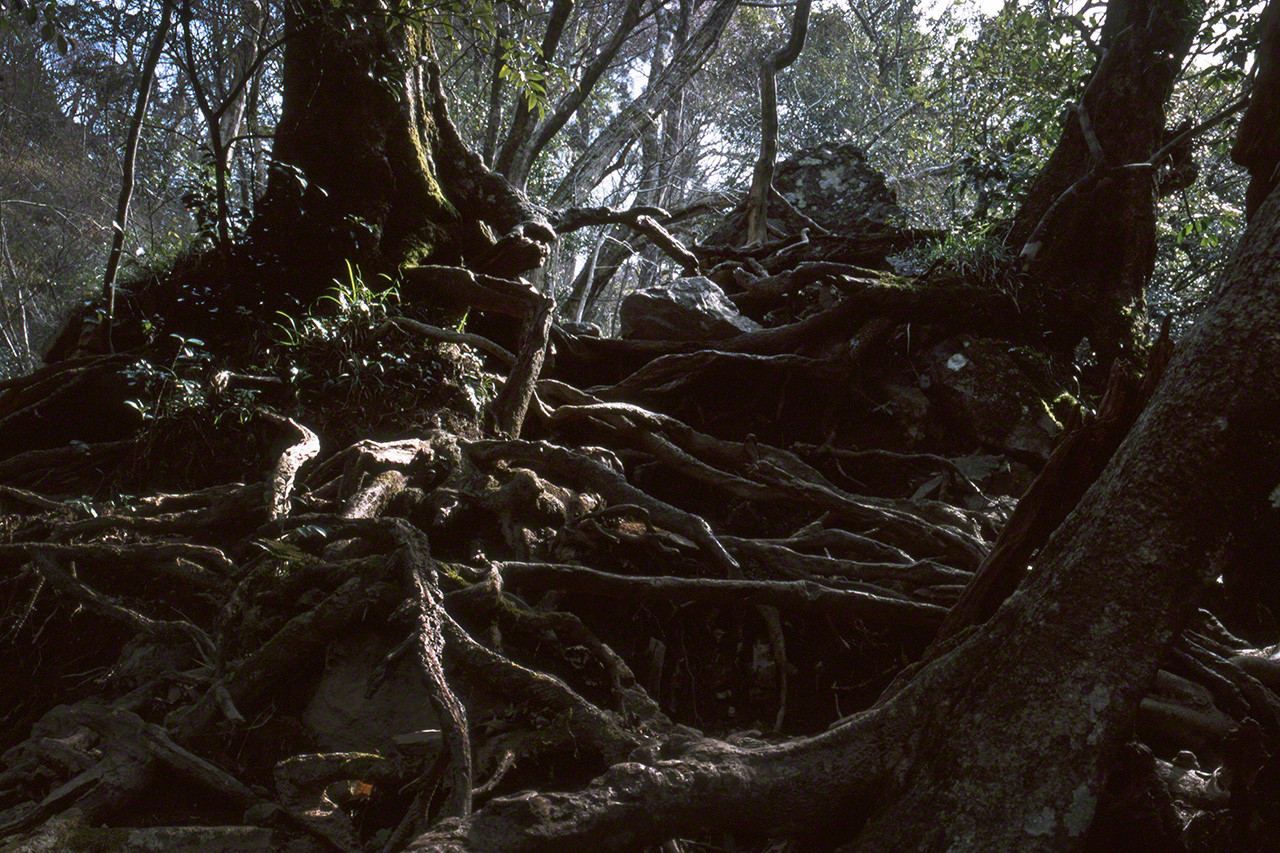
A steep mountain trail leads up to the Sanbutsuji temple, a dangerous path where many pilgrims have suffered bad falls. (© Muda Tomohiro)
Standing Image of Zaō Gongen
- Height: 1.15 meters
- Date: Late Heian period
- Sanbutsuji (Tottori Prefecture)
- Important cultural asset
(Originally published in Japanese. Banner photo: Standing figure of Zaō Gongen at Sanbutsuji temple. © Muda Tomohiro.)