Kumano Magaibutsu: Buddhist Rock Carvings in Ōita
Culture Images History- English
- 日本語
- 简体字
- 繁體字
- Français
- Español
- العربية
- Русский
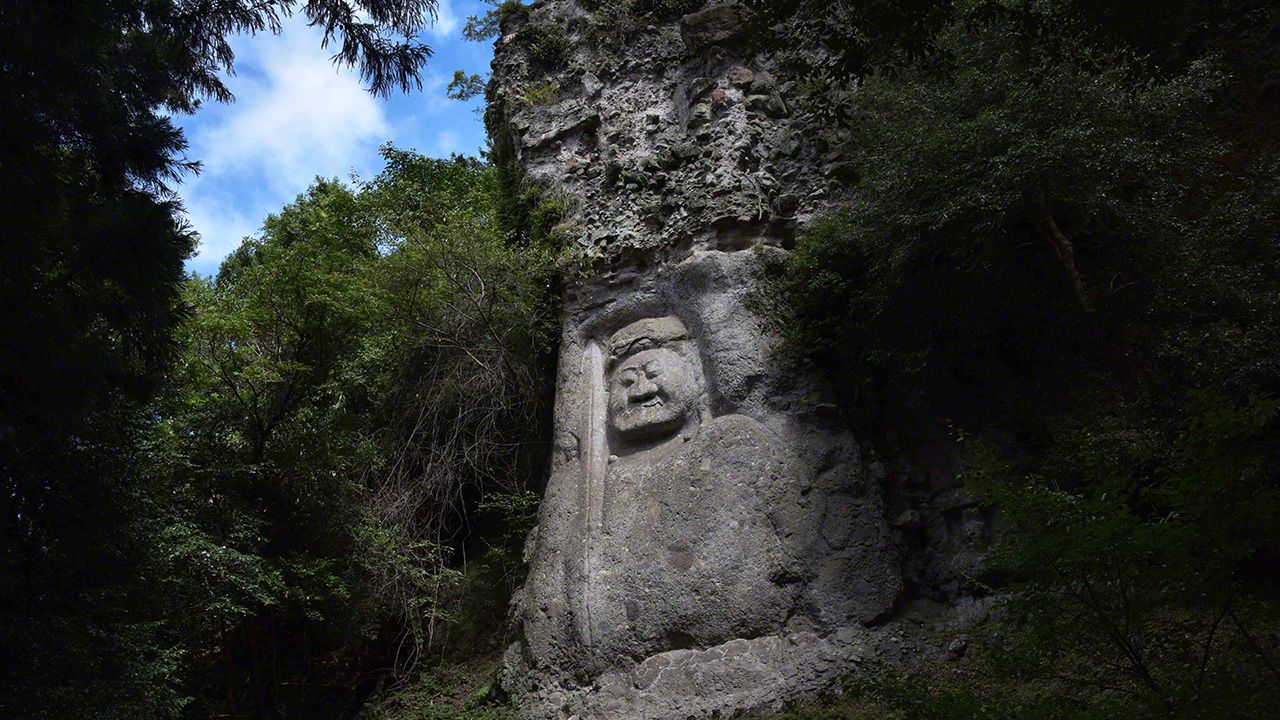
Ima-kumanosan Taizōji temple stands in the foothills of Mount Tawarayama in the Kunisaki Peninsula, Ōita Prefecture. A 10-minute climb up a steep mountain path from the temple leads to a stone torii gate that seems to loom out of the primeval forest. Continuing through the gate, you come to a steep set of uneven stone steps, formed by piling together ill-matched rocks of various sizes. Legend has it that these unadorned steps were built in the course of a single night by a red demon who smashed huge rocks to obtain the materials for the staircase. Slightly out of breath, you clamber over the stones until the view opens up around you and you are greeted by a huge Buddhist carving hewn into the face of the cliff in front of you.
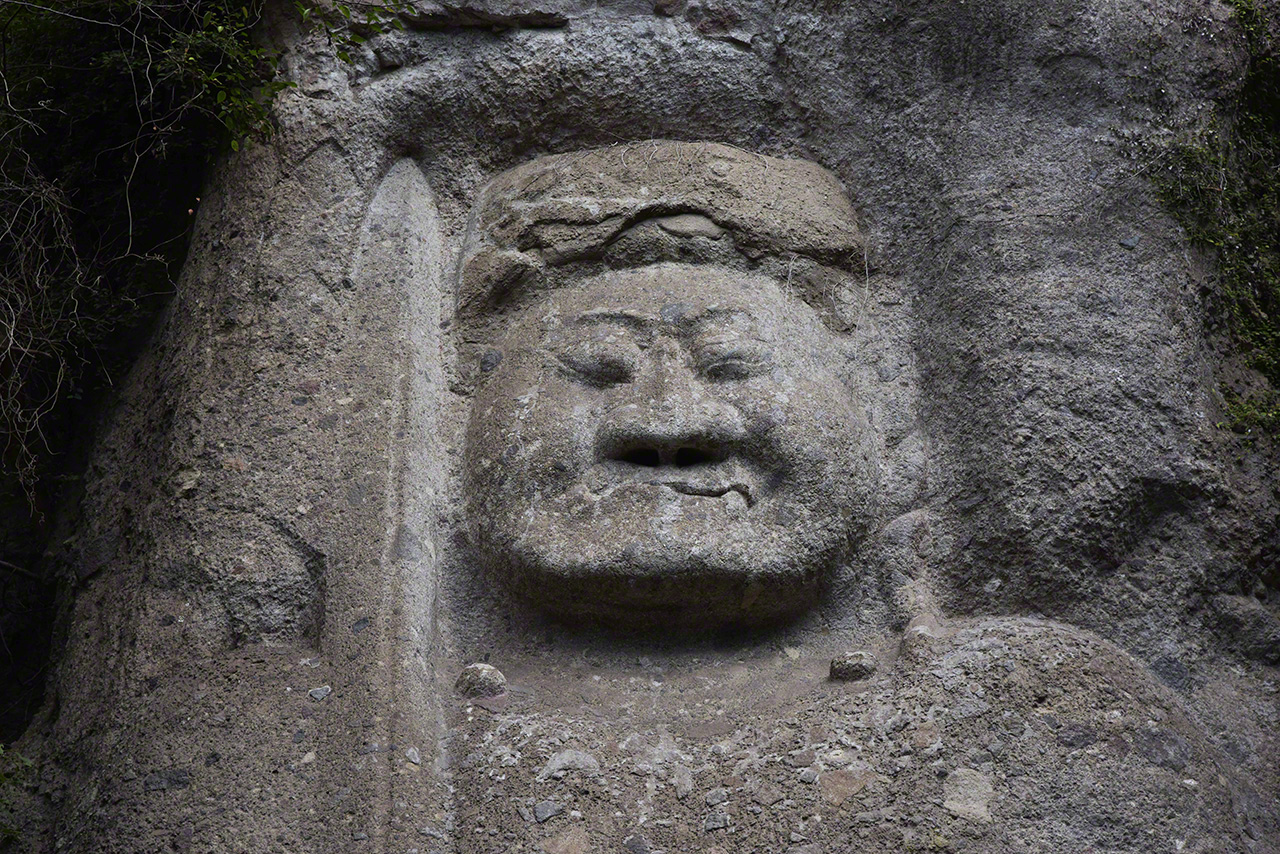
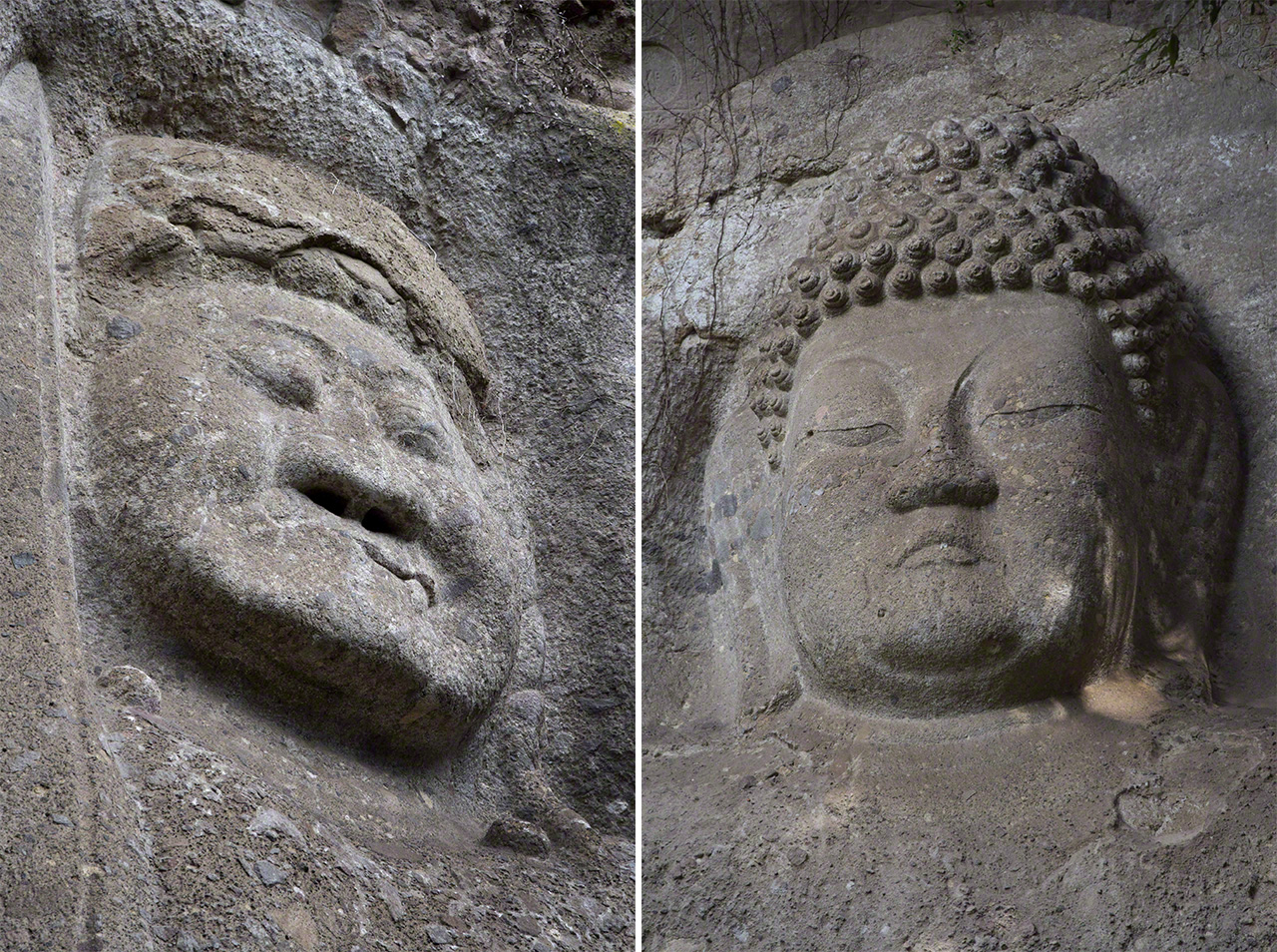
The carved figure, holding a sword in his right hand and a rope in his left, symbolizes Fudō Myōō the “unmoving” guardian deity who protects the Buddha’s Law. Fudō Myōō normally has a somewhat fierce appearance, since one of his roles is to protect ignorant beings as he leads them to the Buddha’s truth. But this carving shows a softer, more approachable side of the demon king: one eye closed and two fangs protruding from his lips, as a gentle smile plays about his features. The carving dates from the early years of the Kamakura period (1185–1333) and is one of the largest rock-carved Buddhist images of its kind in the country, at nearly eight meters tall.
(© Muda Tomohiro)
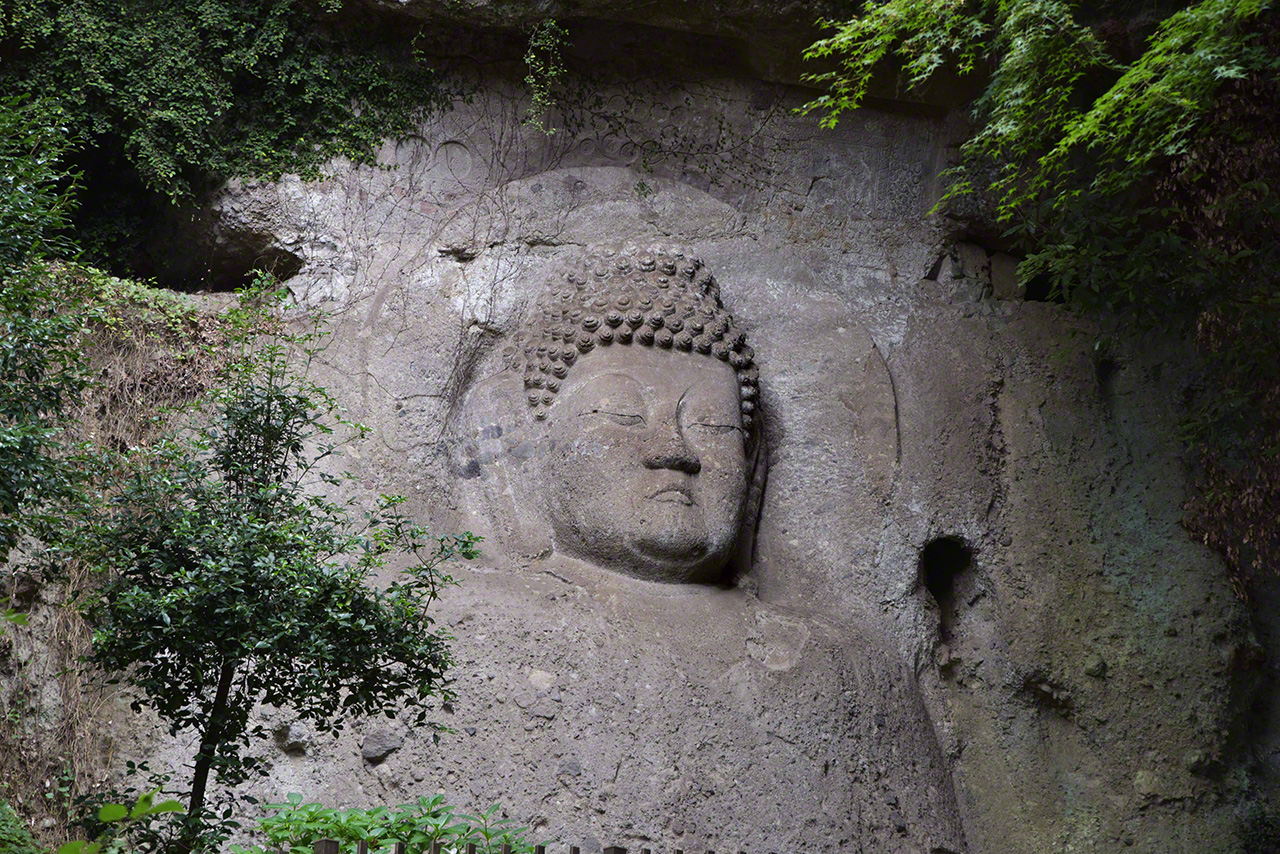
Further back behind Fudō Myōō is a carved image of Dainichi Nyorai, nearly seven meters high, thought to date from the late Heian period (794–1185). This would make it roughly 100 years older than the image of Fudō Myōō. Dainichi forms a striking contrast to the somewhat humorous Fudō, with a quiet dignity emanating from his taut, well-defined features. Although Dainichi is normally depicted wearing a jeweled crown, here the top of the head is covered in spiral-shaped curls, each one carefully carved—another contrast with the rough-hewn texture of Fudō. Dainichi is the central Buddha in Japanese esoteric Buddhism and above his head are three mandalas expressing the secret truths of Mikkyō in Sanskrit letters.

(© Muda Tomohiro)
The Kunisaki Peninsula is formed of volcanic rocks and strata created by ancient volcanic activity. It is a region of jagged peaks and deep valleys, and although the mountains are not particularly high, the area was long feared as a dwelling-place of demons and evil spirits. When Saichō (767–822) brought Tendai Buddhism to Japan from China in the early 800s, this latest version of Buddhism quickly became a powerful philosophical and spiritual force throughout the country. When the teachings reached Kunisaki, they became fused with local traditions of nature worship, mountain ascetic practices, and beliefs associated with Usa Hachimangū shrine, giving rise to a unique syncretic religious culture distinctive to this part of northern Kyūshū.
As well as symbolizing the fearful forces of the other world, these demons were believed to possess mystical powers and were revered as objects of prayer. Over time, they became associated with Fudō Myōō, himself regarded as an avatar of Dainichi Nyorai. The Kumano rock carvings are a monument to the unique religious worldview that developed here in Kunisaki, blending esoteric Buddhism with the local mountain religions.
(© Muda Tomohiro)
“When I turned my lens to focus on the image of Fudō Myōō high on the rockface, I felt as if I could hear the scrape and clang of chisels at work,” says photographer Muda Tomohiro. “I imagined the scene when the stoneworkers looked up at the newly completed sculpture they had just carved, and the sense of accomplishment and awe they must have felt at having brought this manifestation of the Buddha into the world with their own hands.”
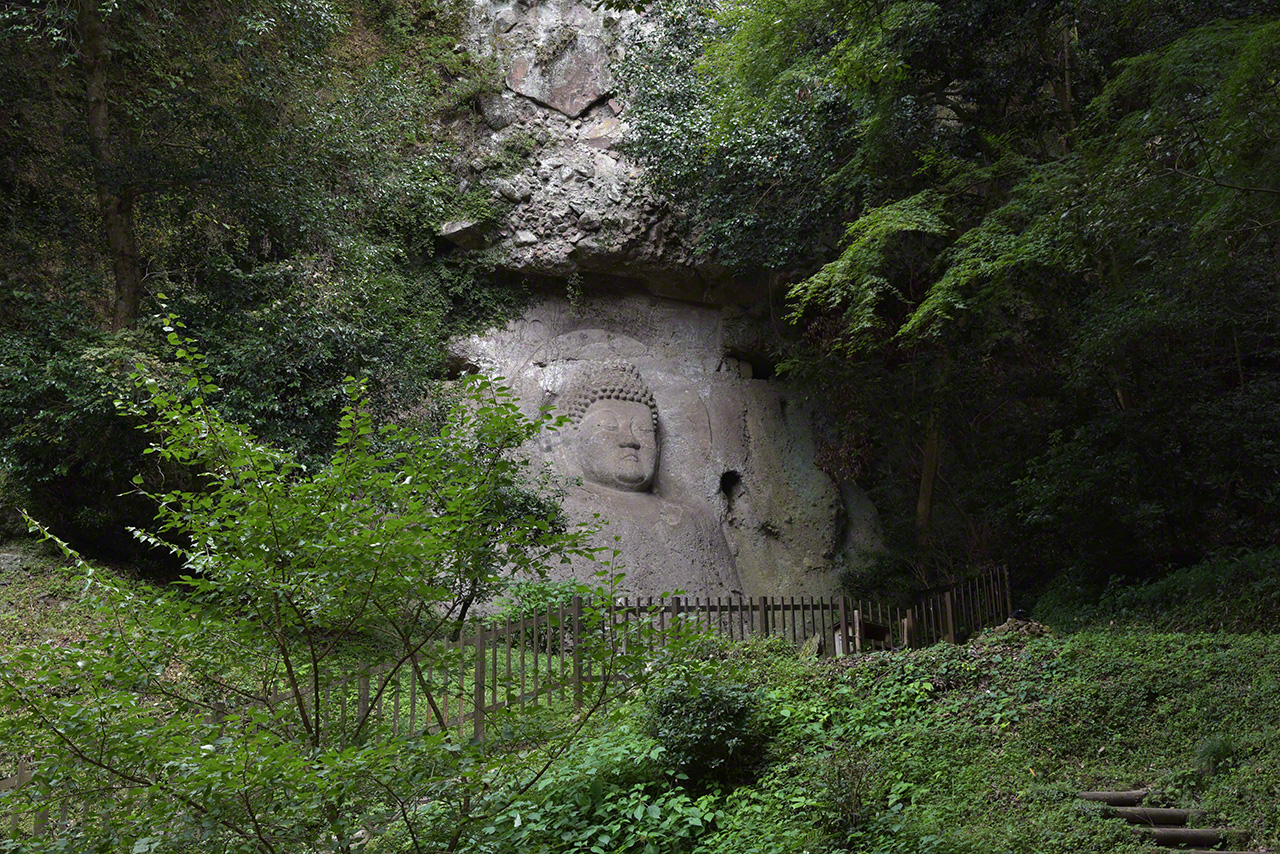
(© Muda Tomohiro)
Kumano Magaibutsu
- Height: 8.1 meters (Fudō Myōō), 6.8 meters (Dainichi Nyorai)
- Date: Early Kamakura period (Fudō Myōō), late Heian period (Dainichi Nyorai)
- Kumanosha (Ōita Prefecture)
- Important cultural asset
(Originally published in Japanese. Banner photo: Rock Carving of Fudō Myōō, Kumano Magaibutsu. © Muda Tomohiro.)