The 11-Headed Kannon at Kōgenji in Shiga
Images History Culture- English
- 日本語
- 简体字
- 繁體字
- Français
- Español
- العربية
- Русский
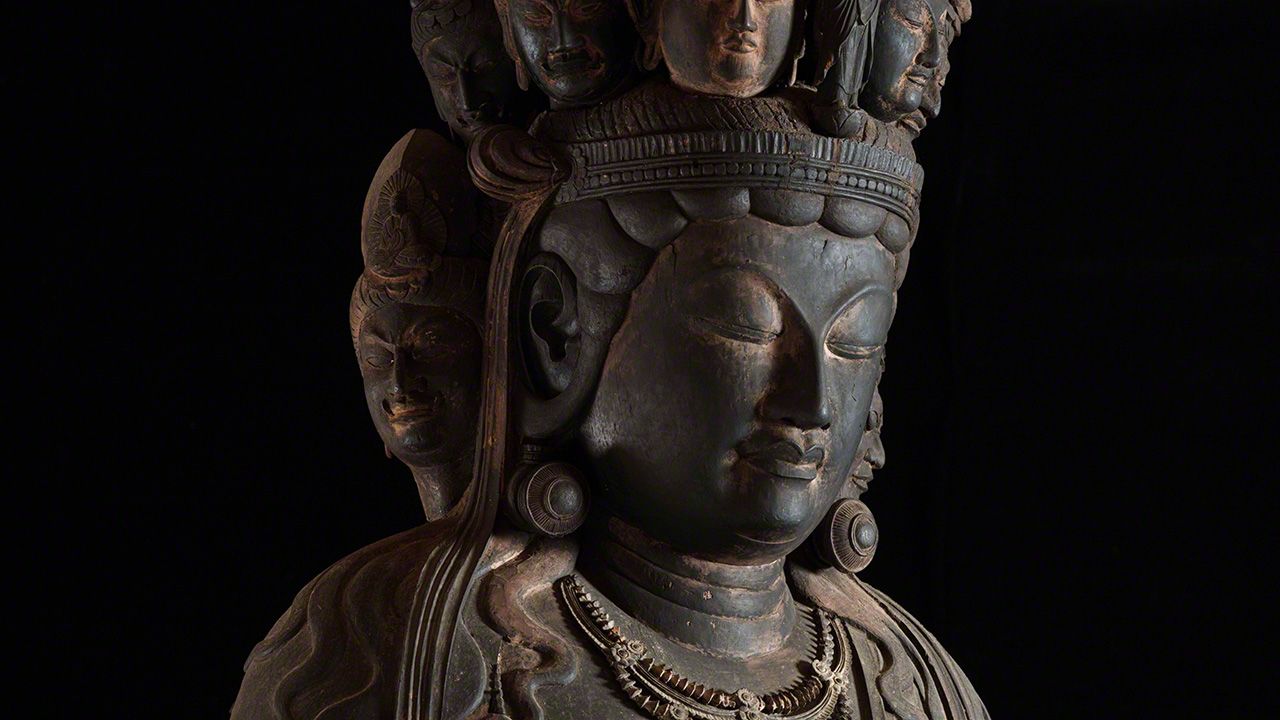
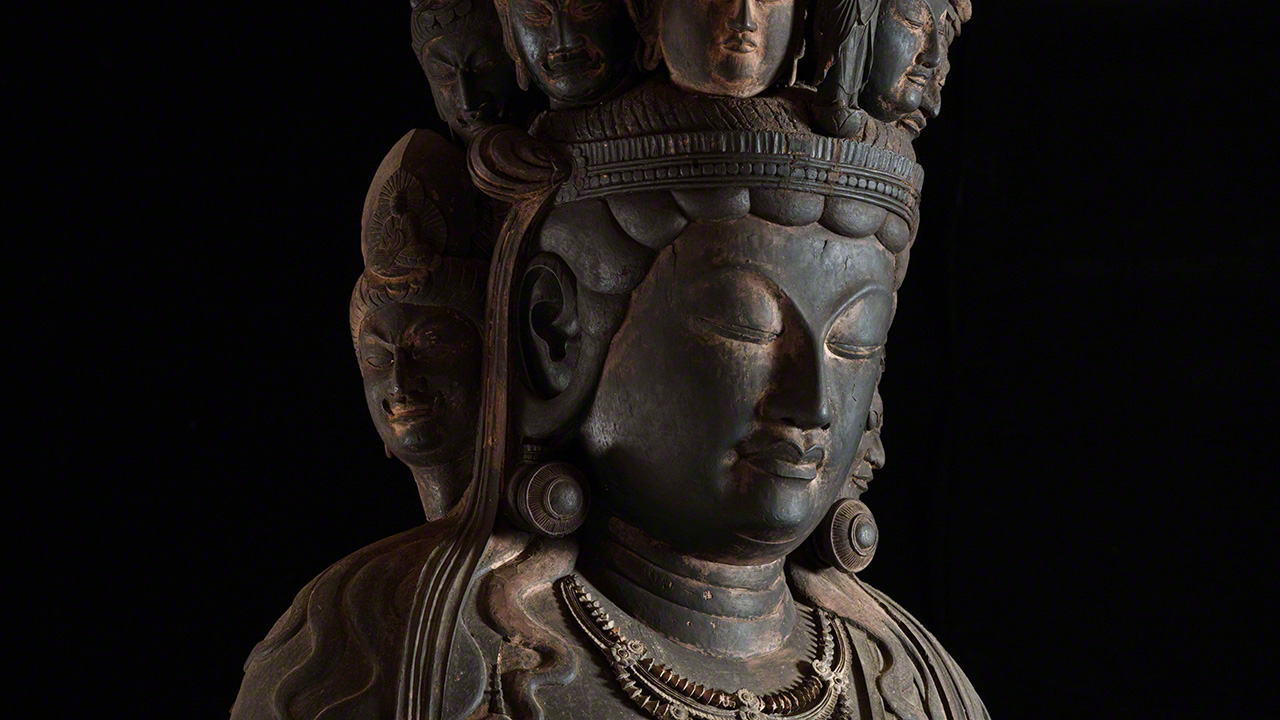
The first time I brought my hands together in prayer here, I was struck deeply by the remarkable beauty of this statue. The standing image of the 11-headed Kannon at Kōgenji in Nagahama, Shiga Prefecture, is a national treasure that has been protected for centuries by the local people, for whom it has served as a spiritual refuge.
(© Muda Tomohiro)
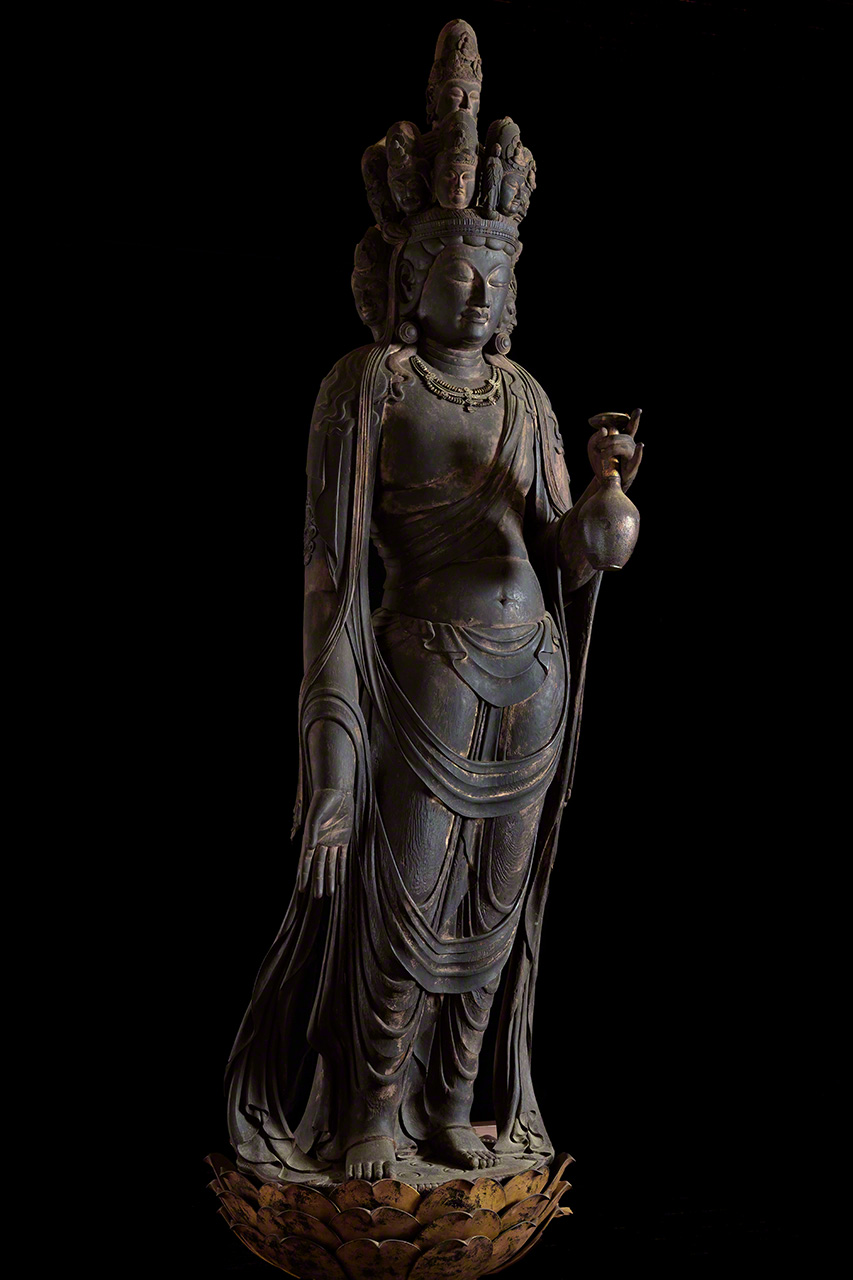
According to temple tradition, Kōgenji was founded during a smallpox outbreak in 736, when the esoteric Shugendō priest Taichō, who had established religious practices at Mount Haku was commissioned by Emperor Shōmu to pray for relief from the epidemic. Legend has it that Taichō himself carved an image of the 11-headed Kannon here. However, the current statue clearly shows the influence of the Tendai sect, which flourished in the early Heian period around 860, making it unlikely to be the work of Taichō, and the actual carver remains unknown. The sculpture is made from a single piece of hinoki cypress, with everything from the arms to the flowing heavenly robes that touch the dais (in other words, everything except the faces and head) carved from a single block of wood.
Images of the 11-headed Kannon symbolize mercy and compassion, extending salvation in all directions, not just straight ahead. At the top is a single bodhisattva face, adorned with a crown; an additional ten faces are arranged below. In the center, flanking a small image of Amida Buddha, are three faces bearing expressions of compassion.
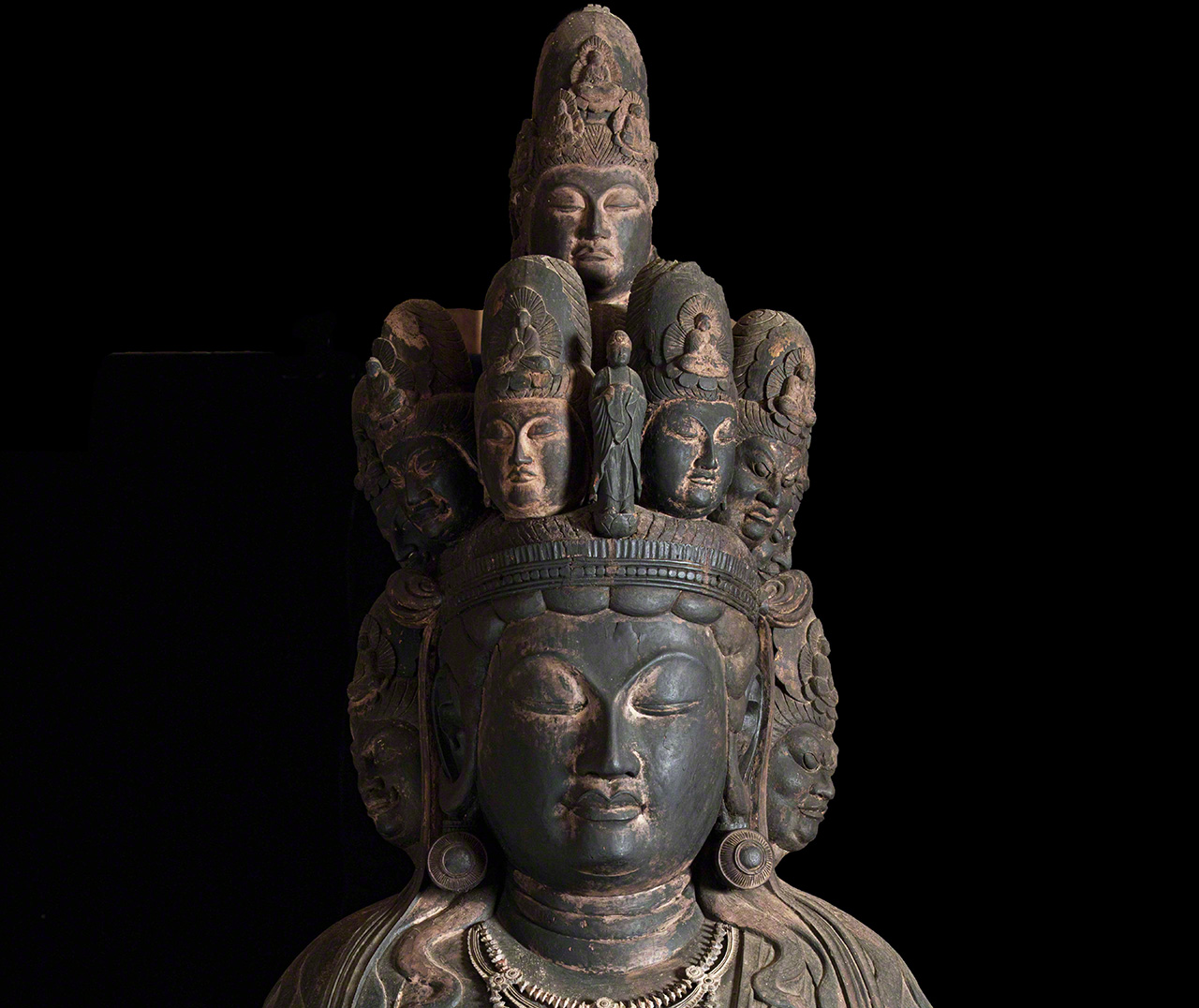
The three central faces are known as jihimen or “compassionate faces.” (© Muda Tomohiro)
To the left of the compassionate faces (on the viewer’s right) are three faces showing anger, while on the right (the viewer’s left) are three more with bared teeth. In most depictions of the 11-headed Kannon, all three faces of each set would be equal in size and arranged in parallel lines. One distinguishing feature of this statue, however, is the presence of larger faces (one angry and one baring its teeth) behind the left and right ears of the main face.
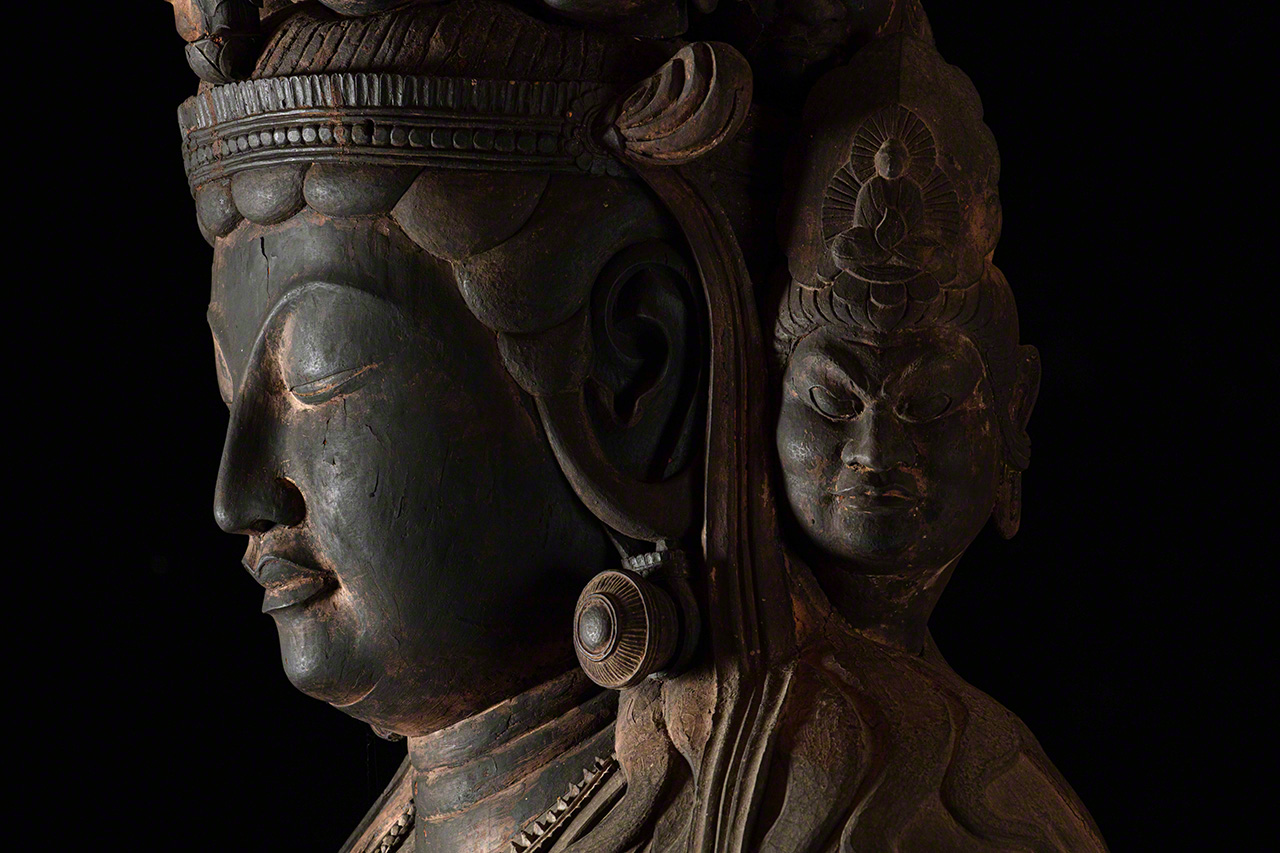
The faces depicting anger (one of which is seen here) are known as the shinnumen. (© Muda Tomohiro)
On the left side of the statue from the viewer’s perspective are three smiling faces with protruding white teeth.
The faces with bared teeth (one of which is seen here) are known as kuge jōshutsumen. (© Muda Tomohiro)
On the back of the head is a face depicted in uproarious laughter, called bōaku daishōmen. This face laughs at the folly of living beings who do not understand the truth, and symbolizes the great, infinite mercy of the bodhisattva, capable of embracing even such ignorance.
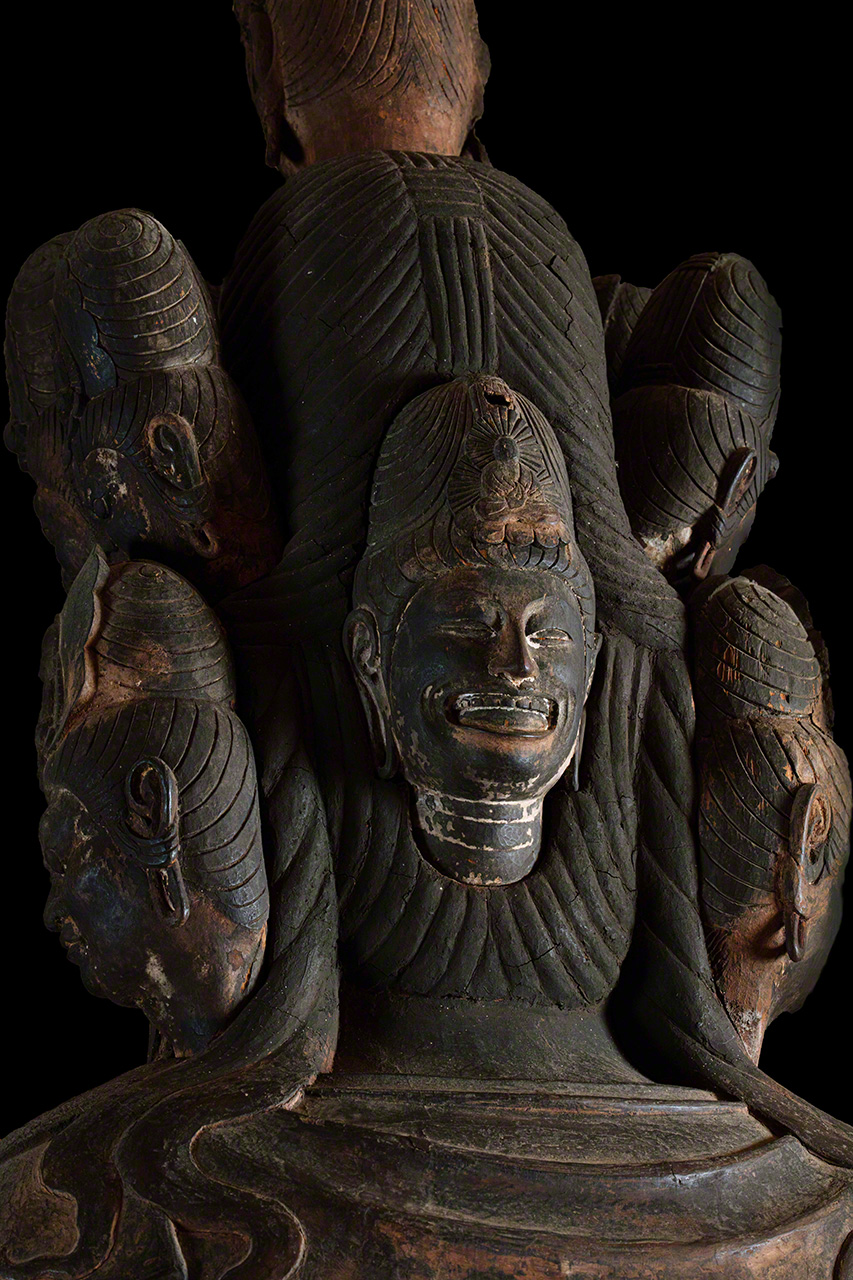
A face on the back of the head laughs at the folly of ignorant beings who remain blind to the truth. (© Muda Tomohiro)
The proportions of the body, almost two meters in height, are also remarkable. The viewer’s eye is captured by the elegant posture: standing with a slight twist at the waist, the figure holds a vessel of healing water in the left hand, while the right arm hangs naturally with the palm facing gently forward. The soft curves of the chest and abdomen, the large and exotic earrings, and the thin, closely fitting outer robes all make clear that the style of the statue was heavily influenced by Chinese Buddhist sculpture from the Tang dynasty.
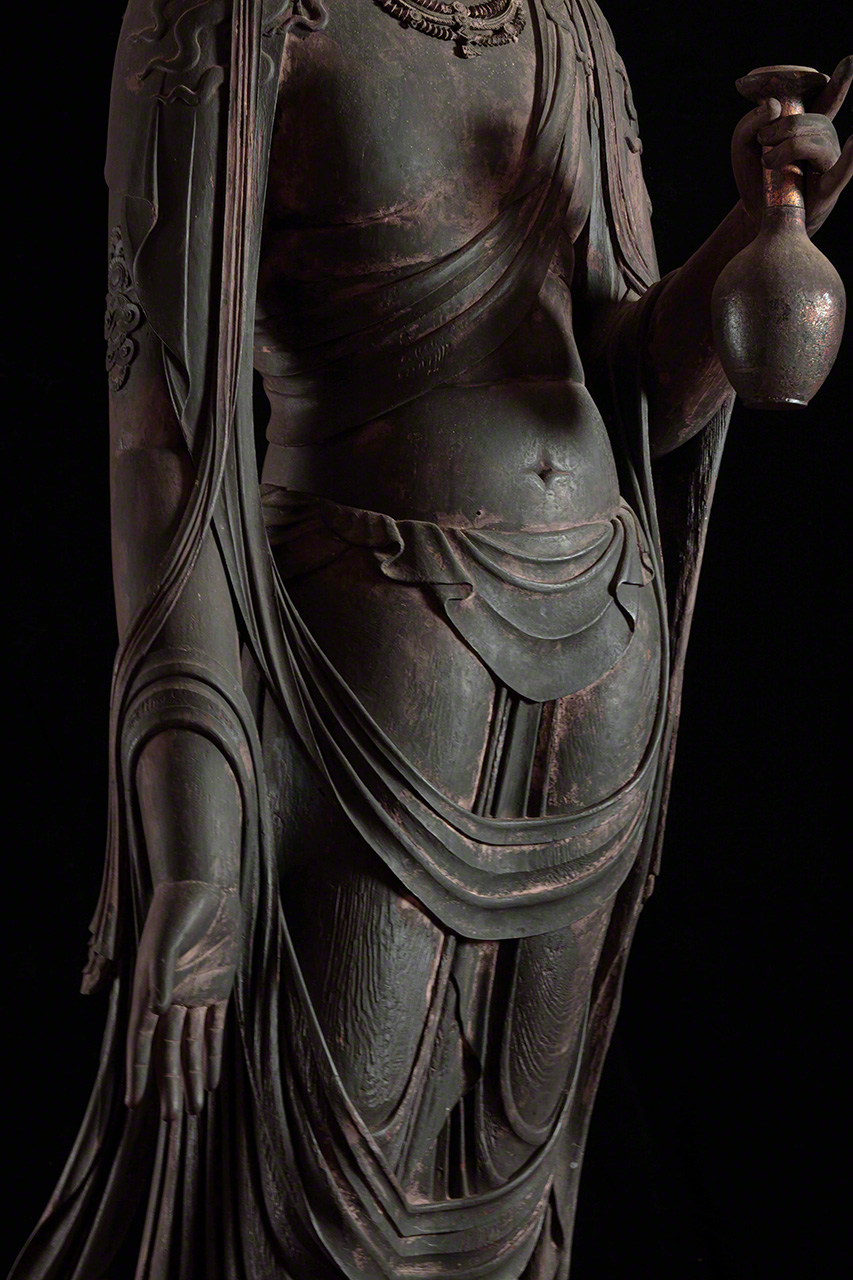
(© Muda Tomohiro)
The main temple buildings were destroyed in the fires and upheaval of the Warring States period (1467–1568), but the temple priest and local devotees rescued the sacred image and buried it to save it from harm. In the years that followed, the villagers built a small hall to house the image, which they carefully preserved. Even today, the statue is kept in a building next to the Dōganji Kannon Hall belonging to Kōgenji, which is maintained by the local Takatsukichō national treasure preservation association.
“While photographing the image, I was able to study not just its overall form, but tiny details like the marks left by the chisels used to carve the statue all those years ago,” says photographer Muda Tomohiro. “It made me gasp in amazement. I thought of all the countless people who have invested their hopes and prayers into this image over the centuries. The original donors who commissioned it, the sculptors, the people who prayed here, and all the generations of local people who have cherished and looked after the image until today. Their devotion has seeped into the statue, and matured inside the wood, and now radiates out from it like a kind of energy. I was simply overwhelmed by the passion and presence that emanate from this remarkable image.”
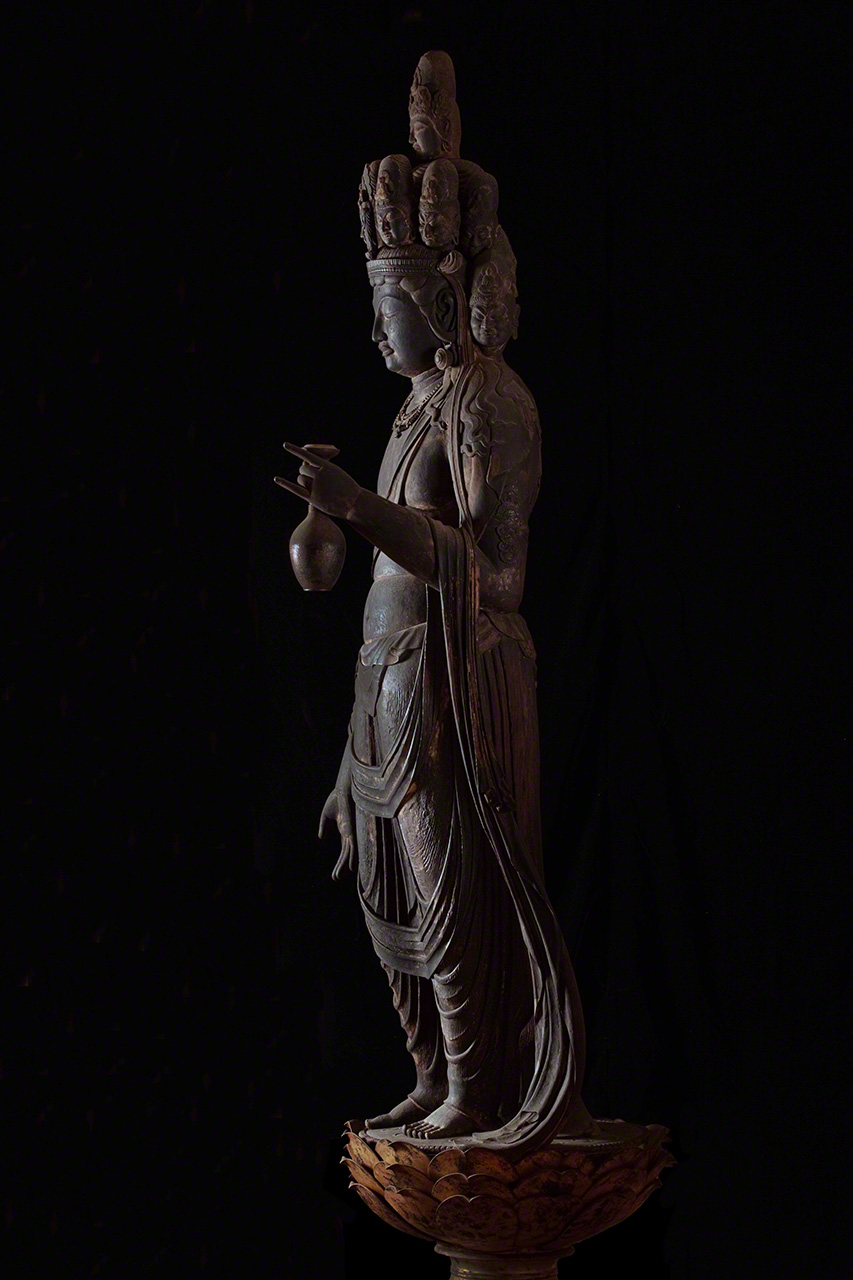
(© Muda Tomohiro)
Standing Image of 11-Headed Kannon
- Height: 1.94 meters
- Date: Heian period (794–1185)
- Kōgenji (Shiga Prefecture)
- National treasure
(Originally published in Japanese. Banner photo: Standing image of 11-headed Kannon at Kōgenji temple. © Muda Tomohiro.)