Standing Image of the Immovable Fudō Myōō at Jōrakuji, Kanagawa
Images Culture History- English
- 日本語
- 简体字
- 繁體字
- Français
- Español
- العربية
- Русский
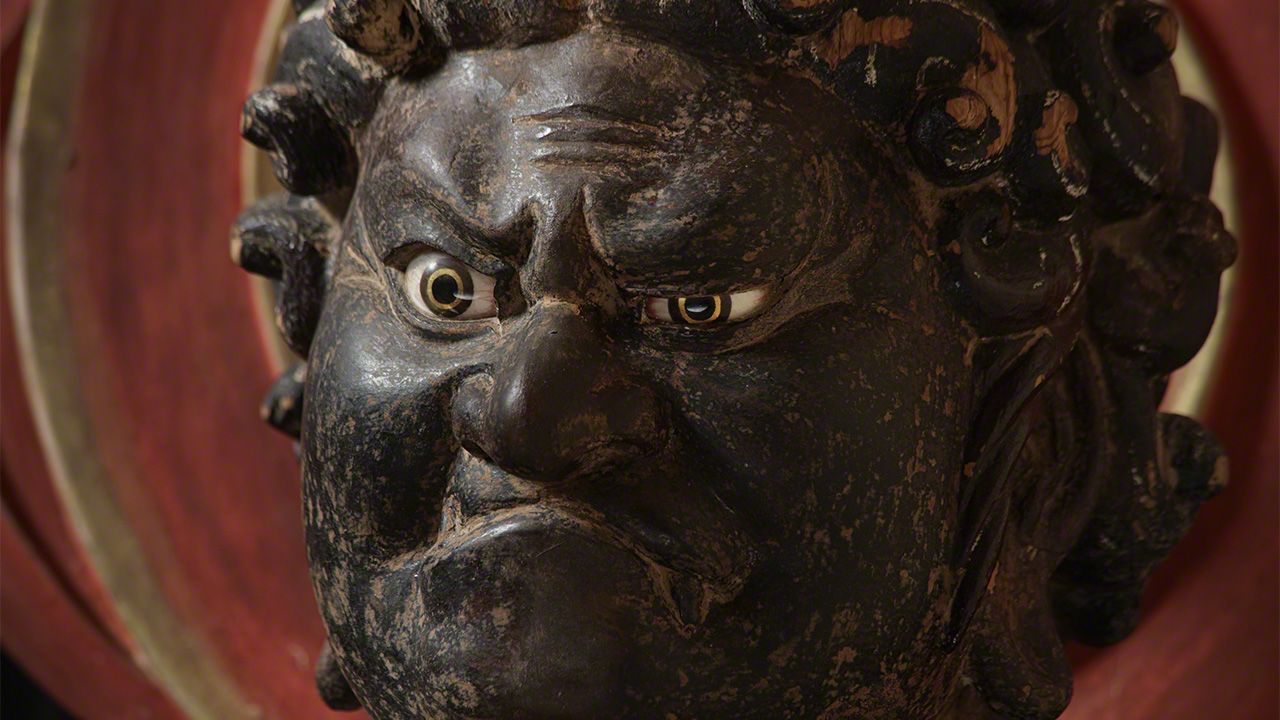
The right eye is opened wide, the left half closed, and a deep crease is drawn between the brows, with the mouth set in a downward-curving grimace. The fierce face and its remarkably lifelike expression of anger belong to an image of Fudō Myōō by Unkei, one of the leading Buddhist sculptors of the Kamakura Period (1185–1333), a golden era in the history of Buddhist art in Japan. The image is enshrined at Jōrakuji in Yokosuka, Kanagawa Prefecture, where it is housed in a small worship hall behind the main temple hondō together with several other works by the same artist, including an Amida Triad and an image of Bishamonten (Vaisravana, one of the four heavenly kings). There are only 20-something confirmed works by Unkei in the whole country, and five of them are found in this single temple. There is a reason for that.
Jōrakuji’s history dates back to the early Kamakura Period. In 1189, Unkei was commissioned to produce a series of images: an Amida Triad that would serve as the principal image, along with statues of Bishamonten and Fudō Myōō. The sculptures were made to fulfill a religious vow by the warrior Wada Yoshimori and his wife, members of the locally powerful Miura clan. Wada was among the most trusted retainers of Minamoto no Yoritomo, who founded the Kamakura shogunate. Their prayers were answered when Yoritomo emerged victorious in the Ōshū campaign against the Northern Fujiwara later that same year, helping to solidify the shogunate’s authority. Jōrakuji was located almost exactly midway between the center of political power in Kamakura and the home base of the Wada clan in the southern Miura peninsula. It thus occupied an important logistical and strategic position.
The name Fudō Myōō derives from the Sanskrit Acalanātha, often translated as “immovable guardian.” Acala means “unmoving” or “immovable,” and nātha means “protector.” Fudō is regarded as a manifestation of Dainichi, (Vairocana), the cosmic Buddha who embodies universal truth in esoteric Buddhism, and who has taken on this wrathful form to save those who cannot be guided to the truth by more gentle teachings.
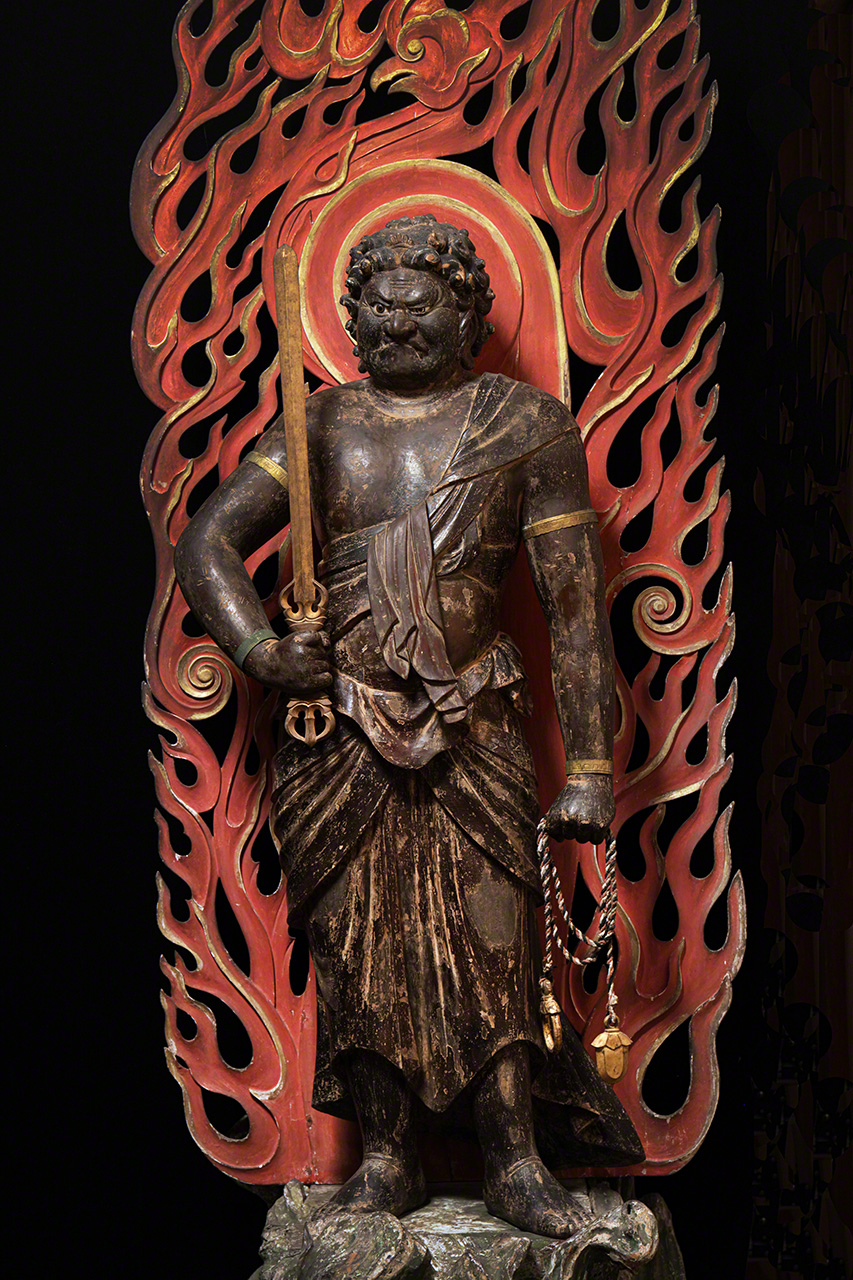
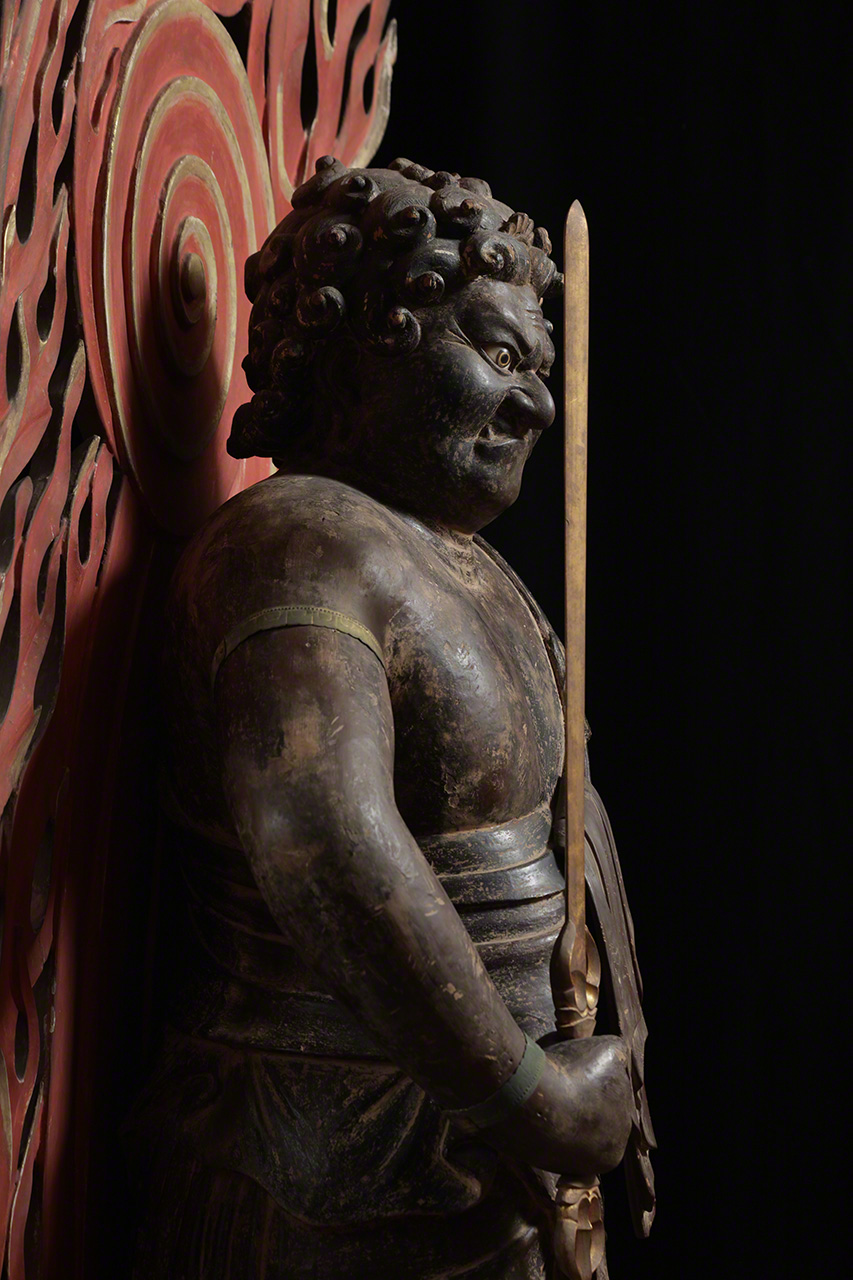
He holds a sword in his right hand and a lasso-like rope in his left. An overwhelming sense of force seems to surge through his entire torso. With its dynamic expression, the sculpture seems to capture a single instant of movement, and is eloquent testimony to Unkei’s genius. The image is made from hinoki cypress using the yosegi technique, with inset crystal eyes (gyokugan) that give a vivid intensity to the gaze.
(© Muda Tomohiro)
“The image seems to burst with energy, and conveys something of the youthful vitality of Unkei, who would still have been in his thirties when he made it,” says photographer Muda Tomohiro. “This energy also resonates with the ardor of the eastern warriors at the time. Even though they were deeply devoted to Buddhism, the samurai struggled with the contradiction that they were potentially violating the sacred precept against taking life every time they went into battle. This image seems to embody a teaching that would have spoken to them directly: Cast aside delusion, devote yourselves wholeheartedly to the teachings, and you too can attain the Pure Land.”
(© Muda Tomohiro)
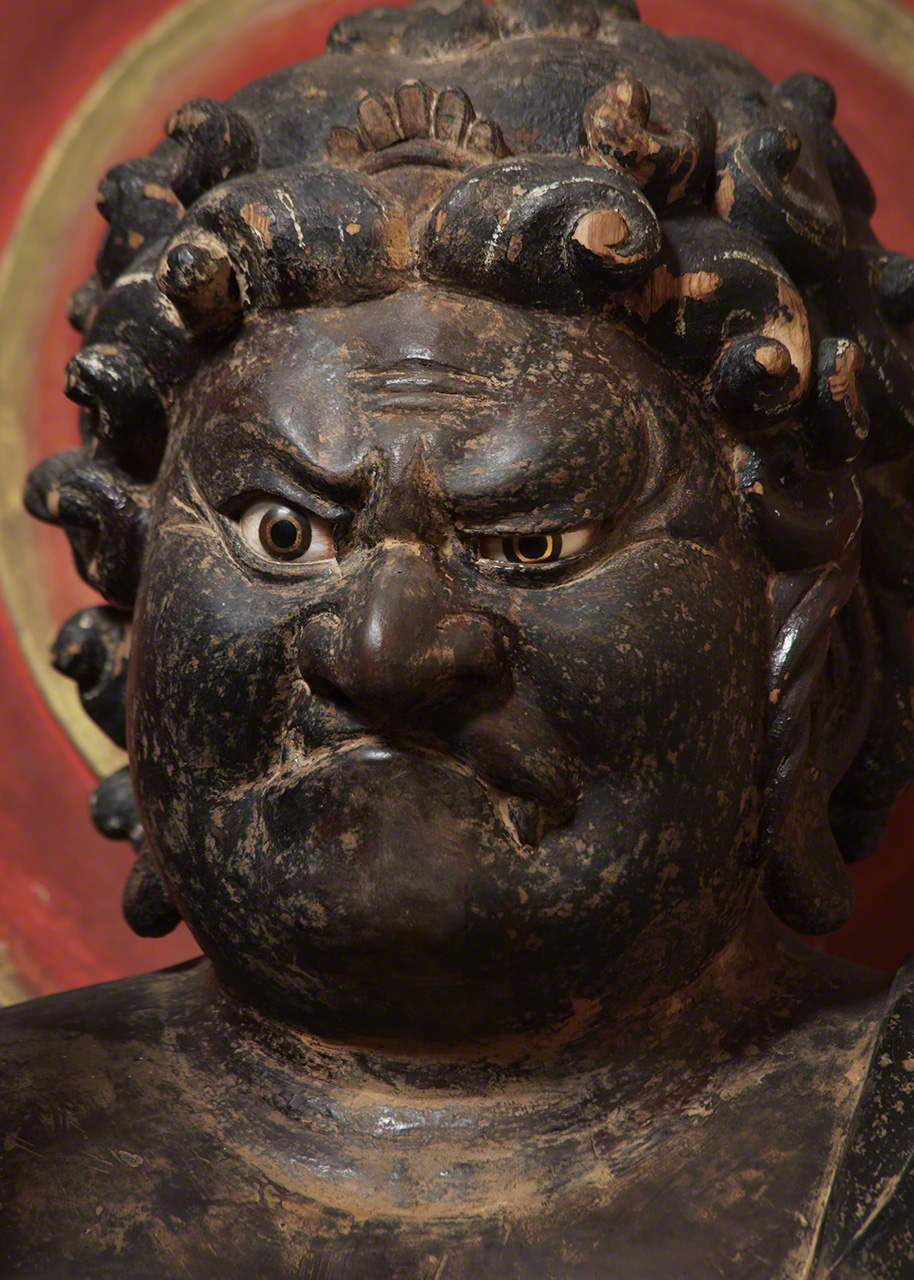
It is worth remembering when we stand in front of this image today that behind the fierce gaze of Fudō Myōō lies a compassionate heart that seeks to bring salvation to all those who suffer.
(© Muda Tomohiro)
Standing Image of the Immovable Guardian, Fudō Myōō
- Height: 1.35 meters
- Date: Kamakura period (1185–1333)
- Jōrakuji (Kanagawa Prefecture)
- Important cultural asset
(Originally published in Japanese. Banner photo: The standing image of the immovable Fudō Myōō at Jōrakuji. © Muda Tomohiro.)