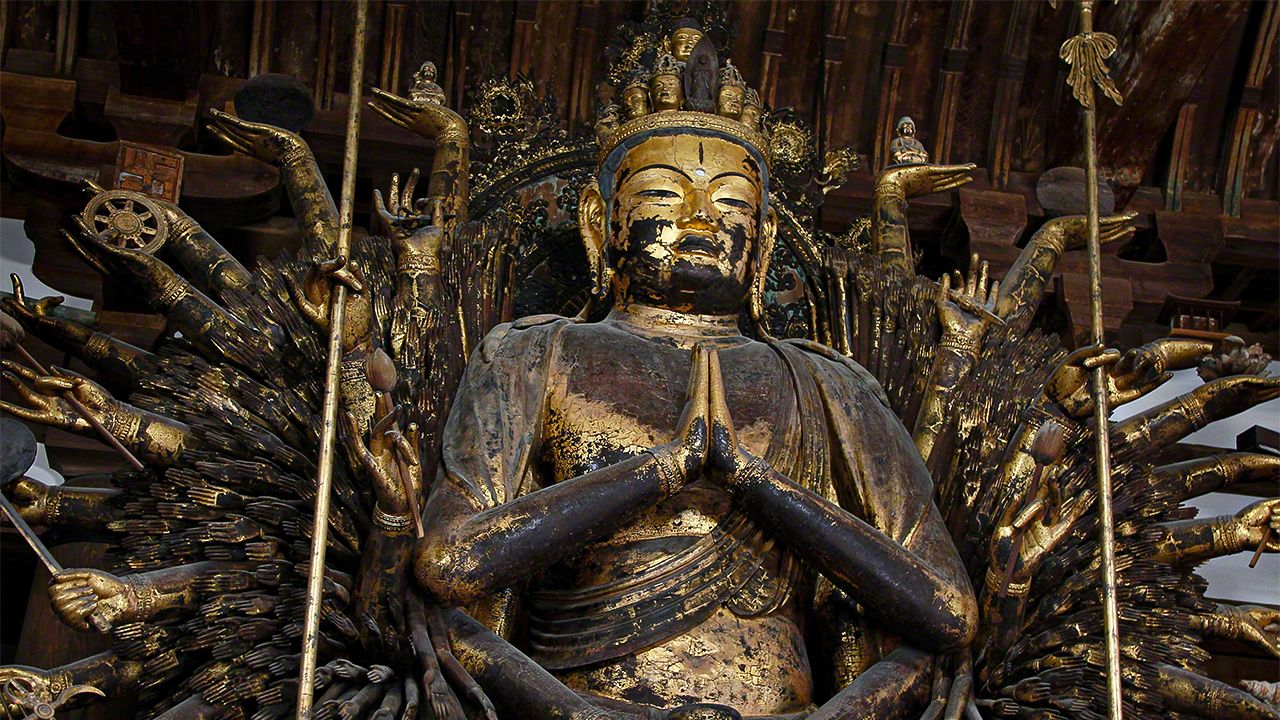
Standing Image of the Thousand-Armed Kannon at Tōshōdaiji, Nara
Images Art History Culture- English
- 日本語
- 简体字
- 繁體字
- Français
- Español
- العربية
- Русский
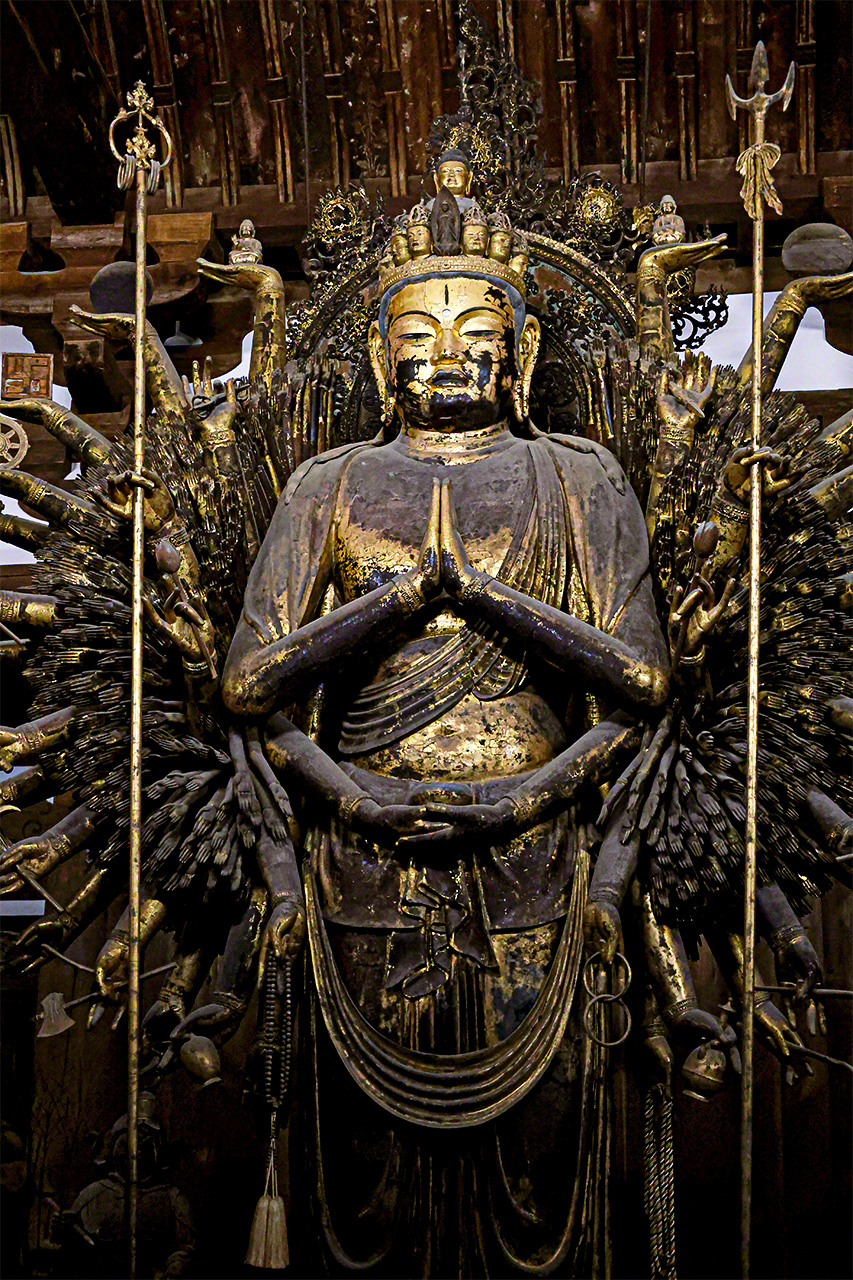
The dominant face is marked by an expression of sadness; above the main head are 10 more faces, surrounded by countless arms that extend in all directions. This awe-inspiring figure of grace and mercy is the Standing Image of the Thousand-Armed Kannon at Tōshōdaiji in Nara, a national treasure.
(© Muda Tomohiro)
Carved vertically into the forehead of the main face is the “third eye” symbolizing wisdom and the ability to penetrate to the true nature of things. This third eye is also known as the “compassionate eye” or the “heavenly eye.” But the chief characteristic of the image is its many arms of different sizes—as many as 953 in all. It is believed that when the statue was first made, it really did have literally 1,000 arms.
Although originally a thousand-armed Kannon was supposed to have one thousand arms, the amount of labor involved in constructing such a complex image meant that from the Heian period (794–1185) on it became common to represent the bodhisattva with two main hands held together in prayer and 40 supplementary arms extending from both sides of the torso, for a total of 42 arms. The belief was that each of these supplementary arms was capable of bringing salvation to 25 worlds, thus symbolically representing 1,000 arms in total. Only three examples in Japan exist of so-called “true” thousand-armed Kannons that actually have 1,000 arms: this image at Tōshōdaiji, along with those at Fujiidera in Osaka Prefecture, and Juhōji in Tanabe, Kyoto Prefecture. This makes this image an extremely rare and important example.
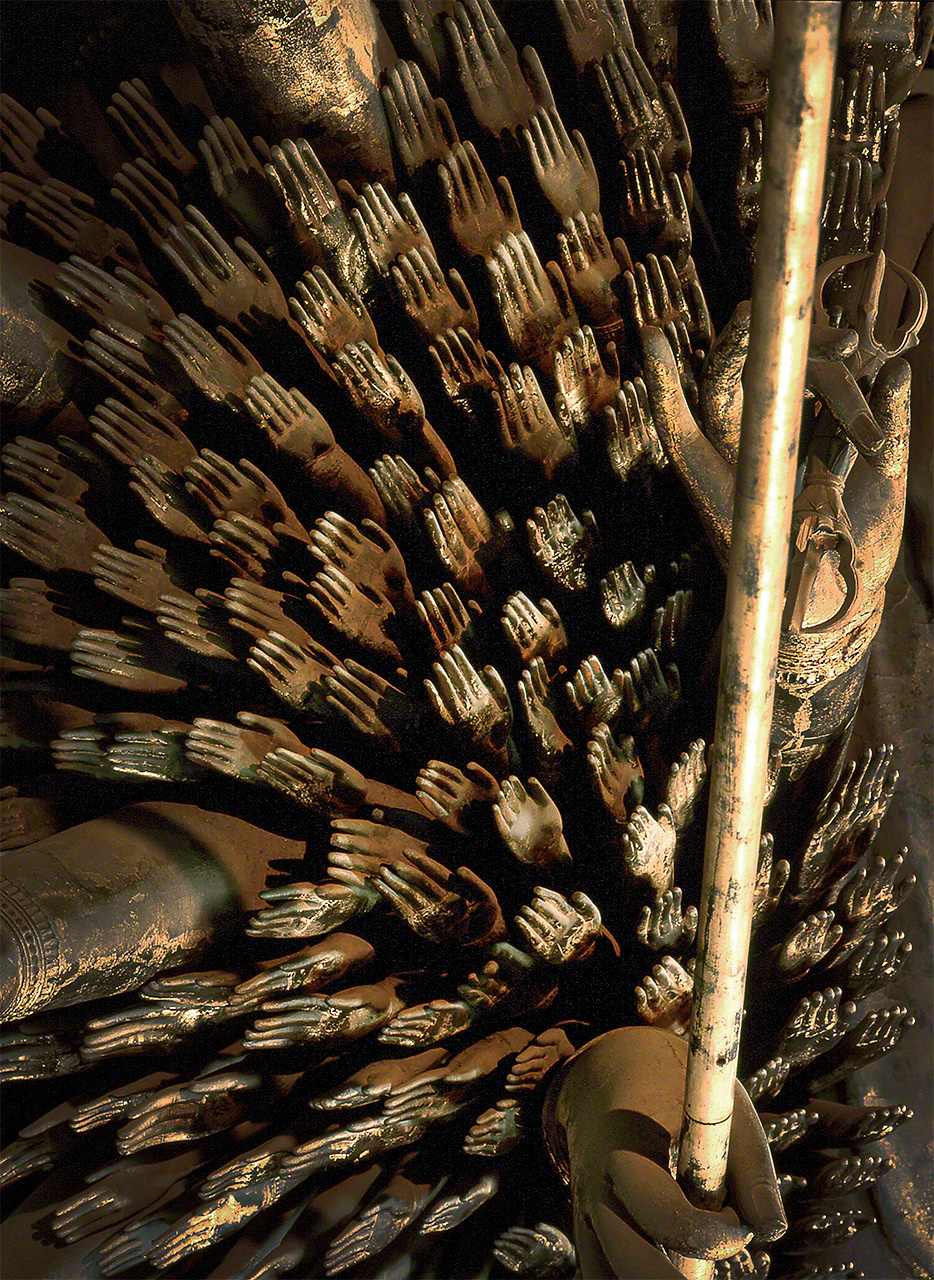
The small hands densely planted between the 42 large arms express the ability of the bodhisattva to save all living things without exception. (© Muda Tomohiro)
The image was made using the mokushin kanshitsu-zukuri (“wood-core dry lacquer”) technique. First a wooden core was carved from hinoki cypress, then the surface was built up and molded with kokuso-urushi, a paste made by mixing wood powder and other materials into lacquer. Seen from the side, the image has considerable thickness and heft, presumably to give the lower body enough balance and stability to support the weight of the thousand arms.
Tōshōdaiji is an ancient temple closely associated with the revered monk Jianzhen (Ganjin in Japanese) who came to Japan from Tang China at the invitation of the Emperor Shōmu. His journey involved repeated hardships and setbacks, and his attempts to reach Japan ended in shipwreck and disaster no fewer than five times before he finally succeeded. After around five years at Tōdaiji, in 759 he received the former residence of a nobleman and founded Tōshōdaiji there as a new center of Buddhist discipline and training.
In the years that followed, helped by donations from the imperial court and other sources, the temple complex gradually expanded. The Kondō main hall was completed after the death of Ganjin’s death.
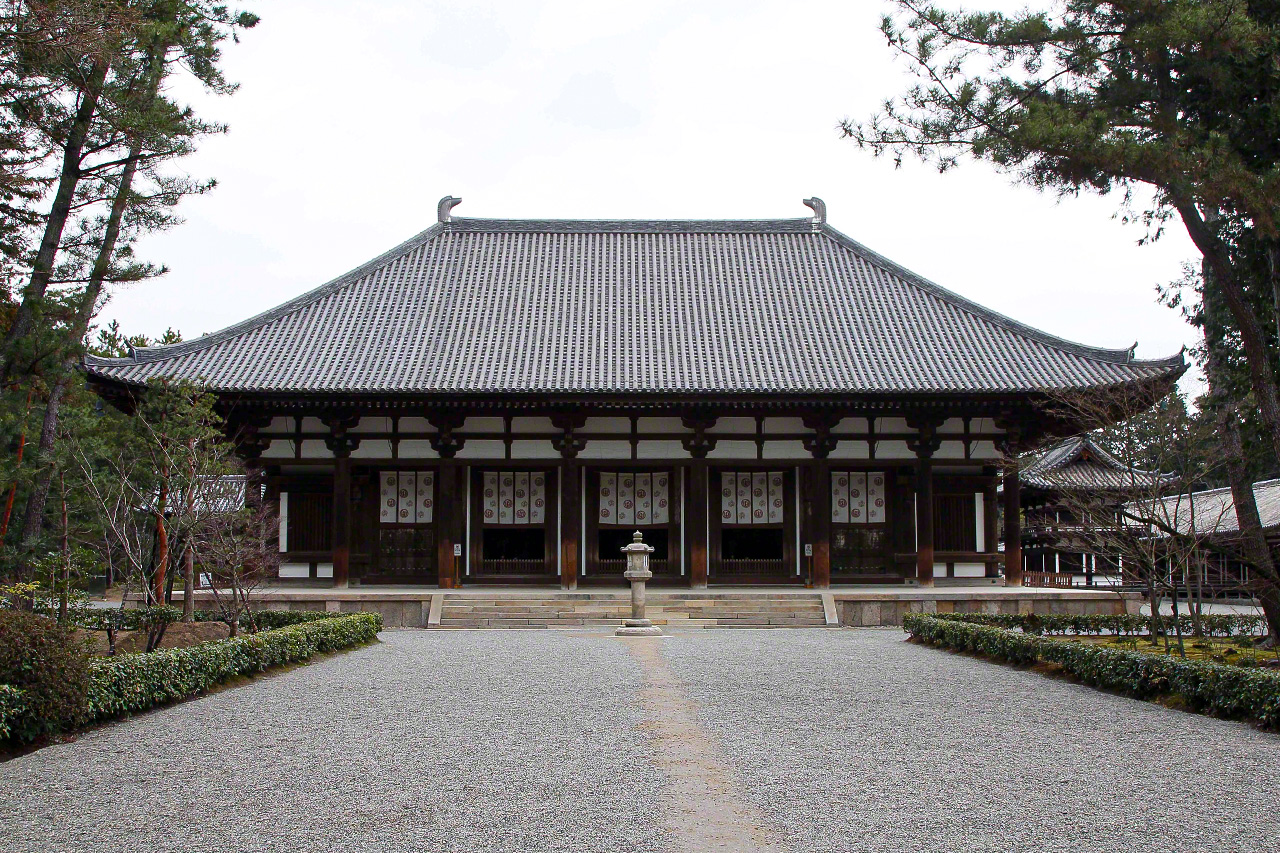
The Kondō Main Hall at Tōshōdaiji is a national treasure. (© Muda Tomohiro)
The main image enshrined in the Kondō is a seated image of the Rushana Buddha (the same Vairocana depicted in the famous Great Buddha image at Tōdaiji). Despite being seated, this sculpture reaches a height of more than 3 meters—more than 5.15 meters if the halo is included. Flanking the main image are two other sculptures of similarly impressive scale: on the right from the viewer’s perspective is an image of Yakushi Nyorai (Bhaisajyaguru, or the Medicine Buddha) standing 3.36 meters high, and on the left this image of the Thousand-Armed Kannon, itself 5.36 meters in height. Together, the three sculptures create an overwhelming impression of grandeur and power. Standing almost squeezed in between them are images of Taishakuten and Bonten, while the four corners of the hall are guarded by the Four Heavenly Kings. All of these images are designated national treasures, making this an extremely rich and concentrated sacred space.
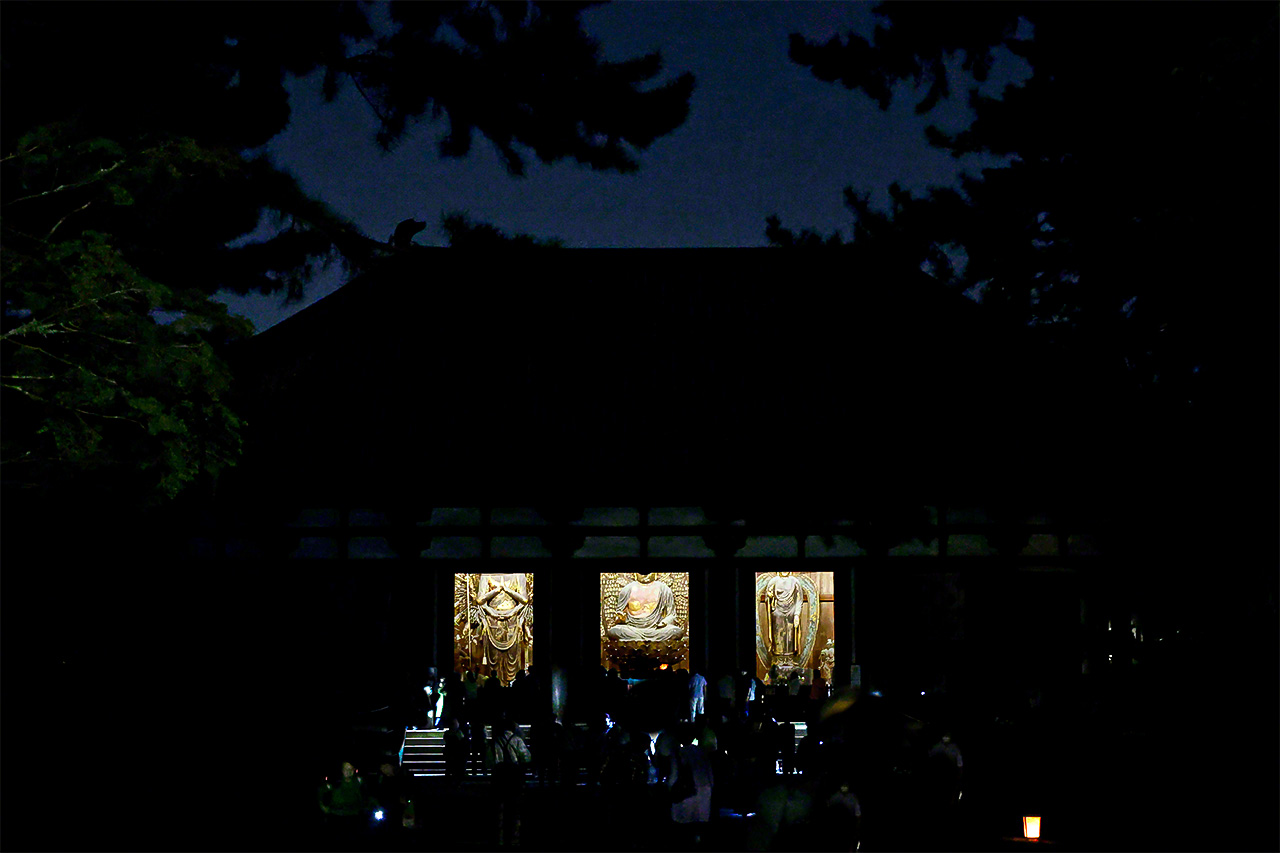
Every year at the time of the harvest moon, a ceremony known as the Kangetsu sanbutsu-e is held in the Kondō main hall. In the darkness of night, the three great images can be seen shining through the opened doors of the hall, illuminated by light from within. From left: Thousand-Armed Kannon, Rushana Buddha, Yakushi Nyorai. (© Muda Tomohiro)
Of all the treasures of this temple, for photographer Muda Tomohiro the Thousand-Armed Kannon stands out as something special. “As I stand looking up at the figure shining with golden light, the countless arms behind it start to feel like the warm rays of the sun, embracing me. It fills me with a boundless sense of reassurance and peace of mind.”
Standing Image of the Thousand-Armed Kannon at Tōshōdaiji
- Height: 5.36 meters
- Date: Nara period (710–794)
- Tōshōdaiji (Nara Prefecture)
- National treasure
(Originally published in Japanese. Banner photo: Thousand-Armed Kannon at Tōshōdaiji, Nara. © Muda Tomohiro.)