Bronze Standing Statue of the Shaka Buddha at Birth at Tōdaiji, Nara
Images Art History Culture- English
- 日本語
- 简体字
- 繁體字
- Français
- Español
- العربية
- Русский
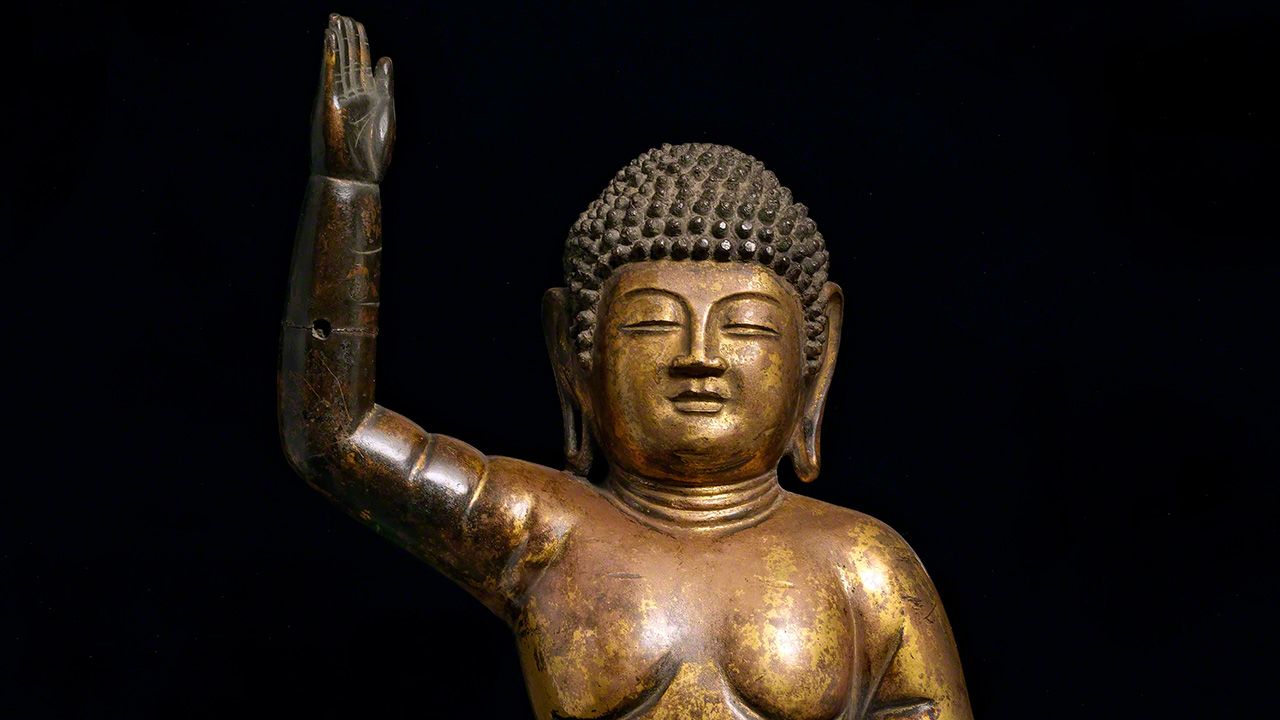
This adorable statue, held at the temple of Tōdaiji in Nara, is a charming depiction of the Shaka Buddha at Birth.
April 8 is marked as the birthday of Shakyamuni, the historical Buddha. The occasion is celebrated with colorful rituals at Buddhist temples across Japan known as Hanamatsuri (Flower Festival) or Kanbutsue. At the celebrations are images depicting the Buddha as a newborn child. According to legend, he was born from his mother Maya’s right side and after walking seven steps, pointed his right hand toward the sky and his left to the earth, declaring: “I alone am honored in heaven and on earth.”
Kanbutsue has been observed since the Asuka period (593–710). In the Edo period (1603–1868), the custom became widespread of pouring sweet hydrangea tea over statues of the newborn Buddha, a tradition that continues today.
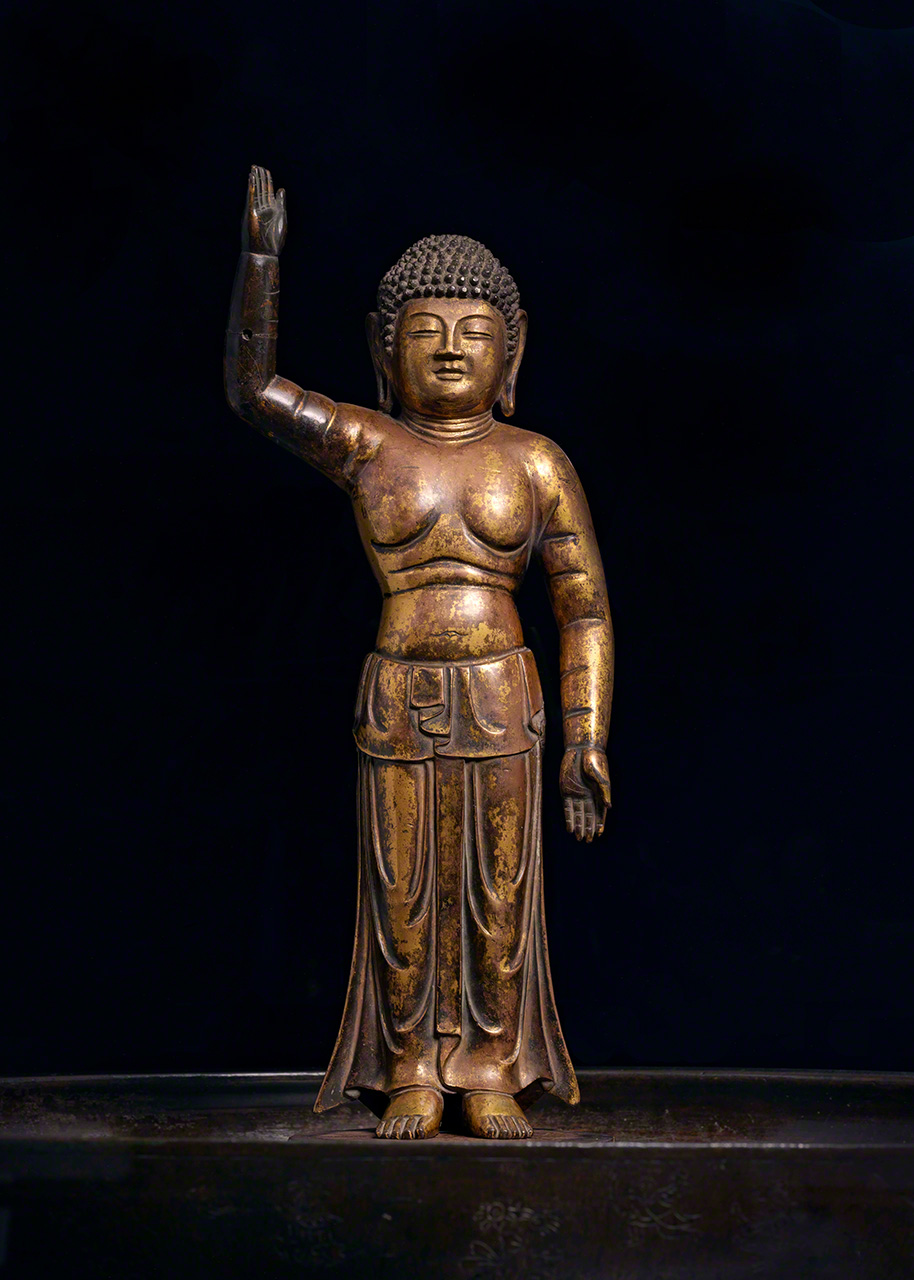
At Tōdaiji, the ritual is known as Busshōe (Ceremony of the Buddha’s Birth). In front of the Main Hall housing the famous Great Buddha, a small pavilion is set up and decorated with colorful camellia and Japanese andromeda (asebi) flowers to house the image of the newborn Buddha during his birthday celebrations. Since it would be unthinkable to pour sweet tea over a national treasure, the image used in the Hanamatsuri ritual is a replica. The original is kept in the Tōdaiji Museum on the temple grounds, together with the gilt bronze basin used to receive the sweet tea and other treasures from the temple’s long history.
(© Muda Tomohiro)
The image skillfully conveys the presence of a newborn child, with eyes gently narrowed in a faint smile and softly rounded cheeks and arms. At the same time, the head is adorned with the rahotsu (snail-like curls that are associated with enlightenment), giving the figure an air of serene dignity.
Although the statue is regarded as a masterpiece from the Tenpyō era (729–749), no documentary record of the image’s provenance survives, and its maker is unknown. The soft expression and slightly pudgy physique show similarities with the reliefs of music-playing bodhisattvas on an octagonal lantern believed to have been dedicated at the “eye-opening” ceremony of 752, when lanterns were offered to illuminate the Great Buddha (Vairocana). For this reason, the dominant view among scholars is that the Birth Buddha also dates from the same period.
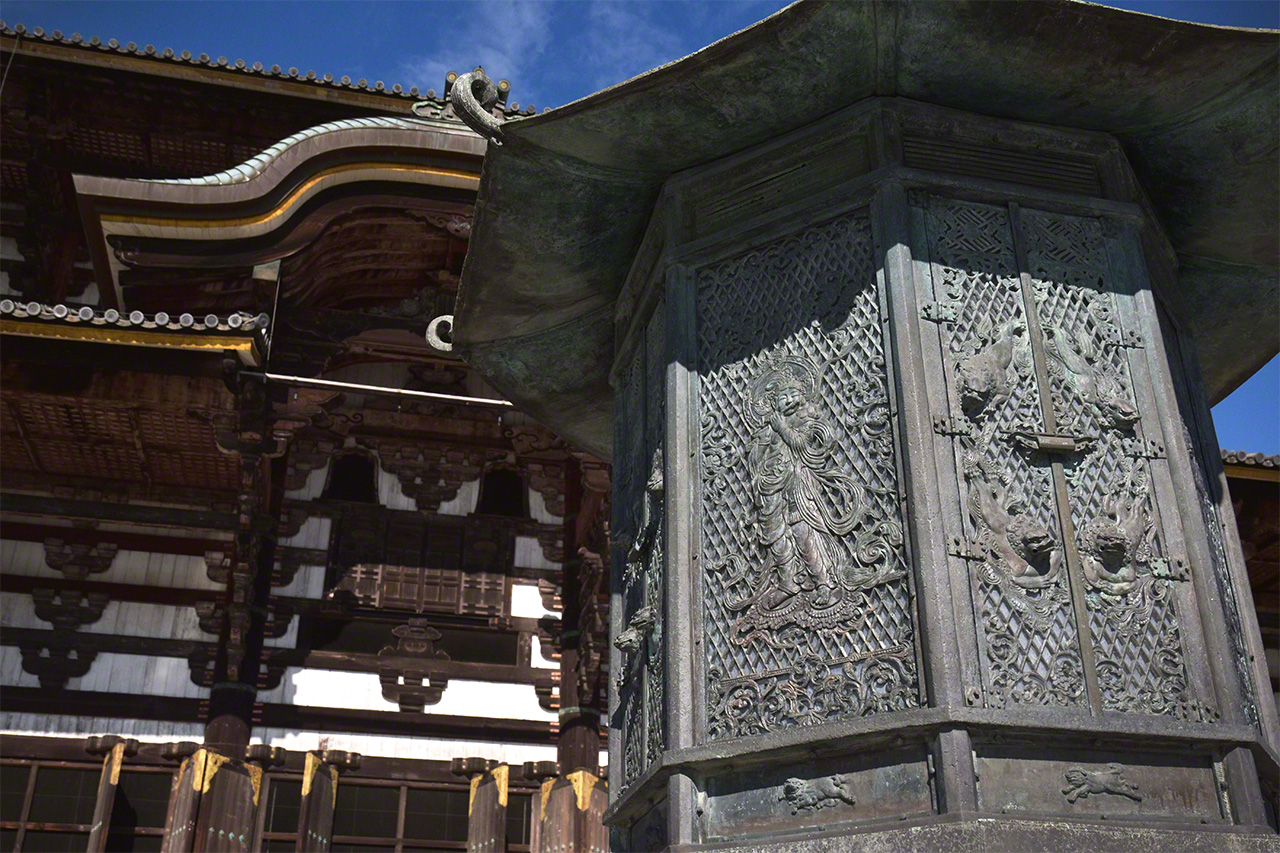
The octagonal lantern that stands in front of the Great Buddha Hall at Tōdaiji. At around 4.6 meters, it is the largest as well as the oldest gold-and-bronze lantern in Japan, and a national treasure. (© Muda Tomohiro)
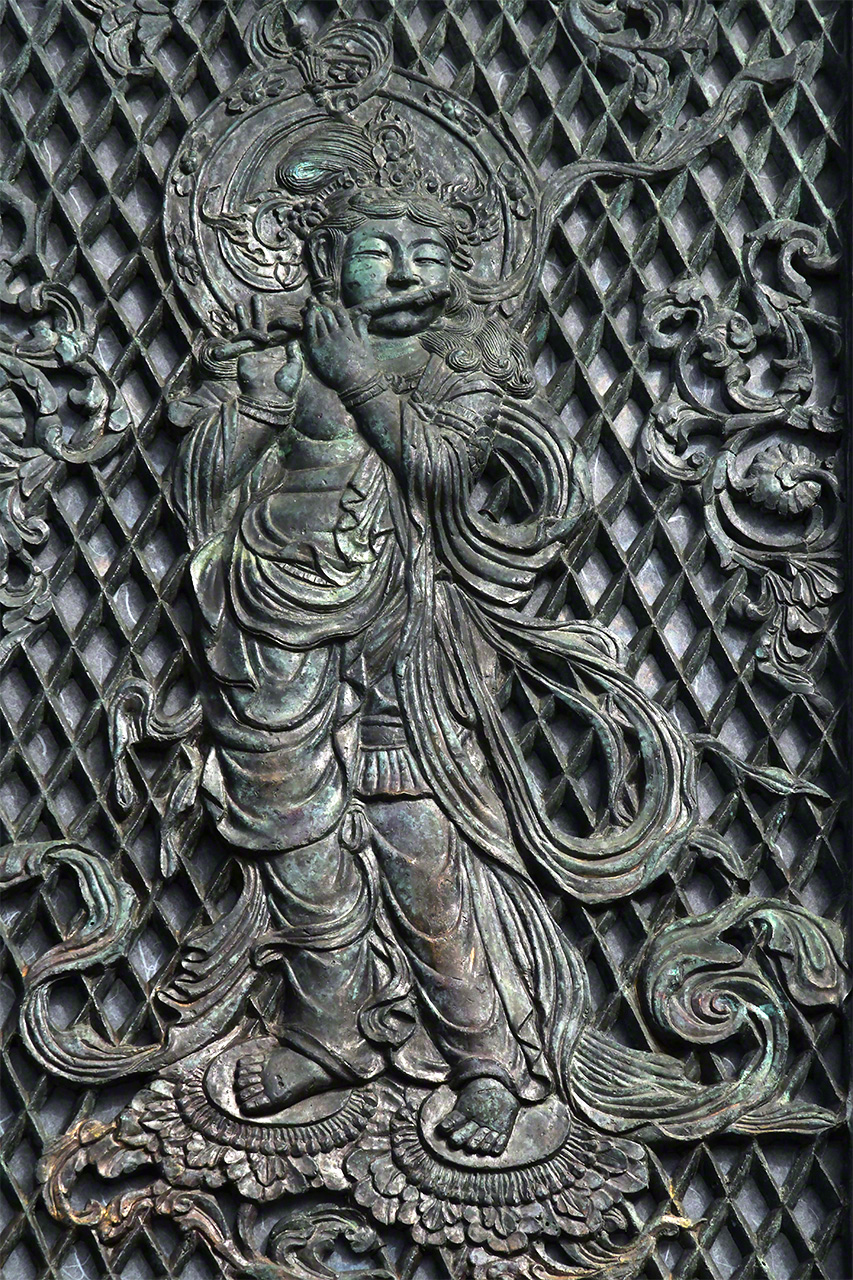
The four sides of the lantern depict bodhisattvas playing flutes and other musical instruments. (© Muda Tomohiro)
When looking at this image, however, questions such as who made it or what period it might belong to start to feel beside the point. Instead, one is struck by the gentle gaze that seems to transcend time, quietly posing to us in the present the question: What is the Buddha?
As a general rule, images of the newborn Buddha tend to be small in scale. The statue at Shōgenji, for example, dating from the Asuka period and believed to be the oldest surviving example in Japan, is a small image in gold and bronze less than 10 centimeters in height. This image at Tōdaiji is much larger: at 47.5 centimeters, it is the largest surviving ancient image of the Buddha at Birth in the country.
“The impression it conveys is quite different from other images of the Buddha’s birth, where a cuteness and childishness are brought to the fore,” says photographer Muda Tomohiro. “This image feels full of confidence—as if the child knows that he has been born to save the world from suffering.”
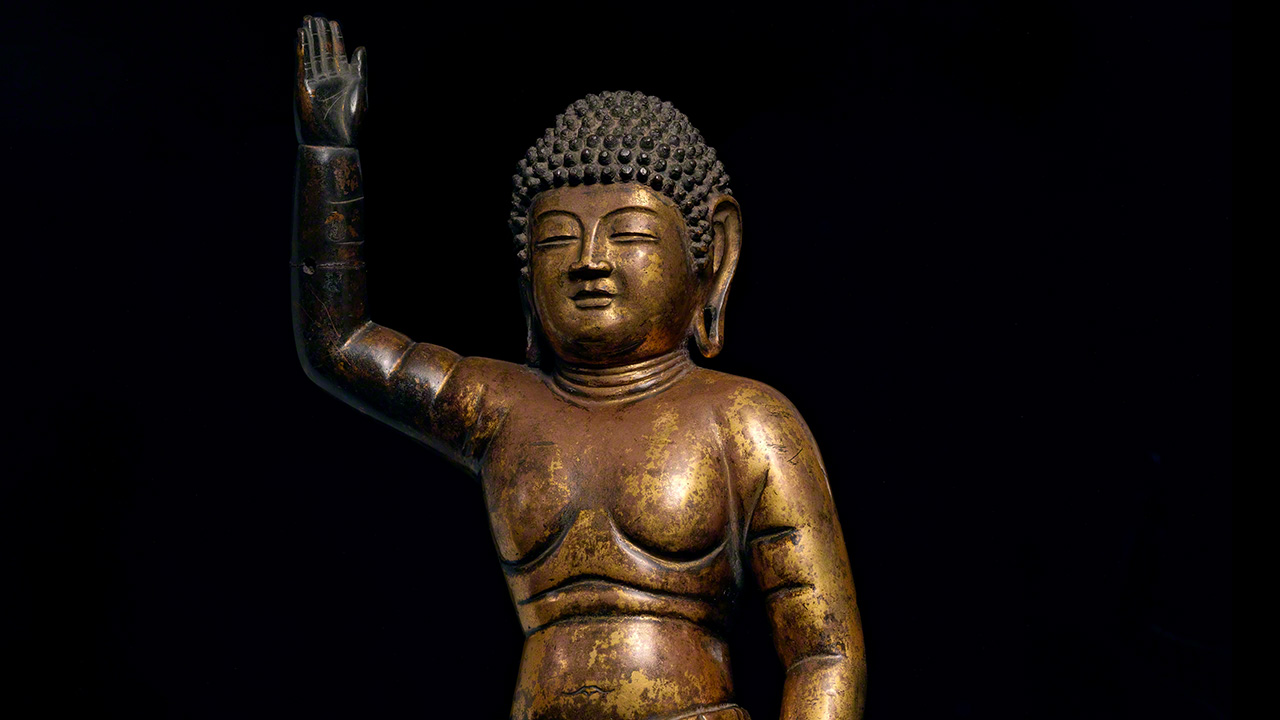
(© Muda Tomohiro)
Bronze Standing Statue of the Shaka Buddha at Birth
- Height: 47.5 cm
- Date: Nara period (710–94)
- Tōdaiji, Nara
- National treasure
View More Tōdaiji Buddhist Images:
(Originally published in Japanese. Banner photo: Bronze standing statue of the Shaka Buddha at birth, Tōdaiji, © Muda Tomohiro.)