The Japanese Masterpiece That Lost Its Head: The 1,000-Year-Old Usuki Stone Buddha
Images Culture History- English
- 日本語
- 简体字
- 繁體字
- Français
- Español
- العربية
- Русский
Weathered by a thousand years of wind and rain, the Usuki Stone Buddhas continue to radiate a quiet and unmistakable compassion. Ōita Prefecture is home to roughly 400 magaibutsu—cliff-carved Buddhist images sculpted directly into rock faces—amounting to about 70% of the national total. Historical and geological factors account for this remarkable concentration. Buddhism flourished in Kyūshū, long a gateway for continental culture, and a massive volcanic eruption 90,000 years ago created rock formations ideally suited for carving.
A particularly striking group of 61 magaibutsu is scattered across a hillside in the southern Ōita city of Usuki, dating from the late Heian (794–1185) to early Kamakura (1185–1333) periods. Clustered around four areas, they offer distinct glimpses into the spiritual landscape of the time. Their refined carving techniques, astonishingly delicate for sculptures hewn from rock, have earned all 61 figures national treasure status.
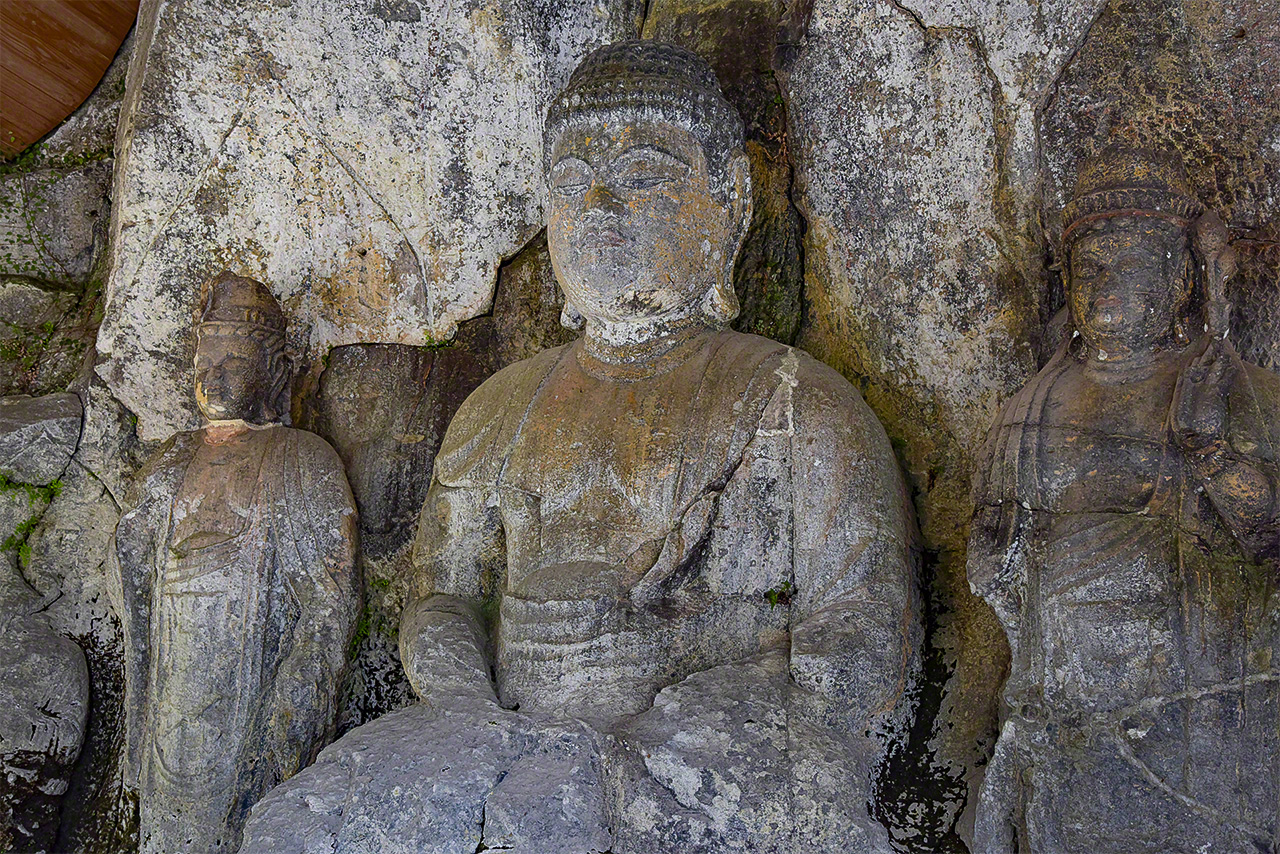
The Amida Triad in the second Hoki cluster. (© Muda Tomohiro)
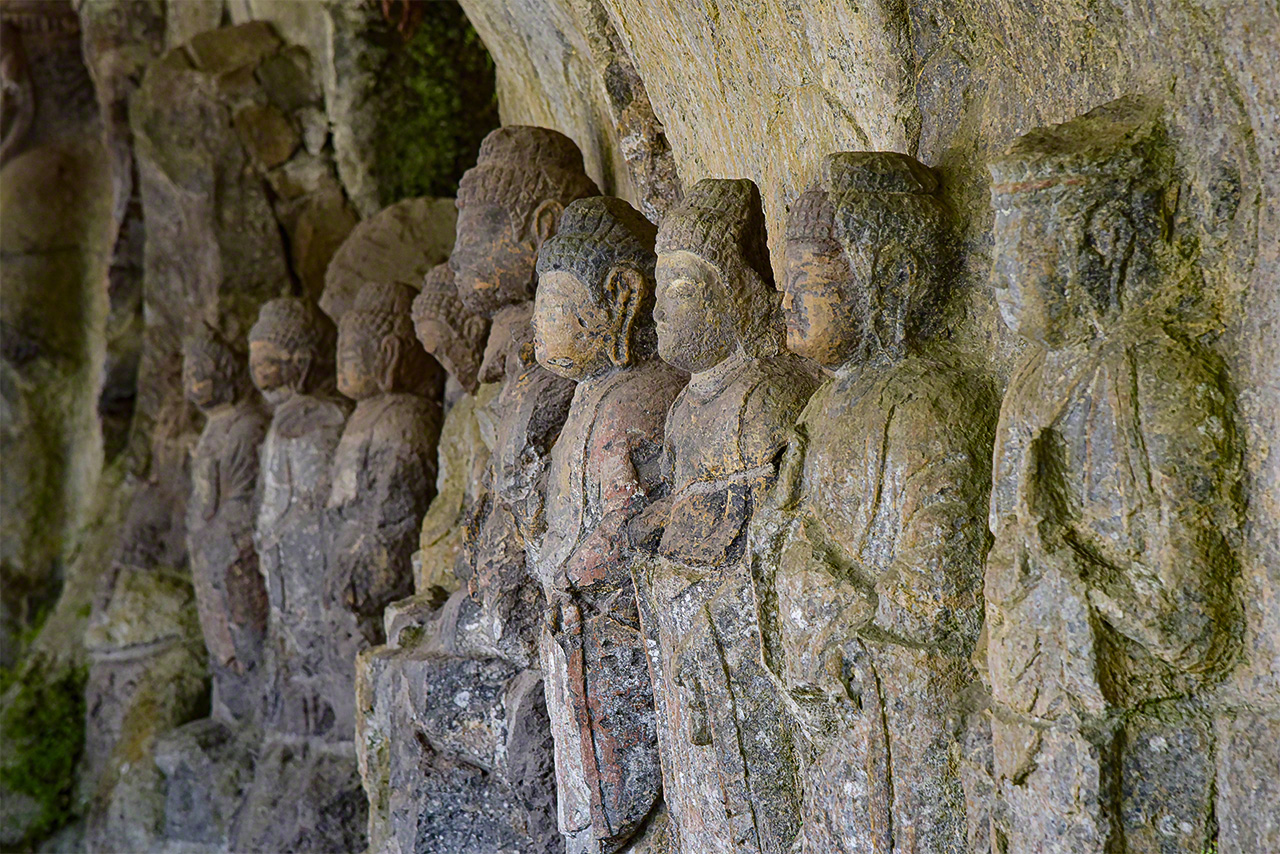
Statues of the nine grades of Amida Nyorai in the second Hoki cluster. (© Muda Tomohiro)
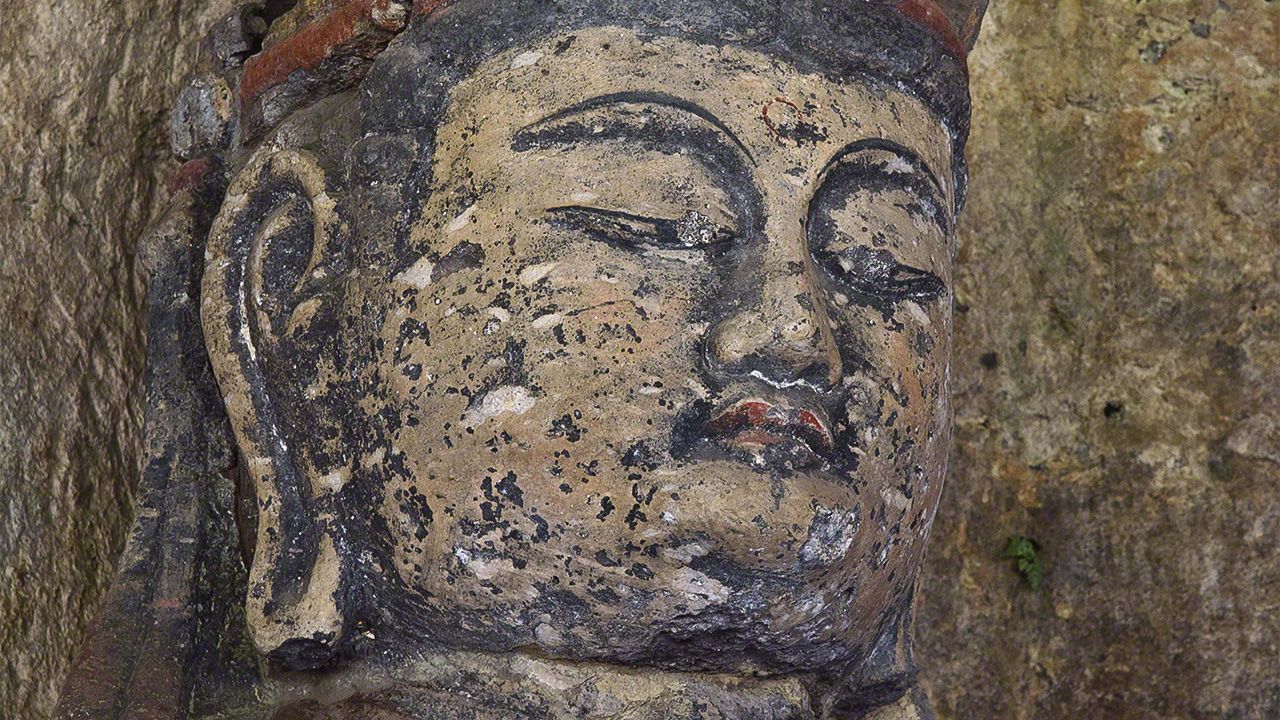
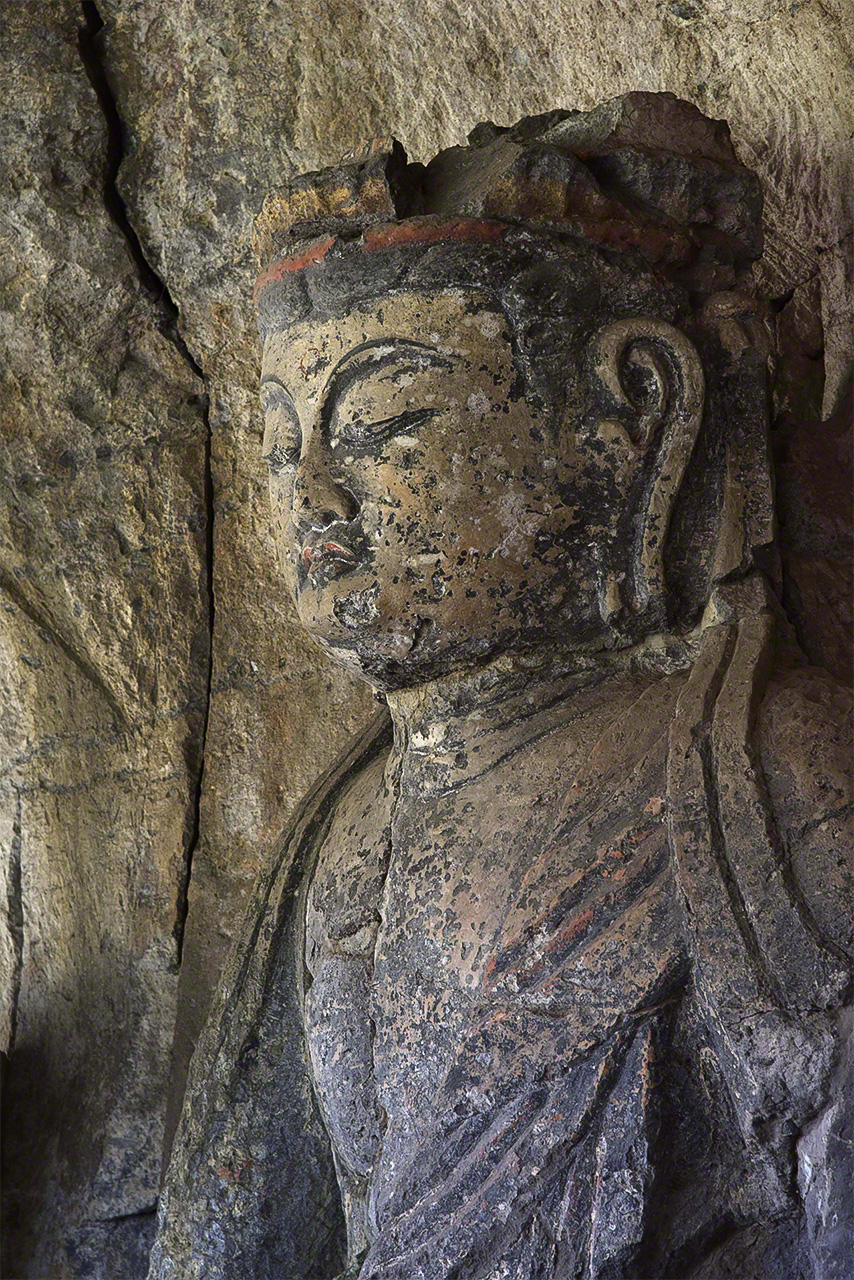
The most outstanding of these statues is widely considered to be the Dainichi Nyorai (Mahāvairocana) of the Furuzono cluster. Set within in a large rock recess, the seated figure occupies the center of a row of 13 Buddhas. At 2.8 meters, it is also the largest of the Usuki Stone Buddhas. The face is full and dignified, and faint traces of pigment—black on the brows and eyes, vermilion on the jeweled crown—suggest that the statue had once been rendered in vivid color.
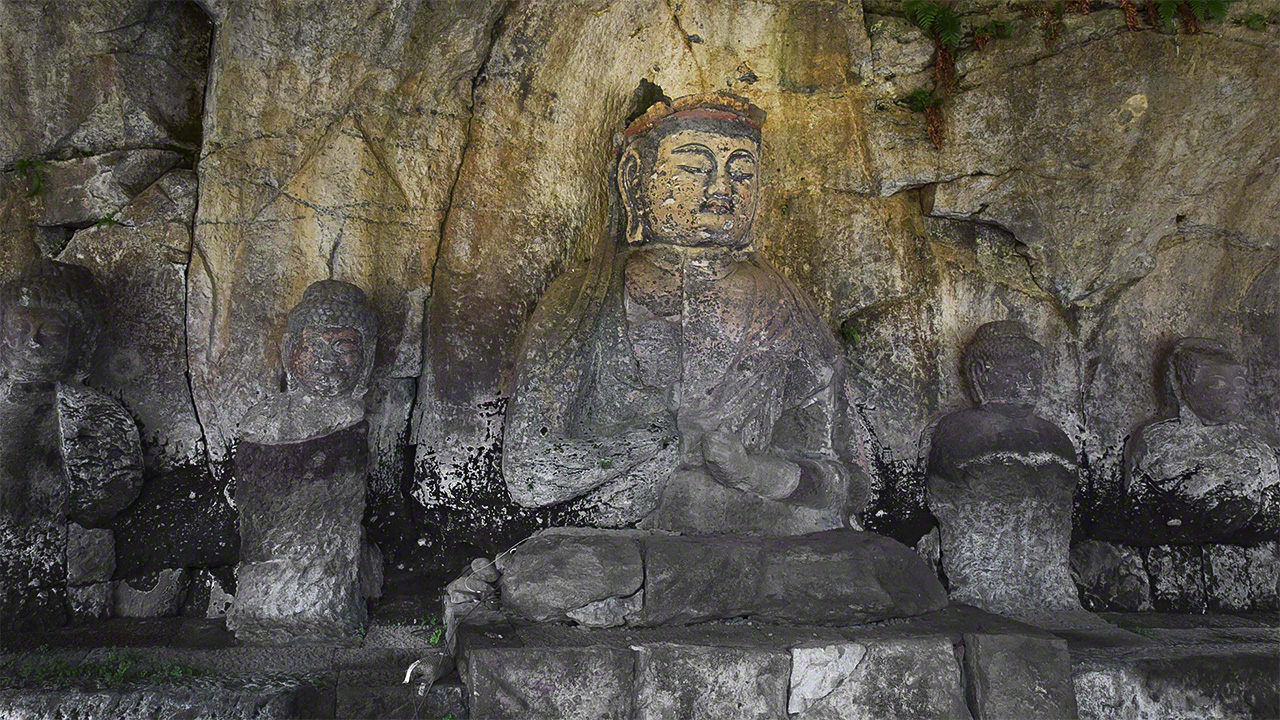
The Dainichi Nyorai, the supreme cosmic Buddha, is flanked by 12 attendant figures at the center of the Furuzono cluster. (© Muda Tomohiro)
For centuries, the Usuki Stone Buddhas stood exposed to the elements, and many lost their heads or arms. The head of the Dainichi Nyorai, too, fell from its torso in the mid-Edo period (1603–1868) and remained resting on the pedestal below. Photographer Domon Ken (1909–1990) captured this fallen-head figure in his celebrated photo book A Pilgrimage to Ancient Temples, juxtaposing the natural decay of time with the statue’s enduring dignity, which continued to inspire devotion.
When the Usuki Stone Buddhas underwent major restoration from 1980 to 1993, experts fiercely debated whether the head should be reattached or preserved in its fallen state as part of the statue’s history. Ultimately, because reinstating the head was required for national treasure designation, the statue was restored to its present form.
(© Muda Tomohiro)
Domon’s photo of the fallen‑head Dainichi Nyorai is still etched deeply in the memory of photographer Muda Tomohiro. “When I actually visited the site, I didn’t immediately recognize it as the same Dainichi Nyorai,” he recalls, describing a sense of dissonance. “The head had been restored, and a roof had been added to shield it from rain, wind, and direct sunlight.
“But as I continued photographing it, I realized that the statue’s downward gaze—filled with compassion—was always meant to be looked up to.”
Rock Carving of Dainichi Buddha, Usuki Magaibutsu
- Height: 2.8 meters
- Date: Late Heian period to early Kamakura period
- The city of Usuki (Ōita Prefecture)
- National treasure
(Originally published in Japanese. Banner photo: Rock carving of Dainichi Buddha, Usuki Magaibutsu. © Muda Tomohiro.)