Nara’s Three-Faced Ashura: The Resolute, Sorrowful Gazes of a Kōfukuji Masterpiece
Images Art History- English
- 日本語
- 简体字
- 繁體字
- Français
- Español
- العربية
- Русский
An Unwavering Gaze in Nara
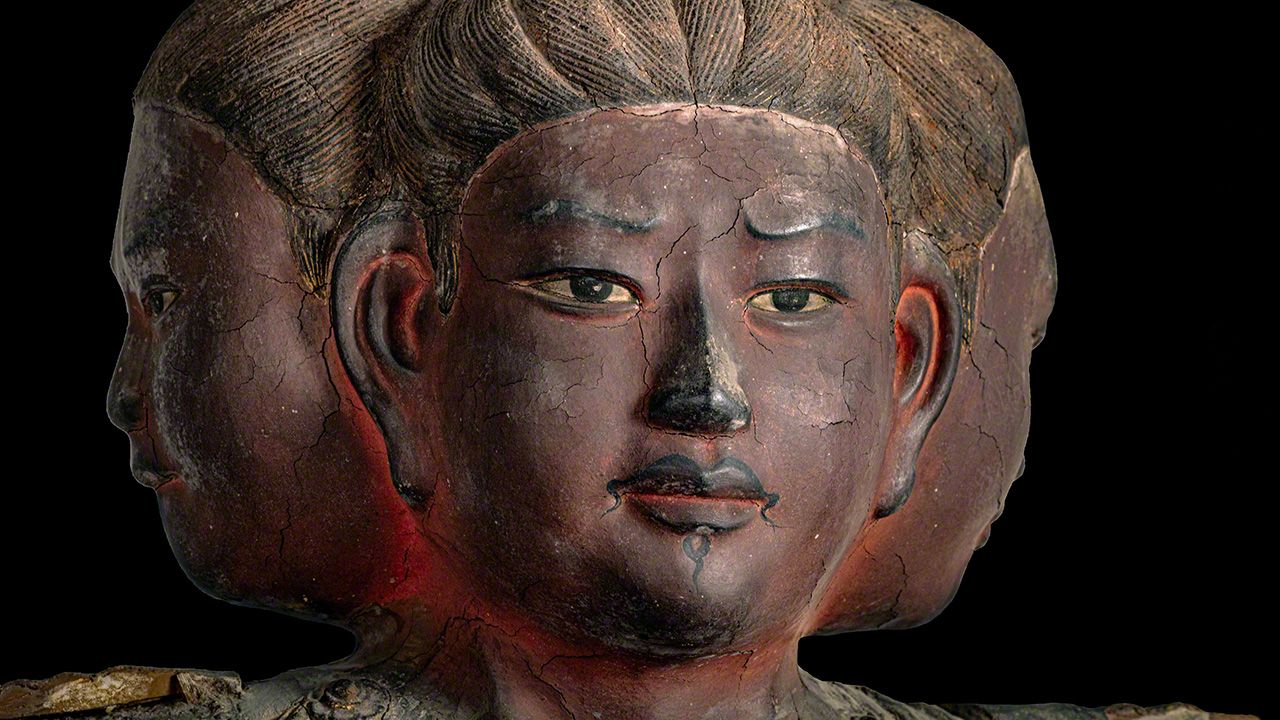
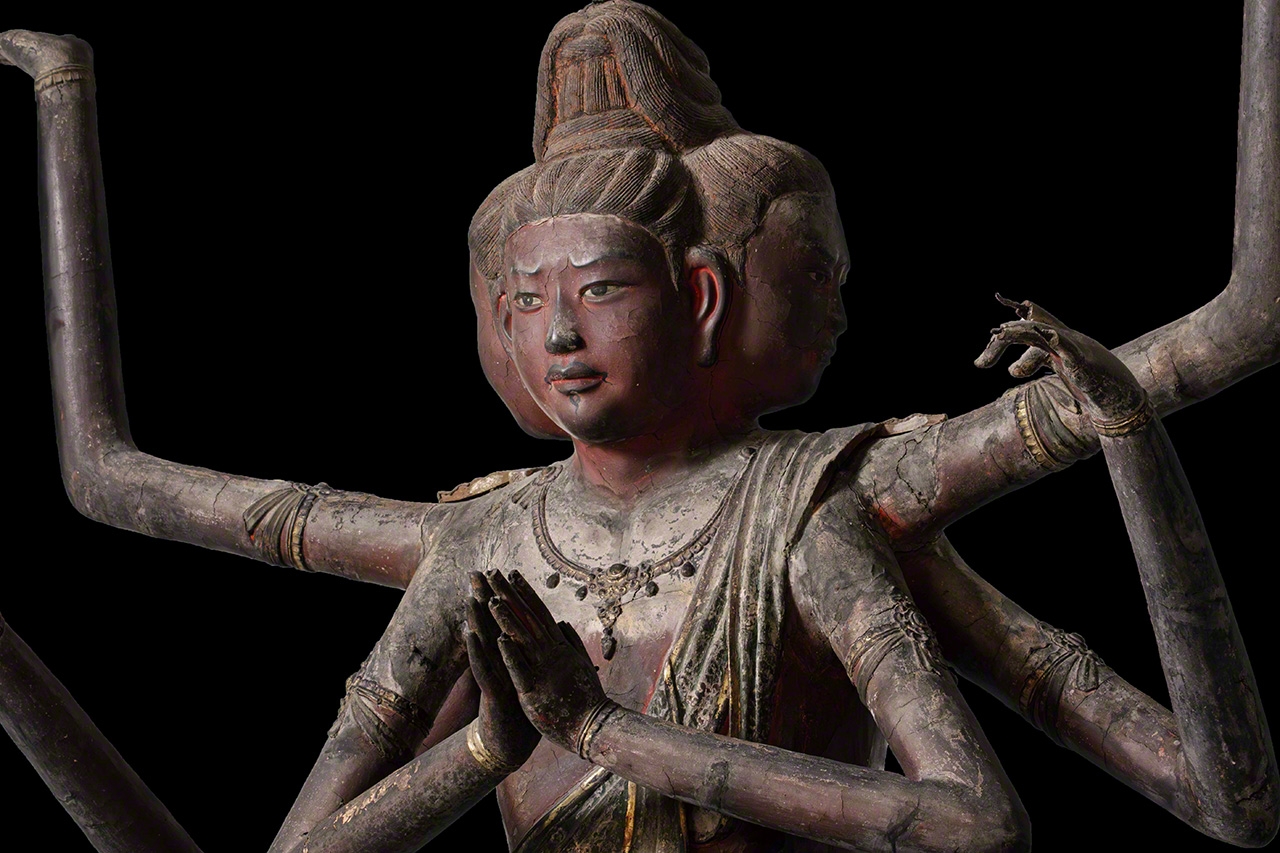
The Ashura statue of the temple Kōfukuji in Nara seems at once burdened by sorrow and fixed on the future with quiet determination. A national treasure, it stands as one of the finest examples of Tenpyō era (710–83) Buddhist sculpture.
(© Muda Tomohiro)
Kōfukuji traces its origins to the seventh century, when the temple Yamashinadera was built in Kyoto to pray for the recovery of Fujiwara no Kamatari—the founder of the powerful Fujiwara clan. The temple was later moved to the capital in Asuka; Kamatari’s son Fuhito subsequently transferred it to Nara and renamed it Kōfukuji.
In 734, Empress Kōmyō—Fuhito’s daughter and wife of Emperor Shōmu—constructed the Western Golden Hall at Kōfukuji to honor her late mother. The statues installed there depicted the Shakyamuni Buddha speaking to his 10 principal disciples, surrounded by 8 mythological guardians of Buddhist teachings.
One of those guardians is Ashura, thought to originate from the war deity Asura, who opposed the god Indra in Hindu tradition. The Japanese word shuraba, meaning “a scene of carnage,” derives from this mythic conflict. In the Buddhist pantheon, however, Ashura is portrayed as a benevolent guardian of the Dharma, having repented and abandoned his vengeful ways upon hearing the Buddha’s teachings.
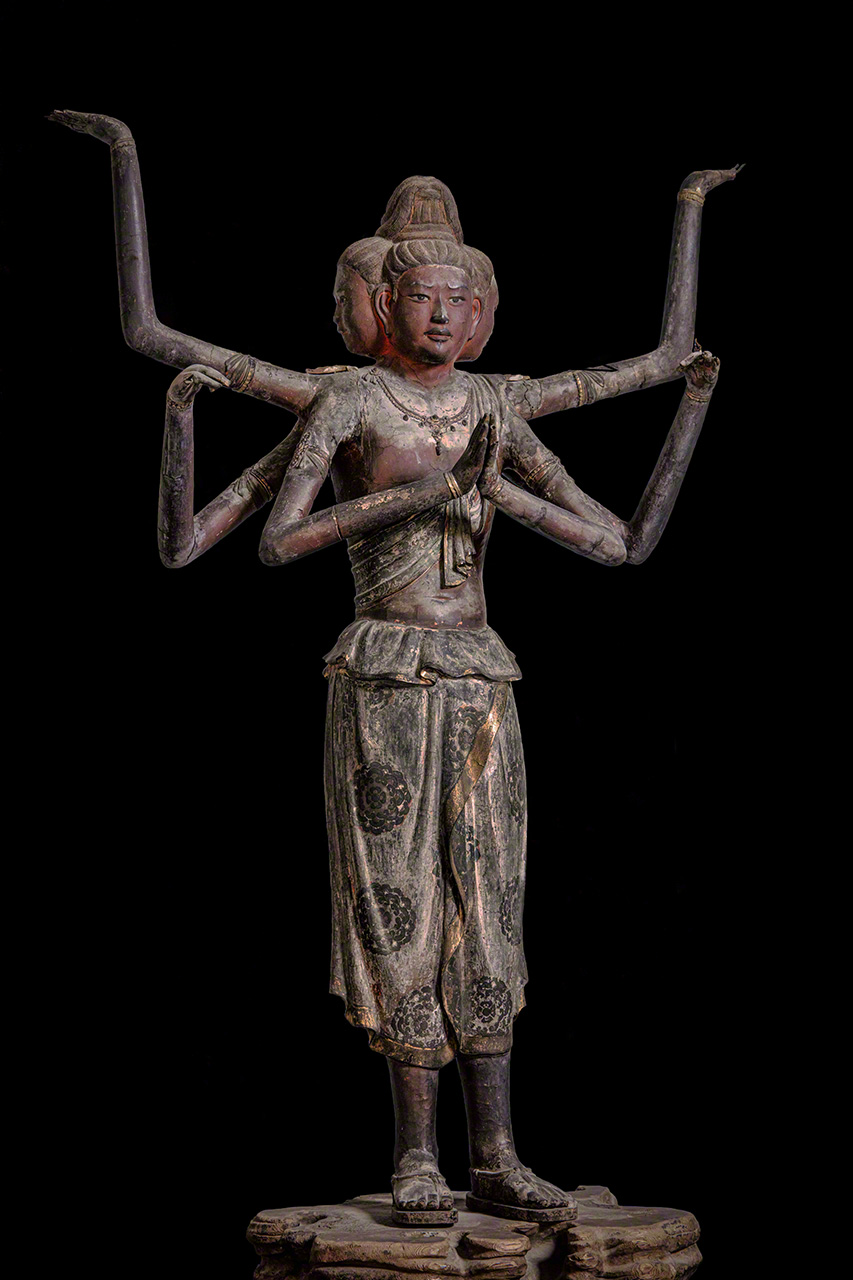
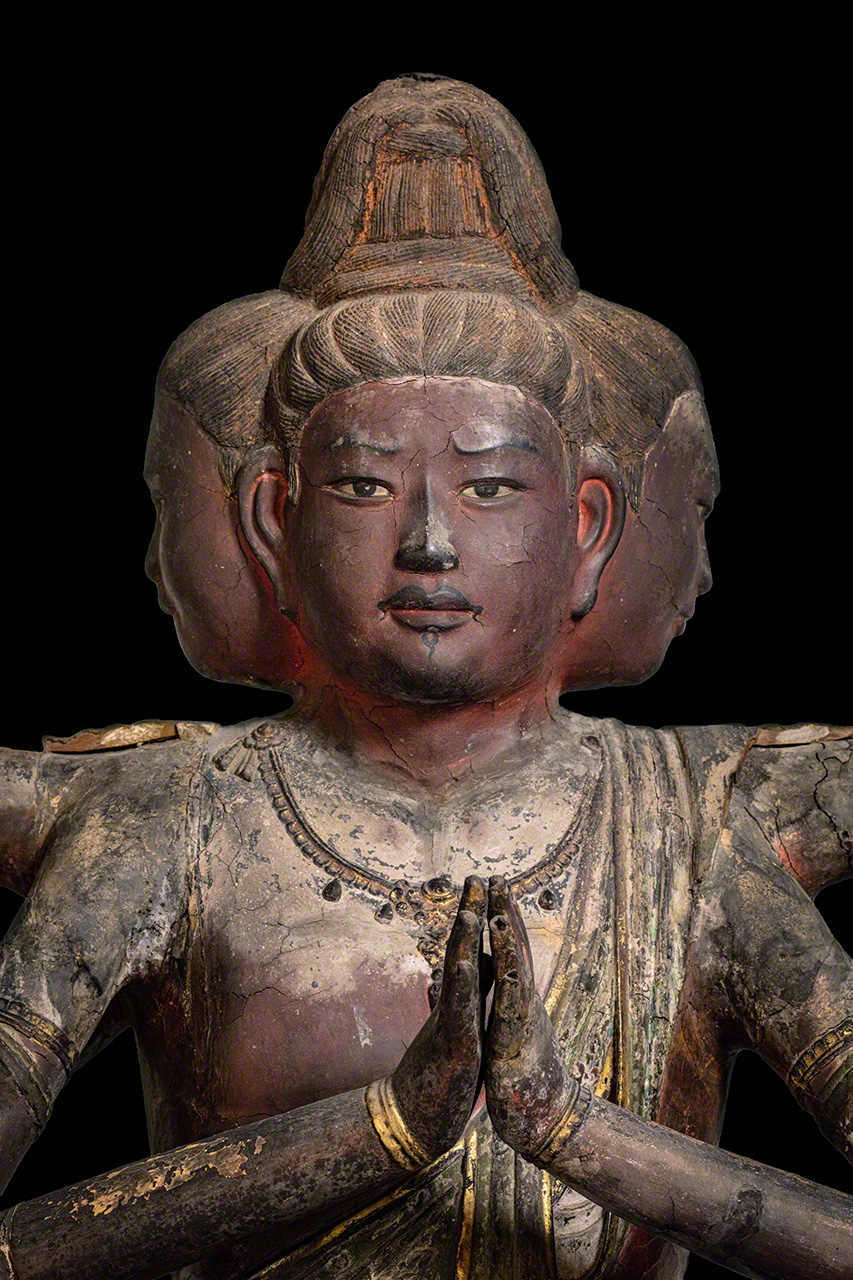
The three‑faced, six‑armed statue’s slender, well-balanced physique and supple arms exude elegance, while its gaze hints at anguish and spiritual yearning behind its solemn façade. It was created using the dakkatsu kanshitsu (dry lacquer) technique introduced from China during the Nara period (710–94). Layers of hemp cloth soaked in lacquer were applied over a clay core; once hardened, the clay was removed and the surface refined with lacquer mixed with wood powder. This method allowed for unprecedented detail, enabling realistic, lifelike expressions.
(© Muda Tomohiro)
The Western Golden Hall was damaged by fire on repeated occasions and repaired each time, but it was not reconstructed after the devastating fire of 1717, as the fortunes of the Fujiwara clan had declined. Even so, the statues escaped destruction, and most are currently displayed in the temple’s National Treasure Hall.
Dry‑lacquer statues are lighter than gilt‑bronze or clay figures, and the Ashura figure weighs only about 15 kilograms. Their lightness likely contributed to their survival, allowing them to be carried quickly to safety during repeated fires.
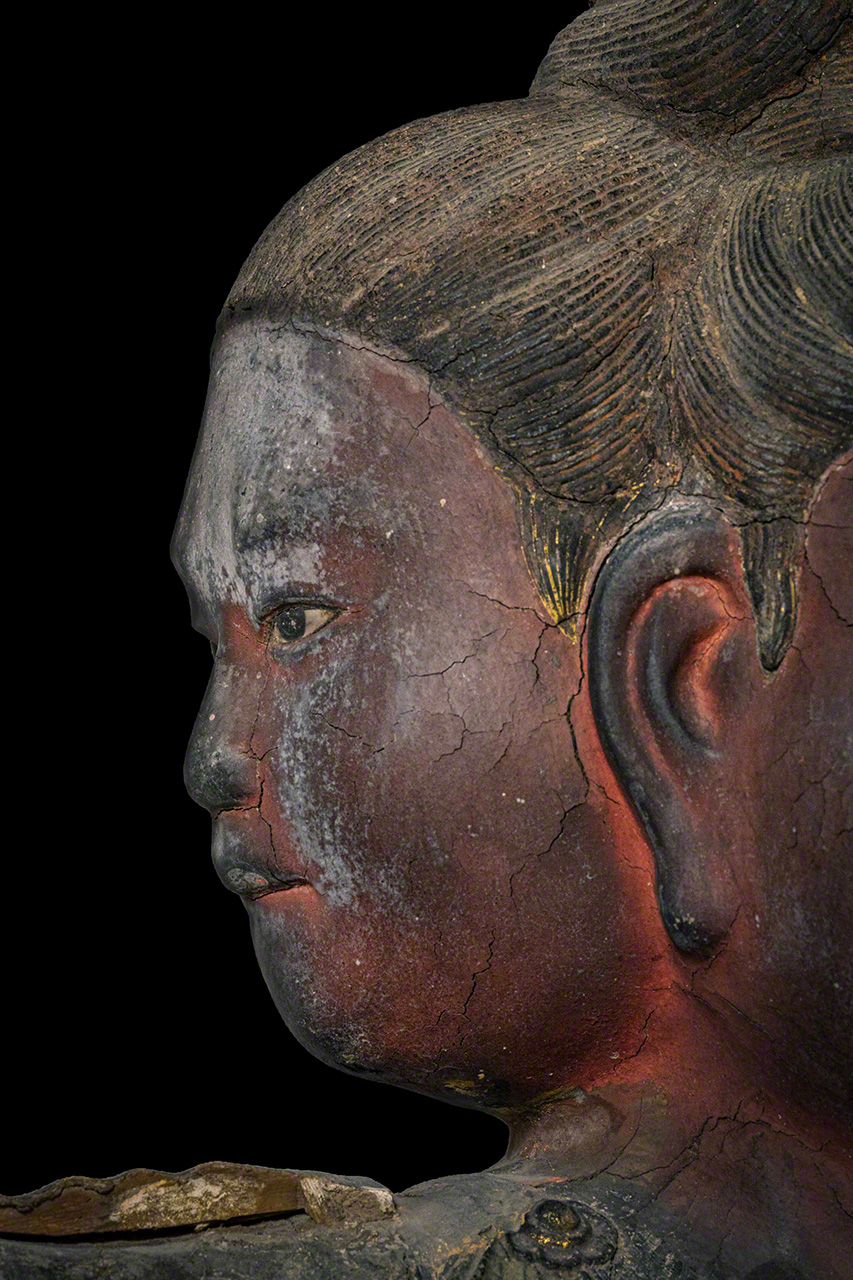
The bitten lower lip of the face on the figure’s left side (as observed) suggests a youth confronting inner turmoil. (© Muda Tomohiro)
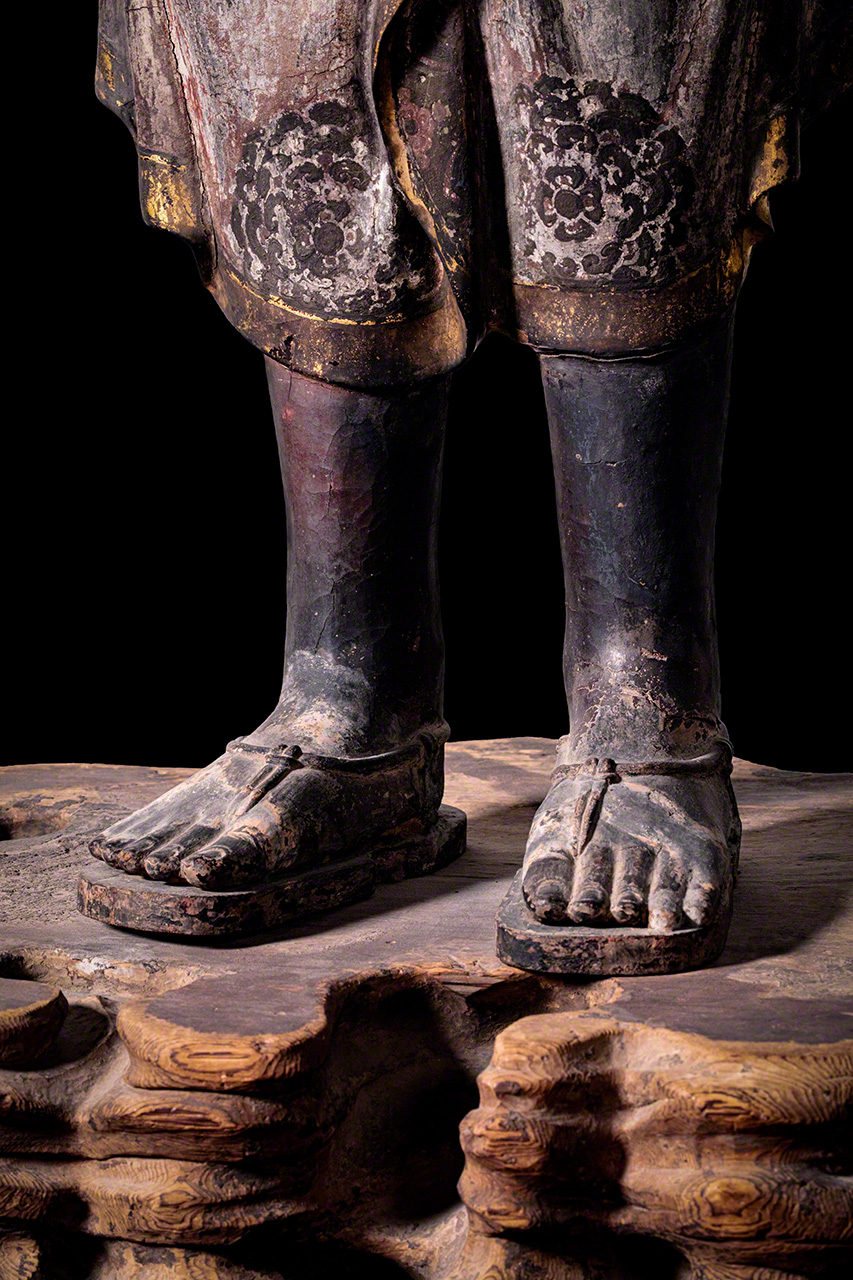
The Ashura figure wears sandals, an unusual detail for a Buddhist statue that lends it a distinctly human feel. (© Muda Tomohiro)
“The front face is often described as that of a sorrowful young man,” recalls photographer Muda Tomohiro, “but as I photographed the statue, I found the gaze to be surprisingly intelligent and clear-headed.
“It revealed a calm and firm resolve—a deliberate effort to subdue inner weakness and conflict. The six arms seemed to radiate that emotional energy.”
(© Muda Tomohiro)
Ashura Statue
- Height: 153.4 cm
- Date: Tenpyō era (Nara period, 710–794)
- Kōfukuji (Nara Prefecture)
- National treasure
View More Kōfukuji Buddhist Images:
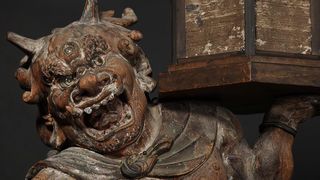
(Originally published in Japanese. Banner photo: The Ashura image at Kōfukuji, Nara. © Muda Tomohiro.)