Manga Media and Content in Postwar Japan
Strong Manga Originals Have Powered Anime’s Global Rise
Art Manga Anime- English
- 日本語
- 简体字
- 繁體字
- Français
- Español
- العربية
- Русский
Making a Connection
In November 2025, the anime movie Demon Slayer: Kimetsu no Yaiba Infinity Castle (released in July) became the first Japanese film to surpass ¥100 billion in global revenue. It has been released in 150 markets worldwide.
The original Demon Slayer: Kimetsu no Yaiba manga by Gotōge Koyoharu was serialized in Weekly Shōnen Jump. Of the 60 to 70 Demon Slayer televised anime episodes broadcast in Japan to date, around half took their stories from the manga.
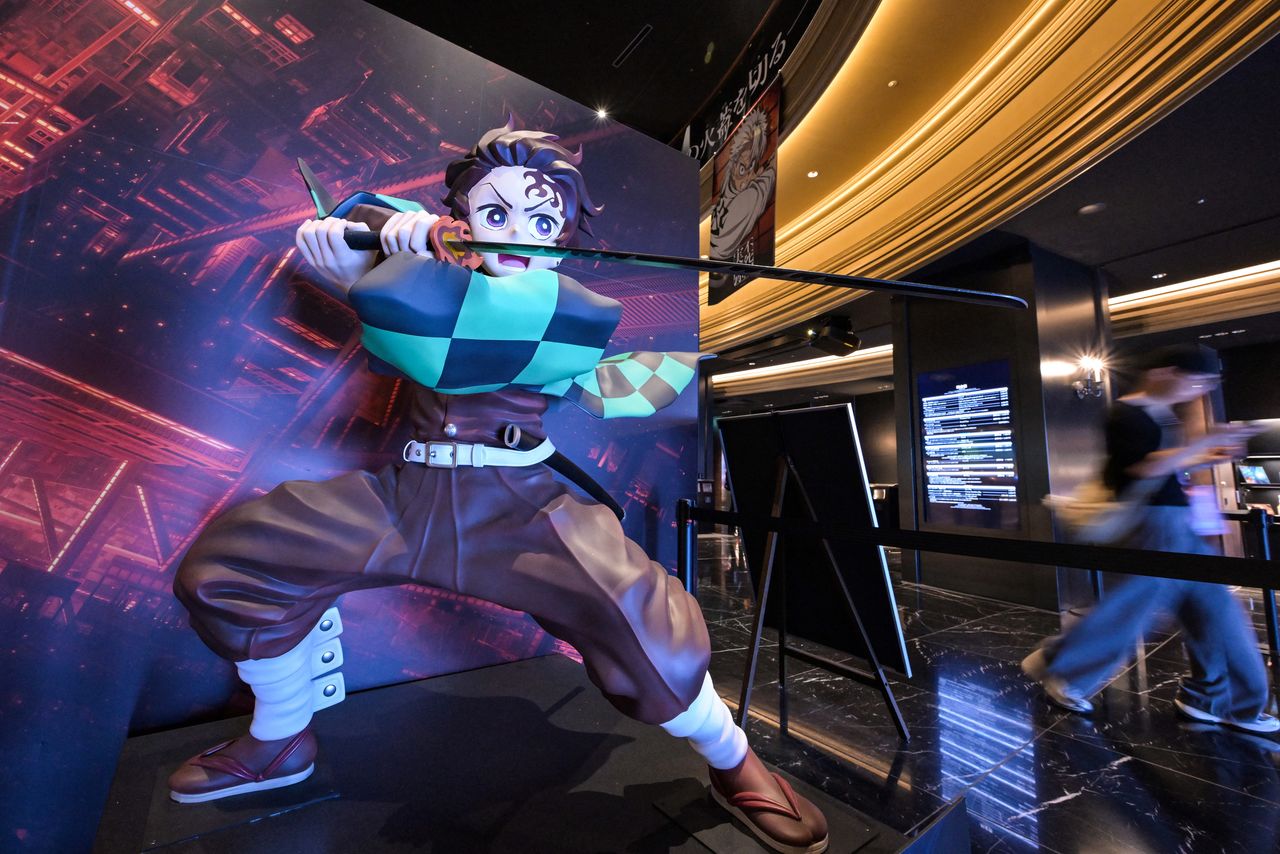
A Demon Slayer: Kimetsu no Yaiba Infinity Castle display at a movie theater in Ikebukuro, Tokyo, in September 2025. (© AFP/Jiji)
Japan’s anime market was worth a record ¥3.8 trillion in 2024, and is expected to have exceeded that in 2025.
When a televised anime series is a hit, its episodes appear next on physical media or streaming services, before a theatrical release is made. Then that movie is shown on television and receives a physical or digital release, and the cycle goes on.
Anime is a major industry in Japan, but many works are still based on manga. They are stories written by mangaka, rather than the creations of marketing methods alone. How was the connection between anime and manga established?
Landmark Anime Look to the Manga World
In 1958, Hakujaden (sometimes known as The White Snake Enchantress in English) was released as Japan’s first feature-length color anime movie by Tōei Dōga (now Tōei Animation). This company was established in 1956, and built a new studio in Nerima, Tokyo, in December of that year, after which its activity came into full swing.
The White Snake Enchantress was based on an ancient Chinese legend, while the studio’s second film Magic Boy (1959) took its story from a novel about the ninja Sarutobi Sasuke by Dan Kazuo. Neither of these were based on manga.
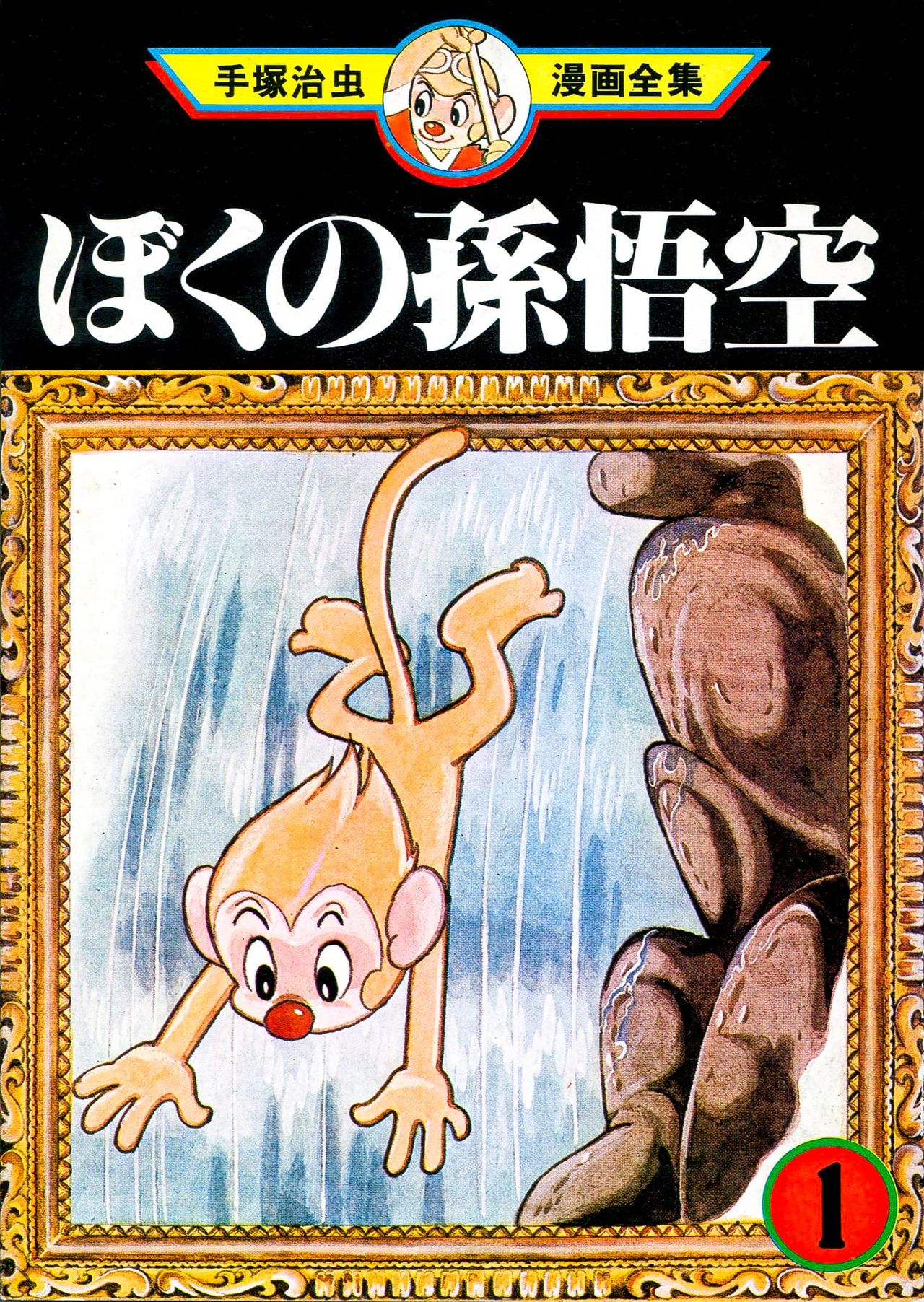
Tezuka Osamu’s My Sun Wukong. (© Nakano Haruyuki)
It was with the studio’s third film, the 1960 Saiyūki (released in the United States as Alakazam the Great) , based on a work by Tezuka Osamu, that the manga-to-anime system was established.
In late 1958, a representative of Tōei Dōga paid a home visit to Tezuka, who was already in hot demand as a mangaka, to propose making his My Sun Wukong, serialized in the magazine Mangaō, into a feature-length anime. The manga itself was based on the Chinese classic Journey to the West.
Tezuka, who was keen to become involved in film production, became a Tōei Dōga contract employee, taking responsibility for drafting, composition, and production (he was credited as director). Given his busy schedule, he sketched story ideas, which staff members used to write scripts and produce more detailed storyboards.
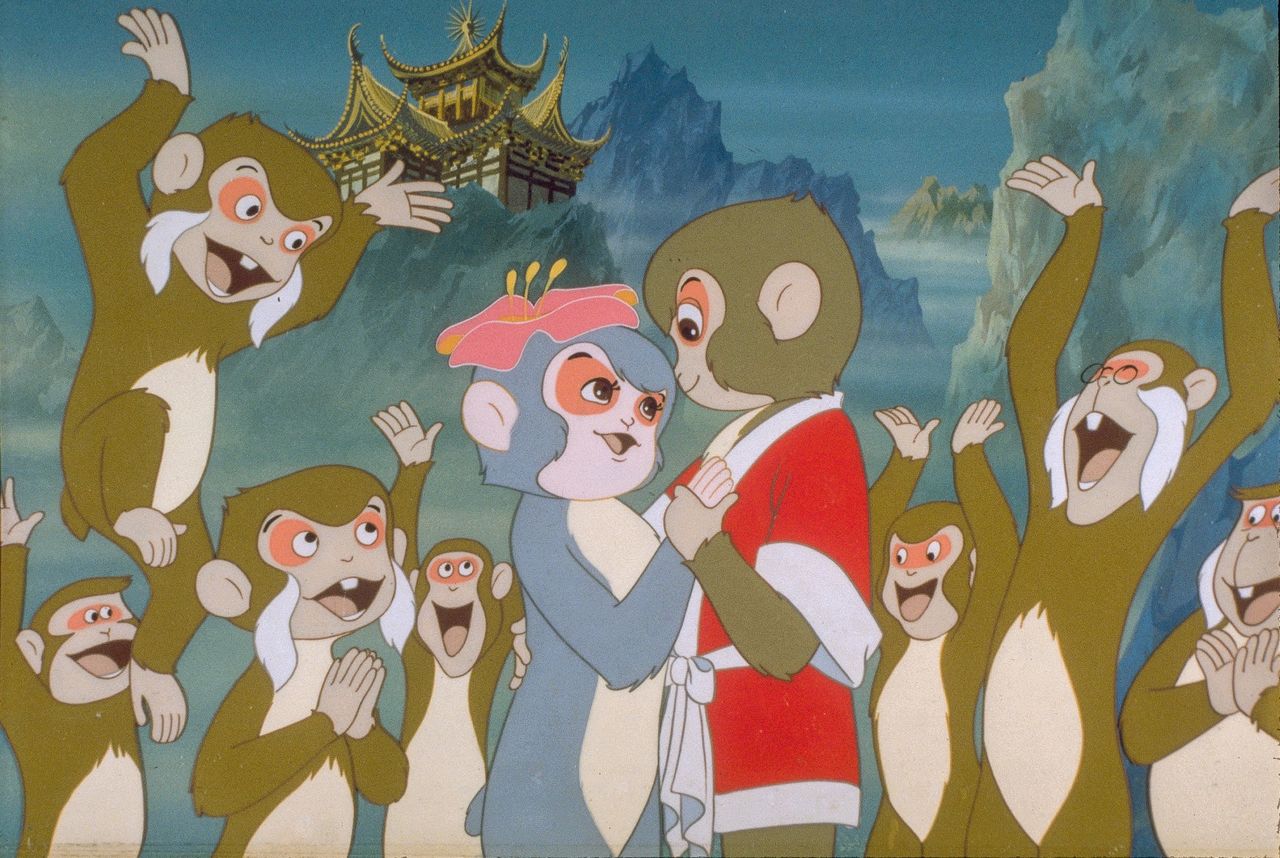
Saiyūki (1960). (© Tōei)
Drawing on his experience making this film, Tezuka established an independent production company to create anime the way he wanted. In August 1960, he built a small studio on the land of his Nerima home and started producing experimental anime with seven young staff members.
At first, Tezuka planned to cover expenses with the payments he received from his manga, but an animator advised him that the company should be able to survive independently, so he decided to focus on TV anime, which provided a steady income. The first project was Astro Boy, as he had plenty of serialized work to draw on and good name recognition.
In 1962, he founded Mushi Production, and the company began work on a pilot to pitch the anime version of Astro Boy to TV stations. At a presentation the same year, it showed the newly completed experimental anime Tales of a Street Corner and the first episode of Astro Boy.
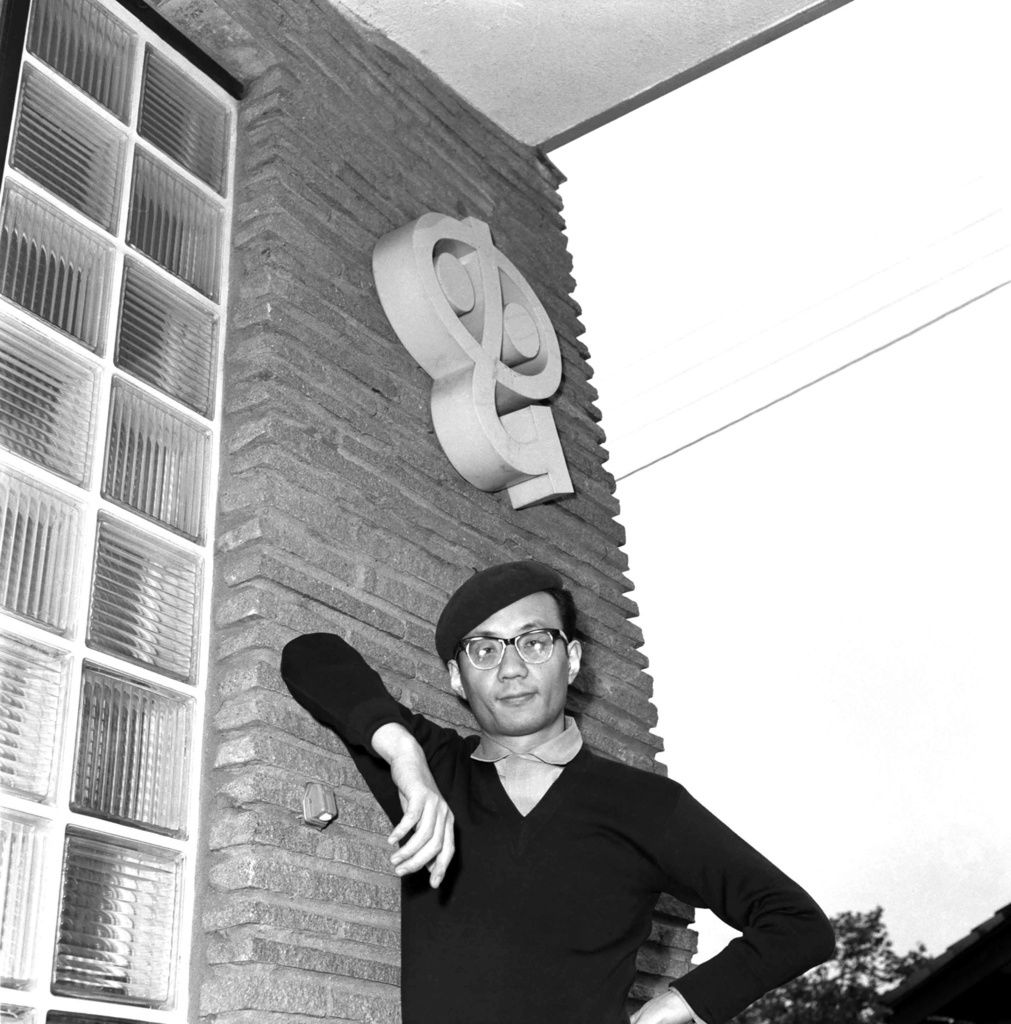
Tezuka Osamu poses in front of Mushi Production on May 13, 1963. (© Kyōdō)
Confidently Unique
Astro Boy started broadcast as Japan’s first long-form anime program on Fuji TV on January 1, 1963.
The SF story is set in the twenty-first century starring the titular Astro Boy, a robot with human emotions. Children were captivated by seeing a character they knew from magazines move, speak, and sing in the TV anime. And with the Tokyo Olympics set to take place the following year, the number of households with televisions was surging.
This was the starting point for the growth of Japan’s content creation industry.
However, it proved challenging to produce a weekly series at 24 frames per second, like an anime movie. Instead, Astro Boy adopted a “limited animation” approach with a reduced number of frames, reused drawings, and techniques like only moving the mouth. It was not possible to match the smoothness of Disney.
Around the time Mushi Production was founded, Tezuka commented, “Even for its smaller works, Disney spends 700 million or 800 million yen on production, while Tōei spends just 30 million or 40 million. There are about 300 people involved in those massive projects. But this is totally impossible for me. On the other hand, even without expensive filming equipment like multiplane cameras, I’m confident that with about 10 assistants, I can create unique works.”
A Groundbreaking Show and an Expanding Market
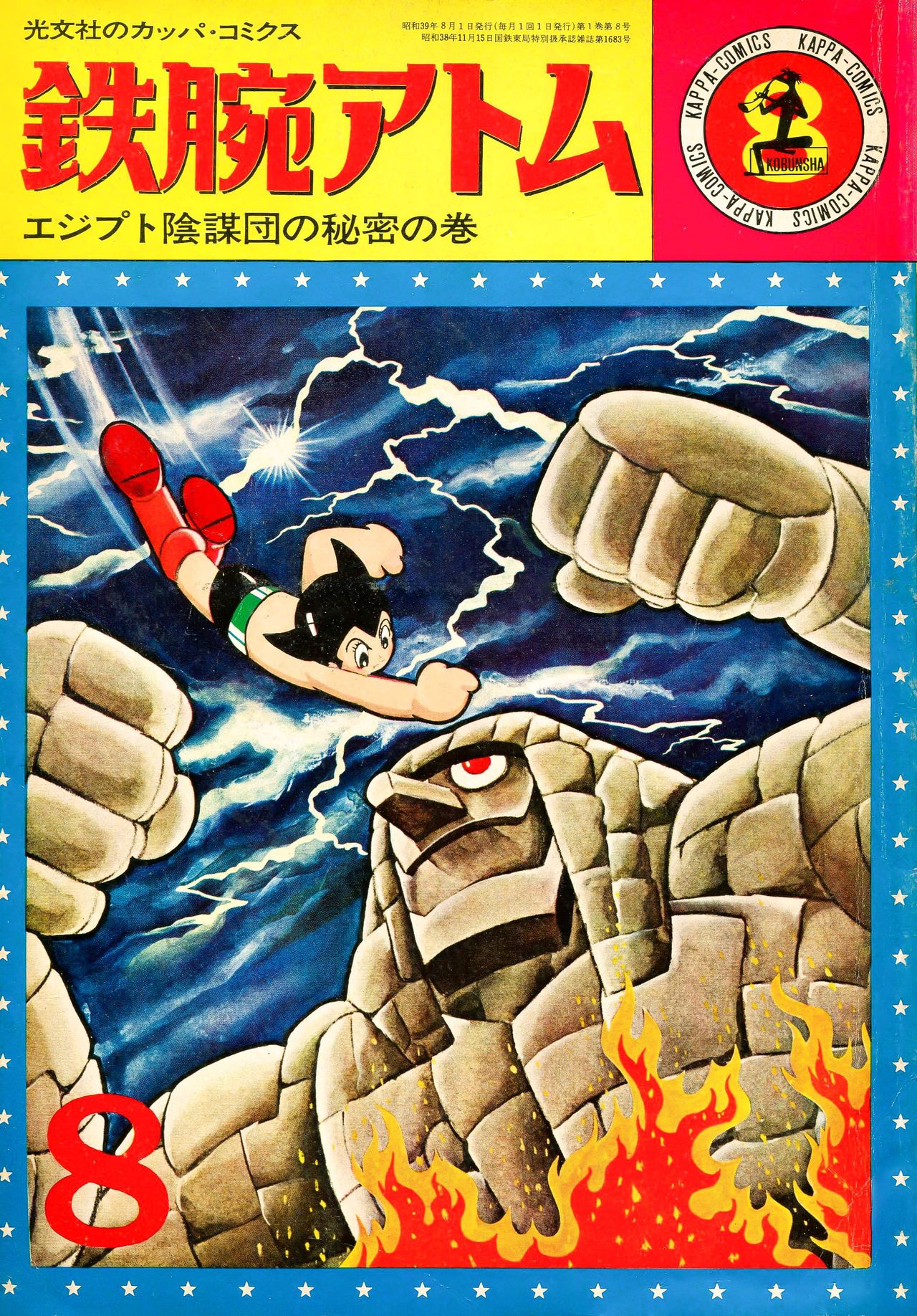
A tankōbon edition of Astro Boy. (© Nakano Haruyuki)
Astro Boy was broadcast in weekly 30-minute episodes at a time when many animations made overseas were only around 10 minutes. It was also groundbreaking in that series shown on a specific day at a specific time were still rare. Basing the show on manga made it possible to have complex storylines and characters, and it became a standard method for televised anime.
Shōnen publisher Kōbunsha released monthly reedited versions of old Astro Boy stories in its Kappa Comics series. Mushi Production entered the character business, starting with official licensing for toys and other goods.
A range of other manga-based anime followed Astro Boy.
In October 1963, Tetsujin 28 (also known as Gigantor) started airing on Fuji TV. The original giant robot manga by Yokoyama Mitsuteru appeared in Shōnen and had a similar level of popularity as Astro Boy.
In November 1963, 8 Man began on TBS, while Super Jetter later appeared on the same station; both were sponsored by Marumiya Foods.
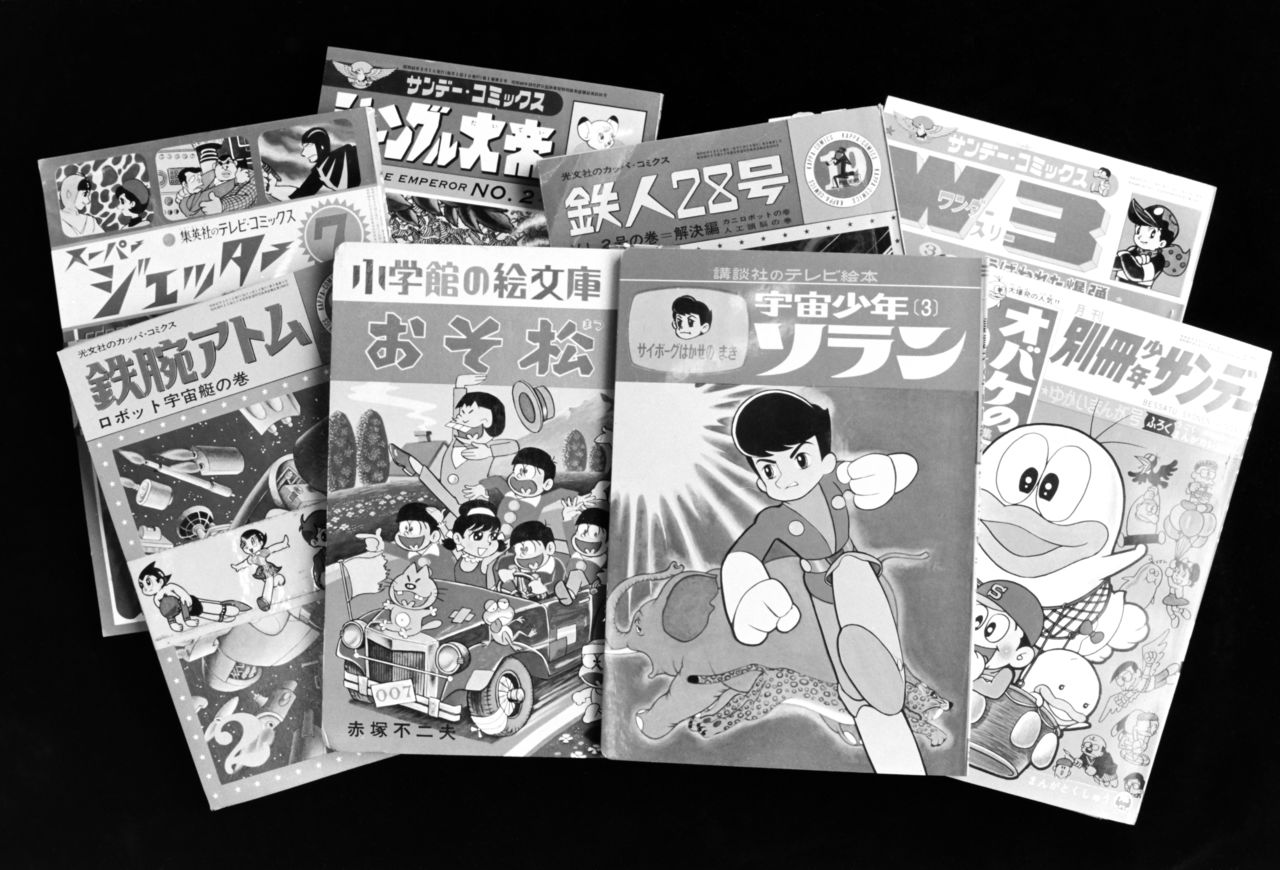
Children’s manga books from the 1960s and 1970s that were adapted into TV anime. (© Jiji)
Tōei Dōga got its start on TV anime in 1963, with the original story Wolf Boy Ken on NET (now TV Asahi). However, its second series in 1964 was Fujimaru of the Wind, which was based on a manga by Shirato Sanpei.
Early sponsors were mainly manufacturers of snacks or other food. While helping to cover production costs, they developed character goods, which became a distinctive part of Japan’s anime culture.
Tōei Animation (having changed its name in 1998) is still active in producing theatrical and TV anime, including Dragon Ball, One Piece, and Pretty Cure, some of which it exports overseas.
The explosive popularity led to the founding of a number of small anime studios, such as Studio Zero; five young manga creators including Ishinomori Shōtarō, Fujiko Fujio, and Tsunoda Jirō were among its May 1963 founders.
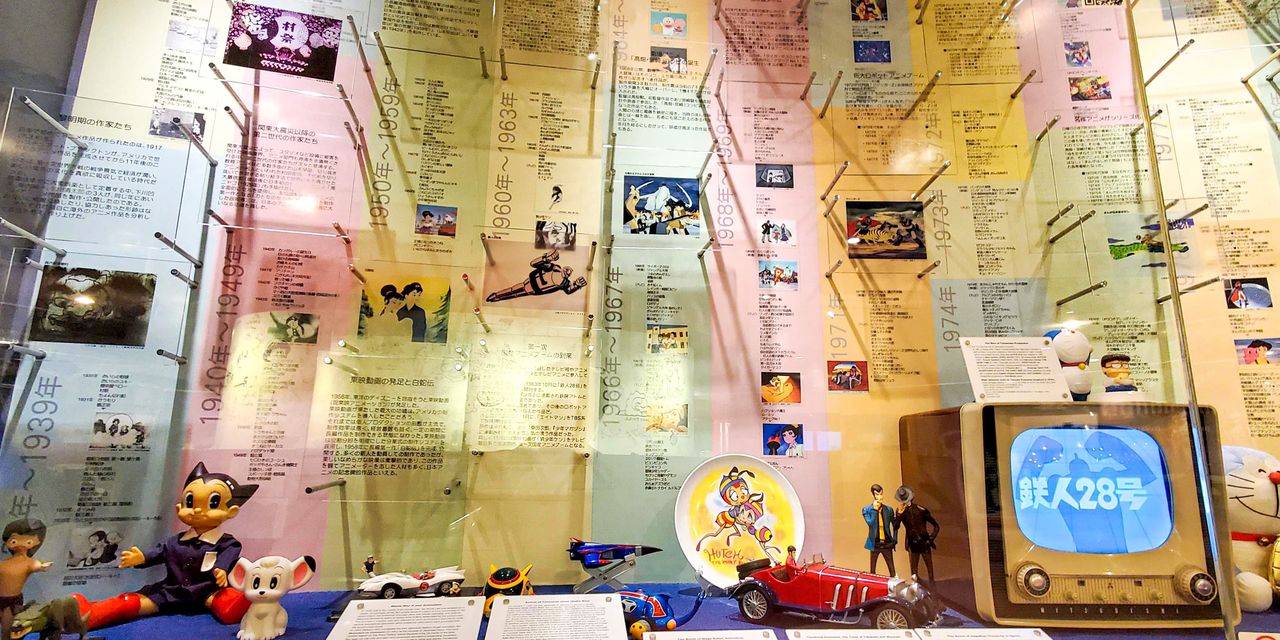
A display at the Suginami Animation Museum shows how many manga works were adapted into anime in the 1960s. (© Matsumoto Sōichi)
A Rich Grounding in the Written Art
Why were children so devoted to TV anime in its early days? At that time, low production budgets and a lack of staff meant that the animation quality was deficient. However, these works remained highly appealing for their stories and characters, and the grounding in manga was what made them so rich. The same is true today, even with the dramatic advances in production technology.
In the trailer for Hakujaden, Ōkawa Hiroshi, the president of Tōei Dōga, said, “Animated films are much more international than ordinary films. I’d like to create wonderful animated films and share them throughout the world.” From the start, anime creators had an eye on the global market, and by using the richly developed narratives of manga, the works took flight to international success.
Magazine publishers also worked hard to publicize anime adaptations. As of 1963, cumulative sales of black-and-white television sets in Japan amounted to 16 million, and the first episode of Astro Boy had viewer ratings of 27.4%. More than 10 million people may actually have been watching it.
Production companies and television stations looking for material to adapt into anime formed close ties with children’s magazines seeking to expand their fanbases through television. This kind of relationship continues now, and it supports today’s manga and anime culture.
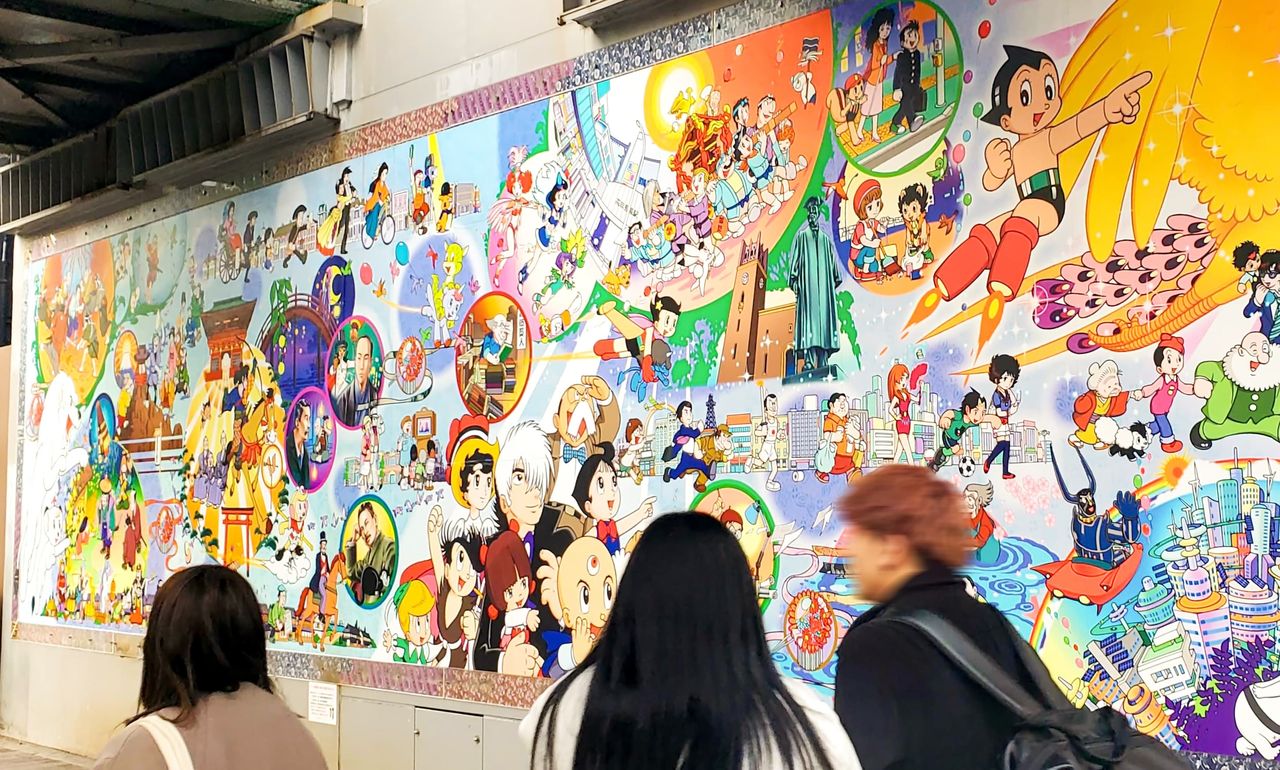
A mural featuring Tezuka characters near Takadanobaba Station. (© Matsumoto Sōichi)
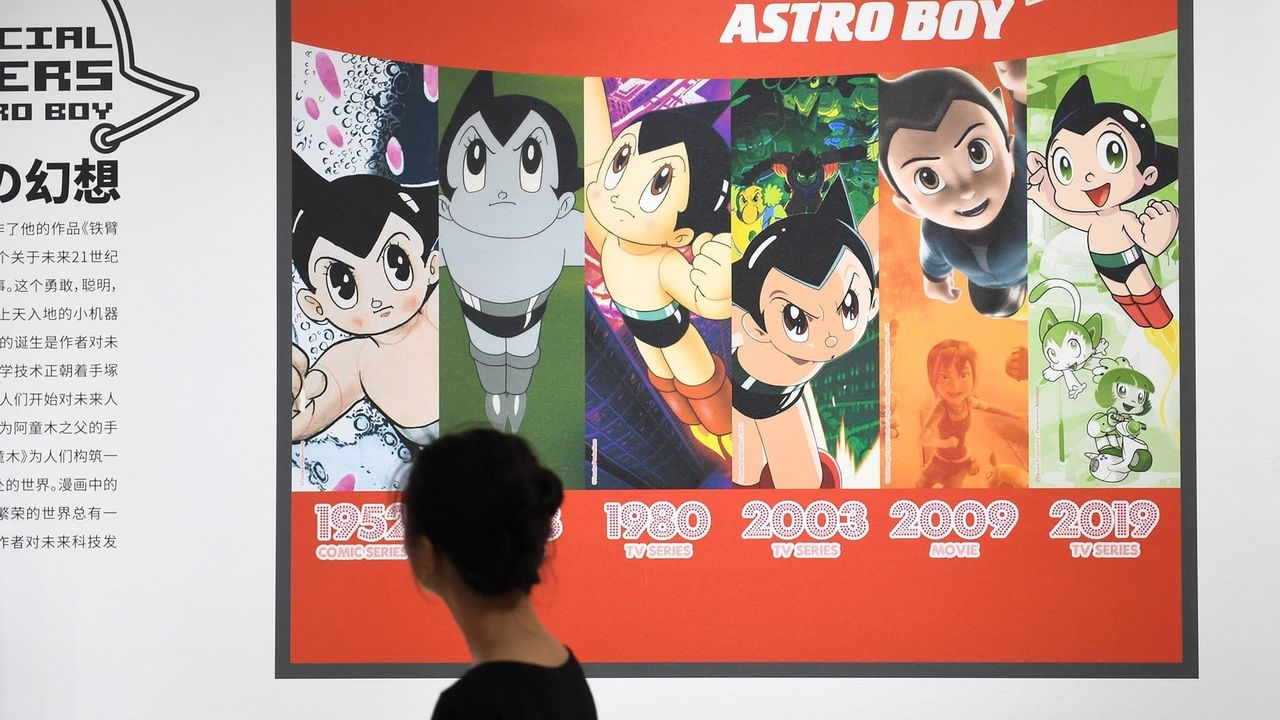
(Originally published in Japanese on February 16, 2026. Banner photo: An Astro Boy exhibition in Changsha, China, in September 2019. © Xinhua News Agency/Kyōdō.)