Cafés at Tokyo’s Traditional Folk Houses
Taizandō Café, Chichibu, Saitama Prefecture
Food and Drink Architecture History Travel Culture- English
- 日本語
- 简体字
- 繁體字
- Français
- Español
- العربية
- Русский
Home to a Flourishing Tearoom Culture
A collection of essays by French literature scholar Kasama Naoko opens with this sentence: “The moment I alight from the train in the evening, I detect the scent of the mountains.” This describes the feeling she experiences when returning to Chichibu, where she has made her home since relocating from Tokyo. She explains a desire to smell pleasant scents as one reason for moving to Chichibu, a city in Saitama Prefecture’s mountainous western reaches.
Speaking of the cafés in the area, she says, “Each has a distinct character, probably because no one expects uniformity here. For locals and visitors alike, these cafés are spaces where one can spend time undisturbed.” Chichibu definitely has a tearoom culture. I encountered Kasama’s book at Taizandō Café on Kuromon-dōri, displayed on the counter as a favorite of Aota Miyuki, the café’s owner.
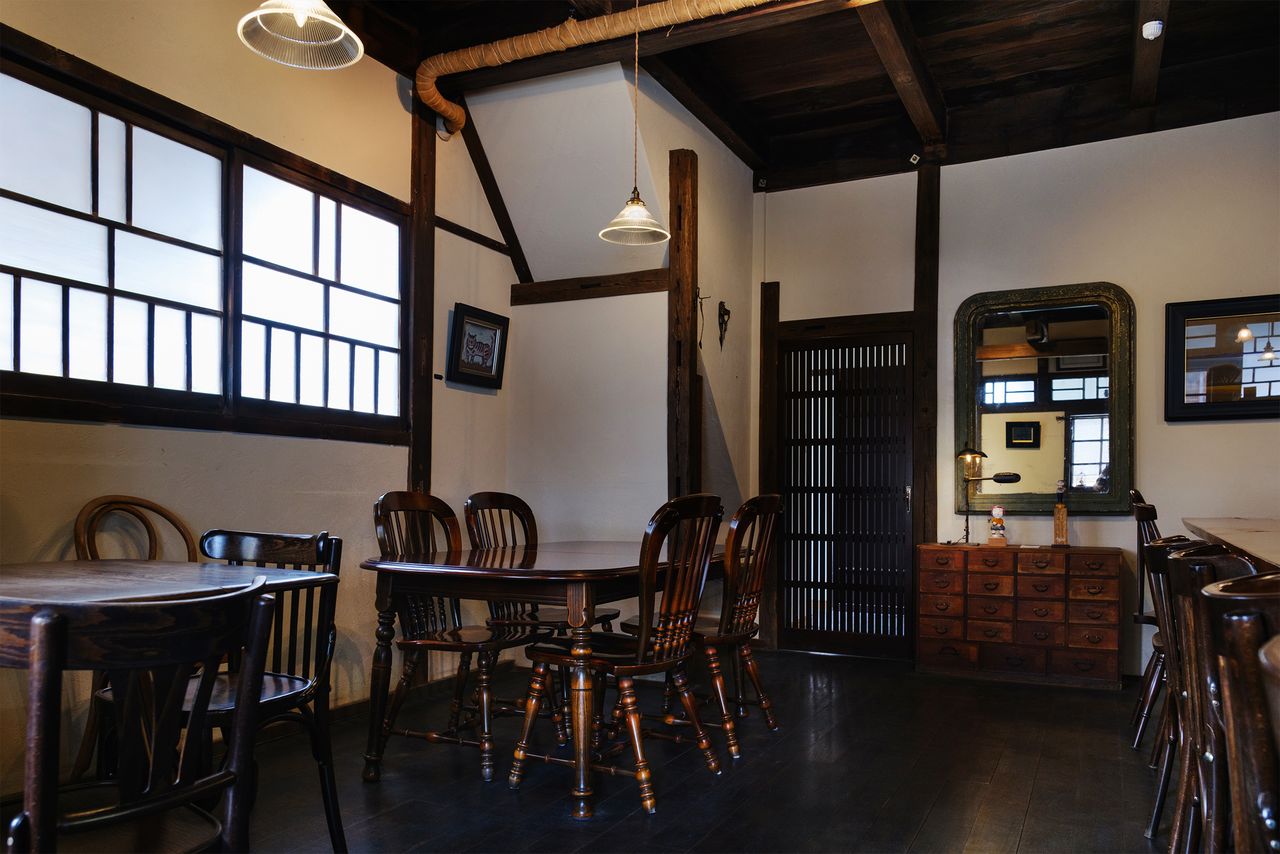
Taizandō’s interior is conducive to quiet enjoyment. (© Kawaguchi Yōko)
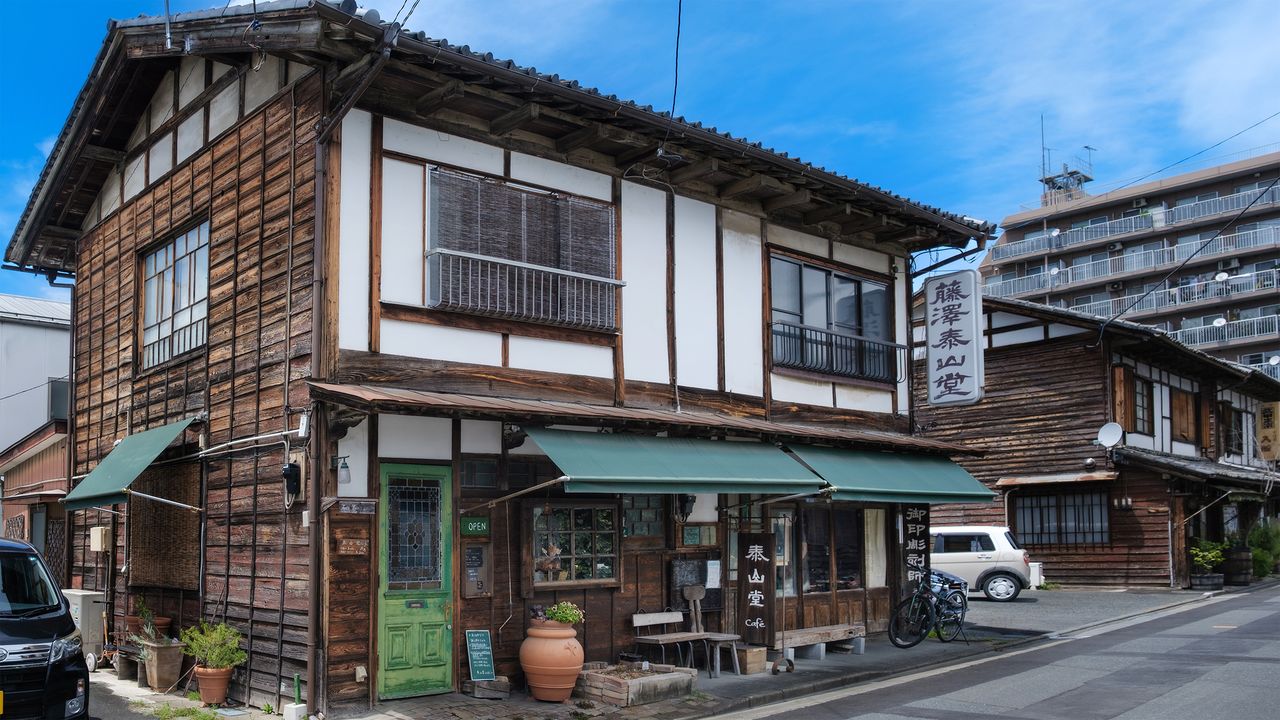
This beautiful café offers casual visitors the opportunity to savor the culture of Chichibu. The building it houses was formerly the shop of a Chichibu silk wholesaler; the scenery along the street takes me back to Shōwa era (1926–89) days. Seibu Chichibu Station is 80 minutes from Tokyo’s Ikebukuro Station by express train, and I decided to go on a jaunt to this small city surrounded by mist-covered mountains.
Echoes of Silkworm Cultivation and Silk Weaving
For a few decades in the early twentieth century, Kuromon-dōri, the street leading to Chichibu Shrine, was lined with the shops of traders dealing in the local silk textiles called Chichibu meisen. Three of the structures, wooden two-story buildings, remain. Designated nationally registered cultural properties, they are reminders of the area’s former prosperity based on silkworm cultivation and textile weaving.
Taizandō Café occupies the left-hand section of one of these gable-roofed buildings; its neighbor is the Hankoya antiques shop. Inside, the premises are connected, replete with memories. As customers push open the green door with its attractive colored-glass inset, an antique sourced from England, owner Aota-san greets them with a warm smile.
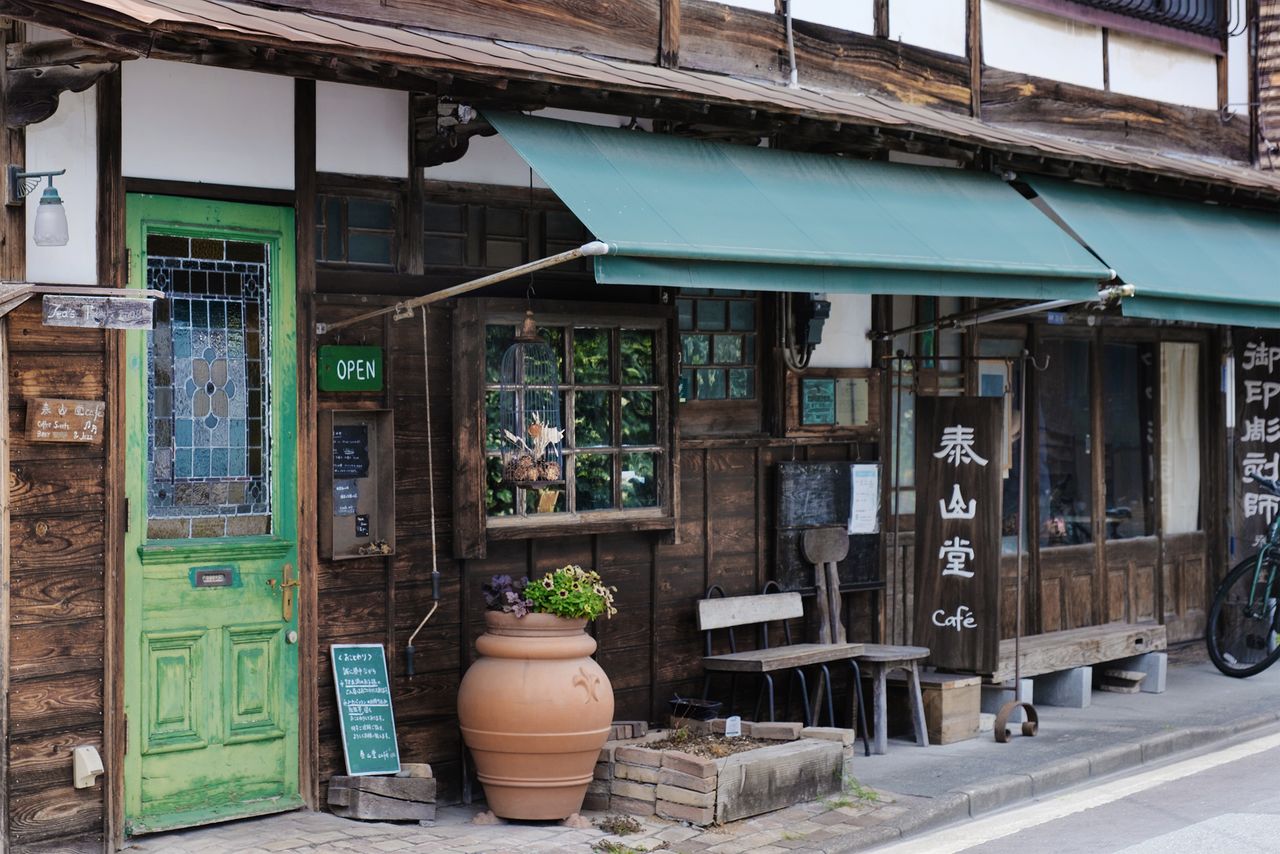
The café’s eye-catching antique green door. (© Kawaguchi Yōko)
An Appealing Blend of Art and History
Anyone who appreciates art and enjoys visiting cafés will notice the tasteful arrangement of paintings and objects inside, the mark of a discerning eye and enjoyment of art as part of daily life. Nothing is overdone; the atmosphere is warm and comforting. Aota-san explains that she grew up surrounded by the woven baskets, netsuke, and folkcraft items her parents collected, which she has supplemented with her own collection of works by locally based artists.
The painting hanging near the entrance is by Chichibu native Azami Norikazu. Its deep green tones, incorporating the region’s natural features and an imagined landscape, speak quietly to the viewer.
Aota-san emphasizes that the essays of Kasama Naoko and the works of Chichibu artists have deepened her appreciation for the charms of the area.
French Sweets and Tea
The French-style sweets the café serves are also part of its appeal. These wonderfully tasty classics are made by Ōsaki Izumi, Aota-san’s daughter, who trained as a pâtissier in Lyon, France, for a year.
One of the café’s most popular menu items is the nougat glacé, a traditional sweet from the south of France. This chilled dessert is made from fresh cream and merengue sweetened with honey and dusted with nuts and dried fruit. The cool nougat dissolves lightly on the tongue, combining with the crisp nuts and the sweet, dried fruit. Dots of raspberry sauce on the plate add a tart accent.
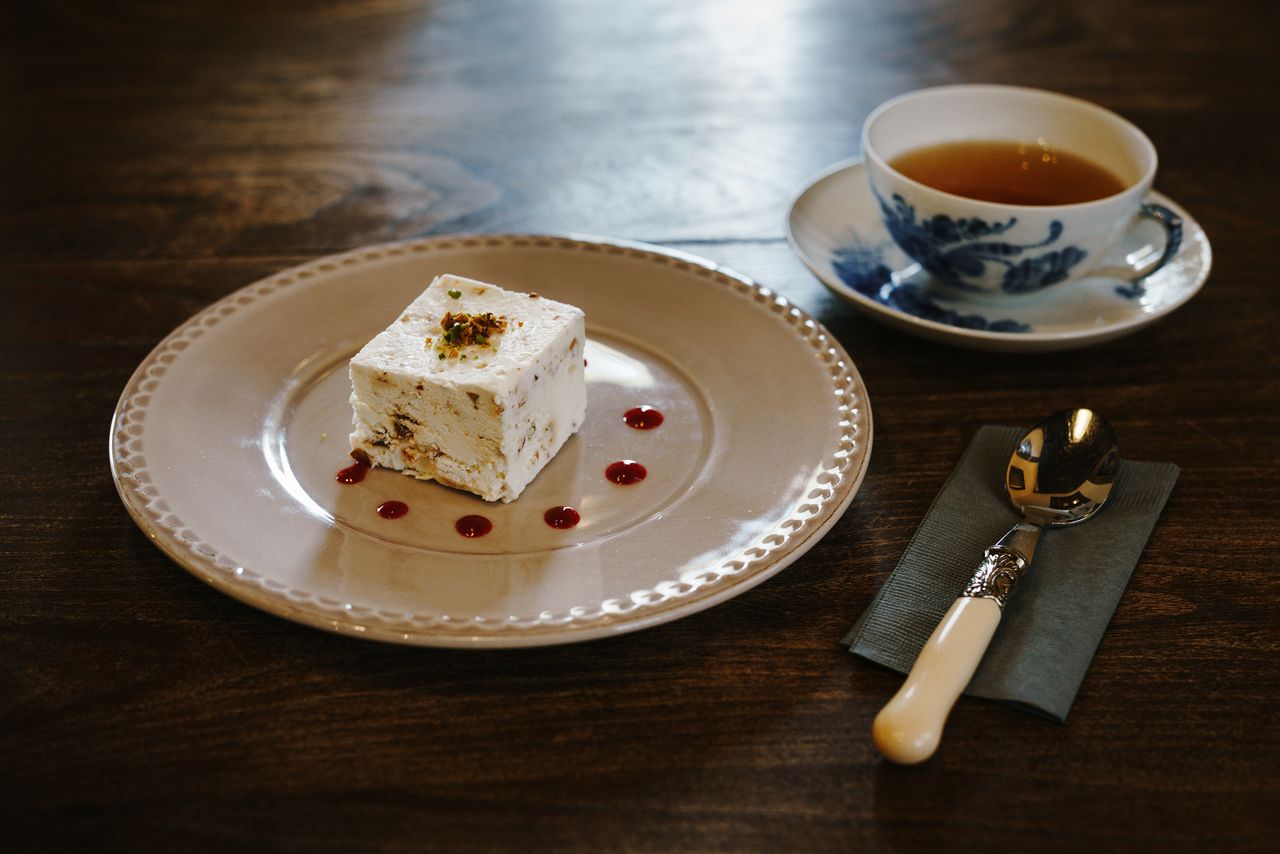
The popular nougat glacé. (© Kawaguchi Yōko)
Several beverages are on the menu, including a wide selection of teas by the French tea specialists Mariage Frères. If in doubt about which to choose, Aota-san will be happy to recommend one. She is especially good at selecting teas with a flowery aroma that best complements the traditional sweets her daughter makes. Spicy house-made ginger soda or a refreshing drink made using black vinegar are also perfect for summer.
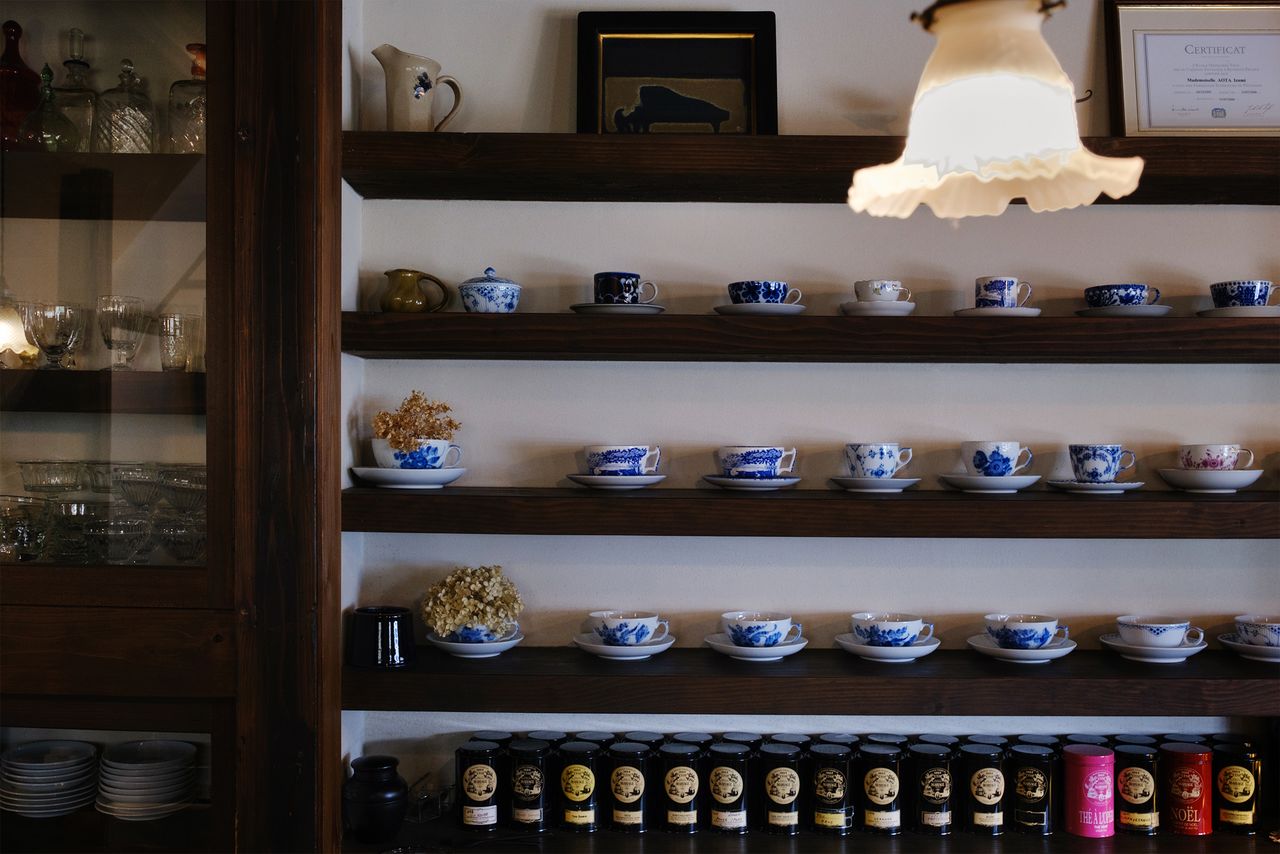
A display of teacups and tea canisters behind the counter. (© Kawaguchi Yōko)
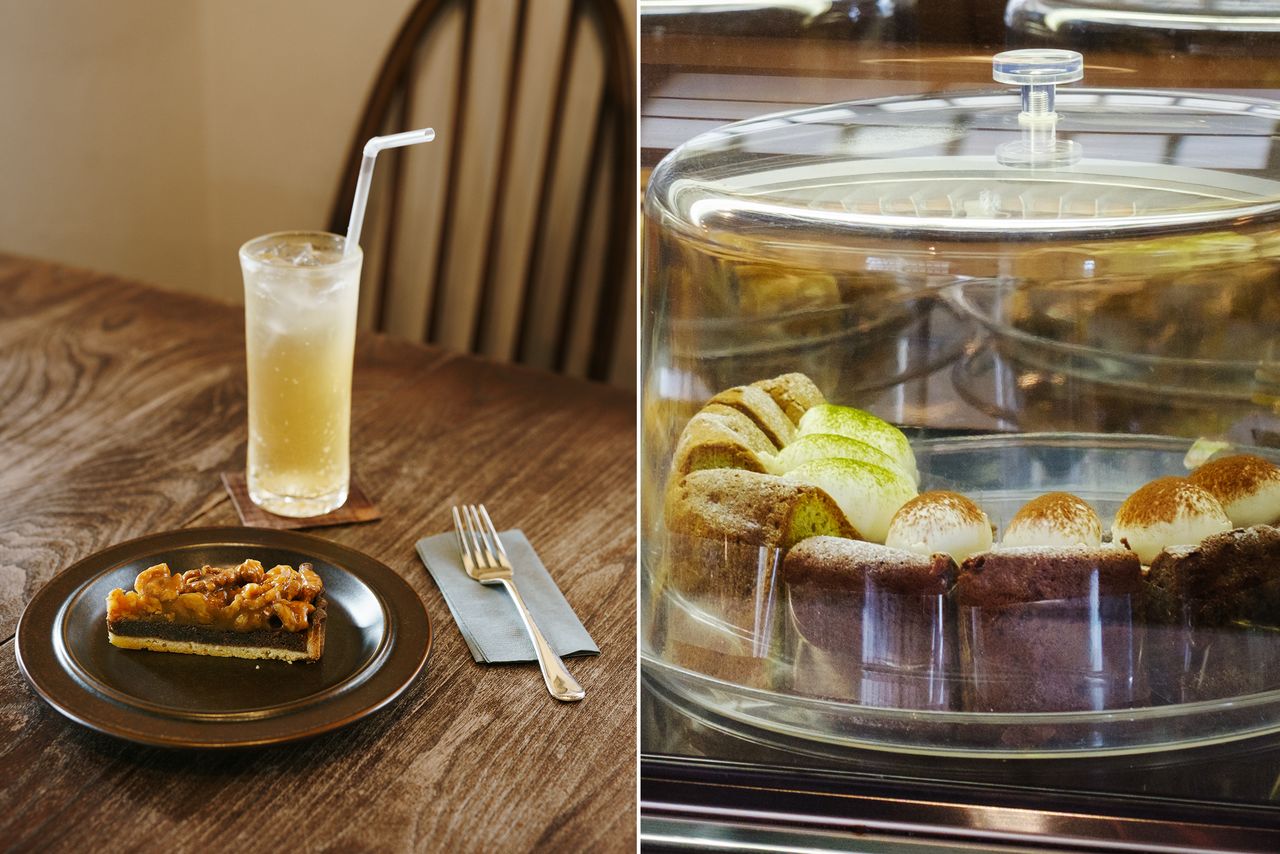
A walnut tart and house-made ginger soda (left); matcha and white chocolate cake (right). (© Kawaguchi Yōko)
Imbued with Memories of the Past
Aota-san explains the history of the building. “This is a silkworm-raising room that belonged to a farming family. Around the 1930s, it was dismantled and relocated here to use as a residence.” In the right half of the building, her great-grandfather operated a business called Taizandō, making hanko personal seals. When her mother inherited the business, Aota-san turned it into a shop selling antiques. In 2008, the ramen shop occupying the other half of the building closed, so Aota-san took it over and transformed the premises into a café.
The structure’s thick ceiling beams, exposed during renovations, and the chestnut floorboards help create a peaceful atmosphere. The old glass windows were left as is, and the square holes in the pillars are a remnant of the days when shelves holding the boxes in which silkworms were raised had run right across the room.
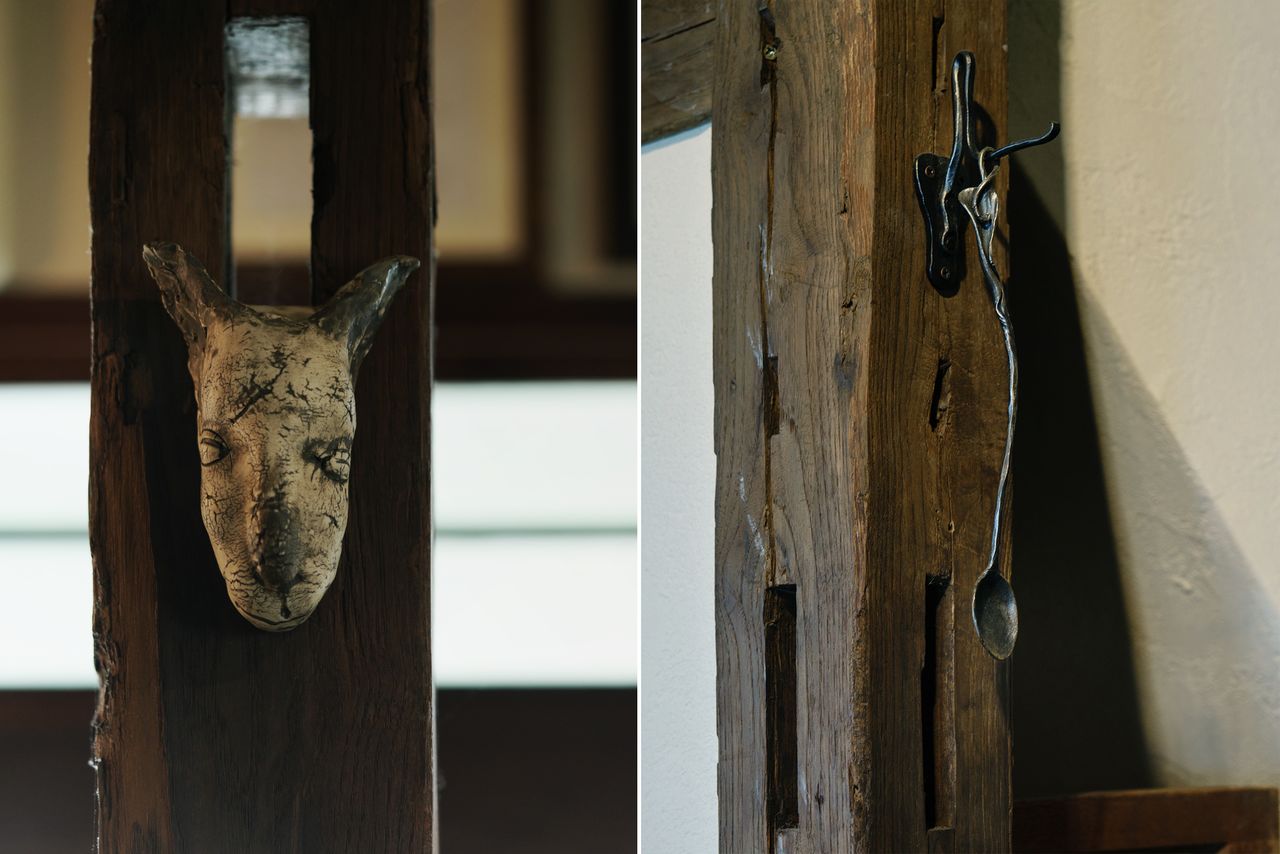
The old pillars, bearing the marks of their former function, blend seamlessly with the café’s contemporary artworks. (© Kawaguchi Yōko)
The nook tucked under the stairs catches my eye. The dim lamplight illuminating the spot casts soft shadows against the painting on the wall and the sculpted figure on the desk. The minuscule chair, much more solid than it looks, was made by a woodworking artist who studied under Kuroda Tatsuaki (1904–82) a Kyoto-born artist who worked in lacquer, wood, and raden pearl shell inlay.
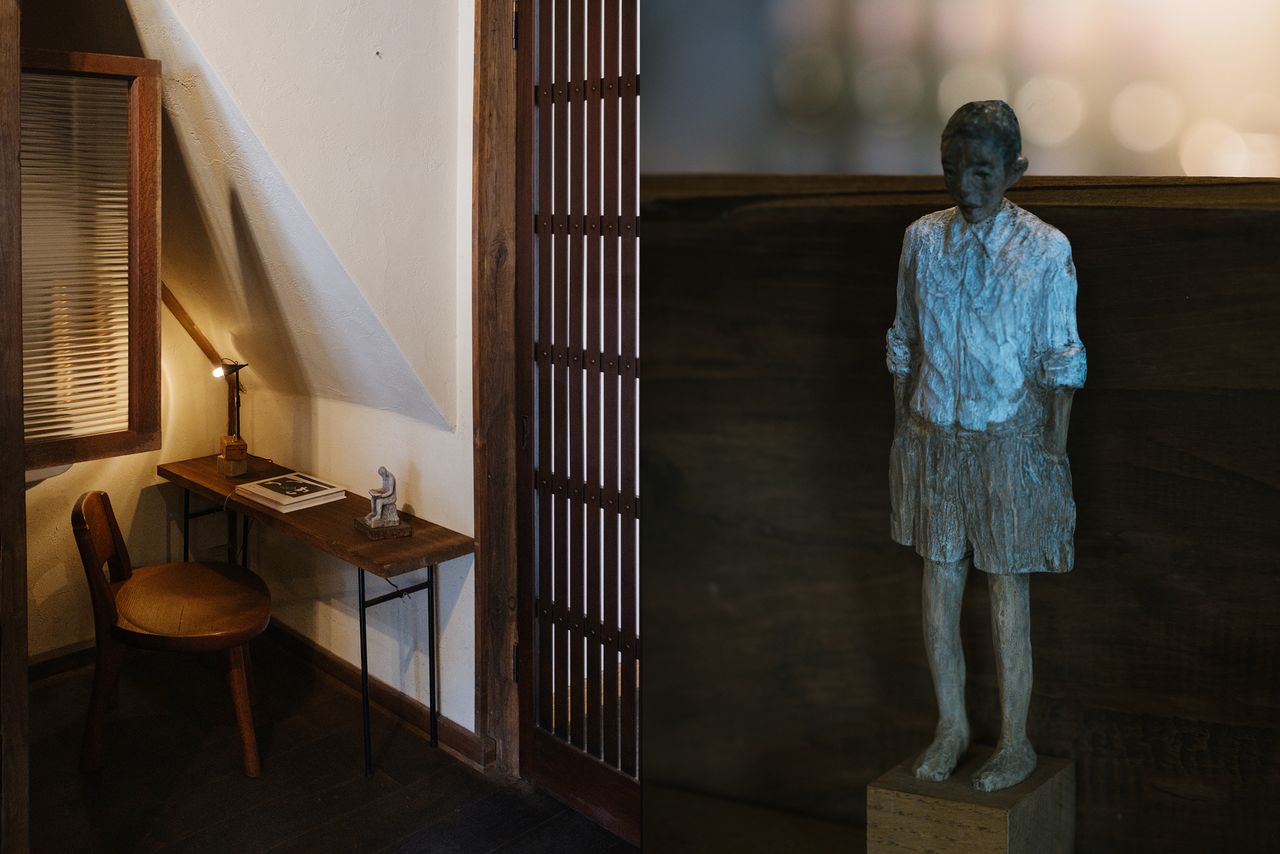
A perfect spot for solitary contemplation. Artworks are displayed throughout the café. (© Kawaguchi Yōko)
Aota-san relates that she opened Taizandō to give her daughter a place to put her pâtissier training to work. But memories of the soothing atmosphere of the many cafés she visited over the years were an additional factor. ”My grandmother was born in Ningyōchō, a traditional neighborhood in the heart of Tokyo, but she evacuated to Chichibu during World War II, where both my mother and I were born and raised. When I was a child, every time my grandmother took me along to Tokyo to visit her family, we would go to the Mitsukoshi Department Store in Nihonbashi, where she treated me to ice cream in the tea parlor there.” As she speaks, her eyes sparkle at the happy memory of those excursions.
Experiencing Chichibu’s Essence
Many of the café’s customers are visitors to Chichibu, who drop in at teatime after having toured the area’s shrines earlier in the day. If you are in search of quiet, the ideal time to go is first thing on weekday mornings.
Taizandō is a great spot for experiencing Chichibu’s four seasons. The café is also a repository of local culture and where history and poetic sentiment overlap. Come savor the quiet charms of Chichibu along with its natural riches.
Taizandō Café
- Address: 11-6 Banbamachi, Chichibu, Saitama
- Hours: 1:00 pm–5:00 pm (last order 4:30 pm)
- Closed: Tuesdays and Wednesdays
- Access: 7 minute-walk from Ohanabatake or Chichibu Stations on the Chichibu Railway, or 12-minute walk from Seibu-Chichibu Station on the Seibu Ikebukuro Line
- Official website: https://www.instagram.com/taizando_cafe/
- Note: No children under age 7, please.
(Originally published in Japanese. Banner photo: A view of Taizandō Café from Kuromon-dōri. © Kawaguchi Yōko.)