Cafés at Tokyo’s Traditional Folk Houses
Kamakura Kitahashi: Quality Coffee and Soba in a Century-Old Setting
Food and Drink Travel Culture Architecture Guide to Japan- English
- 日本語
- 简体字
- 繁體字
- Français
- Español
- العربية
- Русский
A Villa that Was a Local Landmark
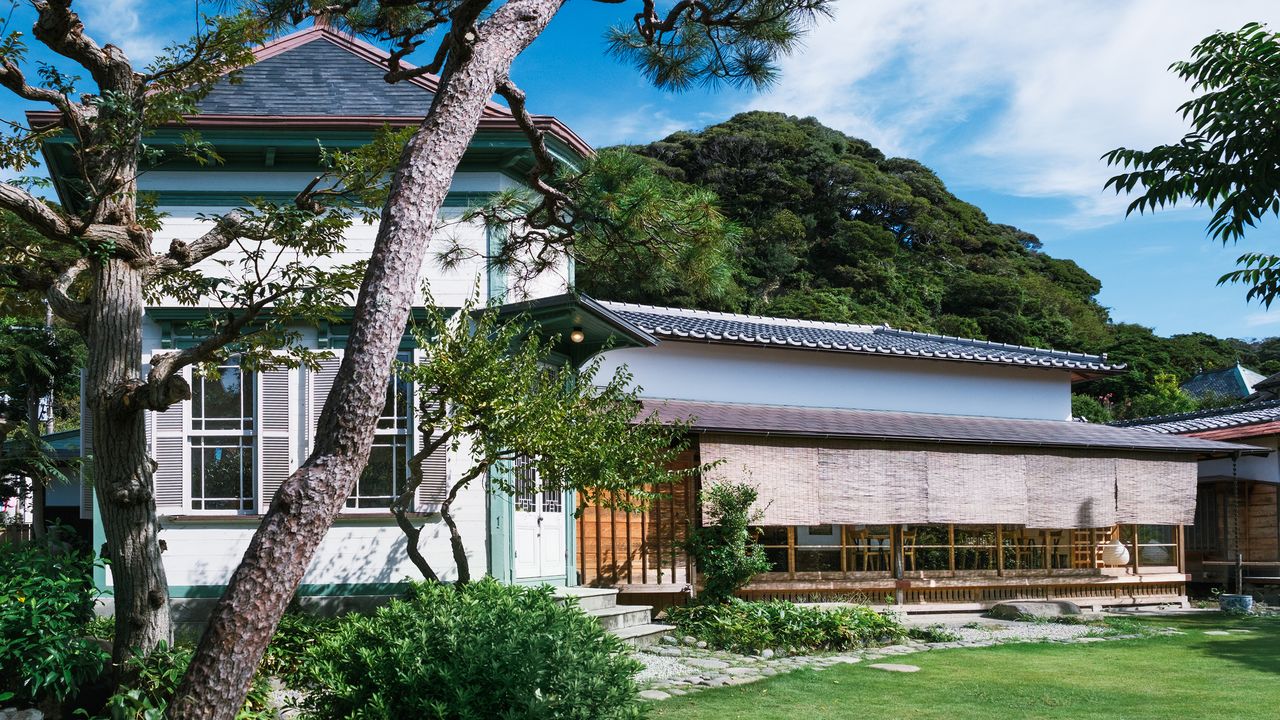
The Hase district in the historical city of Kamakura, is home to many historical temples and residences. One former mansion in Hase is now a stylish restaurant and café: Kamakura Kitahashi, which opened in June 2024, serving soba noodles and, of course, great coffee.
The renovated former Kagaya family villa, built over a century ago, is designated by the Kamakura municipal government as an important scenic building. Its interconnected Japanese- and Western-style wings provide a glimpse into sophisticated living during the Meiji (1868–1912) and Taishō (1912–26) years. The moment you step inside, you are enveloped in the lingering essence of a bygone era. Its atmosphere has gotten the venue featured as a backdrop in the televised dramas looking for a stylish setting.
Back Streets Filled with Old World Charm
The café is a six-minute walk from both the Yuigahama and Hase stations on the Enoshima Electric Railway. Slipping off the main road into a quiet back street, I come upon the torii gate of Amanawa Shinmeigū. This shrine, said to be the oldest in Kamakura, is dedicated to the local Shintō deity of Hase.
On the day I visited, a religious festival was underway, and the street was decorated with colorful lanterns. As I enjoyed the quintessentially Japanese atmosphere, I continued on my way until I spied a Western building with green-trimmed white walls.
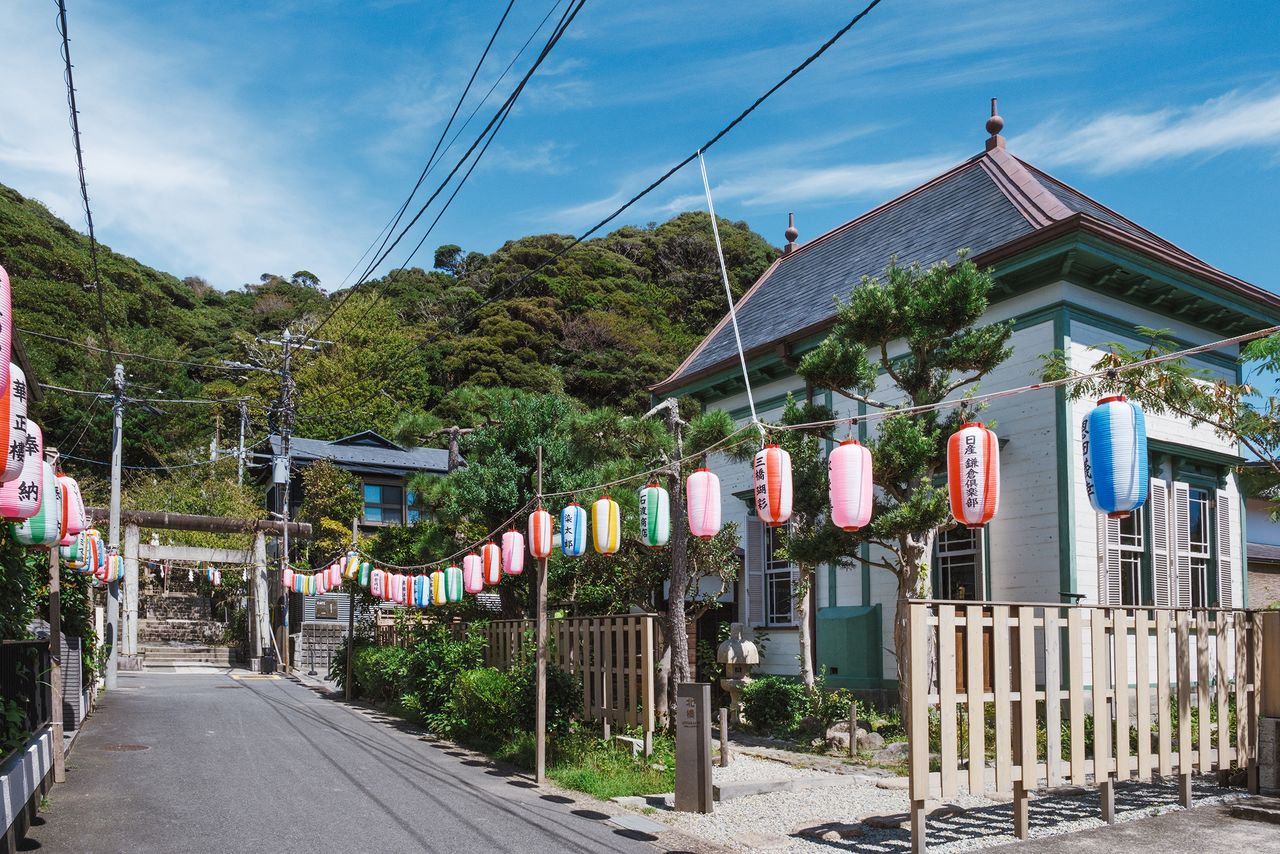
The shrine torii at the end of a lantern-lined street, with the old Western-style building to the right. (© Kawaguchi Yōko)
Modest signs at the entrance read just “soba” and “coffee.” The Japanese wing serves soba noodles, while coffee is on offer in the Western structure.
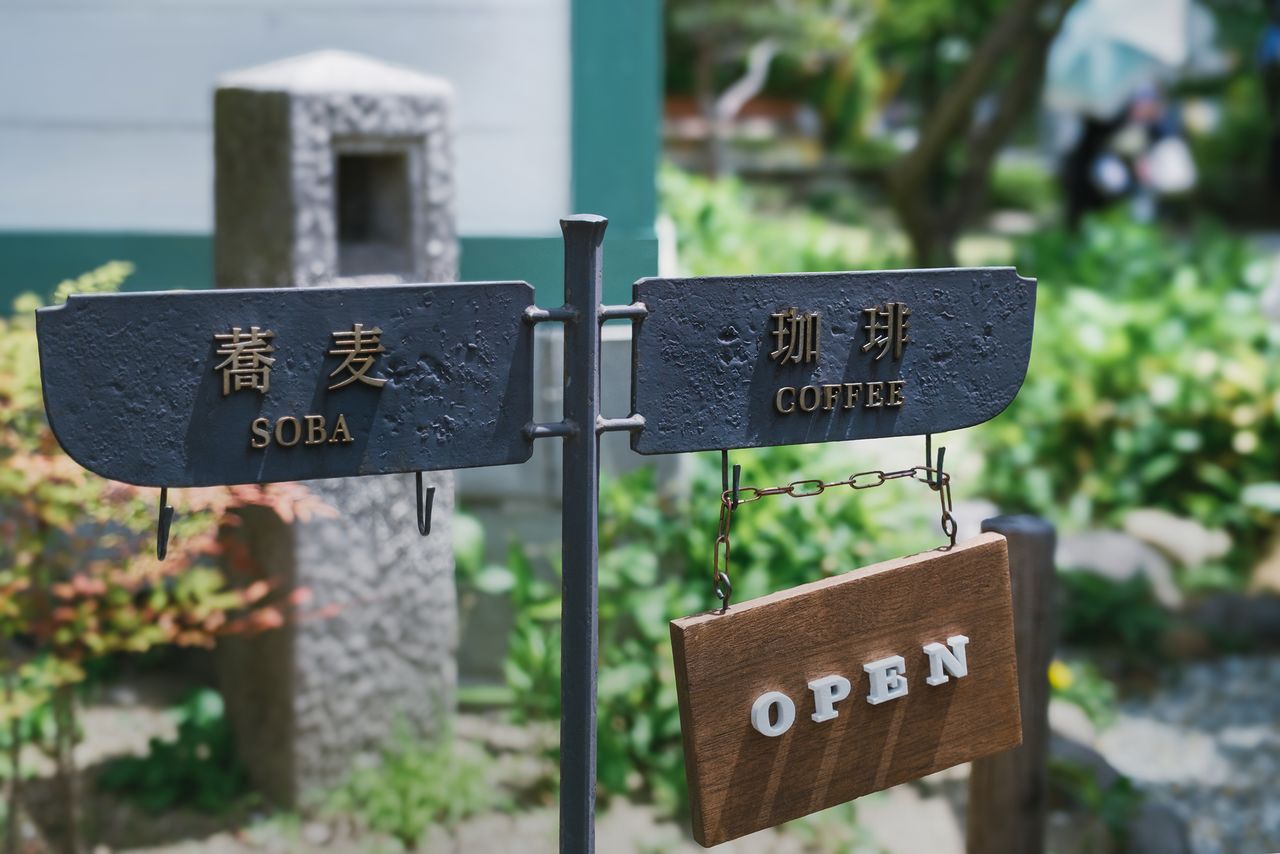
The sign outside the building. (© Kawaguchi Yōko)
The Western-style café wing opens earlier than the soba restaurant. I decided to bide my time enjoying coffee and something sweet at the café.
A Western-Style Space and Memories of an Author’s Youth
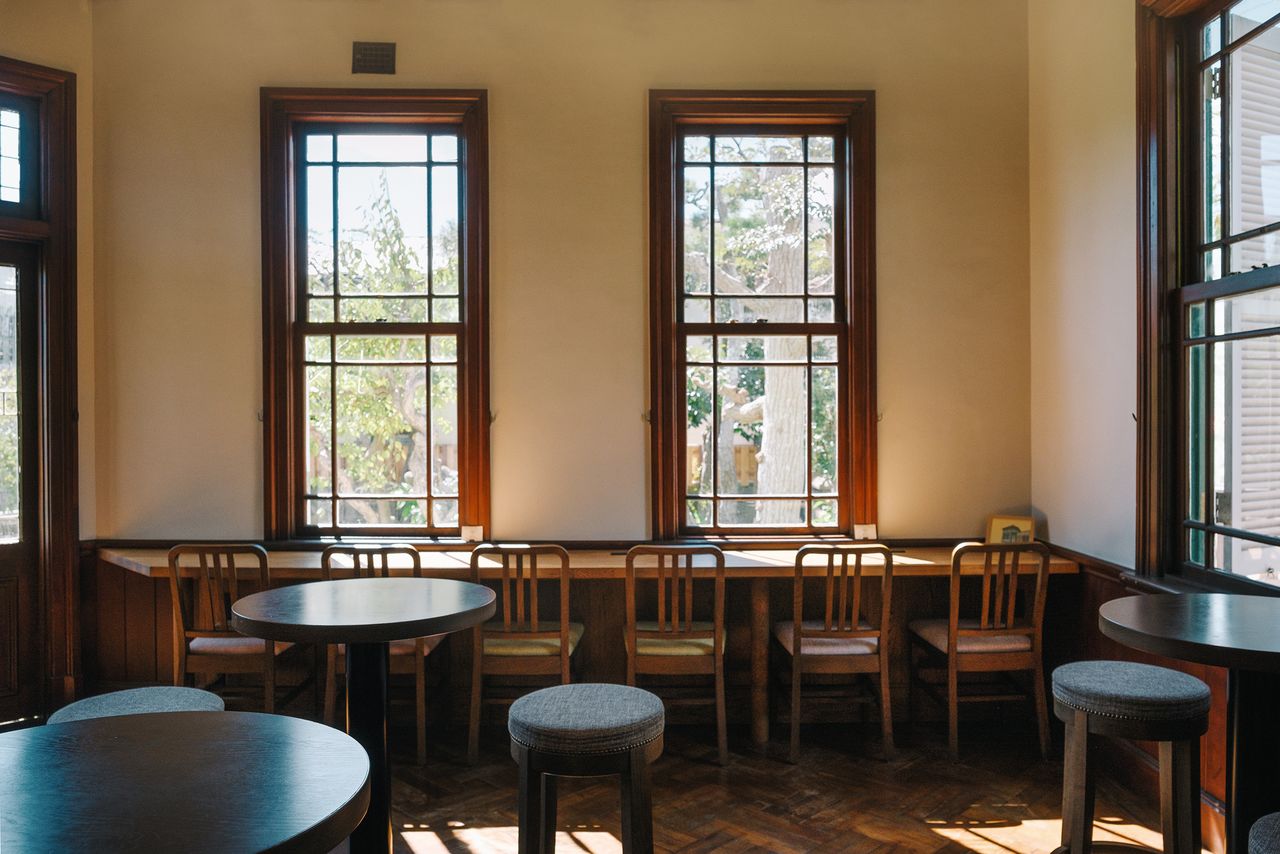
Natural light enhances the interior. (© Kawaguchi Yōko)
The aroma of the single-origin coffee arouses my senses. An Americano, brewed with beans roasted at Harajuku’s Nozy Coffee, highlights the quality and natural flavor of the beans, while valuing its connection with the producer.
Natural-tasting gluten-free desserts, made from home-ground buckwheat flour, are mildly sweetened with either beet sugar, cane sugar, or honey. The delicate soba-flour chiffon cake simply melts on your tongue.
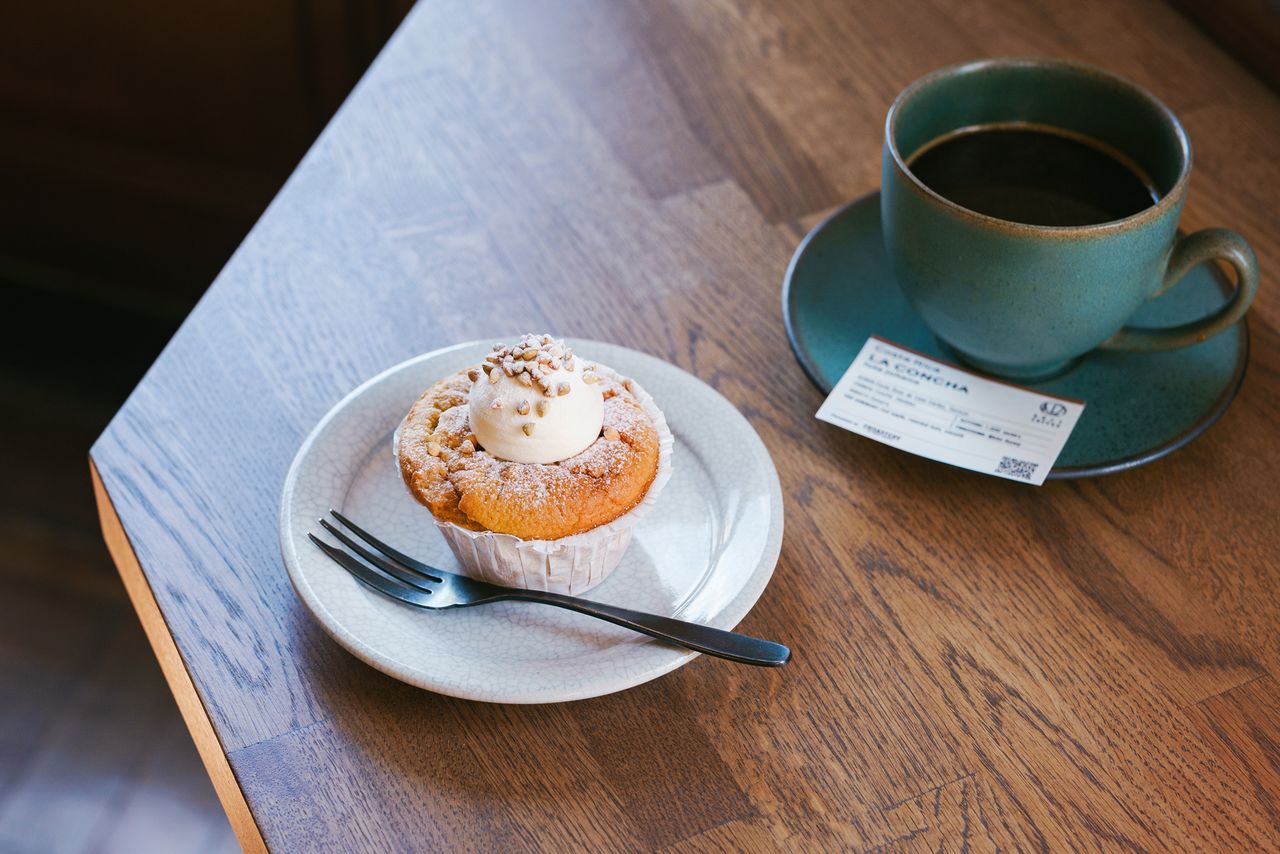
An Americano coffee and a delectable soba-flour chiffon cupcake. A card placed on the saucer gives details of the coffee beans, including place of origin. (© Kawaguchi Yōko)
Pâtissier Tetsuya Sayako explains that she hopes that people with gluten sensitivities can enjoy her creations. Her soy milk panna cotta and soba/rice flour carrot cake are perennial favorites.
This building has an interesting history. At one stage, it was a dance hall, and at another time, it was the home of the award-winning novelist Yamaguchi Hitomi (1923–95). From 1946, when he was in his twenties, Yamaguchi attended the progressive but short-lived college Kamakura Academia. This connection brought many famous authors who taught at the college, as well as students, to Yamaguchi’s home. He apparently also enjoyed interaction with the Nobel Prize–winning author Kawabata Yasunari (1899–1972), who lived close by. Did the two debate literature in this very room?
If you look closely at the mantelpiece, you can make out the name “Yamaguchi” scratched in small letters. Perhaps this is graffiti left by the young writer himself!
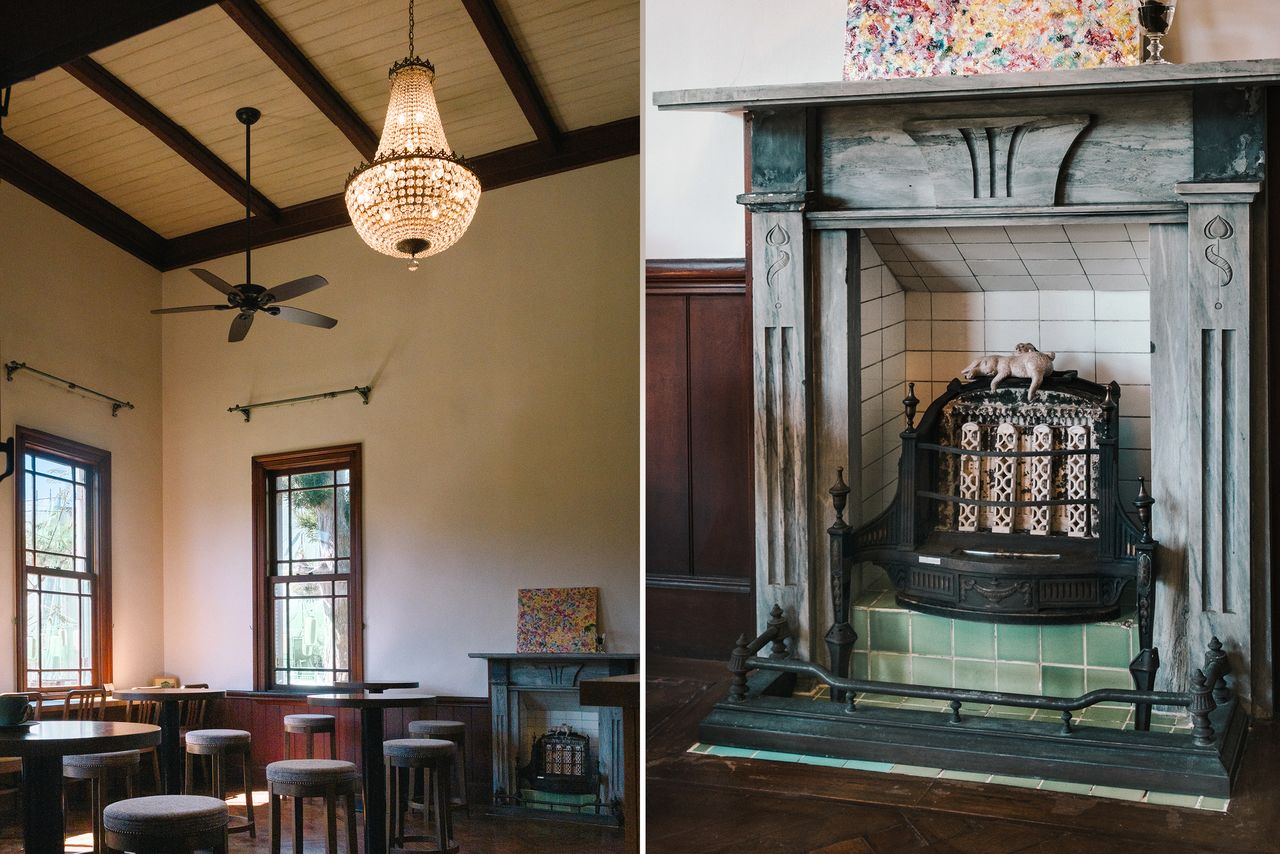
The high-ceilinged room features a chandelier and fireplace with mantelpiece. (© Kawaguchi Yōko)
Hand-Cut Soba in the Japanese Wing
A short white noren curtain is hung at the entrance to the soba restaurant to signal its opening, at 11:00 am. Customers must remove their shoes to enter. The Japanese building has two main rooms, measuring 8 and 10 tatami mats respectively (just over 12 and 15 square meters, respectively), and a sunlit engawa veranda, where the former residents no doubt relaxed. The garden, designed for all seasons, can be observed from anywhere in the restaurant.
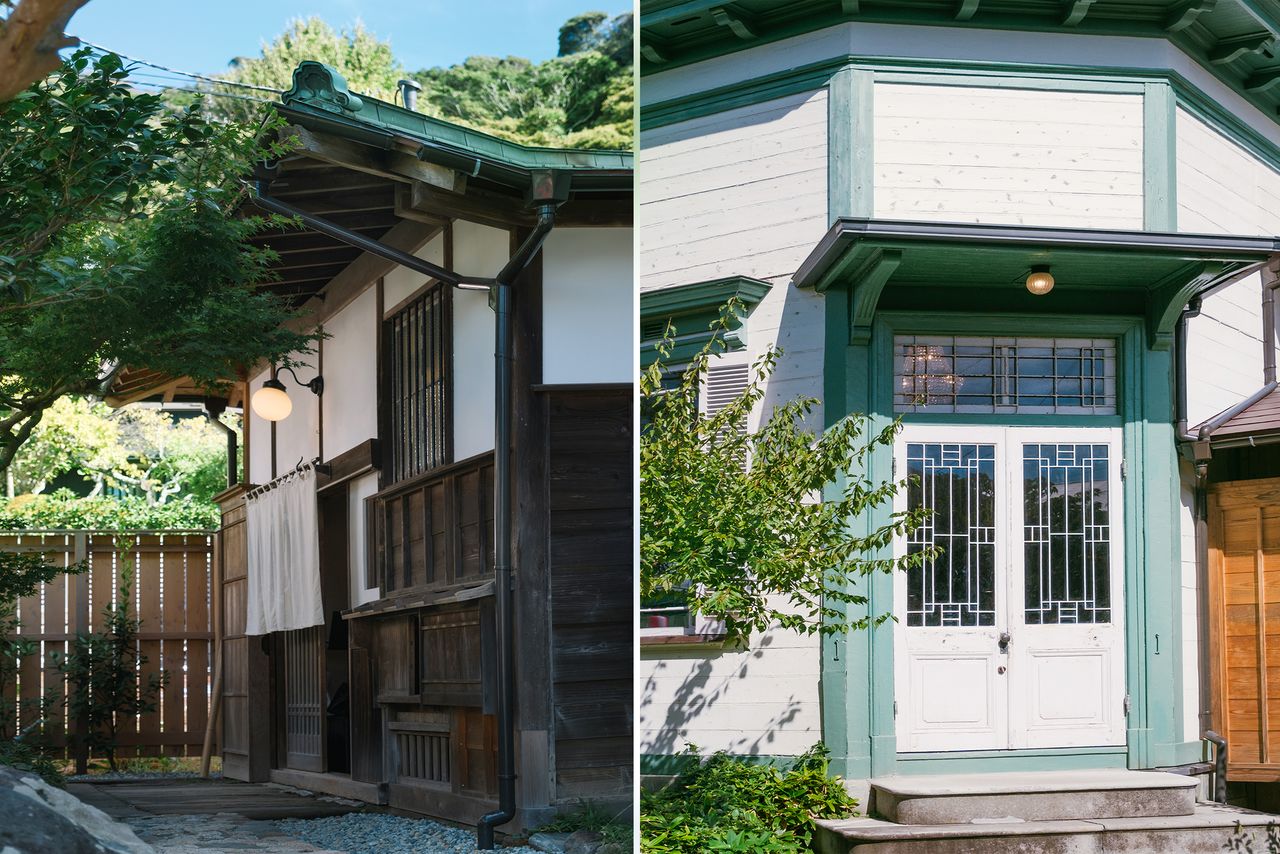
Entrances to the contrasting Japanese and Western-style wings. (© Kawaguchi Yōko)
I order a set lunch course named Sakura, including an entree plate, soba, and dessert.
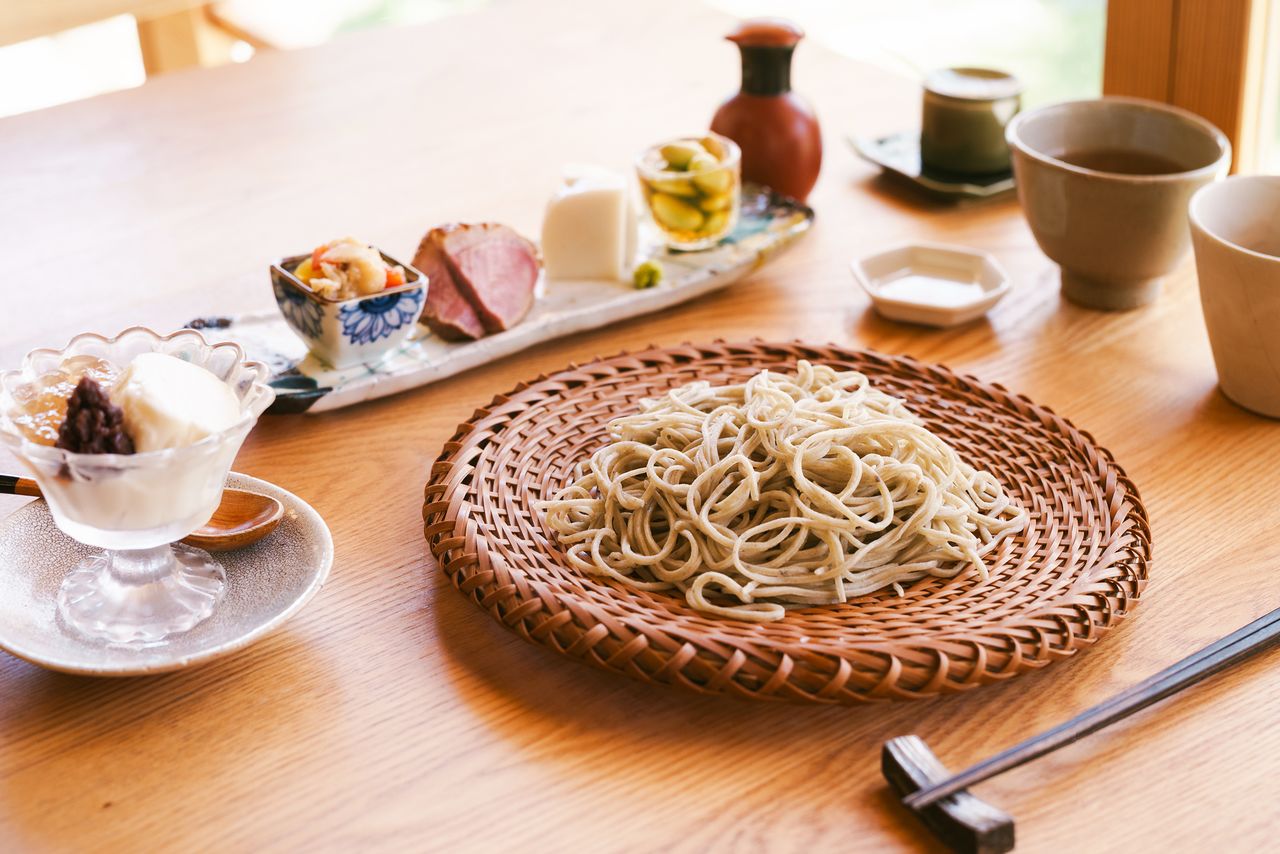
The Sakura set lunch course. (© Kawaguchi Yōko)
Kitahashi Yūto, the manager and soba chef, buys freshly harvested, unhusked grain directly from buckwheat farmers. on the premises, he first removes stones and soil before hulling, polishing, and milling the grain himself. The attention he pays to the ingredients results in flavorsome and nutritious noodles.
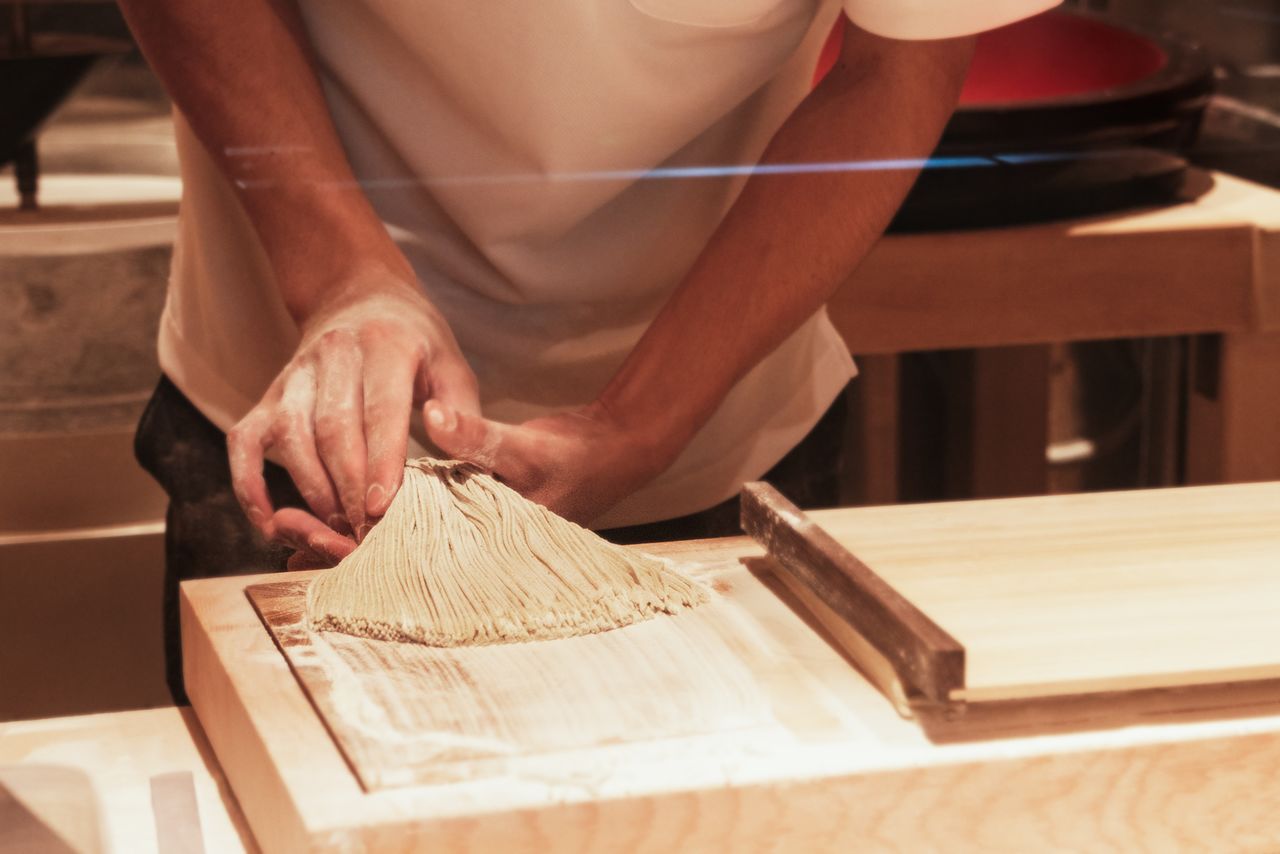
The skill of the chef is apparent in the beautifully cut noodles. (© Kawaguchi Yōko)
The first task each day is preparation of the soup broth. Kitahashi makes his broth by combining high-grade dried katsuobushi (shipjack), mackerel, and sōdabushi, to produce a refreshing Tokyo-style finish.
He explains: “Soba broth requires a delicate balance of the umami of konbu, the aroma of katsuobushi, and soy sauce. I try to ensure none of them overwhelms the others.”
A Space Combining Culinary Skills and History
Before opening his restaurant, Kitahashi worked as a securities broker. His experience of the 2011 Great East Japan Earthquake made him realize he should follow his dreams, and he left Japan to travel around the world. During that trip, he became enamored with food culture, leading him to pursue the career of soba chef after returning to Japan.
For five years, he was the master chef of a well-known restaurant in Tokyo’s hip Shimokitazawa district. Then, while looking for a property to open his own establishment, he discovered this villa, where Kagaya still resided, and inspected the interior.
“I felt a wave of optimism the moment I stepped inside. The natural light in the Western wing, the smell of natural greenery in the back street, away from the tumult, the feeling of being protected by the shrine—it all felt right.”
Kitahashi took time to renovate the property, using the original layout, and respecting the wishes of Kagaya to preserve the building and its historical value. He retained the old pillars, ceiling, and flooring, replastering the walls in the Japanese section to achieve a sublime Kyoto ambiance.
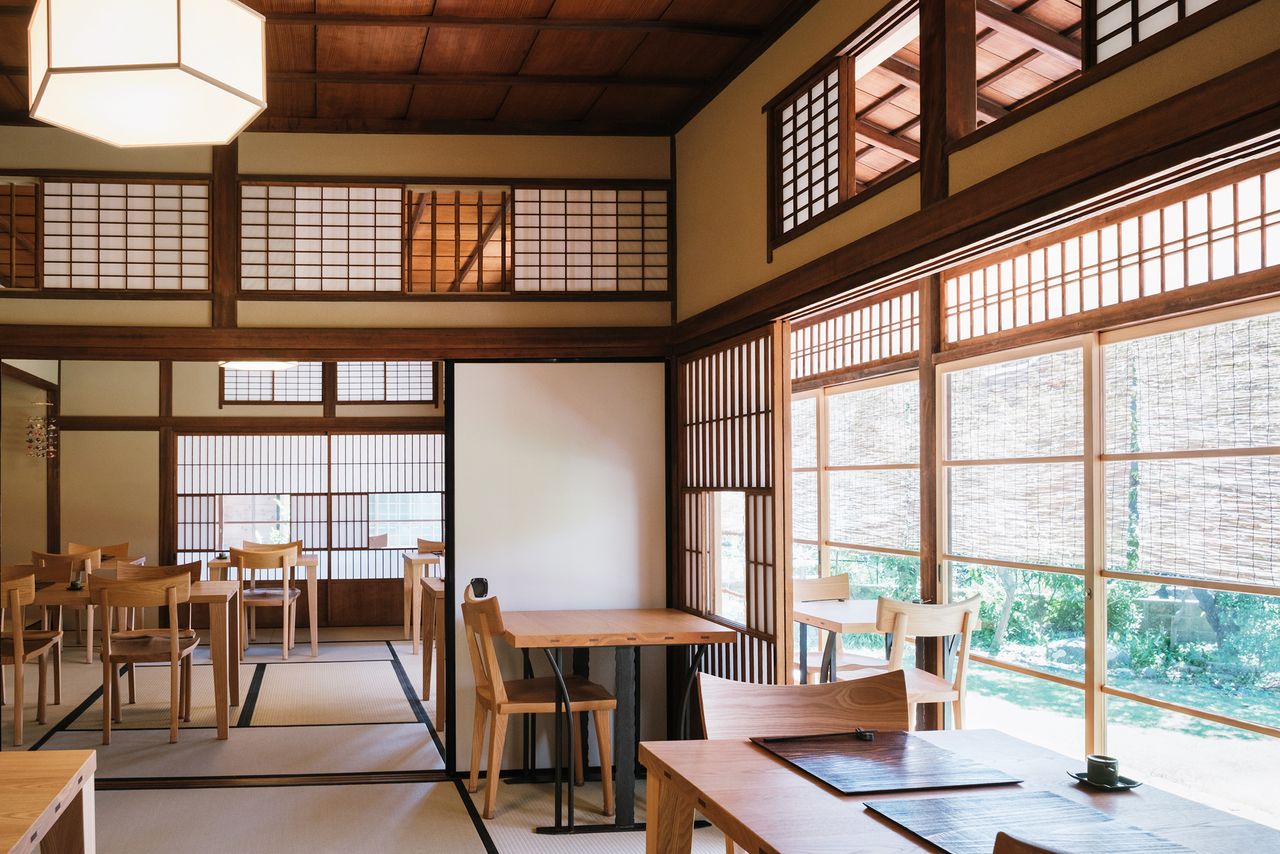
The old pillars and ceilings are highlights of the Japanese rooms. (© Kawaguchi Yōko)
The signage is the work of iron worker Tanaka Jun. Tables and chairs in the Japanese wing are made from Manchurian ash, crafted by artisans in Honshū’s mountainous Hida region for perfect comfort.
Kitahashi explains his intentional choices in the décor. “In each and every object the customers touch, I want them to sense the quality of the materials and skill of the artisan.” Family members of the previous owner have visited and expressed appreciation at the building’s preservation.
Yielding to a Unique Space
The light that shines through the windows changes with the hour and the weather. On rainy days, the old glass creates a dreamy blur.
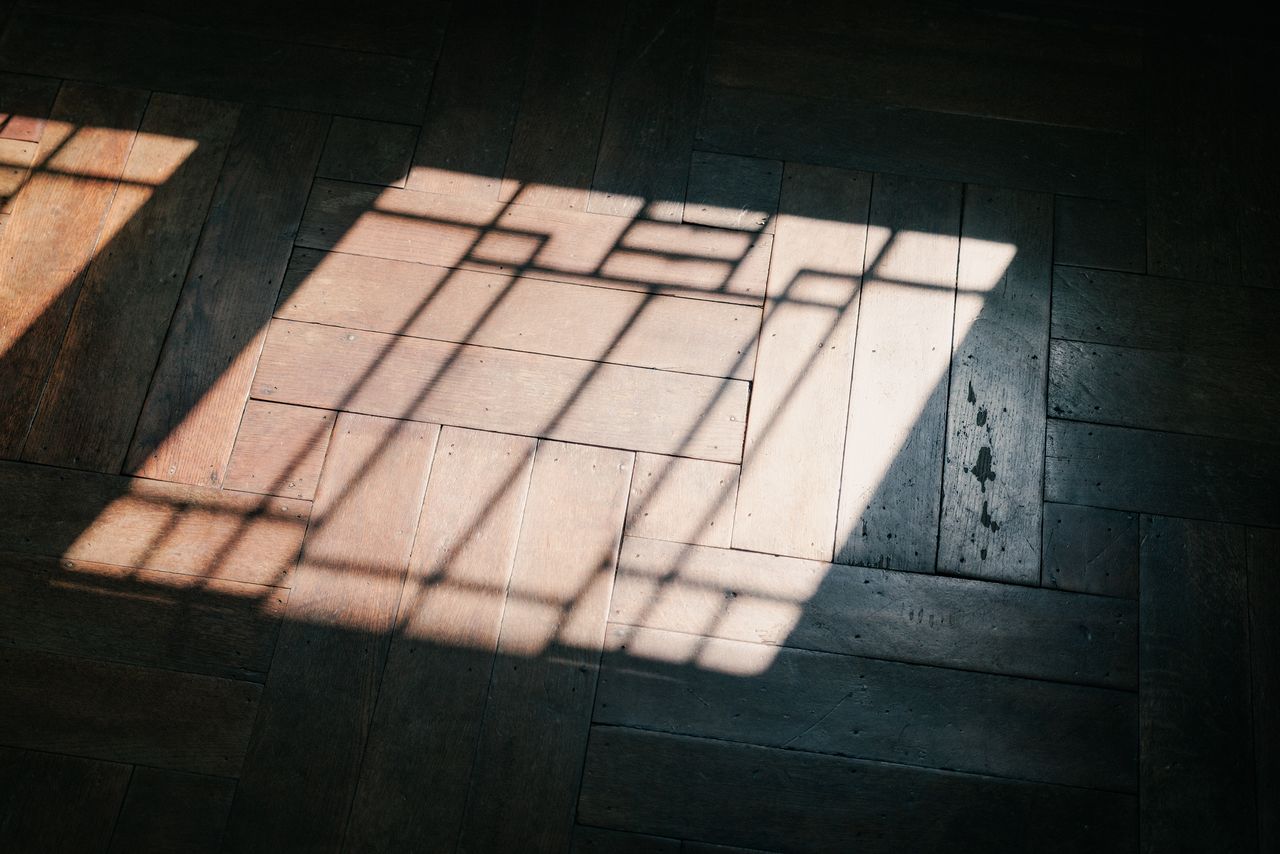
During renovations of the Western wing, each plank of the wooden floor was removed, before being reassembled like a jigsaw. (© Kawaguchi Yōko)
After dining on soba, one could partake of coffee, or just enjoy the café space alone. Pâtissier Tetsuya says that people who simply want a coffee are more than welcome. Smiling, she says “They could just relax with a book and a drink.”
The soba restaurant is busy at midday, but around an hour after noon, it settles down. This venue provides a setting for a fancy outing or quiet contemplation, whether it be a meal and drinks with someone special, or precious time alone while admiring the garden and architecture.
Another option is to savor the history of the nearby, ancient Amanawa Shinmeigū, said to have been established by the Minamoto clan long centuries ago. Kamakura Kitahashi promises the pleasure of skillfully crafted flavors in the peaceful setting of a century-plus-old building.
Kamakura Kitahashi
- Address: 1-11-32 Hase, Kamakura, Kanagawa Prefecture
- Hours: Soba, 11:00 am–3:00 pm and 5:00 pm–8:30 pm (earlier if sold out); café, 10:00 am–6:00 pm (open from 9:00 am on Saturday, Sunday, and public holidays)
- Closed: Tuesdays
- Access: 6 minutes on foot from Yuigahama Station or Hase Station on the Enoshima Electric Railway.
- Official website: https://kamakura-kitahashi.com/
(Originally published in Japanese. Banner photo: Kamakura Kitahashi seen from its garden. © Kawaguchi Yōko.)