Cafés at Tokyo’s Traditional Folk Houses
Traditional Sweets and Time Travel: A Visit to Misegura Hisamori in Akiruno, Tokyo
Travel Food and Drink Architecture- English
- 日本語
- 简体字
- 繁體字
- Français
- Español
- العربية
- Русский
Memories of Old Edo
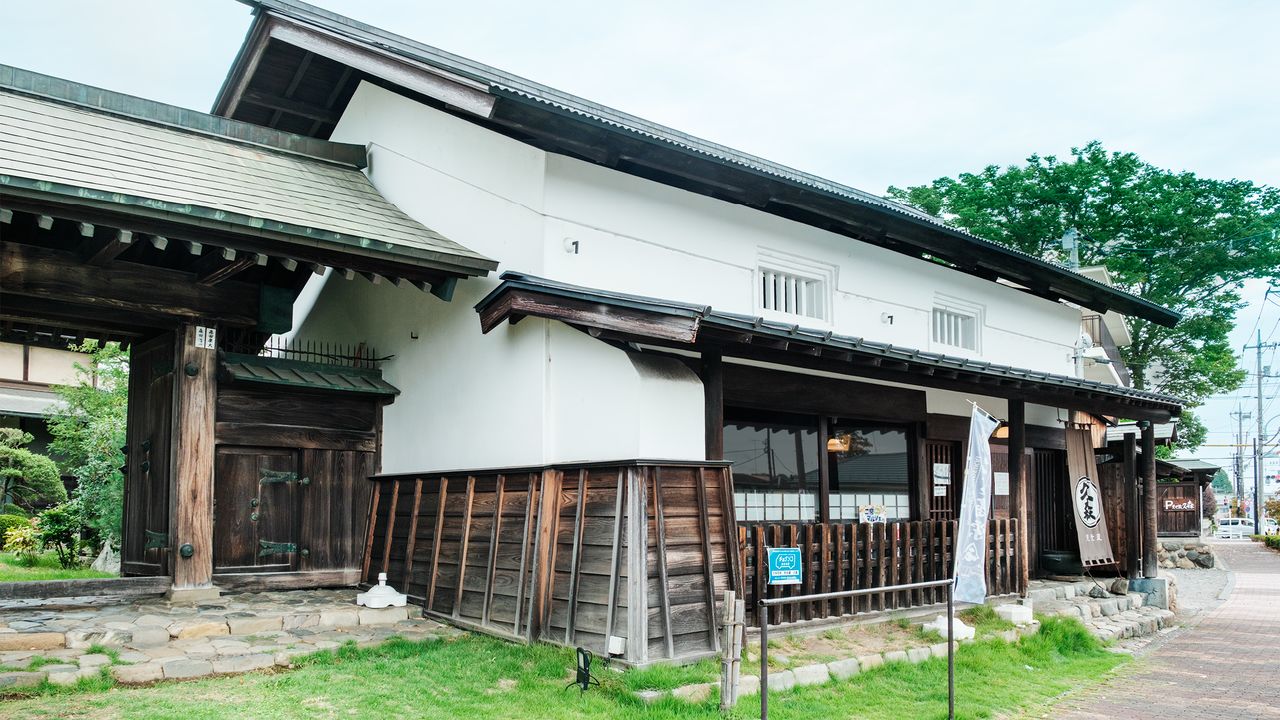
Slide open the heavy wooden door to Misegura Hisamori, and you are embraced by an atmosphere weighted by 170 years of history. It is visible in the heavy exposed beams, the soaring ceiling, the white stuccoed walls. This stately building, just 10 minutes’ walk from Higashi-Akiru Station on the Itsukaichi Line in western Tokyo, was built in 1852, during the waning days of the Edo period (1603–1868). Now, it is home to a café perfect for a short break from workaday life.
In summer, customers line up for the kakigōri shaved from natural ice, but I would recommend a visit in autumn or winter, when things are more subdued. You can relax and enjoy a wide variety of sweets in a bubble of times long gone.
Tradition in the Hisamori Name
Misegura Hisamori stands on the ancestral property of the Morita family, who were once prosperous farmers and hereditary heads of the local village. The word misegura refers to a style of commercial architecture that developed during the Edo period, using sturdy warehouse construction for buildings that served as both shops and residences. Hisamori, meanwhile, is the trade name used by the Morita family in those days.
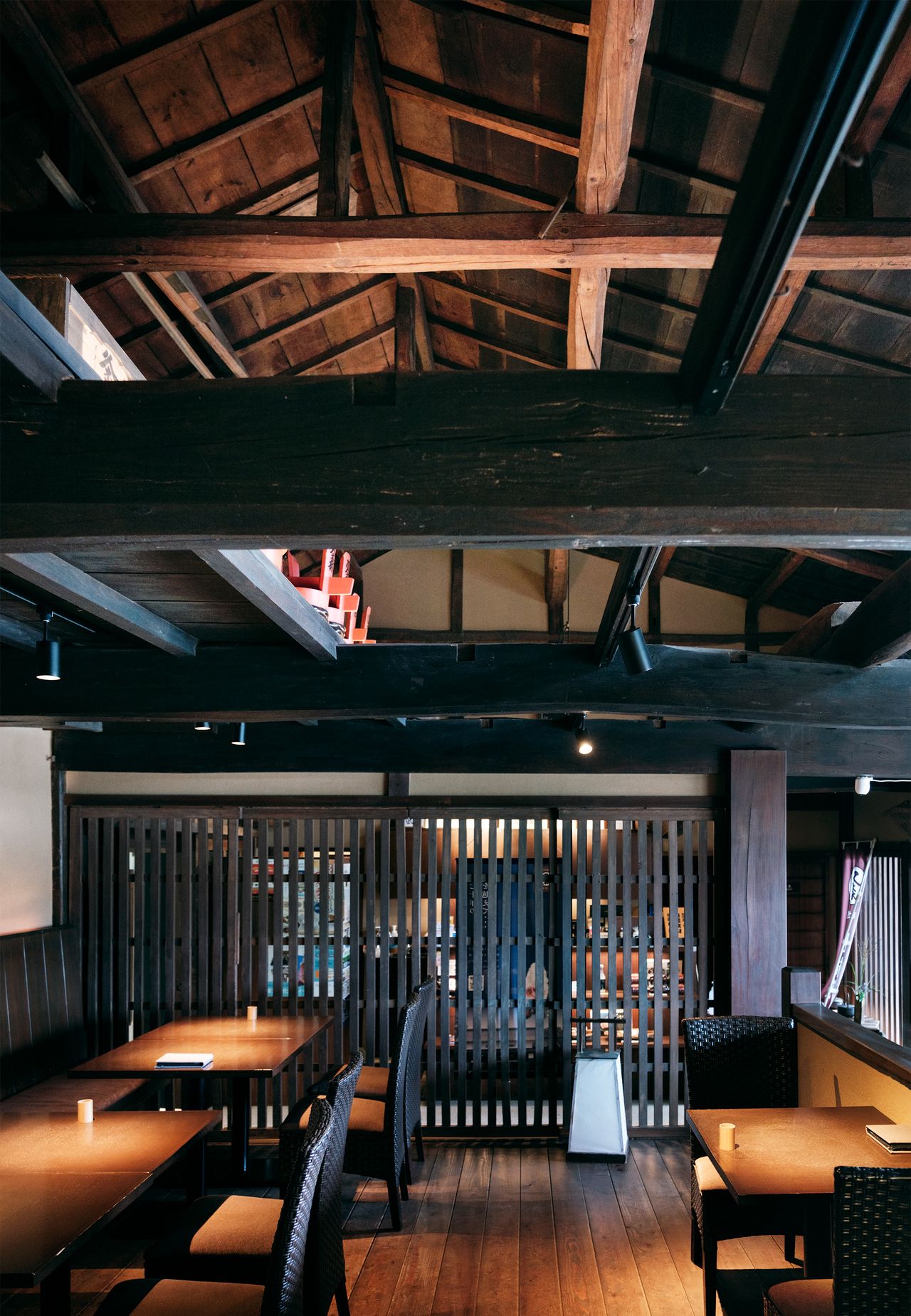
This space has been renovated and the ceiling removed, revealing the original roof trusses. (© Kawaguchi Yōko)
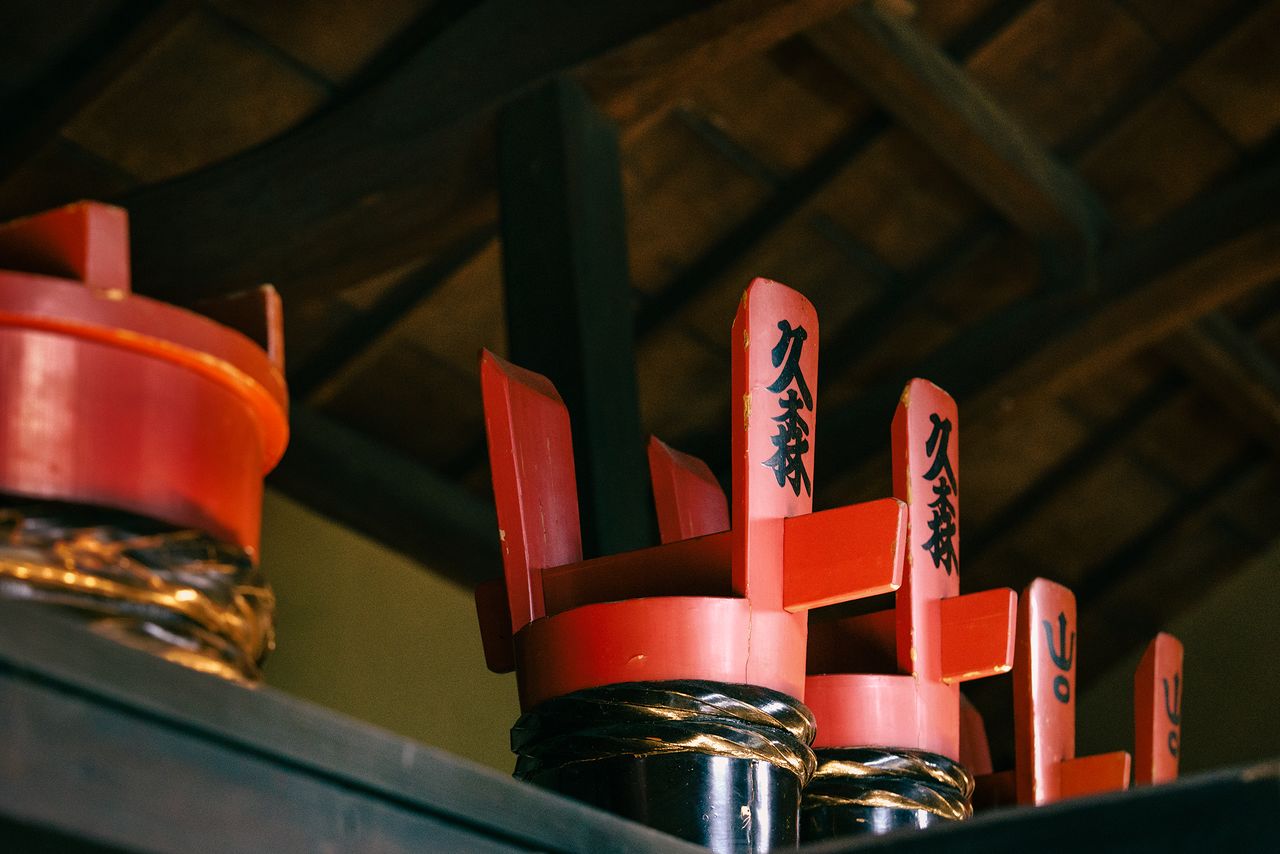
These vermilion lacquered tsunodaru handled vessels, once used in weddings and other celebrations, are now on display in the shop. They bear the Hisamori trade name. (© Kawaguchi Yōko)
The Morita family grew rice, but they were also the first family in the Nishi-Tama region to begin brewing sake. The Morita Shuzō brewery flourished from the late seventeenth century through the end of the Edo period. An interesting bit of trivia is that after Morita Shuzō stopped business, the building was borrowed by Ishikawa Shuzō, which went on to become one of Tokyo’s leading local sake makers, with the label Tama Jiman.
In later days, the Morita family ran a medicine shop out of their misegura. Eighteenth-generation head of the family Morita Yasuhiro says, “There’s a story that the family of Hijikata Toshizō, vice commander of the Shinsengumi, was a customer.”
The renovated misegura interior now displays an array of valuable cultural properties. In the rafters, a plaque commemorating the original construction is inscribed with the year of completion, 1852, along with the name of carpenters who worked on it, evoking visions of the expert hands who shaped the building.
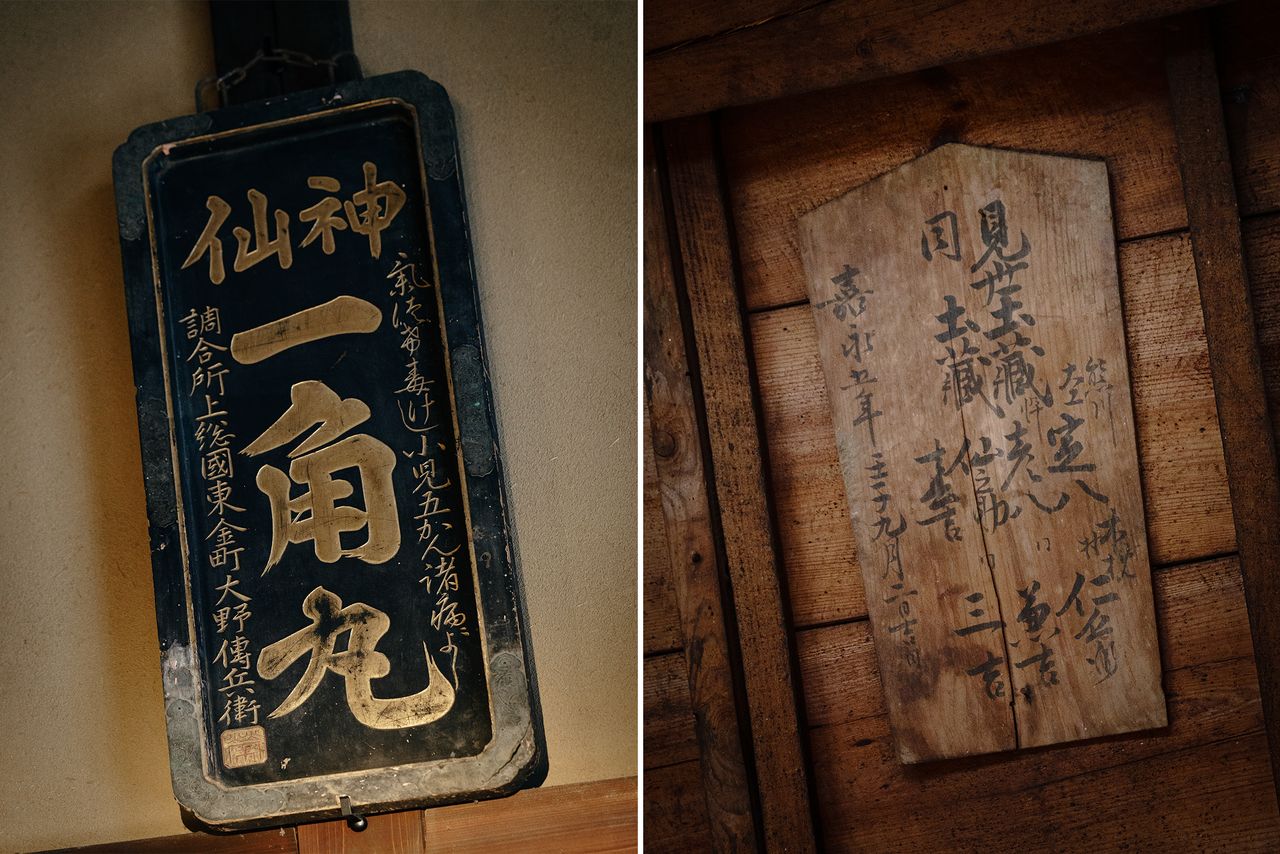
A sign used during the medicine shop days to the left, and the plaque recording the construction date hanging in the rafters. (© Kawaguchi Yōko)
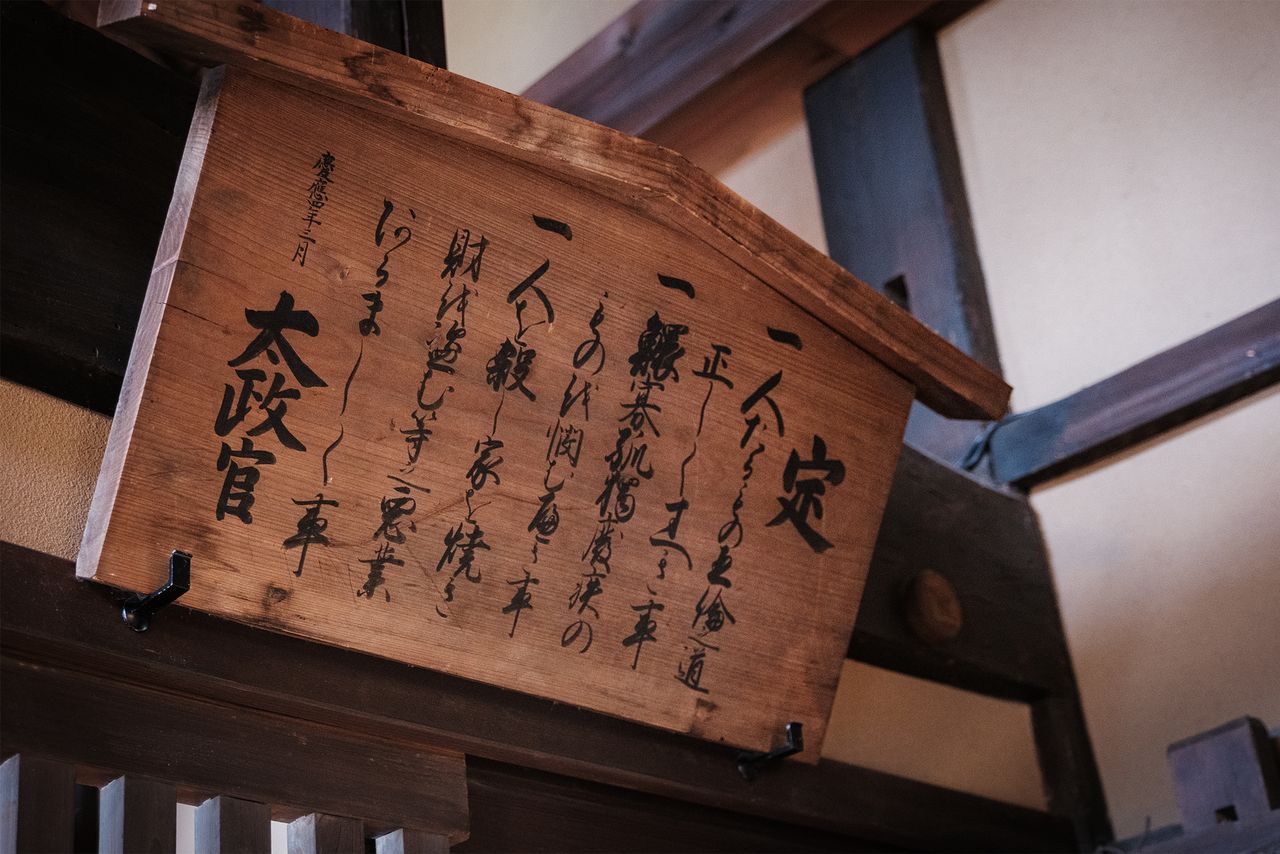
The Gobō no Keiji, a public notice dating back to 1868. (© Kawaguchi Yōko)
There is a wooden sign on the wall known as the Gobō no Keiji, an official public notice of five proclamations promoting moral principles and forbidding acts like gathering for rebellious purposes that was distributed by the newly formed Meiji government in 1868. Such notices would have been displayed at village entrances.
This café’s true charm is the way it allows guests to experience a taste of times long gone along with their delectable sweets. The misegura was there a century or more ago, through times of turmoil, and as we sit in its seats during our own uncertain times this space lends itself to thoughts about how the local villagers in those days may have responded to the rocky transition from the Edo to the Meiji period (1868–1912) much like we make our own way through our own uneasy times.
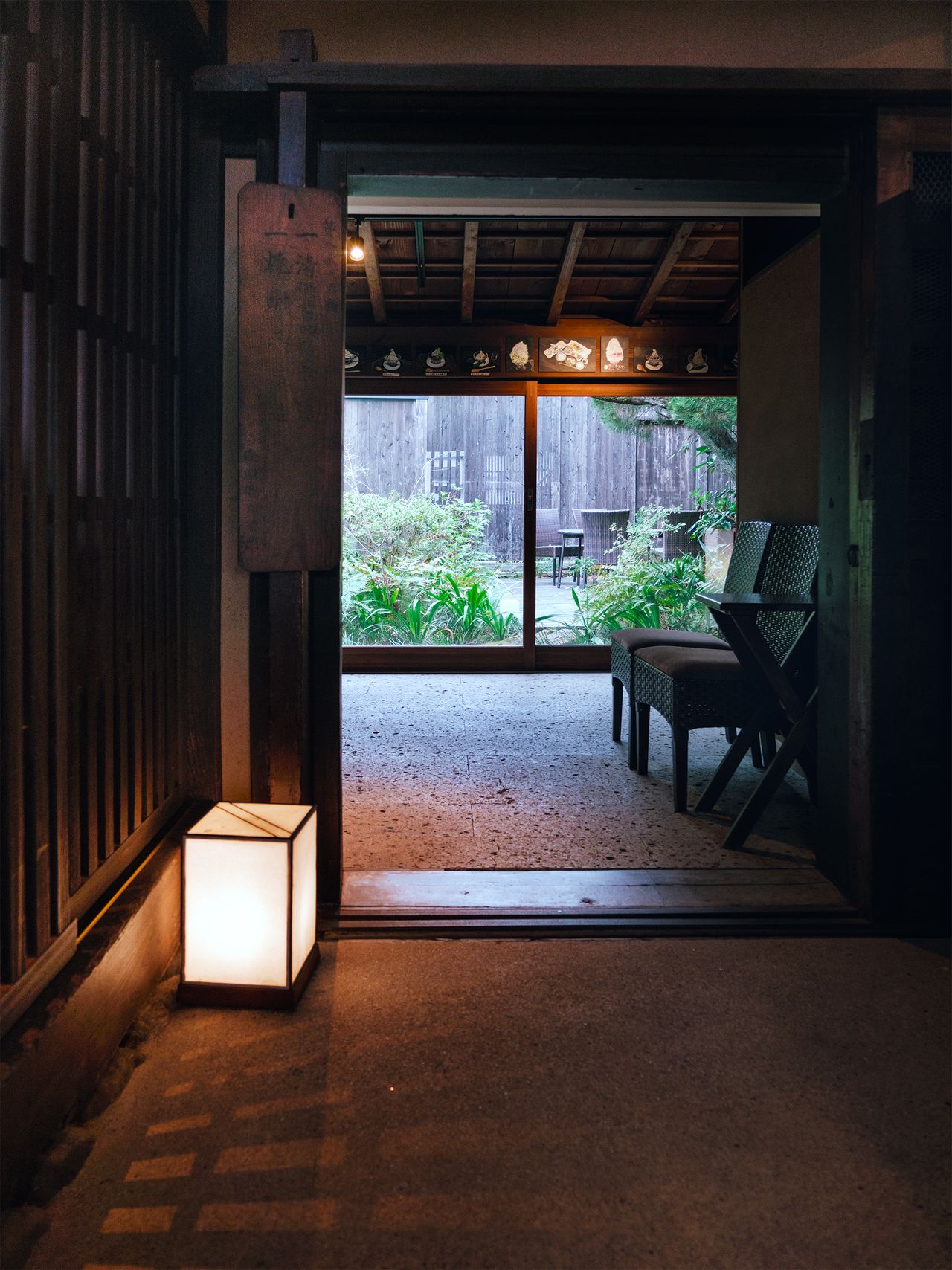
One section alongside the internal garden has a terrace for customers visiting with pets. (© Kawaguchi Yōko)
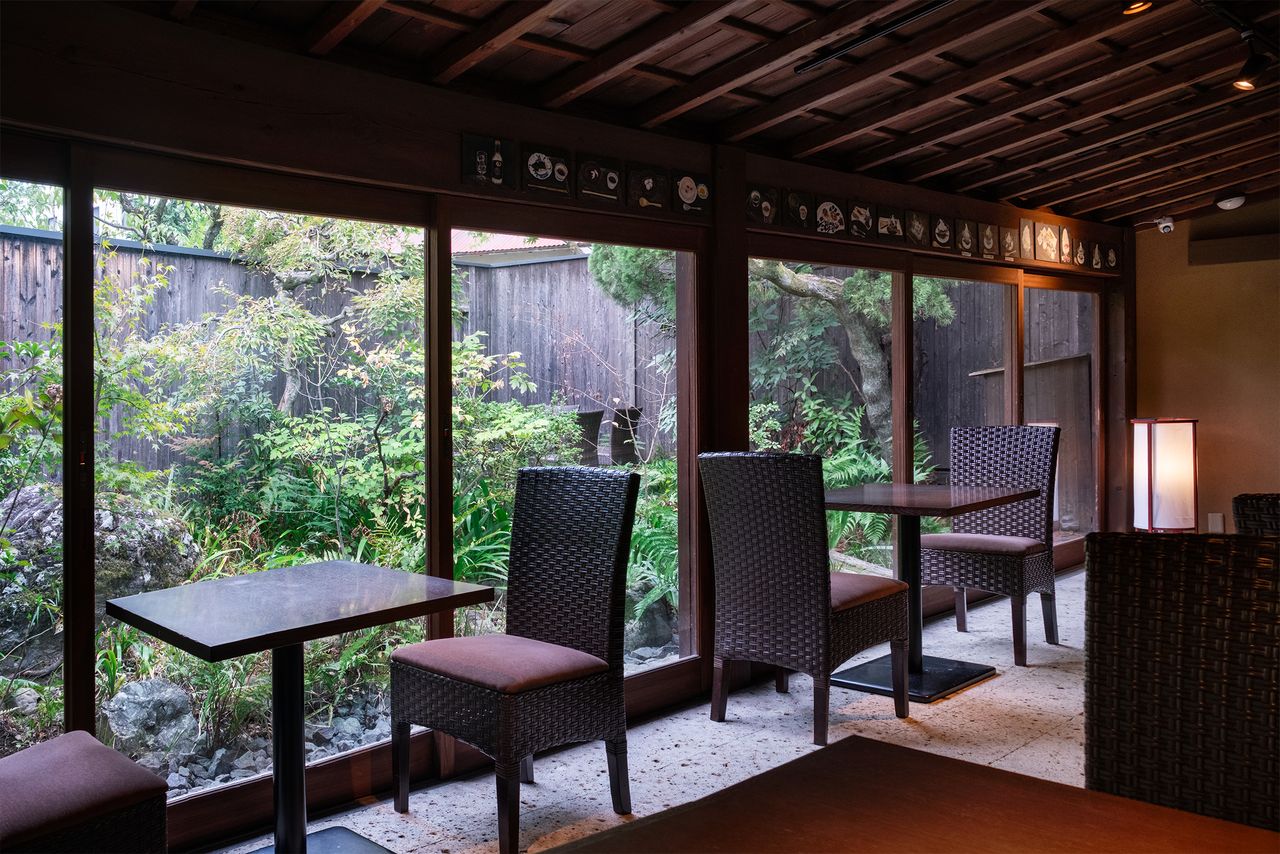
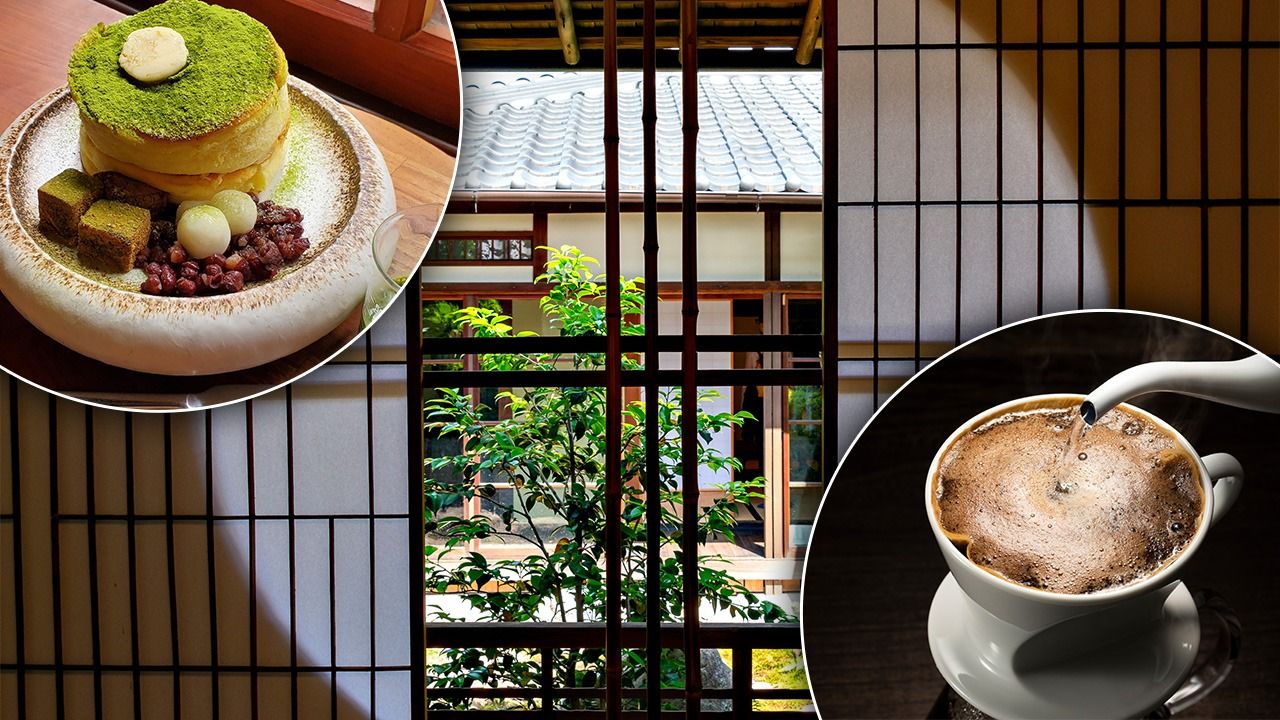
The view of the internal garden from the café addition. (© Kawaguchi Yōko)
Delicate Natural Shaved Ice and House-Made Syrup
The shop’s flagship dish is the kakigōri made by shaving natural ice from the Yatsugatake range and the Minami Alps. The delicate flakes vanish on the tongue with a delightful sensation. There are only a few suppliers of natural ice in Japan, so the café’s ability to offer kakigōri into the autumn and early winter depends entirely on how much ice it managed to secure during the early months of that year.
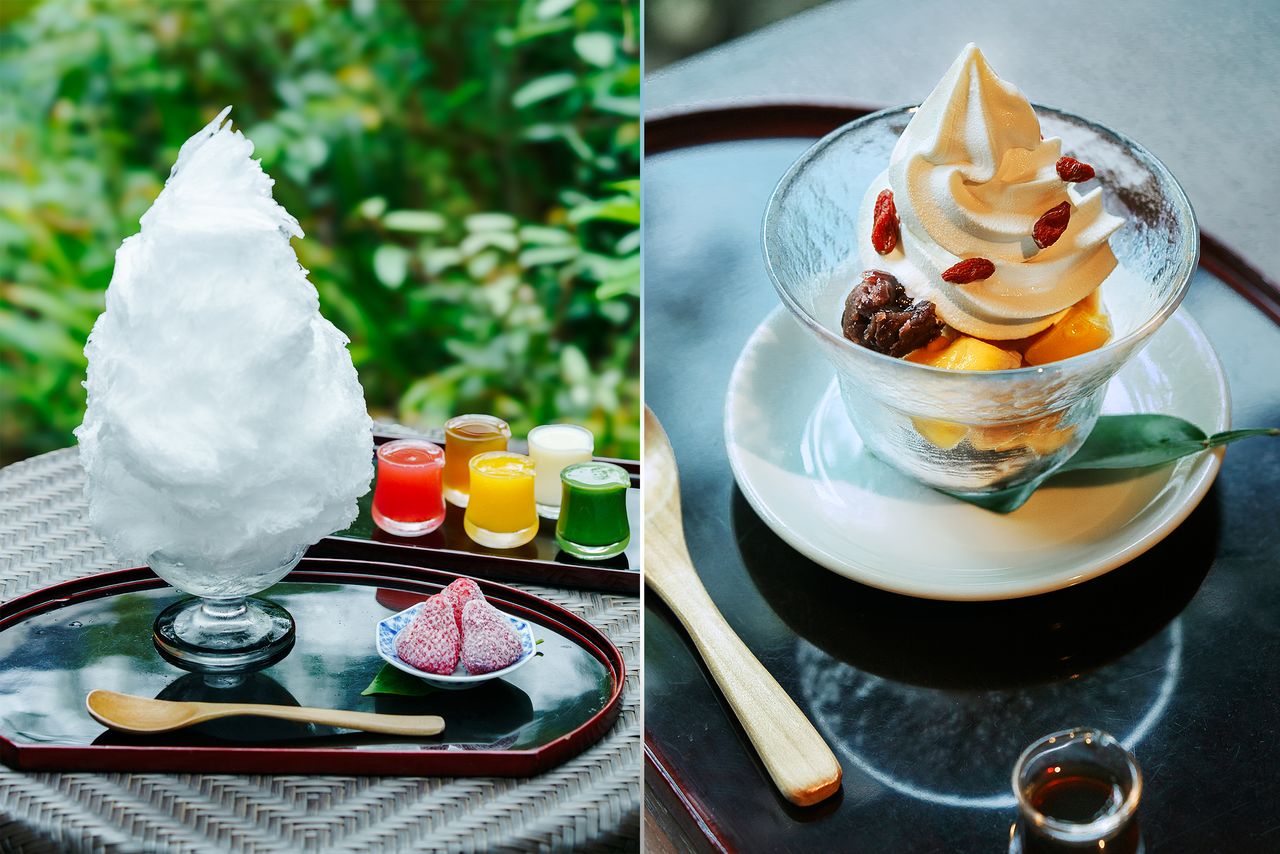
The Natural Ice Kakigōri (left) and Warabimochi Anmitsu. (© Kawaguchi Yōko)
Making the dish even more special are the house-made syrups, blended with care by Morita himself. His own agricultural background is what inspired the café’s philosophy of “slow living, slow food” and dedication to local production for local consumption. He uses only local fruit, including strawberries grown by farmers in Akiruno, kumquats from Morita’s own fields, and yuzu picked from the garden. He also contributes to reducing food loss by using strawberries that are misshapen or otherwise unsuited for shipping to retail channels.
He shows his love for local produce in other ways, as well, like using Tama-produced Tokyo Milk in the soft-serve topping the Warabimochi Anmitsu, or Koshihikari rice from his parents’ fields in the roasted Goheimochi rice cake.
Edo Craft on Display
After enjoying the café, I get a tour of the whole facility. The Morita family residence was designated a tangible cultural property in 2013. The sprawling, 6,000-square-meter grounds are home to other impressive buildings besides the misegura café, including a rice storehouse and a warehouse for fermenting miso.
Passing through the gate next to the misegura reveals the main house, which is over 200 years old. It is still the family’s main residence, so there is no access, but visitors can view the exterior.
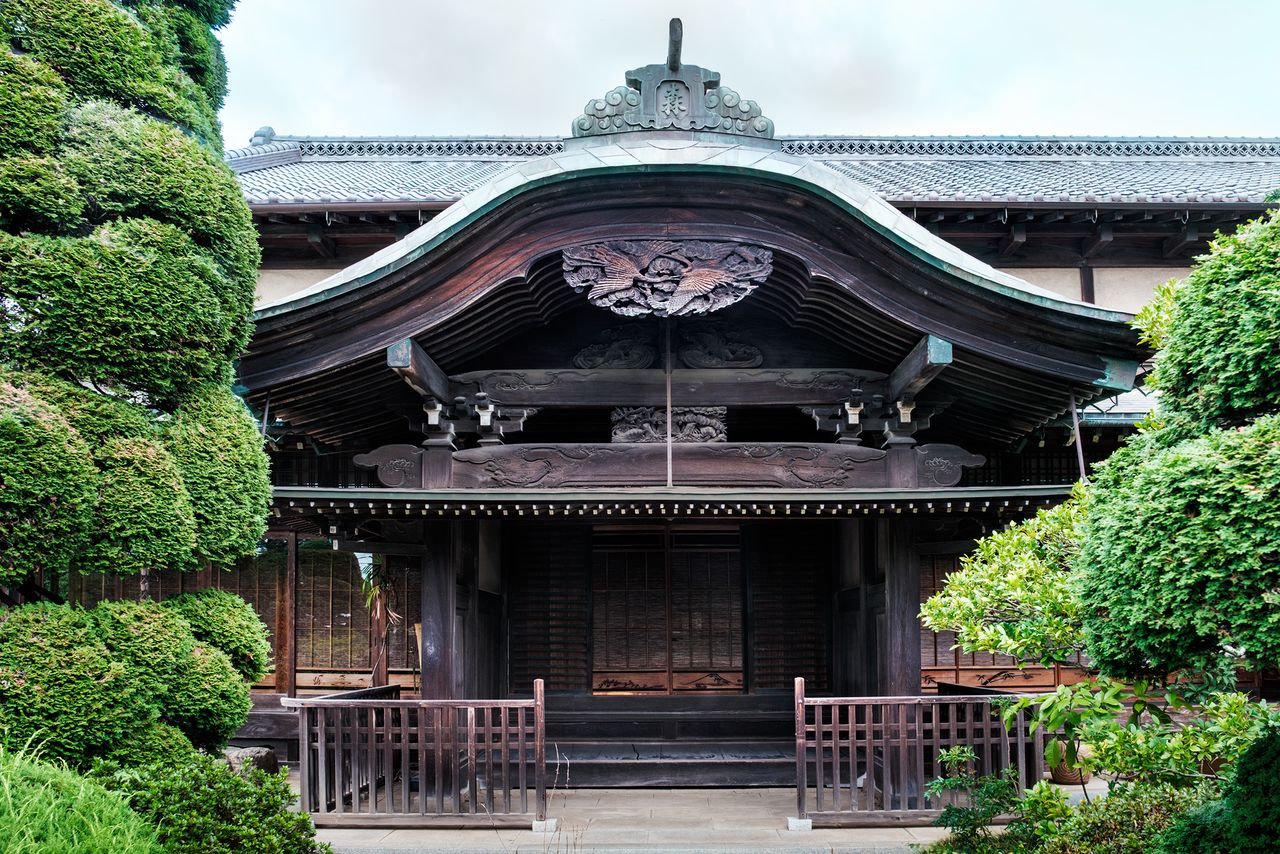
The main house has a beautiful bowed-gable roof over the entrance. (© Kawaguchi Yōko)
Morita says, “Buildings deteriorate quickly when people stop living there.” That explains why he continues to carefully use both the main house and the other buildings while renovating them.
The main house entrance is made entirely of zelkova wood and has a gorgeous bowed-gabled roof worthy of any temple or shrine, decorated with intricate carvings of stunning beauty. It speaks volumes about the skill and pride of Edo period artisans.
Ushering in the Future
Morita decided to open this café out of the desire to display this valuable cultural property to more people and so contribute to the local community by preserving both these historical buildings and the surrounding scenery of lush rice fields. One concrete action to achieve that aim is reviving the Edo period sake label Yaegiku once used by Morita Shuzō. He is doing that with aid from Ishikawa Shuzō and local farmers, having it made from Koshihikari rice grown in the city of Akiruno.
However, the path of carrying on these traditions is not a smooth one. Morita says, “I’ve felt since I was little that inheriting and preserving the family house was a given. But those days are gone, actually. I won’t force it on my own children.”
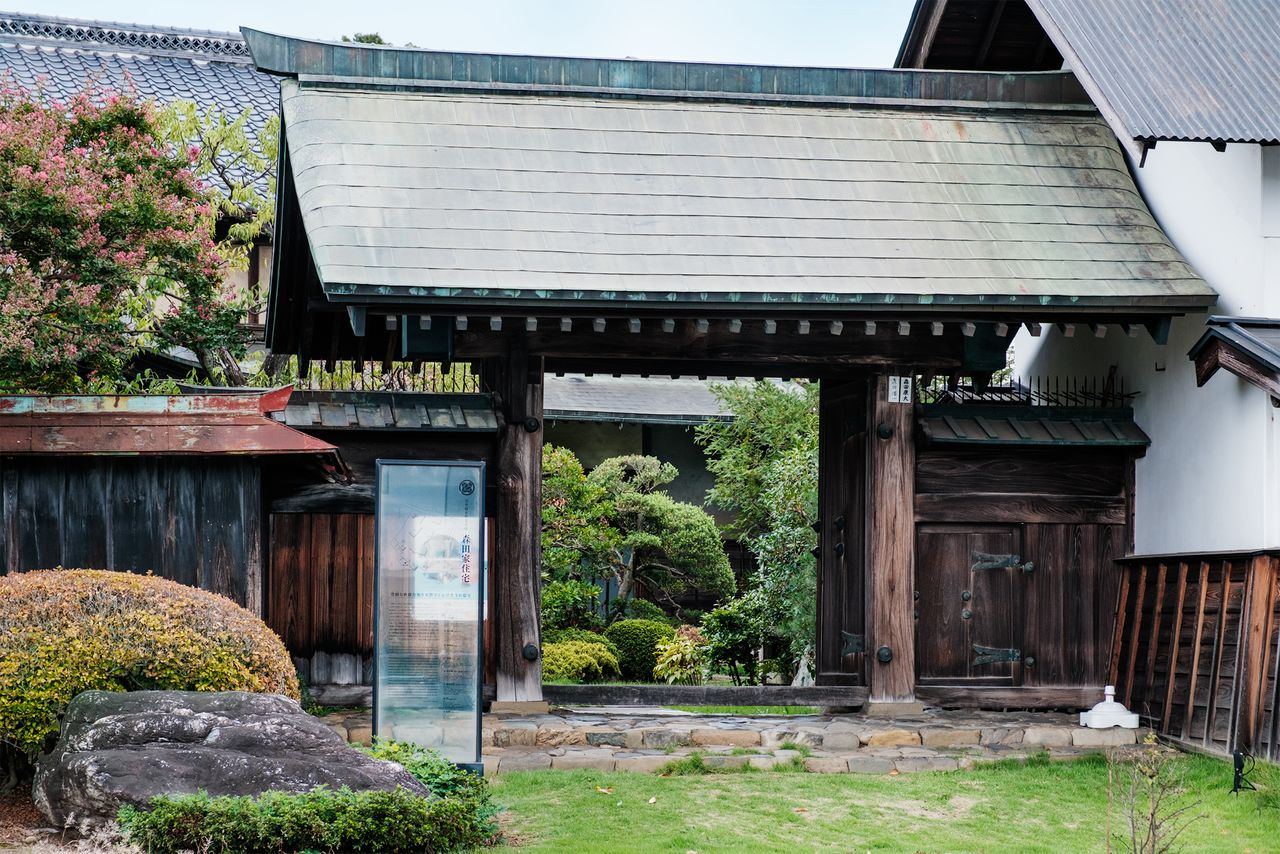
The gate to the main house also dates back to the late nineteenth century. (© Kawaguchi Yōko)
The café has been popular with sightseers visiting the city’s attractions, like the clear river flowing through the Akigawa Valley, since its opening a decade ago. Recently, though, it has transformed into a spot that people go out of their way to visit on its own merits. The impressive presence of the historical properties, the charm of sweets made from local produce, and the owner’s quiet resolve to carry on tradition seem to elevate the business.
“I’m really happy about the impact of repeat customers. Even if it’s just for a single cup of coffee, I love it when people stop in to our misegura, forget about life for a while, and maybe find a bit of strength to face tomorrow.”
Morita’s words stick with me. The ride from Shinjuku to Higashi-Akiru Station takes about an hour including a changeover. It’s worth it to enjoy a bit of time under the watchful eye of this historic building.
Misegura Hisamori
- Address: 633 Ogawa, Akiruno, Tokyo
- Hours: 12:00 pm to 5:00 pm (May stop taking orders early during busy periods.). Open daily except for Tuesdays (or Wednesday if the previous Tuesday is a national holiday). May be closed other days.
- Access: 10 minutes’ walk from JR Higashi-Akiru Station
- Website: https://www.hisamori.biz/ (Japanese)
(Originally published in Japanese. Banner photo: An exterior view of Misegura Hisamori. © Kawaguchi Yōko.)