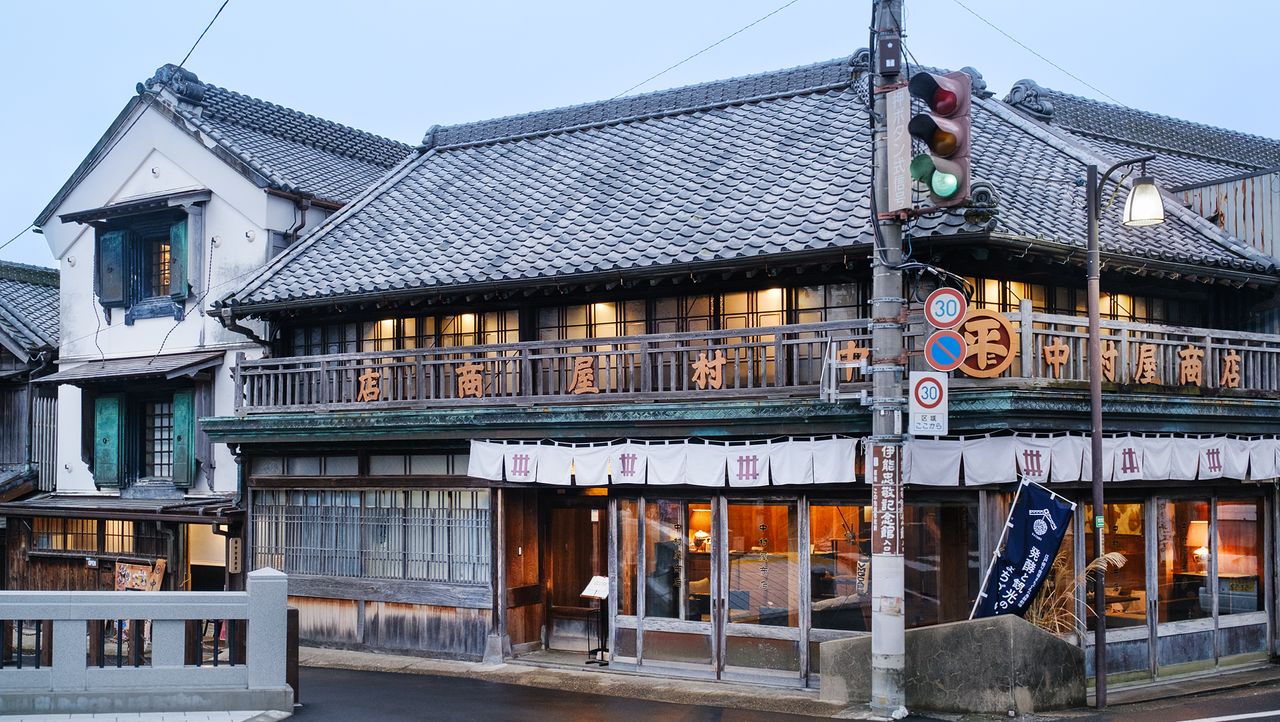
Cafés at Tokyo’s Traditional Folk Houses
The VMG Cafe: Local Tastes in a Riverside Merchant Home
Travel Food and Drink Architecture- English
- 日本語
- 简体字
- 繁體字
- Français
- Español
- العربية
- Русский
A Front-Row Seat to the Passage of Time
The town of Sawara flourished in the Edo period (1603–1868) as a hub for river shipping and a fermentation center that turned rice from the nearby fields into prized sake, soy sauce, and more. Now a neighborhood within the city of Katori in Chiba Prefecture, Sawara is still home to beautifully preserved streetscapes from that time.
I admire the merchant homes with their sturdy plastered storehouses and swaying willows as I walk along the Ono River, gentle afternoon rain dampening the flagstones beneath my feet. Toward the center of this designated historic preservation district stands the old Chūkei Bridge, and not far away I spy my intended destination: a stately two-story merchant home. Built more than 170 years ago and now a designated prefectural tangible cultural property, this historic building is still serving customers—as a café.
The Mercantile World of the Edo Period
After admiring the characters spelling out “Nakamuraya Shōten,” the former name of the establishment, still prominently visible on the railing around the second story, I step inside. To my right I see a space clearly meant for relaxation and refreshment. This is the VMG Cafe, operated by Value Management, an Osaka company that finds new uses for old houses like this. The café space is connected to the interior of the storehouse to the left, where Nakamuraya Shōten still sells ornaments and sundries.
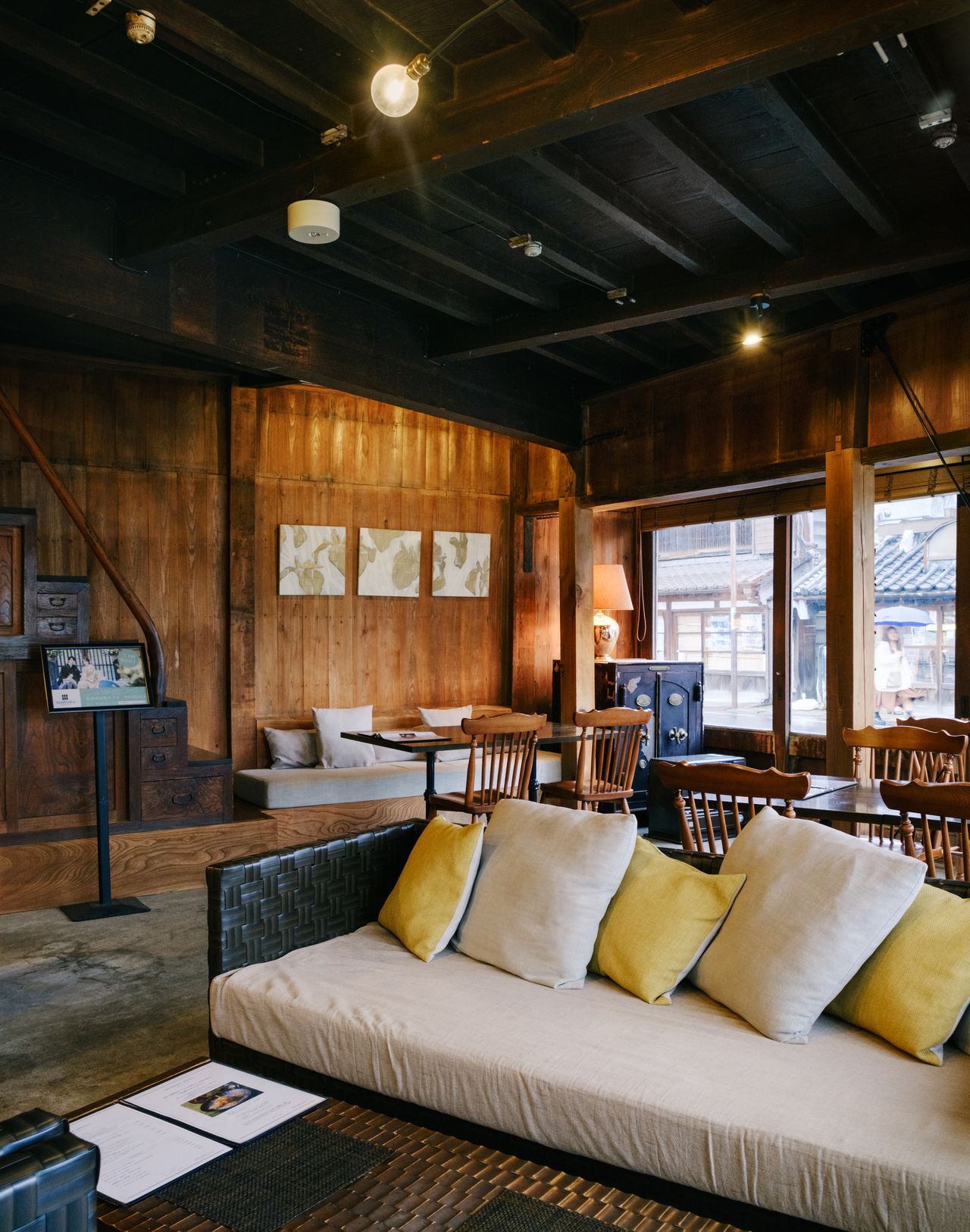
The first-floor café space has high ceilings and an airy, open feel. (© Kawaguchi Yōko)
The comfy café sofa is an excellent perch from which to gaze at the bridge and the streets outside through the glass doors. As I settle in and relax, I feel 170 years of accumulated history begin to speak to me.
The ceiling and pillars are all vintage 1855, dating to the building’s original construction. The pentagonal zelkova corner pillars are particularly noteworthy, and were reportedly cut to suit the unusually shaped plot of land the building stands on. Square pillars would have served just as well, but the additional face on each pillar reflects the skill and playfulness of the artisans who put the building together.

Pentagonal pillars still hold the building up. (© Kawaguchi Yōko)
Against one of the walls stands a chunky safe that Nakamuraya Shōten actually used until mere decades ago—more proof that this space is not a decorated stage set, but a lived-in venue for commerce for more than a century.
There is also a traditional “box staircase” between the first and second floors, with the space under the stairs used for storage, but these stairs are now considered dangerously steep and off-limits to visitors. Fortunately, the second story is still reachable via a more user-friendly set of stairs.
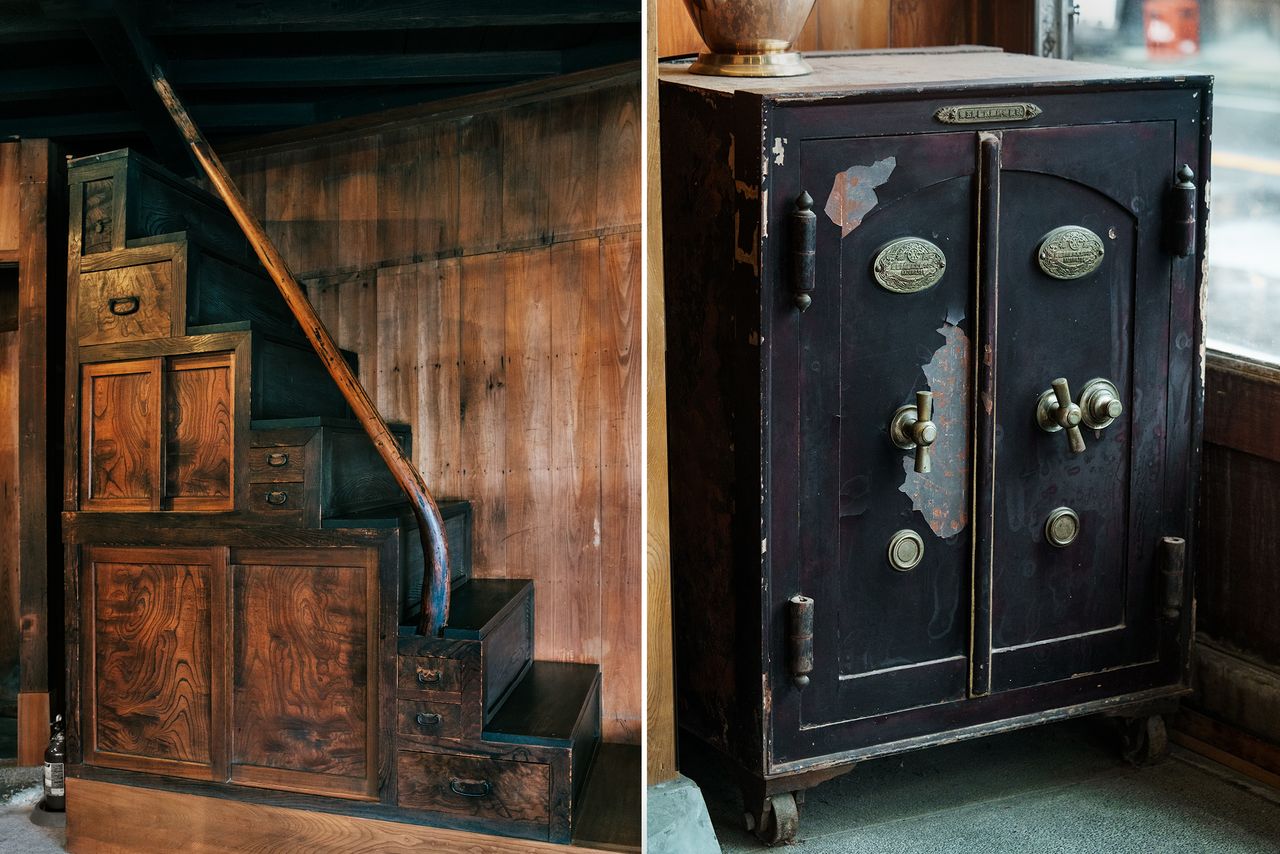
Secure storage, Edo-style: Box staircase and sturdy safe. (© Kawaguchi Yōko)
Savoring Sawara’s Fermentation Culture
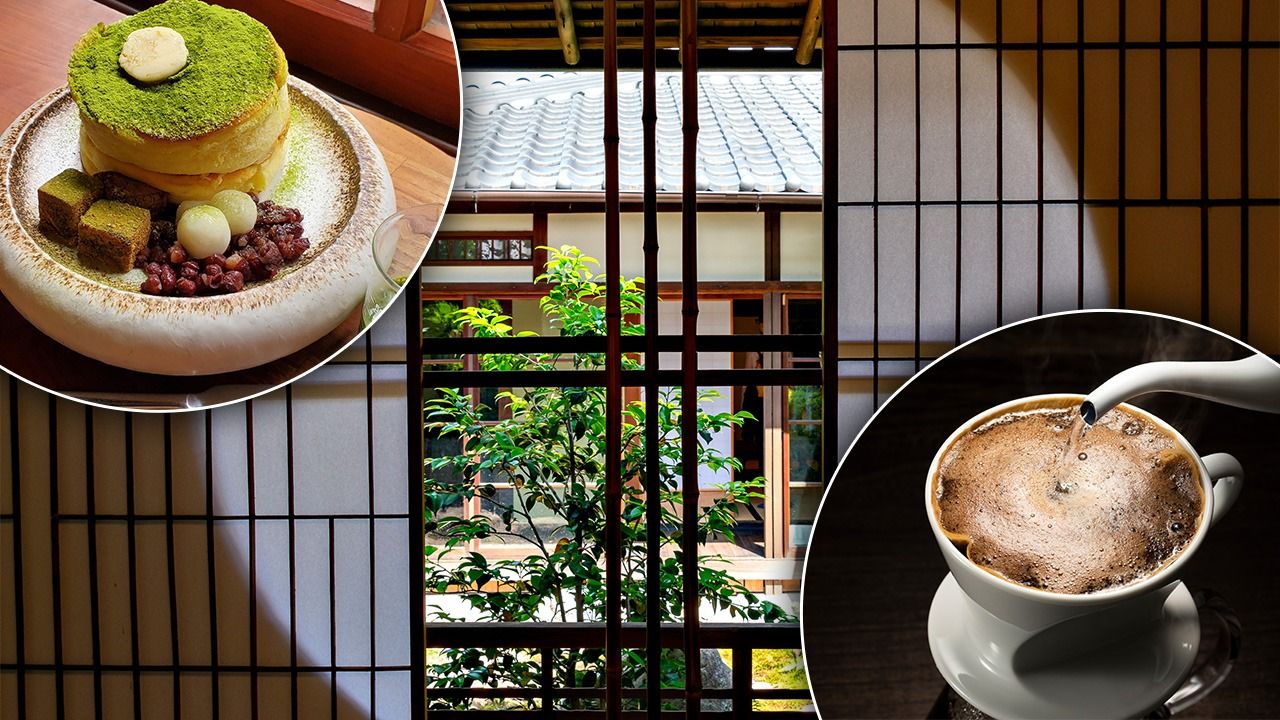
I order the VMG Cafe’s signature dish: sweet potato Mont Blanc, made on the premises from fresh ingredients. The staff extrude the sweet potato paste in long strands as I watch, completing the dish before my eyes. I couldn’t be more eager to dig in.
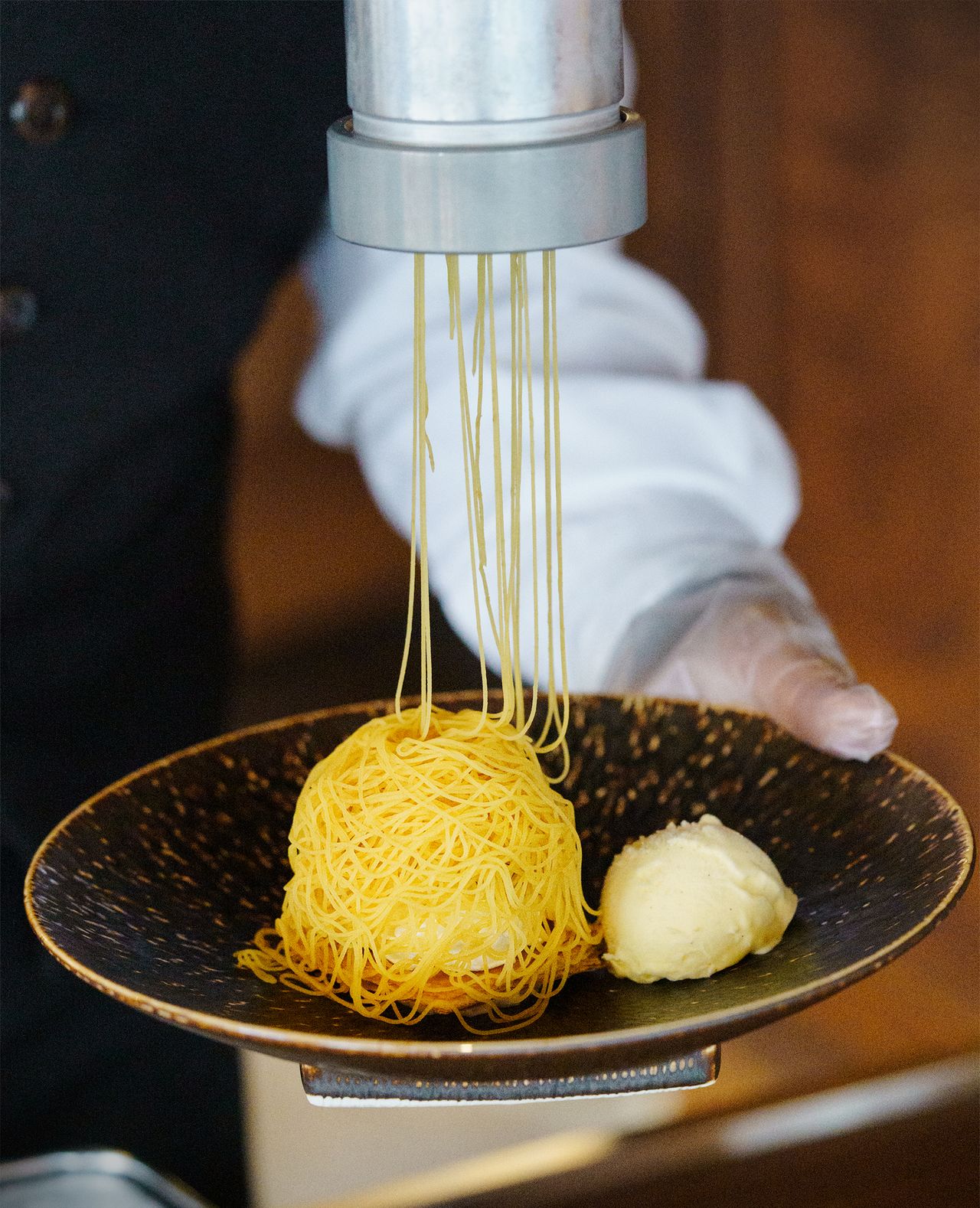

The VMG Cafe’s deliciously fresh sweet potato Mont Blanc. (© Kawaguchi Yōko)
The countless strands of sweet potato paste mingle in my mouth, filling it with natural sweetness. The smooth cream and crunchy pie pastry also included in the dish add new textures to each layer, ensuring a deliciously absorbing experience till the last bite.
The VMG Cafe menu is organized around tastes only available in Sawara—in particular locally grown ingredients brought to fragrant perfection by the region’s flourishing tradition of fermentation.
In summer, the café’s shaved ice is a popular choice. Delicately shaved ice topped with three kinds of sauce, including one using berries fermented with rose petals and amazake made in a Sawara brewery, adds up to a refined treat for warmer months.
Upstairs, Testament to Disaster and Recovery
The upstairs space is tatami-floored, with specially ordered furniture. On close inspection, the pillars and windows are recognizably askew. In 2011, the Great East Japan Earthquake hit Sawara with greater than magnitude 5 force, causing considerable destruction. Roof tiles fell from the buildings along the Ono River that flows past the café today, and the river itself was choked with gravel and dirt.
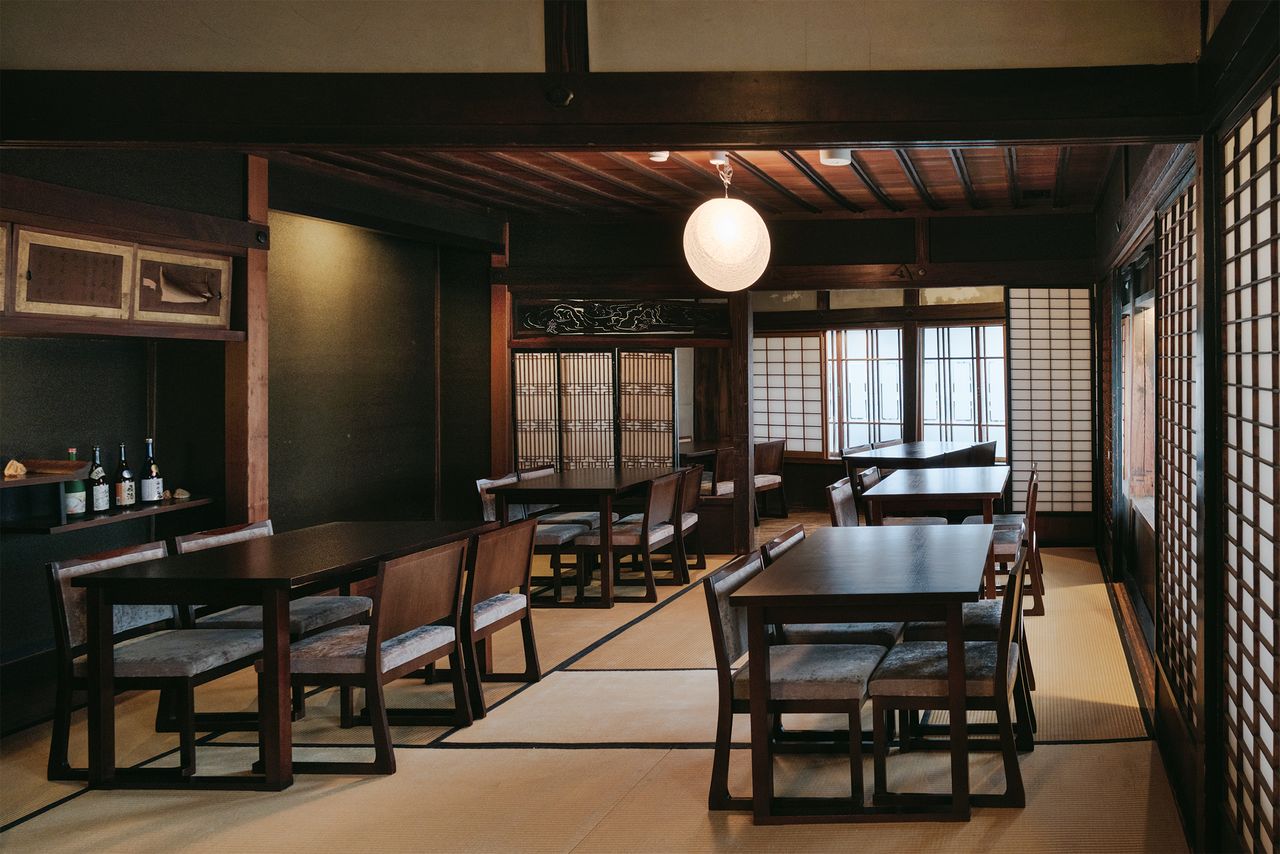
The spacious upstairs area. The doors and other fittings, though modern, evoke the Edo period. (© Kawaguchi Yōko)
Nakamuraya Shōten was structurally knocked askew, but eventually rectified through repairs such as adding new boards beneath the sliding doors on the ground floor. During the repairs, builders also took the opportunity to reinforce the building for greater safety in case of future quakes, but the effects of the last earthquake remain visible.
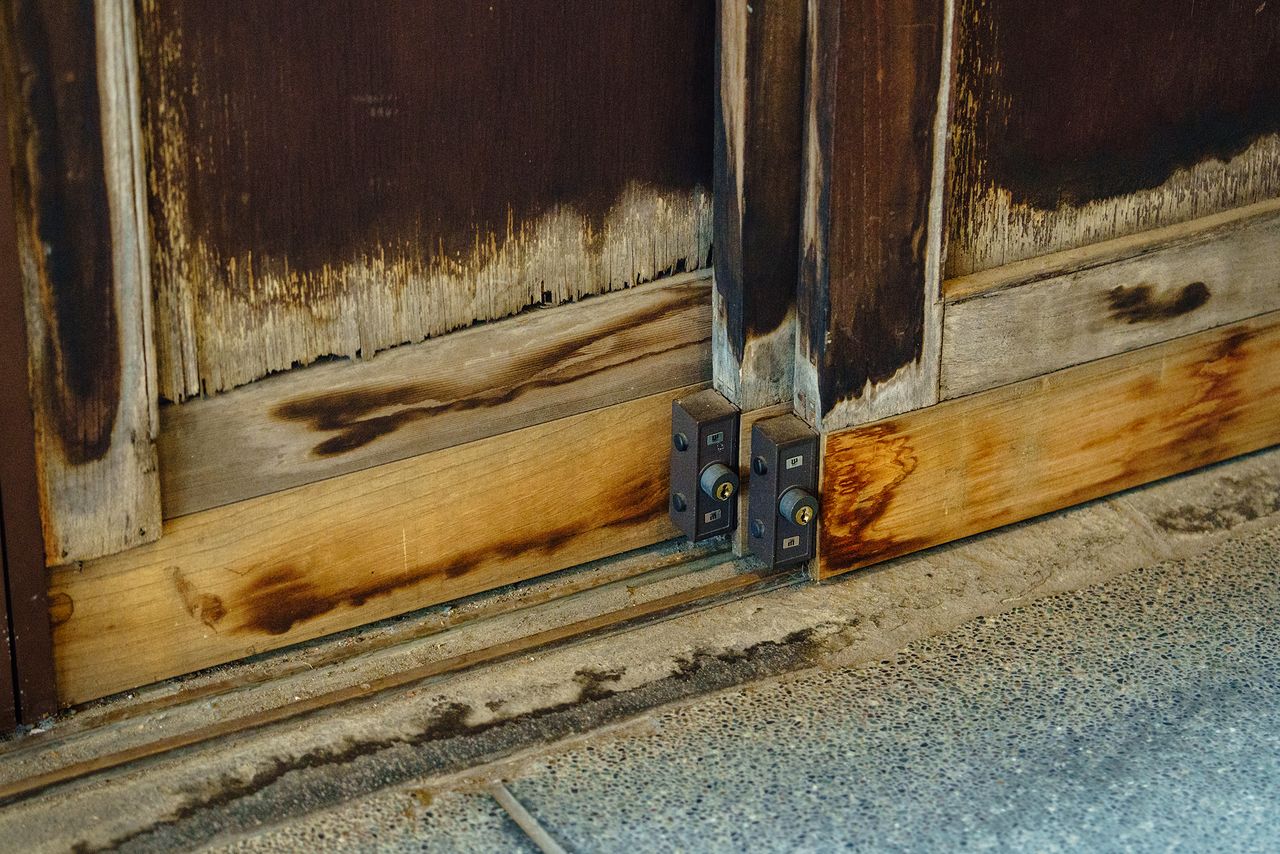
Extra boards were added to fix the skewed sliding doors and keep them in use. (© Kawaguchi Yōko)
The café is inextricably intertwined with the area’s history. Sawara flourished as a merchant district where the spirit of mutual support and self-governance was strong. There was even a tradition of storing spare roof tiles under the eaves in preparation for future fires. After the Great East Japan Earthquake, this spirit found new expression in a conservation movement determined to preserve these historical structures for future generations.
Turning an Entire Town into a Hotel
In 2015, the Nipponia Sawara Merchant Town Hotel opened its doors. This public-private project reframed the whole neighborhood as a “distributed hotel,” born at the intersection of the desire of the people of Sawara to revive the town’s fortunes and the vision of Value Management. Crucially, the head of Value Management lived through the 1995 Kobe earthquake himself, seeing valuable buildings lost forever. This experience left him eager to breathe new life into Sawara’s historical resources and help it preserve its culture into the future.
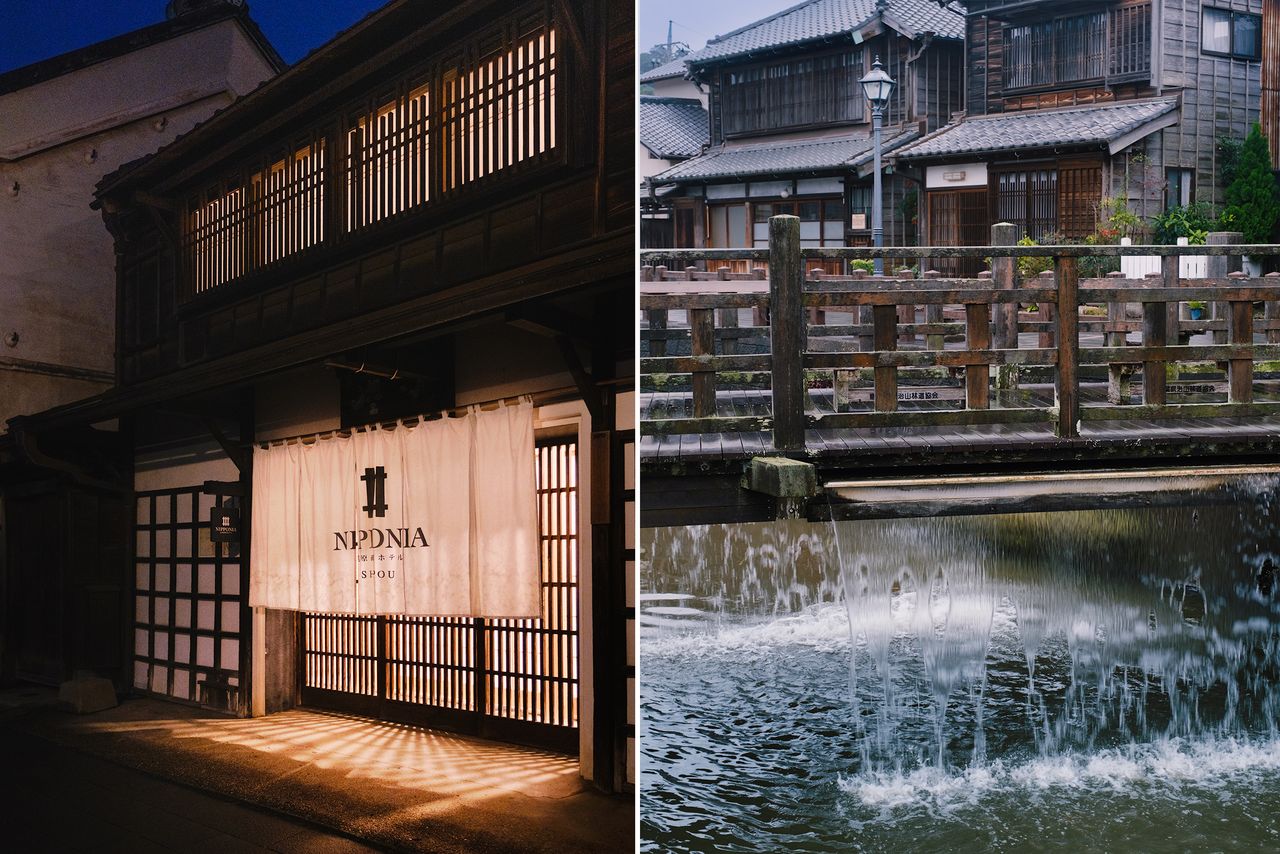
Historical buildings scattered across the town were renovated and reborn as hotel venues. (© Kawaguchi Yōko)
This multi-year Nipponia Sawara Merchant Town Hotel plan saw historical buildings scattered across the town reborn one by one to serve functions within the hotel, from front desk and guest rooms to hotel restaurant. After checking in, guests cross the town to reach their rooms and other facilities; along the way, they might drop in at a store that catches their eye. Reframing the entire town as an accommodation center has revitalized Sawara entirely.
Nakamuraya Shōten, a beloved town landmark even then, was reopened first in 2018 as the hotel’s front desk, then later as a café. It’s certainly in the ideal location to serve as a base for exploring Sawara—or a rest point along the way.
The History of Nakamuraya Shōten
The three-story storehouse with plastered walls next to the café is, like the café building itself, a prefectural tangible cultural property.
“The building where the café is now was a salt-making house during the Edo period,” explains Namiki Kayoko, the wife of the fifth-generation proprietor of the shop that operates inside the storehouse. “The family bought the property in 1874 and founded Nakamuraya Shōten there.”
In the past, the Namiki family both lived and worked on the property, says Namiki.
“My husband grew up here. When I first came to live here after our marriage, I was still young and didn’t understand historical value, so I wasn’t happy about living somewhere so old! Now I feel gratitude toward our ancestors and this building.”
In its first incarnation, Nakamuraya Shōten sold household goods and everyday necessities. From the postwar years through to 2001, it was a wholesaler of materials for tatami mats. Starting in the 1990s, the family also began to sell Japanese ornaments and interior goods. Today the shelves in the storehouse are lined with traditional crafts from Chiba and items created by local artisans and Namiki herself.
The third floor of the storehouse has been converted into a mini-museum. Entry is free, and exhibits include charming Girl’s Day and Children’s Day dolls owned by former heads of the family, an enormous abacus used during the building’s wholesaler days, and many other treasures. It’s a must-visit.

Girl’s Day and Children’s Day dolls handed down from generation to generation. (© Kawaguchi Yōko)
Other noteworthy sites near the café include the Inō Tadataka Museum, which honors one of Sawara’s most accomplished sons. Inō made the first complete map of Japan, and he did it all by touring the country on foot.
When Sawara was at its peak during the Edo period, with all manner of people and goods passing through, the city was said to surpass even Edo itself for luxury. VMG Cafe and Nipponia Sawara Merchant Town Hotel are meant to preserve that history going forward.
As I sat at the café window, I saw the rain cease and the pale blue evening approach. Watching the lights reflected in the wet flagstones below, I treated myself to another cup of coffee. The VMG Cafe is the perfect spot to enjoy such moments. There are even highway buses direct from Tokyo Station.
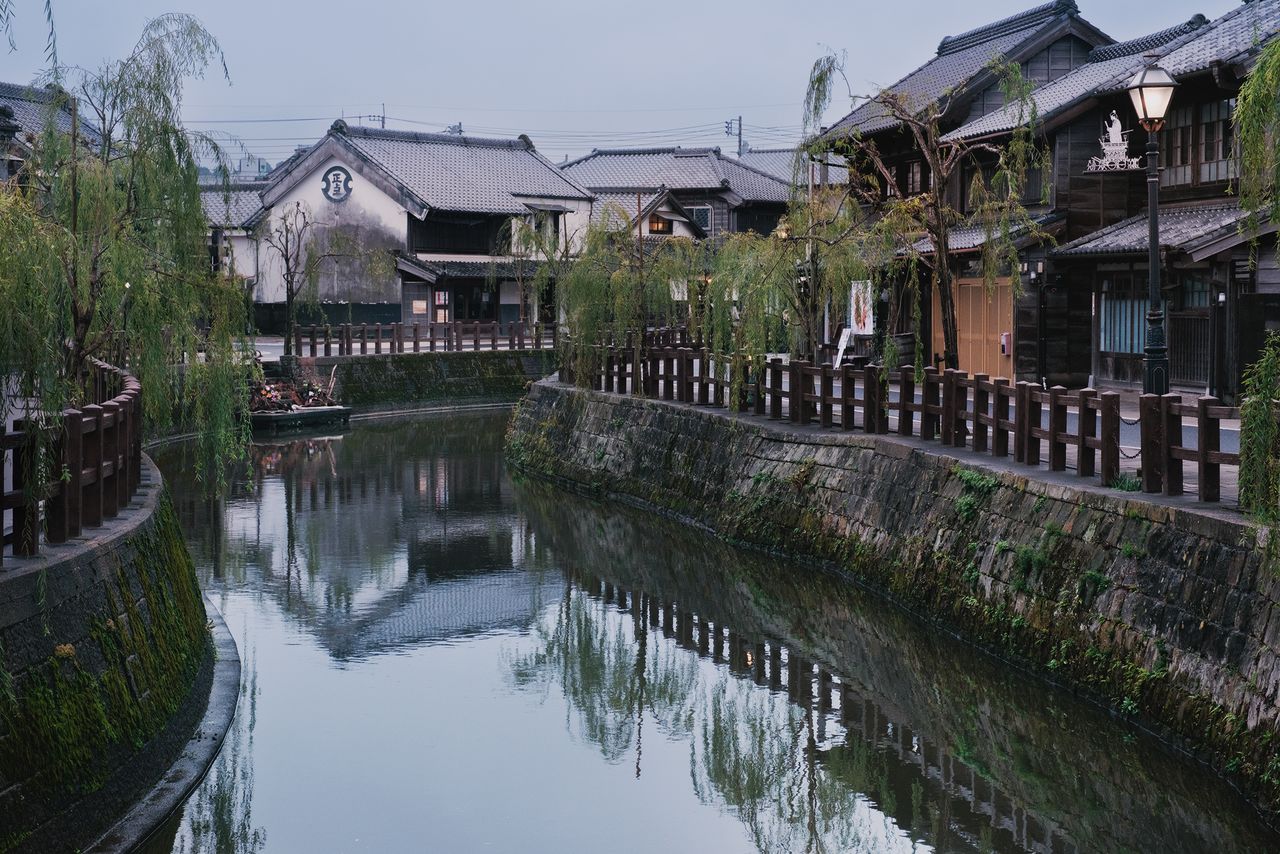
The Ono River at dusk. (© Kawaguchi Yōko)
VMG Cafe
- Address: 1720 Sawara I, Katori, Chiba Prefecture
- Hours: 11:00 am–4:00 pm (until 4:30 pm on Saturdays, Sundays, and public holidays)
- Closed: Tuesdays
- Access: 12 minutes on foot from JR Sawara Station,
- Website: https://www.nipponia-sawara.jp/cafe (Japanese)
(Originally published in Japanese. Banner photo: Exterior view of the VMG Cafe. © Kawaguchi Yōko.)