Cafés at Tokyo’s Traditional Folk Houses
Sun Potter Café Nonbiriya: An Innovative Menu and Retro Home Comforts in Yanaka, Tokyo
Food and Drink Culture- English
- 日本語
- 简体字
- 繁體字
- Français
- Español
- العربية
- Русский
Memories of Yesteryear
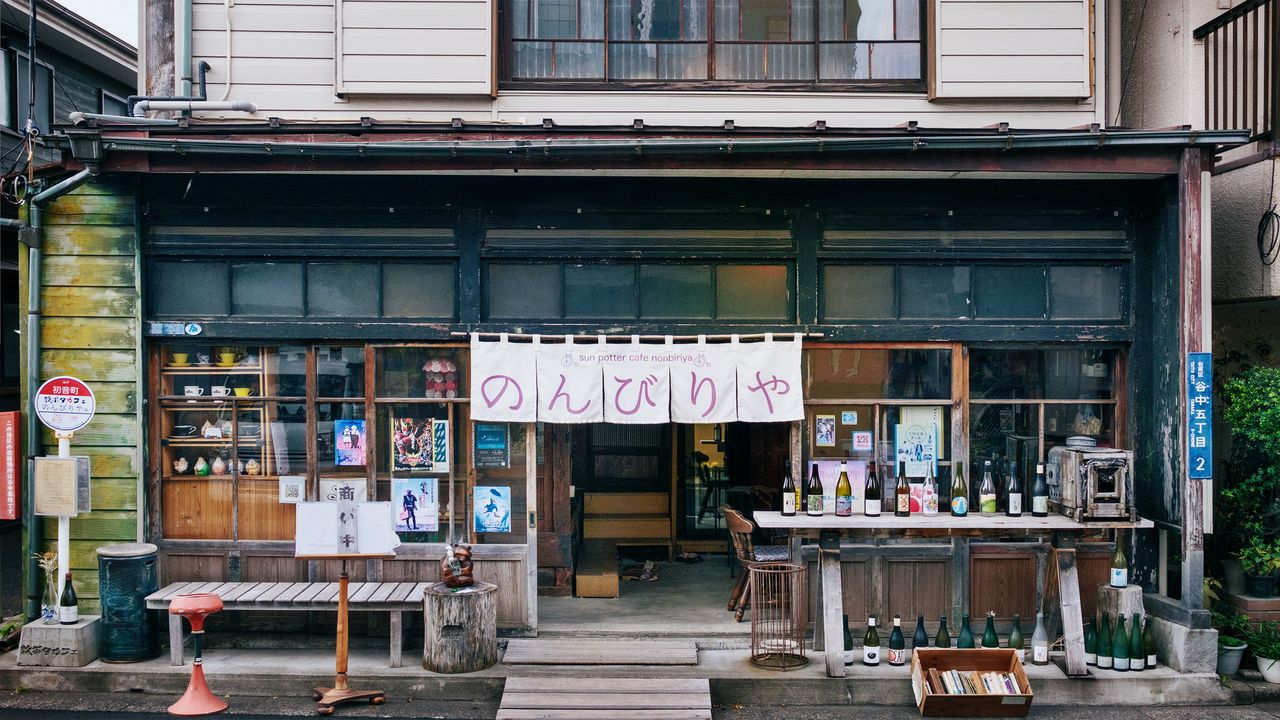
In Tokyo’s Yanaka district, known for its historic temples and atmospheric side streets popular with foreign visitors, a distinctive structure caught my eye. To one side, there was a bus stop-style sign, while liquor bottles lined up behind a crate of used books. As I opened the café’s sliding door, I was hit by a wave of nostalgia for the twentieth century.
There are tables set up in the earthen-floored doma entrance, which is illuminated with natural light. A small room up a step holds an old-fashioned chabudai table surrounded by zabuton floor cushions. The cathode ray TV and stereo set from decades ago bring to mind scenes of a homey space where family members relaxed together.
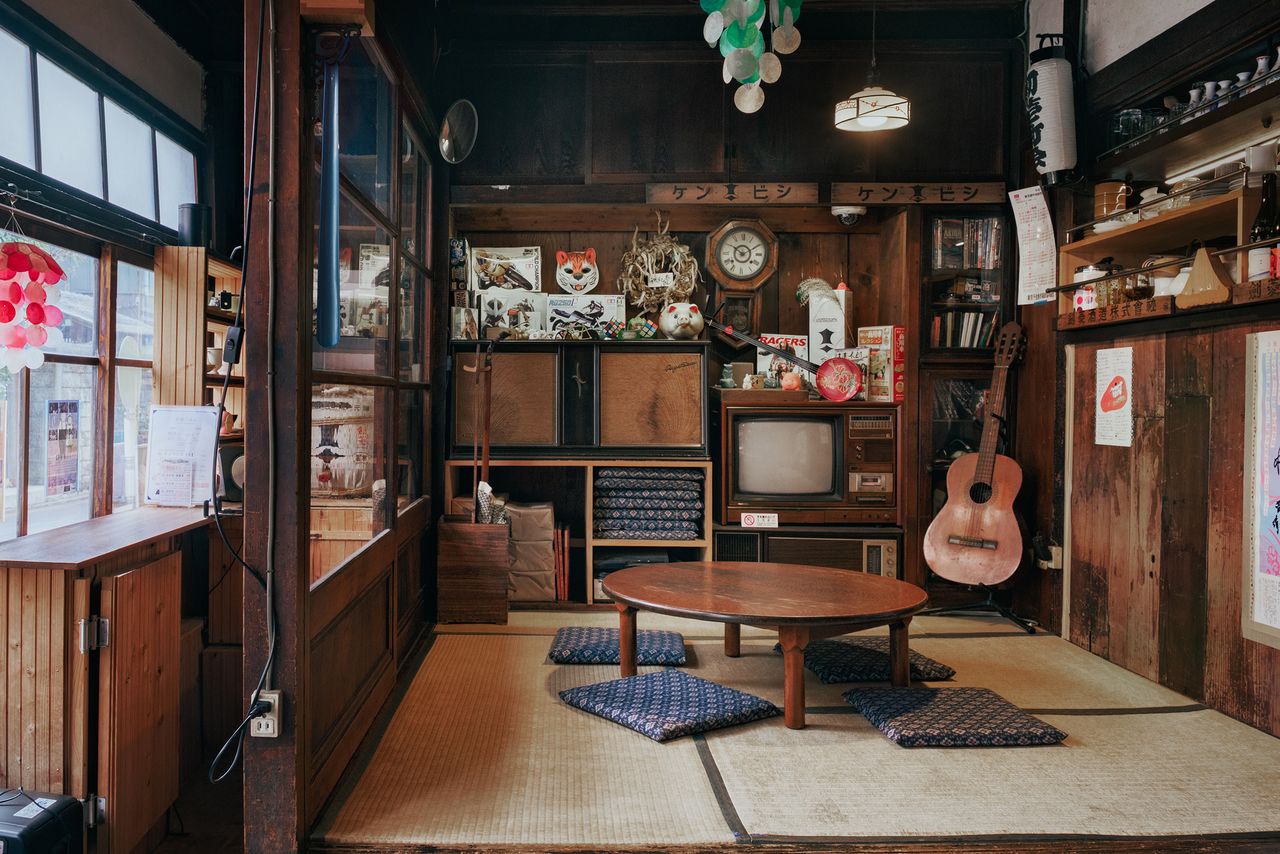
The home’s original furnishings are now part of the décor. (© Kawaguchi Yōko)
The café’s old-fashioned vibes are so strong that customers may mistakenly assume they are in a museum. All the items here, left behind by the former residents of the home, are genuine. As I eagerly awaited my order of coffee and crème brulée, I chatted with the café owner, who goes by the name Mosha.
Stationery Shop Turned Café
Sun Potter Café Nonbiriya, café by day and local drinking spot by night, is like a trip back in time to the daily life of Tokyo’s shitamachi neighborhoods a century ago. The café occupies a two-story wooden home, erected in 1919, where the owners later ran a stationery shop. Standing by the elementary school, it was long a neighborhood fixture, but the owners eventually moved out and the house stood empty for a while. After serving as a venue for pop-up shops, it was reborn as a café, which Mosha and her husband opened in 2016.
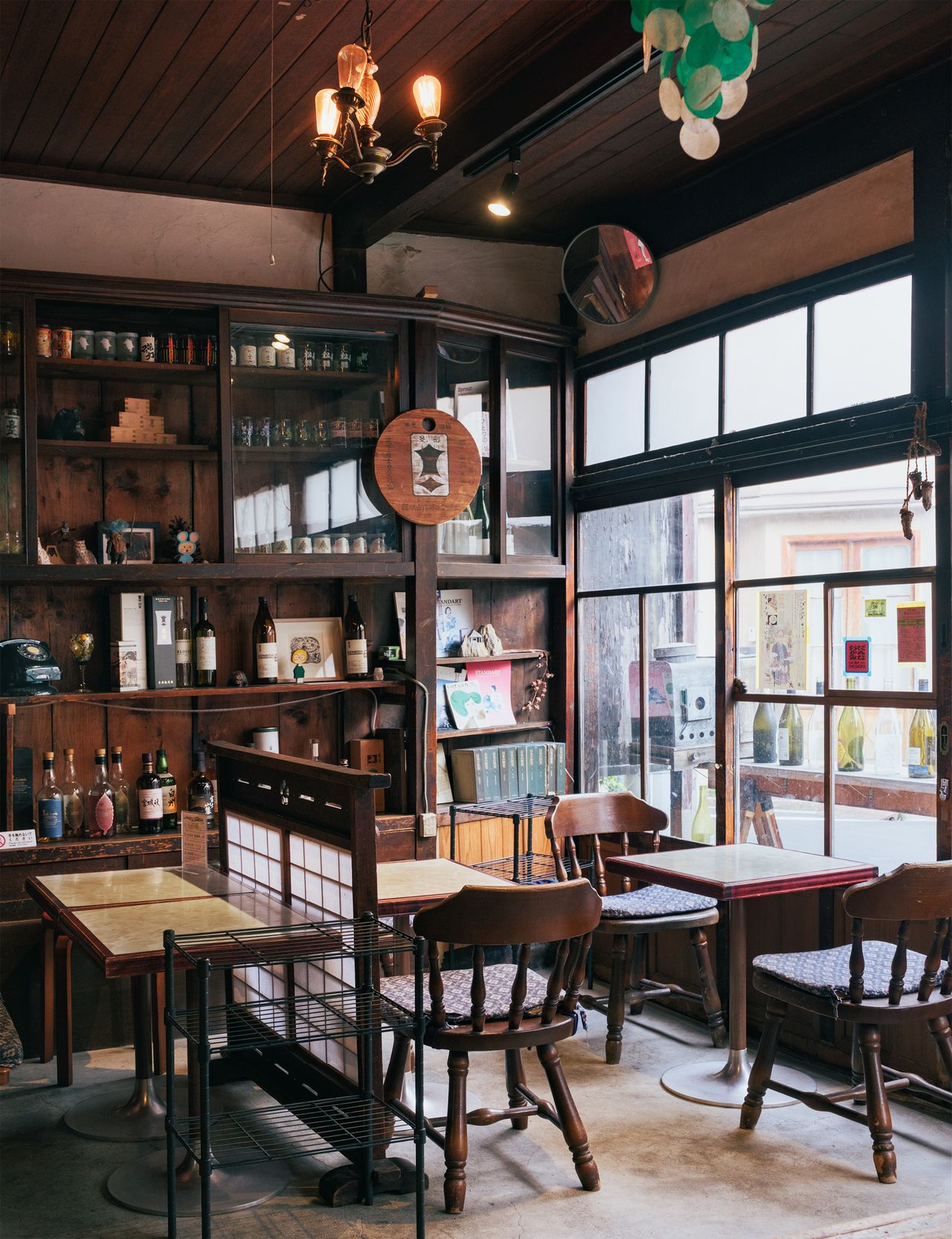
The built-in shelves were used when the space was a stationery shop. (© Kawaguchi Yōko)
Mosha was born and raised in the area. After making necessary repairs to the century-old building, she wanted to honor the lives of its former residents and communicate the appeal of life in the traditional neighborhood of Yanaka. Not wishing to detract from the structure’s atmosphere, she kept renovations to a minimum, limiting herself to replacing the building’s old water pipes and improving ventilation to keep the damp at bay. A space underneath the structure was apparently used as an air raid shelter during World War II, but when Mosha acquired the house, the floor had already been concreted over. She applied new concrete to even out the surface and eliminate tripping hazards.
Family Photos
The family left behind a photo album that Mosha treasures. Leafing through it, she says “The black-and-white photos record the father traveling all over Japan, emceeing folk song contests held in various parts of the country. Some of them show him dressed as a traveling actor, so he may also have acted as part of his job. Meanwhile, his wife ran the shop and took care of the family.”
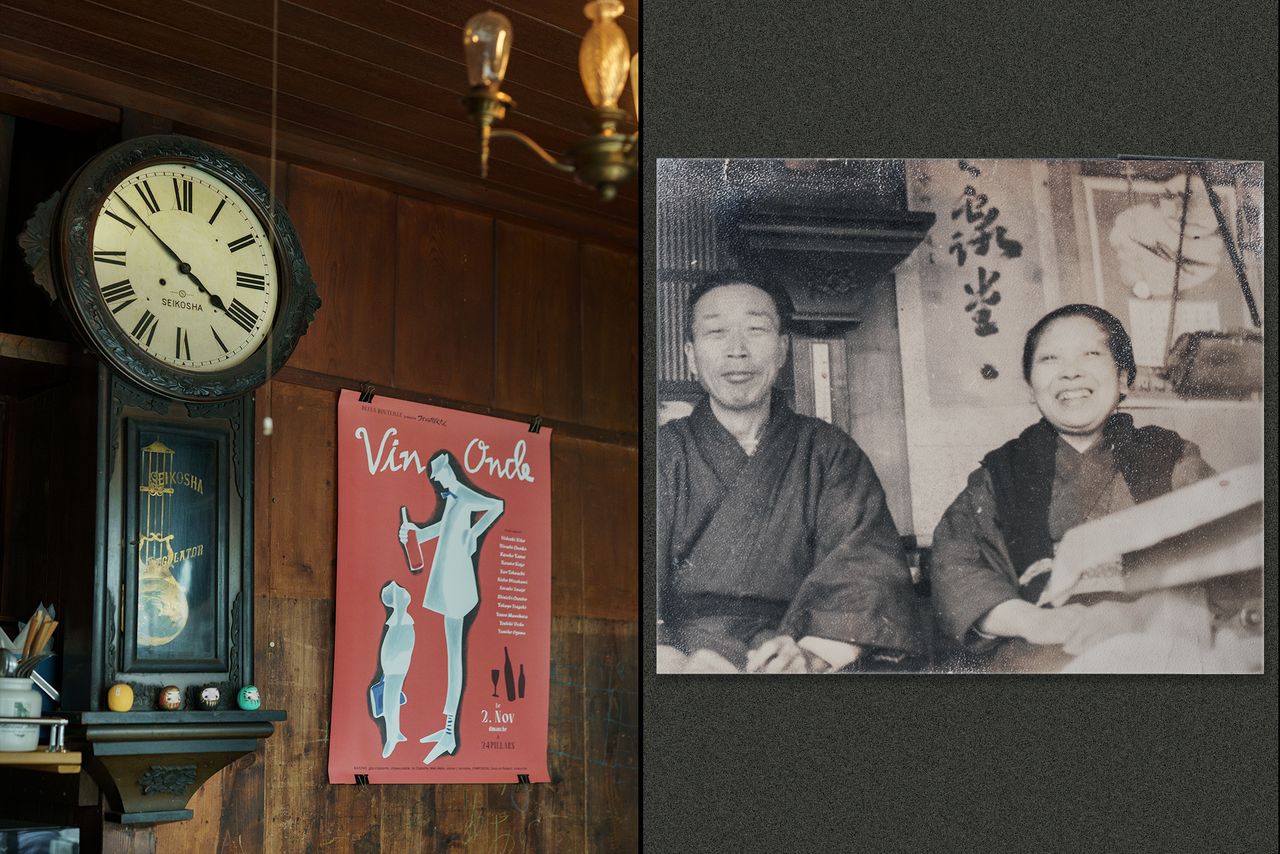
The wall clock had been in working order until recently, having previously looked out over the family. (© Kawaguchi Yōko)
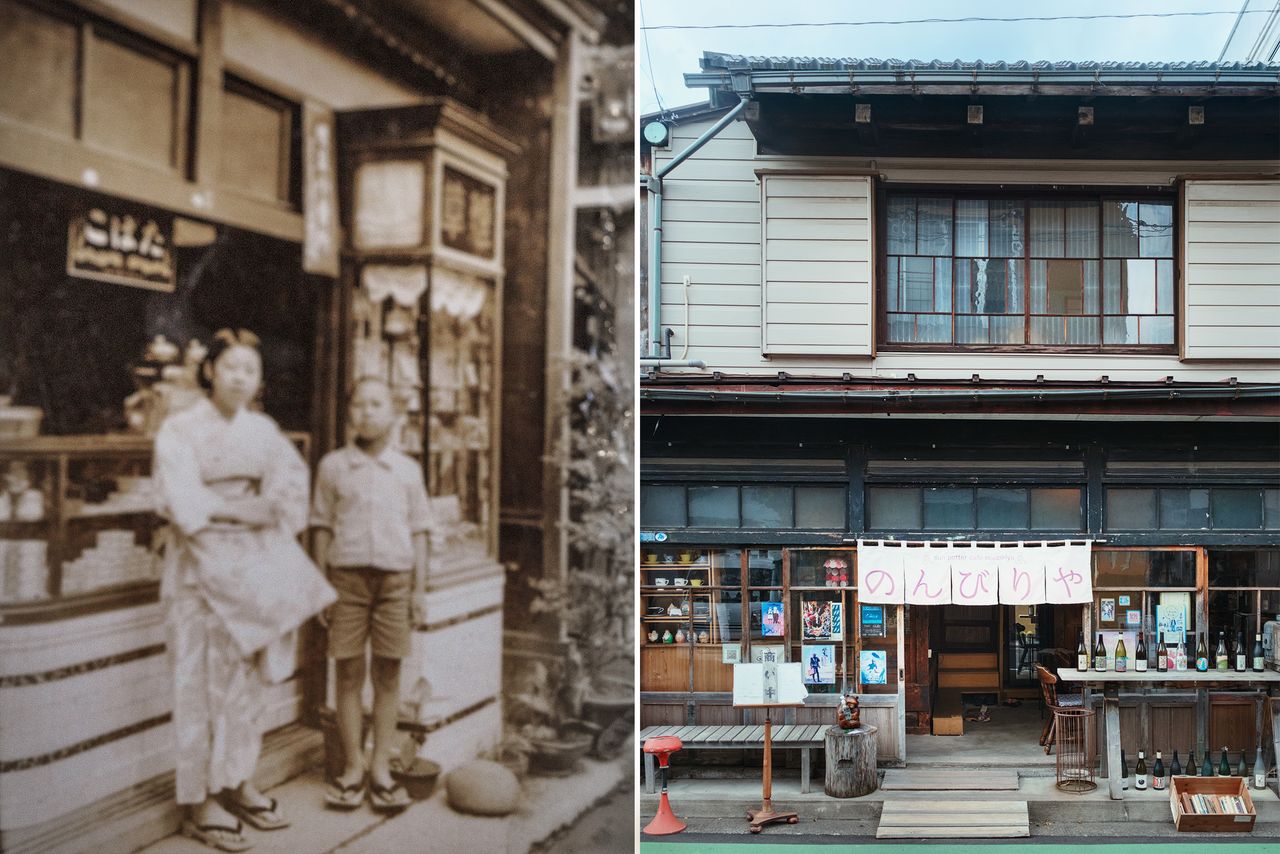
Back in the day, the shop sold cigarettes too. Today, it is fronted by a noren shop curtain bearing the café’s name. (© Kawaguchi Yōko)
The album’s pages are marked by strips of paper with notations matching the photos with present-day landmarks. It is touching to see how much Mosha cares about people she never met and the streetscapes of the past.
Appealing Menu
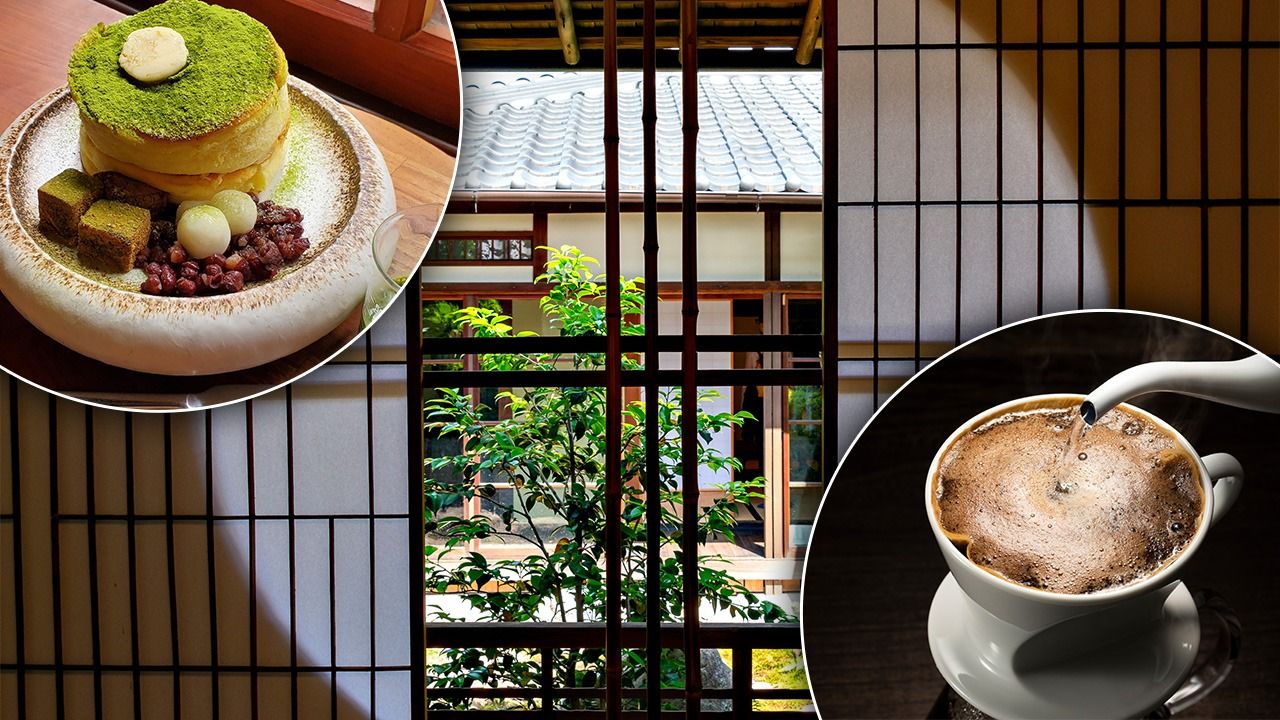
The café’s retro atmosphere is just one facet of its appeal. Its crème brulée has been a menu standard since the café opened, influenced by Mosha’s youthful infatuation with the French film Amélie. She vowed that if she ever opened a café, that dessert, a favorite of the film’s titular character, would be a featured item on the menu. When I crack open the dessert’s caramelized top, sweet custard gushes forth, and the caramel melts in my mouth.
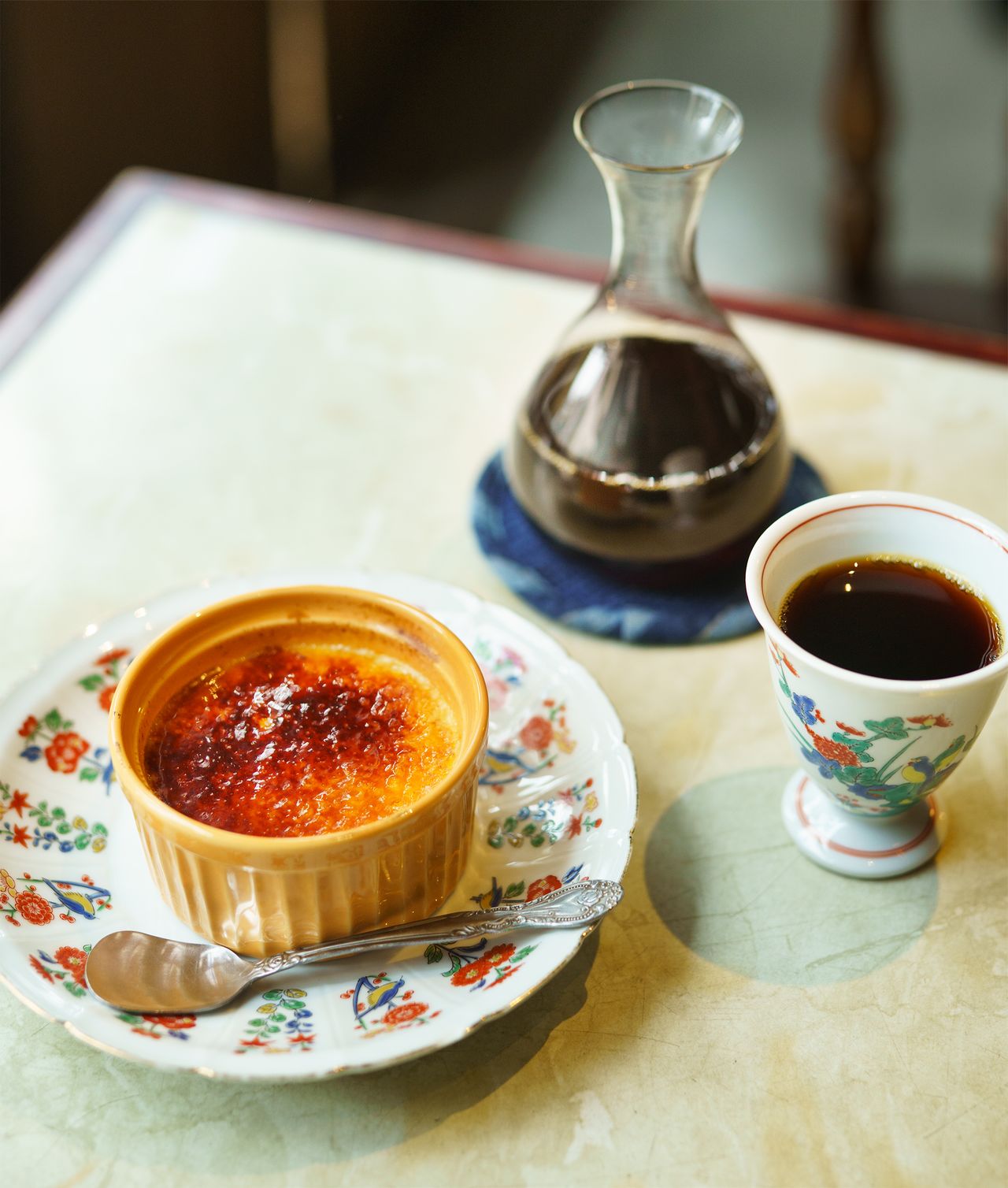
Menu mainstays crème brulée and coffee. (© Kawaguchi Yōko)
Mosha sources her coffee beans mainly from Hyakutō Coffee, a roaster-cum-café in Toshima, Tokyo, where she was previously employed. The chai she serves, perfect for warming up in cold weather, is her original creation. The concoction includes red chili, star anise, and cloves, along with a subtle note of yuzu citrus, accented with a generous amount of ginger.
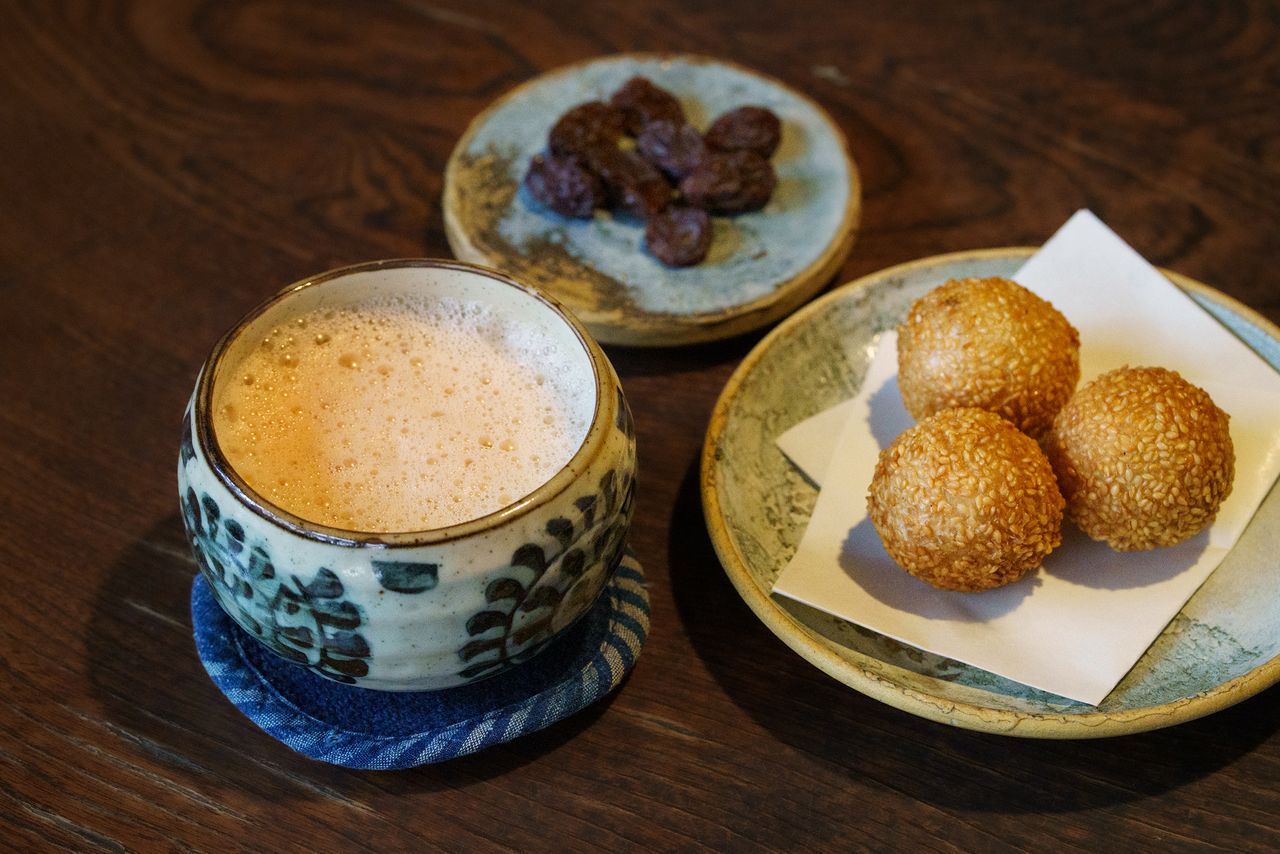
Ginger-infused chai, homemade sesame dumplings, and raisins sourced directly from growers. (© Kawaguchi Yōko)
The menu is full of small fun surprises. The so-called “black” omuraisu turns out to be seafood fried rice darkened with squid ink and topped with a fluffy omelet.
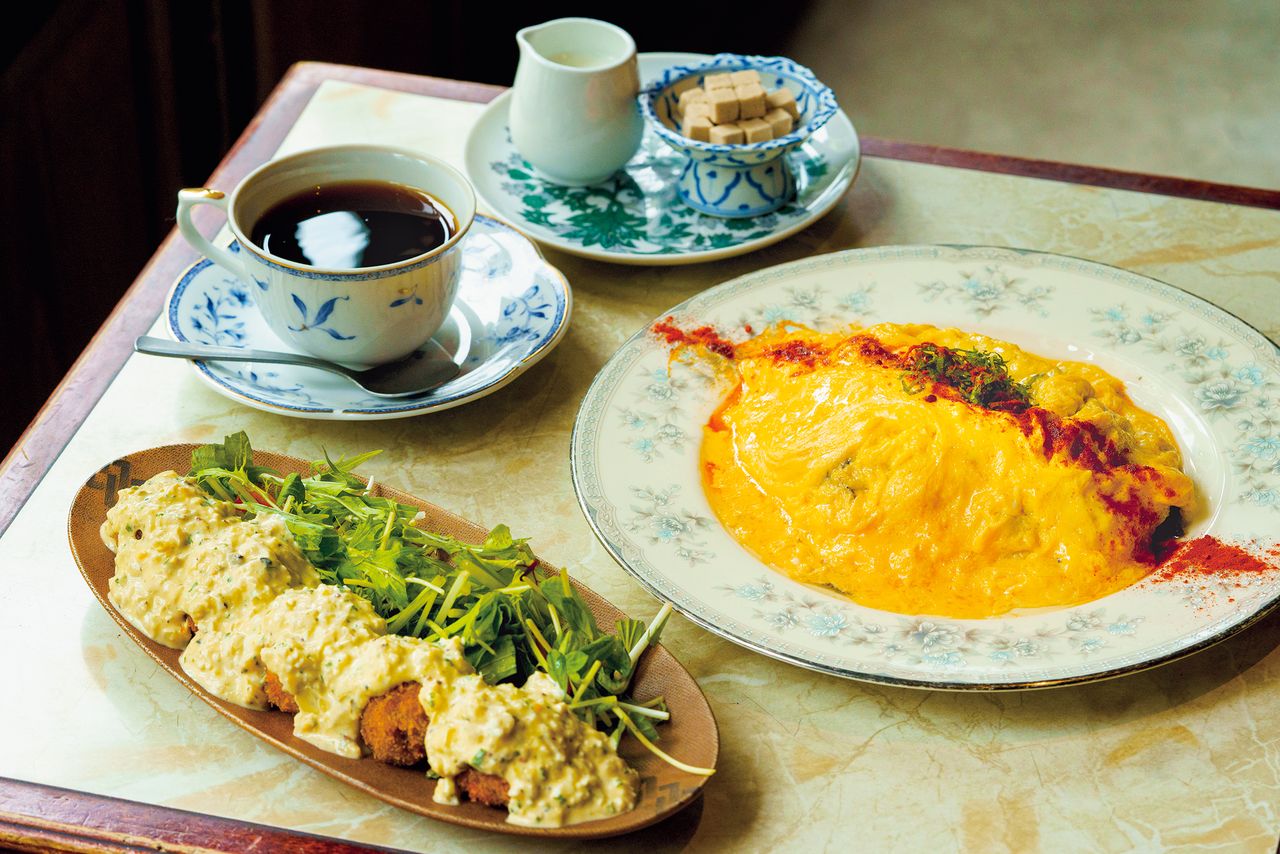
The café’s special omelet over “black” rice and Super Mario mushroom fries. (© Kawaguchi Yōko)
Come evening, the café transforms into a bar. Patrons enjoy Super Mario fries, which are giant deep-fried mushrooms playfully listed on the menu as “power-up mushrooms” as a tribute to the video game hero. Topped with house-made tartar sauce, they are a perfect accompaniment to wine or beer.
Adding New Pages to the Album
Exchanging friendly greetings with neighborhood acquaintances, going bar- or coffee-shop hopping to explore new laneways or tiny shops—that’s the intangible culture of shitamachi that Café Nonbiriya subtly communicates. The café sees itself as the concierge of Yanaka: Mosha has created a meeting place where people can make a habit of dropping in for small talk, get to know their neighbors, and enjoy delicious food.
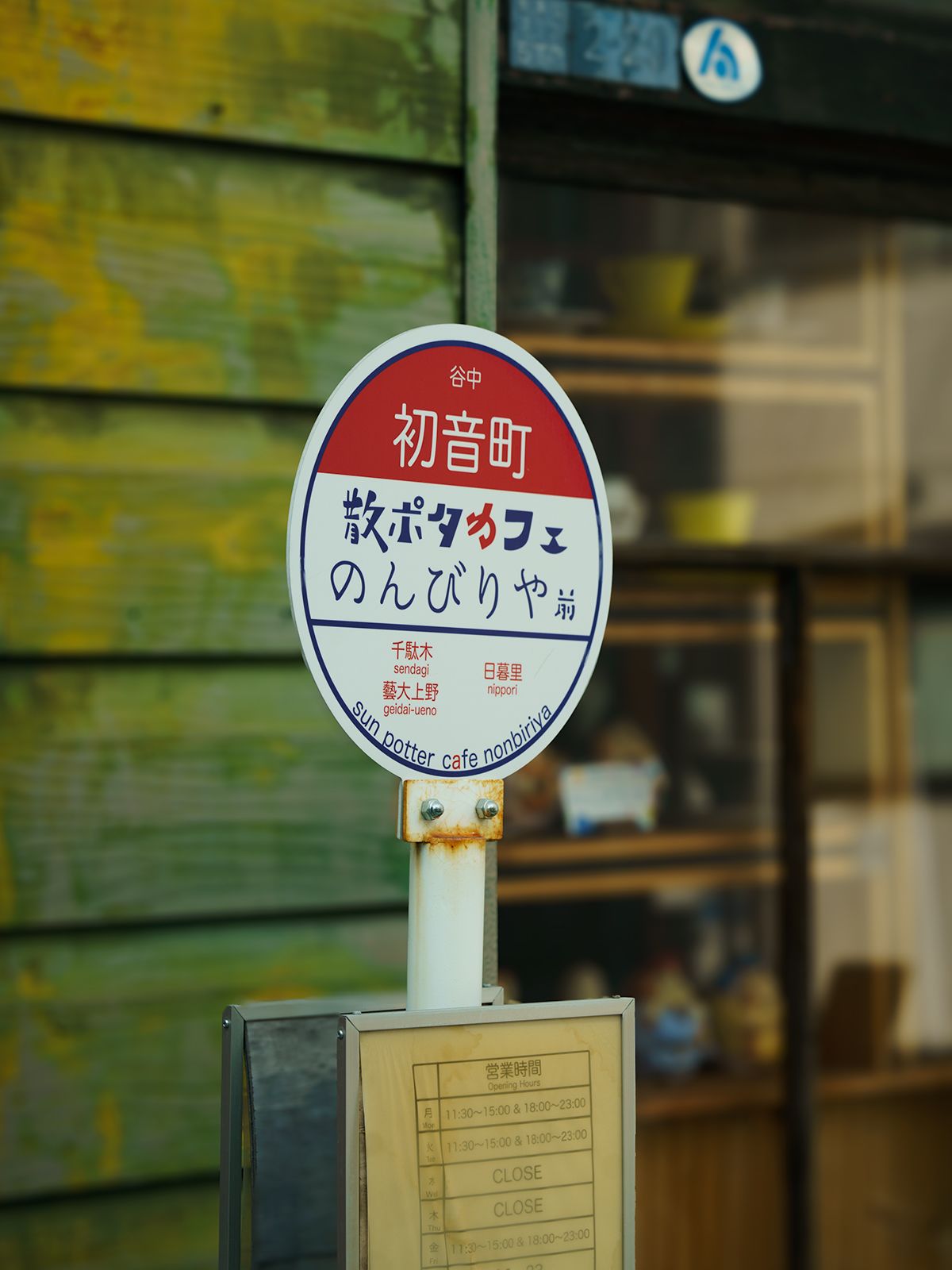
The café’s name is a portmanteau combining the san (which becomes sun) of sanpo (to take a walk) with pottering, a Japanese adaptation of the English word, which has taken on the new meaning of casual cycling around a neighborhood. (© Kawaguchi Yōko)
Nonbiriya’s photo album collects memories day by day, with every customer who slides open the café’s door leaving a mark. A story that began a hundred years ago adds new pages today.
Sun Potter Café Nonbiriya
- Address: 5-2-29 Yanaka, Taitō, Tokyo
- Hours: 11:30 am–3:00 pm, 6:00 pm–11:00 pm (11:00 am–11:00 pm on Saturdays, Sundays, and public holidays).
- Closed: Wednesdays and Thursdays.
- Access: 8 minutes’ walk from JR Nippori Station
- Website: https://nonbiriya.jp/ (Japanese)
- Note: Payment is cash only.
(Originally published in Japanese on December 20, 2025. Banner photo: An exterior view of Sun Potter Café Nonbiriya. © Kawaguchi Yōko.)