
Cafés at Tokyo’s Traditional Folk Houses
Travel Back in Time at Itabashi Tototo in Azusawa, Tokyo
Food and Drink Architecture Travel- English
- 日本語
- 简体字
- 繁體字
- Français
- Español
- العربية
- Русский
The Taishō era (1912–26) awaits at Shimura-Sakaue on the Toei Subway Mita Line, just 23 minutes away from the tall buildings of Ōtemachi, the ultra-modern heart of Japan’s economy. Five minutes on foot from the station throughout a residential area, the view broadens at a corner and a long wall comes into view. Inside, surrounded by greenery, is the grand family home of a village headman living in the area since the Edo period (1603–1868). From the gate with its gabled roof, a red noren shop curtain beckons.
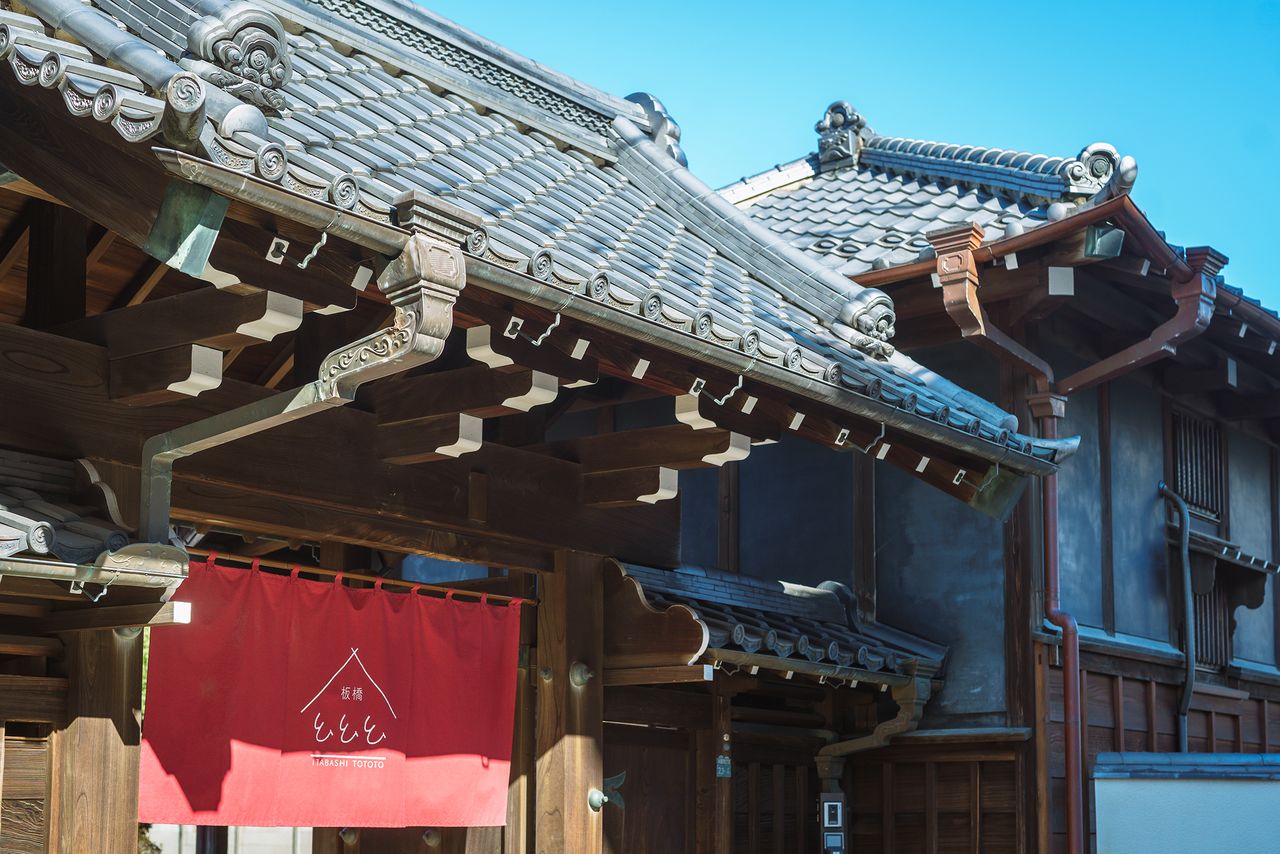
The home’s gabled gate, called a yakuimon, was built in a distinctive architectural style that uses two sets of posts to support the roof—main posts and secondary posts set to the rear. (© Kawaguchi Yōko)
After being kept closed for half a century, since November 2025 the gate now welcomes visitors to Itabashi Tototo, a renovated complex of buildings that includes a café and a bookstore. Step back in time to enjoy a unique experience.
Refurbishing An Old Storehouse
Through the gate, a sliding door in a black plaster structure to the right beckons. The building, known as the east storehouse, dates from the Taishō era and houses Café Apollon and Utouto, a bookstore specializing in books on time travel.
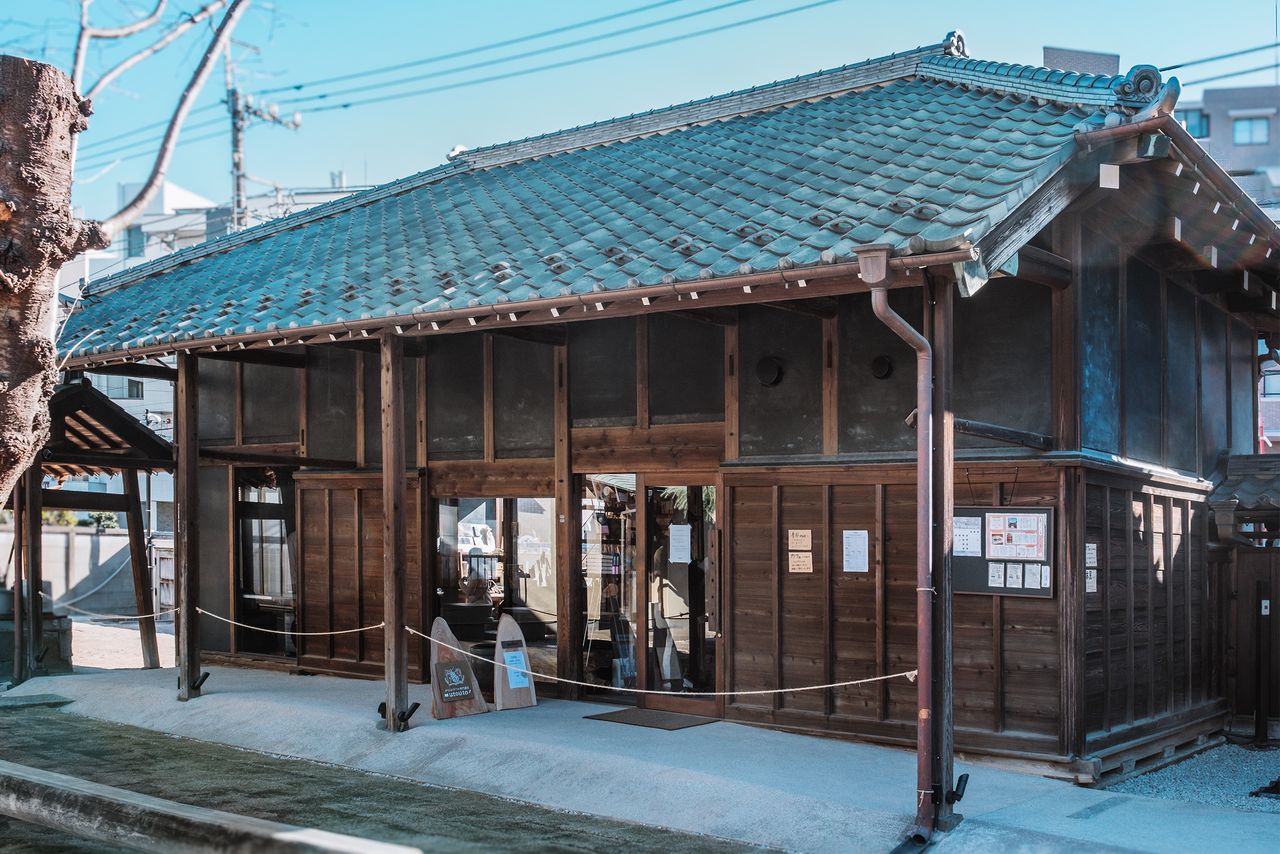
A café and a bookstore occupy the east storehouse. (© Kawaguchi Yōko)
Step inside, and your gaze is drawn to the soaring ceiling. The upper floor was removed to create an atrium-like space, its windows high above letting light in. The aged zelkova beams give the structure solid support. As you look around the room, old tansu chests and other items of the former home’s furnishings come into view.

The storehouse’s thick beams are solid zelkova. (© Kawaguchi Yōko)
Decision Time for the Property
Hasunuma Yuki, elder sister of the family’s twentieth-generation head, and her spouse Suguro Akira, give me a tour of the premises. “The desk at the back of the café belonged to my grandfather, the eighteenth family head,” explains Yuki.
After Yuki’s uncle, of the family’s nineteenth generation, passed away, she discussed with other family members what to do with the house and outbuildings, which now lay empty. The eminently practical financial solution would have been to tear the structures down and put up an apartment building on the land. But as Yuki worked her way through the dust-covered items in the storehouse, she realized that “if any of the previous generations, living here for four hundred years, had opted out of their responsibilities, I would not be here today.” Moved by deep emotion, she shifted gears and decided to preserve the property.
The late uncle had led a busy life as a teacher of the Japanese language. To go to and from his home, he used a side gate, and the yakuimon gate had remained closed for 50 years. “I wanted this gate to open once again to offer access to the property, which had long been a private residence, as a way of giving back to the community, just as my ancestors had done.” Her determination to preserve the buildings swayed the family, who agreed to her plan.
Documents Highlight Local History
The storehouse contained farming implements, household goods, clothing, and other items dating back more than a century. It also housed the neighborhood’s mikoshi palanquin used during festivals, a perfectly preserved hand-operated pump used in the eighteenth and nineteenth centuries to put out fires, and a host of other historically valuable items, including thousands of old documents.
The Hasunuma family had been village headmen in the Azusawa district for generations; they left behind numerous records of their duties managing the land and handling administrative tasks. Those records were donated to the Itabashi Historical Museum, where curators have deemed them a major discovery. They are currently being deciphered and evaluated, and will help fill in gaps in the area’s history.

A welcome board displays old keys and timepieces found in the storehouse. (© Kawaguchi Yōko)
Coffee and Baked Goods at Café Apollon
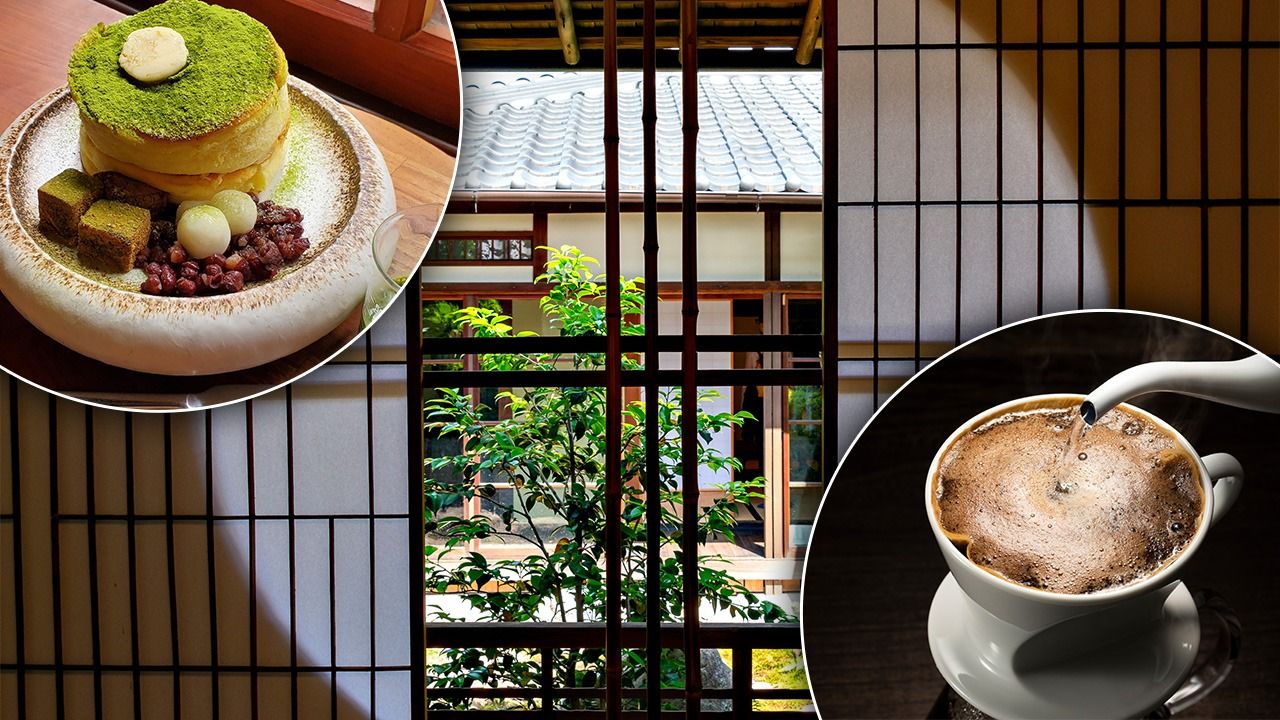
Refurbishing the irreplaceable storehouse was entrusted to a renovation firm and a studio with an established reputation for creating sustainable interiors. The made-to-order furniture was crafted with lumber from neighboring Saitama Prefecture; even the wood shavings were used, hardened with resin to create tabletops. Two businesses now occupy the renovated premises, offering inviting discoveries. One of them is Café Apollon, serving specialty coffee and house-made baked goods.
Owner Fukuhara Eito trained as a barista in Melbourne, Australia, which has a vibrant coffee scene. The café’s main branch is in Ōji, Kita. Just like the main branch, Itabashi Tototo serves three varieties of coffee made from light-roasted, aromatic beans, and an assortment of lightly sweetened baked goods.

The showcase displays pound cake, muffins, and other treats. The writer selected a whole-wheat scone to go with her coffee. (© Kawaguchi Yōko)
Customers step up to the counter, which incorporates doors from old tansu chests, to place their orders. I notice that the coffee is served in specially designed Arita ware mugs. They are rounded like wine glasses, to direct the aroma of the coffee to the nose, while the glassware for serving lattes echoes Oceania style. The mugs and glasses were chosen to create a new specialty coffee experience rather than simply for their design flair.

The doors from old-fashioned paulownia chests have been repurposed to form part of the counter. (© Kawaguchi Yōko)
Fukuhara relates that he was surprised to find a site of living history like this in Tokyo. “It’s easy to tear a building down, but preserving it is a different story. I thought it would be a fun experience to run a coffee house here.”
Utouto, A Time Travel Bookstore
The other shop in the refurbished storehouse is Utouto, a bookstore stocking books with appealing titles relating to time travel. Items for sale are displayed on shelves and old chests previously used by the Hasunuma family, and a vintage stereo set adds a retro touch.
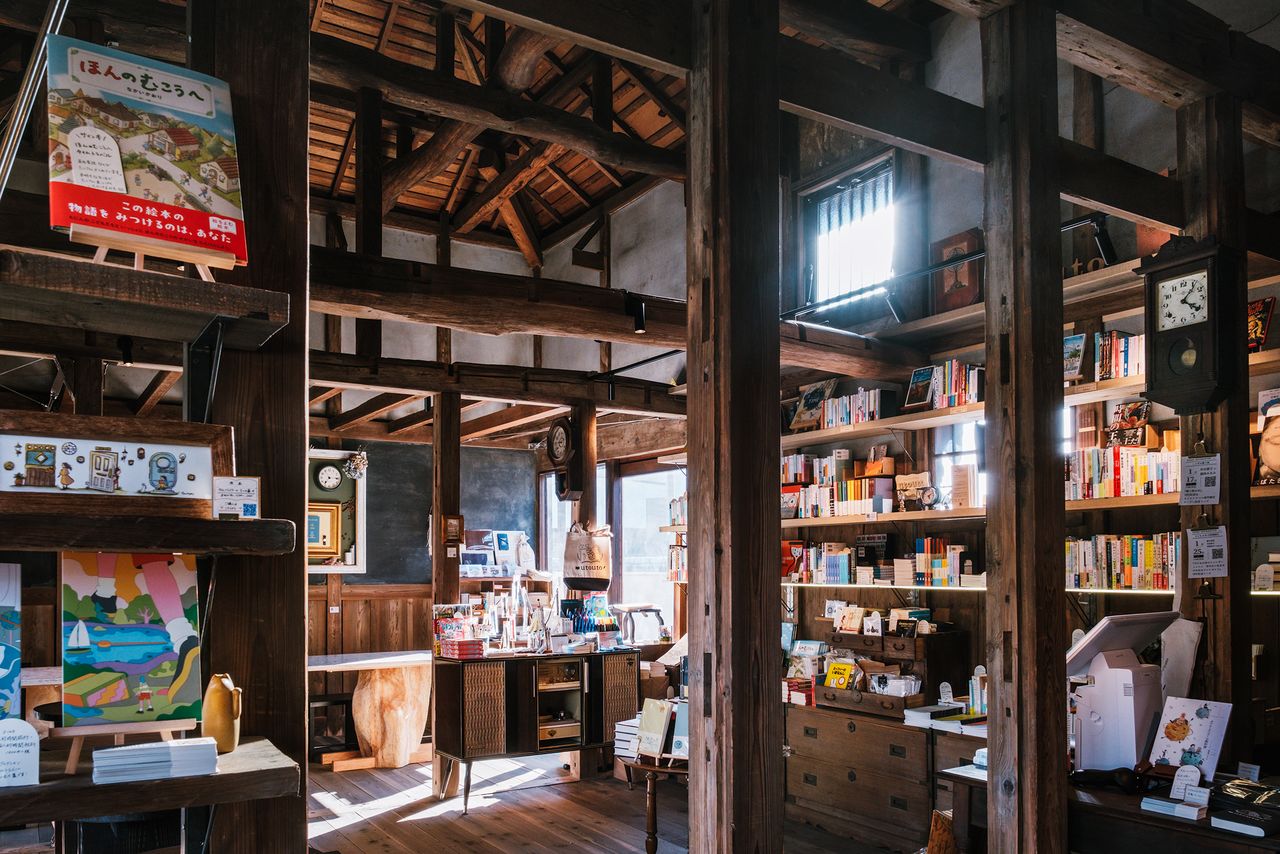
The shop’s books are displayed in old furniture repurposed as shelves. (© Kawaguchi Yōko)
Fujioka Minami, shop owner and herself a writer, explains that “The instant you walk through the gate, you’re transported to another era; it’s a unique sensation. Itabashi Tototo really communicates the Hasunuma family’s desire to cherish the past and connect with the community.”
Fujioka says that works on the theme of time travel “aren’t merely exciting; they also make readers feel that the same thing could happen to them.” She recommends the store’s best-selling title, Ken Grimwood’s Replay, whose main character is caught in a time loop.
“I’ve always felt that I wanted to make time travel a reality. In this storehouse, we’re surrounded by antiques harboring the owners’ memories, and I hope that customers will take their time selecting books and other things we sell. We welcome time travelers.”

Hand-lettered cards explain the themes of the displays. (© Kawaguchi Yōko)
Linking Past, Present, and Future
Hasunuma Yuki, who is also a school librarian, sees a connection between books and old buildings. “Each of them has a story to tell. The books use words; old things convey a wordless story.” Her task now is to decipher the message of the past contained in the objects she recovered and communicate it to the next generation. It is also a new journey for her.
Renovation of the property continues. The west storehouse is being transformed into a rental space, and there are plans to utilize the main house and the fireproof kura storehouse behind it in the future. In the meantime, Yuki and her spouse spend time every morning tending to the garden and the family graves and offering prayers at the small Shintō shrines in the compound. They are reinventing the duties of their village headman ancestors, who played a central role in local life.

The main house stands unused for now. (© Kawaguchi Yōko)
“I saw a couple sitting in the café, who were enjoying the atmosphere and the view of the garden,” Yuki says. “I hope everyone who comes to Itabashi Tototo can spend quiet time in these surroundings.”
At Itabashi Tototo, time flows from the past to the future, or in the opposite direction. With coffee in one hand and a book in the other, we can all be time travelers here.

(© Kawaguchi Yōko)
Itabashi Tototo
- Address: 2-23-4 Azusawa, Itabashi, Tokyo
- Hours: 10:00 am–5:00 pm
- Closed: Tuesdays and Wednesdays
- Access: 5 minutes’ walk from Shimura-Sakaue Station on the Toei Subway Mita Line
- Website: https://itabashitototo.com/ (Japanese)
(Originally published in Japanese on February 11, 2026. Banner photo: The main gate of Itabashi Tototo. © Kawaguchi Yōko.)