Cafés at Tokyo’s Traditional Folk Houses
Miyano-Yu: A Former Tokyo Bathhouse Serving Matcha, Espresso, and Warm Memories
Food and Drink Travel Culture Architecture Guide to Japan- English
- 日本語
- 简体字
- 繁體字
- Français
- Español
- العربية
- Русский
As communal sentō bathhouses close their doors across Japan, a new movement is emerging to repurpose their distinctive traditional architecture and decor for other uses, including cafés and galleries. From early twentieth-century sentō with sweeping curved gables to the plainer, more businesslike bathhouses of the postwar period, these establishments were once gathering places for local communities. Now the memories of older lifestyles and scenes are being handed down to a new generation amid the rich aroma of freshly brewed coffee.
Located just two minutes’ walk from Nezu Station on the Tokyo Metro Chiyoda Line, Miyano-Yu is one charming example.
Warming the Town for 57 Years
The original Miyano-Yu bathhouse was opened in 1951 beneath a towering gray chimney on a narrow side street not far from the Nezu 1-chōme intersection. There it played a key role in the local community for more than half a century until its closure in 2008.
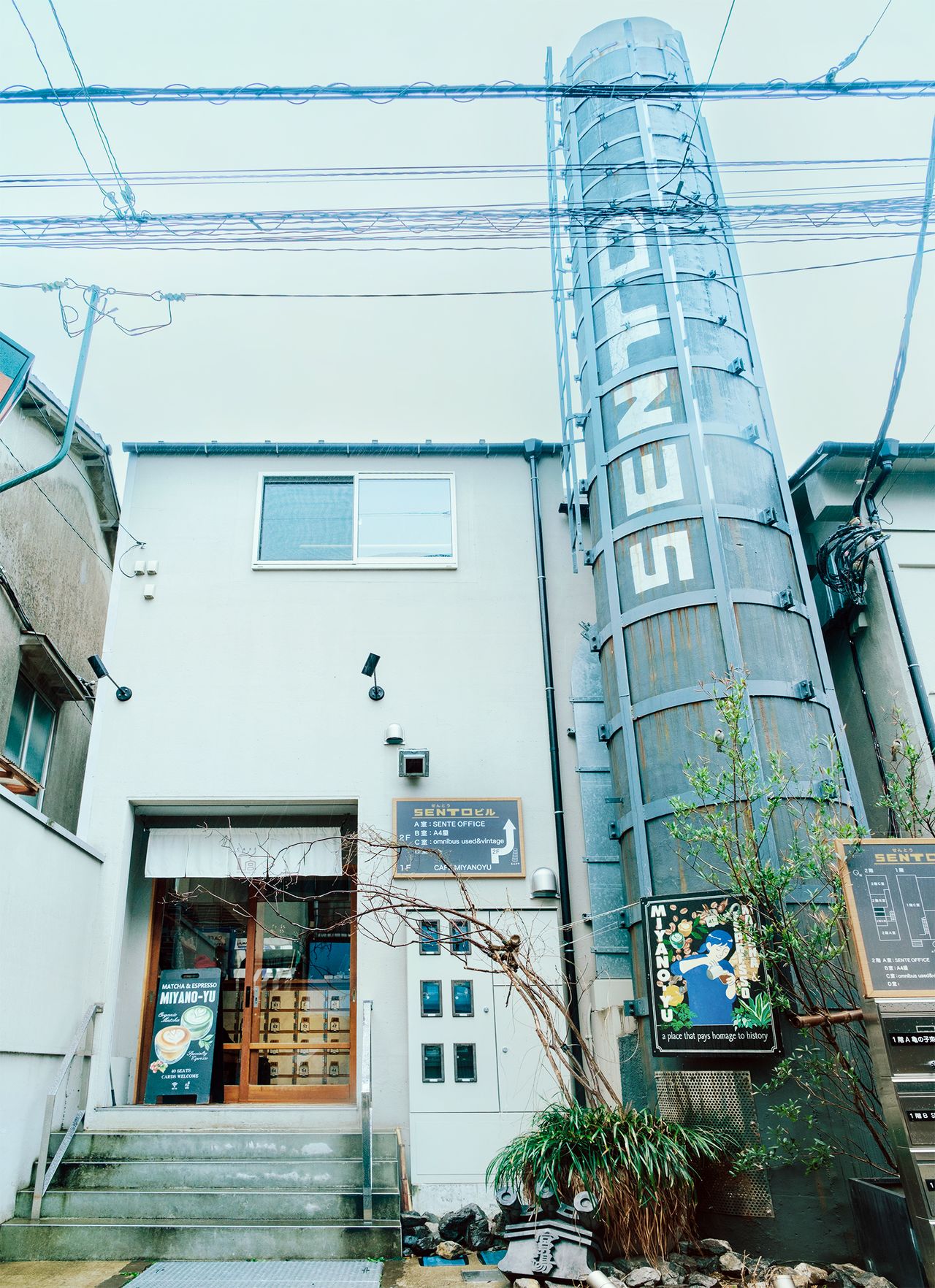
The stout, towering chimney draws the eye. (© Kawaguchi Yōko)
In 2021, a new business opened in the former sentō building: a café called Matcha & Espresso Miyano-Yu. I climb the small flight of stairs at the entrance and open the sliding door to see a counter built from the bathhouse’s shoe lockers. The bathhouse stretches out behind the counter, looking much larger than it ought to be given the building’s subdued presence in the streetscape. After placing my order at the counter, I receive a numbered wooden key from a shoe locker—another memory in concrete form of the building’s bathhouse days.
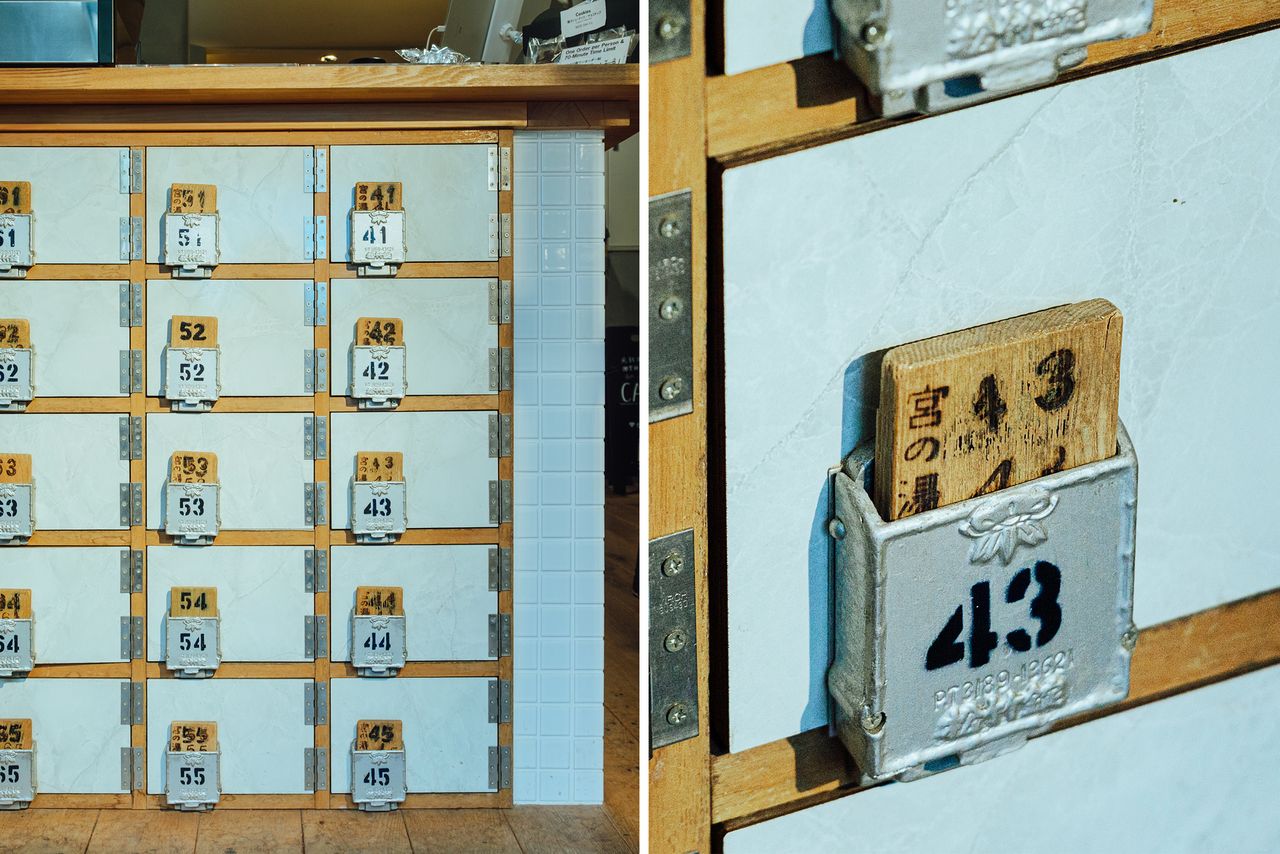
Find your way to the seat indicated by the number on the key, and your order will soon follow. (© Kawaguchi Yōko)
Beyond the order counter, the Miyano-Yu is divided into two distinct areas. Those who seek undisturbed peace and quiet are guided to a low-ceilinged area above the former boiler room. This dark, grotto-like space is a bastion of calm.
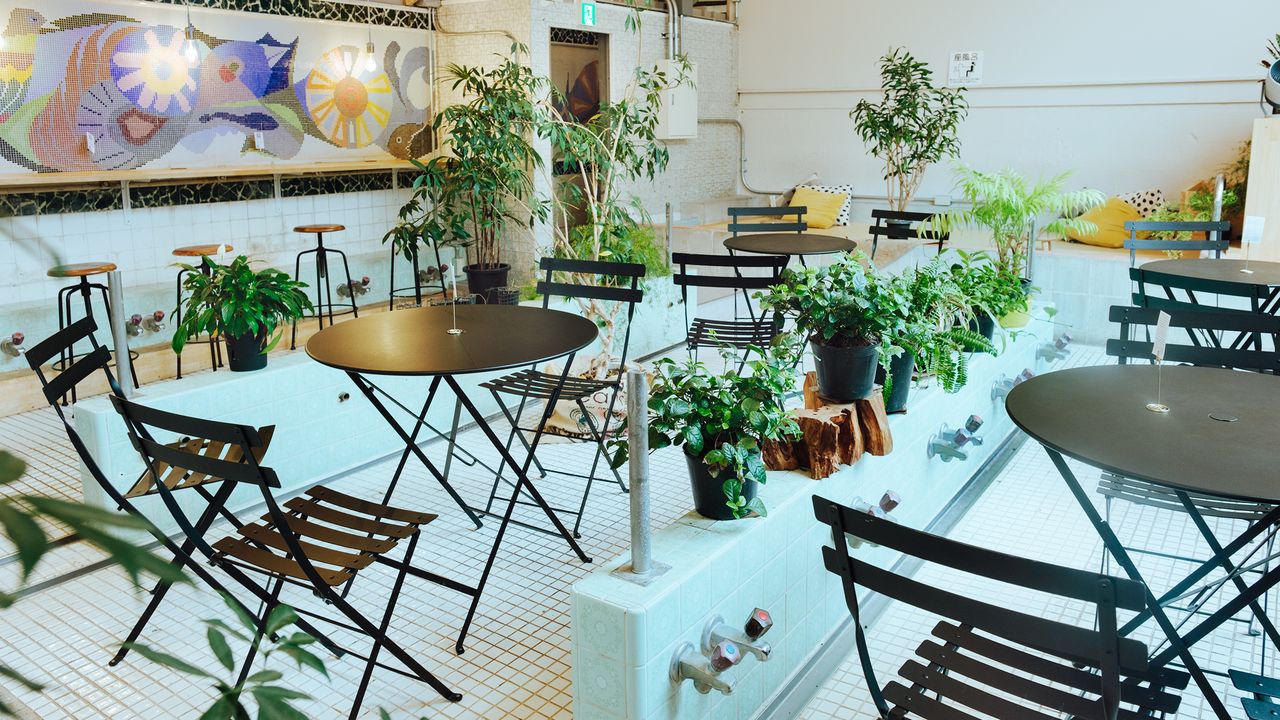
But visitors who want to experience the full scale of the traditional sentō experience must go through a dark, narrow corridor to the left that leads to the former bathing area proper (watch your head!). The room, originally the men’s baths, has a high, arched ceiling, large windows, and a powerful sense of openness. (The former women’s area, located on the other side of a wall, has a different establishment as its tenant.)
Emerging into the bathing area, visitors are welcomed by vivid greenery. (© Kawaguchi Yōko)
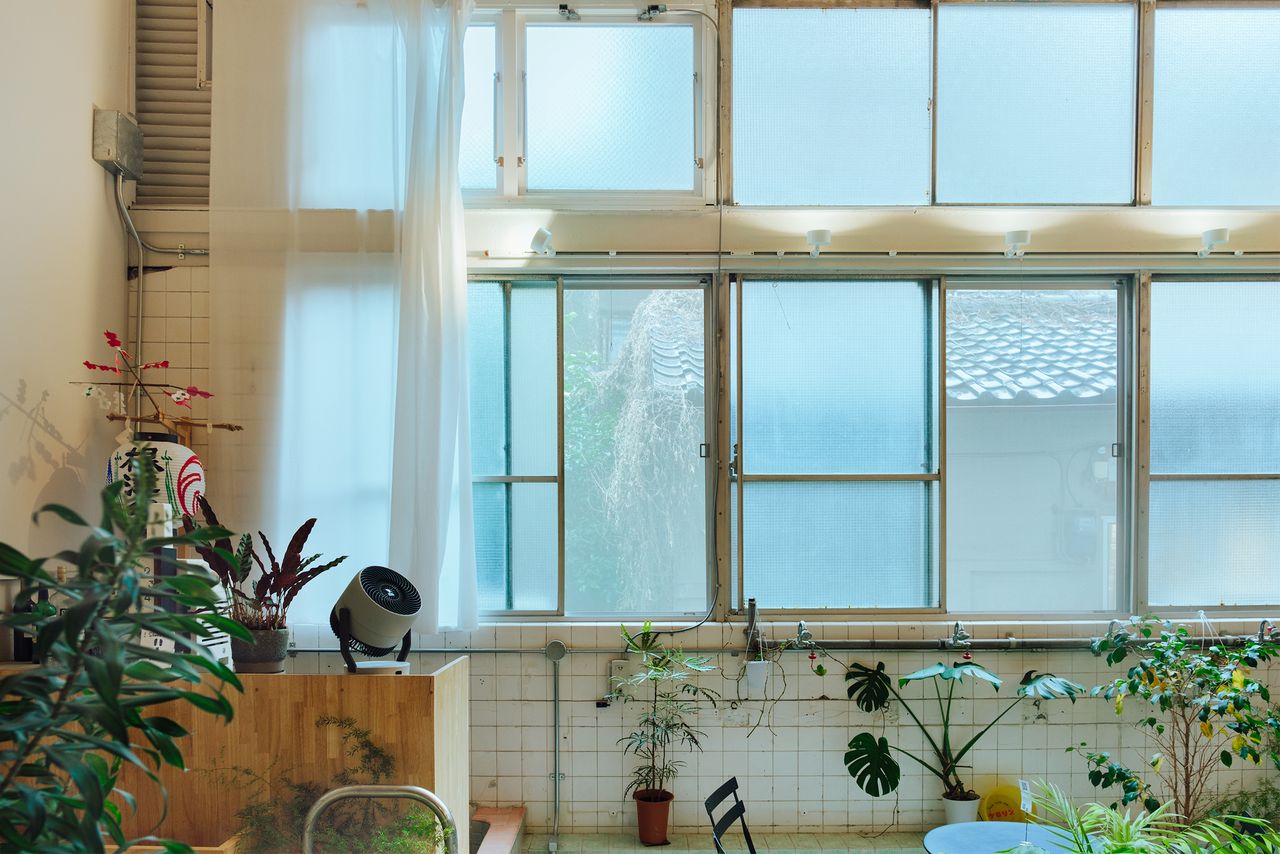
Light pours in through the wall of windows. (© Kawaguchi Yōko)
“I went to great lengths to preserve the original bathhouse just as it was,” says Miyano-Yu manager Ōsato Emi. “There are some cracks in the tiles, but apart from a few critical issues I intentionally left everything unmended. I’d like visitors to sense the history of the space—to feel the same delight I did when I first laid eyes on it.”
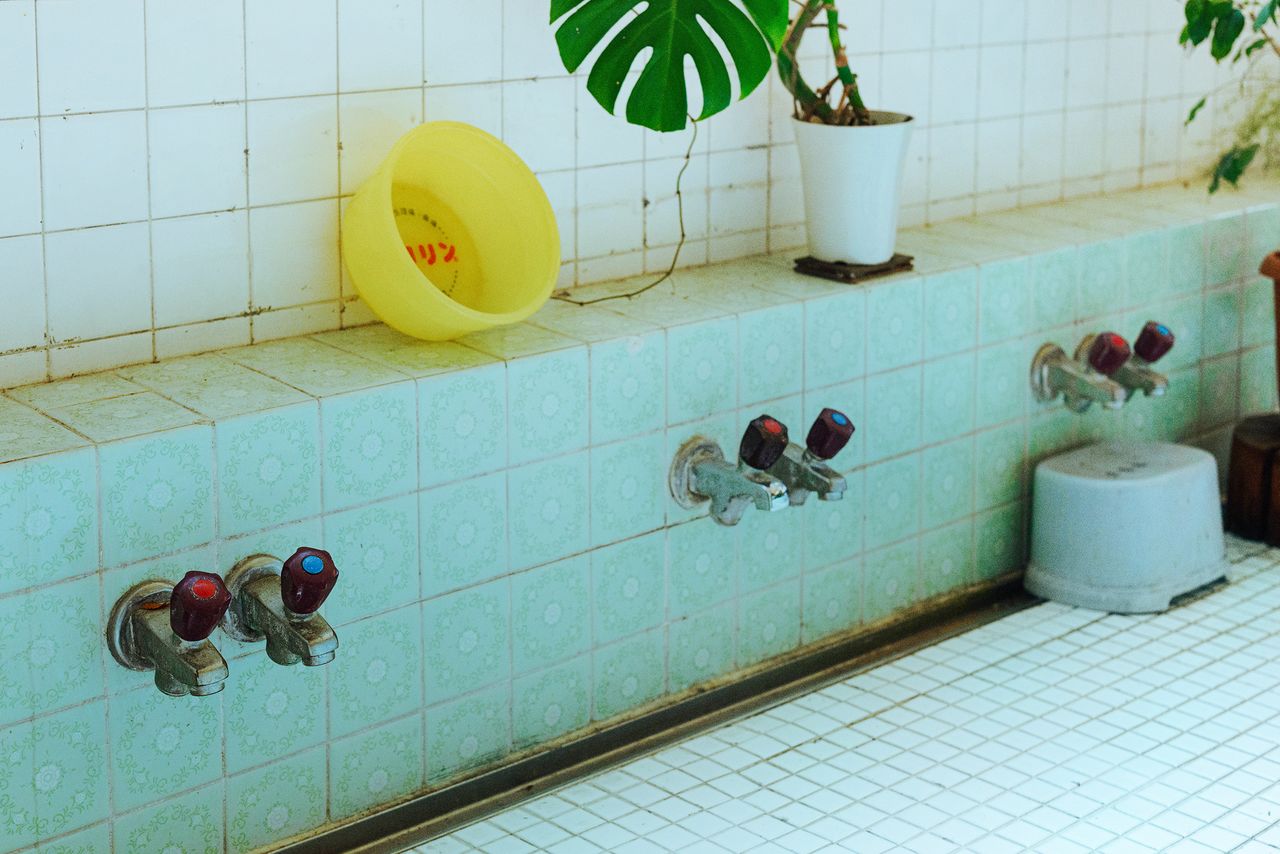
Old-fashioned basins and chairs are arranged along the walls. (© Kawaguchi Yōko)
The profusion of ornamental plants imparts a fresh vital energy to the space. Ōsato recalls thinking that the former sentō was “like a hothouse” on her first visit. The light that streams through the windows illuminates inorganic tiles and gently growing greenery alike.
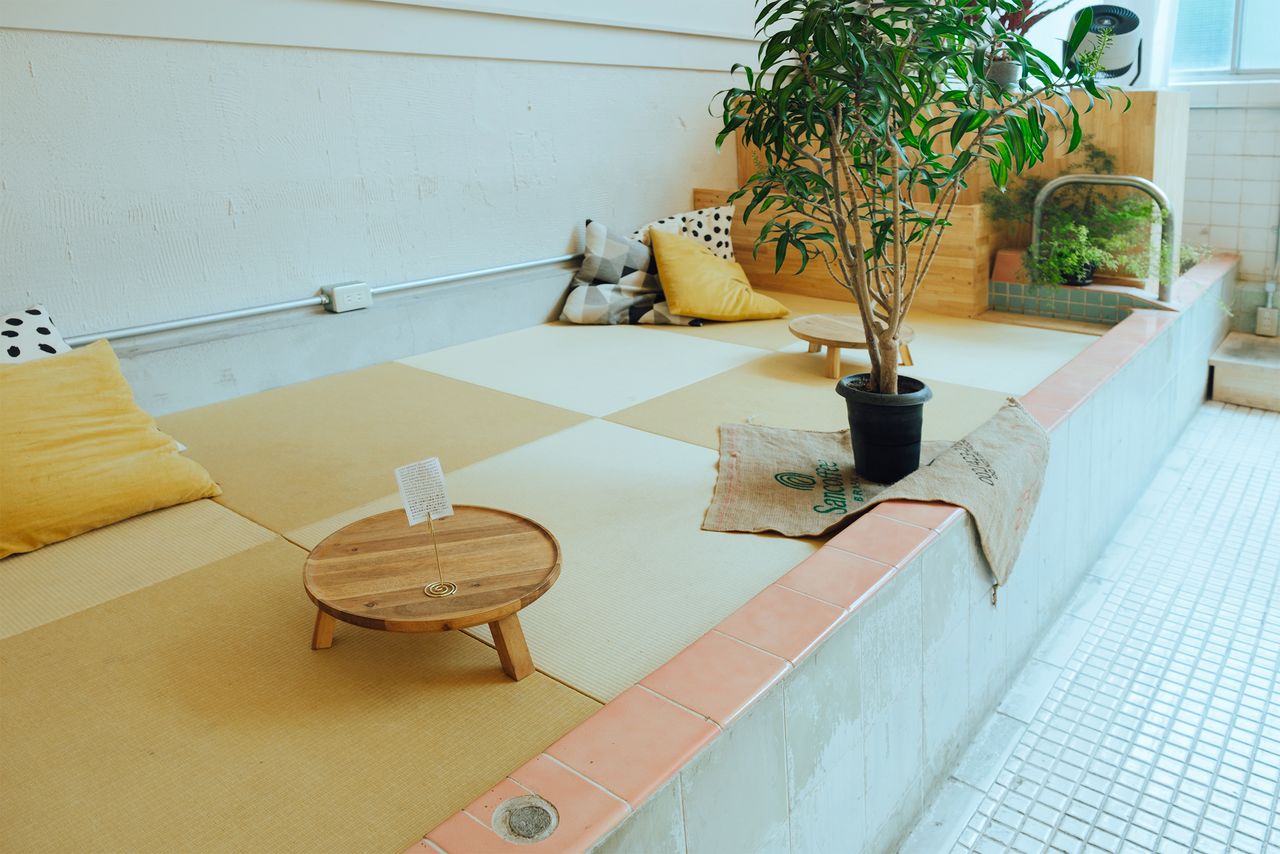
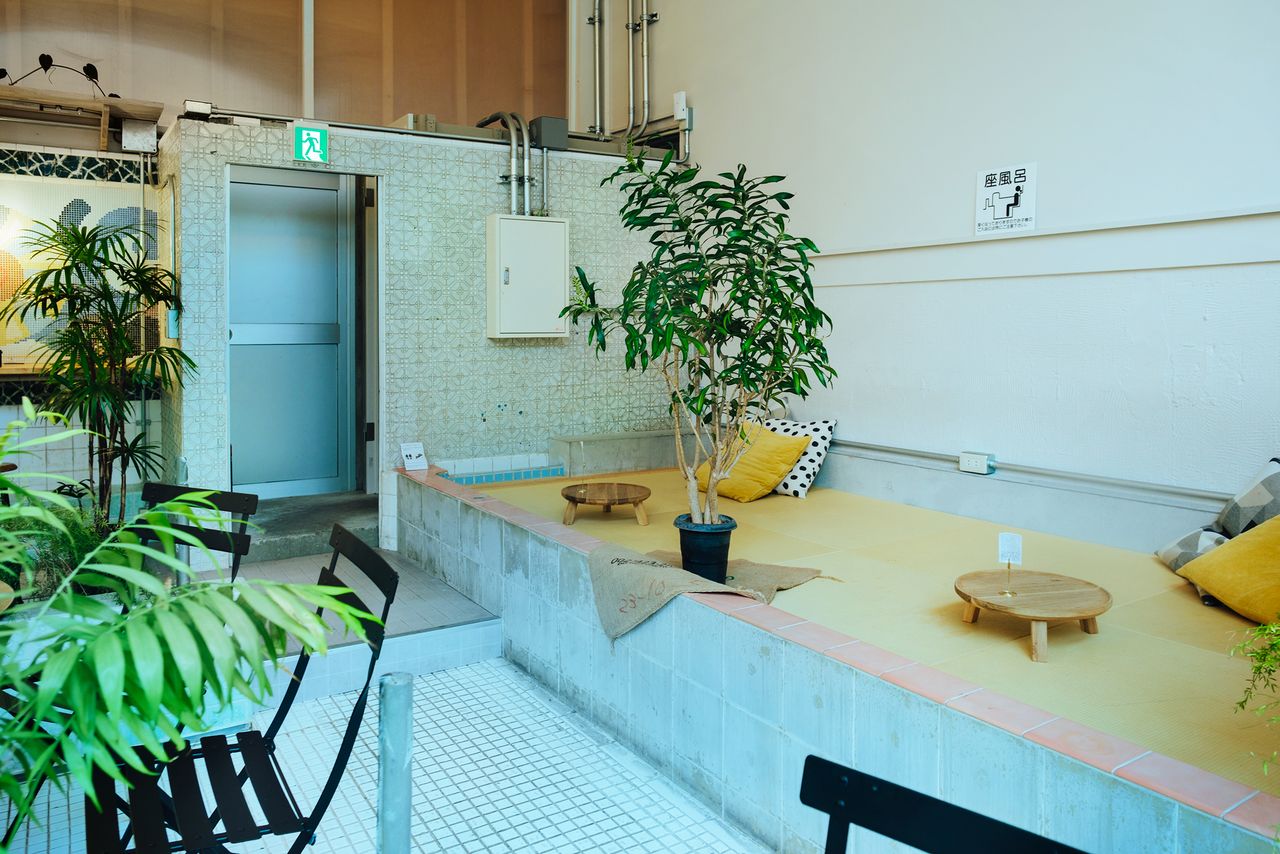
In the zashiki corner, visitors can stretch out and relax on a raised floor. (© Kawaguchi Yōko)
Today, tatami mats are spread over the tub, creating a small, raised space where visitors can stretch out and relax as former generations did in the bath. Rows of faucets protrude from the lower walls, offering another reminder of the decades when they saw use. The exquisite mosaics on the walls would be challenging to repair, Ōsato says, chiefly due to a lack of artisans still performing the work.
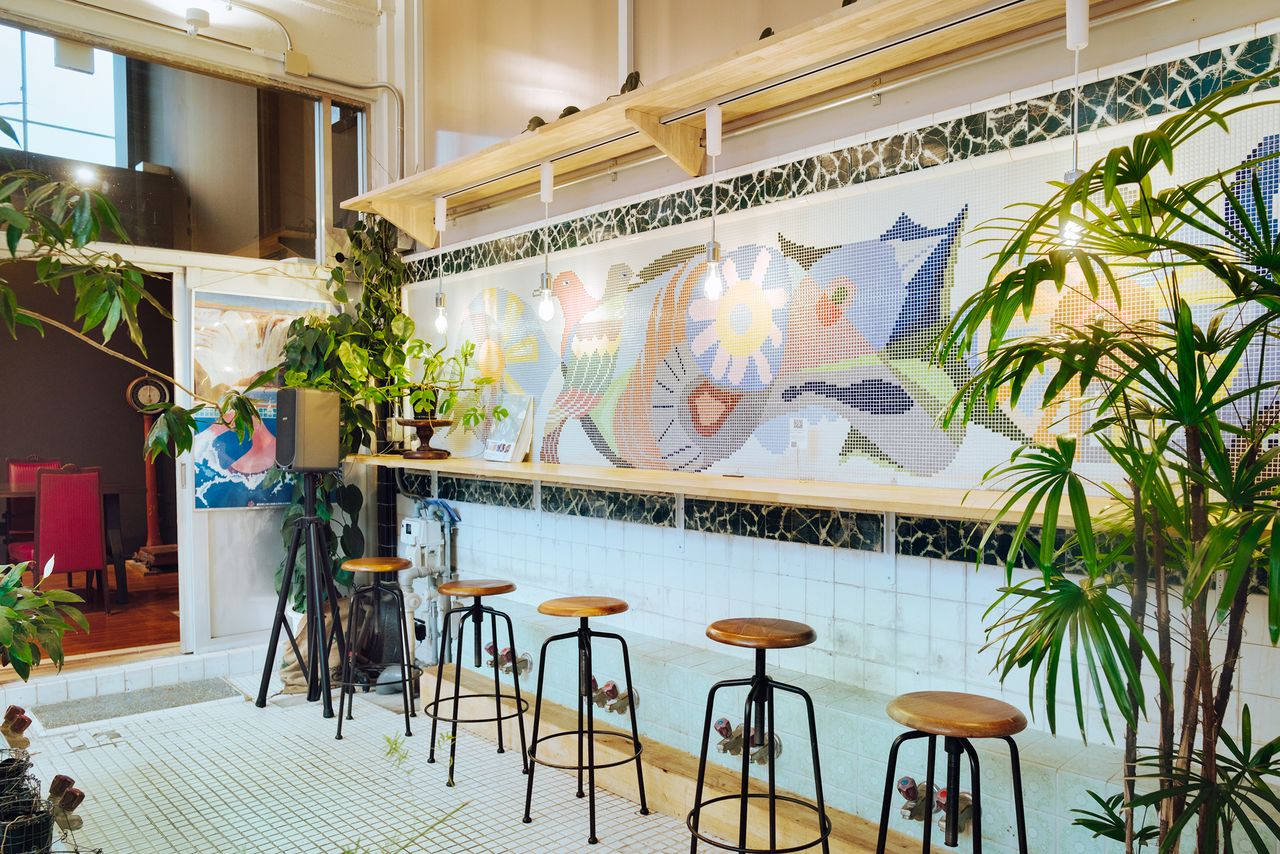
This vivid mural has an avian theme. (© Kawaguchi Yōko)
Matcha and Espresso: A Menu with Two Sides
The entryway to the café today is beside the original sentō chimney, but when the bathhouse was in operation its main entrance was actually on the opposite side of the building. This means that the original changing area, once watched over by an attendant at the entrance, is actually beyond the baths in terms of the modern café’s layout.
Today that changing area houses a coffee roaster and a table seating four. The process of roasting raw beans to draw out their aroma seems to evoke, in a leisurely fashion, the strata of memory within the space as a whole.
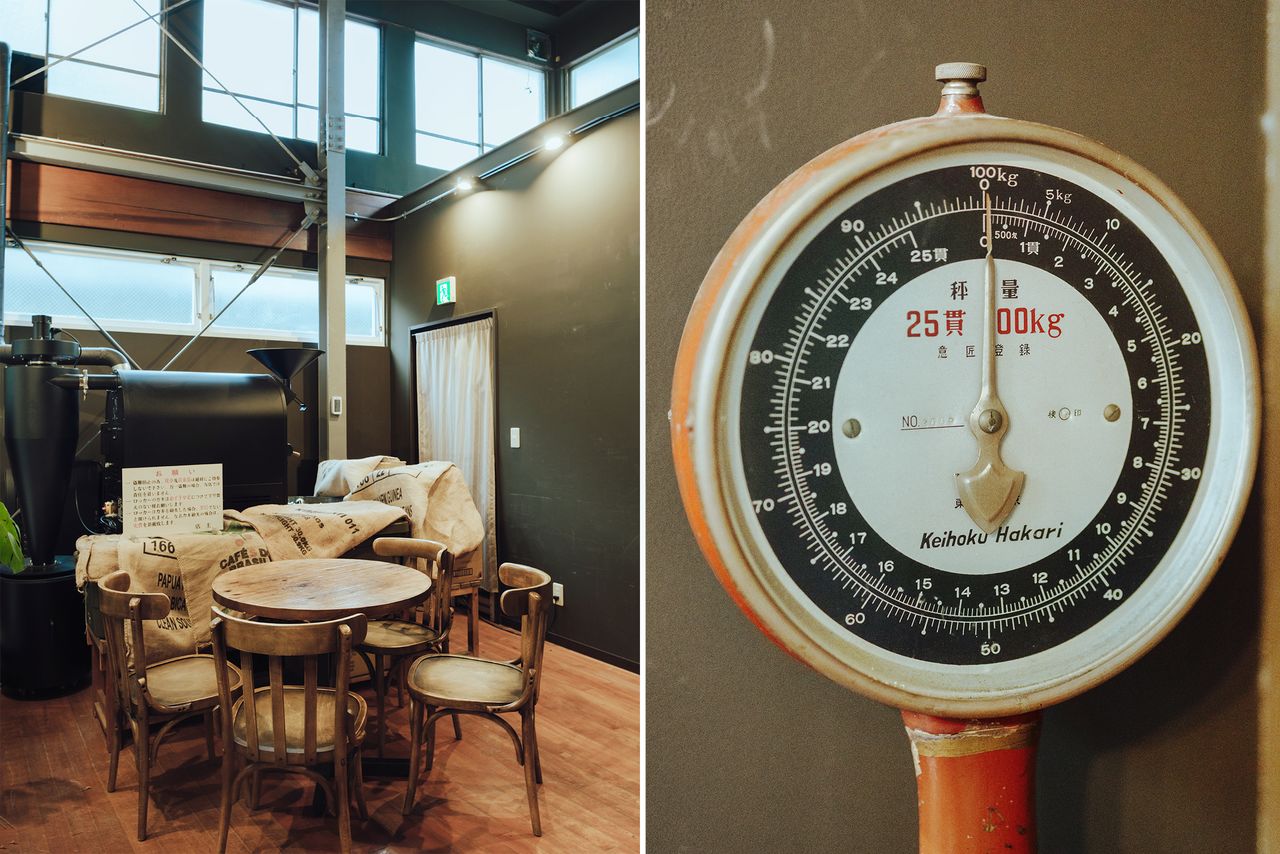
The former changing area. Who knows how many customers enjoyed a cool post-bath bottle of milk here over the decades? (© Kawaguchi Yōko)
The two pillars of the menu are espresso coffee and matcha. The espresso is served Oceania-style—the flat white, combining the coffee with delicately foamed milk, or the long black, in which the espresso is poured into a cup of hot water. The café changes its coffee blend with the seasons, offering lighter tastes in summer and a richer brew amid the chill of winter.
The matcha is Okumidori grown in small, painstaking batches by young farmers in Shizuoka Prefecture. By all accounts, it is quite popular among repeat overseas visitors who have developed a taste for matcha drinks.
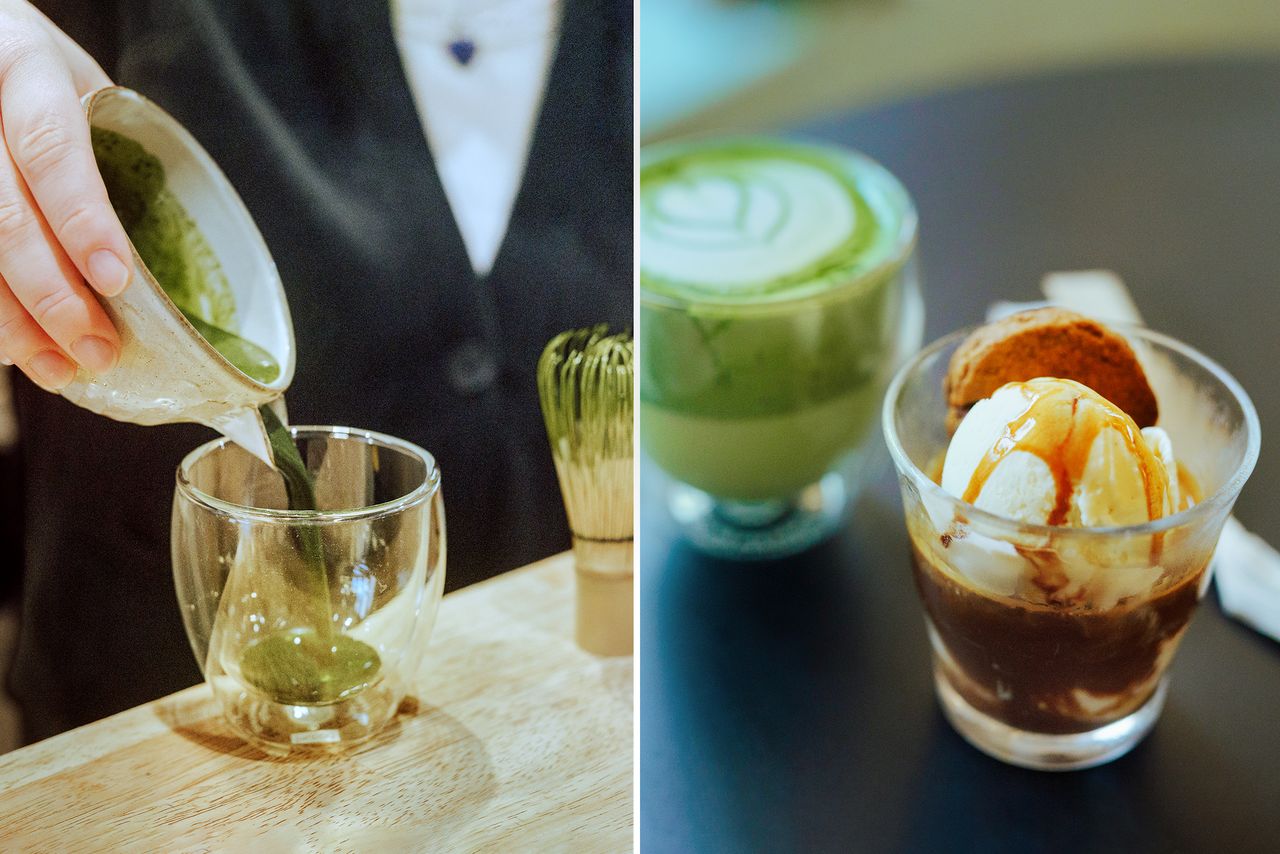
The café serves matcha lattes and a matcha affogato sundae topped with a café-baked cookie. (© Kawaguchi Yōko)
The Warmth of the Community
Ōsato was inspired to enter the café business by her experiences as an exchange student in Brisbane, Australia.
“In Japan, cafés are thought of as spaces for immersing yourself in your own private time. But across Australia, in every café you visit, you’ll find the customers chatting to the staff and to each other. This local café culture, in which cafés were venues for communication, came as a profound shock to me.”
Sentō are also communication hubs, where local residents gather and connect with each other.
“I wanted to continue that tradition here by turning the space into a contemporary café where people from all walks of life can enjoy conversations,” says Ōsato.
During the morning, travelers from overseas make up most of the clientele, but in the afternoon most guests are locals. Both enjoy chatting with the baristas at the counter. At one table, three generations of the same family might be sitting together, with the oldest telling their grandchildren, “I used to take my baths right here.” At another table, a solo visitor might gaze at the roof in silent contemplation. One couple, who originally met at a sentō in another town, even held their wedding reception here.
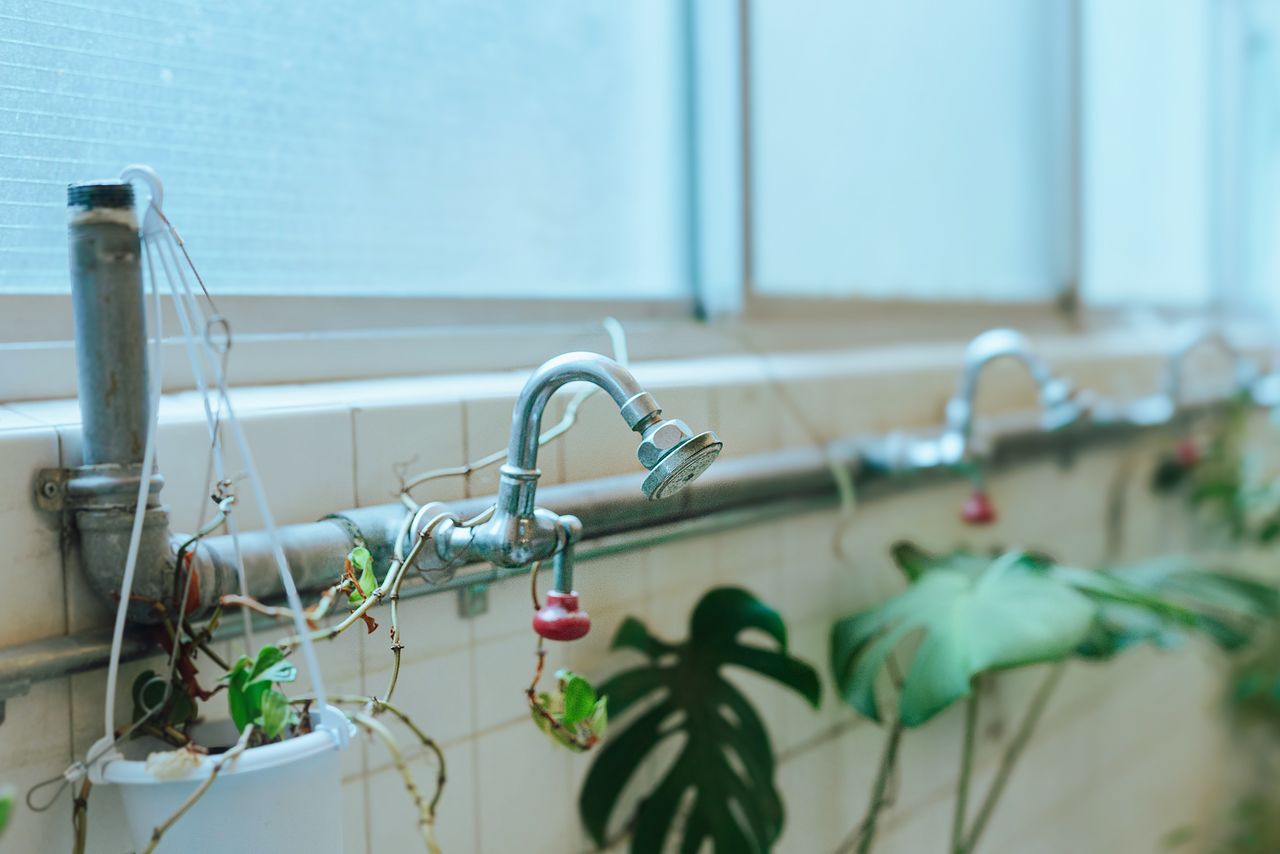
These faucets have seen the town thrive through the building’s days as a sentō and now a café. (© Kawaguchi Yōko)
The work of renovating the bathhouse into the Miyano-Yu café was performed by the Suzuwa Construction Corporation, a firm based in Tokyo’s Taitō municipality with experience in sentō construction. Suzuki Kōzō, head of the firm, is a relative of the bathhouse’s original owner, and the space holds important memories for him.
Following the bathhouse’s closure, Suzuki heard from many former customers who wanted it to reopen. Unfortunately, he says, the economics simply did not make sense. On the other hand, he says, “if it had been torn down and an apartment building thrown up in its place, the whole area would have changed.” That sense of peril led him to renovate and reopen the structure as the multi-use Sento Building.
The billowing steam of the bathhouse may have given way to the fragrant aroma of the Miyano-Yu’s matcha and coffee, but the warmth it brings to the neighborhood is unchanged.
Matcha & Espresso Miyano-Yu
- Address: 2-19-8 Nezu, Bunkyō, Tokyo
- Hours: 9:30 am–6:30 pm (last order 6:00 pm)
- Closed: Irregular closing days
- Access: 2 minutes’ walk from Nezu Station on the Tokyo Metro Chiyoda Line
- Website: https://www.miyanoyu.tokyo/english
(Originally published in Japanese on March 30, 2026. Reporting, text, and photographs by Kawaguchi Yōko. Banner photo: This Miyano-Yu seating space is repurposed from a bathhouse washing area. © Kawaguchi Yōko.)