Cafés at Tokyo’s Traditional Folk Houses
Yokohama’s Enoki-Tei Café: Afternoon Tea in an English-Style House
Food and Drink Architecture Guide to Japan- English
- 日本語
- 简体字
- 繁體字
- Français
- Español
- العربية
- Русский
Afternoon Tea Steeped in a Century of Memories
When talk turns to Yokohama’s luxurious Yamate area, the Enoki-Tei café never fails to receive a mention. My conversation with owner Andō Miho, who grew up in a European-style building herself, uncovered a surprisingly deep history behind the sun-dappled tea parties held on its terrace.
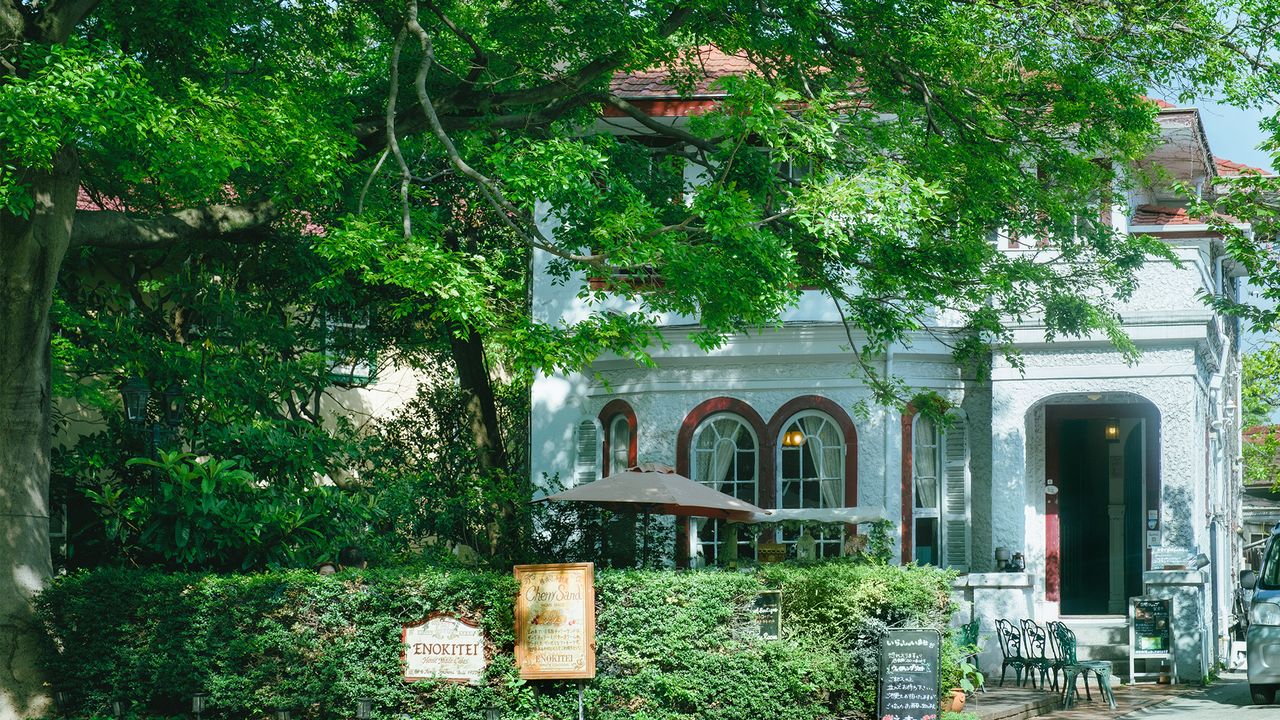
From the mid-nineteenth century to the early decades of the twentieth, the Yamate district in Yokohama hosted a foreign settlement known informally as “the Bluff” and filled with magnificent homes built in European style. Enoki-Tei is located in one of those buildings: an English-style house almost a century old, with a spreading Japanese hackberry tree or enoki outside that gives the café its name.
Founded nearly half a century ago in 1979, Enoki-Tei remains a beloved Yamate institution. But it is not only the delicious tea and confections on offer that have fans eagerly lining up outside. From the antique furnishings and fireplace in the tearoom to the leafy green canopy that shades the outdoor terrace, Enoki-Tei is a space where time itself seems to have special depth and meaning.
Letting the Ingredients Shine
On my visit I ordered the Rose Garden Set, an afternoon tea option available without reservation on weekdays only.
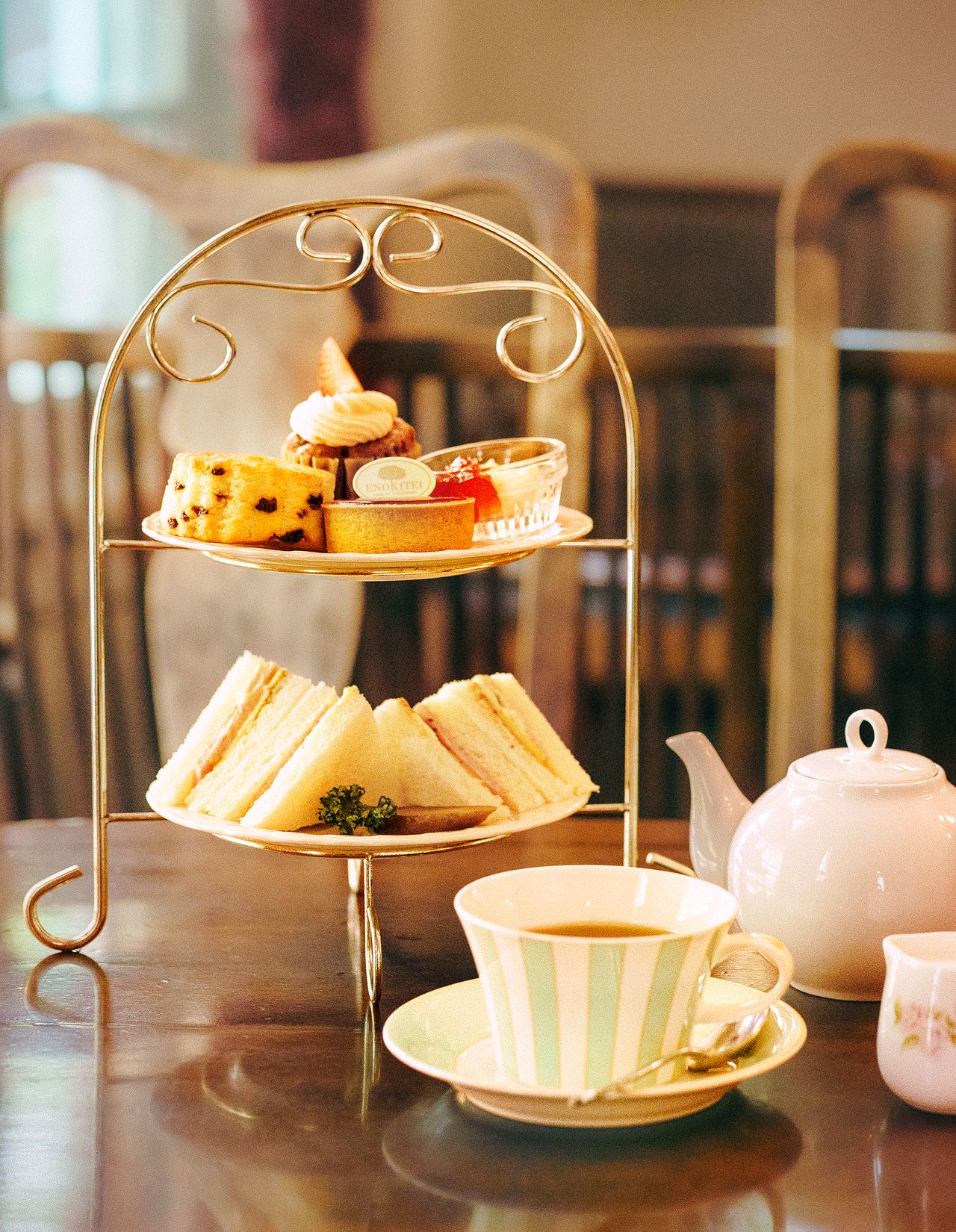
Made with the finest ingredients, this teatime assortment goes perfectly with its relaxed surroundings. (© Kawaguchi Yōko)
Soon a pot of tea and a double-decker plate stand are brought to my table. The upper plate holds a currant and raisin scone, crunchy on the outside but mouth-meltingly moist on the inside, served with clotted cream and strawberry jam, plus two pieces of cake from a selection that changes daily. The lower plate bears an assortment of sandwiches and pickles. From fresh cream to ham, the quality of the carefully selected ingredients makes the tastes on offer shine.
From Requisition by the US Army to Recovery and Return
Enoki-Tei’s English-style house, built in 1927, was designed by architect Asaka Kichizō. The street originally had three residences built to the same design standing side by side, which reportedly made it the envy of Yamate, with the air of a genuine European residential area. Today, Enoki-Tei is the only one of the three still standing. Incidentally, Bluff No. 234, right next door, was also designed by Asaka in the same period.
The wooden-framed sash windows, the converging double staircase, and the fireplace—still in use!—are all just as they were when the building was first erected.
The building’s current owners are the Andō family, who lived in the Yamate area before World War II, but were forced to move when the US Army requisitioned their house during the postwar occupation. Patriarch Andō Yoshio’s long-held dream of returning to Yamate finally came true in 1969 when the building that now houses Enoki-Tei was put on the market.
The previous owner was Franklin Warren, an American who acted as an attorney for Japanese defendants at the postwar Tokyo Trial.
“Warren was kind enough to let us keep anything we liked in the house, including some antiques that were 150 years old,” says Andō Miho, who was in elementary school at the time. “He was of advanced age and living alone, and the yard was quite overgrown.”
As it turned out, the house was also the site of special memories for Andō’s mother Chizuko. In her student years, she once served as a model for photographs taken in the garden.
After taking ownership of the house, the Andō family breathed new life into it while carefully preserving its original form. The warmth of their life here became the fertile soil from which the café would later be born.
From Living Room to Café
The impetus to open the café was an event on a winter’s day. Chizuko noticed two female students taking photographs and invited them into her living room to warm up. By all accounts, the two young women couldn’t help exclaiming with delight over the tea and homemade cake she served.
“After that, my mother started talking about opening a café,” says Andō with a laugh. The Andōs were already friendly with the English and German families who lived nearby, and Chizuko enjoyed both baking cakes for the frequent parties the circle held and offering warm hospitality when it was the Andōs’ turn to host.
And so, in 1979, Enoki-Tei opened its doors. Its core principle is to offer refreshments and hospitality with all the heartfelt care and attention one would show a friend visiting one’s home. This is why the café maintains rigorous quality standards for ingredients. The strong black tea, made with water of precisely the right temperature and steeped for precisely the right length of time, is another embodiment of this principle.
Afterglow of the Tokyo Trial
Franklin Warren, former resident of the Enoki-Tei building, is an indelible part of the café’s history. Warren acted as attorney for Japanese defendants at the Tokyo Trial, raising a voice in protest against a country victorious in war judging the nation it had defeated. He had a deep understanding and love of Japanese culture, and remained in the country after the trials, keeping in touch with surviving families and living in this building until his final years. Toward the end of his life, his existence became quiet and solitary, led in “gloomy rooms lit only by a single light bulb”—a far cry from the lively atmosphere at Enoki-Tei today.
The antique furniture in use at Enoki-Tei includes two chairs said to have been used by judges at the Tokyo Trial. Beyond the steam rising from the teacups, the weight of history remains. At sundown, as the café interior grows still, the hush that descends on the building must be profound.
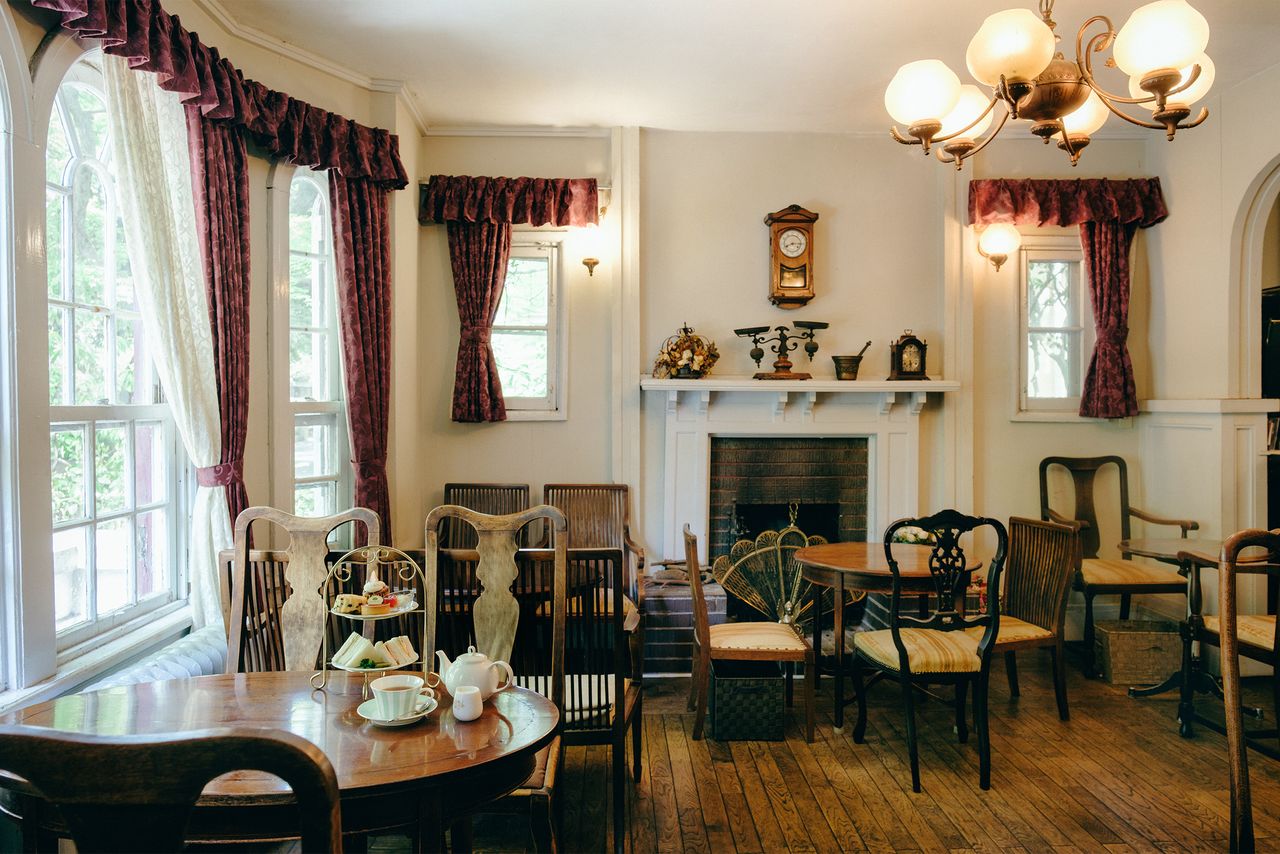
The lovingly preserved antique furniture enriches every moment here. (© Kawaguchi Yōko)
Preserving Her Mother’s Recipes
Andō began helping her mother with the café as a university student. In 2000, she became its second owner, attained certification as a tea instructor, and began serving afternoon tea worthy of an English-style building. Seasonal afternoon tea sets can be enjoyed by reservation in private rooms on the second floor.
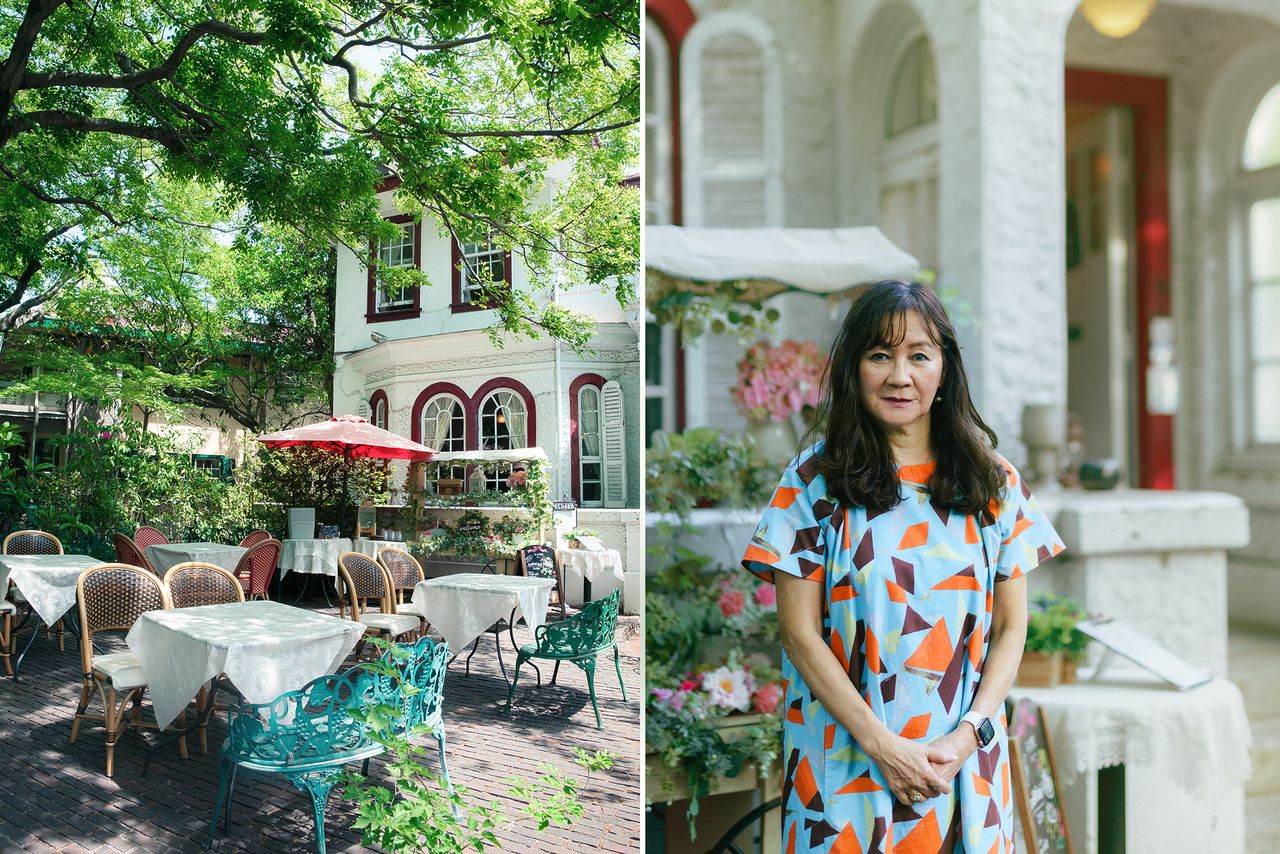
Andō Miho, second (and current) owner of Enoki-Tei. (© Kawaguchi Yōko)
In the tearoom on the ground floor, cake and coffee are also readily available. The cheesecake and certain other confections are still made to Chizuko’s original recipes.
The cherry sauce used on the cheesecake is also mixed with cream and used as the filling in the café’s cherry sandwich biscuits. These remain among Enoki-Tea’s most popular offerings.
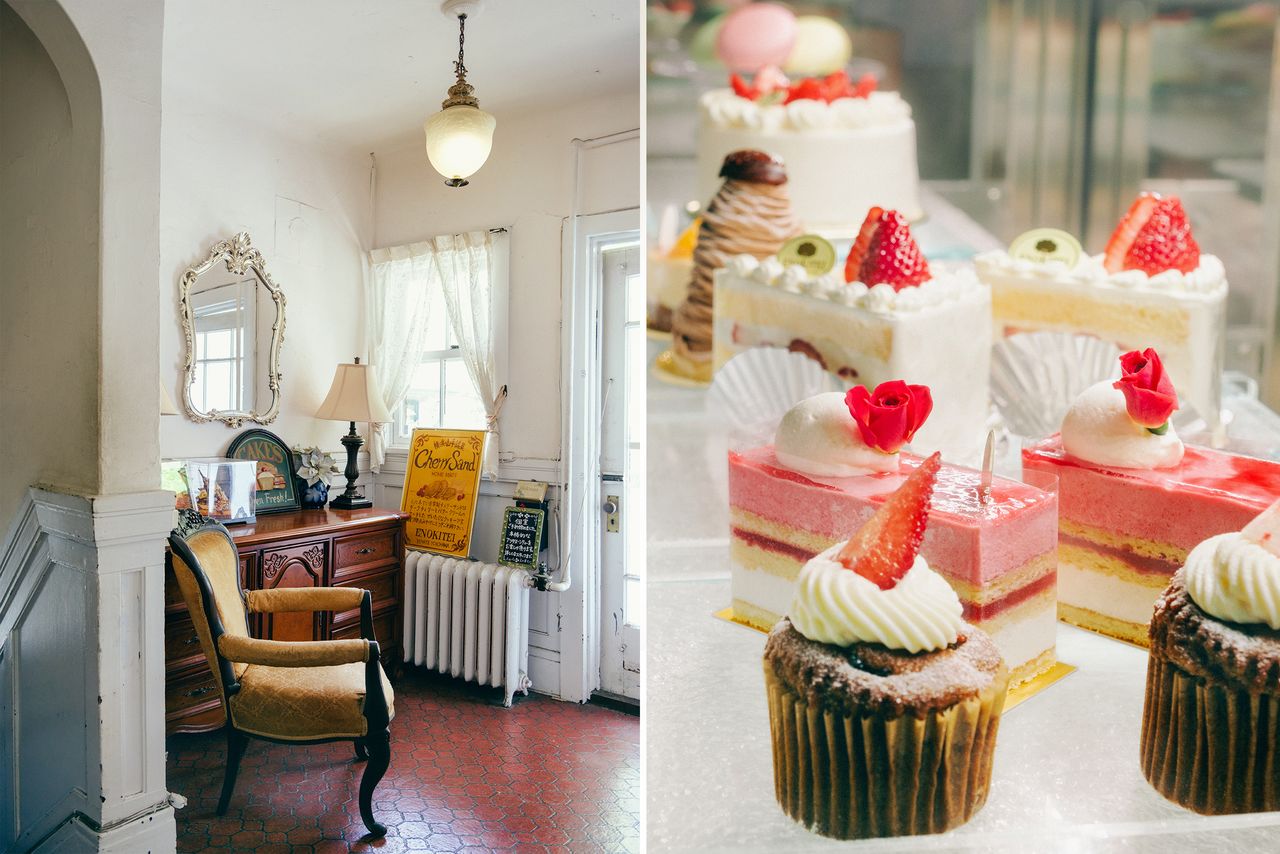
The takeout menu includes fresh cakes, cherry sandwich biscuits, and more. (© Kawaguchi Yōko)
Overcoming Disaster and Looking to the Future
Over half a century of history, Enoki-Tei has faced the risk of closure several times. The 2011 Great East Japan Earthquake left the building’s foundation with deep cracks. Instead of simple repairs, Andō decided to cease operations for a full month to remove the walls and perform large-scale earthquake-proofing. Already looking decades ahead, she was determined to preserve this cultural property for future generations.
The Japanese hackberry tree (enoki) in the garden has gifted the café with more than just its name. One year, a typhoon struck Yokohama with such ferocity that the roofs of neighboring houses were torn loose and went flying—but the enoki shielded Enoki-Tei from this fate.
“The tree had some broken boughs, but the building was undamaged,” says Andō.
When the Andō family moved into the house, the tree was only about as tall as the garden lights, but today it rises above the two-story building’s roof, a silent witness to the history of the house and its resident family.
In May and June, roses bloom throughout Yokohama. This is the perfect season for a stroll through these history-steeped streets, admiring the surviving European-style architecture—and, of course, dropping in on Enoki-Tei!
As a starting point, I recommend Motomachi-Chūkagai Station on the Minatomirai Line. Walking from America-Yama Park with its riot of flowers up the gentle slope toward Enoki-Tei, note the Yokohama Foreign General Cemetery, final resting place of Franklin Warren.
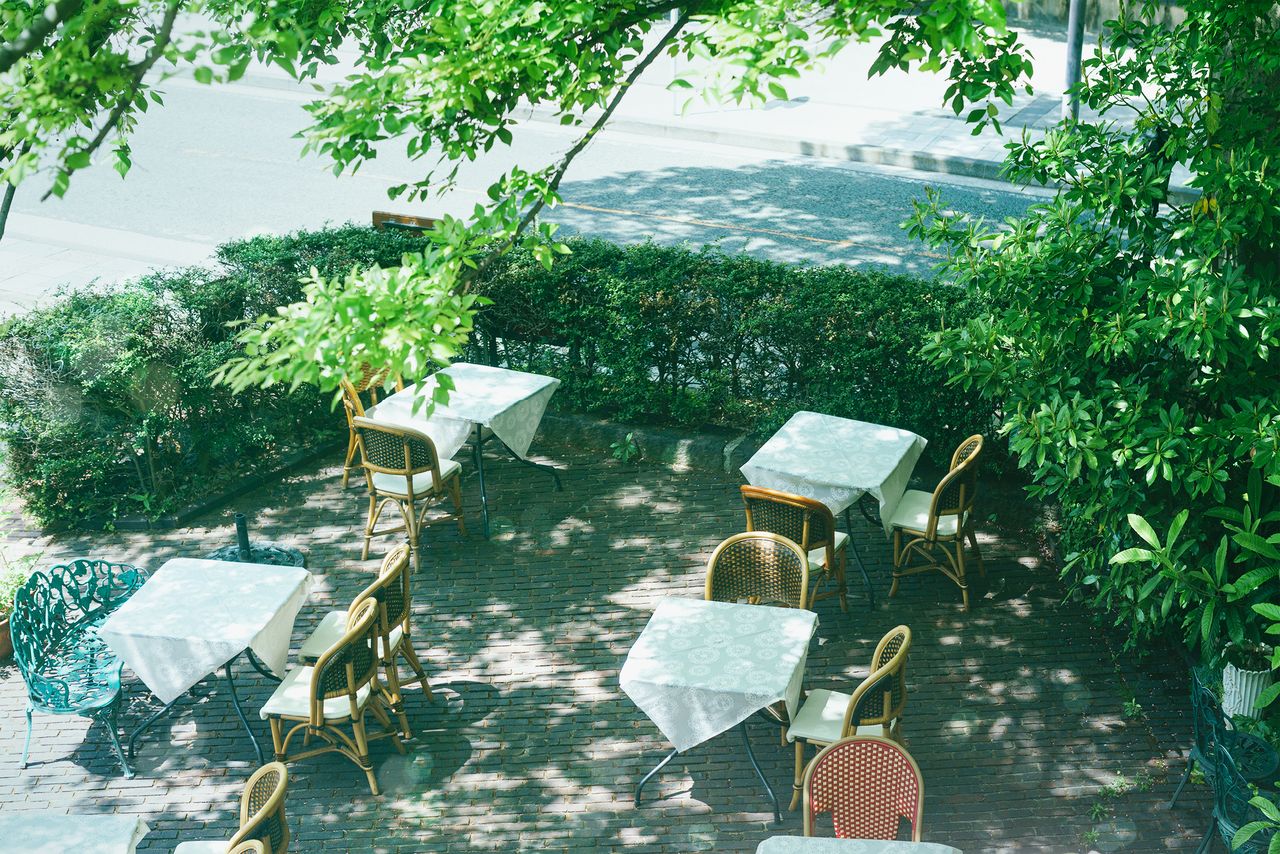
A pleasant breeze freshened the air in the shade of the café’s iconic enoki tree. (© Kawaguchi Yōko)
Enoki-Tei
- Address: 89-6 Naka-ku, Yamate, Yokohama
- Hours: Weekdays: 12:00 pm–5:30 pm (last order 5:00 pm); Saturdays, Sundays, and public holidays: 11:30 pm–6:00 pm (last order 5:30 pm)
- Closed: No regular closing days
- Access: 8 minutes’ walk from Motomachi-Chūkagai Station on the Minatomirai Line
- Website: https://www.enokitei.co.jp/ (Japanese)
(Originally published in Japanese on April 30, 2026. Reporting, text, and photographs by Kawaguchi Yōko. Banner photo: The exterior of Enoki-Tei, which was built in 1927. © Kawaguchi Yōko.)