Manga Worth Having on Your Shelves
Young Love with a Modern Twist: “I See Your Face, Turned Away”
Manga Anime Culture Entertainment- English
- 日本語
- 简体字
- 繁體字
- Français
- Español
- العربية
- Русский
Bittersweet Young Love
Before us stands a young heroine—the prime mover of our story, but not without her insecurities. How will she manage to overcome them? The approach to that central question varies with the times and the style of any given shōjo manga work, but finding love with a partner who accepts her just the way she is is a fundamentally unwavering element of the genre.
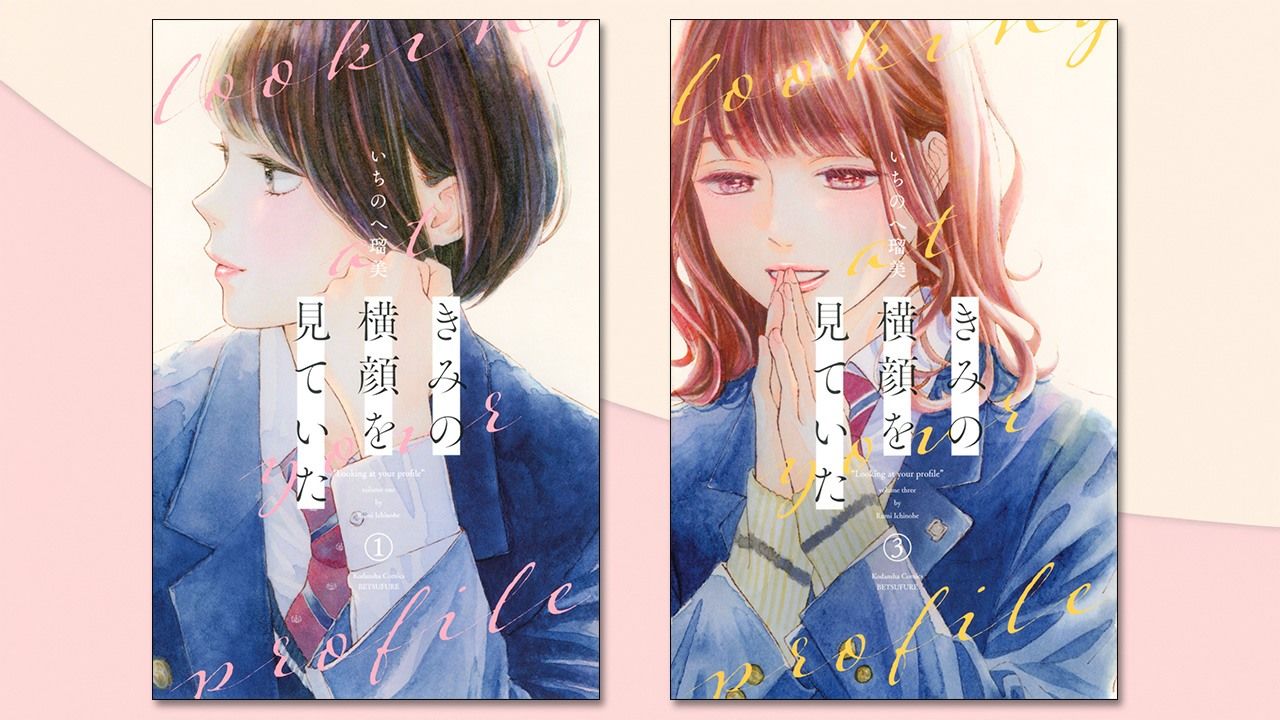
One of the central characters of Ichinohe Rumi’s Kimi no yokogao o miteita (literally “I was looking at you in profile”; published in English as I See Your Face, Turned Away) is Mori Hikari—who appears on the cover of volume one—a high school girl who frets over her single-creased eyelids. Mori is the very image of the orthodox shōjo manga heroine. She has a crush on Ōtani Shintarō, class clown and baseball team member, but Ōtani himself only has eyes for Mori’s friend Takahashi Mari, the cover character for volume 3. Mori pushes her emotions aside to root for Ōtani finding true love, but eventually finds herself on the verge of admitting to her own feelings. Dressing it up as a hypothetical, she tells Ōtani that the guy she likes is interested in girls with double-creased eyelids, unlike her own single creases. When she asks if she should try something like eyelid glue to fake a double crease, Ōtani says, ”But, you’re so cool . . . Just stay the way you are.”
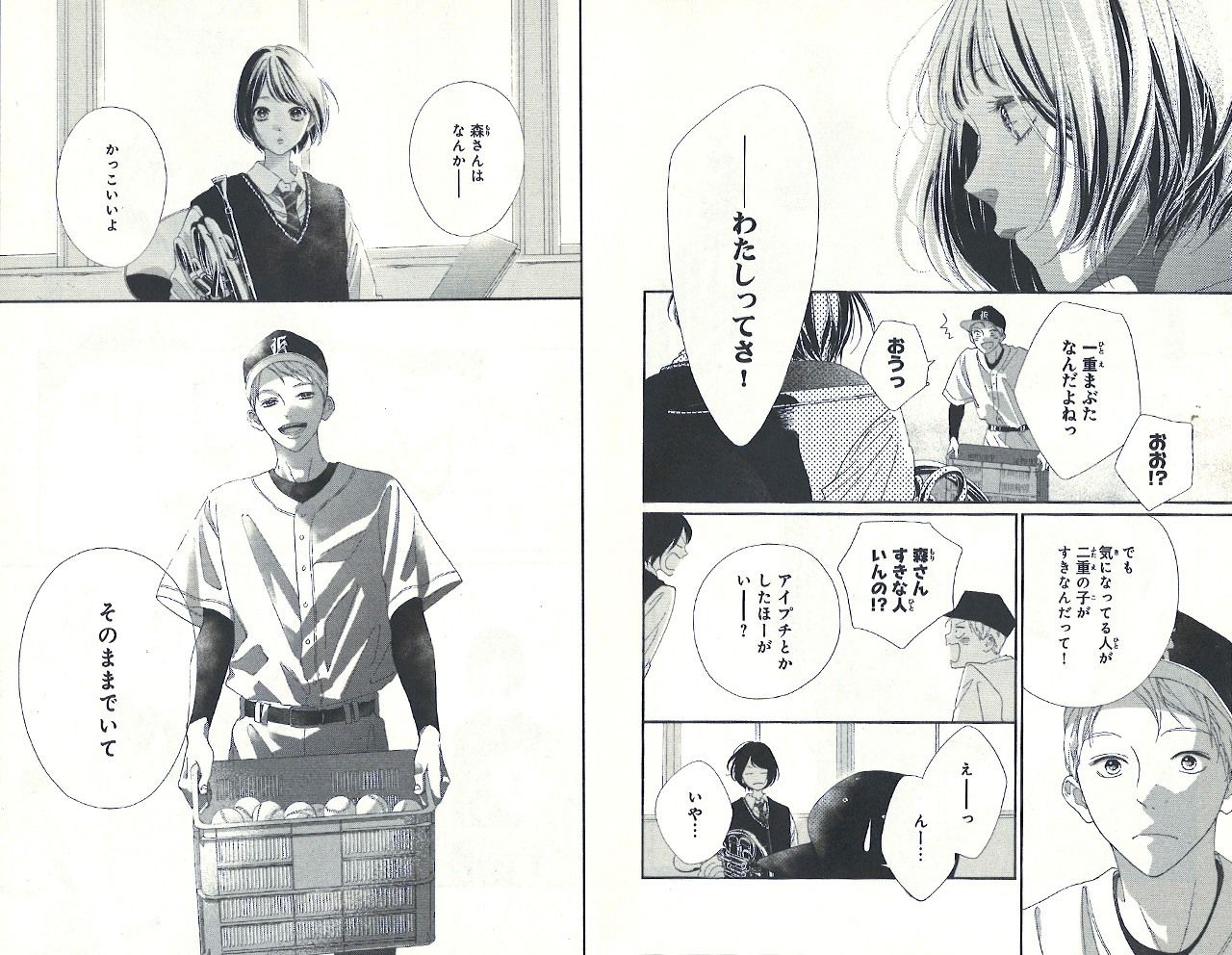
From volume one of I See Your Face, Turned Away. (© Ichinohe Rumi/Kōdansha)
Ōtani accepts her just the way she is. In any other shōjō manga, those would be the magic words that marked the beginning of true romance, particularly when said by the object of unrequited love. And that is what makes this particular scene so bittersweet.
Manga for girls began focusing on romantic love in the 1960s. Love stories set in schools have been on the rise ever since, often showing perfectly ordinary girls finding love through determination. The other half of that fixed set would be a boy who would accept the girl, insecurities and all, just the way she was. This is why I described Mori as “the very image of an orthodox shōjo manga heroine.”
In the 1970s, a new shōjo subgenre appeared, so-called otomechikku, or “maiden-esque,” manga, with works by artists like Mutsu Ako. These became the new standard for romantic manga and set the basic heroine type, which has since evolved to meet the changing times and society.
For example, manga like Kamio Yōko’s Boys Over Flowers were popular for depicting strong heroines who pushed through all the obstacles in their way. Then, in the 2000s, Shiina Karuho’s Kimi ni Todoke: From Me to You depicted a powerful heroine who lived life her way, despite a physical appearance that the outside world assumed would lead to insecurities.
Modern Heroines Struggling with Society
The most direct way that I See Your Face, Turned Away expresses modernity is in the second heroine, Mori’s friend and Ōtani’s crush Takahashi Mari.
Despite Takahashi’s good looks, she is painfully shy. She has endured bullying in the past and struggles in social situations. Matsudaira, the school’s language arts teacher, encourages her to try and deal with these issues, and she grows so focused on her own problems that she has no attention to spare for the feelings of Mori and Ōtani.
Rather than simply being a form of romantic love, her feelings for Matsudaira begin to transform into something akin to “fandom.” I expect that the story will begin to treat Matsudaira and his story like another protagonist, but there is no hint of any now out-of-date “student/teacher romance” subplot to come. In other words, for Takahashi, love is a tool to change herself for the better and pursuing her crush is path toward growing up. This way of viewing love as a kind of fandom is a distinctly modern take for Japan. In that sense, Takahashi is in clear contrast with Mori as a heroine.
Since the 2010s, many shōjo manga have focused on girls dealing with so-called social disorders or bullying, like Takahashi does. As otaku culture, fashion, and music are all increasingly subsumed into common culture, more attention is falling on young people who struggle with daily life. With social media forcing more and more young people to deal with the judgment of others, audiences might well find it easier to empathize with characters who have difficulty figuring out how to relate appropriately with others.
For generations that grew up loving earlier shōjo manga, it is immediately obvious that Mori represents that traditional protagonist. But within the work itself, she sees Takahashi as the manga heroine. This is because she herself shares the sensibilities of modern shōjo manga fans.
You can also see how times have changed in friendship—and the distance—between Mori and Takahashi. If this were a manga from an earlier age, their friendship would be shown in how they opened up to each other about everything and anything. But the fact that these two see and accept each other is shown in how they keep each other at a distance. Even as the conflict around Ōtani’s feelings progresses, the relationship between the two never falls into a morass of jealousy. In other words, there is no fiery passion here.
A Delicate Balance
There are also two boy protagonists. As mentioned, one is Ōtani. He is a nice guy and the class clown, but he is not depicted as the cool, flawless, king of the school. Rather, he is shown to be a more natural high school boy. He thinks about Takahashi constantly, including nightly fantasies about her, and douses himself in deodorant to try to hide the smell of sweat. And his feelings for Takahashi ebb and flow, just like a real high school boy’s would.
The other is Ōtani’s friend, the mysterious, handsome boy Asagiri Hikaru. With his philosophical view of the world and hints of darkness, he is another iconic shōjo manga character, but then the fourth volume digs into his story to show just why he acts the way he does. And Asagiri’s love brings about a major change in the relationships between all four of the series’ young characters.
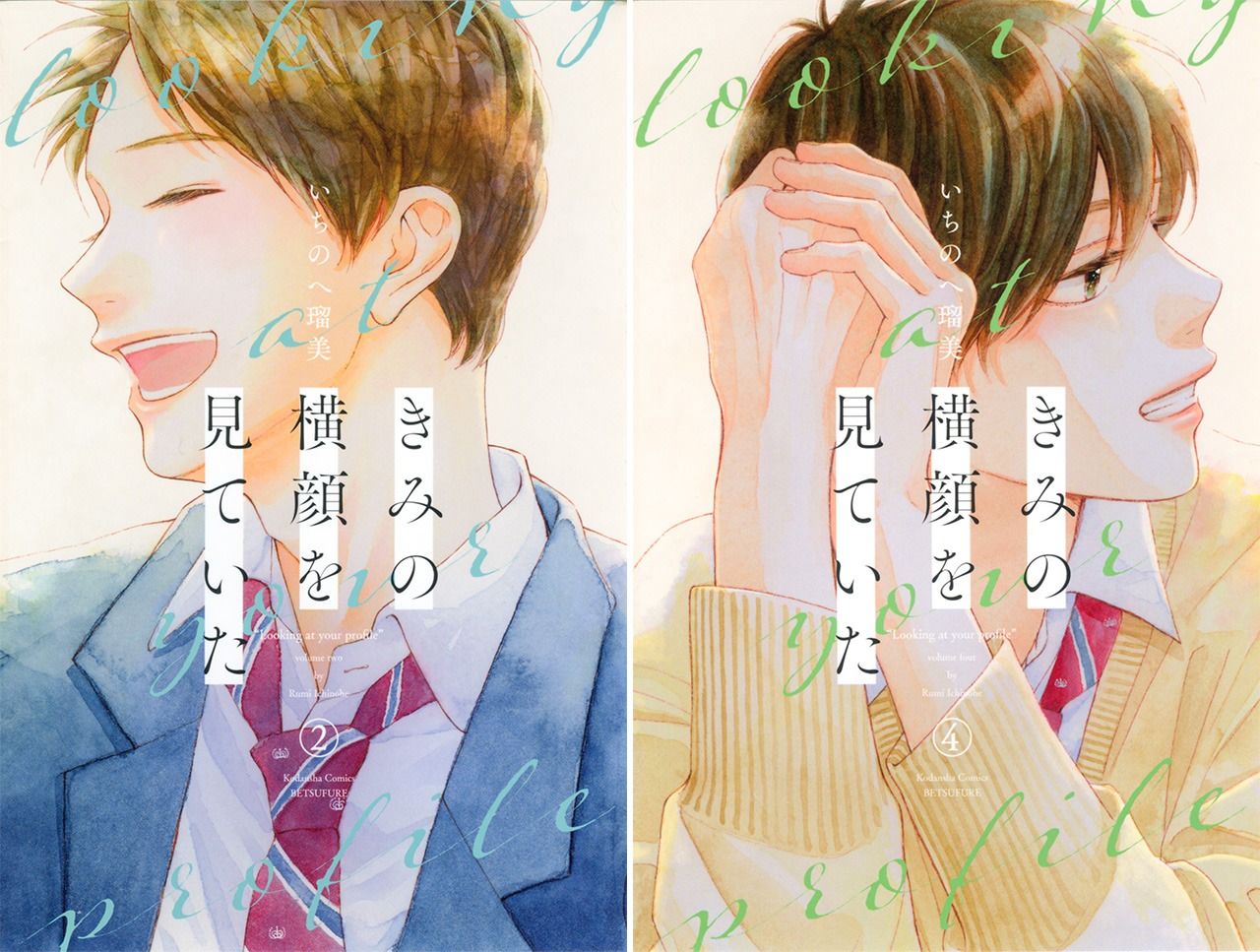
The covers to volumes two and four of I See Your Face, Turned Away. (© Ichinohe Rumi/Kōdansha)
Both Ōtani and Asagiri have a gentle, cool heroism that makes them appealing to women readers, but when they open up about their feelings, the artificial maturity of their protagonist role falls away and they become much more true to life. The male heroes of this story strike a delicate balance between ideal and reality.
The boys in modern shōjo manga rarely show any dark sides. Where, now, are the slightly mean hero of days gone by? In the modern era, that meanness might instead be viewed as abusive, and so rejected. Unless the character is clearly depicted as some kind of dominating sadist with a penchant for nastiness, the author might be viewed as having failed to take the characterization far enough to truly work.
Youthful Spirit
I See Your Face, Turned Away won the 2024 Kōdansha Manga Award in the Shōjo Division. Award judge Andō Natsumi praised the comic, saying, “I admire the intricate descriptive powers and plotting for each character. It made me want all of them to find success in love.” When Ichinohe Rumi accepted the award, she said, “These characters are alive inside the story. I think they provide enormous encouragement and support to be who you are, no matter what happens.”
Even as it has changed with the times, Japan’s shōjo manga has long been a medium depicting the intricacy of teenage hearts, in all their fragile but enduring beauty, along with the fun and the pain of unrequited love. I See Your Face, Turned Away shares that heritage as it depicts the vibrant, youthful spirits of modern teens. Everyone in it is a main character, and they all struggle with the difficulties of love as they grow up. I’m sure lots of readers will see their own youths in the stories of these young people, and root for them all. The series has been on hiatus since November 2024, but readers are waiting patiently for its return.
(Originally published in Japanese. Banner photo: The covers to volumes one and three of I See Your Face, Turned Away. © Ichinohe Rumi/Kōdansha.)