
Manga Worth Having on Your Shelves
“Medalist” Goes for Gold as a New Breed of Sports Manga
Entertainment Art Manga Anime Sports- English
- 日本語
- 简体字
- 繁體字
- Français
- Español
- العربية
- Русский
The Power of Persistence and Passion
The manga Medalist tells the story of fifth-grader Yuitsuka Inori, who has a reputation both at home and at school as not being very good at anything. But she has one passion: figure skating. Her older sister Mika had her own skating dreams broken, though, and their mother has decided that success on the ice is beyond the sisters. Defiant Inori secretly joins a skating club at the local rink, though, where she meets a former ice dance athlete, Akeuraji Tsukasa. He recognizes Inori’s passion for skating, and she, in turn, asks him to become her coach, saying: “If I told you I’m going to be the best in the world, would you help me?”
Inori has enormous dreams but Tsukasa accepts her ambition. The 11-year-old and the 26-year-old, two people whose dreams were almost shattered, team up to aim for the inconceivably distant goal of Olympic gold.
Betting It All
The first volume earns full score on passion. But it is from here onward that the story grows truly interesting. What truly captures the hearts of readers is the growing strength of the relationship between coach and athlete.
Tsukasa is the manga’s other protagonist. Despite his own great talent, financial reasons kept him from continuing his figure skating career, and his talents failed to bloom in the ice-dancing world he switched to. He decides to begin coaching when Inori cries out that she doesn’t want to be embarrassed about skating. He is convinced that she has hidden talent that only he, who was unable to achieve his own dreams, can reveal.
Tsukasa, a being of pure positive thinking, showers Inori with praise. At one point, when Inori is unable to decide on a jump for an upcoming competition, she tries to read Tsukasa’s expression for guidance. He is firm enough to tell her bluntly that it’s no good to try to guess what he wants, and then goes on, “Whatever you decide, I’ll guide you to victory.” Truly, the ideal coach.
And Inori, having asked Tsukasa to coach her, learns that Tsukasa’s own skating life has ended. Her new understanding—that her jump performance is no longer a question of her own strength, but rather the dreams of two people—pushes her through her own limits. This mutual fandom creates a relationship of trust so strong there’s no room for anyone else.
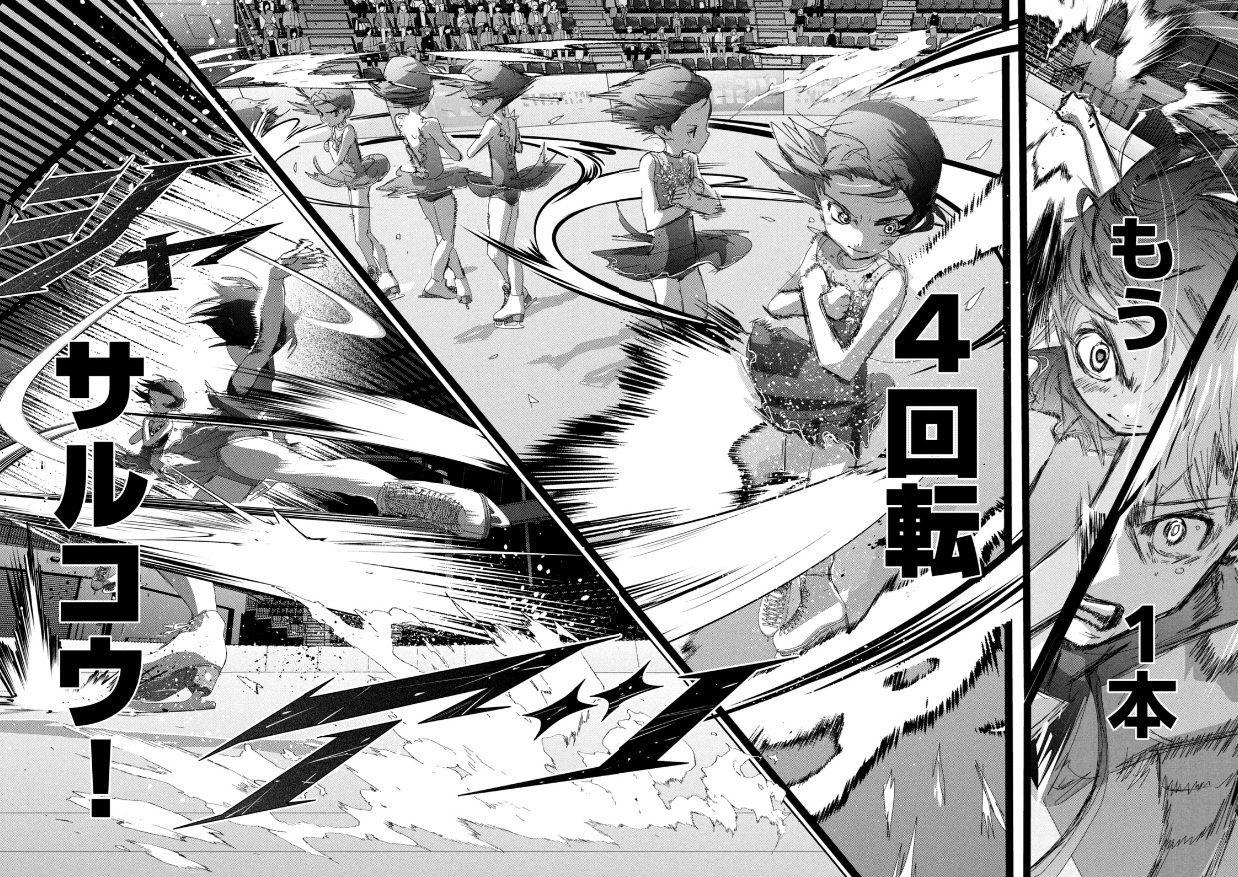
The competition jump scenes are packed with life and emotion. (© Tsurumaikada/Kōdansha)

Homage to a Classic
This series is packed with reminders of a great girls’ sports manga from the 1970s, Yamamoto Sumika’s tennis manga Aim for the Ace!
The protagonist of that work, Oka Hiromi, was a normal rookie on her school tennis team. When new coach Munakata Jin singles her out for unknown reasons, his harsh training helps her hidden talents bloom. Under Jin’s coaching, Hiromi grows strong enough to rival her role model and team ace, Ryūzaki Reika—nicknamed “Madame Butterfly.”
These two leading sports manga of different generations both feature male coaches and female athletes working together to become world’s best. The two protagonists share a childlike naivete as well as a hatred of failure. But the more interesting comparison is between the two coaches, Jin and Tsukasa, who happen to be of about the same age.
Jin was once a famous player, but his tennis career ended after injury and illness. Just like Tsukasa with Inori, Jin sees hidden potential in Hiromi and responds by bringing all his passion for tennis to bear. Fans from back in the day still remember his famous line to his protégé: “It was you I chose, not those others! I’ll never let you go!”
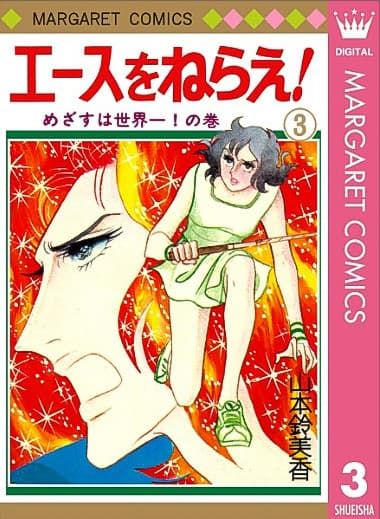
Volume Three of Aim for the Ace! (© Shūeisha)
But at the same time, you could say the two characters are polar opposites. Jin, with his furrowed brow, is a hard-nosed coach who never praises Hiromi. He pushes her to practice until she passes out, yet Hiromi still persists. Eventually, the relationship between them threatens to go beyond coach and athlete and blossom into something romantic. That kind of intimacy moved the hearts of girl readers in the 1970s.
A New Style of Coaching
This difference between Jin and Tsukasa can be linked to a change in the approach to coaching. According to the 2007 book How Coaching Works, by Joseph O’Connor and Andrea Lages, a new style of coaching incorporating psychology and Eastern philosophy was born in the late 1970s and developed further in the United States in the 1980s and 1990s. Interestingly, it cites the 1984 film Karate Kid, about a Japanese-American coach training a teenage boy in karate, as an early example of this style in pop culture. Concepts like “Defeat the enemy within yourself” and “People have hidden potential” have become fundamental to modern coaching, and Tsukasa embodies such thinking and methods. In Munakata Jin’s day, such thinking had not yet become commonplace.
Aim for the Ace! and Medalist have something else in common: the power of emotional bonds. The basic theme of these works is that two people can connect at a deeper level, despite gender and generational gaps, and work together to approach a goal. There is a reading of the relationships between Inori and Tsukasa, and between Hiromi and Jin, as treading close to codependency. In that sense, Medalist can be considered the final evolution of the old-fashioned sports manga.
Inori is not the only one devoting her life to skating. She has rivals, of course, girls of interesting character and charm, and it would be a shame to overlook how Medalist begins to work as a kind of ensemble piece. Readers are free to choose their favorite skater to root for. One girl Inori’s age, in particular, reigns as the queen of the rink: Kamisaki Hikaru. Both her deep solitude and celestial magnificence radiate from the page, and in a sense she echoes the Madame Butterfly of Aim for the Ace!
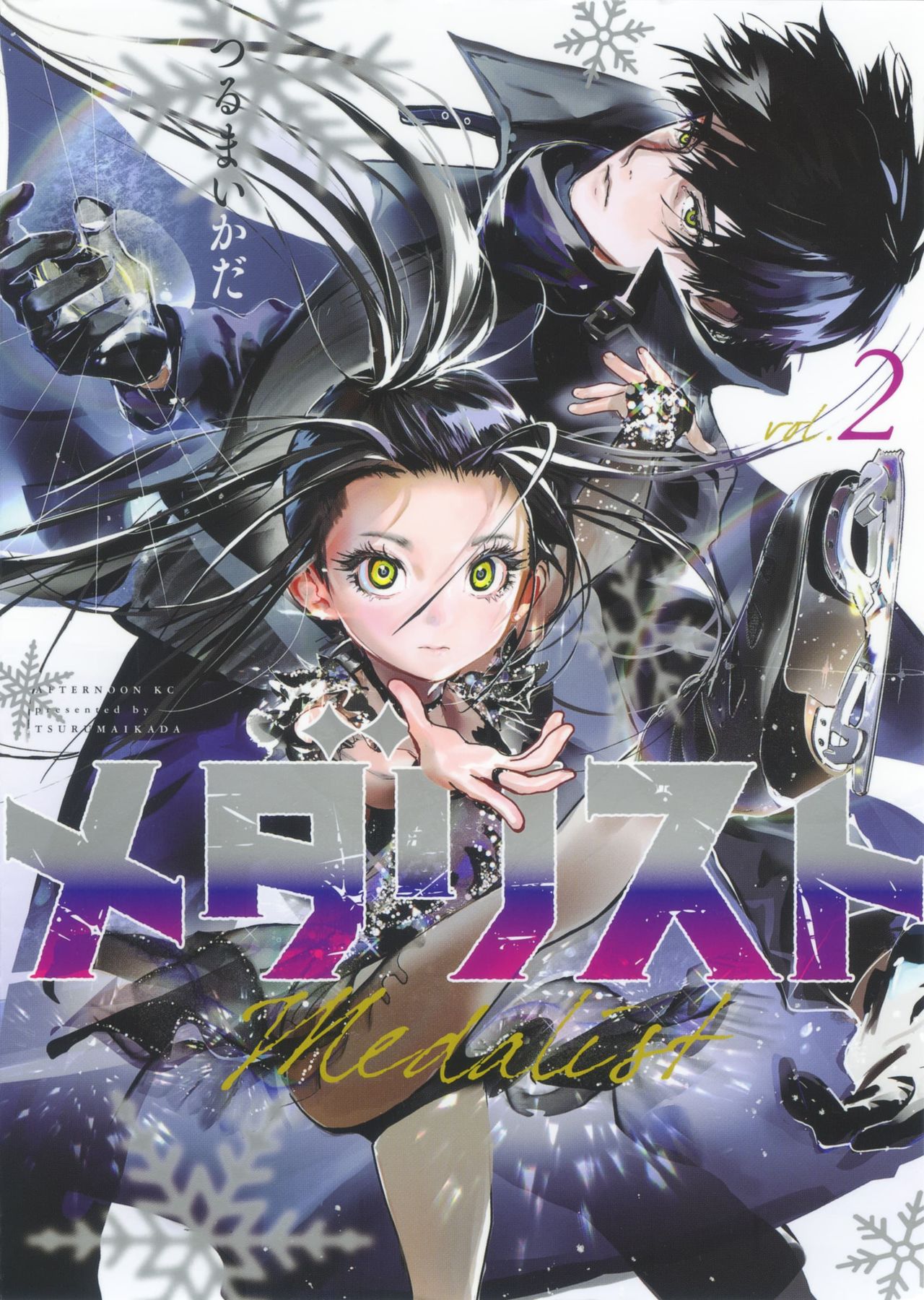
Genius skater and Inori’s rival Kamisaki Hikaru on the cover of Medalist volume two. (© Tsurumaikada/Kōdansha)
Medalist has more charms than I could possibly list here, from the adorable characters to the vigor of the jump scenes, and the easy-to-understand explanation of rules on earning competition skating’s points through a card game.
Shaping Dreams into Reality
The artist—Tsurumaikada, whose real name and gender remain unknown—started in the dōjinshi amateur publishing world. Medalist is their professional debut. It began serialization in the monthly magazine Afternoon in 2020. In a 2021 interview, the author said the goal was to draw “people shaping their dreams into reality by hand, even though no one else expects anything from them.” After deciding to start this project, Tsurumaikada began going to skate competitions and clubs for research, and even started taking lessons—even suffering a compound fracture of the ankle right before serialization. Clearly, the artist’s tenacity is as indomitable as the characters’.
Japan is a figure-skating powerhouse, but the fact is that rinks across the country are closing due to deterioration and financial hardship. Athletes active today are polishing their skills and taking on the world in full awareness of that fact. The author says: “I want to increase the number of skaters and of rinks to help improve things, even if just a little.” Medalist has already won two major publishers awards, the Shōgakukan Manga Award in 2022 and the Kōdansha Manga Award in 2024, and its television adaptation entered its second season in January 2026.
There’s no doubt that as new generation of children put on their first pair of skates and step carefully out onto the ice, Medalist will be there, pushing them forward with gentle strength.
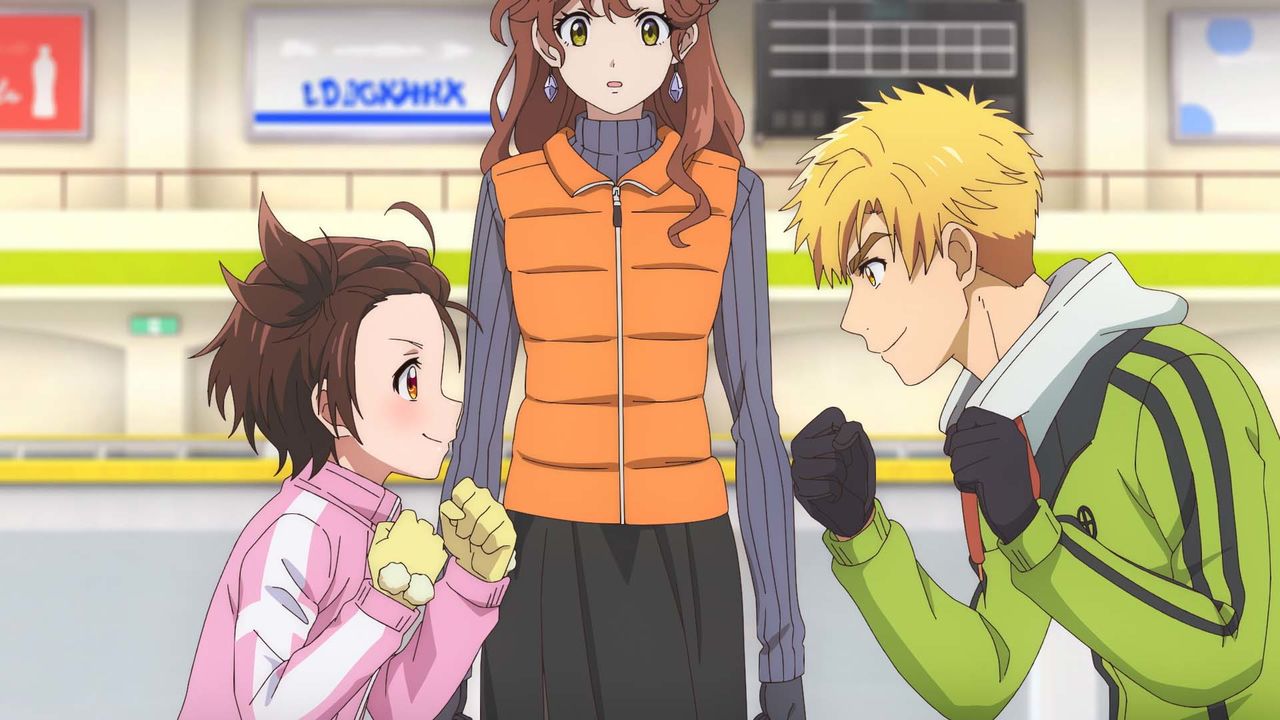
Medalist depicts the bonds between coach Tsukasa (right) and athlete Inori (left). The anime series has been airing on the Abema platform. (© Tsurumaikada/Kōdansha; Medalist Production Committee; Abema/PRtimes)
(Originally published in Japanese. Banner photo: Volumes one and three of a Medalist edition. © Tsurumaikada/Kōdansha.)