Manga Worth Having on Your Shelves
The Way of Rest: “Hirayasumi” Teaches Manga Lessons on Happiness
Manga Culture Entertainment- English
- 日本語
- 简体字
- 繁體字
- Français
- Español
- العربية
- Русский
Lives Intersecting Under One Roof
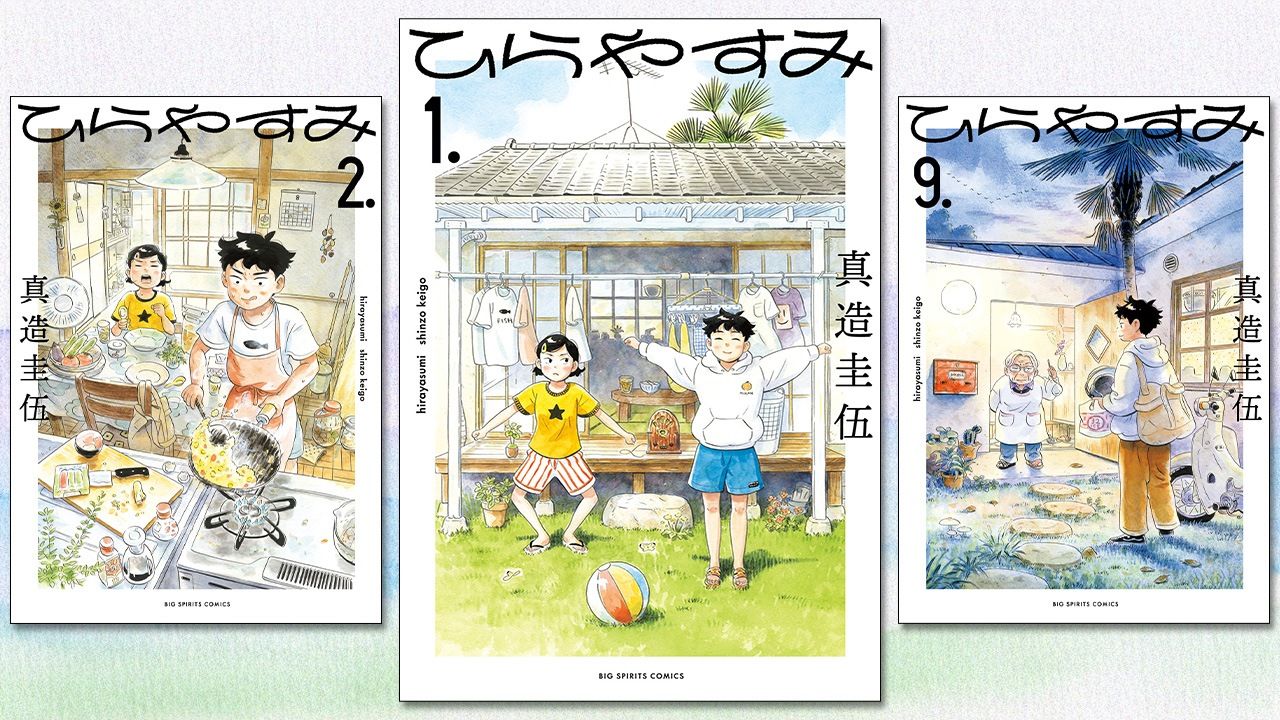
The setting of this manga is a hiraya, a traditional style of one-story Japanese house with an emphasis on open spaces. The title, Hirayasumi, combines this word with yasumi, meaning “rest” or “taking a break,” conveying the quiet calm of the living space at the heart of the story.
The protagonist is 29-year-old Hiroto, who lacks a stable career. He is a good-natured man who seems to attract the attention of older generations. Twice a week, he meets up with neighborhood granny Hanae for a meal and socializing. But Hanae suddenly passes away from a heart attack and leaves her hiraya home in Tokyo’s Asagaya district to Hiroto. Then his cousin Natsumi from Yamagata moves in, and the story begins in earnest.
Hiroto, who once dreamed of becoming an actor, now spends his days bouncing between part time jobs and lazing about the house, like some eternal summer vacation. As he does, he encounters hard-working people who never seem to get any rest, and the contrast presents readers with an opportunity to think about what “rest” really means.
For example, Hiroto’s best friend Hideki has a job working at a company handling high-end home furnishings. He has a family and an expensive car, and from the outside it looks like he has everything he might want. But the stress of work and ill treatment from coworkers has eroded his mental health to the point of contemplating suicide.
Hideki finds salvation in Hiroto, who lacks a regular job, a wife, and a child. Hiroto remains a faithful friend to Hideki even in the face of coldness. This is because when Hiroto grew tired of the constant competition of auditioning and thought about giving up on his dreams, Hideki is the one who told him, “You’re important, whether you’re an actor or not. Just as long as we can keep hanging out like this.”
In a world where social standing and job titles are given ever greater importance, you might well forget the real meaning of life without someone to tell you the same. The friendship between these two drives home the message that position, money, and honor aren’t enough to bring true happiness.
Hiroto, as carefree as he seems, does worry whether his life is going the right direction. Should he find something he really wants to do and work hard to build a career? Once more, Hideki offers another view, saying, “You’re already the best, just the way you are.”
This book is packed with words to soothe spirits exhausted by a competitive society.
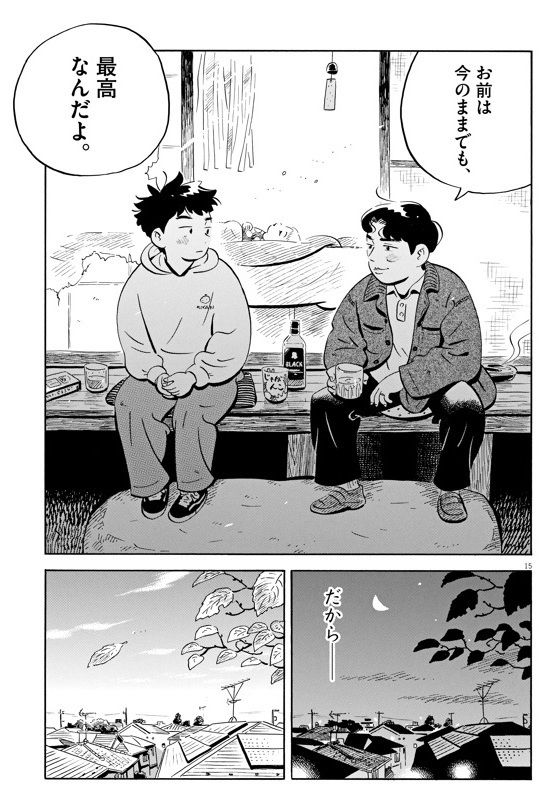
A scene from volume nine of Hirayasumi. Hideki, at right, tells Hiroto “You’re already the best, just the way you are.” (© Shinzō Keigo/Shōgakukan)
Manga Expressing Changing Views on Work
Japan’s bubble economy, when everyone felt that simply working hard was the way to affluence, burst in the early 1990s. Its aftermath gave way in the early 2000s to a more competitive society where real skill became key. In a reflection of the times, popular manga of the day centered on protagonists who worked hard to acquire skills and become the best around. Many of them featured women on the road to success.
For example, Anno Moyoko’s 2004 manga Hataraki Man and Makimura Satoru’s 2006 work Real Clothes both had career women as protagonists. There were also a strong showing of characters taking it on themselves to open their own paths in creative industries. Bakuman, a 2008 manga from Obata Takeshi based on an original work by Ōba Tsugumi, and Higashimura Akiko’s Blank Canvas: My So-Called Artist’s Journey, from 2012, are just two of many stories about young people forging themselves into manga artists.
One thing all these share is the lesson that an earnest, single-minded approach to work is the path to a more fulfilling life. I imagine that when these manga were at their height, scores of readers found inspiration in the protagonists’ dedication. At the same time, though, there had to be many who worked hard without similar success, finding only exhaustion and an unfair reality.
In the old days, the standards of a happy life were to find a stable job, get married, and have kids. As times evolved, that core belief remained, with a new layer of seeking fulfillment in life by doing what you love.
And that pursuit of self-fulfillment might well have put pressure on some young people to “become someone,” or achieve something big. But now that they’ve grown up, many have probably found their lives to be far from their ideal imagination.
In the transition from the 2010s into the 2020s, we have seen more and more works focusing on the topic of “rest.” That could well be due to all the people who found themselves unable to meet the old-fashioned standards of happiness and self-actualization. Some, like Konari Misato’s Nagi no oitoma (Nagi’s Long Vacation) from 2016, or Mizunagi Tori’s Shiawase wa tabete, nete, mate (Just Eat, Sleep, and Await Your Happiness) from 2020 show how happiness can be found in a peaceful daily life and the bonds with those around you, rather than achieving some big dream. Hirayasumi is another in that same vein.
According to monthly labor figures from the Ministry of Health, Labor, and Welfare, average annual working hours per person fell about 20% from 1990 to 2024, to 1,643. Work reforms like those promoted by the government have helped make old-school values like “workaholism” a thing of the past, and society has gradually started to see the value in proper rest. The popularity of these manga is probably reflecting that change in Japanese society.
This work, which boasts both inherent charm and a strong sense of the times, has won awards like the TV Bros magazine’s Comics Awards Grand Prize in 2021 and the Shōgakukan Manga Award announced in January 2026. It was awarded the Gran Guinigi for Best Comic Serial at the 2024 Lucca Comics Awards, held in Italy, and the jury called it “A work that is not only beautifully written but above all characterized both in the art and the script by a leisurely pace and serene tone, making for a radical artistic act that is anything but obvious.”
A Story Born from a Vacation
The Hirayasumi creator, Shinzō Keigo, discusses its origin in the story “About the Time I was Hospitalized for Malignant Lymphoma,” collected in the short-story collection Senchimentaru muhannō (Sentimental Apathy). The story described how the idea solidified when the author was undergoing chemotherapy around the time that the COVID-19 pandemic started. The cancer seems to have gone into remission, but this work all about the idea of resting ended up expressing the real experience of the author, who had no choice but to do just that. The pandemic brought change to all our lives, giving a taste of the extraordinary as so many things that once seemed to be given were suddenly taken away. That shared experience is most likely what makes the characters in Hirayasumi so empathetic, and encourages the reader to want to watch over their struggles with warm protectiveness.
The work took a break from serialization from October to December 2023. The author took to social media to explain the hiatus, saying, “Hirayasumi is about to take on the topic of summer holidays, and I want to show that summer in a way that will cause absolutely no regrets. It’s that simple a reason!” It’s a message the clearly reflects the author’s true belief that resting is essential for creating something truly good.
Contrasting Dreams
Within the work, two characters are shown with a contrasting relationship to dreams: Hiroto and Natsumi. Hiroto is someone who gave up on his dream of becoming an actor, while Natsumi is an art student with aspirations of manga artistry, working toward her debut. This makes Natsumi a mirror reflection of Hiroto’s past.
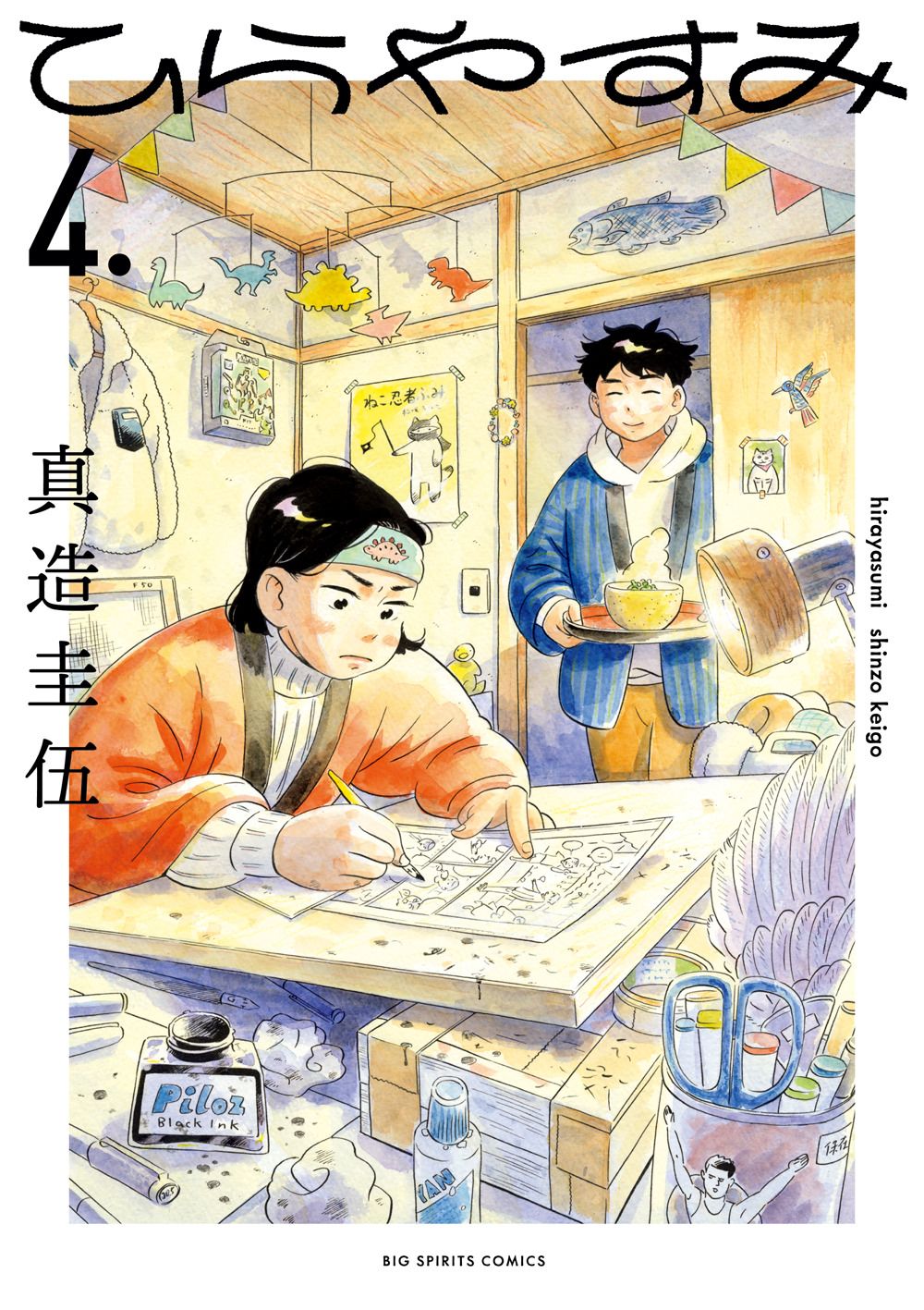
The cover to volume four of Hirayasumi. (© Shinzō Keigo/Shōgakukan)
What might readers take from seeing these two lives placed in parallel? On the one hand, perhaps they will learn that it isn’t bad to have dreams. For Natsumi, having a goal brings motivation to her daily life and gives light to life.
But readers can also find lessons from Hiroto. His pursuit of his goal wore him down spiritually until he realized that if he was just going to end up losing himself, it would be better to rest, or even to give up. That doesn’t mean giving up your entire life. Even past the age of 30, you can still have those same youthful days, time and again.
How will their lives and dreams change? The reader simply has to know.
Reflecting the Mood of One Tokyo Neighborhood
This treatment of modern values is not the only appeal to be found in Hirayasumi. The occasional scenes of home cooking are enthralling. There is also something enchanting about the astonishing reality of its depiction of the neighborhood along the tracks of the JR Chūō Line in Asagaya. The work re-creates the unique atmosphere of a neighborhood full of people chasing their dreams and indulging in various subcultures, and that absolutely adds to its emotional impact.
The evening walk home along streets filling with the aroma of dinner cooking, the sounds of arguments across the table heard through orange-lit kitchen windows. After closing the book, readers find themselves longing for their own journey to a home where loved ones wait and hurried steps relax as that place of happiness comes into sight.
(Originally published in Japanese. Banner photo: The covers to volumes one, two, and nine of Hirayasumi. © Shinzō Keigo/Shōgakukan.)