Photography as a Bridge to a Vanishing Time
Keeping a Photographic Record of Amami’s Identity
Culture History Travel- English
- 日本語
- 简体字
- 繁體字
- Français
- Español
- العربية
- Русский
Lost Amami Culture
I was born in 1953, the year the Amami Islands, my birthplace, reverted to Japanese rule after postwar administration by the United States. At that time, Japan’s main islands were going full-tilt into recovery, ushering in the era of rapid economic growth.
During that time, a veritable outflow was beginning in the farming communities and outlying islands of Amami, as young people left to seek jobs in industry in the Kantō and Kansai regions. Festivals, ceremonies, and other facets of local culture became viewed as outmoded and rapidly faded away. In school, children were instructed to abandon the local tongue in favor of standard Japanese instead, to enable them to make their way in urban society. Raised in a village on Amami Ōshima, I was also exposed to that teaching. When I lapsed into our tongue at elementary school, a “he used dialect” placard was hung around my neck, a humiliation that even today I cannot forget.
After graduating from high school, I moved to Tokyo to build a career as a photographer. I returned to Amami in 1979, but although I began photographing daily life, festivals, and nature on the islands, I struggled to find a suitable theme and simply took photos haphazardly. After six years of doing that, I decided that I would make my life’s work documenting the Amami no kurousagi, the Amami rabbit, a species designated by the Japanese government as a natural monument.
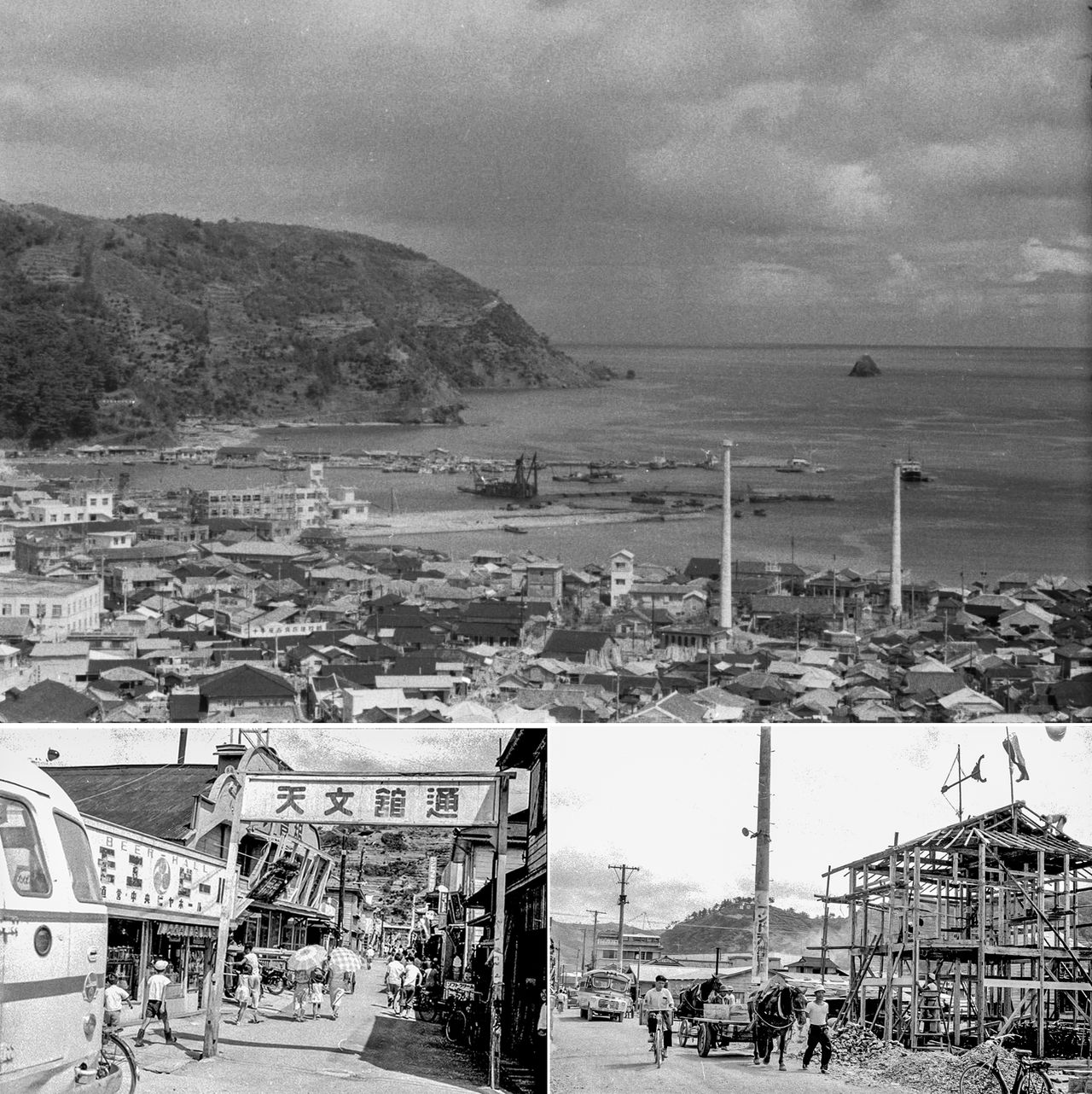
The center of Naze, now a district in the city of Amami, soon after reversion to Japanese rule. Horses and rugged bus-type vehicles were a common sight on the unpaved roads. (© Haga Hideo)
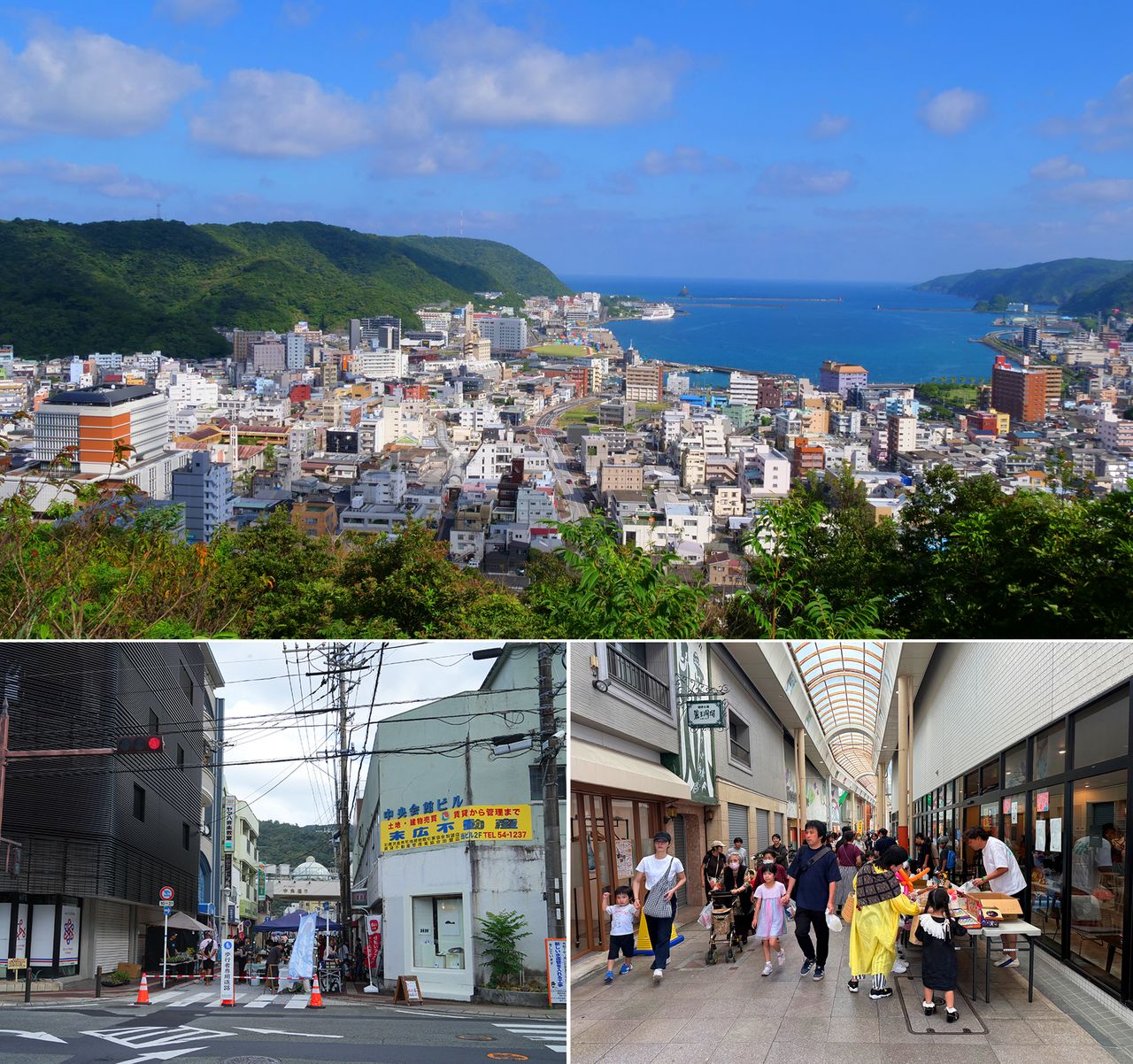
Top: The Naze district today. The shallow waters of the bay were filled in, and a port for large ships was built. Bottom: the Amami Hondōri shopping street retains a distinctly retro flavor. (© Hamada Futoshi)
Helping Preserve Local Culture
As I continued trekking to the forests to photograph the rabbit, I began to imagine how nature had evolved on Amami. Today’s primeval forests, where many of Amami’s endemic species live, developed about 6,000 years ago. By employing their senses to the full, our forebears likely learned through practical experience which forest creatures were edible and how to protect themselves from venomous snakes, typhoons, and other natural hazards. The islands’ traditional culture is no doubt rooted in profound respect for nature from time immemorial.
I began to identify more strongly with my birthplace in 1987. My photographs had been selected for inclusion in the natural sciences section of the soon-to-open Amami Museum. It was there that I encountered the photo collections of folklore photographer Haga Hideo, who had photographed the islands in the 1950s. Haga was a towering presence in the world of photography; I had seen his work in photography magazines and collections since my student days. I also learned that this master of folklore photography had begun his career taking photos in Amami.
Haga’s photos brought back my earliest memories, scenes of thatched-roof dwellings and fields stretching away into the distance, brought to life by Haga. But as a result of agricultural policy changes after the islands’ reversion to Japanese rule, the islands’ rice paddies were converted into fields, and all our local customs associated with rice farming were forgotten. Haga was in Amami at that time, documenting every aspect of life in the islands from the ethnographic perspective and leaving a record of sights that have since disappeared.
I met Haga in person in 1992, when I was granted membership in the Japan Professional Photographers Society and participated in the society’s general meeting for the first time. Haga, a founding member of the society, was attending, and when I introduced myself and mentioned that I was from Amami, his face broke into a broad smile. “Ah, Amami, where I got my start as a photographer.” He continued, “As long as humans walk the earth, folk culture will continue to exist, but it’s important to distinguish between what needs to be preserved and what will be no great loss if it fades away.” Hearing those words renewed my ambition to continue photographing Amami.
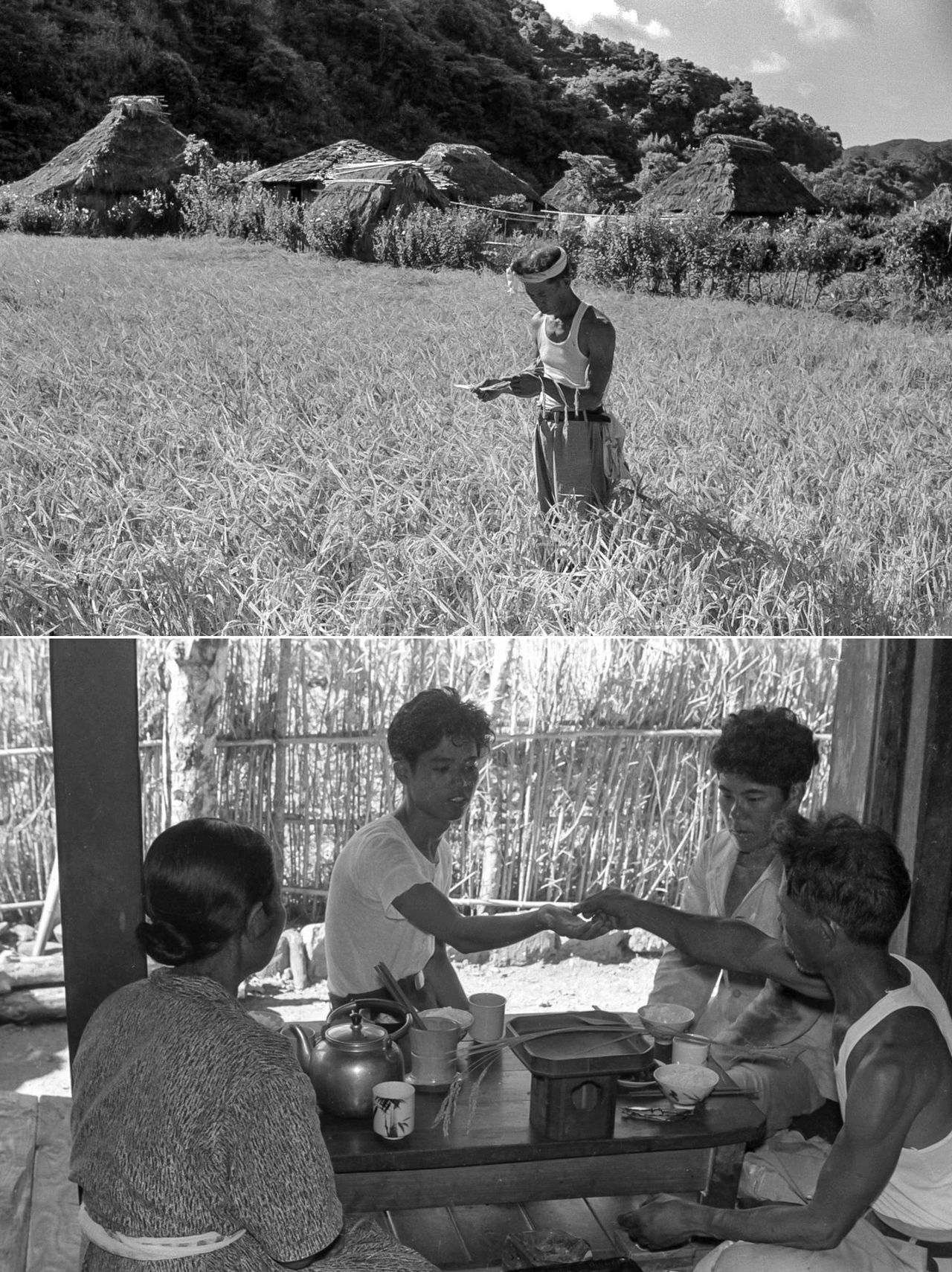
The Shikyoma ritual connected to rice growing, formerly practiced in Uken, Amami Ōshima. The harvest’s first ears of rice were offered to the deities at home, and family members each ate several grains of the rice. (© Haga Hideo)
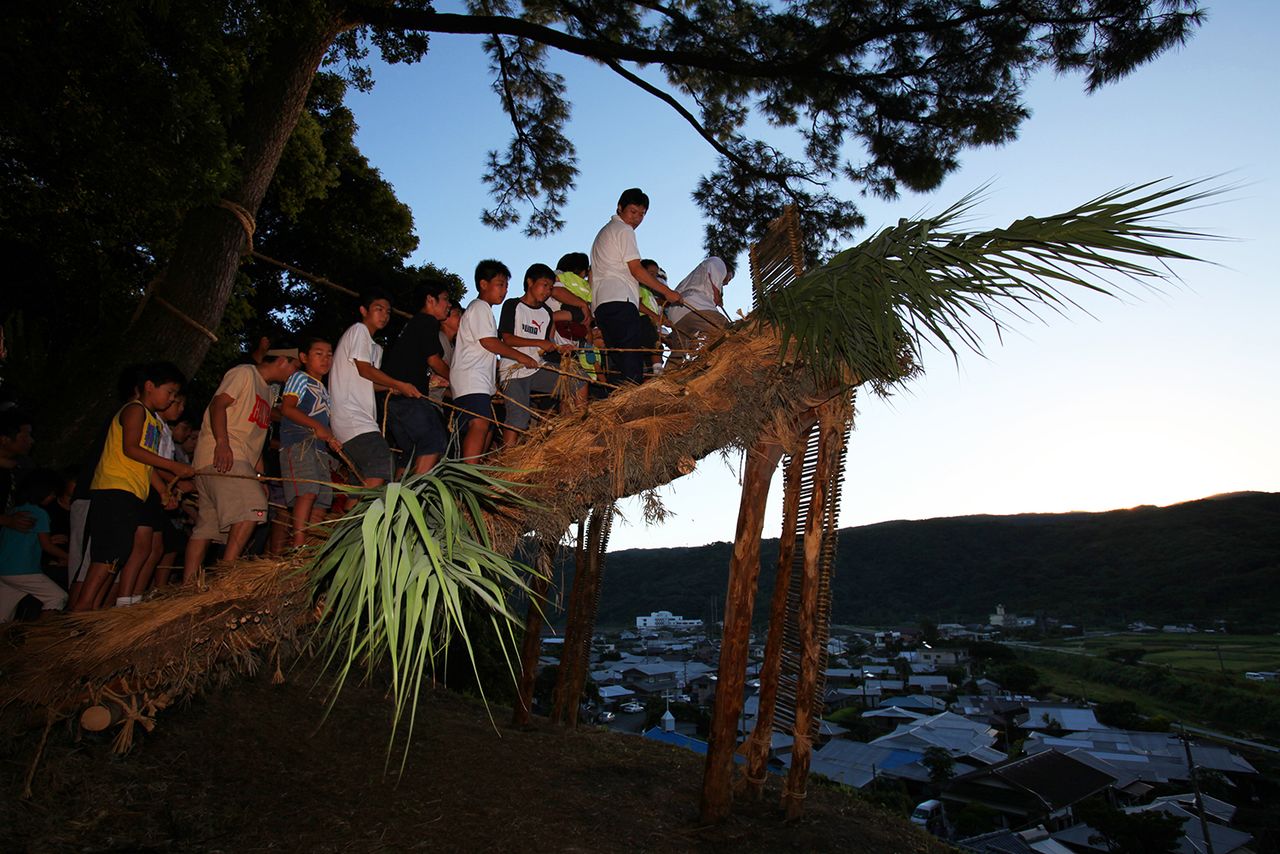
The Akina district in the town of Tatsugō is one of the few areas of Amami Ōshima still growing rice. Shochogama, where the men of the district trample a straw-roofed shed, is a highlight of a local ritual to pray for a good harvest. This is the Akina Arasetsu, which takes place in the eighth month according to the lunisolar calendar. (© Hamada Futoshi)
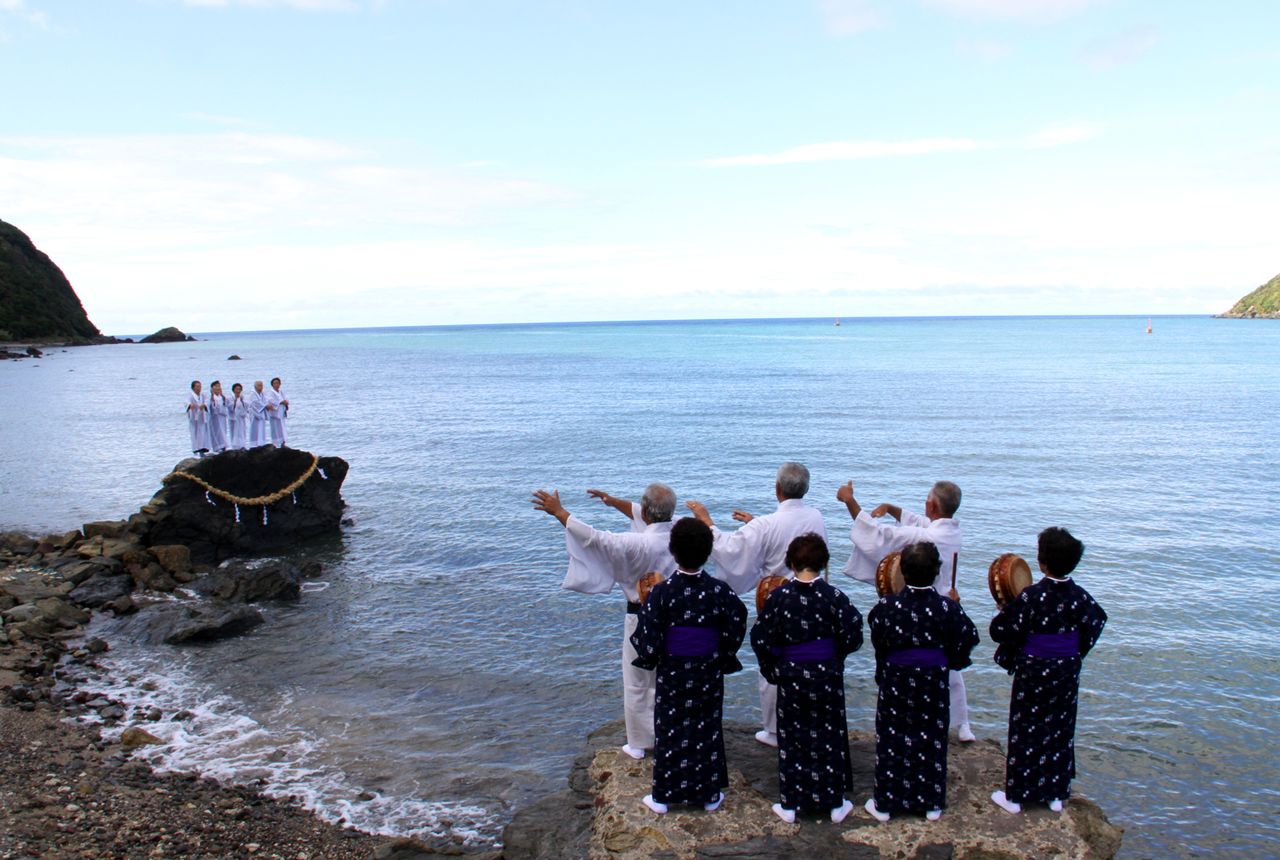
In the Hirase Mankai religious ritual, conducted at dusk, white-clad noro priestesses gather on the shore to summon the deity from over the horizon. (© Hamada Futoshi)
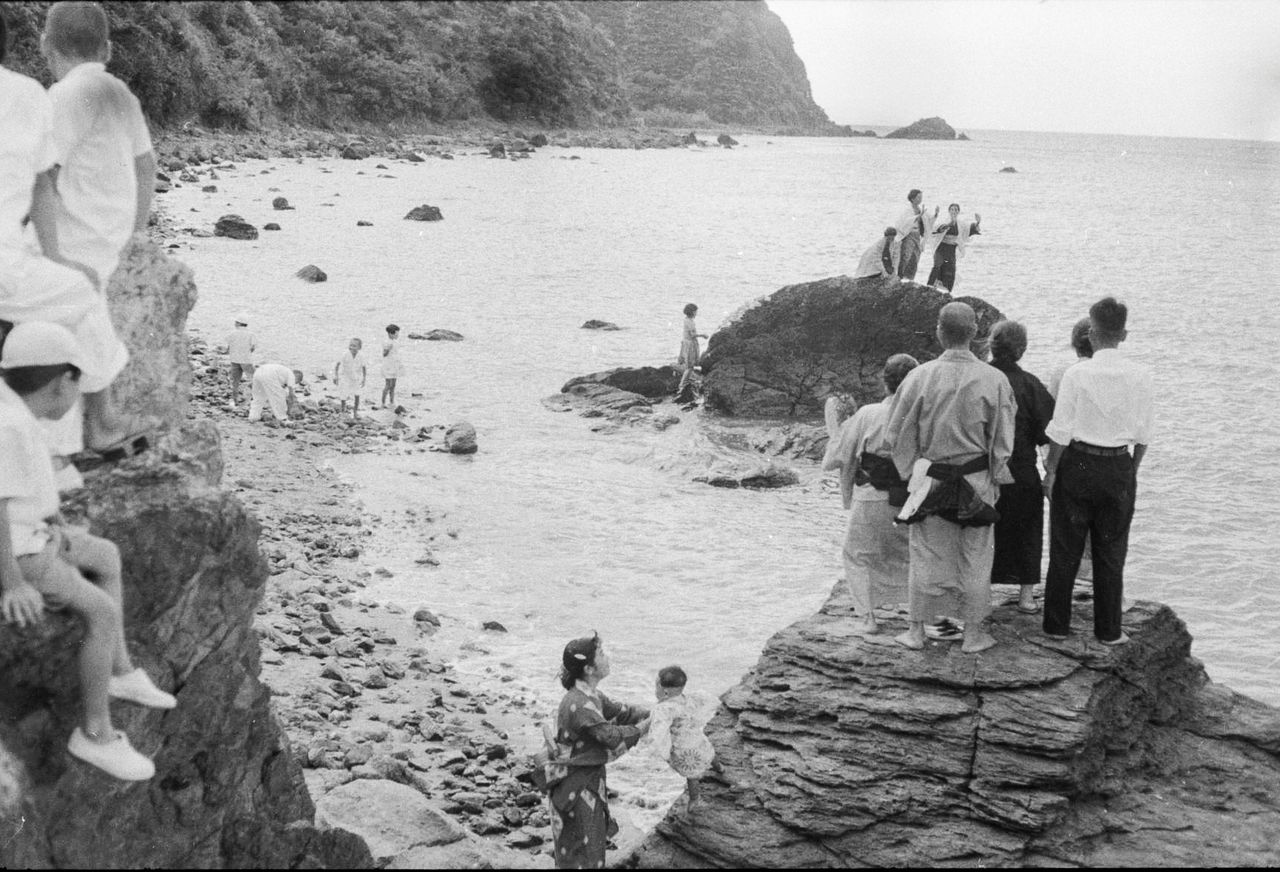
The Akina Arasetsu combines elements of veneration of tanokami, the deity of the rice paddies, from the Japanese mainland, with native Okinawan niraikanai worship. The ritual is said to have started prior to the seventeenth century, when Amami was administered by the Satsuma clan. (© Haga Hideo)
Reestablishing Amami’s Identity
Folklore photography began attracting attention in the 1990s. The bursting of the bubble economy marked the end of gung-ho growth, creating self-doubt among the Japanese. “Identity” began to be reinterpreted as the characteristics of a group or region, which provided an opportunity for them to reevaluate their roots.
In 1995 I began publishing Horizon, a newsletter featuring Amami culture, nature, and people to acquaint readers with the islands’ identity, together with my wife as editor. Haga was fully on board with our endeavor and agreed to write about the photos he had taken in the 1950s; he continued to contribute material until 2009. His vivid recollections of the circumstances under which he had taken photos half a century earlier resonated with readers, who never failed to respond positively.
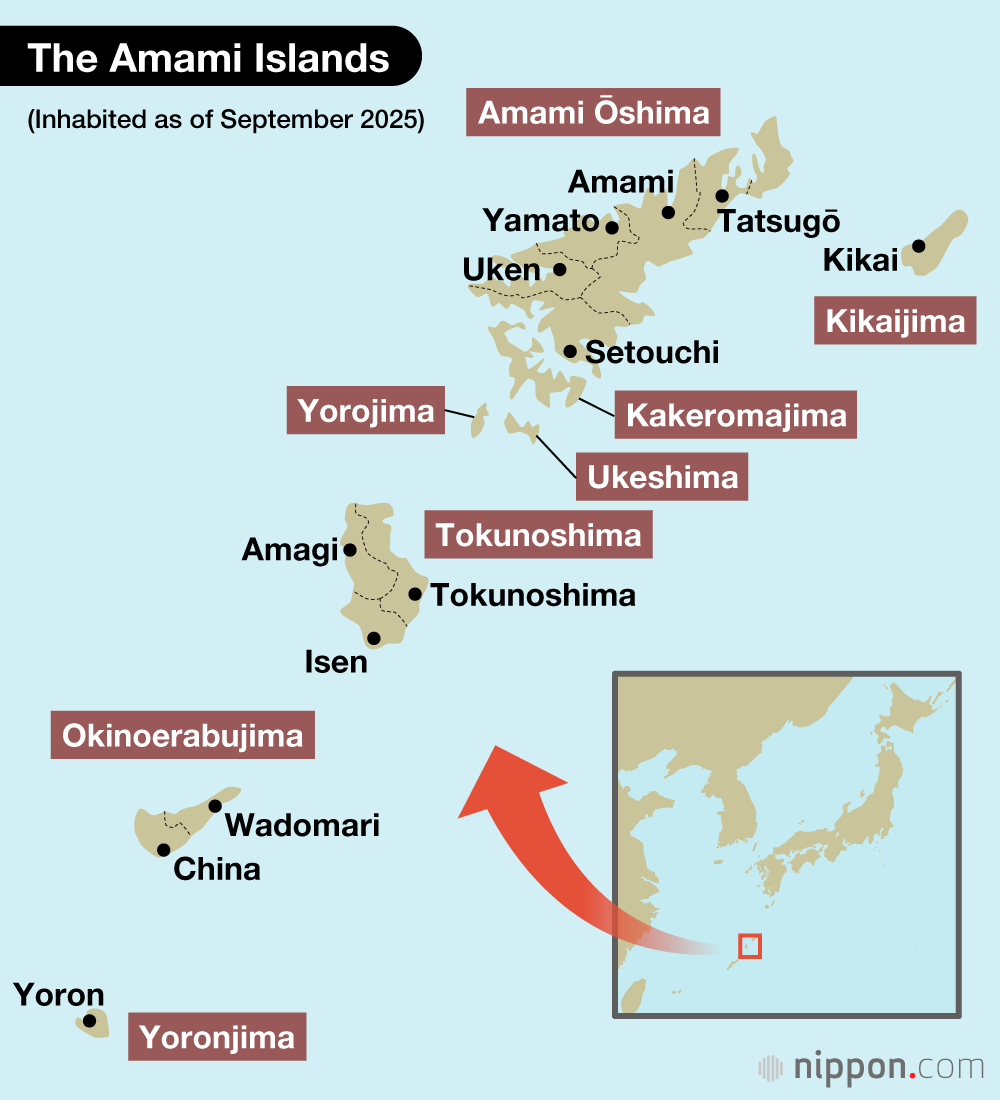
In 2021, Amami Ōshima and Tokunoshima, along with northern Okinawa and Iriomote, were registered as a UNESCO Natural World Heritage Site. Amami’s biodiversity sites attracted broad attention and reinforced the importance among Amami islanders of coexisting with our natural environment. It was around that time that Haga’s son Hinata, also a photographer, donated a digitalized collection of 20,000 of his father’s photographs to the Amami Museum and local communities. We must preserve the landscapes, customs, and people that Haga so vividly captured. Passing on the legacy of this invaluable collection will no doubt serve as a guide to the future for the islands’ descendants.
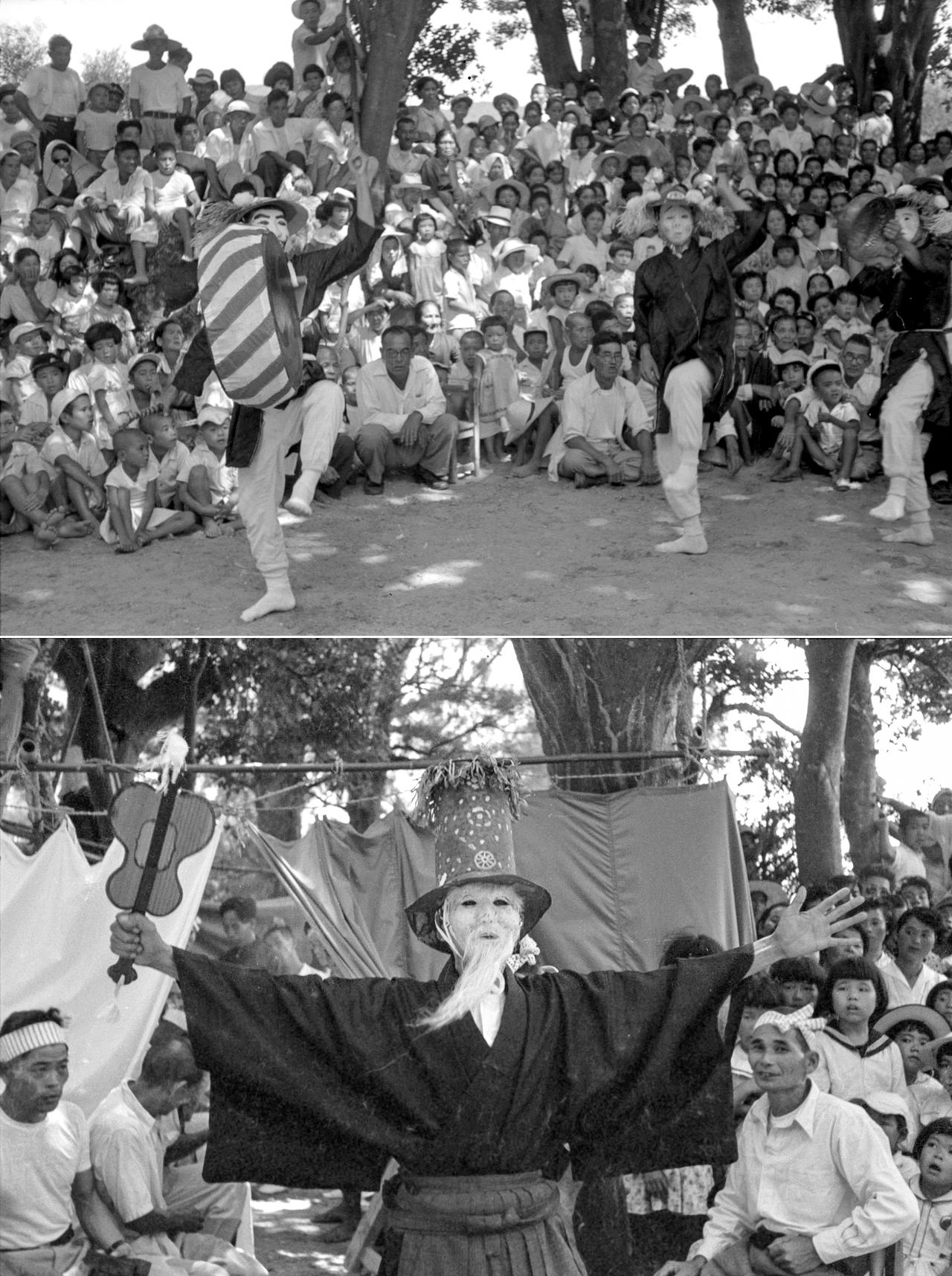
Shodonshibaya, a local form of kyōgen comic drama on Kakeromajima. (© Haga Hideo)
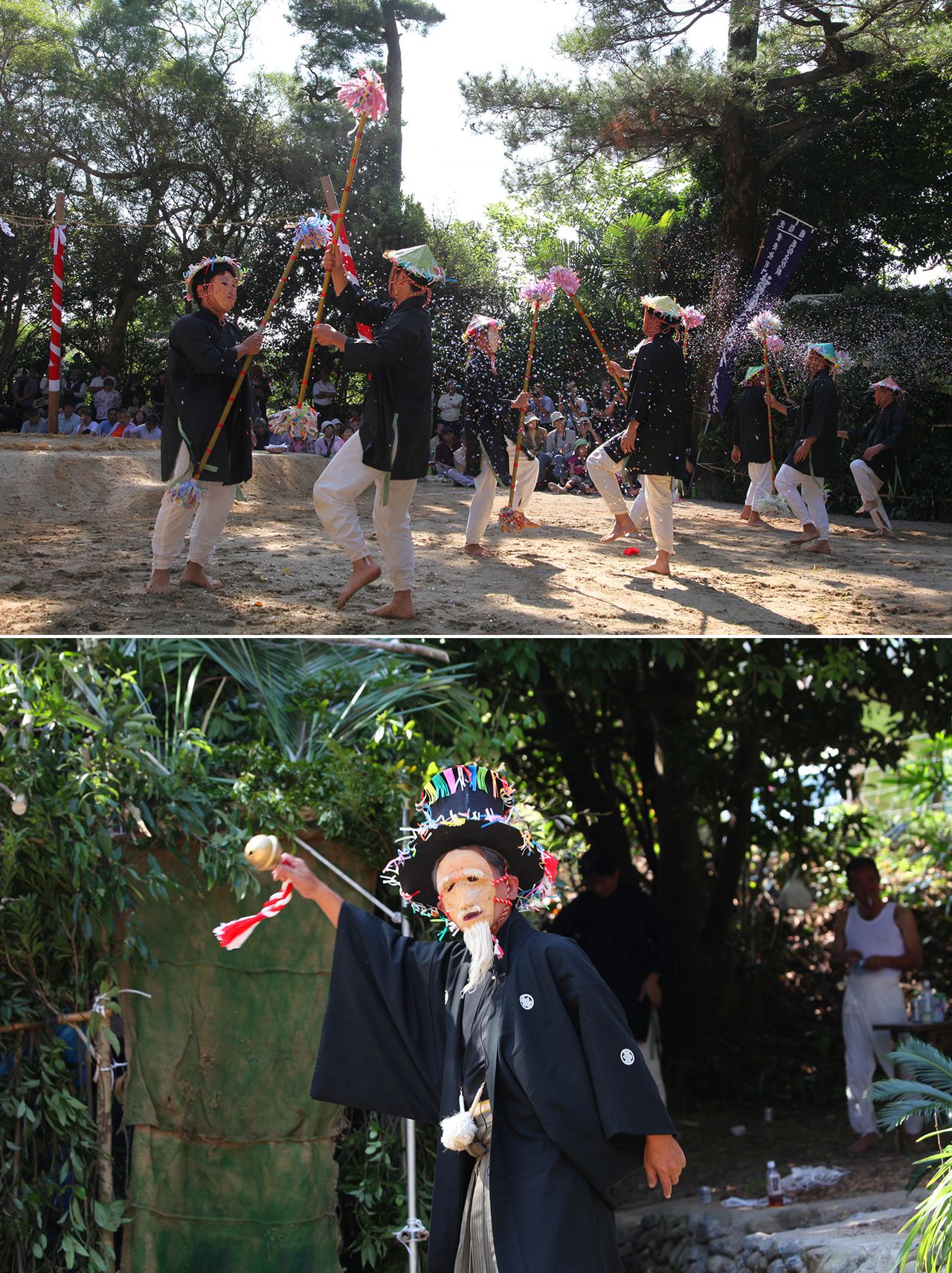
Shodonshibaya, folk entertainment said to have started some 800 years ago, is performed at the Ōchon Shrine festival on the ninth day of the ninth month according to the old lunisolar calendar. (© Hamada Futoshi)
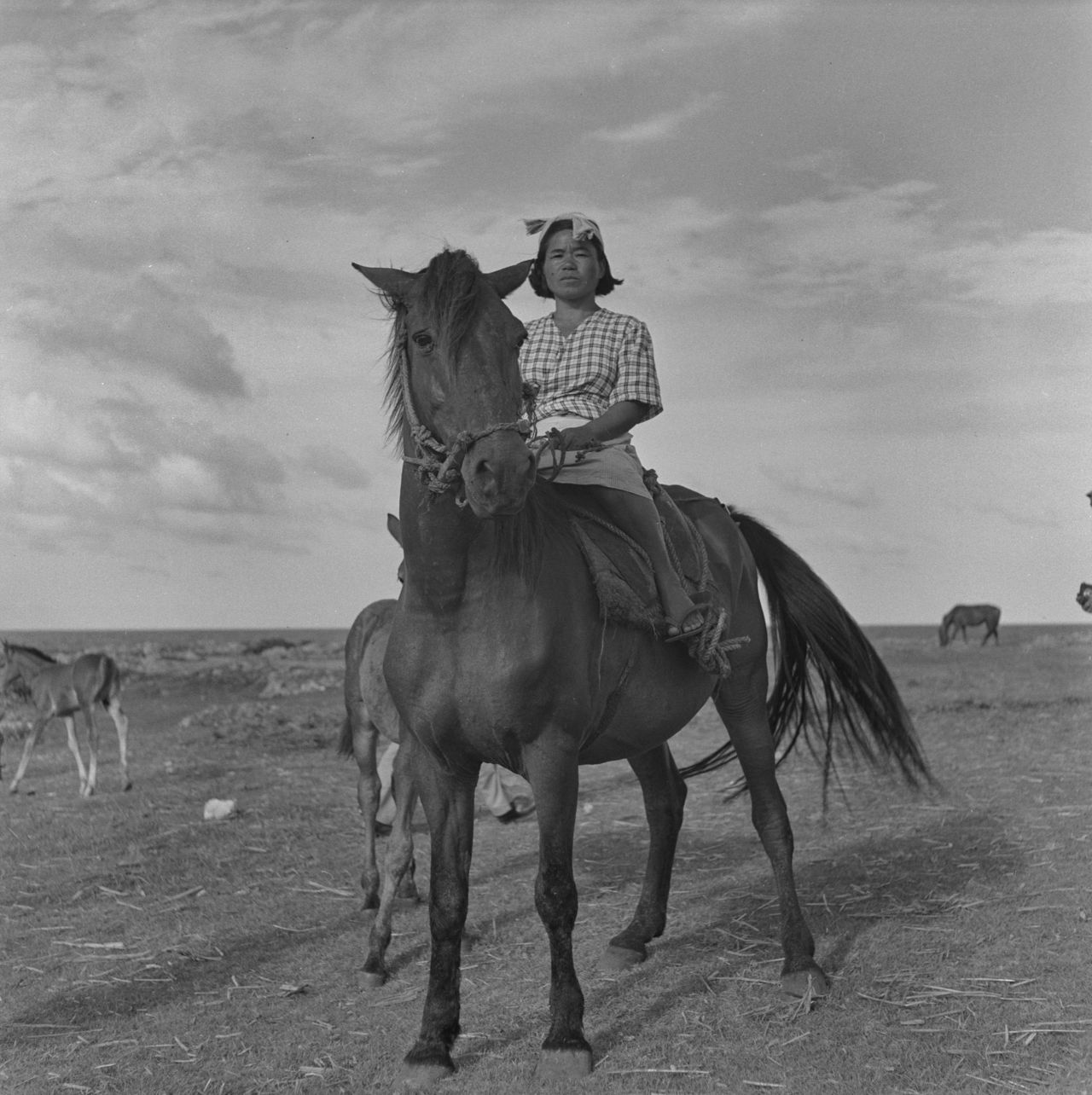
Seventy years ago, there were no cars on Kikaijima, and residents got around on horses. (© Haga Hideo)
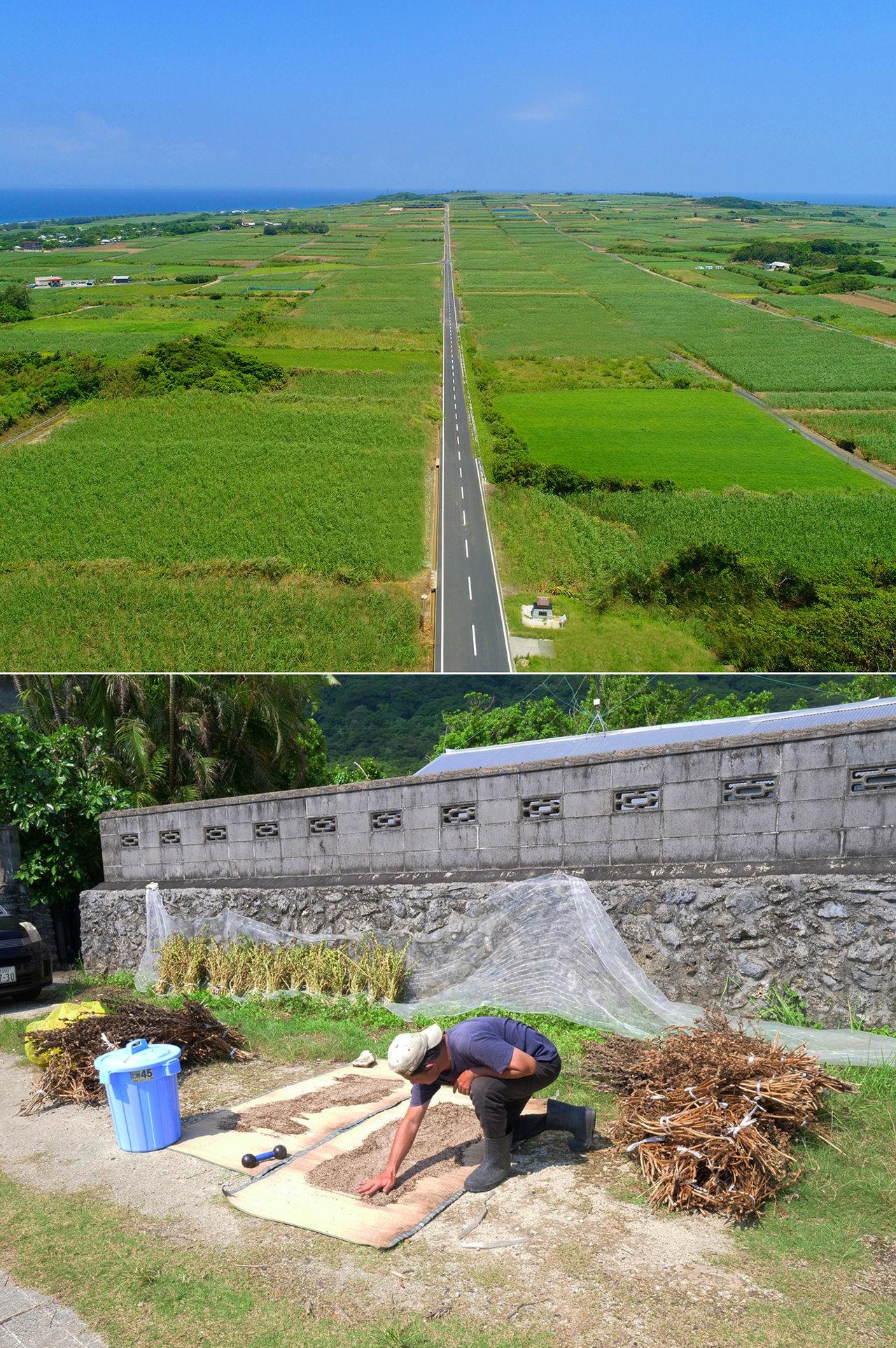
Kikaijima today; a paved road cuts through sugarcane fields. White sesame cultivation was promoted after the war, and the island now accounts for 40% of domestic production. (© Hamada Futoshi)
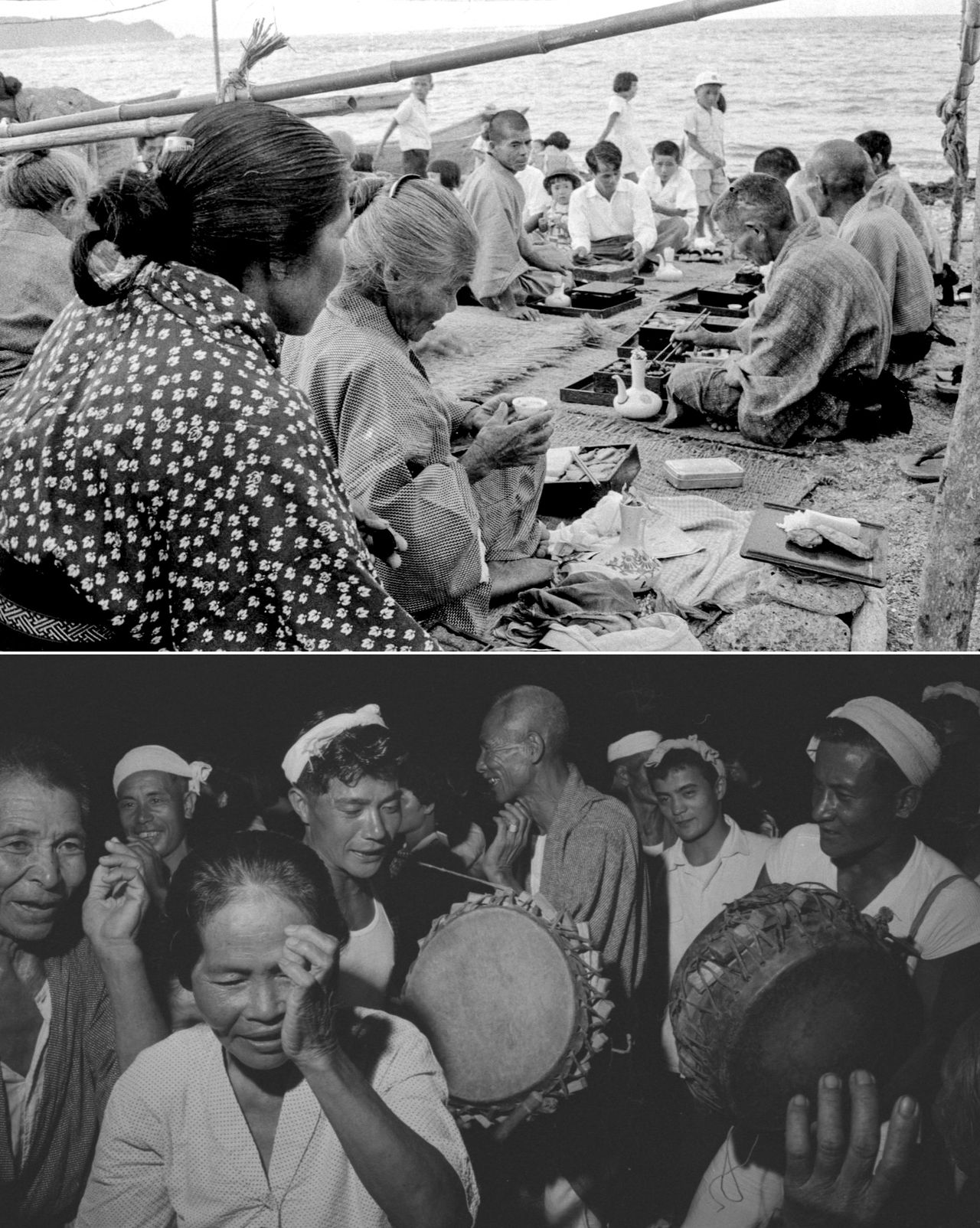
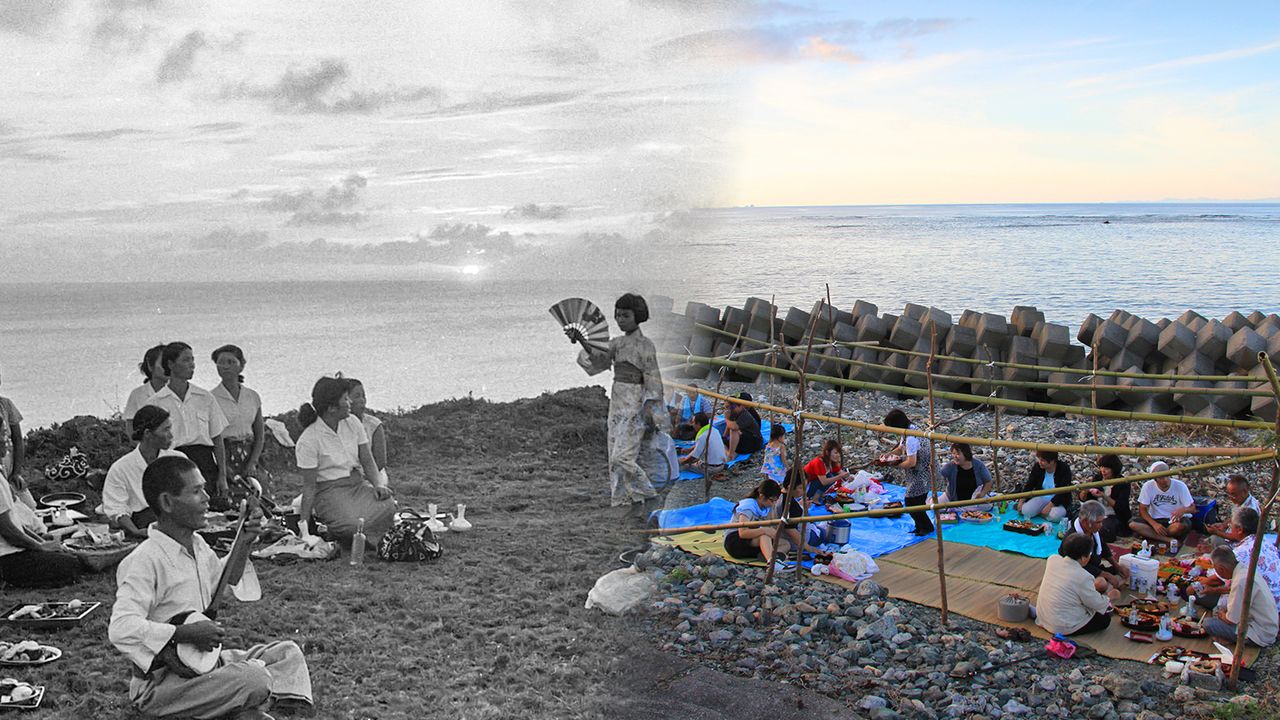
The hamaori festival at Inokawa on Tokunoshima is a ritual to thank ancestors for the harvest. In the seventh month according to the lunisolar calendar, people partake of food and drink on the shore before going around the district performing the Natsume Odori dance all night long. (© Haga Hideo)
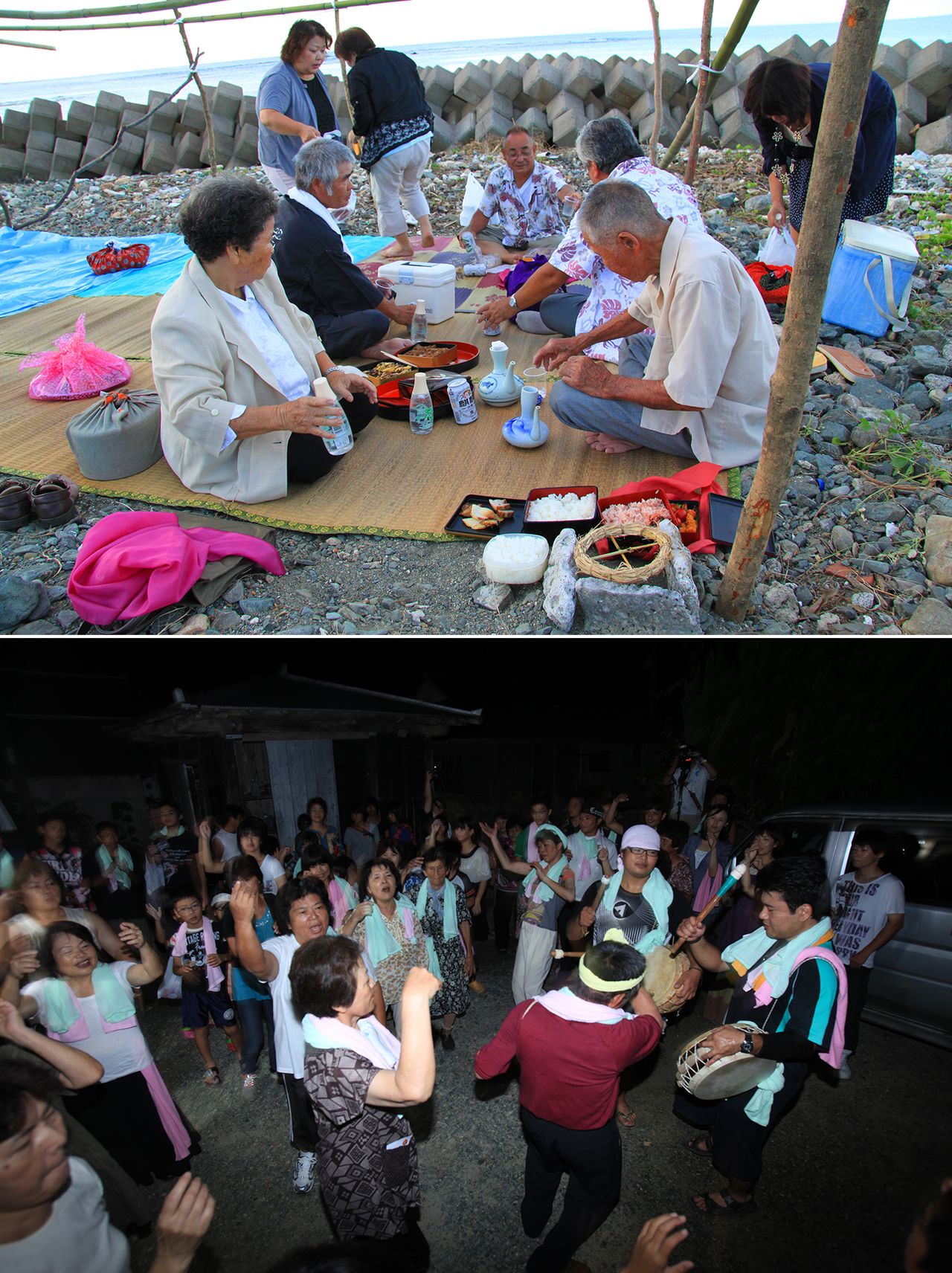
While rice farming has almost died out on Tokunoshima, hamaori and the Natsume Odori continue to strengthen community bonds. (© Hamada Futoshi)
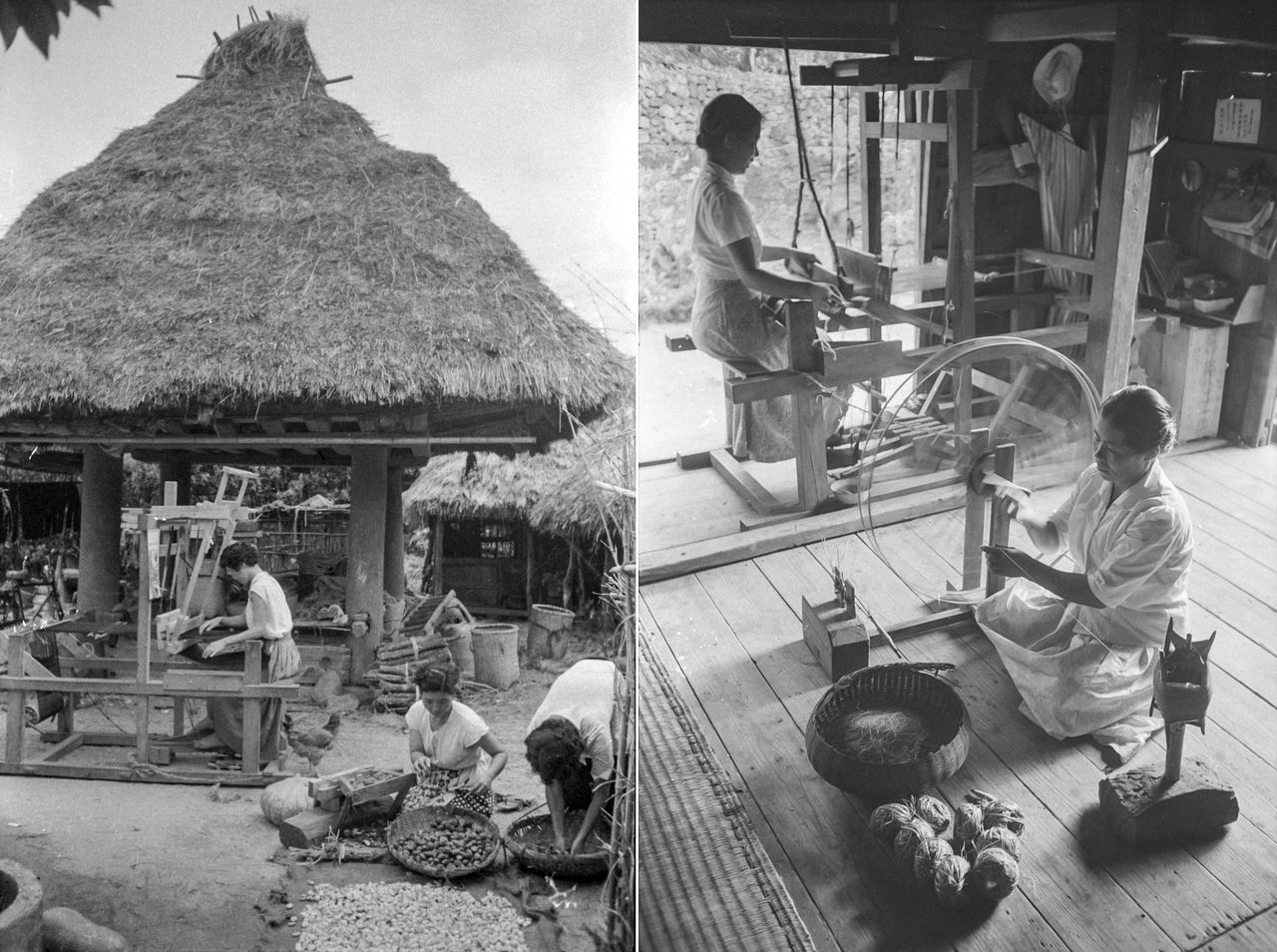
Left: Farm women weaving tsumugi silk pongee on looms at home in Kasari, Amami. Ōshima tsumugi silk fabric has been produced for 1,300 years. As it grew in popularity in the 1970s, it began to be produced overseas, but nowadays, production has fallen to one-seventieth of former levels. Right: a farmwoman spins banana fibers into thread for bashōfu traditional handicrafts in Wadomari. (© Haga Hideo)
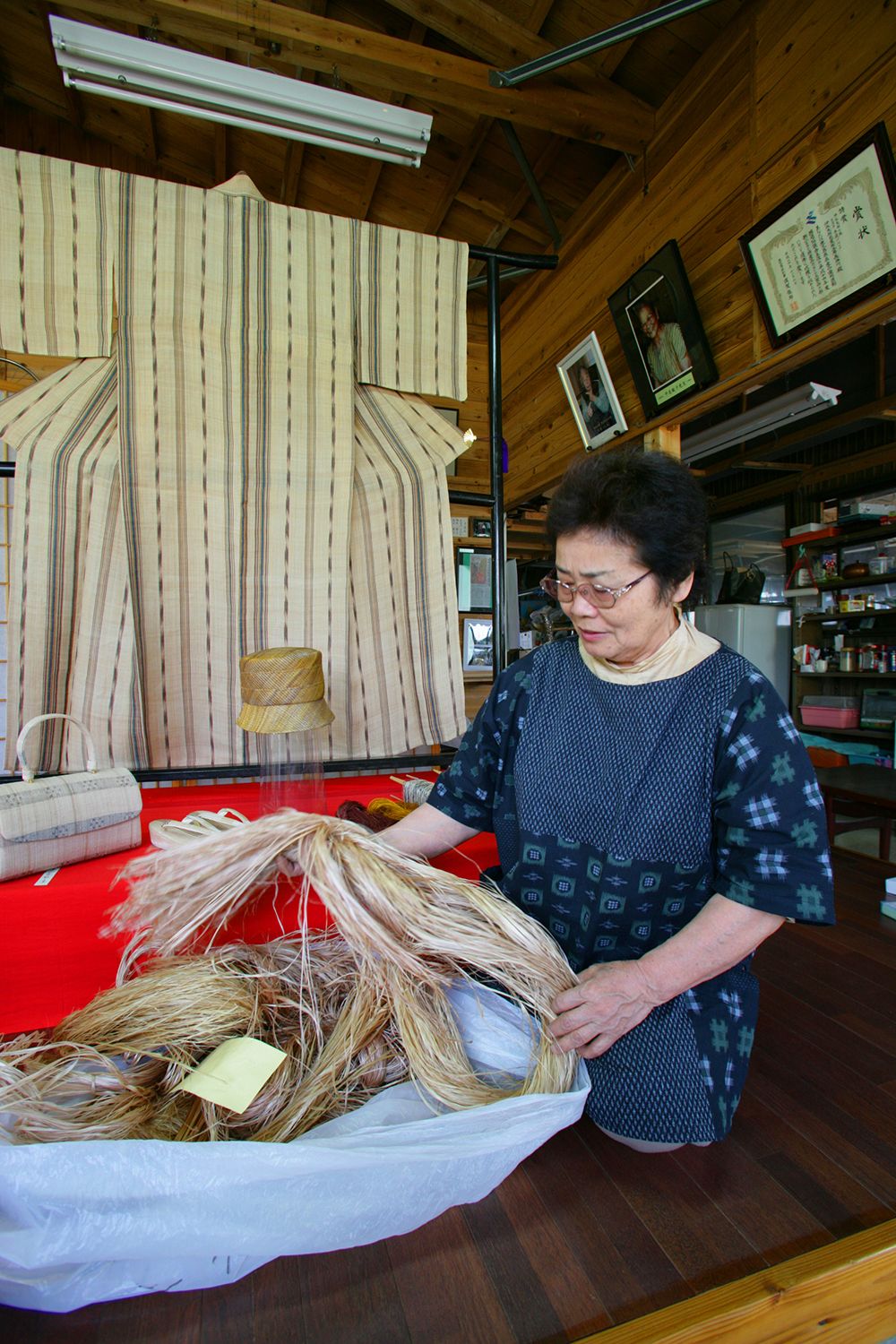
Bashōfu artisan Hasegawa Chiyoko (1939–) learned production techniques, which had died out on Okinoerabujima, from Okinawa resident Taira Toshiko (1921–2022), a living national treasure. (© Hamada Futoshi)
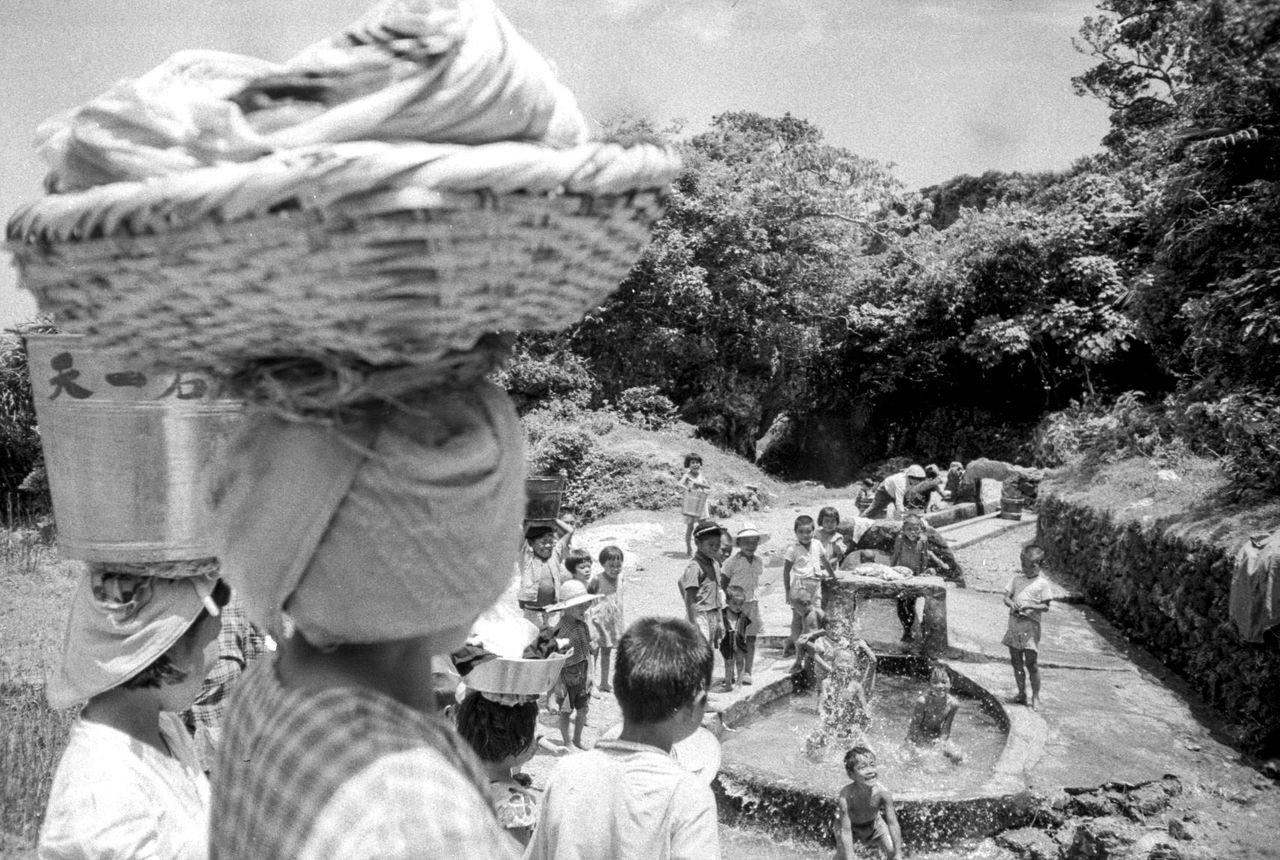
On Okinoerabujima, an island composed of limestone, natural springs are a vital water resource. (© Haga Hideo)
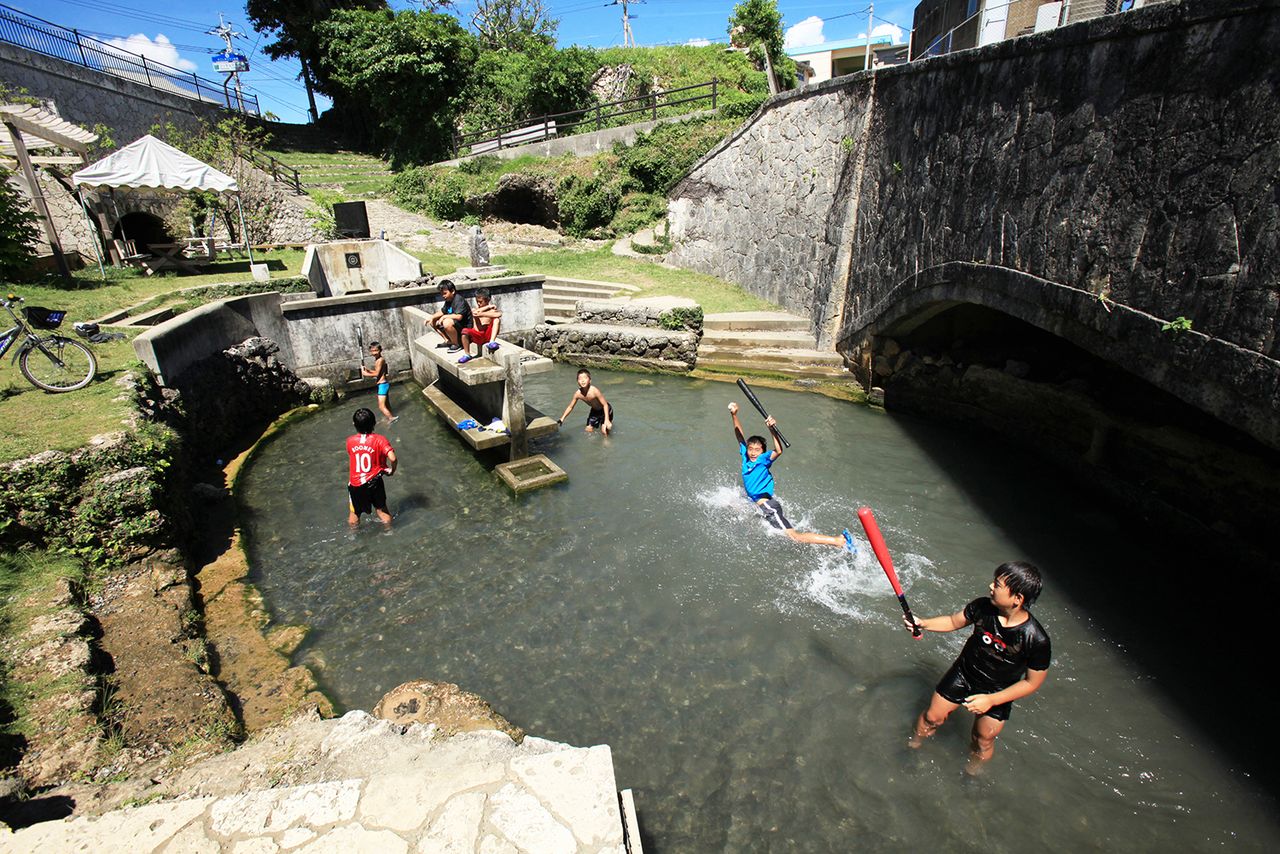
Jokkyonuhō in the town of China is a communal recreation spot where water still bubbles up. (© Hamada Futoshi)
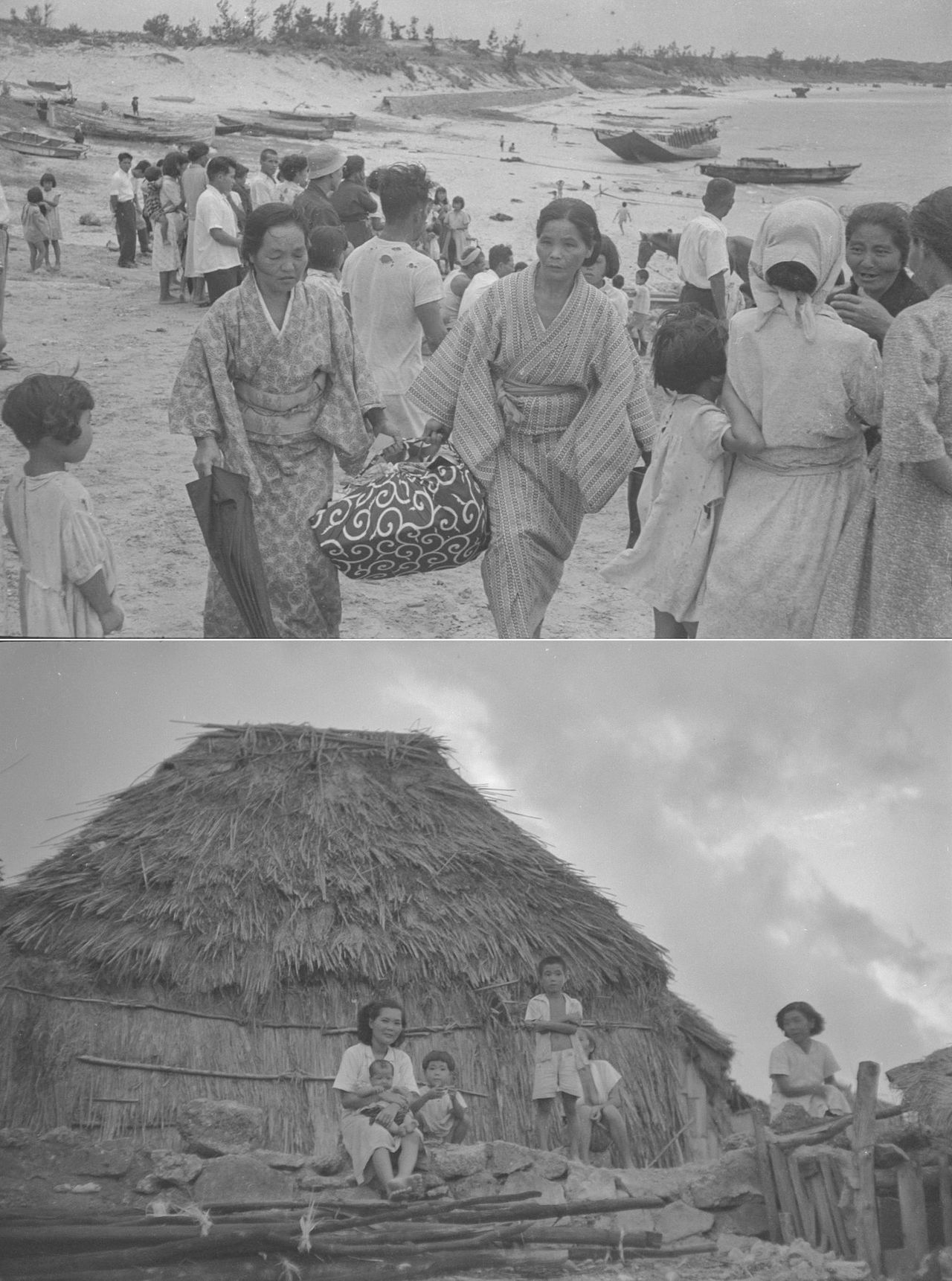
Scenes from Yoron, which before Amami’s reversion to Japanese authority was the southernmost island in the country. (© Haga Hideo)
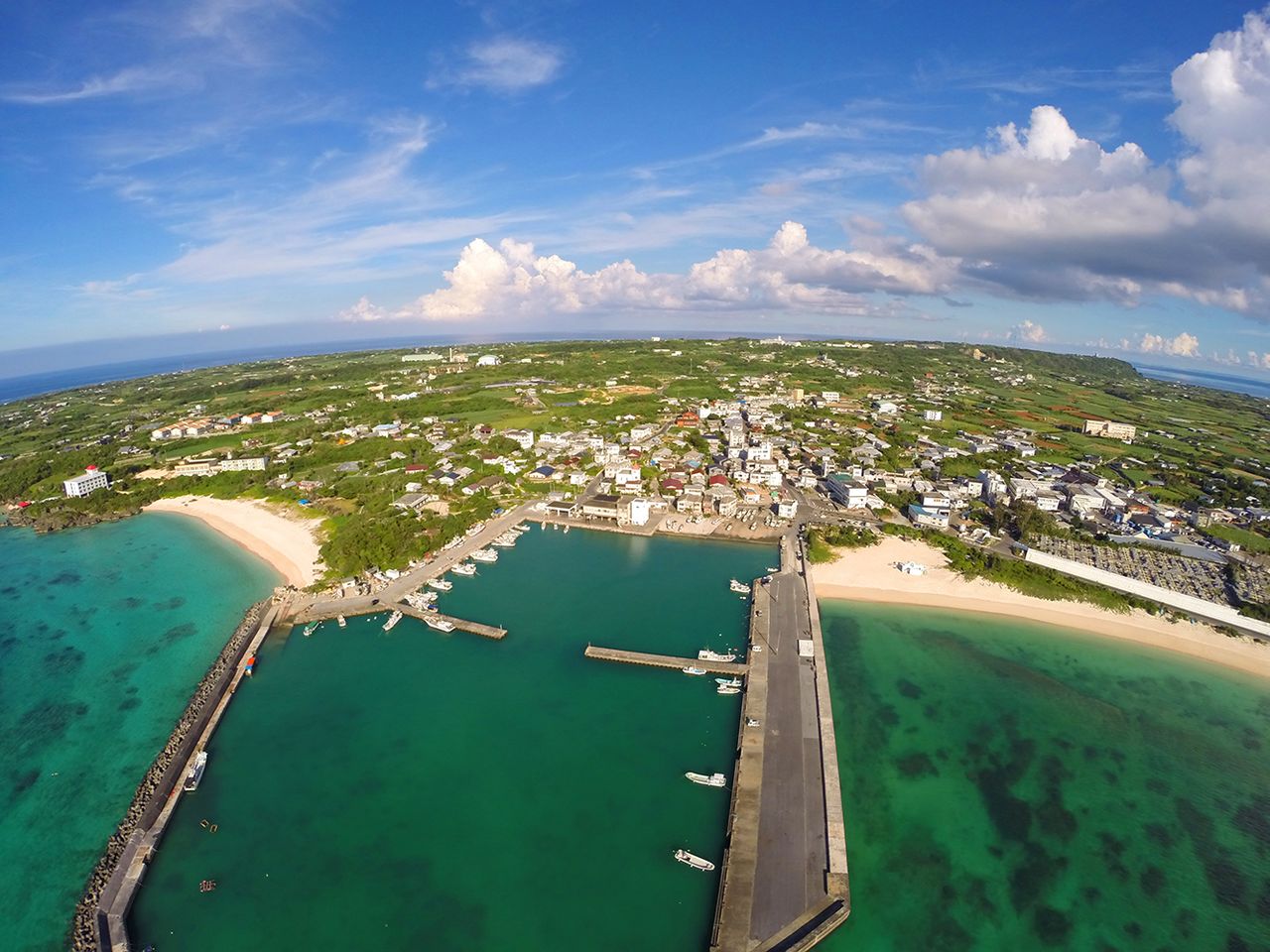
Chabana Kaigan on Yoron. The coral reef shore has been developed as a ship harbor. (© Hamada Futoshi)
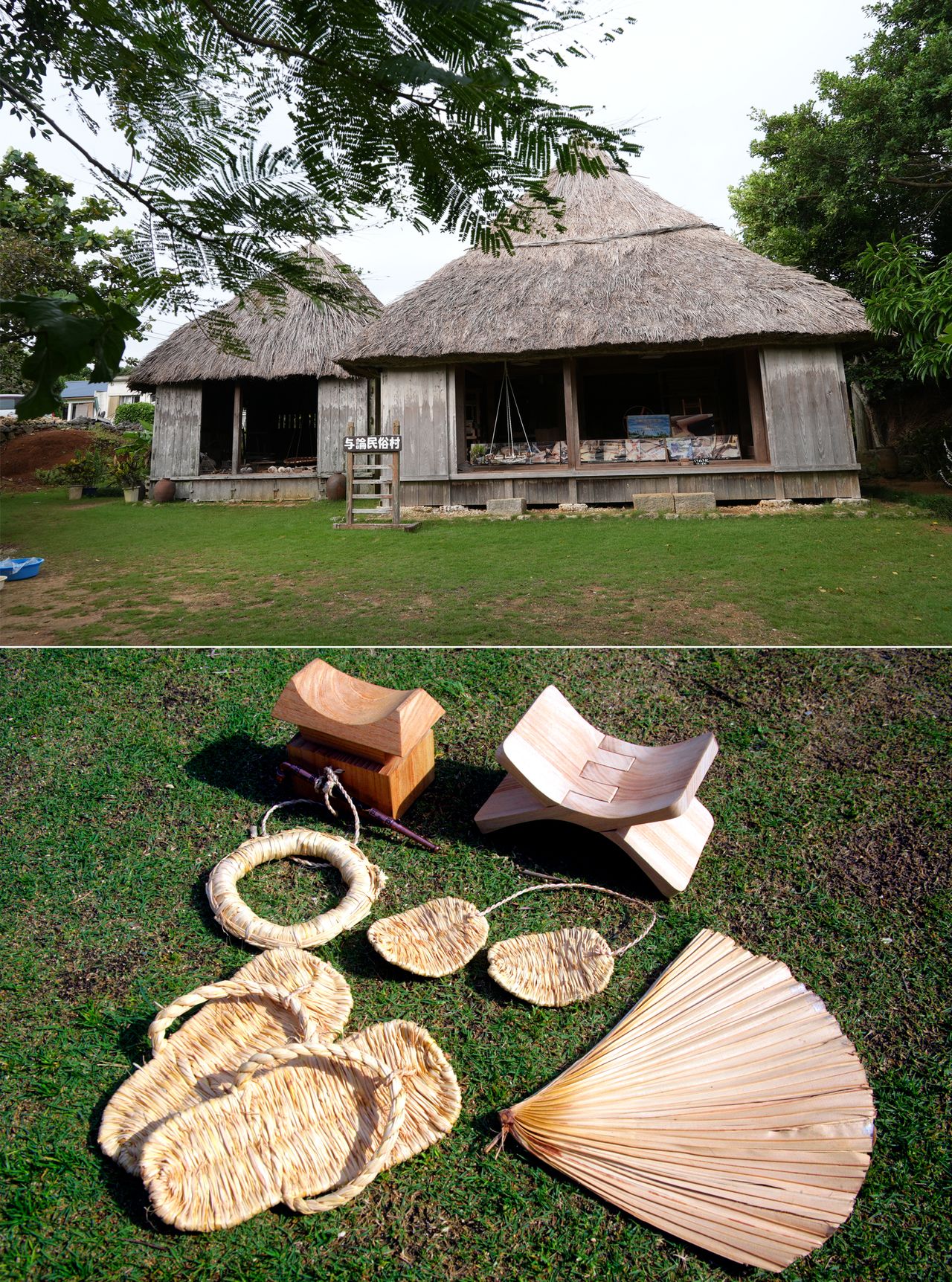
Yoron Folk Village, a privately operated museum, opened in 1966, when mass-produced goods were overwhelming Amami and threatening everyday culture on the islands. The facility aims to communicate the old ways of life to future generations through exhibits and the sale of folk items and hands-on workshops for making articles used in daily life. (© Hamada Futoshi)
The black-and-white photos in this article were taken by Haga Hideo between 1955 and 1957.
(Originally written in Japanese. Text and photos by Hamada Futoshi. Banner photo: At left, a gathering on the shore on Okinoerabujima in 1955, captured by Haga Hideo, who lamented the passing of this tradition [© Haga Hideo]; at right: Tokunoshima’s hamaori, which preserves some elements of the gathering [© Hamada Futoshi].)