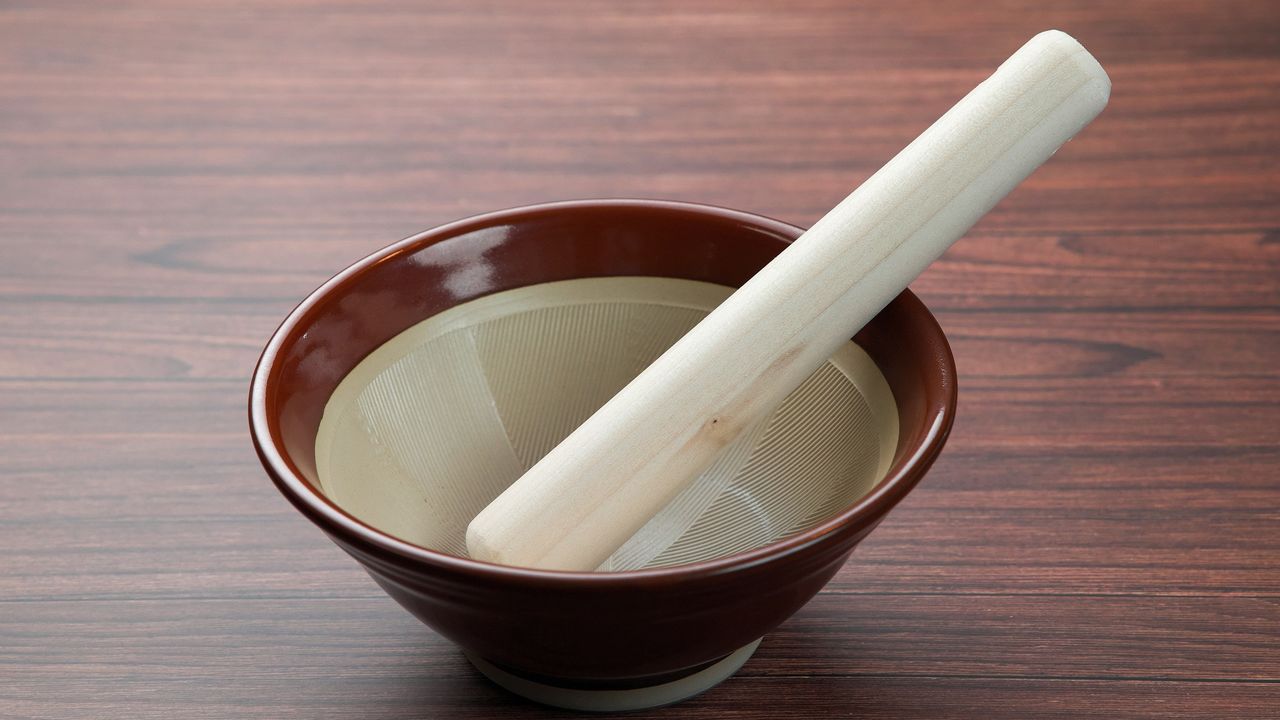
Ten Exceptional Utensils from Kappabashi, Japan’s Kitchen
Suribachi and Surikogi: Function Meets Beauty to Create the Perfect Texture
Culture Guide to Japan Food and Drink- English
- 日本語
- 简体字
- 繁體字
- Français
- Español
- العربية
- Русский
Getting Into the Grooves
In Japan, the traditional way to finely grind food ingredients or create a smooth paste is to use a suribachi earthenware mortar and a surikogi wooden pestle. What makes the suribachi special is the kushime comb-pattern jagged grooves, carved into the interior of the bowl, against which ingredients are pressed and ground.
A large suribachi can be used to mash yamaimo and tōfu until they are smooth. A small suribachi is great for grinding sesame seeds and kinome (young sanshō Japanese pepper leaves); then just add other ingredients to the bowl to create a simple aemono (dressed salad). The grater itself transforms into a beautiful serving dish fit for the table.
Overseas visitors to Iidaya, a kitchenware emporium in the Kappabashi area of Tokyo, are known to ask for the “sesame grinder.” It seems they use it not just for sesame seeds, though, but also making pastes out of herbs.
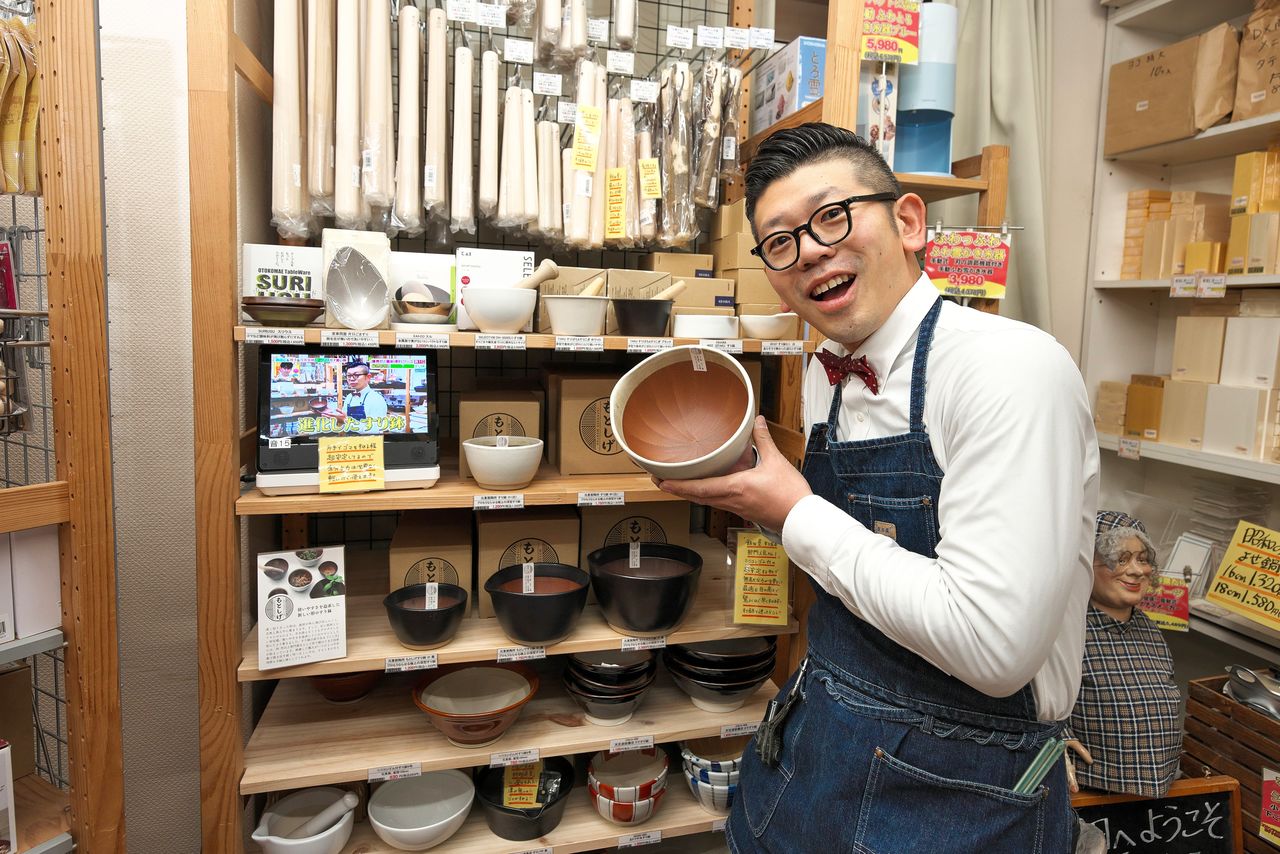
Iida Yūta, the sixth-generation owner of Iidaya, in the plentifully stocked suribachi earthenware mortar section. (© Nomura Kazuyuki)
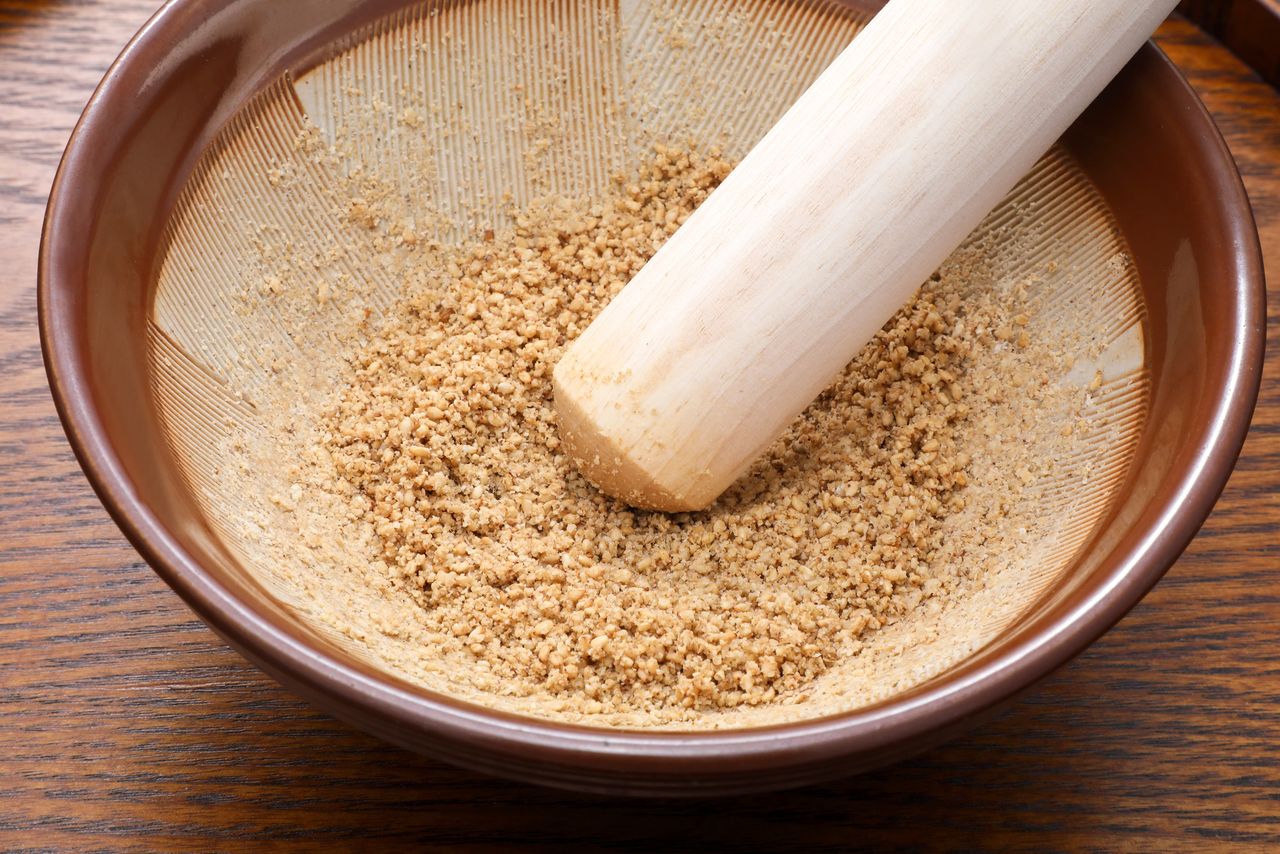
Using a surikogi wooden pestle in a circular motion to grind sesame seeds. (© Pixta)
One type of suribachi that is particularly popular with tourists to Japan has a particularly deep bowl, to avoid ingredient splashes, and a nonslip silicone base.
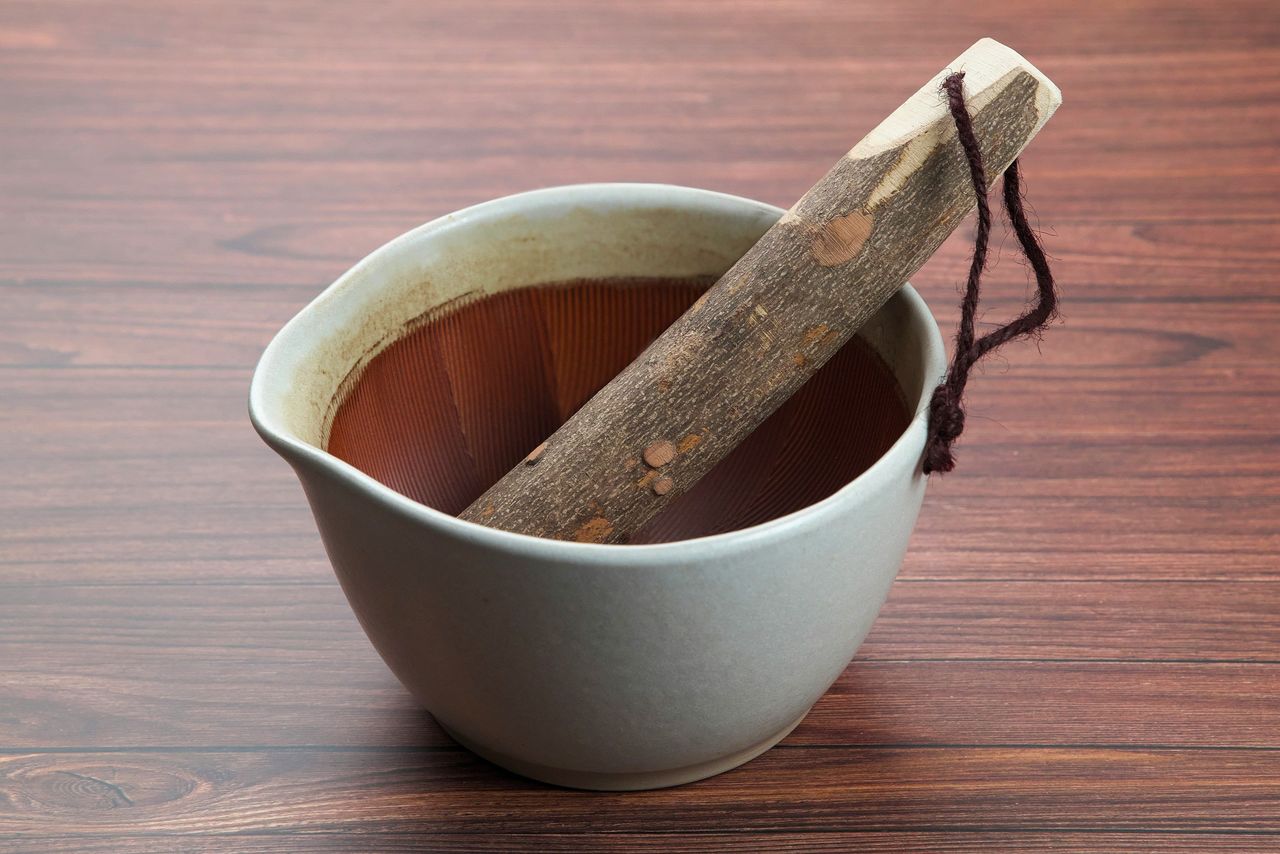
The most popular suribachi at Iidaya. The wide, nonslip base gives it stability. (© Nomura Kazuyuki)
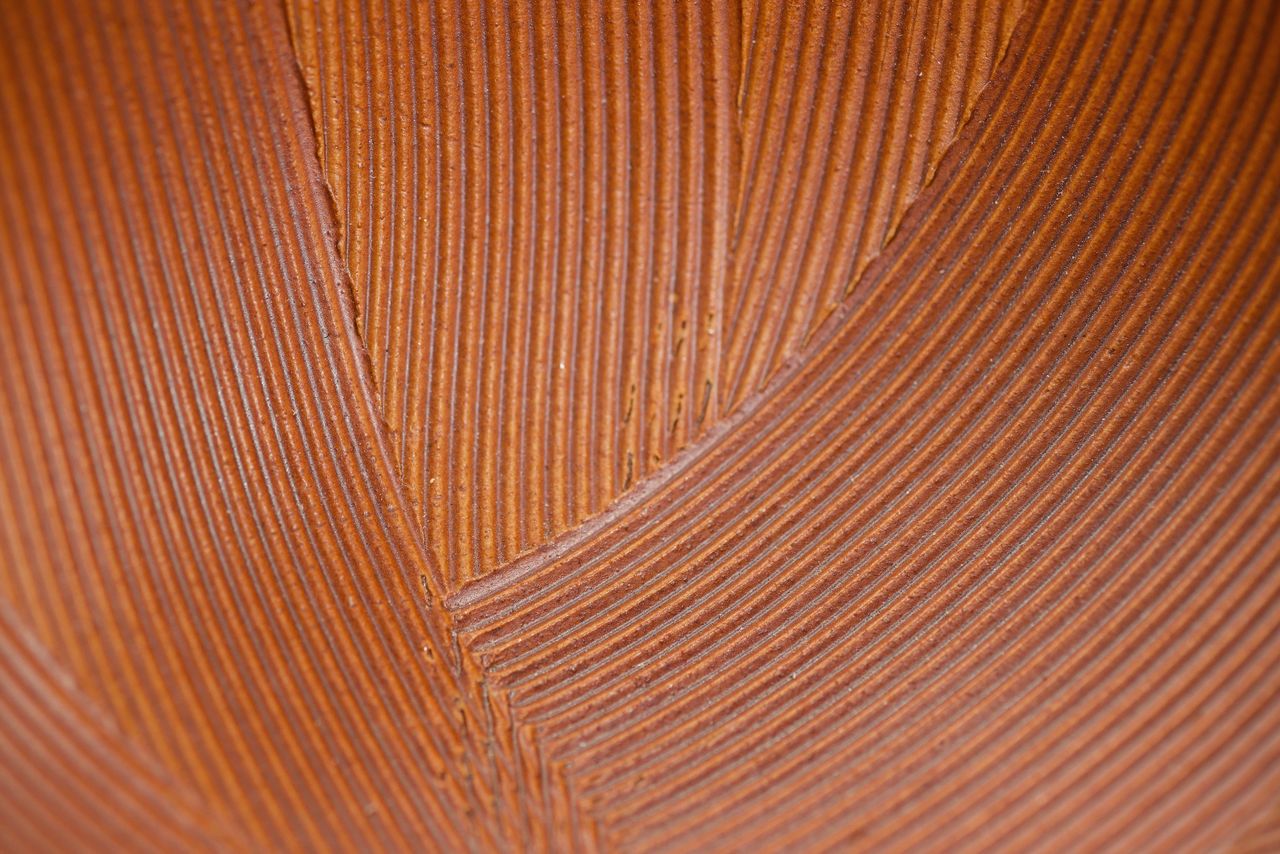
The suribachi ease to use comes from the kushime comb-pattern grooves, combining beauty and function. They are embossed on less expensive types, while the ones hand-carved by artisans have sharper edges that make grating easier. (© Nomura Kazuyuki)
Sanshō Makes the Best Surikogi
Traditionally, surikogi pestles are made from sanshō, a plant native to Japan. This makes sense as it is a hard wood, resistant to wear, with knots that provide a good grip. The plant also has natural antibacterial properties, making it a hygienic choice.
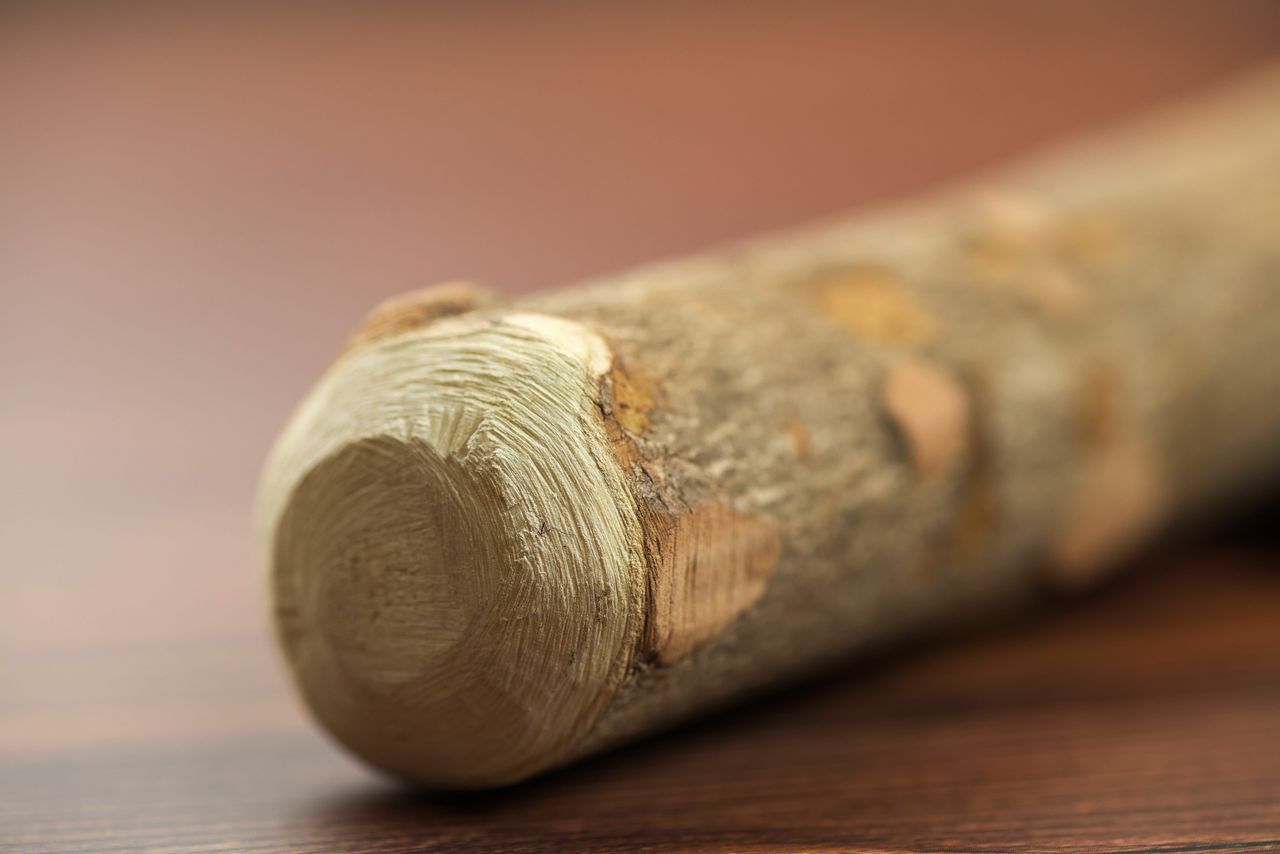
The density of the sanshō wood makes it ideal for grinding. (© Nomura Kazuyuki)
While today there are handy tools like electric mills and food processors that can do the same job, the charm of the suribachi is being able to use a combination of grinding, pounding, and mashing to create just the right texture. The careful touch of the cook’s hand brings out the natural flavors of the ingredients, and there is a pleasure to be gained through the motions of careful preparation, so the resulting dish is sure to be all the more delicious.
Ten Utensils Sought by Overseas Visitors
- Oroshigane: Traditional Japanese Graters for Every Ingredient on Your Plate
- Suribachi and Surikogi: Function Meets Beauty to Create the Perfect Texture
- Onigiri Shapers and Makisu Sushi Rollers
- Peelers and Slicers
- Tetsubin and Chakoshi Teapots and Strainers
- Donabe and Other Cooking Pots
- Frying Pans
- Tamagoyaki Square Pans and Cooking Chopsticks
- Cutting Boards
- Soy Sauce Dispensers and Miso Muddlers

(Originally published in Japanese. Banner photo: A suribachi earthenware mortar and surikogi wooden pestle. © Nomura Kazuyuki.)