
“Occupied Kyoto”: New Book Explores Postwar Treatment of Historic Sites
Books History- English
- 日本語
- 简体字
- 繁體字
- Français
- Español
- العربية
- Русский
Kyoto Imperial Palace and Gardens Targeted
The most interesting details in Akio Satoko’s book Kyoto senryō: 1945 nen no shinjitsu (Occupied Kyoto: The Truth About 1945) relate how and why famous and historic sites in the city came to be requisitioned during the postwar Allied Occupation of Japan, as well as the determined opposition to the occupying authorities’ plans by Kyoto municipal officials and religious leaders. Below are just a few examples of the sites affected by requisition orders.
Many of Kyoto’s grand avenues, some of them 50 meters wide, run north to south. Dwellings lining those streets had been forcibly cleared away during the war, to prevent fire from spreading to the Kyoto Imperial Palace. After the war, one of them, Horikawa-dōri, was even used as a runway for small US forces’ aircraft, since Kyoto had no airport.
In December 1945, the Allied Occupation issued the Shintō Directive to end state support for Shintō, although shrines throughout the country were left undisturbed so that people could worship there if they saw fit. As a result, Heian Jingū’s main shrine was spared, but surrounding structures were requisitioned, transforming the area into a so-called “American village.”
Other buildings requisitioned by the Occupation forces included the Kyoto Enthronement Memorial Museum of Art, erected to commemorate the enthronement of Emperor Shōwa (Hirohito); it is today the Kyoto City Kyocera Museum of Art. The building was used for lodgings and as a hospital for Occupation personnel. A martial arts hall was turned into a noncommissioned officers’ club, half of the Kyoto City Zoo became a parking lot, and other structures were used as storage depots for arms and materiel.
At one point, the Imperial Palace, where generations of emperors had lived, and its surrounding gardens, were in danger of being requisitioned as well. Occupation authorities were looking for a spacious plot of land on which to build homes for 245 families, but to Kyotoites, handing over the Imperial Palace was unthinkable, even if Japan’s emperors had resided in Tokyo since the nineteenth century. After long negotiations, Occupation officials accepted an offer of land at the Kyoto Botanical Gardens instead.
It is likely that this decision was influenced by Supreme Commander for the Allied Powers General Douglas MacArthur’s pronouncement after meeting with Emperor Hirohito in late September 1945 that the imperial system would be maintained. But site preparation at the Botanical Gardens saw over three-quarters of the more than 25,000 trees there cut down in the process.
Gods or Golf?
The Occupation authority’s Kyoto commander was a golf lover who attempted to turn Kamigamo Shrine, Kyoto’s oldest Shintō shrine, into a golf course. Shrine leaders learned of this when they were called to the Kyoto prefectural government office in September 1946. They were told that the proposed site for the golf course was the sacred Mount Kōyama, where the shrine’s deity is said to have descended to earth and where the miare rite, the most important ritual of the shrine’s Aoi Festival, is conducted.
The shrine opposed the plan, but construction nevertheless began in October. In the end, the project was scrubbed when the central government objected, but by that time 4,000 of the shrine’s sacred trees had been felled, with less than half remaining. The commander was tenacious, though: he finally got his golf course two years later, built on land owned by the shrine, the experimental forest of Kyoto University’s faculty of agriculture, and privately-owned land. Today, that course is the Kyoto Golf Club.
The war did not spare the heart of Kyoto’s traditional culture either. In March 1944, all geisha quarters throughout the country had been ordered closed and okami teahouse proprietors, geisha, and nakai room attendants were put to work for the war effort. Gion’s Kaburenjō, where young geisha trained in dance and the grand Miyako Odori dance performance took place, became a denture factory, and balloon bombs were fabricated at the Yasaka Kaikan hall next door. During the Occupation, the Kaburenjō became a dance hall for the US military, and the building was only returned to Gion in 1951.
Today, 80 years after the end of the war, older Kyotoites remember this dark period of Kyoto’s history, but such episodes are mostly unknown to Japanese and to foreign visitors. Even so, it is interesting to explore the story behind each of these examples.
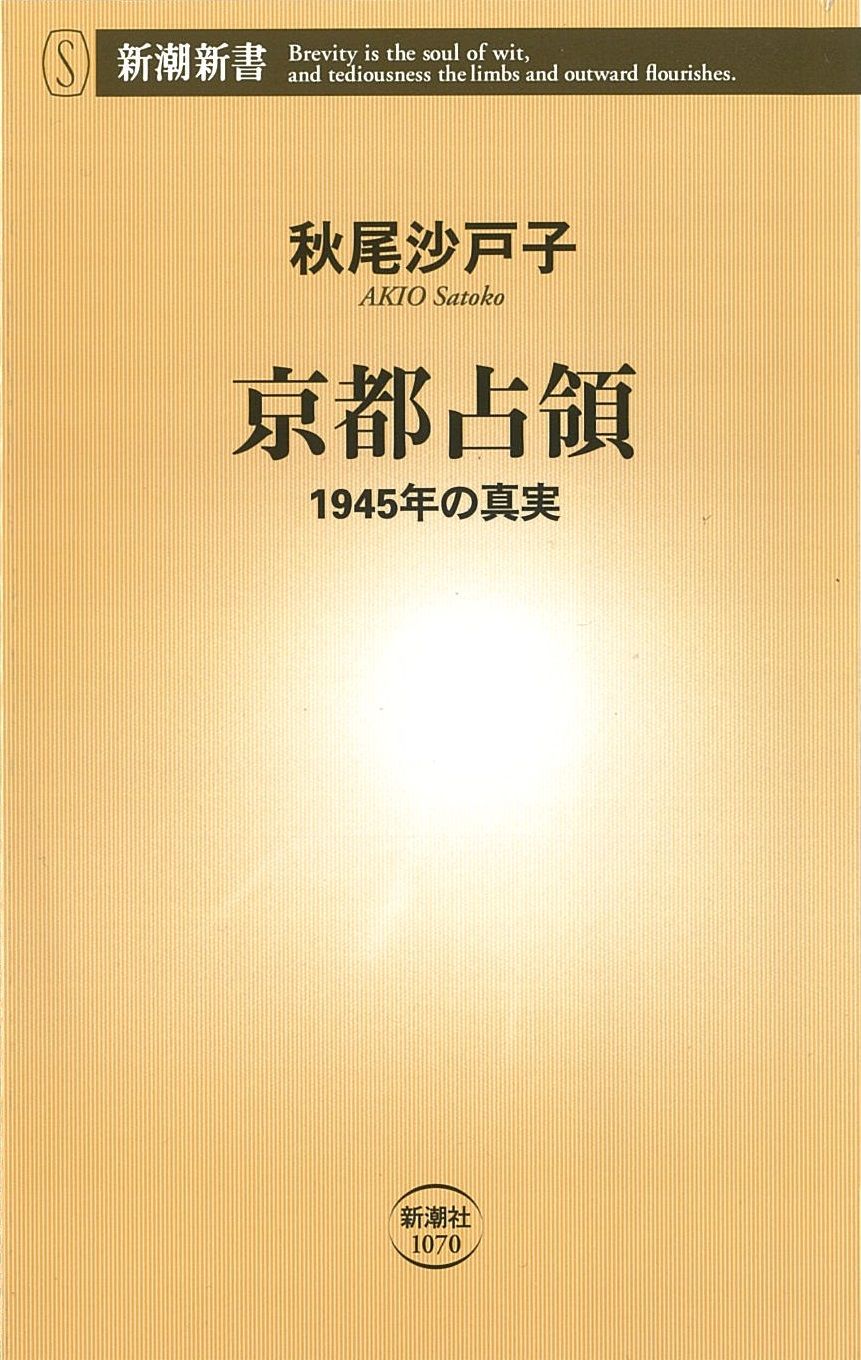
Kyoto senryō: 1945 nen no shinjitsu (Occupied Kyoto: The Truth About 1945)
By Akio Satoko
Published by Shinchōsha in December 2024
ISBN: 978-4-10-611070-2
(Originally published in Japanese. Banner photo: The Yasaka Pagoda in Kyoto at night. © Pixta.)