New Book Tells the Story Behind Ado’s Rise to Worldwide Fame
Books Music- English
- 日本語
- 简体字
- 繁體字
- Français
- Español
- العربية
- Русский
Discovering Vocaloid and Becoming Obsessed with Music
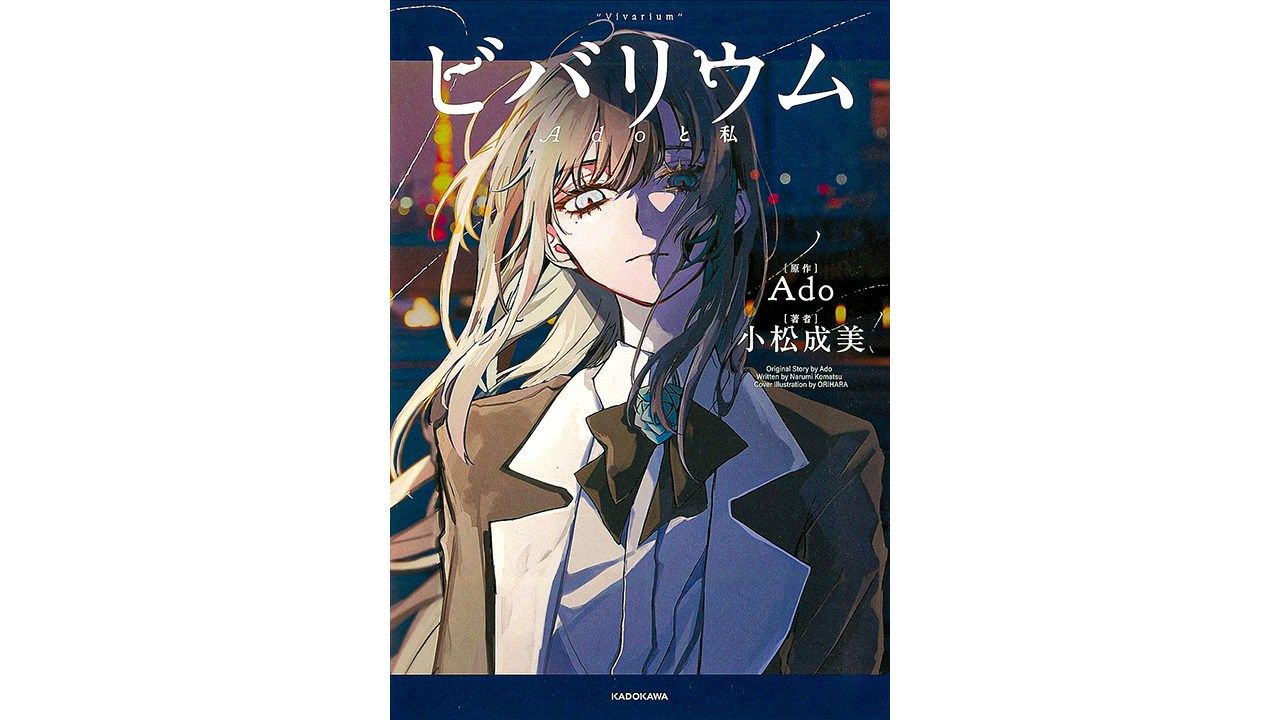
The Japanese performing arts are home to a growing number of “masked singers,” who never reveal their identities to their fans. Leading this pack is Ado, a 23-year-old phenom whose concerts and music videos have built her a worldwide following. Based on interviews with the artist herself, a new book, Vivarium: Ado to watashi (Vivarium: Ado and Me), traces Ado’s journey from her childhood to her debut as a singer and eventual rise onto the global stage, compiled by the writer Komatsu Narumi. Presented in the form of an autobiographical novel, it is likely very close to a true account.
Her parents had a troubled relationship and later divorced. During junior high school, she became withdrawn and stopped attending school. Music was the one thing she could truly immerse herself in. The book candidly portrays the anguish of her teenage years, as she wrestled with questions like “Who am I?” and “How can I learn to love myself?”
Where did the name “Ado” come from? Why did she debut as a faceless artist and continue to keep her appearance hidden? How does she view her string of major hit songs and the reactions surrounding them? She lays everything bare with striking honesty. Far removed from a typical celebrity memoir, the book is compelling not only for fans, but for anyone who has ever heard her music.
Looking a little deeper into the story, the shy elementary school girl first encountered the world of Vocaloid music through videos uploaded to the site Niconico Douga on a friend’s computer. She quickly became captivated. Vocaloid is a synthesized music software package in which users input melodies and lyrics into a computer, and a virtual character sings them with an artificial voice.
By the age of 10, she had begun dreaming of becoming an utaite, an online vocalist who performs songs over Vocaloid tracks. Looking back, she says, “I loved singing, but I wasn’t cute, I couldn’t dance, I was gloomy and shy, and I thought there was no way I could ever stand on a stage and sing.”
A Closet Becomes a Safe Space
During her junior high school years, Ado created a small personal refuge inside the closet of her home, spending her days uploading her own Vocaloid song covers to Niconico Douga. That space became the starting point of “Ado.” She earned her diploma without ever returning to school. At her mother’s suggestion, she enrolled in a training program where she could pursue music professionally while attending a correspondence high school.
Her distinctive singing voice was not easily accepted by those around her. But as the videos she uploaded began surpassing 100,000 views, a turning point arrived in August 2019, when the president of her current talent agency discovered her work and reached out. From there, she began carving out her own path as a professional utaite.
In October 2020, she made a shocking debut with the breakout hit “Usseewa,” whose lyrics sparked both praise and criticism. She recalls how reporters would often ask her provocative questions such as, “Do you actually go around saying shaddap [usseewa] in everyday life?” To that, she would answer, “No matter what happens, I don’t think I’d ever say that in my private life.” At the same time, she admits that the song’s emotions resonated deeply with her own feelings at the time. “The anger that builds up inside you, and that rebellious urge to leave a mark on the world, completely synced with how I had been feeling over those past few years,” she says candidly.
Searching for a Vivarium of Her Own
Ado was far more than a one-hit wonder, as proved by her string of successful releases that followed. The moment that dramatically elevated her reputation came in August 2022, when she performed the songs featured in the anime One Piece Film: Red. Its theme song, “New Genesis,” became the first song by a Japanese artist to reach number one on the global Apple Music chart, opening the door to international success.
Reading the book reveals the sincere and deeply committed person behind the music. She is not simply “playing Ado” under the control of entertainment industry executives. From her vocal approach to live performance direction, she thinks through everything herself and refuses to compromise with the opinions of adults around her. One of the book’s highlights is its portrayal of the grueling process through which her songs are created.
The title Vivarium refers to “a small, enclosed environment designed so living creatures can exist safely and comfortably.” She confesses, “Ever since I was a child, I’ve been searching for a vivarium of my own, a place where I could breathe without stress.” Yet now, having become a diva watched by the world, she admits to feeling conflicted. “I felt that if I kept going like this, my heart and the name Ado would become completely separate things,” she says. “It made me want to stop for a while.” That may be precisely why she chose to express her true feelings through an unembellished novel.
At the same time the book was published, she also released the music video for her new song, also titled “Vivarium.” Unlike her usual animated iconography, the video offers the briefest glimpse of what appears to be her real profile. It suggests that she may already be envisioning a new chapter meant to bring even greater joy to her fans.
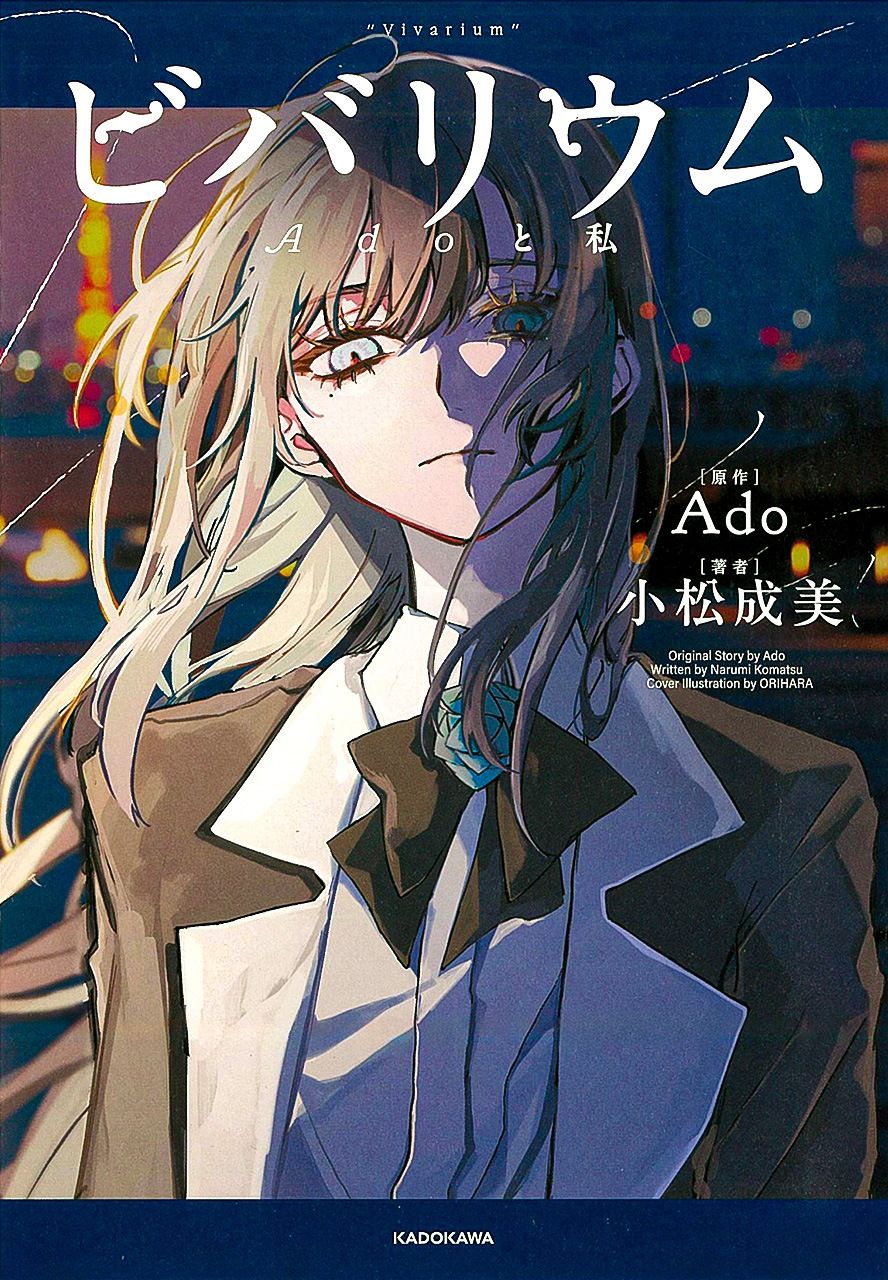
Vivarium: Ado to watashi (Vivarium: Ado and me)
By Komatsu Narumi
Published by Kadokawa in 2026
ISBN: 978-4-04-897660-2
(Originally written in Japanese. Banner photo © Kadokawa.)