
A Certain Spooky Place: Chilling Japanese Horror with an Online Feel
Cinema- English
- 日本語
- 简体字
- 繁體字
- Français
- Español
- العربية
- Русский
A Peculiar Novel Transplanted into Film
The editorial chief of a paranormal magazine mysteriously vanishes while researching his next special feature. Just before he went missing, he had been researching the unsolved disappearance of a young girl, a mass-hysteria event at a school, urban myths, and live broadcasts by ghost hunters. His subjects at first appear to be random, with no common thread connecting them.
A member of the editorial team, Ozawa Yūsei (played by Akaso Eiji), takes over from his missing boss, and calls in an old friend, the writer Seno Chihiro (Kanno Miho), to assist. What had the chief been investigating? As the two sift through his files, they discover that many parts of the enigma are linked to “a certain location in the Kinki region”—the meaning of the movie’s title, Kinki chihō no aru basho ni tsuite.
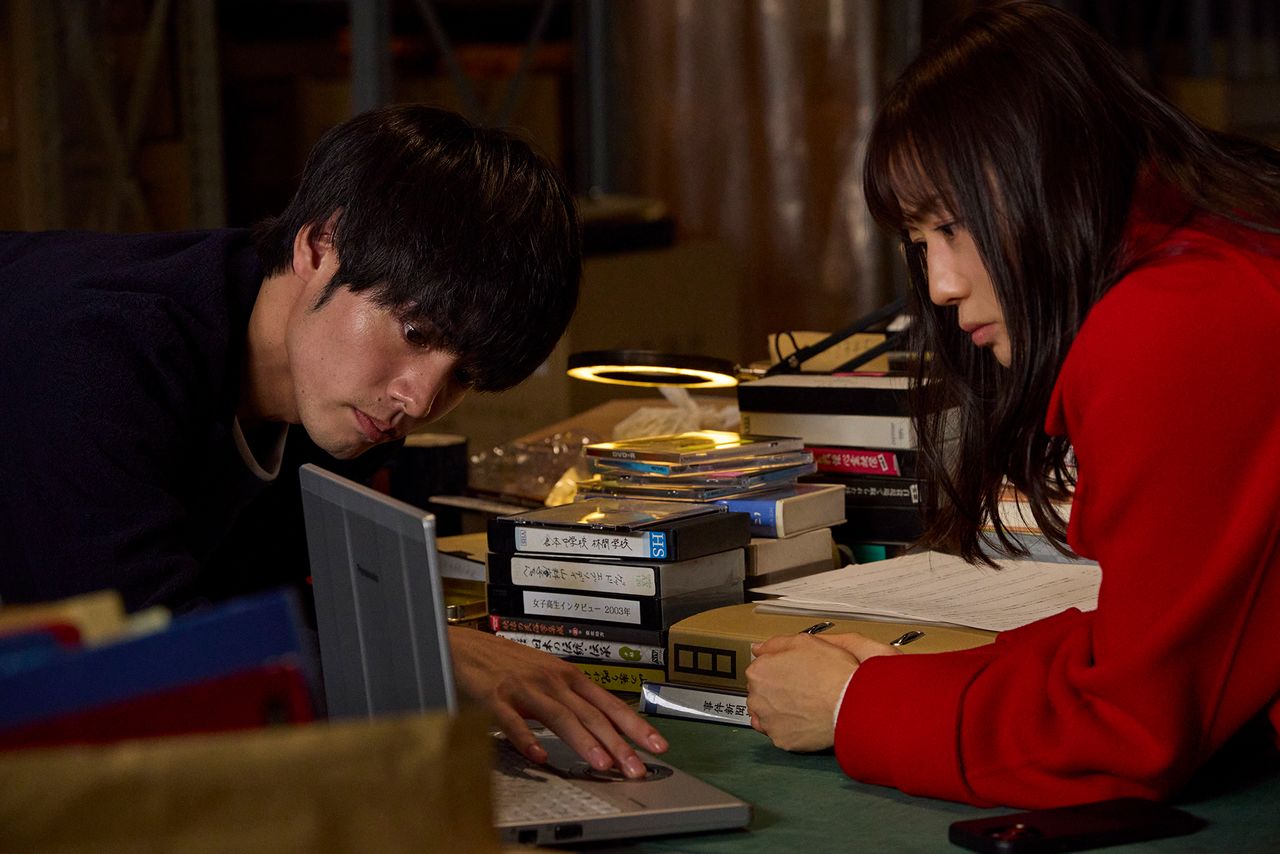
Yūsei (Akaso Eiji, left) and Chihiro (Kanno Miho) start their investigation in the magazine’s basement archives. (© 2025 Kinki chihō no aru basho ni tsuite Production Committee)
The film is based on an online novel by the writer Sesuji, originally serialized in 2023 on the website Kakuyomu. This pseudo-documentary fictional work comprised dozens of short texts, including descriptions of unsolved mysteries from print and the web, urban legends, and interviews with related parties.
The truth of each tale is left vague, and they are interspersed with supposed investigative notes. As the novel progresses, the mystery of the location in Kinki slowly emerges.
Due to the ambiguous writing style, followers of the serialization questioned if it was really fiction. The attention earned the novel over 23 million page views, turning it into a major hit. Later, it was published in print form, which became a best-seller, selling more than 700,000 copies.
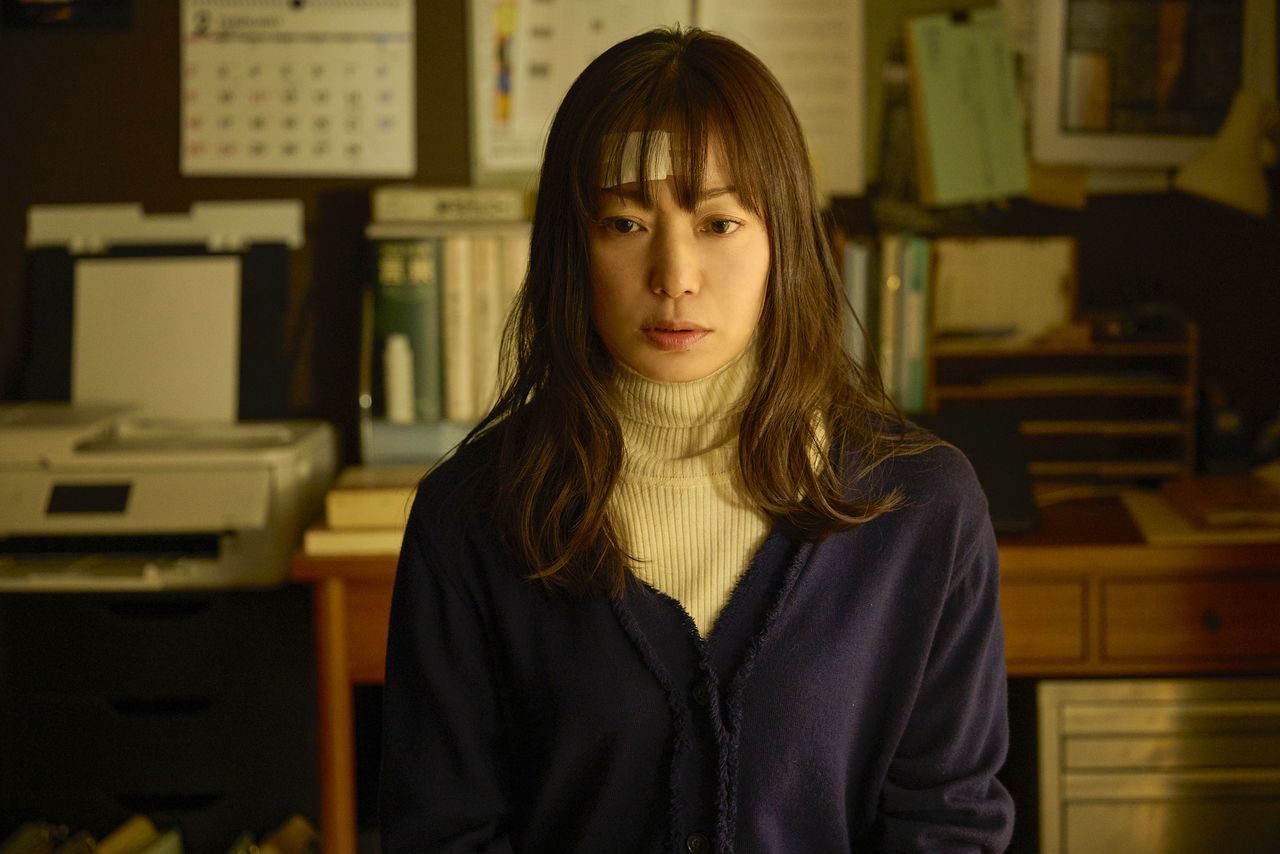
Following a mysterious disappearance, Chihiro resorts to social media to plead for information. (© 2025 Kinki chihō no aru basho ni tsuite Production Committee)
The film adaptation is a mockumentary, inspired by the original format. Chihiro and Yūsei probe into the credibility of the stories, viewing footage collected by the editorial chief. Their discoveries point to a specific location in Kinki. The film flits between the story of the two investigators and film snippets depicting mysterious tales from the novel.
The film was directed by Shiraishi Kōji, known for his Kowasugi! (Too Scary!) series of films, released from 2012 to 2023. Shiraishi is a virtuoso of horror, and has been crafting mockumentaries since his early days.
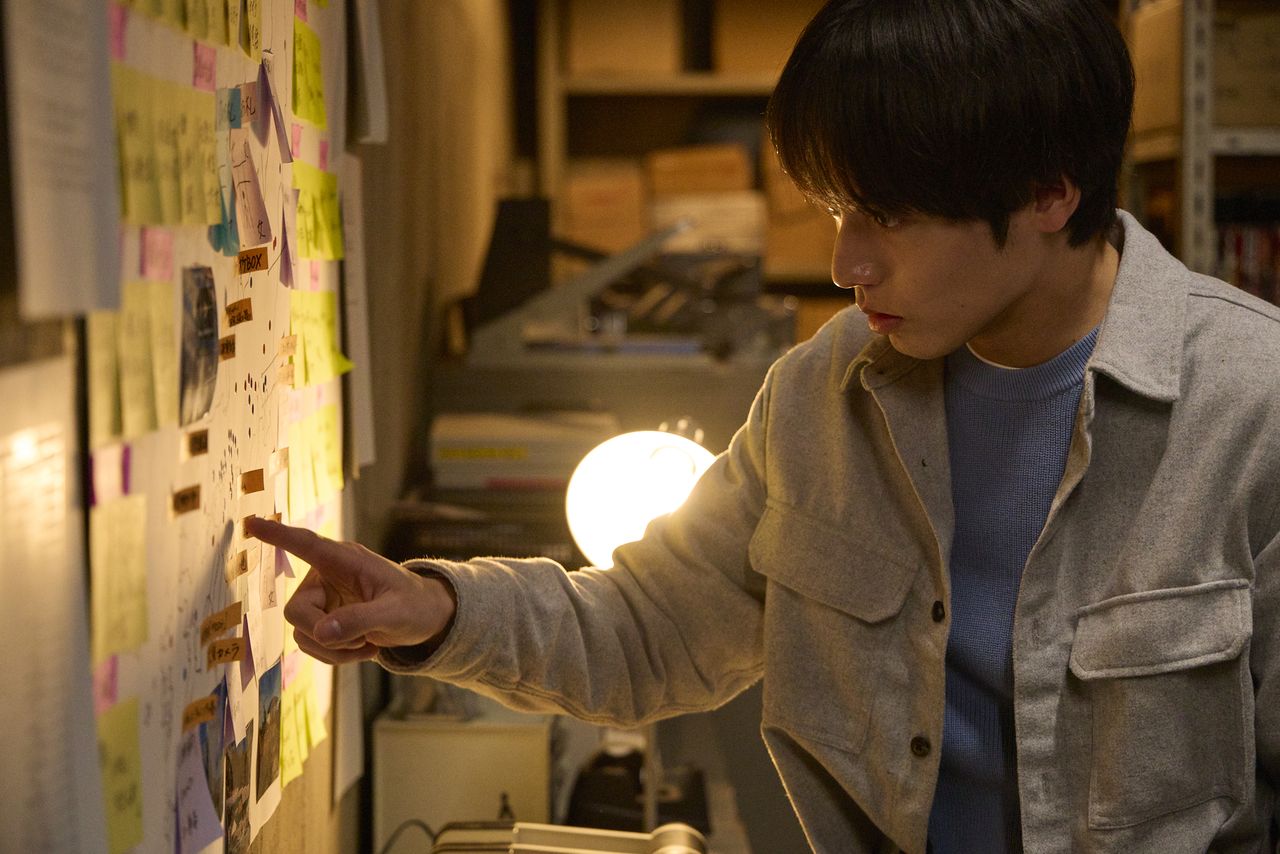
The pair’s inquiry gradually assembles the pieces of the puzzle. (© 2025 Kinki chihō no aru basho ni tsuite Production Committee)
Written Versus Visual Style
Since its first appearance as serialized fiction, the story captivated readers with its credible sense of dread. The horror builds through the intertwining of different media styles: weekly reportage, short stories, reader comments, online noticeboard posts, nightmarish children’s tales, recordings of interviews with people caught up in the incidents, and so on.
The movie attempts to re-create this experience on-screen for the viewer. Reportage from the novel is presented in talk-show format, noticeboard posts are re-imagined as live streaming, and interviews are shown as on-location candid reporting. Other mockumentary media includes cursed videos shared online, vlog posts, and shaky hand-held footage captured on smartphone, all typical formats today.
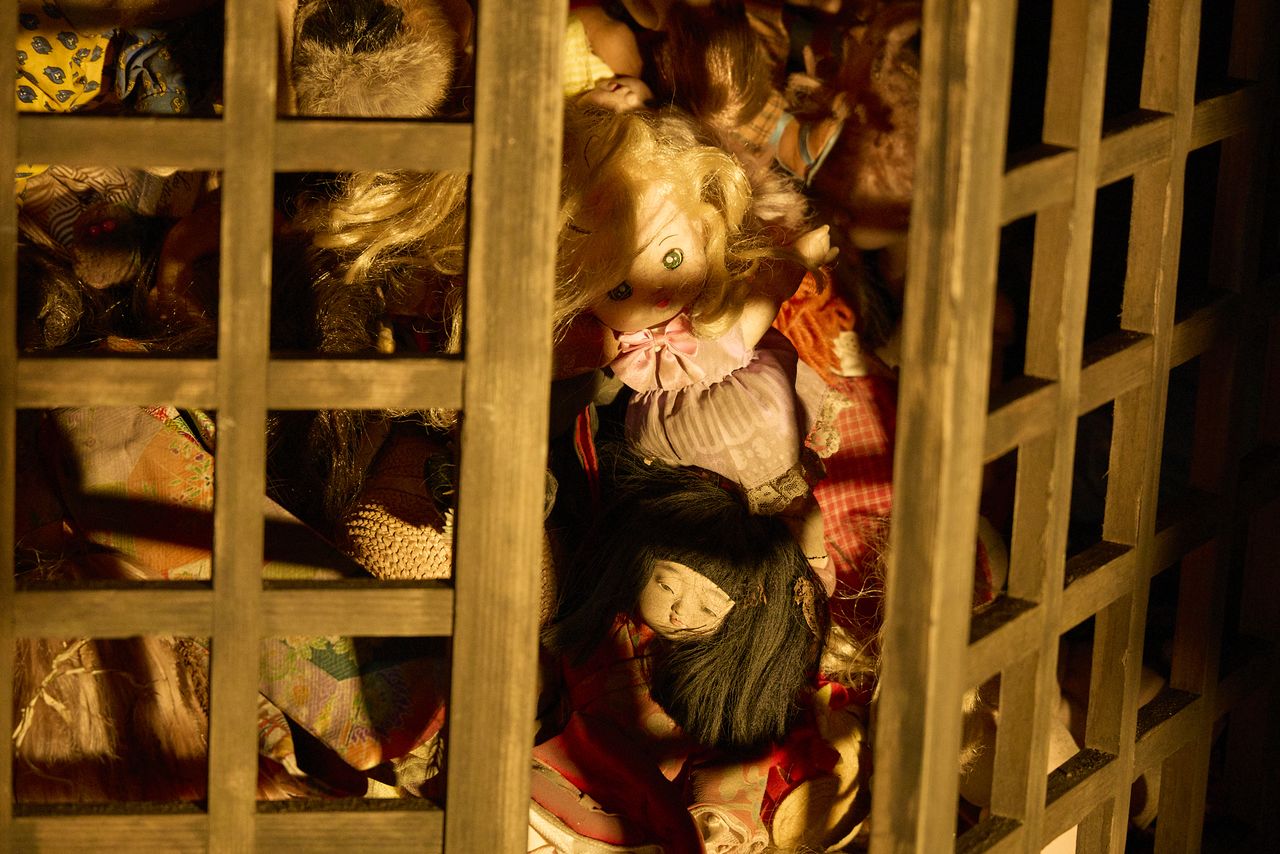
Dolls crammed inside a secluded forest shrine. (© 2025 Kinki chihō no aru basho ni tsuite Production Committee)
The original novel adopts an experimental literary style, and the movie has a similar flavor. Shiraishi constantly changes the shooting style, angles, and composition, and uses grainy footage and screen noise, common glitches in the video of past decades, along with an outdated subtitling style, all for added effect. He has mastered the craft of the mockumentary, and the film showcases his techniques and staging skills. Casually yet deftly, he weaves in hints of what is to come, unnoticeable to those unfamiliar with the original.
Brief footage excerpts propel the first half of the movie at a rapid pace akin to the short social media videos young viewers are accustomed to. It is an authentic reproduction of the velocity of an online novel, where the onslaught of short sentences spurs the reader on.
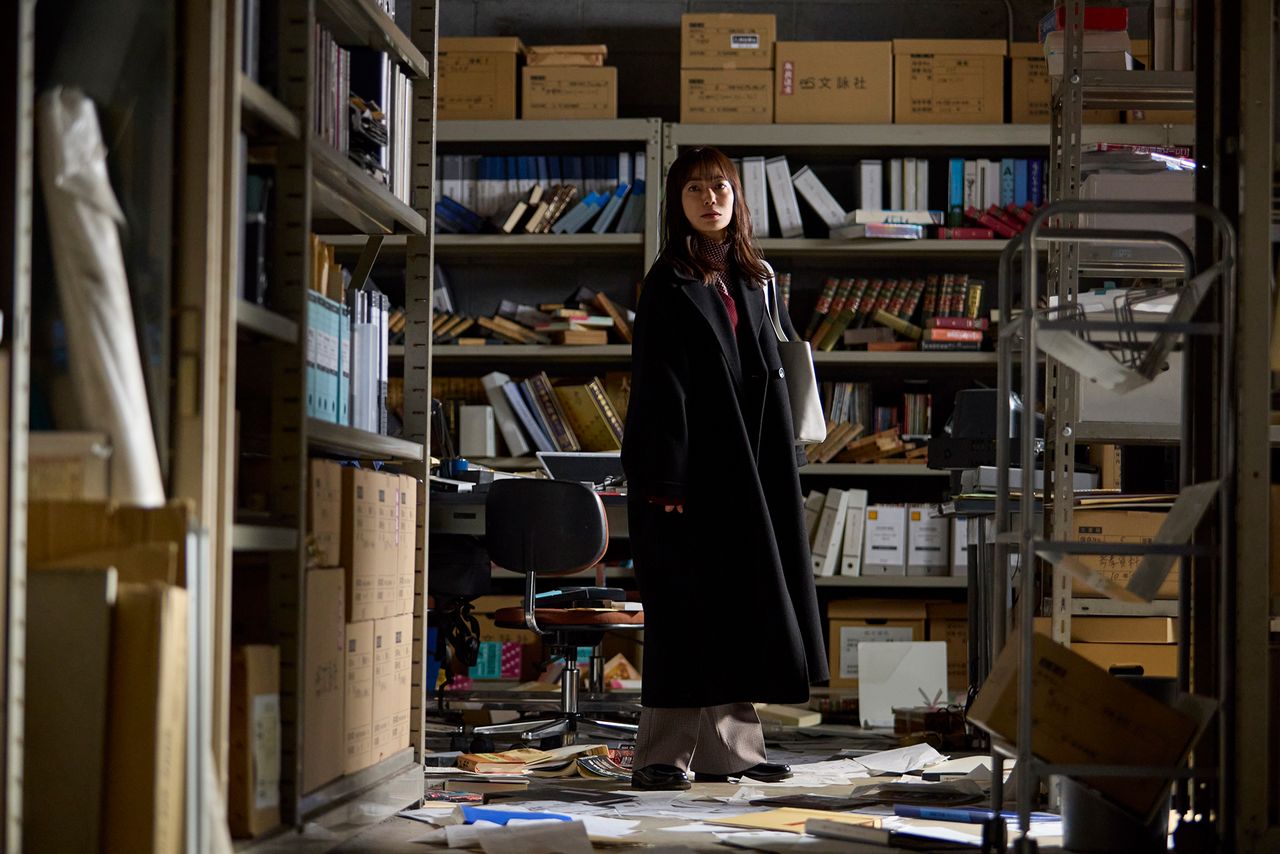
Chihiro’s attention is seized by something . . . (© 2025 Kinki chihō no aru basho ni tsuite Production Committee)
From Sesuji’s Style to Shiraishi’s
Kinki chihō no aru basho ni tsuite is horror writer Sesuji’s debut work. Sesuji was already a fan of Shiraishi’s work, and has acknowledged its influence on his writing. He collaborated in the scriptwriting process, but asked that Shiraishi craft the film in his own style.
An interesting aspect of this adaptation by Shiraishi, a powerful writer himself, is how it shifts from Sesuji’s style in the first half as it moves toward Shiraishi’s distinctive, slowly intensifying climax.
When Chihiro and Yūsei decide that the origin of the mystery lies somewhere in the Kinki region, they rush out from the office. Shiraishi fans will appreciate this familiar format, where the production company director investigating eerie phenomena in online video posts heads to the site to confront the mystery.
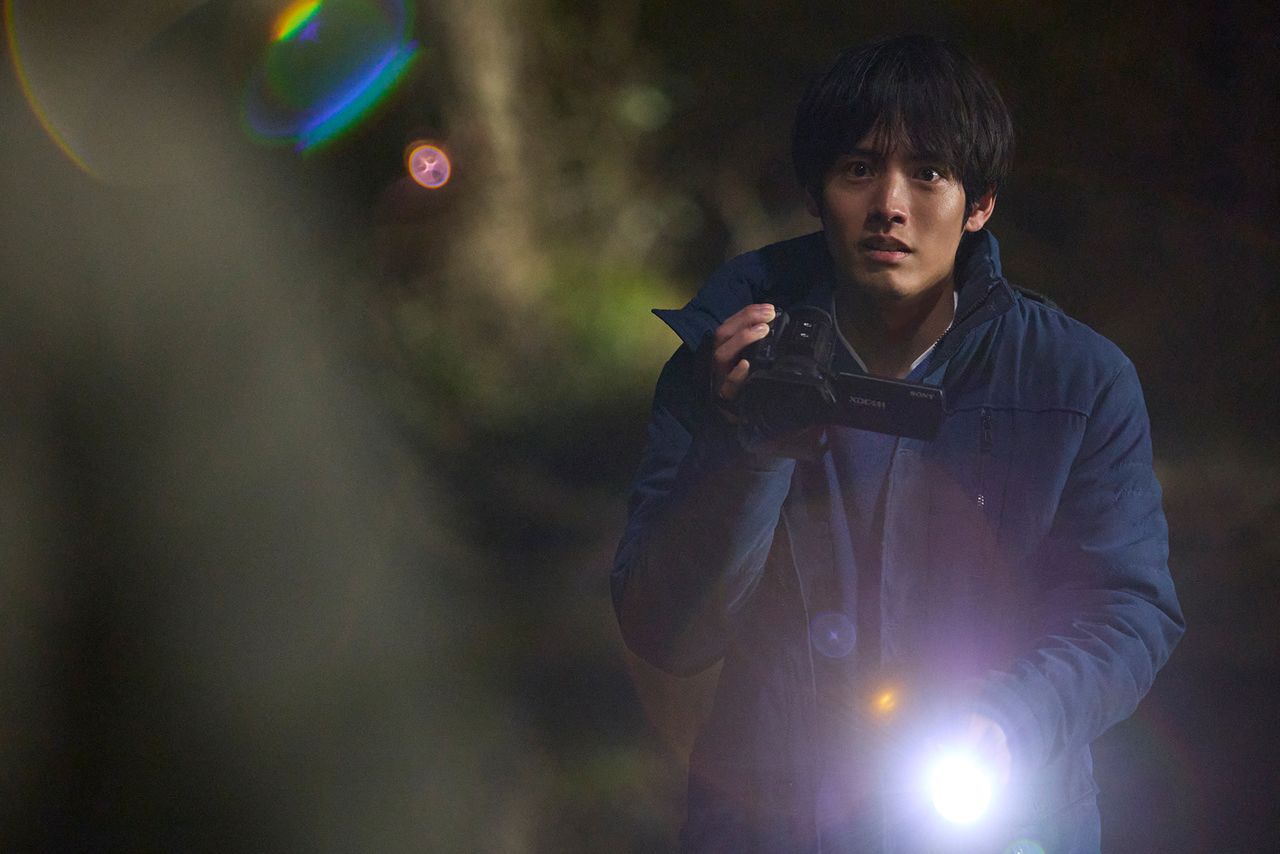
Finally, Yūsei’s camera captures the monstrosity. (© 2025 Kinki chihō no aru basho ni tsuite Production Committee)
In the first half, the pair combs through sources left by the editorial chief, but in the latter half, the focus shifts to the footage shot by Yūsei. The relative quietness of early developments is replaced with an accelerating drama, hurtling towards an astonishing finish, in typical Shiraishi form. This bold but inevitable switch was possible perhaps precisely because the original novel uses such a range of styles to build up fear.
While overall, the film is experimental and elaborate, it is also highly entertaining, and sure to please fans both of the novel and the director. Rather than rely on shock and horror, it is a goosebump-inducing Japanese horror story that maintains the tension to the end. Like a haunted house in summer, this spine-chiller is sure to thrill and chill cinema goers this season.
Film Information
Official film website: https://wwws.warnerbros.co.jp/kinkimovie/
Trailer (Japanese)
(Originally published in Japanese. Banner photo: The poster for Kinki chihō no aru basho ni tsuite. © 2025 Kinki chihō no aru basho ni tsuite Production Committee.)