Legends: Japan’s Most Notable Names
Chiba Shin’ichi: A Martial Arts Actor Whose Impact Lives On
People Culture Cinema- English
- 日本語
- 简体字
- 繁體字
- Français
- Español
- العربية
- Русский
Gaining Respect in Hollywood
The Japanese actor Chiba Shin’ichi, known internationally as Sonny Chiba, passed away on August 19, 2021. His death was widely covered by the entertainment media, and obituaries for him were published in the New York Times, the Los Angeles Times, and other major US papers. They reflected on his profound legacy in Western cinema, as an actor who leveraged his skills in full-contact Kyokushin karate to create powerful action films.
The American Academy Museum of Motion Pictures posted on its X account that “he blended toughness with depth in films.” The New York Times quoted him as saying, “Martial arts is part of the drama—it’s performance. . . . It’s a way of expressing emotions.” Both show a strong understanding of his special talent for extreme action.
CNN gave an even deeper analysis, noting that, while comparisons to martial artist and film star Bruce Lee “were inevitable . . . Chiba’s distinct fighting style was unlike anything Lee attempted. Chiba went ballistic on his enemies and appeared to use more force to land his blows, a method that de-emphasized the choreographed nature of his cinematic spars.”
Chiba Shin’ichi was born Maeda Sadaho in Fukuoka on January 22, 1939. He first rose to fame in the West through the 1974 Japanese martial arts film The Street Fighter and two sequels (the Satsujinken series in Japanese). Avid fans of the films include Keanu Reeves, Samuel L. Jackson, Jonathan Nolan, and other influential Hollywood figures, who praised Chiba both during his life and after his passing. In 2015, while promoting his own film John Wick in Japan, Reeves stated “I can do movie kung fu, but Sonny Chiba was [actually doing it] with passion.”
Admiration from Tarantino
Renowned director Quentin Tarantino was one of Chiba’s greatest fans. After watching the Japanese period drama Shadow Warriors (Kage no gundan in its original release), Tarantino not only became a huge fan of Chiba, he hoped that one day they could work together. His dream finally came true in 2003 with his fourth film, Kill Bill: Volume 1. In fact, the 1993 film True Romance, for which Tarantino wrote the script, also paid homage to Chiba.
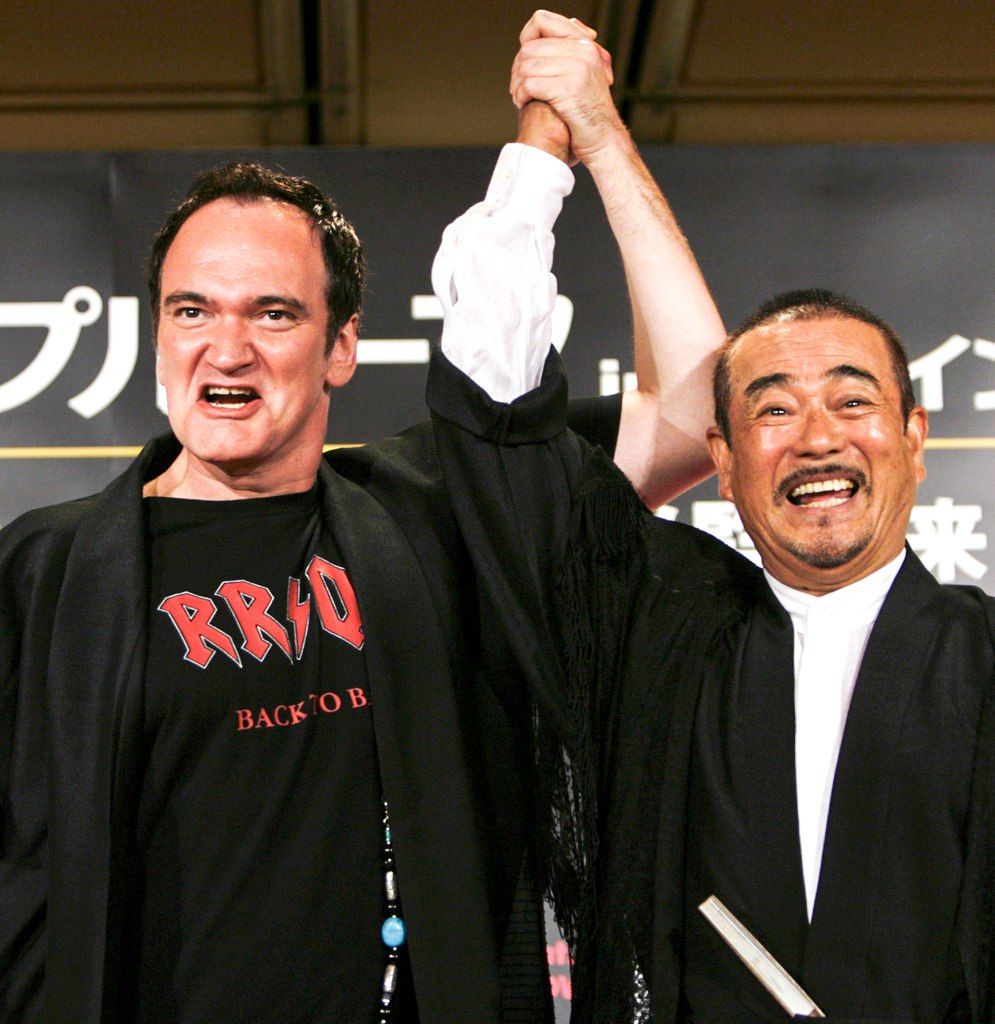
Tarantino (left) and Chiba display their mutual admiration at a press conference in Tokyo on August 2, 2007. (© Reuters)
At the opening of the film, the lead character Clarence, played by Christian Slater, meets a woman named Lucy (Anna Thomson) in a bar. He invites her to the cinema to see a Sonny Chiba Street Fighter triple feature. When Lucy asks “Who’s Sonny Chiba?” Clarence replies “Well, he is, bar none, the finest actor working in martial arts movies today.” In a later scene, we see posters of Chiba’s films adorning the walls of Clarence’s apartment, further expressing Tarantino’s adoration.
But The Street Fighter received an X rating (now known as NC-17) in the United States, restricting viewing age to 18 years and older—the first film to gain the rating solely due to extreme violence. This impeded its chance at mainstream success, but helped the film to acquire cult status.
Contribution to Kill Bill
For Kill Bill, Tarantino had a character specially tailored for Chiba: Hattori Hanzō. This was the same name as the ninja character played by Chiba in the Shadow Warriors series. In a 2003 interview, Tarantino explained that in that series, there are multiple sequel shows. . . . Every time they did a new series it was always a different Hattori Hanzō. It was set a little further in history. Hattori Hanzō number three, Hattori Hanzō number four. It just kept on going down. So now Sonny Chiba is playing Hattori Hanzō one hundred and still continuing that character.” This is a sentiment that long-standing fans could appreciate.
Although Chiba only appears briefly in Kill Bill, he is a key character in the development of the story. The Bride, a former assassin played by Uma Thurman, travels to Okinawa seeking the renowned swordsmith, and at her request, he spends a month crafting the perfect sword for her to defeat her enemies. With dialog in both Japanese and English, Chiba’s character makes a menacing impression. Unfortunately, he does not perform any martial arts in the film, but he made an important contribution to the fighting scenes in other ways.
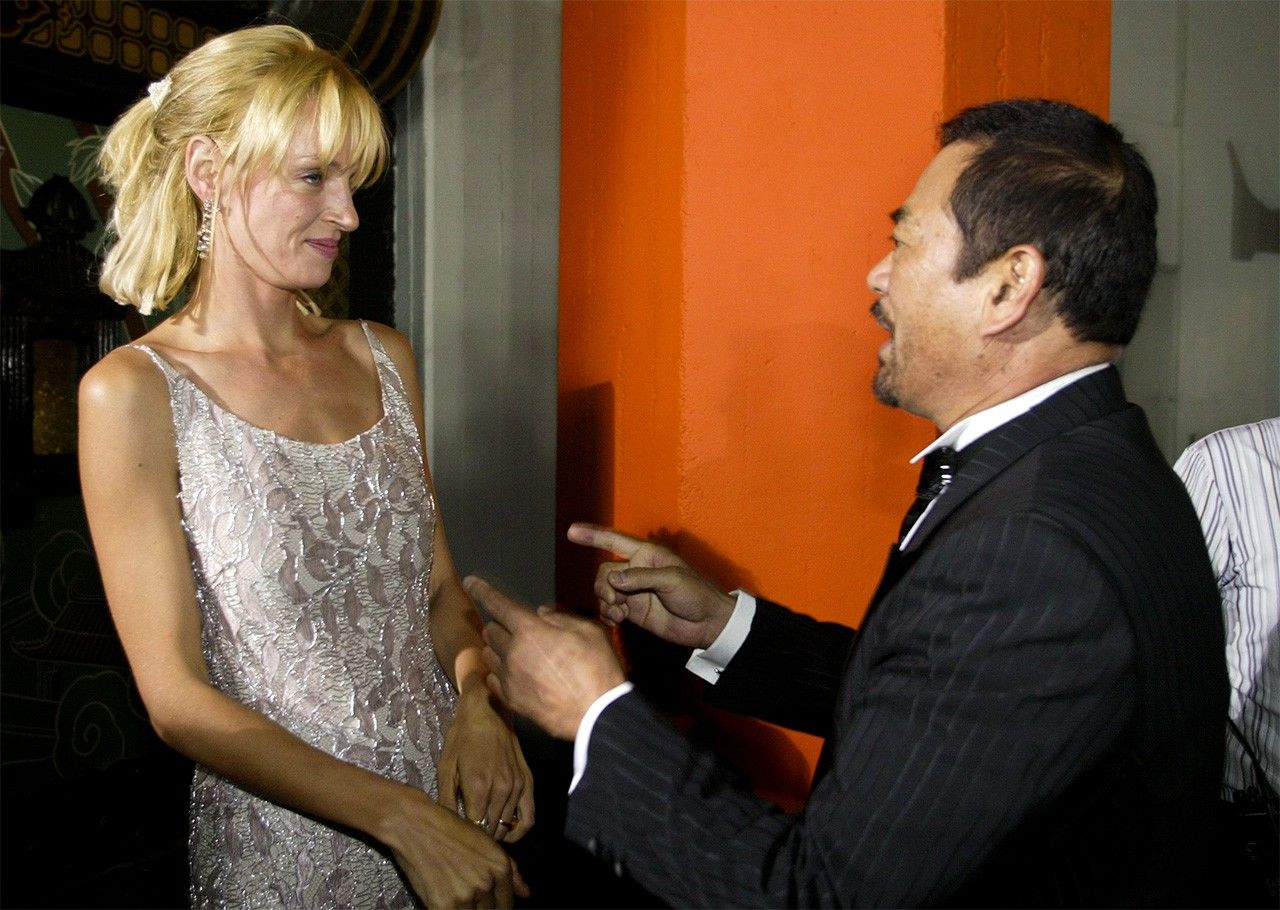
Uma Thurman (left) and Sonny Chiba in an exchange at the premier of Kill Bill in Hollywood on September 29, 2003. (© Reuters/Fred Prouser FSP)
Lucy Liu, who played O-Ren Ishii, an adversary of the main character, spoke on a talk show after the film’s US release describing the swordsmanship tips Chiba often shared with Liu and her costars Thurman, Vivica A. Fox, and Daryl Hannah. “He would demonstrate this beautiful move, and he goes, ‘Now you.’ And then we’d all have to do it separately . . . afterwards, he would say, ‘almost good!’ So it wasn’t really an insult. Sort of encouraging. . . . It’s so Japanese, because it’s polite.”
Chiba’s next Hollywood appearance came with the action film The Fast and the Furious: Tokyo Drift, the third in that series, which was set in Tokyo. In the film, Chiba plays Kamata, a yakuza boss. Once again, Chiba did not perform in the action.
In 2012, he appeared in the low-budget film Sushi Girl. Although it was screened at a number of film festivals, it did not gain wider recognition, and was not released on DVD in the United States. In 2018, he made an appearance in the Australian short film Shakespeare in Tokyo. His final film was Bond of Justice: Kizuna, released in 2024. None of these attracted significant attention, again indicating Chiba’s limited appeal in the United States beyond his cult fan base.
His Aspirations Live On
But Chiba was always willing to share his brand of action. In 1970, Chiba founded the Japan Action Club to nurture action stars and stunt performers, including global stars such as Sanada Hiroyuki. The swordsmanship skills taught to Liu and the others by Chiba is a similar reflection of his dedication.
He passed down his unique and well-honed acrobatic style of action in various forms to many, the most famous of whom is his beloved pupil Sanada. The television drama Shōgun, which Sanada produced and performed in, was released in 2024, achieving worldwide success. Despite much of the dialog being in Japanese, Shōgun won 18 Primetime Emmys, as well as many other key awards.
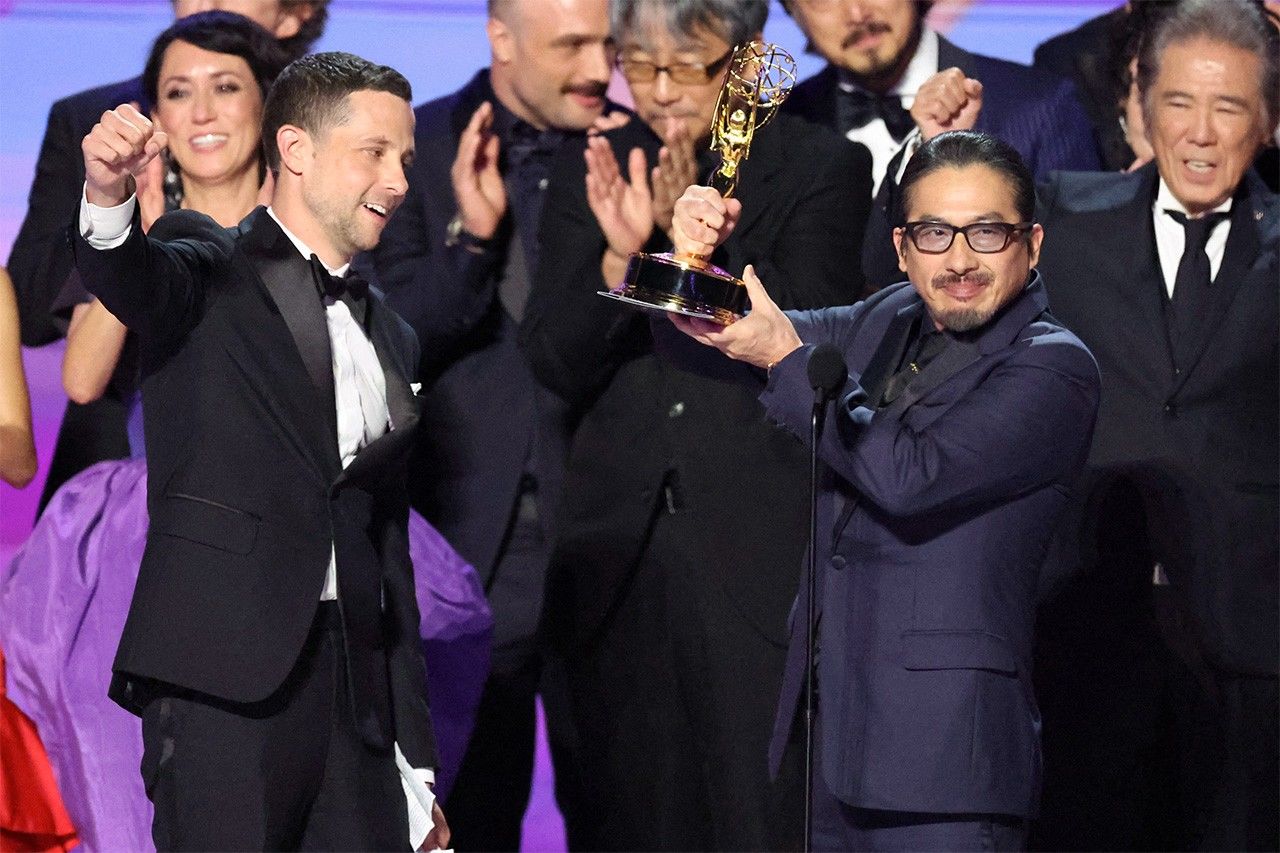
Sanada Hiroyuki receives an Emmy Award for his performance in TV drama series Shōgun on September 15, 2024, Los Angeles. (© Reuters/Mario Anzuoni)
Sanada followed in Chiba’s footsteps, relocating from Japan to Hollywood, where his track record now spans more than 20 years. With his big break in Shōgun, Sanada not only realized his own dreams, but also Chiba’s longstanding desire for Japanese samurai action to reach the world stage.
Japanese media carried Sanada’s obituary farewell to Chiba, in which he commented that “continuing Chiba’s aspirations is repaying my obligation to him and accepting my responsibility.” Thanks to the strong reception Shōgun received, its creators are now working on a second season. This will again provide many roles for Japanese performers, and opportunities to display great swordsmanship, whereby Chiba’s aspirations will bear even greater fruit in Sanada’s success.
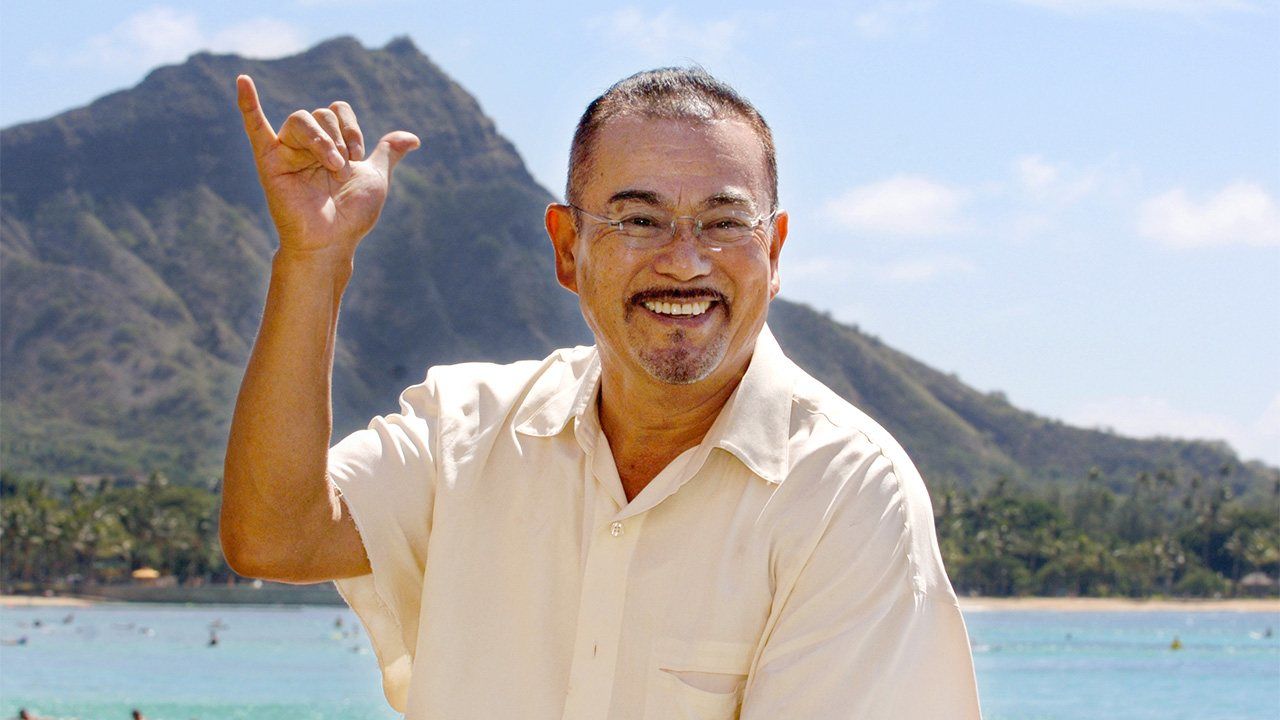
(Originally published in Japanese. Banner photo: Chiba Shin’ichi at Waikiki Beach, Hawaii, October 27, 2005. The martial arts actor was in Honolulu to receive the film festival’s Maverick Award. © Reuters/Lucy Pemoni.)