The Ever-Evolving Culture of Ramen
Thick or Thin, Crinkly or Straight: Noodles Make the Ramen
Food and Drink Culture Lifestyle- English
- 日本語
- 简体字
- 繁體字
- Français
- Español
- العربية
- Русский
The Art Behind the Ramen Counter
Ramen has evolved and diversified into many styles as it has developed as a food culture. That is reflected both in the soup and in the noodles.
Ramen shops can either make their own noodles in-house, or can contract with a noodle-maker. House-made noodles allow the shop owner to express their own ideal style. On the other hand, this results in a significant burden in terms of equipment, skill, and labor.
Contract makers possess expert skills and can guarantee stable quality and supply, as well as flexibility to handle special orders from individual shops. Most probably believe that “house-made means unique,” but the fact is that individual shops can work closely with noodle makers to create their ideal bowl.
Noodle makers can make shop owners’ hopes a reality. Behind the scenes of this work stand the seimenshi, the master noodle makers. Among the most well known of these is the seimenshi at Asakusa Kaikarō, found near Tokyo’s Kappabashi: Fushichō Karasu.
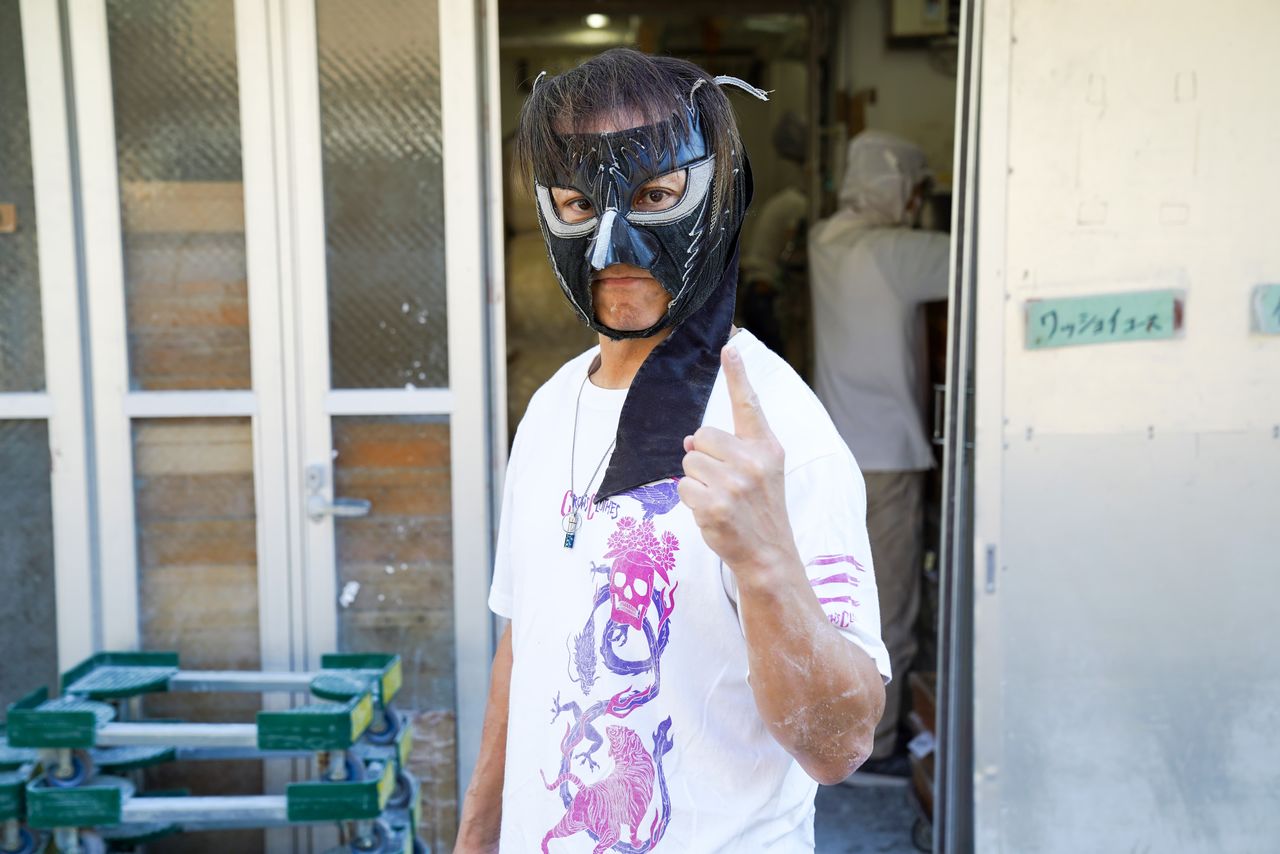
Seimenshi Fushichō Karasu in his trademark raven mask. (© Yamakawa Daisuke)
From Pro Wrestler to Seimenshi
Karasu was once a professional wrestler and wrestling manager. After he left the business, he took a part-time delivery job for a noodle workshop. The owner’s passion opened his eyes to the fascinating depths of ramen. But the real turning point came when he tried the tsukemen, a ramen dish where noodles and soup are served separately, at a certain restaurant. “The match between those thick noodles and the rich soup was just incredible. I was convinced that tsukemen was going to become huge.” And so he began his journey on the path of the maker.
During his factory days, he learned all he could about the basics of making noodles: everything from wheat variety and ratios to hydration, the influences of temperature and humidity on noodle dough, and more.
When dealing with customer shops, Karasu realized he wanted to try making noodles. While listening to shop owners explain what they wanted from their noodles and tasting the soup they offered, he senses that the products his company currently offered couldn’t help those shop owners achieve the dreams they expressed.
“Let me make noodles.” He took his request directly to the president and threw himself into producing specifically for tsukemen, exploring mouthfeel by manipulating the flour mix and adjusting hydration levels. There were as yet no noodles specifically for tsukemen, and his workshop only had noodles with simple combinations of strong, semistrong, and weak chewiness. To create noodles that had the chewy texture and the firm body to handle the rich tsukemen dipping sauce, he had to reevaluate the flour types and mixture from the ground up.
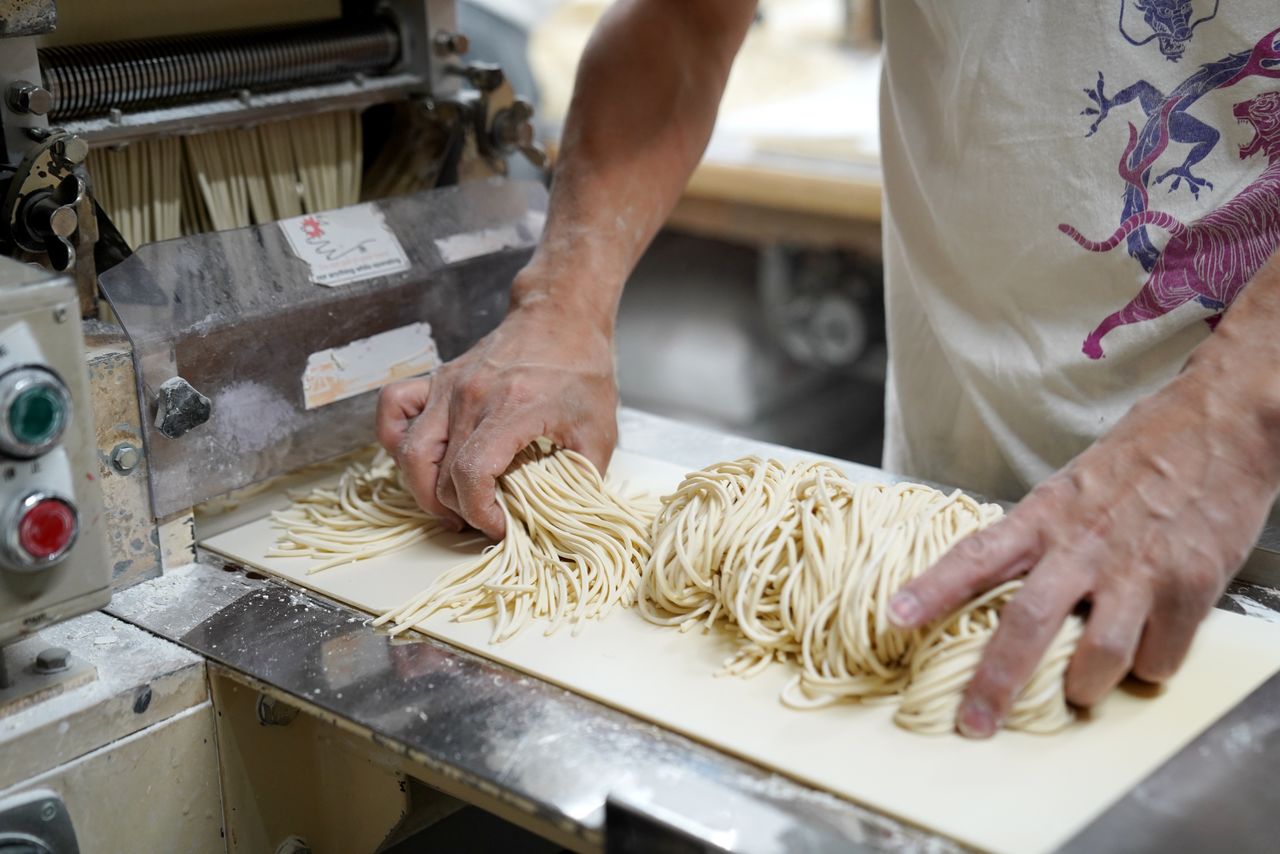
Fushichō Karasu hard at work making dream noodles a reality. (© Yamakawa Daisuke)
The firm, chewy noodles he made after rounds of trial and error have gone on to help countless shops serve customers. Famed tsukemen shop Rokurinsha adopted his noodles and cemented its fame in the industry. Now this shop is an icon of the nationwide boom in this new ramen variety.
After Karasu and Asakusa Kaikarō built their reputation, they took a general approach of listening to shop owners’ ideals and creating original noodles to meet them. Hardcore ramen fans now know that Asakusa Kaikarō is a name to be trusted.
As ramen evolves and the variations expand, the work for seimenshi who translate owner dreams into reality is sure to go on. “Noodles can be the main character or they can play a side role. It’s the seimenshi who finds that balance,” explains Karasu. His words overflow with the spirit that underpins the ramen industry.
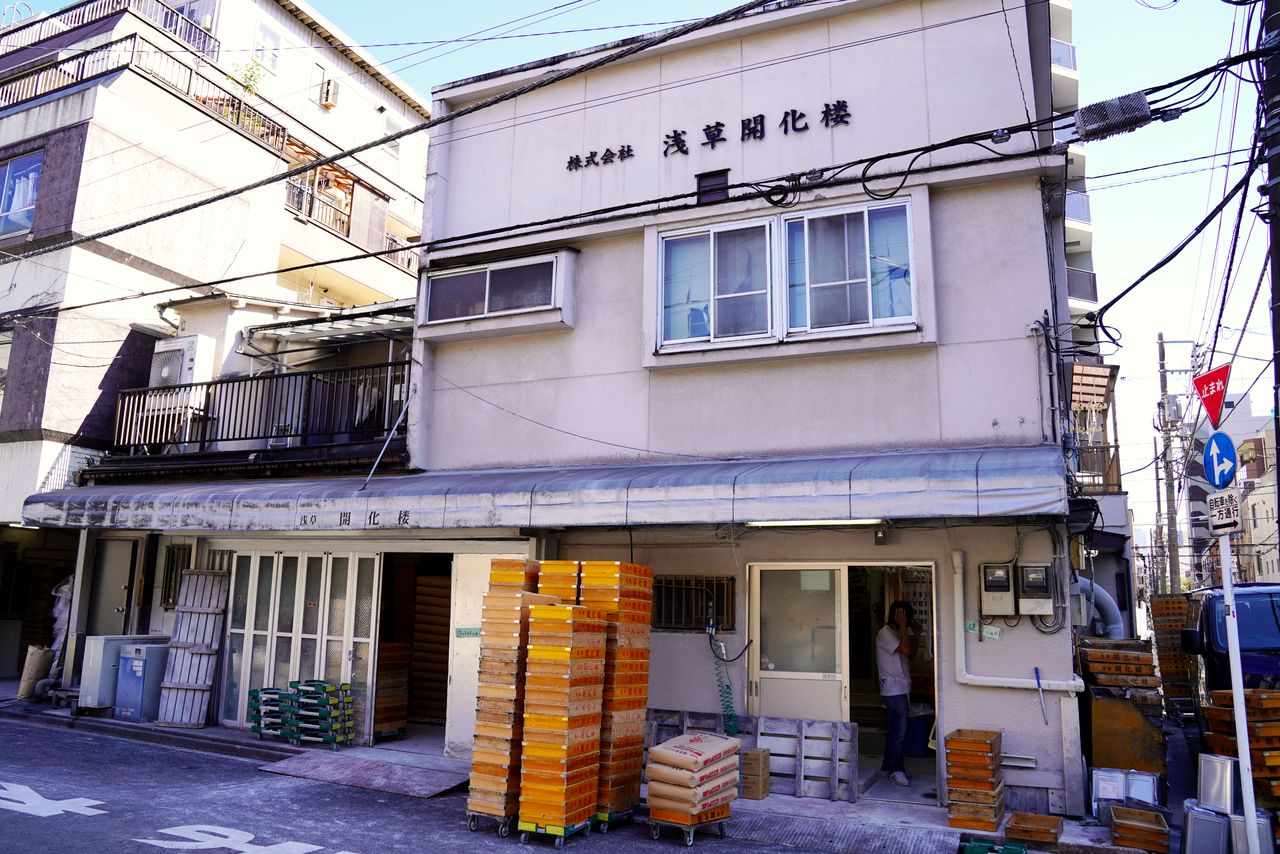
Asakusa Kaikarō, in Taitō, Tokyo, has been in business since 1950. (© Yamakawa Daisuke)
Noodles the Key to Ramen Style
The single word “noodles” seems inadequate to cover the enormous variation in shape and type that exist today. In general, though, they can be described through three basic elements: thickness and shape, hydration level, and flour mix.
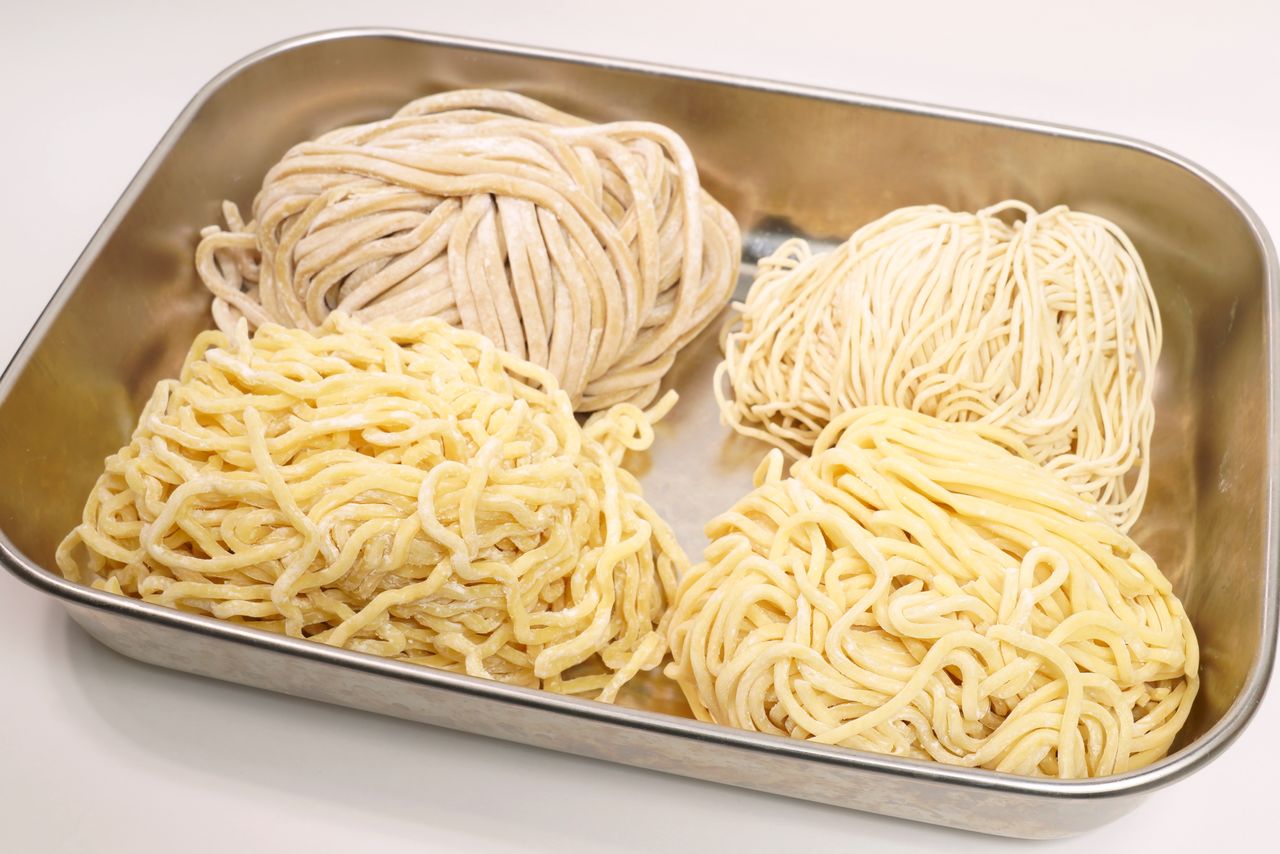
Four major noodle styles. Counterclockwise from upper right: Super thick noodles, thin noodles, medium thick, and hand-kneaded crinkly. (© Yamakawa Daisuke)
Thickness and Shape Determine Mouthfeel
The thickness of the noodles plays an enormous role in determining the mouthfeel of your ramen. It decides how they hold soup and how they feel between your teeth.
Ultrathin to thin noodles are fit for light, clean chintan-style soups. The noodles take a back seat to the soup, enhancing its aroma with each slurp. Examples include Hakata ramen, tanrei shōyu (soy sauce combined with often intricate chicken or seafood broth bases) ramen, and shio (chicken-based salt broth) ramen.
Medium-thin to medium-thick noodles are the most common range: orthodox noodles that strike a perfect balance with the soup. Examples include shōyu (soy sauce broth) and seafood-base broth dishes.
Thick to ultrathick noodles are the perfect choice when looking for something that can stand up to rich, heavy soup. Full-bodied, chewy noodles offer lots of satisfaction. Examples include offerings in rich miso broth, seafood/pork marrow broth, Jirō-style (rich pork broth accompanied by mounds of toppings), and tsukemen (rich, thick broth served separately for dipping noodles).
The next important element of mouthfeel is the shape of the noodles. There are two major types here: the easy-slurping straight style, and the soup-holding crinkly.
You can also classify the noodles by round or square cross section. Square noodles have a solid bite and a clearly defined feel that complements and adds to the soup. Round noodles are gentler and less assertive, blending into the background. The elements of shape and thickness together define the noodles’ relationship with the soup.
Hydration Ratio Defines Firmness and Resilience
Here hydration refers to the ratio of water to flour in the noodle dough. This influences the final mouthfeel of the noodles in terms of firmness and resistance under the teeth.
Low-hydration noodles offer a firm but clean bite, cutting easily under the teeth and absorbing soup well. Examples include dishes served in Hakata tonkotsu and rich niboshi (dried sardine) broth.
High-hydration noodles are fluffier and chewier, with a clean mouthfeel. They offer more wheat-flour aroma than those with lower water content. Examples include tsukemen, Sapporo miso ramen, and Fukushima’s Kitakata ramen.
Flour Mix Creates Body and Aroma
Flour mix is the foundation of noodle-making. The varieties and ratio of flour used can influence everything that comes after: the body, aroma, sweetness, and interaction with the soup. Many noodle experts have detailed preferences, down to the growing region and even variety of wheat.
Strong or hard (bread) flour has a high protein content and is characterized by strong gluten formation. A lot of strong flour in the mix leads to noodles with firm body and resistance that offer assertive mouthfeel. These can be the core of a bowl pairing rich soup and thick noodles.
Semistrong flour stands between strong and weak (cake) flour, balancing body and delicacy. It tends to make more aromatic noodles that are great all-rounders, matching everything from light chintan to richer soups.
Weak flour has a low protein content, leading to noodles with a soft, light mouthfeel. Depending on the ratio, a high content can give noodles a more delicate mouthfeel and bring out the wheat aroma. Noodles made with weak flour alone, though, tend to lack body, so it tends to play a supporting role in combinations.
Noodles always express themselves in relationship with the soup. In rich, multilayered soups with lots of fatty flavor and high viscosity, thick noodles with firm chewiness and a clear core work well. In lighter, chintan-style soups that focus on aroma and clarity, thin noodles are ideal. The different combinations of these elements lead to endless possibilities.
Five Shops Adopting the Karasu Philosophy
Karasu’s philosophy is packed into every bite of the noodles he makes. The best way to understand the truth of that is to taste them at working ramen shops. Here are five shops in Tokyo where you can taste Asakusa Kaikarō noodles for yourself.
Tsukesoba Kanda Katsumoto
This famed shop in the Kanda district brings a fresh take on the tsukemen fad. Its name is built on a dish proposed by Karasu himself, featuring two different types of noodles at once.
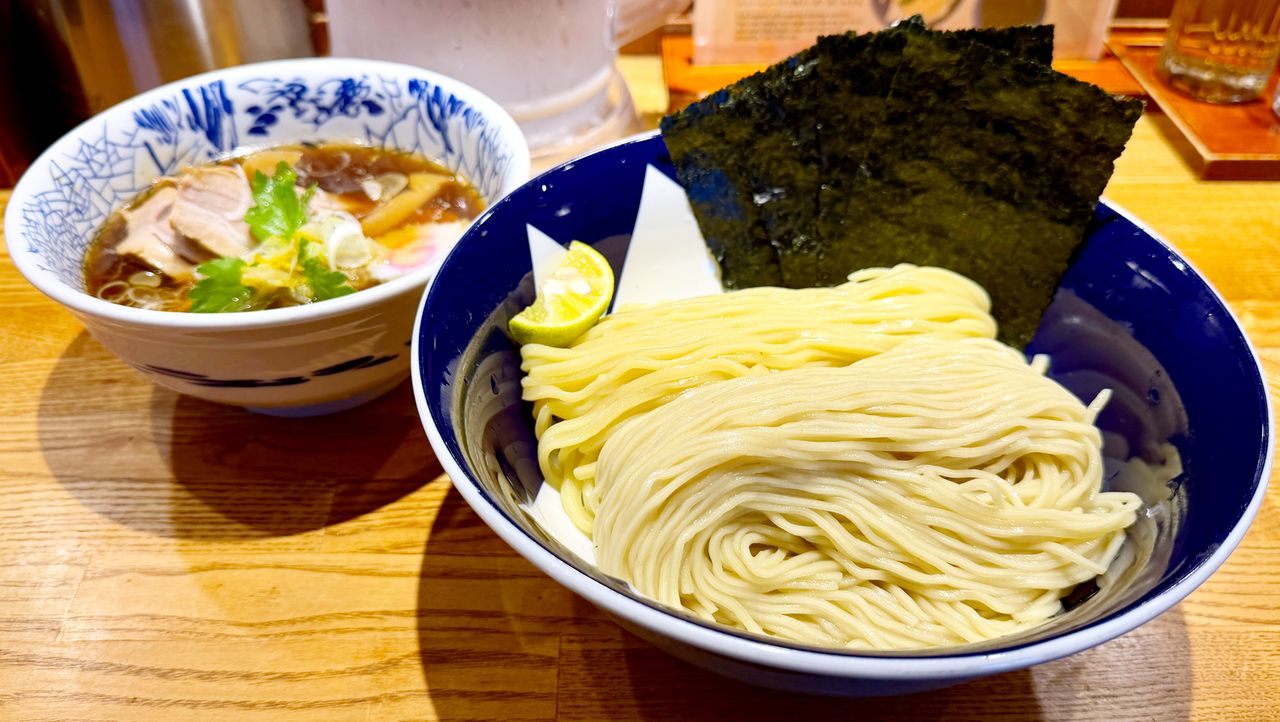
The tsukesoba at Tsukesoba Kanda Katsumoto. It pairs a chintan dried-sardine soup with both thin noodles and wide, flat ones. (© Yamakawa Daisuke)
Ginza Hachigou
This Ginza shop has grown famous for its revolutionary ramen made without tare, a flavor-rich sauce usually considered the heart of ramen soup, thought up by a shop owner who trained in France. It made the Michelin Bib Gourmand within a year of opening.
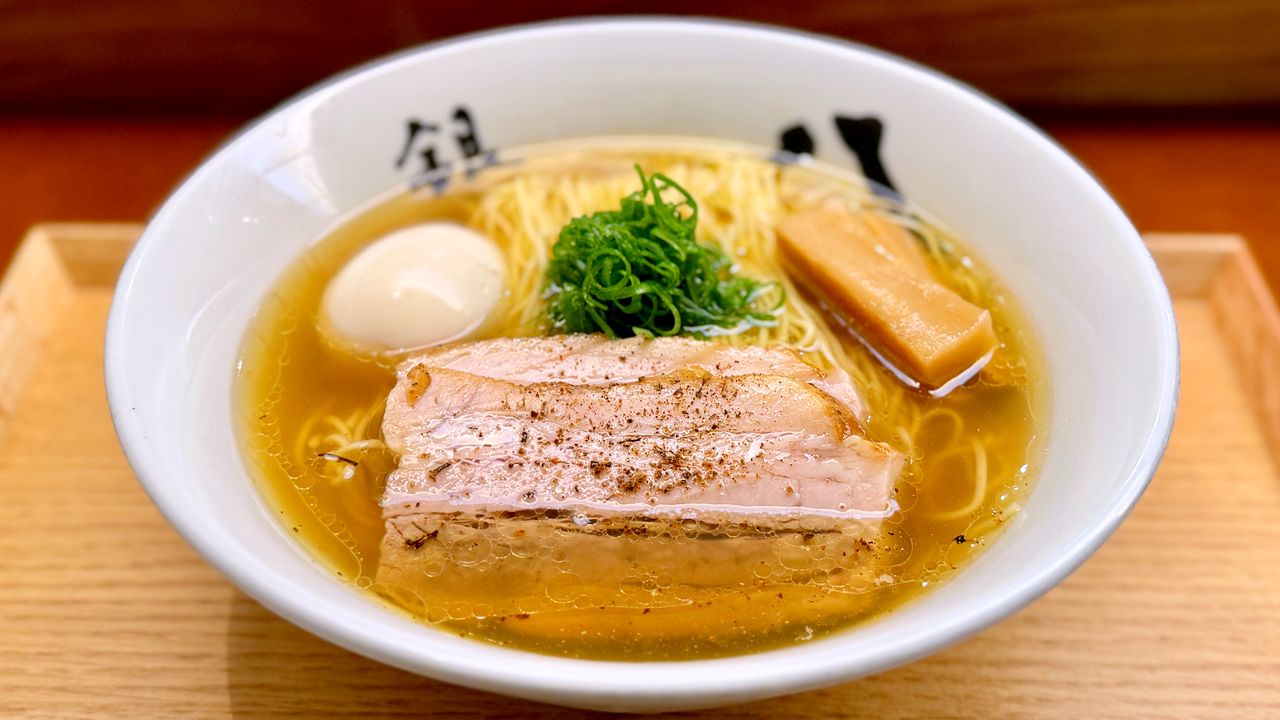
Chūkasoba from Hachigou. The soup, filled with the natural flavors of its ingredients, matches perfectly with noodles with clear body and toothsomeness despite their thinness. (© Yamakawa Daisuke)
Ramen Daishi
This Ochanomizu shop serves a perfected form of good, old-fashioned shōyu ramen. The light, yet deep, orthodox style of Ramen Daishi is loaded with artisanal skill despite the simplicity.
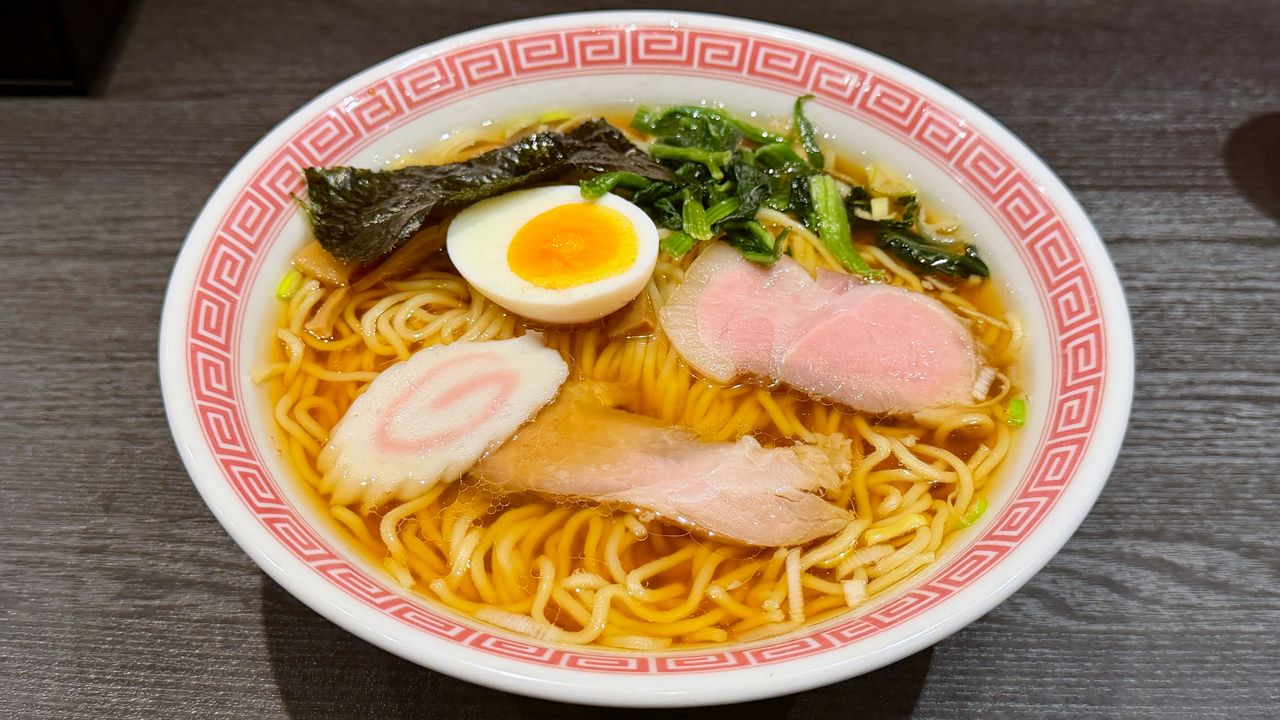
Ramen Daishi seeks to reach “the pinnacle of ordinary.” (© Yamakawa Daisuke)
Do Miso Kyōbashi
This ramen at Do Miso Kyōbashi combines the assertive presence of thick noodles that can stand up to the punch of thick miso soup. This bowl shows off the role and shape of the noodles and expresses the natural sweetness of their wheat flour.
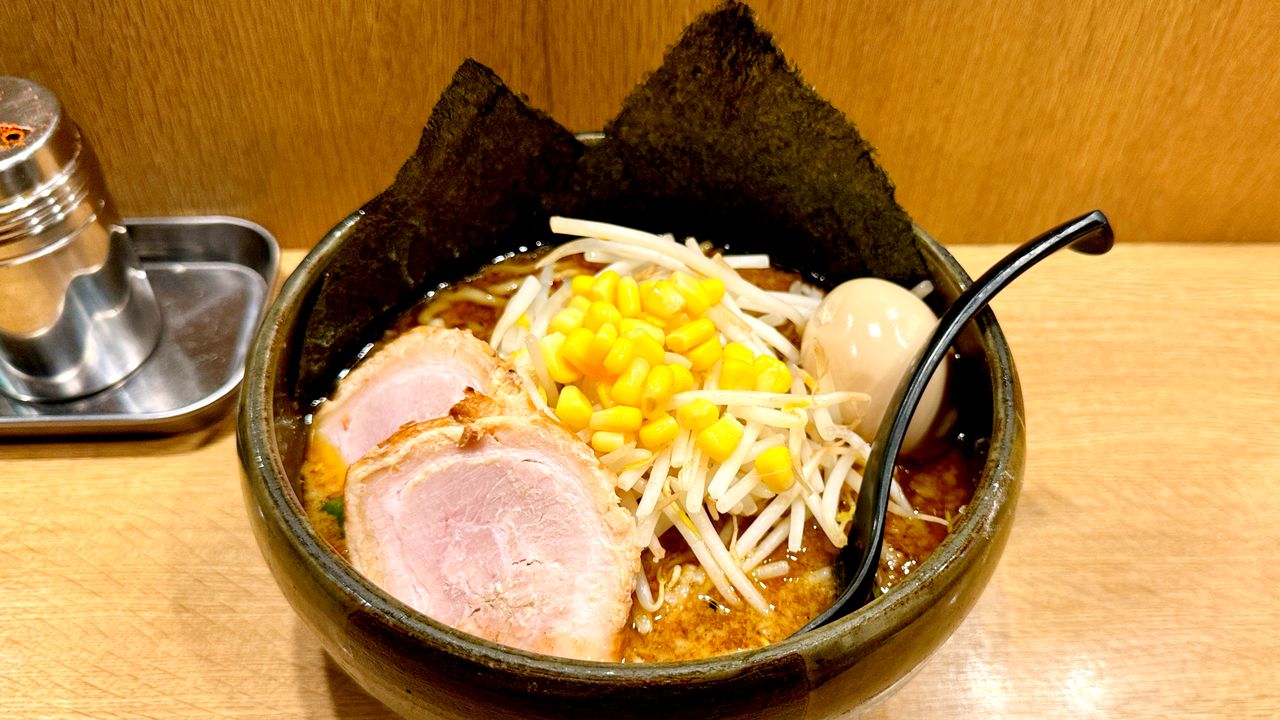
Do Miso ramen uses special-order chewy noodles made from domestically grown wheat and tapioca. (© Yamakawa Daisuke)
Menzin Saitō
The addictive ramen at Menzin Saitō, an Akihabara fixture, combines crisp vegetables with a wagyū-based, clear paitan-style soup and thick, chewy, flat noodles.
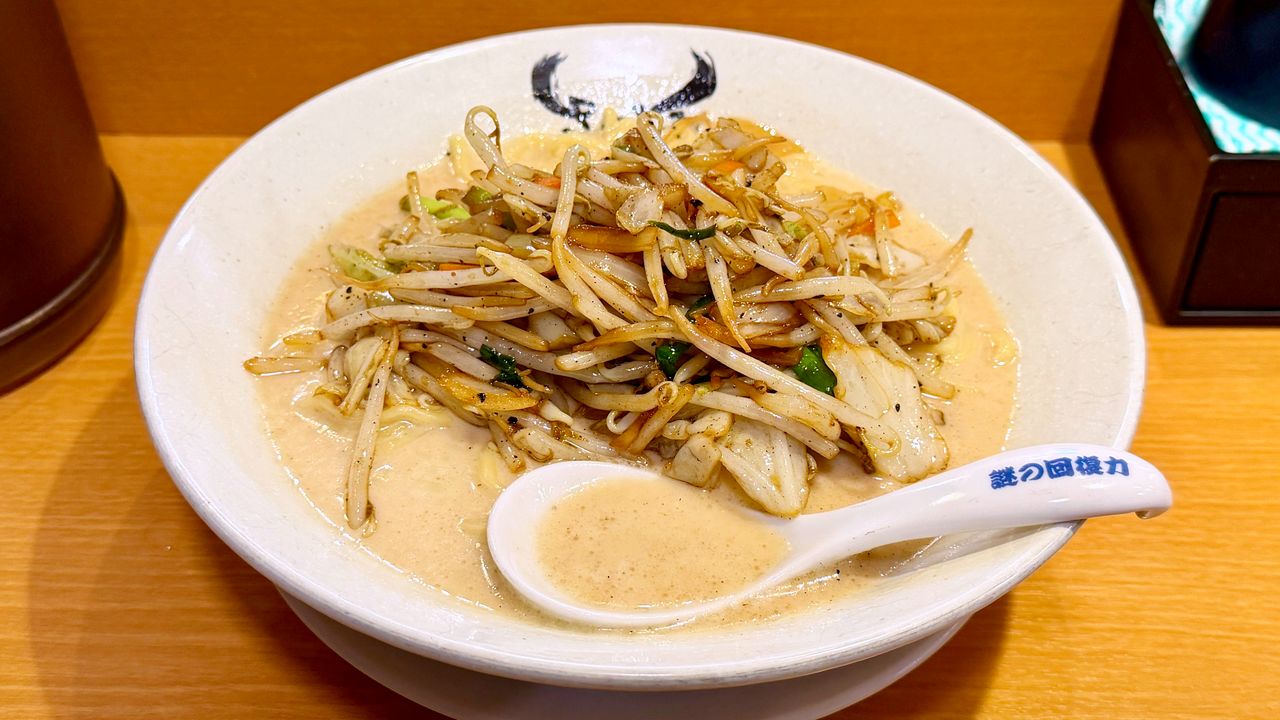
Wagyū Paitan Tanmen from Menzin Saitō combines rich paitan soup; chewy, crinkly noodles; and vegetables. (© Yamakawa Daisuke)
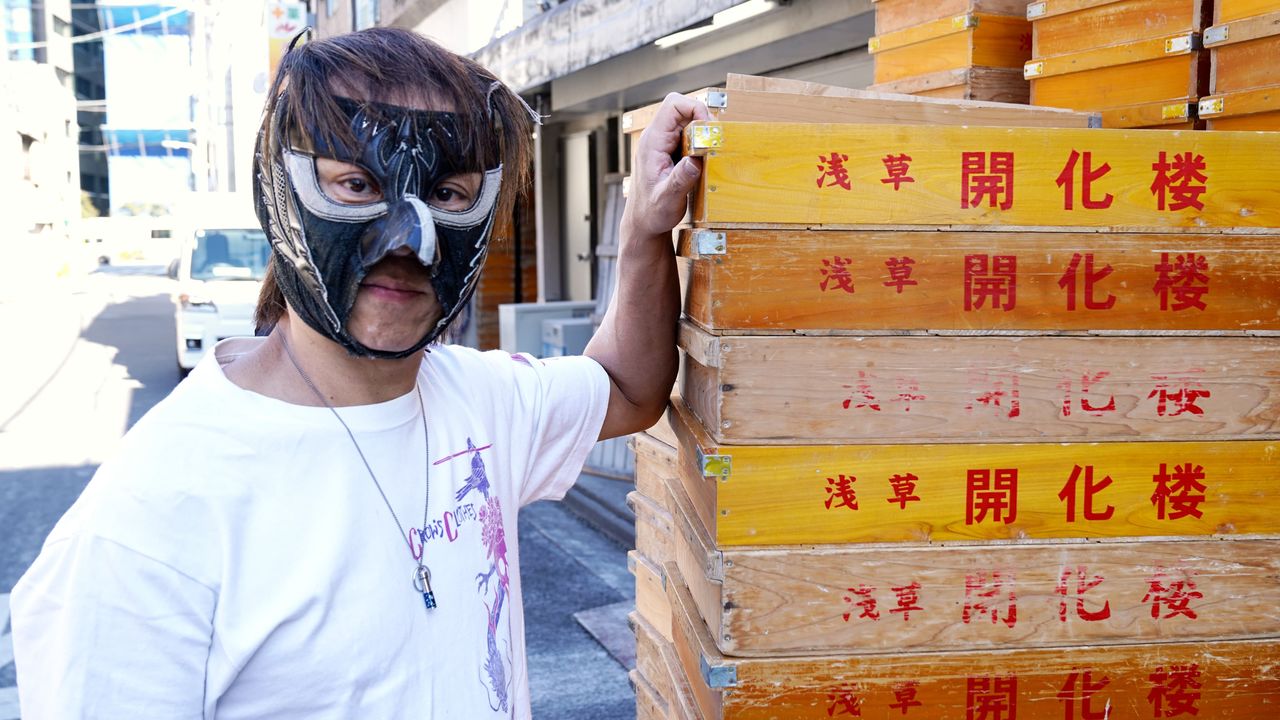
(Originally published in Japanese. Banner photo: Fushichō Karasu left the pro-wrestling behind for the world of ramen. © Yamakawa Daisuke.)