Getting Back to Basics: What Japan and China Must Do on the Taiwan Issue
Politics- English
- 日本語
- 简体字
- 繁體字
- Français
- Español
- العربية
- Русский
The Importance of Diplomatic Precedent
Sino-Japanese relations have been in a state of turmoil since Prime Minister Takaichi Sanae’s November 7 comments in Diet proceedings regarding a potential “Taiwan contingency,” involving China’s use of force to shut down sea lanes in the region or otherwise move to reunify with the island, that could require Japan to exercise its right to collective self-defense.
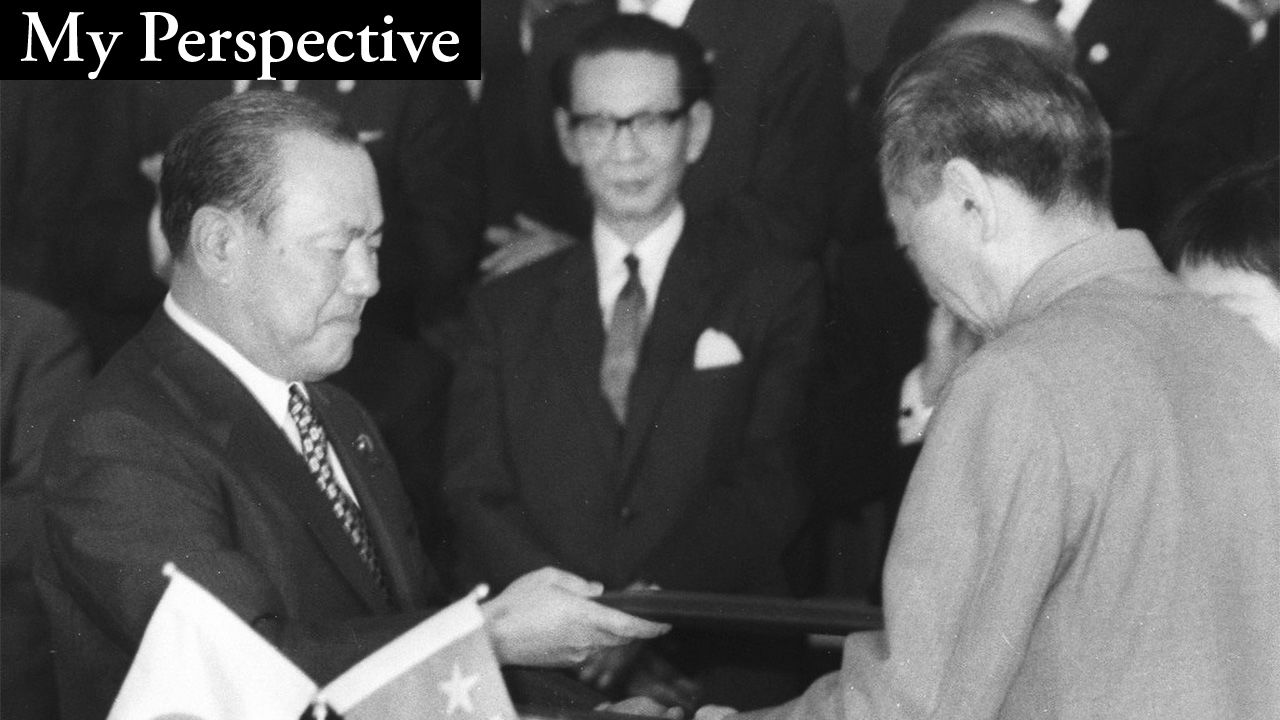
“When things get overly complicated, go back to basics and rethink them” is commonly offered advice, but in the case of the present situation between Japan and the People’s Republic of China, this dictum is one we must heed. This means a revisiting of the 1972 Joint Communiqué of the Government of Japan and the Government of the People’s Republic of China. The third article of this document, which normalized relations between the two states more than a half-century ago, reads:
The Government of the People’s Republic of China reiterates that Taiwan is an inalienable part of the territory of the People’s Republic of China. The Government of Japan fully understands and respects this stand of the Government of the People’s Republic of China, and it firmly maintains its stand under Article 8 of the Potsdam Proclamation.
A strict reading of this joint declaration indicates that Japan must go beyond merely expressing an understanding of China’s claims to “respect” them. In short, it signifies that the Japanese government should refrain from making statements or taking actions that run counter the Chinese position expressed here.
What this means is that the Japanese authorities should avoid all actions seeming to recognize Taiwan as something other than a PRC territory. Specifically, this means being cautious about any steps that might be construed as publicly acknowledging Taiwan as an independent political entity on the international stage.
Taking this a step further, we should also view this as implying that any sort of politically significant words or deeds—setting aside private-sector interactions in economic, cultural, sports, and other spheres—should be avoided by representatives of the Japanese government. The upshot is that Japanese officials need to be extraordinarily cautious about the appropriateness of their interactions with political leaders and other key figures from Taiwan.
It is hardly surprising, then, that Beijing has responded negatively to Prime Minister Takaichi’s statement. In the end, the Japanese authorities have to adhere to the stance of respecting the Chinese position on the Taiwan issue.
Caution Needed on Both Sides
At the same time, the 1972 declaration also spelled out aspects that the Chinese side must pay heed to—namely, that Tokyo honors its side of the bargain in line with Article 8 of the Potsdam Proclamation, declaring in part: “Japanese sovereignty shall be limited to the islands of Honshu, Hokkaido, Kyushu, Shikoku and such minor islands as we determine.” The fundamental meaning here is that, upon its surrender at the end of World War II, Japan gave up its former colonial holdings, including Taiwan, with their disposition to be determined internationally (by the Allied victors) thereafter. The significance of this passage is that the Taiwan question is not one to be decided by China unilaterally, but rather as an international issue. China, too, is required to show its understanding of this position.
The 1972 Joint Communiqué and the Treaty of Peace and Friendship between Japan and China, signed subsequently in 1978, also represent agreements between the two sides that, as spelled out in the former document, “Japan and China shall in their mutual relations settle all disputes by peaceful means and shall refrain from the use or threat of force.” Simply stated, this means that any conflict arising in connection with Taiwan, by definition an international matter, is one that China must not engage in with force as a tool for its resolution. And Japan, for its part, is required to avoid its own use of force and to seek resolution through peaceful means.
If Prime Minister Takaichi’s words or actions, or the response of the Chinese government to them, contradict the content of the 1972 Joint Communiqué, then it falls upon both nations to reflect seriously on the spirit of this document.
(Originally published in Japanese on December 8, 2025. Banner photo: Japanese Prime Minister Tanaka Kakuei, at left, and Chinese Premier Zhou Enlai, at right, signing the Sino-Japanese Joint Communiqué on September 29, 1972. © Kyōdō.)