Not Just Left or Right: Increasingly Complex Choices in Japanese Politics
Politics- English
- 日本語
- 简体字
- 繁體字
- Français
- Español
- العربية
- Русский
Big Political Moves at the Beginning of 2026
Prime Minister Takaichi Sanae’s decision to dissolve the Diet on January 23, the first day of the 2026 ordinary session, and call a snap House of Representatives election for February 8 came as a shock to many observers. It also set in motion a highly unpredictable political scene.
This has already seen a move by Kōmeitō—the longtime junior partner to Takaichi’s Liberal Democratic Party that left the coalition in October last year after her election as LDP president—to join forces with the Constitutional Democratic Party of Japan in a new party, the Centrist Reform Alliance. Japan’s political center of Nagatachō has been rocked by the major changes sweeping the stage in the one short week following the first media reports that the prime minister was considering a Diet dissolution.
The newly formed CRA has drawn mixed responses on social media. Some supporters of Kōmeitō and the CDPJ are clearly pleased that the new party is shedding its leftist image and erecting a larger tent that can attract broader public support. At the same time, there are many who question the vague nature of the “centrism” indicated in the party’s name, noting that it is not a moniker likely to appeal to younger voters in particular.
Measuring Japan’s Left, Right, and Center
It is worth exploring how many voters actually occupy the centrist zone this party is aiming at. My company JX Press and the election information website operator Senkyo Dot Com carried out a public opinion survey in October 2025. In it we asked Japanese voters to indicate their political alignment on a 10-step scale ranging from conservative to liberal. We found that some 28% of respondents identified firmly as conservative, 20% as liberal, and 52% as centrist—neither of the above.
These results show that going by the standard yardstick of conservative or liberal, right or left, the largest volume zone of the voting population lies in the centrist middle. The leaders of the CRA are aiming precisely at this zone with their new party.
At the same time, we must pay heed to certain shifts in voter behavior seen in recent years. Prominent among these was the support for Sanseitō, which made significant strides in the July 2025 House of Councillors election. Public opinion surveys carried out before the election and exit polls painted an unexpected picture where around half of self-described supporters of the left-leaning Reiwa Shinsengumi cast votes for the right-leaning Sanseitō in some districts. There were also a growing number of self-described conservative voters who opted for candidates from opposition parties rather than supporting the ruling LDP, a seemingly natural fit.
In Japanese elections of the past, the “fracturing of the conservative vote” tended to describe electoral districts where multiple candidates with LDP backgrounds faced off against one another. Today, though, when even opposition parties are picking up votes from conservative voters, this “conservative fracture” definition appears to be more and more a thing of the past.
More Than One Axis to Worry About
In short, politics in Japan no longer operates on a simple axis from right to left, or from conservative to liberal. There appear to be entirely new axes in play guiding voters’ choices at the ballot box. In labeling itself “centrist,” the new CRA may be creating a sense of discomfort among voters who are no longer thinking along the traditional axis where it sits at the center. This mismatch may lie at the heart of the cognitive dissonance we now see at work in politics.
One such new axis might be defined as “economic conditions.” In an opinion poll JX Press carried out with the television broadcaster TBS a week before the July 2025 upper house election, we asked respondents to describe their own standard of living compared to others around them on a seven-level scale. Among those who said they intended to vote for a Sanseitō candidate, fully 48% selected one of the two lowest levels on the scale, something not seen for supporters of any other party. The propensity of those on the lower end of the economic ladder to vote for newer, non-establishment parties, whether Sanseitō on the right or Reiwa on the left, marks the presence of an economic axis oriented from precarity to security, functioning quite separately from the standard right/left ideological axis.
It is also important to explore the axis defined by where voters get their information. Supporters of parties like Sanseitō, the DPFP (Democratic Party for the People), and Reiwa—all of which are very much rooted in the internet—tend more to look to YouTube, X (formerly Twitter), Tiktok, and other online channels for their information. For these voters, the established parties, which rely on exposure in traditional media, appear to have very little real-world impact on their lives. Here, then, we have another axis to consider, running from old to new media as a source of input for voters.
Finally, there is a clear generational dynamic at work. In the summer 2025 survey by JX Press and TBS, we displayed a range of political views and asked respondents to indicate their level of agreement with them. One of these views was “Japanese politics excessively favors the elderly at the expense of the working-age generations”—a statement that gained agreement from fully 56% of respondents. For people in this group, viewing Japan’s approach to government as a “silver democracy” of sorts, many of the established parties come across as something to oppose for their preferential treatment of the elderly. This builds growing support for parties like the DPFP that can brand themselves as speaking for the younger, working generations.
The upshot of this all is that the choices before voters no longer lie on a single, simple political axis running from left to right. There are diverse factors in play, from income levels to information sources and age, all forming an increasingly multidimensional structure for Japanese politics.
Politicians and journalists alike need to accurately recognize the multidimensional nature of the landscape they are grappling with. To fail to do so is to be viewed as “out of it,” and removed from the conversation entirely. Such is the nature of the political age we are now entering.
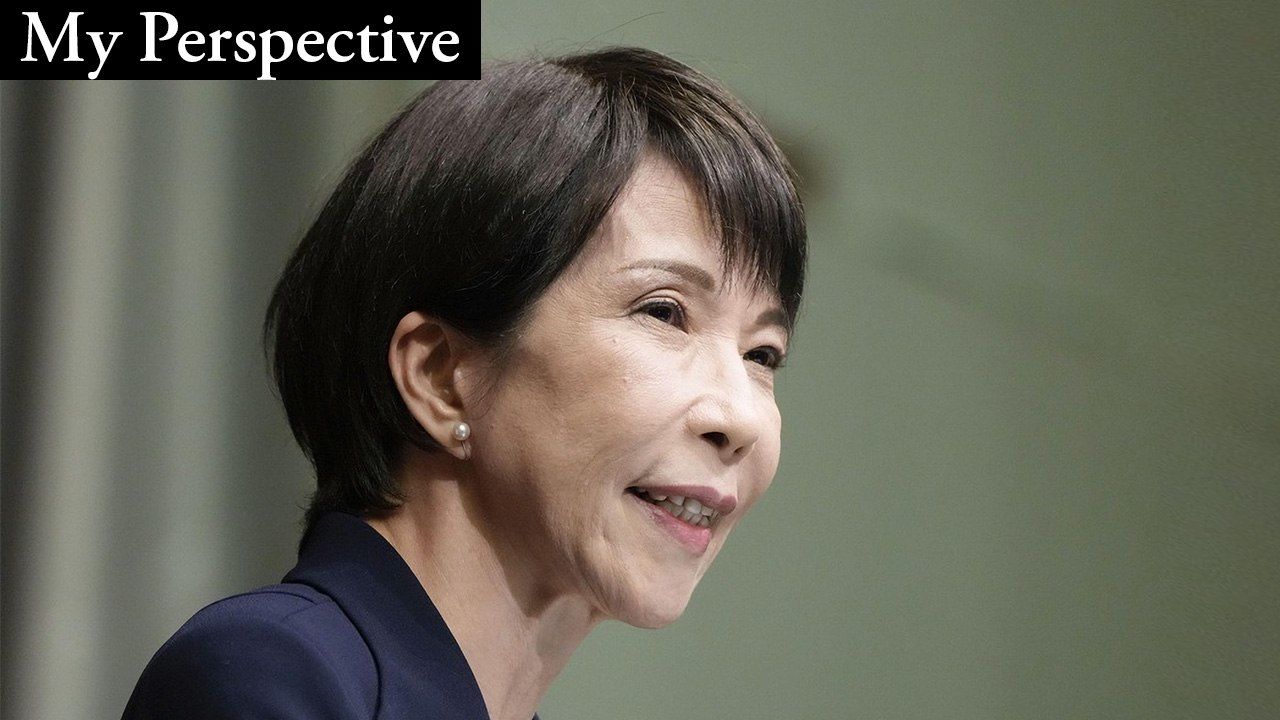
(Originally published in Japanese. Banner photo: Prime Minister Takaichi Sanae announces on January 19, 2026, that she will dissolve the Diet on January 23, the opening day of its ordinary session. Taken at the Kantei in Tokyo. © Kyōdō.)