Komiya Yasumasa: The Evolving Artistry of a Timeless Japanese Dyeing Tradition
Culture History- English
- 日本語
- 简体字
- 繁體字
- Français
- Español
- العربية
- Русский
A Dyeing Tradition That Elevates the Wearer
Edo komon dyeing traces its origins to the kamishimo formal attire of samurai in the Edo period (1603–1868). From afar, the dyed cloth appears as a solid color, but up close, extremely intricate patterns emerge—repeating motifs that carry a quiet rhythm and an understated elegance.
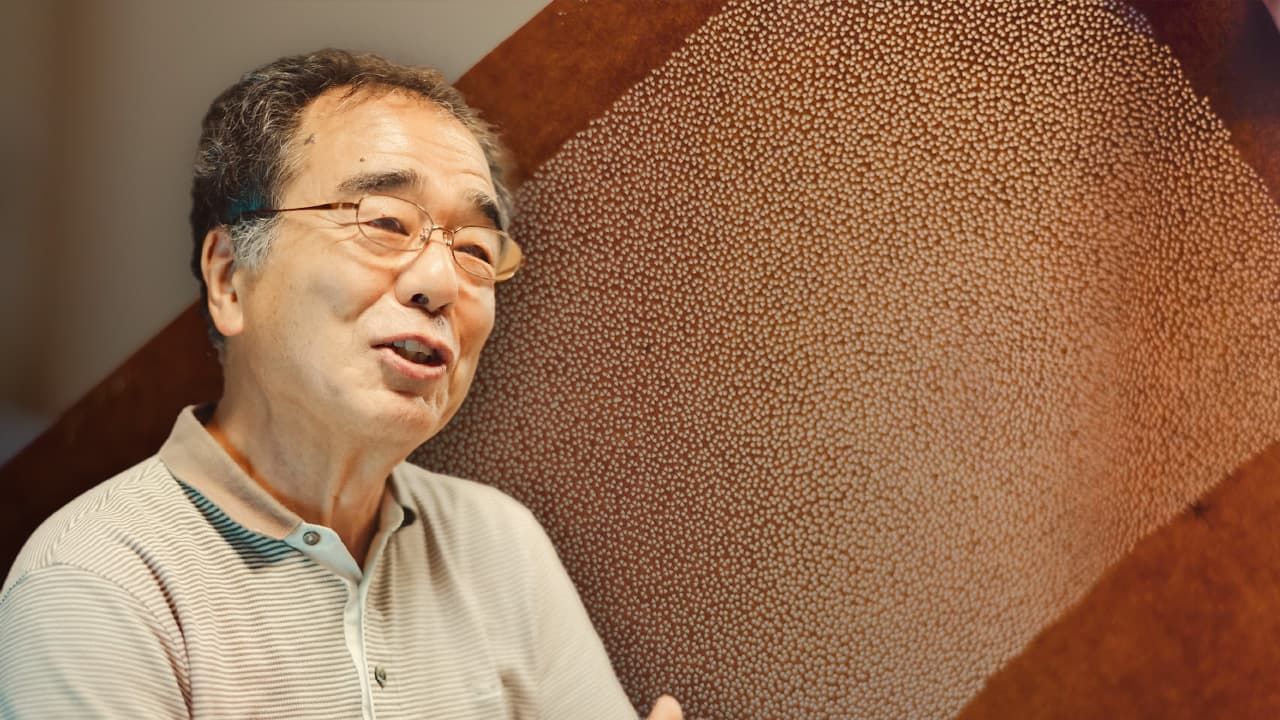
“Edo komon comes alive only when someone wears it,” says master artisan Komiya Yasumasa. “Its beauty lies in how it elevates the wearer. That’s also what makes it so difficult and formidable.”
Komiya is the third‑generation head of a dyeing studio in Tokyo’s Katsushika that has been central to the development of Edo komon. In 2018, he became the third consecutive member of his family—after his grandfather Kōsuke and father Yasutaka—to be named a living national treasure.
The depth and subtlety of Edo komon come from dyeing an entire bolt of cloth with extremely fine patterns using hand‑carved stencils. The precision required can be unforgiving.
“Even tiny differences in hand pressure or the condition of the materials will change the size of each dot,” Komiya explains. “That’s why the patterns dyed by my father are not exactly the same as mine. Stencil carving, too, is done in millimeter increments—there are parts where you rely entirely on intuition. Naturally, the finish varies from one carver to another.”
The final result can therefore appear completely different, even when using the same traditional motif, depending on the dye artisan and stencil carver.
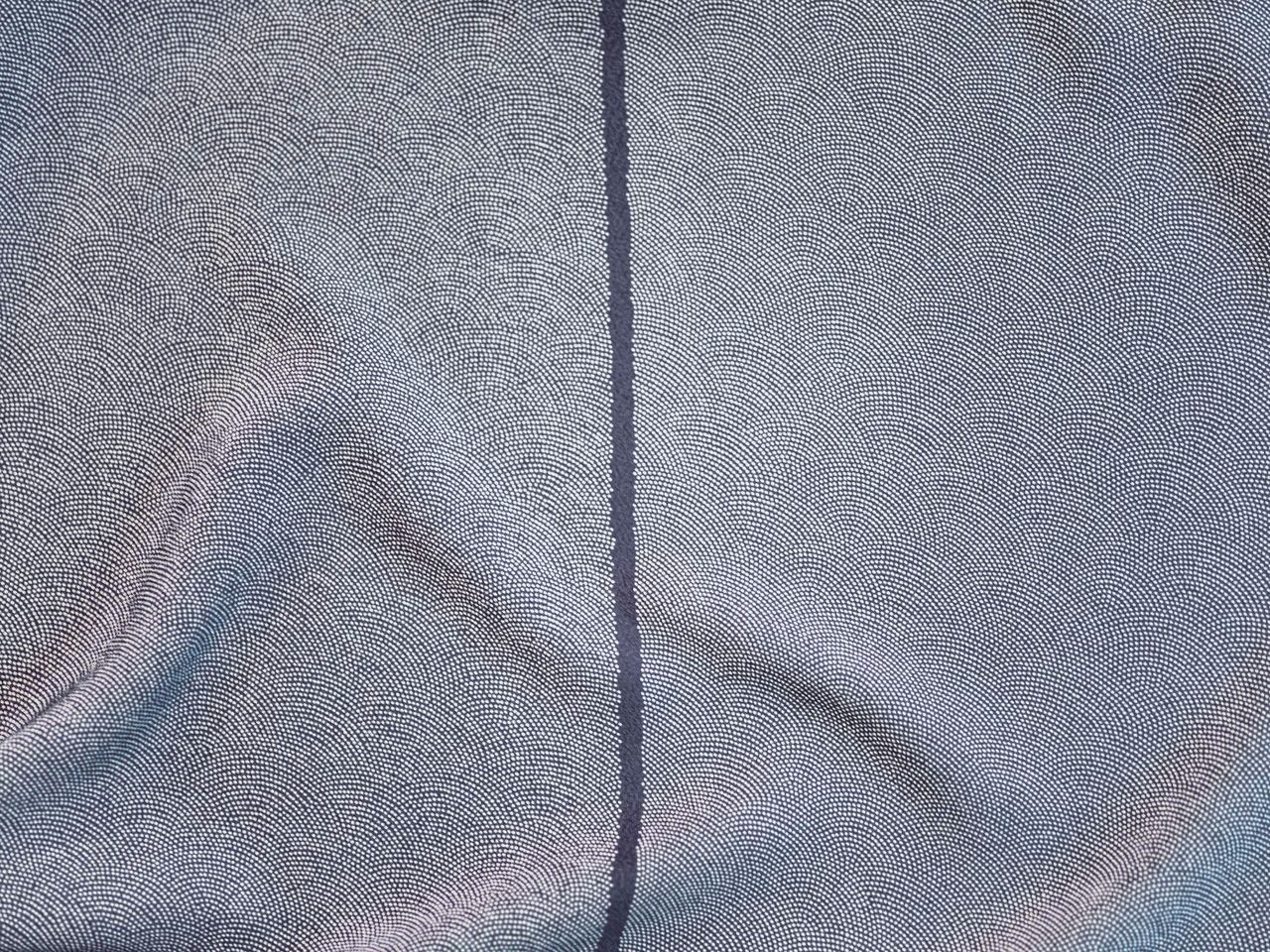
A same (sharkskin) komon pattern used by the Kii branch of the Tokugawa shogunate. The dots on the right are evenly spaced, while those on the left show slight irregularities—evidence of how different stencils produce distinct results. (© Mori Masatoshi)
Patterns Finer Than a Needle
Creating Edo komon begins with preparing a resist paste made from glutinous rice and lime. The cloth is stretched across a long worktable, and the stencil is placed on top, after which the paste is applied—a step known as katatsuke. This determines which areas will absorb the dye and which will not. The base color is then brushed across the entire surface, and the cloth is steamed to fix the dye, washed, dried, and finished, after which minor adjustments are made.
Among these steps, katatsuke is especially crucial. A stencil roughly 20 centimeters long must be aligned and applied repeatedly so the pattern continues seamlessly across nearly 13 meters of fabric. The paste must be applied with full-body strength, evenly, and without blotches.
Komiya’s mastery is most evident in his renji (lattice‑slat) patterns. Inspired by the thin wooden slats used in traditional windows and transoms, renji consists of ultrafine stripes layered in multiple tiers, creating a subtle sense of depth and movement. His renji works are widely regarded as the pinnacle of the craft.
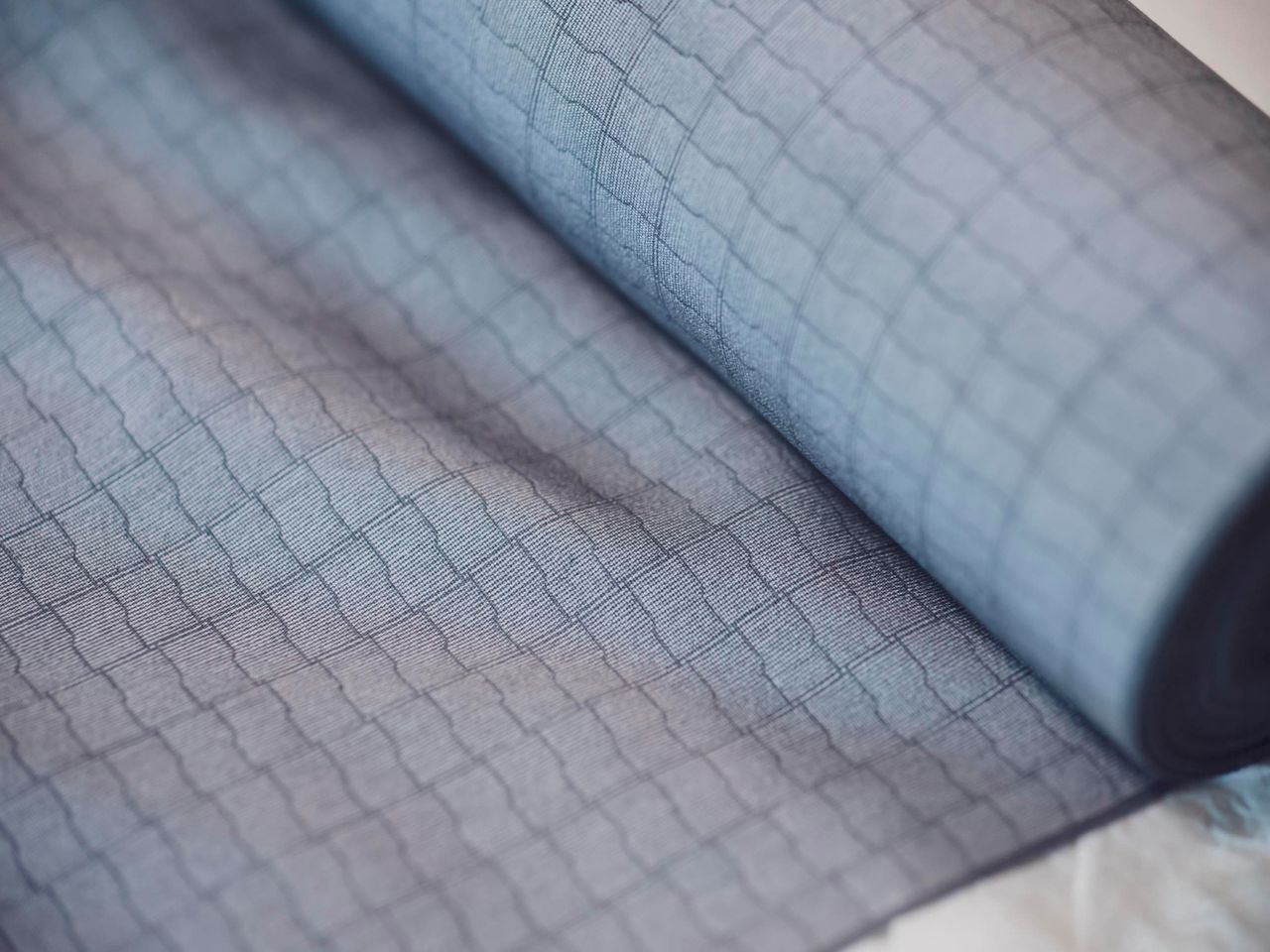
A bolt of renji-patterned cloth. Each square contains stripes so fine they are almost invisible to the naked eye. (© Mori Masatoshi)
“Renji requires fitting more than forty stripes into a space of just three centimeters,” Komiya explains. “That means each stripe is thinner than a needle. And because the pattern is dyed identically on both sides, the stencils must align perfectly front and back. Carving the stencil and applying it to the cloth require extraordinary precision; this is very difficult work demanding absolute, life-or-death focus.”
Production of genuine Edo komon is not possible unless each component of the process—dyeing skill, stencil carving, traditional washi paper, paste, brushes—is of the highest quality. The Komiya family has thus devoted itself not only to dyeing but also to collecting and preserving stencils and training carvers.
Stencils Are Key to the Art Form’s Survival
The first‑generation head of the Komiya studio, Kōsuke, began studying katatsuke at age 11 under Asano Mojūrō, a renowned komon dye artist in Asakusa, Tokyo. After completing his apprenticeship, Kōsuke traveled to workshops across Japan to refine his skills before establishing his own studio in 1907.
At the time, artisans began turning to imported synthetic dyes. Kōsuke developed new techniques using these dyes and soon became recognized as a katatsuke expert. When he was designated a living national treasure, the term Edo komon was coined to distinguish these ultrafine patterns from other stencil-dyed komon styles.
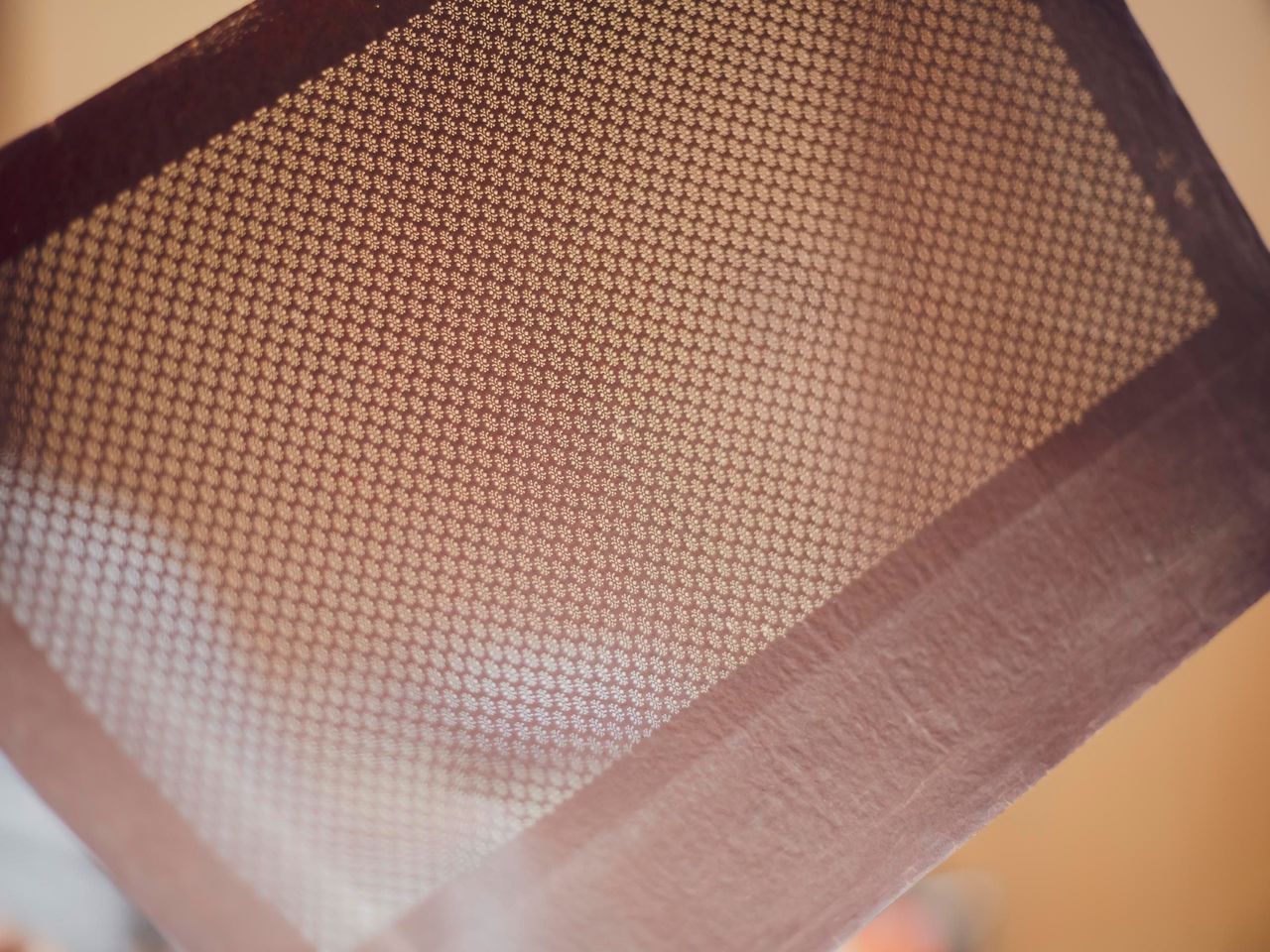
A hand-carved stencil so fine as to be almost transparent. (© Mori Masatoshi)
“I’ve heard that during World War II, my grandfather used to say we’ll somehow manage as long as we have the stencils,” Komiya recounts. “He’d sleep with the stencils beside his pillow, and when the air raid sirens sounded, he’d flee to the shelter clutching them. He also said that if you have any money to spare, ask a carver to create even one more stencil. He was no doubt determined to protect the culture of Edo komon.”
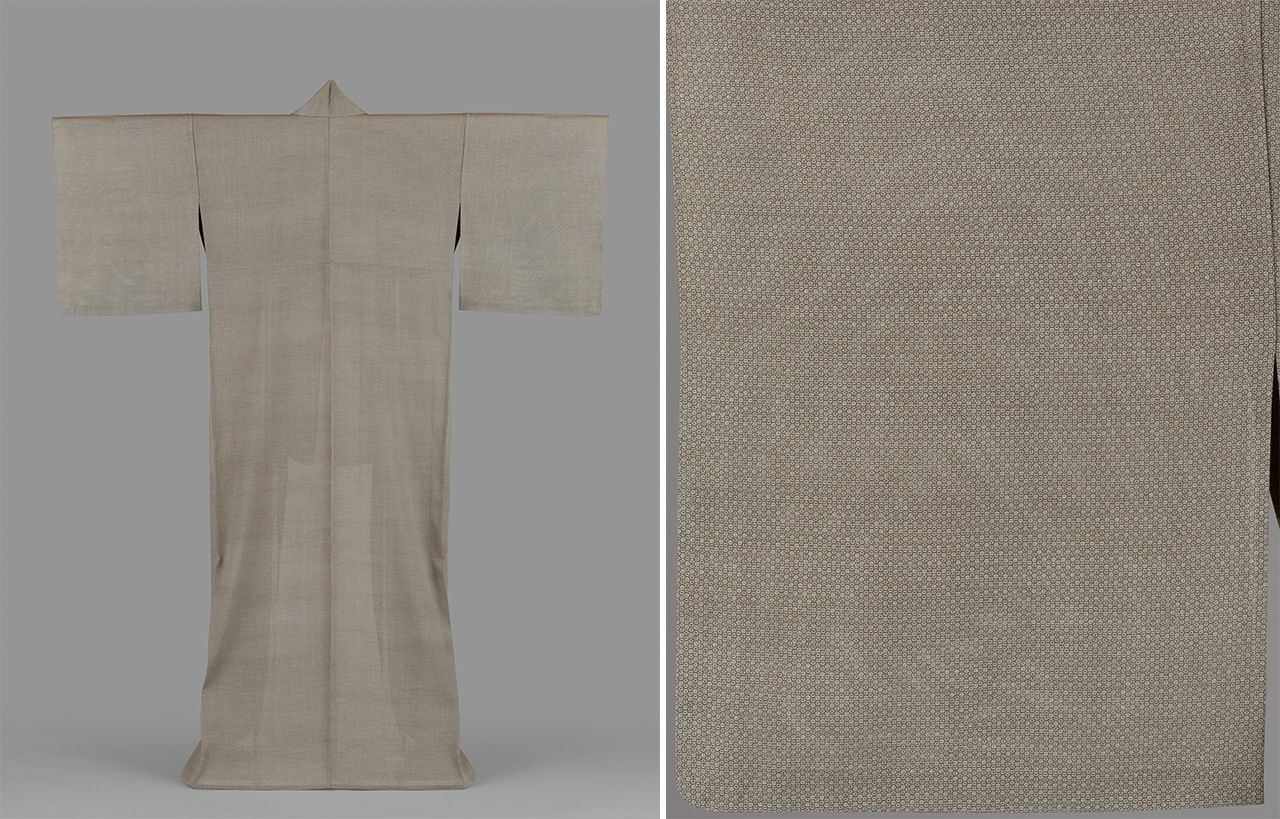
An Edo komon summer silk kimono with a nashi no kirikuchi (pear cross section) design, blending traditional techniques with modern motifs. (Courtesy of Agency for Cultural Affairs)
Kōsuke’s son, Yasutaka, trained under his father’s strict guidance and became the second-generation head of the Komiya studio. Yasutaka worked with washi artisans to improve the quality of the paper used for stencils and to revive traditional komon patterns. Survival of Edo komon depends on stencils—and stencils cannot be made without quality washi.

Detail of an Edo komon kimono with a goku‑same design. Among sharkskin patterns, goku‑same is the most delicate and elegant. Exhibited at the forty-eighth Japan Traditional Textile Arts Exhibition. (Courtesy the Japan Kōgei Association)
Passing On the Spirit of Authenticity
For Yasumasa, taking on his family trade was a natural choice. He began his apprenticeship under his father in 1972 after finishing junior high school.
“My father told me to master all aspects of the art before I turned forty. I remember feeling, at age thirty‑five, that I had learned everything I needed to know. That was a peak moment for me. Since then, with each passing year, I’ve been focused on deepening the craft.”
Like his father and grandfather, he has been actively engaged in preserving materials and nurturing artisans, studying washi, paste, and cloth, and working closely with stencil-carvers. The renji stencils, too, were created through repeated discussions and trial and error with carver Masui Ippei and others—masters of their craft who are now quite advanced in age.
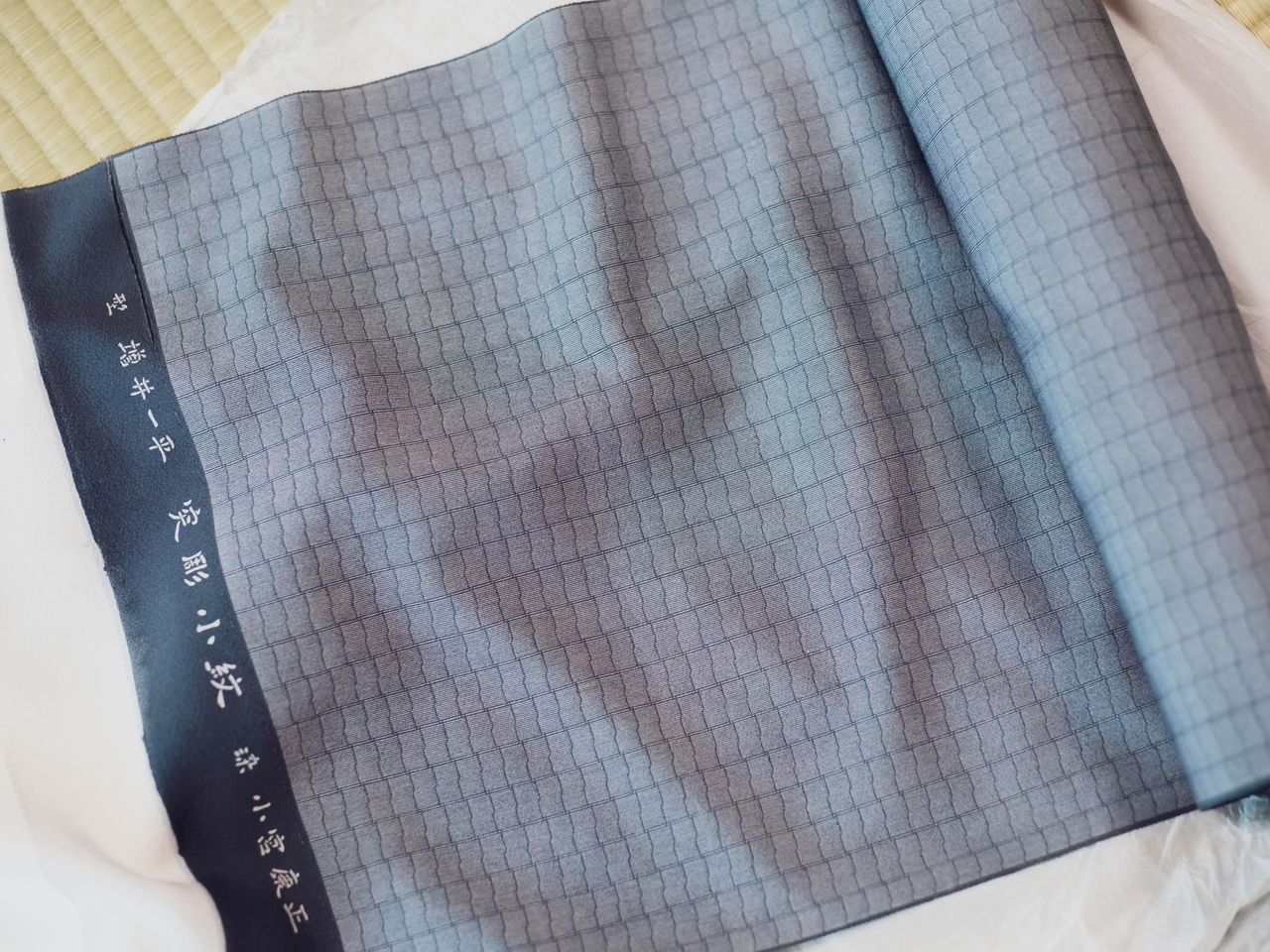
This bolt of cloth bears the name of stencil carver Masui Ippei. (© Mori Masatoshi)
The situation today, however, is increasingly precarious, Komiya notes. “We can no longer obtain the high‑quality washi needed for stencils. The washi my father worked so hard to develop is no longer available—the artisans have passed away. I’m personally involved in various initiatives to revive the essential skills and materials required for stencil production, notably through the Ise stencil preservation society, but unfortunately, renji stencils can no longer be produced. At this rate, it may not be long before Edo komon itself disappears.”
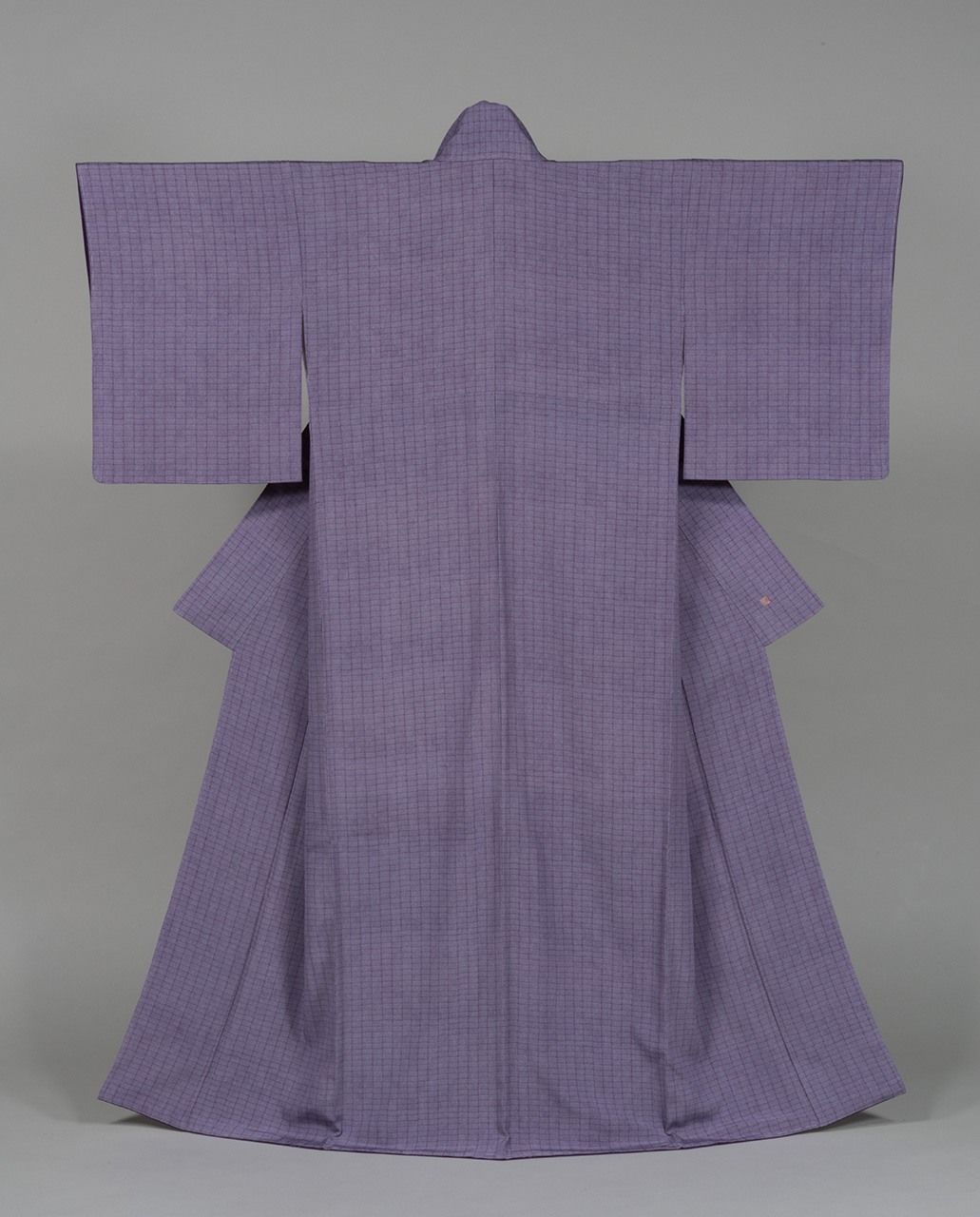
A highly renowned tsukibori komon kumichigai renji kimono. (Courtesy the National Museum of Modern Art, Kyoto)
Komiya also bears responsibility for transmitting Edo komon skills to the next generation, namely, his sons Yasuyoshi and Kōhei.
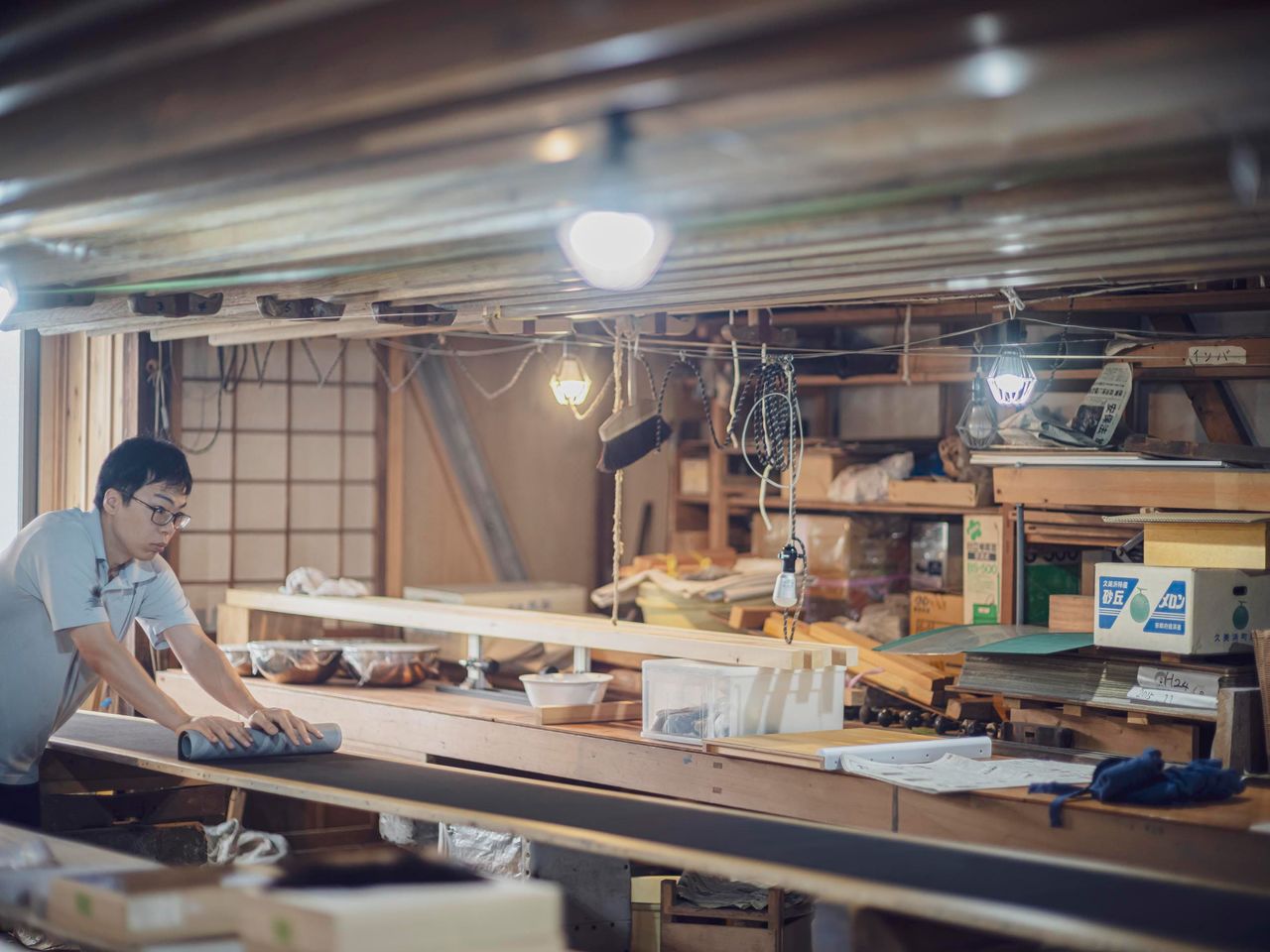
Komiya’s second son Kōhei, fully absorbed in his work in the studio. (© Mori Masatoshi)
“Preserving tradition doesn’t mean obstinately sticking to old ways,” Komiya says. “Our work undergoes subtle changes and evolves on a daily basis. We adjust our techniques and materials with the times, so what we produce today is always at the cutting edge. In other words, the most important thing to pass on from generation to generation is the spirit of authenticity—a mindset that values excellence in artisanship. As long as that survives, the rest will take care of itself.”
This sentiment echoes his strong desire not only to keep a family tradition alive but also to fully recognize its essence and carry it forward.

A sample book made from offcuts of past works. (© Mori Masatoshi)
Machine‑made komon can now be found on the market, he notes, but such products are uniformly flat and have none of the subtle dynamism that only handwork can produce.
The skills held by generations of master artisans in the Komiya family have evolved like a continuous flow, almost as if a single individual were refining and developing them across generations. Yasumasa epitomizes this philosophy in his reply to a question about what he hopes to create next.
“My responsibilities as a national living treasure are less about creating specific works and more focused on advancing techniques so they can be passed on to future generations. Tradition is like a stream that links—and ultimately transcends—the individuals engaged in it. New ideas about what to try next come to me quite naturally in my daily practice. Our work is simply an accumulation of these small insights.”
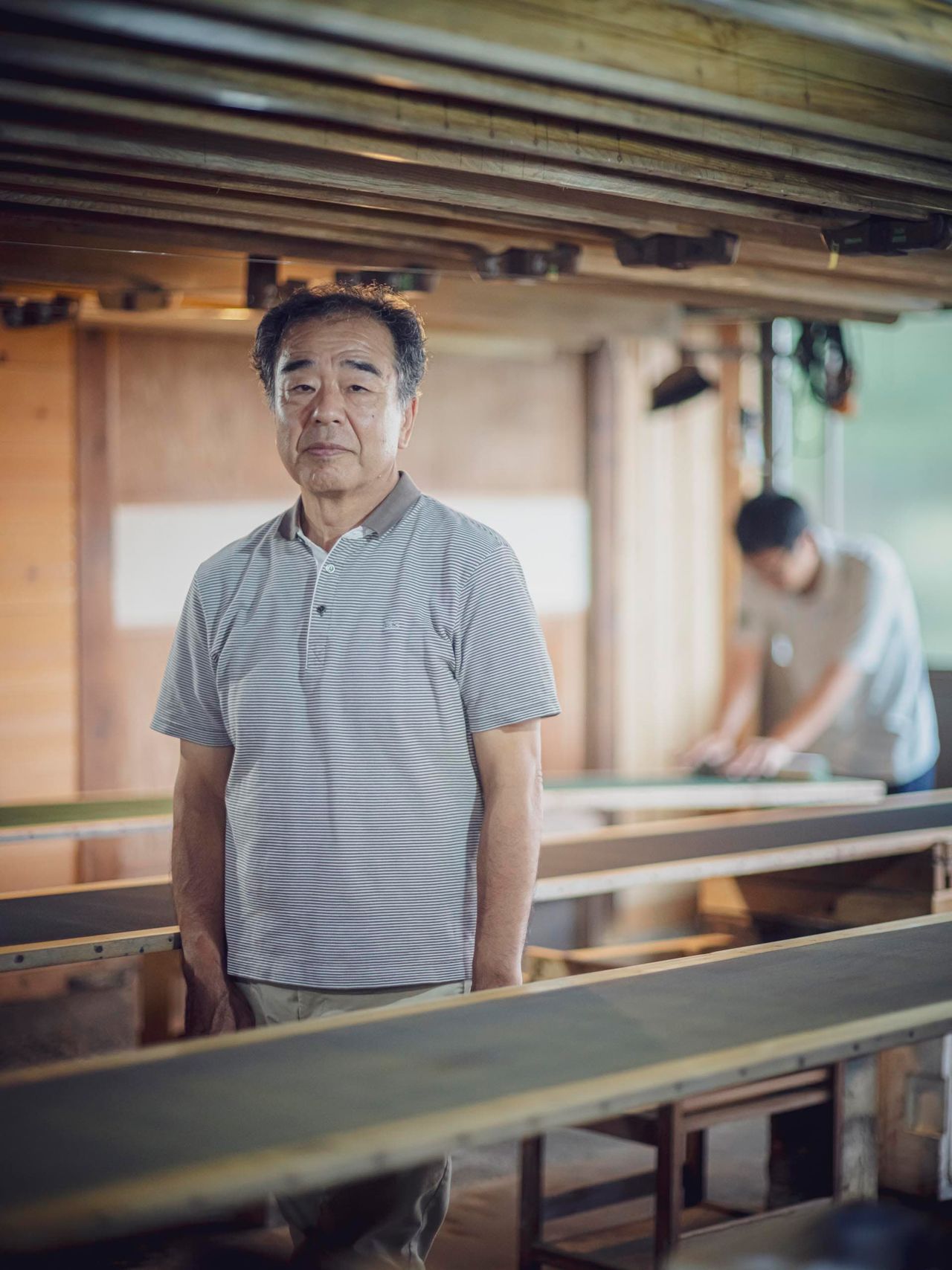
Inside the workshop. (© Mori Masatoshi)
(Originally published in Japanese. Interview and text by Sugihara Yuka and Power News. Banner photo: Komiya Yasumasa, with an Edo komon stencil pattern in the background. © Mori Masatoshi.)