
Building Blocks: The Basic Ingredients Behind Japan’s Flavors
Wakame: A Popular Seaweed Available in Many Forms All Year Round
Food and Drink Culture Lifestyle- English
- 日本語
- 简体字
- 繁體字
- Français
- Español
- العربية
- Русский
Wakame grows extensively along the coastlines of East Asia and is one of the most familiar types of seaweed for Japanese people. However, very few know its true form.
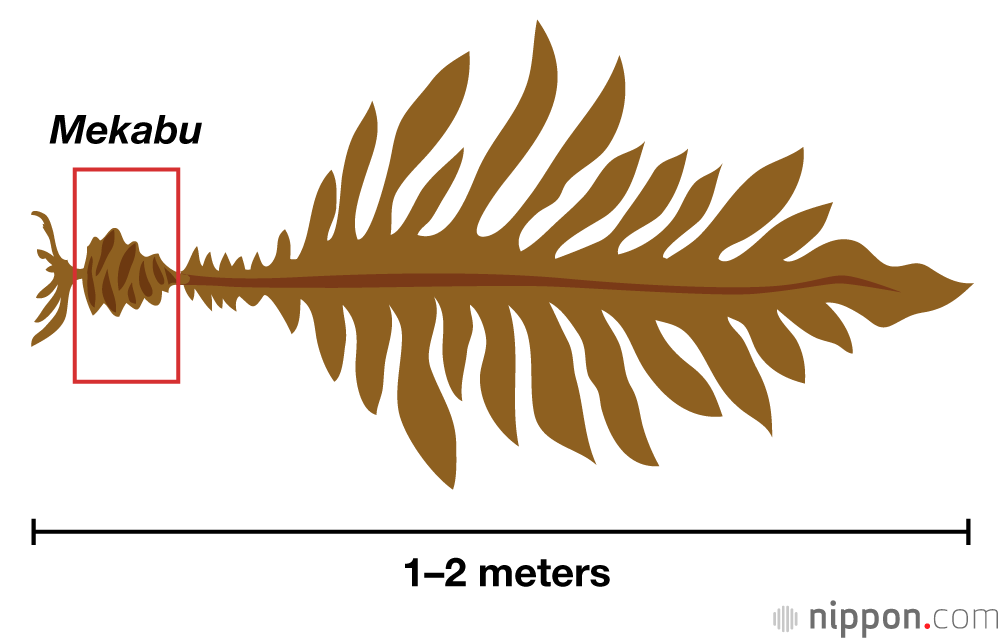
When seen as an ingredient in miso soup or pickles, it is deep green, almost black and has been cut into bite-size pieces. In reality though, this large algae is brown and can grow one to two meters in length.
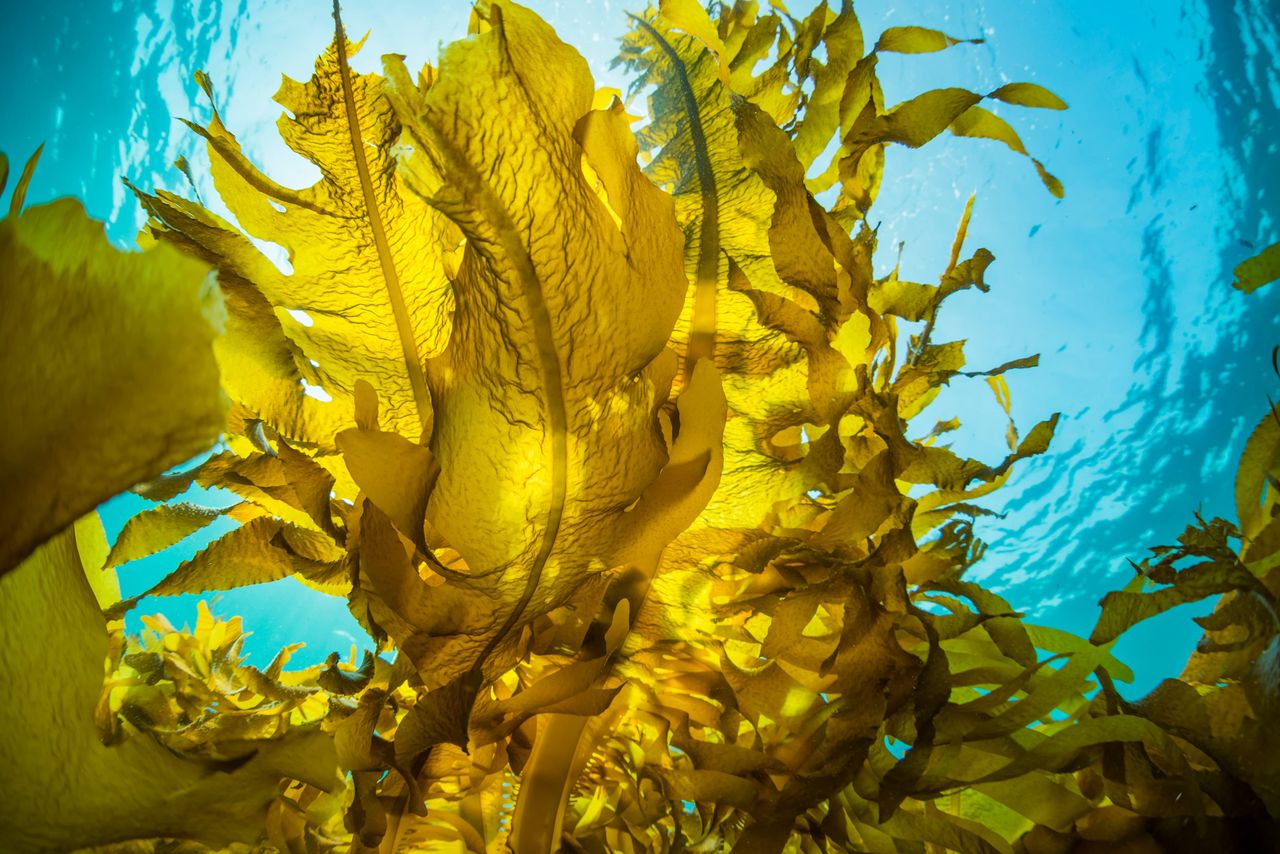
Wakame in its natural element. (© Pixta)
Wakame is Best in Spring
While the wakame generally available is either salted (pickled in salt) or dried, meaning it can be bought all year round no matter the season, it actually has a highly seasonal annual life cycle.
This cycle begins in the early summer, as the seawater temperature starts to rise, with the wakame releasing spores into the sea from the ruffled, screw-like flowering sprout found at its base, known as mekabu. The wakame, having completed its task of creating the next generation, dies back and the fresh spores attach themselves to rocks and other hard surfaces in order to survive the summer. When the seawater temperatures drop in fall, the spores develop into eggs and sperm and, following fertilization, young wakame sprouts emerge from the fertilized eggs, growing rapidly through the winter until they reach harvest time in the spring. This is the life cycle of wakame.
From around 1960, wakame farming techniques were established on the Sanriku coast, which extends along Miyagi and Iwate Prefectures, and today most wakame on the market is from cultivation areas. Enzō wakame, which is wakame that has been blanched immediately after harvesting and rubbed with salt, has a particularly long shelf-life, while also keeping its flavor and crunchy texture.
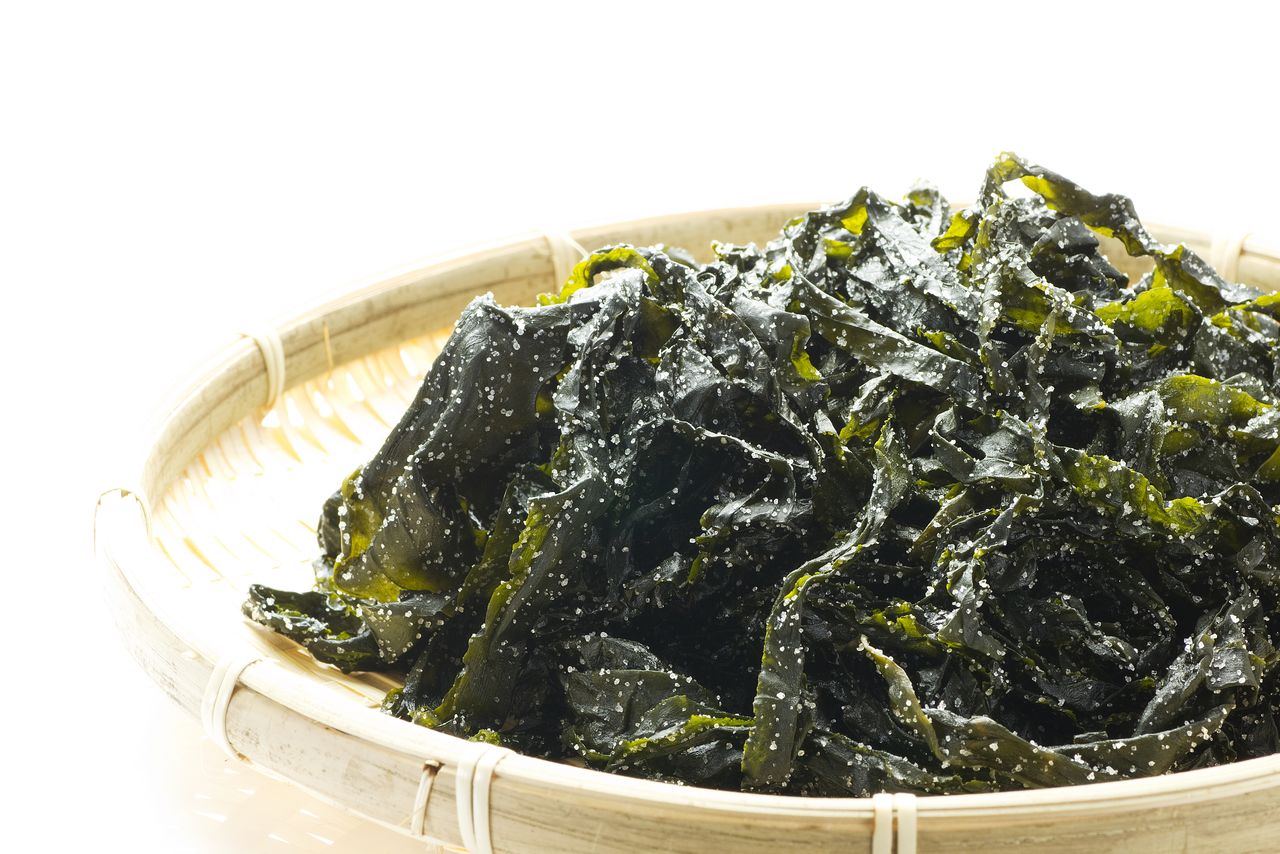
Enzō wakame (© Pixta)
Incidentally, a surprising number of people eat mekabu ponzu, a popular “slimy” menu item at izakaya, without knowing it comes from the spore-producing sprout of wakame. During harvest time in the spring, the screw-like mekabu are available in supermarkets for preparing at home, but they are slipperier than they appear.
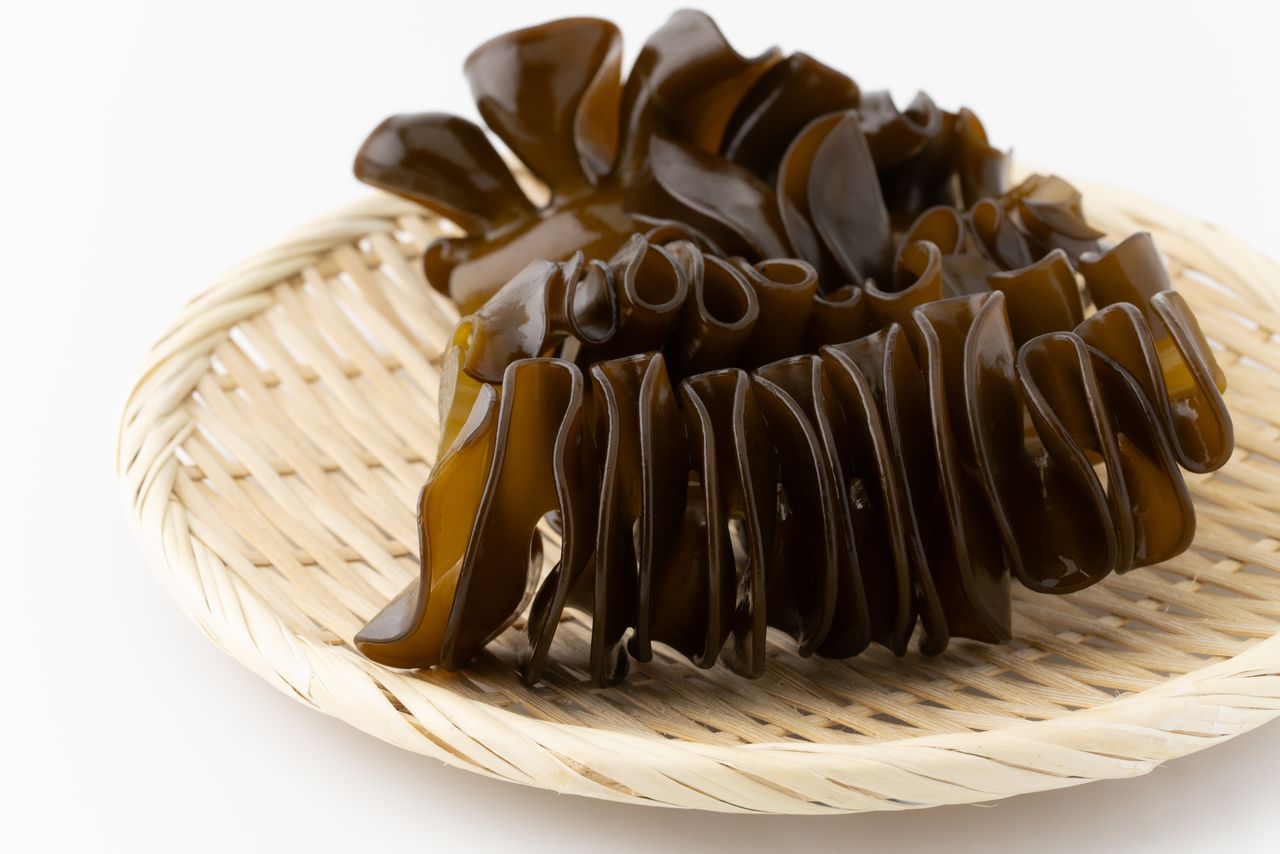
Raw mekabu (© Pixta)
A Food Enjoyed in Ancient Times
Wakame has long been a food source in Japan and has been found together with pottery dating from the Jōmon Period (ca. 10,000 BC–300 BC) at the Kamegaoka archeological site in Tsugaru, Aomori. The Taihō Code, enacted towards the end of the Asuka Period (593–710), stipulated that wakame could be used to pay taxes, and later in the Nara period (710–94), the Man’yōshū includes songs mentioning this seaweed. By the Heian Period (794–1185), it was already being used in dishes such as tsukudani (chopped wakame simmered in soy sauce, mirin, and sugar), indicating it was a familiar and valuable ingredient for Japanese people.
Its deep black color has given rise to many sayings related to hair, including “eating wakame makes your hair thicker” and “you won’t go gray,” but unfortunately these are not backed by scientific evidence. Even so, wakame is gaining attention as a health food due to its high mineral content, especially calcium and magnesium, and because it is rich in dietary fiber and vitamins.
Related Content
Find ways to use wakame in your own cooking in “Dishes for Enjoying the Subtle Flavor of Wakame Seaweed.”
(Originally published in Japanese. Banner photo © Pixta.)