Building Blocks: The Basic Ingredients Behind Japan’s Flavors
Katsuobushi: The True Umami of Japanese Cuisine
Food and Drink Culture Lifestyle- English
- 日本語
- 简体字
- 繁體字
- Français
- Español
- العربية
- Русский
Katsuobushi: Japan’s Fishy Flakes of Flavor
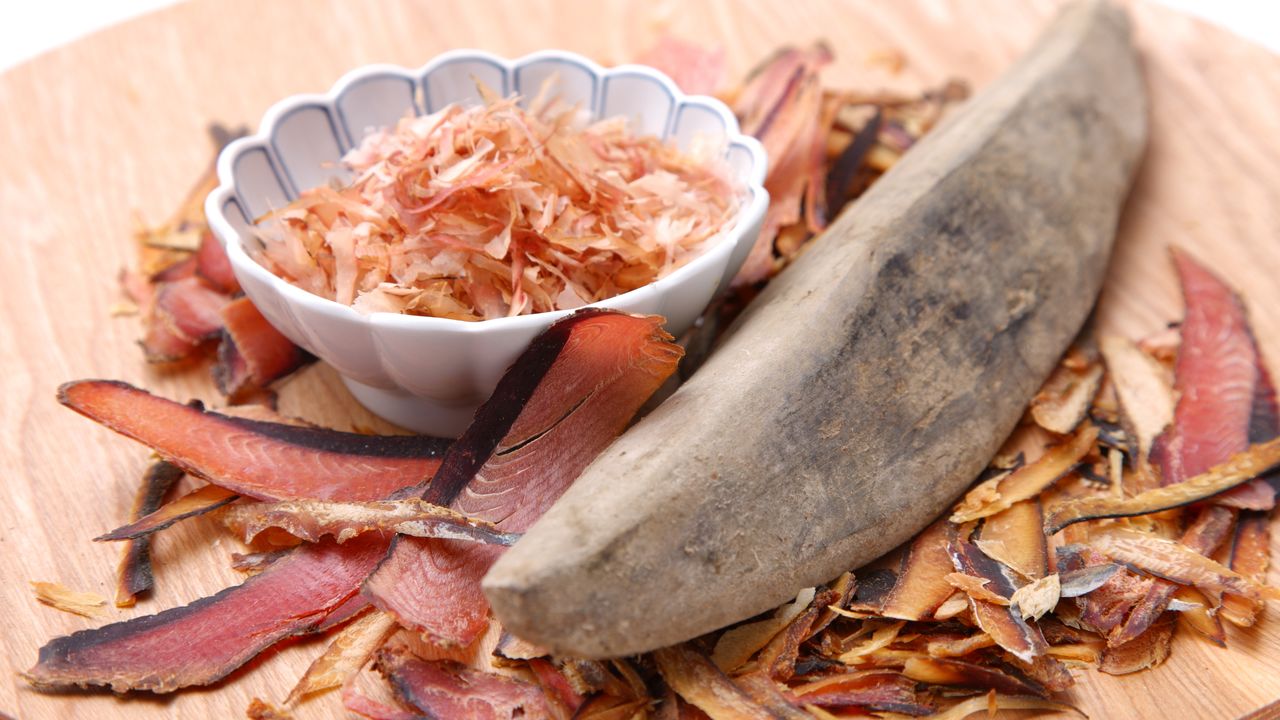
Katsuobushi, an essential ingredient for dashi stock, is made by boiling katsuo (bonito) that has been cut into five pieces, and then repeatedly smoking and drying it to reduce the moisture content to less than 26%.
At that point of the process, it is known as arabushi.
To become karebushi, it goes through a further process of mold inoculation and maturing. Honkarebushi, literally “true” karebushi, goes through many cycles of this inoculating and drying, taking more than six months in total to produce, and results in an exquisite mellow taste and rich aroma. The irresistibly delicious dashi served at hotels and high-end Japanese restaurants is almost certainly made using honkarebushi.
The main umami component of katsuobushi is inosinic acid. When combined with konbu, the main umami component for which is glutamic acid, they work synergistically to create a greatly enhanced flavor. Both these ingredients are readily available at supermarkets in Japan, so after having learned how to combine them, it is easy to make authentic dashi at home too.
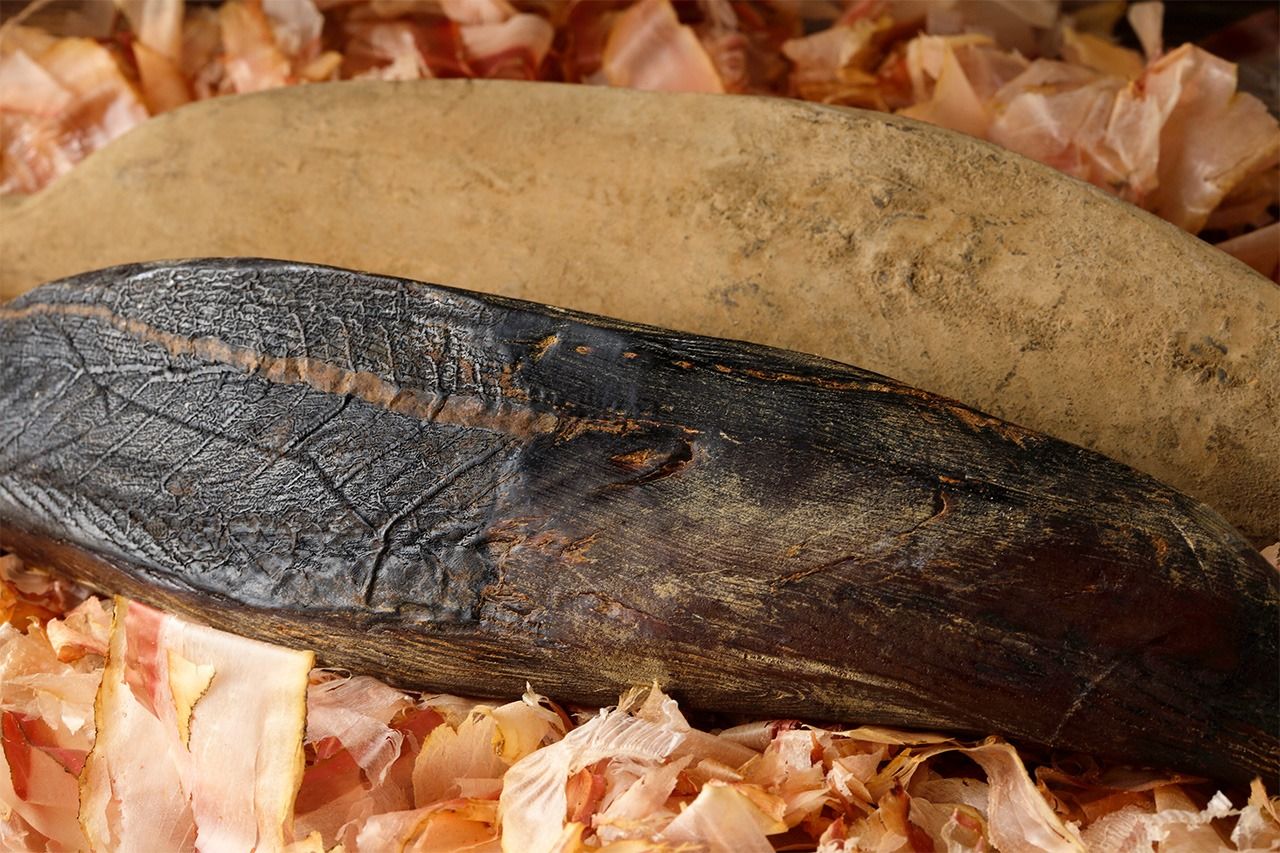
The charred-looking object in the foreground is arabushi, with the powdery karebushi behind. (© Pixta)
During the Shōwa period (1926–89), every household had a special tool for shaving blocks of katsuobushi, using it as needed. These days though, it is more usual to buy prepackaged machine-cut shavings.
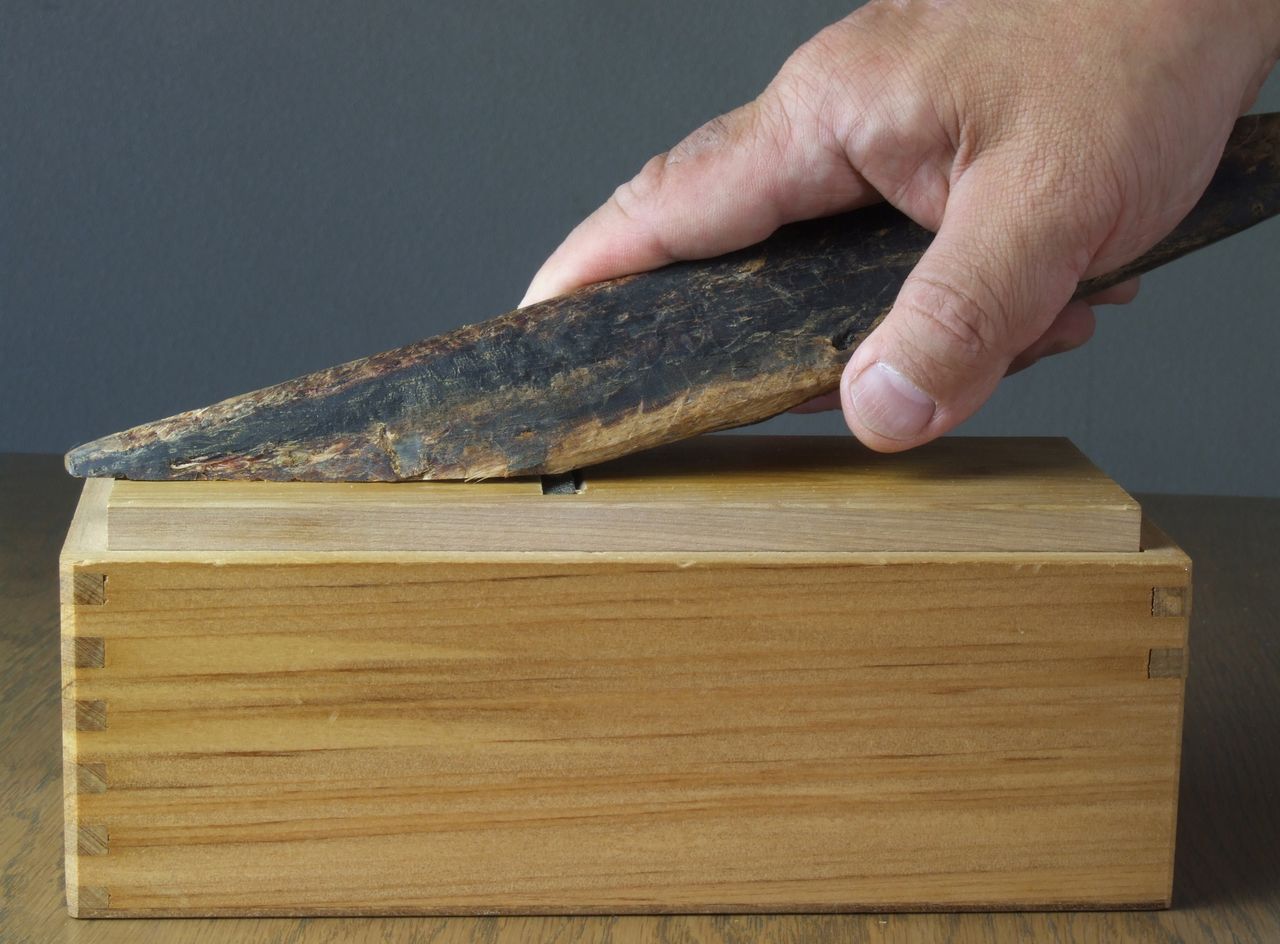
The blade at the top shaves the cured bonito into flakes, which are caught in the box below. (© Pixta)
Hana-katsuo
These katsuobushi shavings are less than 0.2 millimeters in thickness and the most common type used for making dashi. They are sold in large packets at supermarkets. Making a simple dashi is easy. Just warm up some water in a pot and once it has boiled, turn off the heat and add the hana-katsuo, letting it steep for around 10 minutes. For a deeper flavor, you can reheat it without letting it boil.
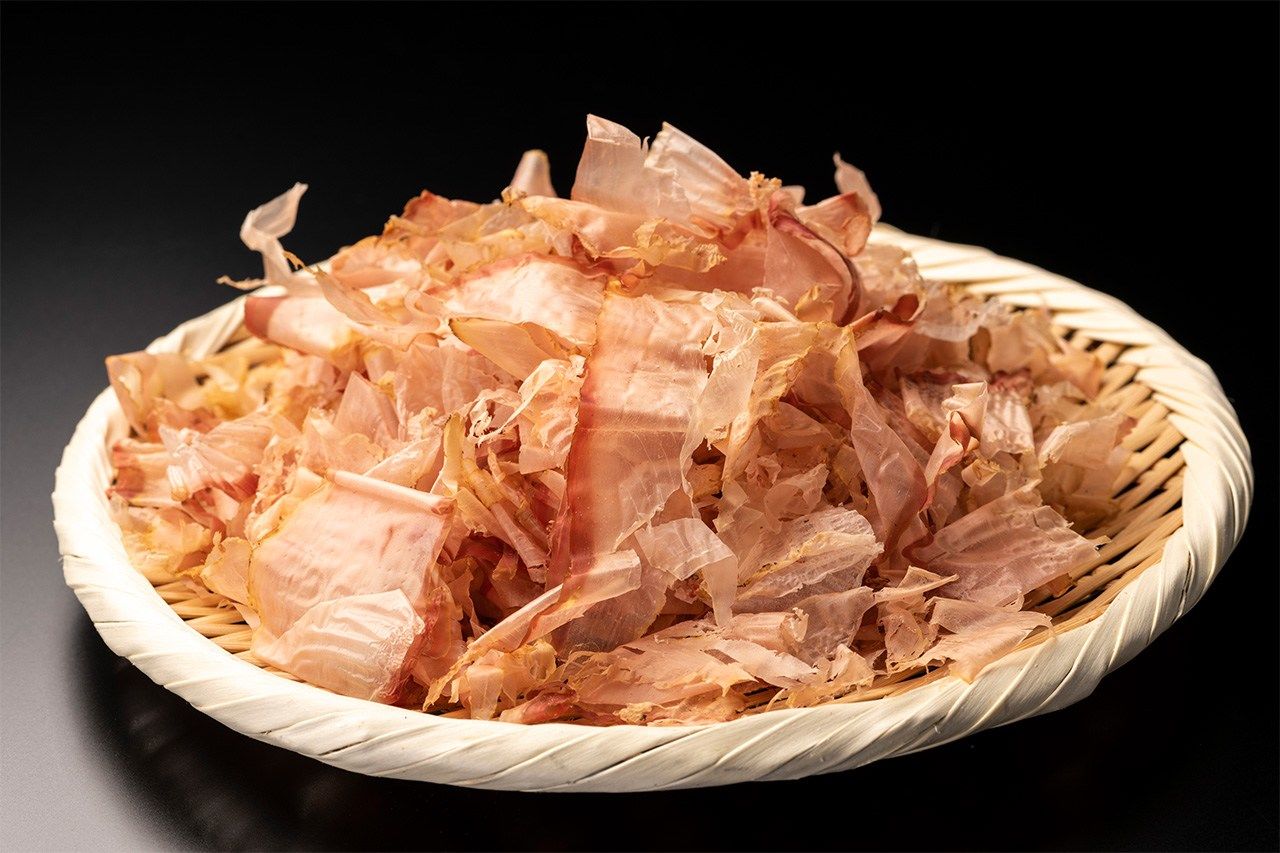
The thinly shaved hana-katsuo flakes. (© Pixta)
Atsukezuri
In general, dashi made from katsuobushi should not be overheated, but this type of thickly shaved katsuobushi should be simmered for a longer time. It is used when you want create dashi for a rich, full-bodied tsuyu sauce, such as to accompany soba noodles. These thick shavings are also great as a snack with alcohol or an ingredient in pasta dishes.
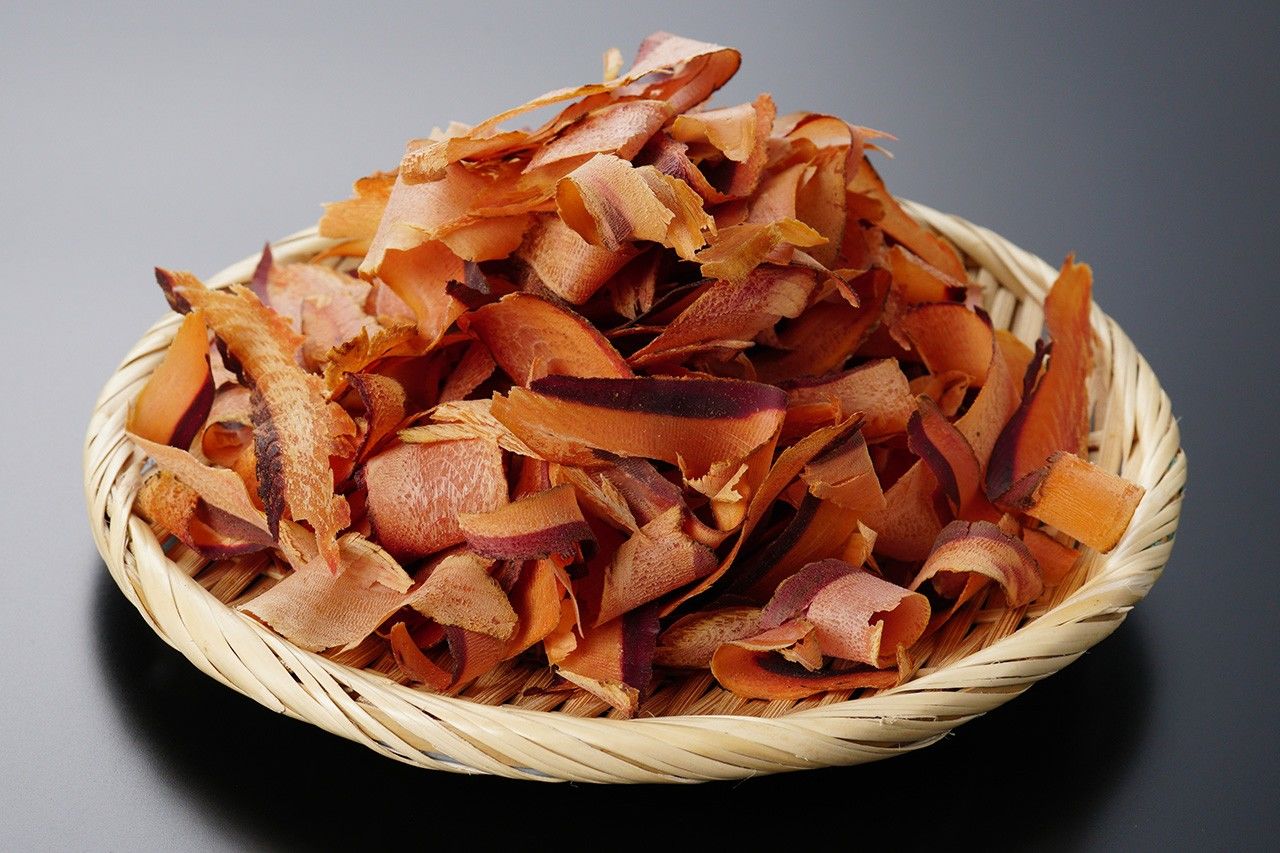
Thickly shaved atsukezuri flakes. (© Pixta)
Saihen and Itokezuri
Saihen, sometimes called hasai, refers to katsuobushi that has been been crushed. Meanwhile, itokezuri has been very thinly shaved into threads. Both of these preparations make it easier to eat. They are commonly sold as kezuribushi in small packs for home use. Rather than using it to make dashi, they can be added as a topping or mixed into dishes.
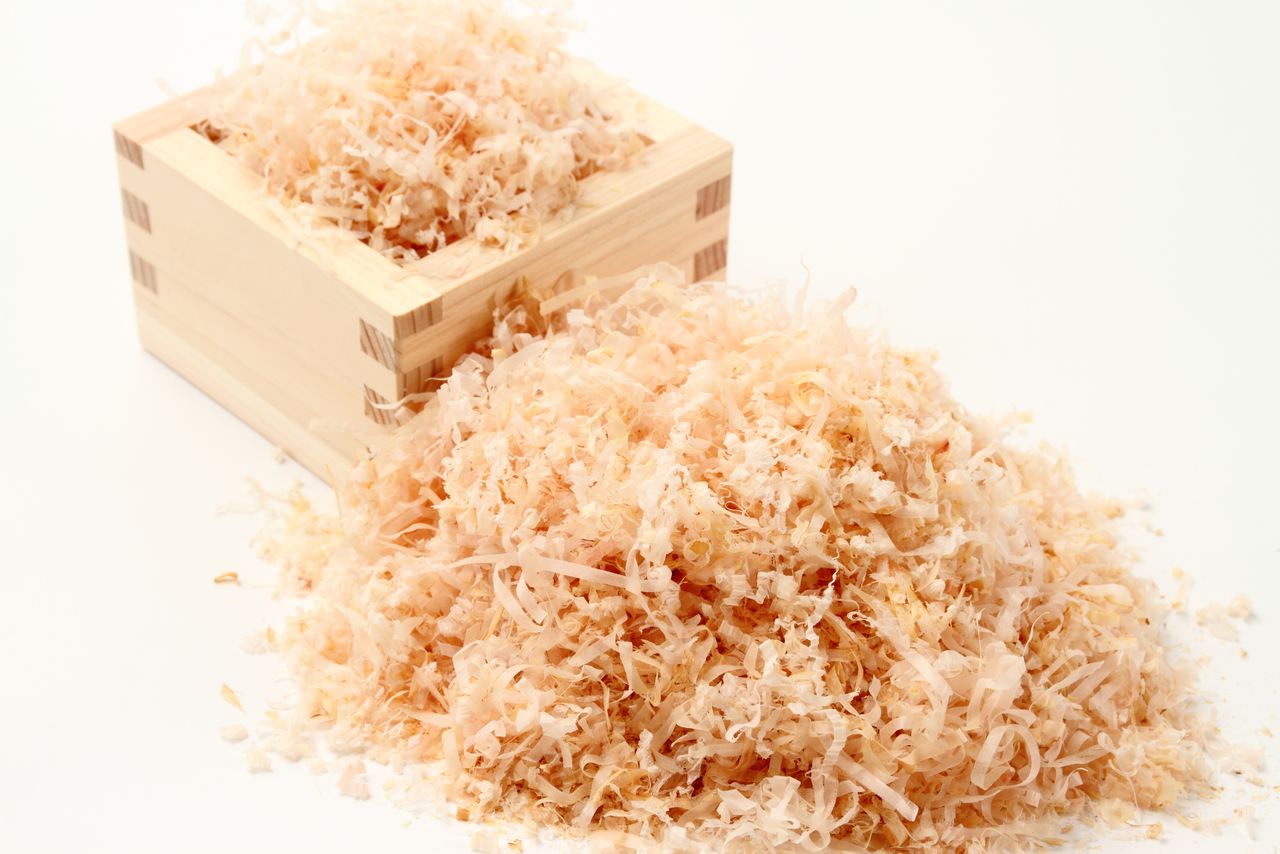
These more finely chopped preparations are ideal for use in cooking. (© Pixta)
While dashi made from katsuobushi has recently become popular overseas, there are strict restrictions in China and some European markets due to the mold on the karebushi flakes, so unfortunately it cannot be exported there.
Find out more about this versatile ingredient in “Katsuobushi Adds a Sprinkle of Elegance to a Whole Range of Dishes.”
(Originally published in Japanese. Text by Ecraft. Banner photo © Pixta.)