Building Blocks: The Basic Ingredients Behind Japan’s Flavors
Konnyaku: Delicious and Guilt-Free Dining
Food and Drink Culture Lifestyle- English
- 日本語
- 简体字
- 繁體字
- Français
- Español
- العربية
- Русский
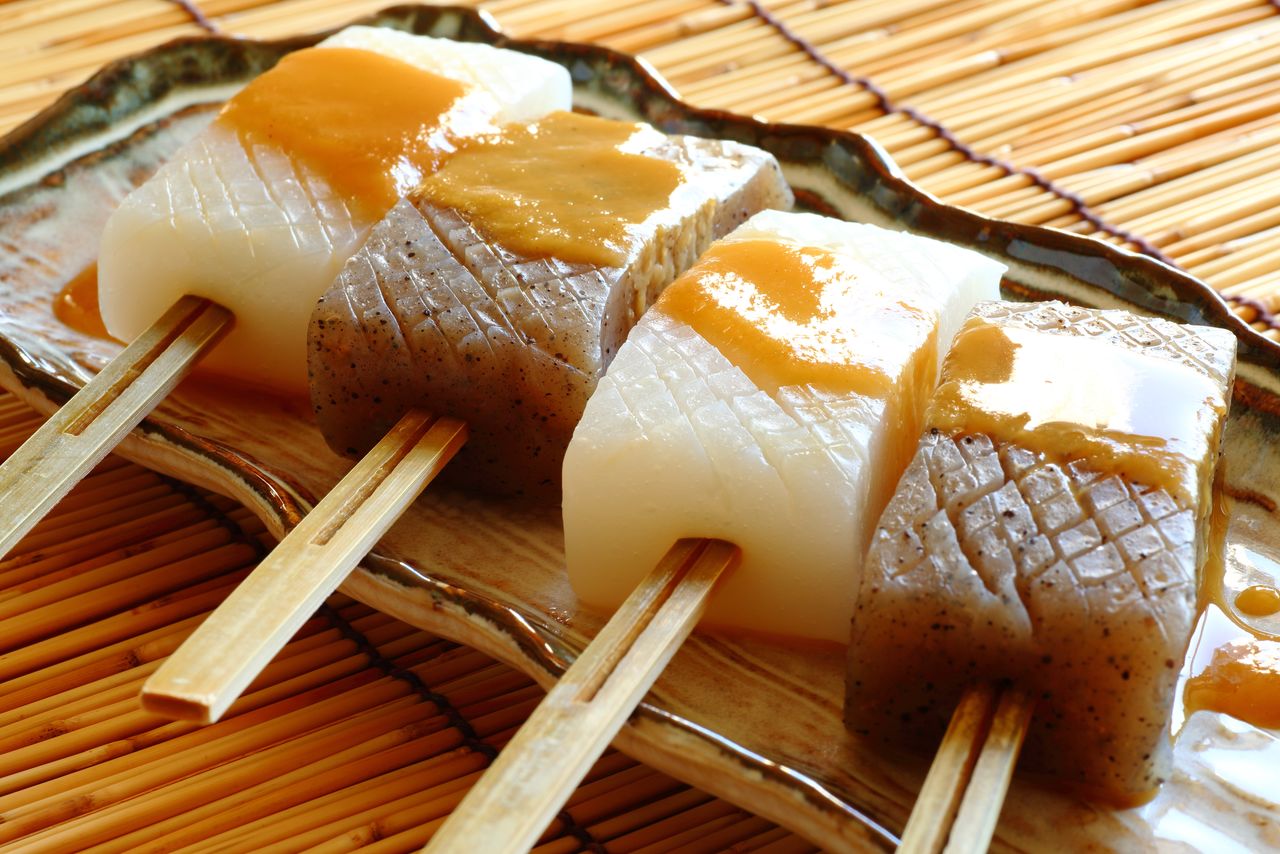
Miso Dengaku
These blocks of konnyaku are usually served on skewers, covered in rich, sweet miso sauce.
(© Pixta)
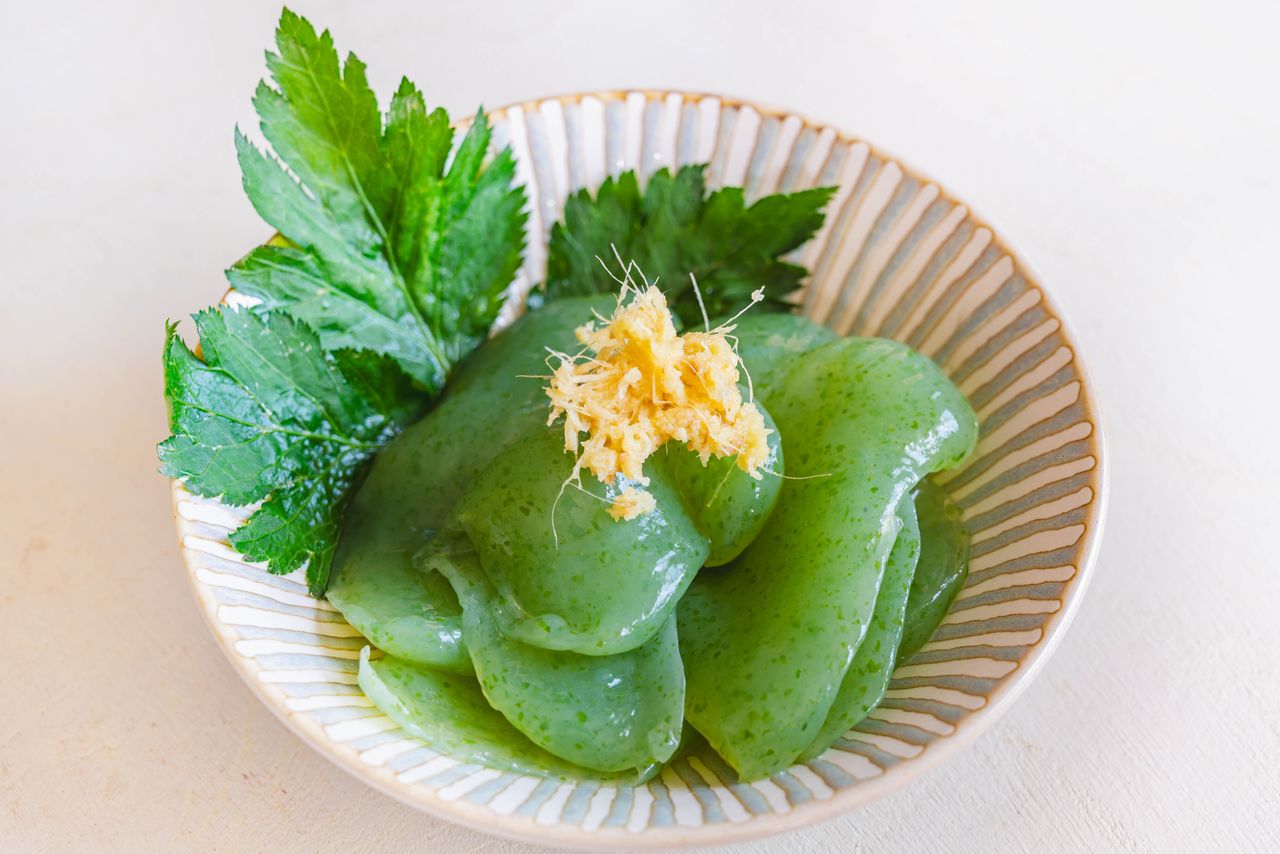
Sashimi Konnyaku
This type of konnyaku is made using high-quality konjac powder, giving it a moist, jelly-like texture. It has a refreshing taste that makes it a great summer side dish. It goes well with ginger-infused soy sauce or vinegared miso.
(© Pixta)
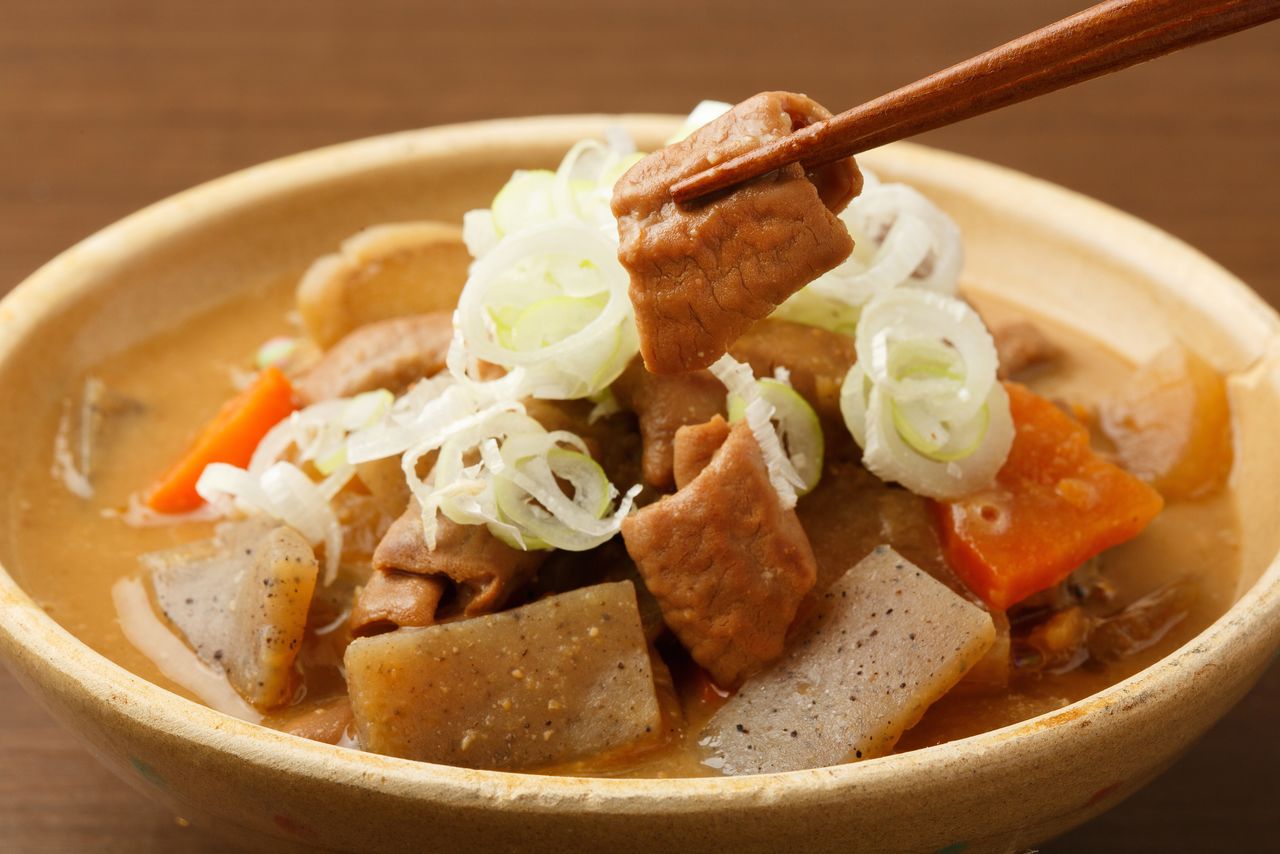
Motsu-ni
Chunks of konnyaku adds texture to this stew of offal and vegetables, with the chewy pieces absorbing the rich flavors of the other ingredients.
(© Pixta)
Tama-konnyaku
This type of konnyaku is a specialty of Yamaga Prefecture, where it known as tama-kon and regarded as a soul food. The konnyaku is formed into spheres around three centimeters in diameter and simmered in soy sauce. They are sold on skewers at festivals and other events and are perfect for eating on the go.
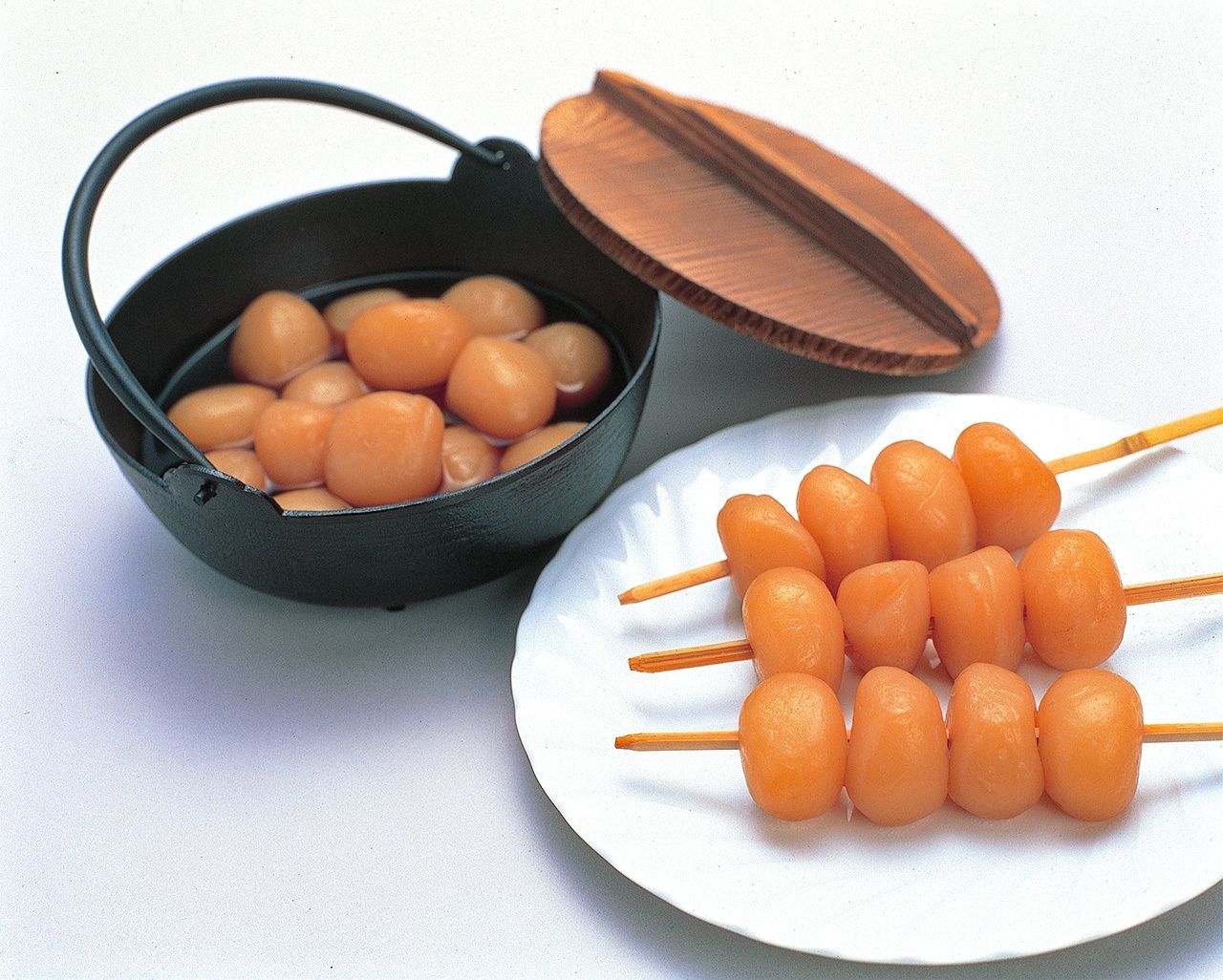
(Courtesy Yamagata prefectural government)
Shirataki and Ito-konnyaku
Both of these types of konnyaku are thread-like in appearance, but shirataki is made by pushing konnyaku paste through a noodle press, while ito-konnyaku is traditionally formed by finely slicing blocks of konnyaku. Today, though, both types are typically made using the same method and are distinguished by their thickness. There are also regional variations like tsuki-konnyaku, a thicker variety popular in western Japan called.
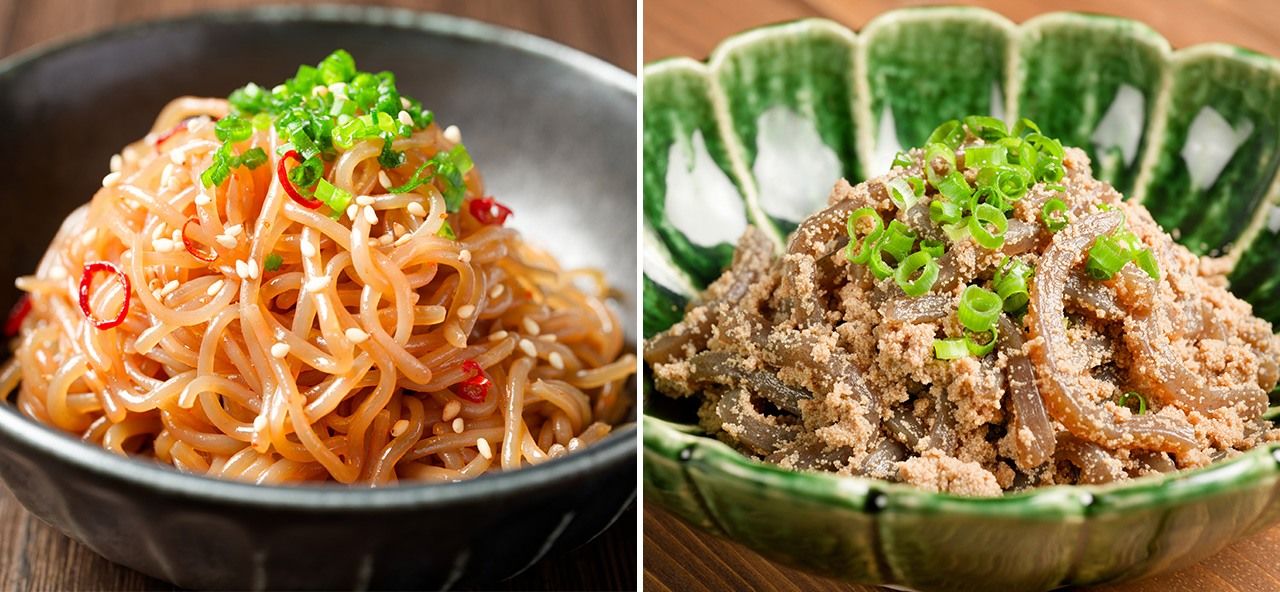
Shirataki (left) and ito-konnyaku (© Pixta)
Sukiyaki
The main ingredient of sukiyaki is beef, but the addition of shirataki, simmered to amply soak up the broth, adds a hearty texture to the dish.
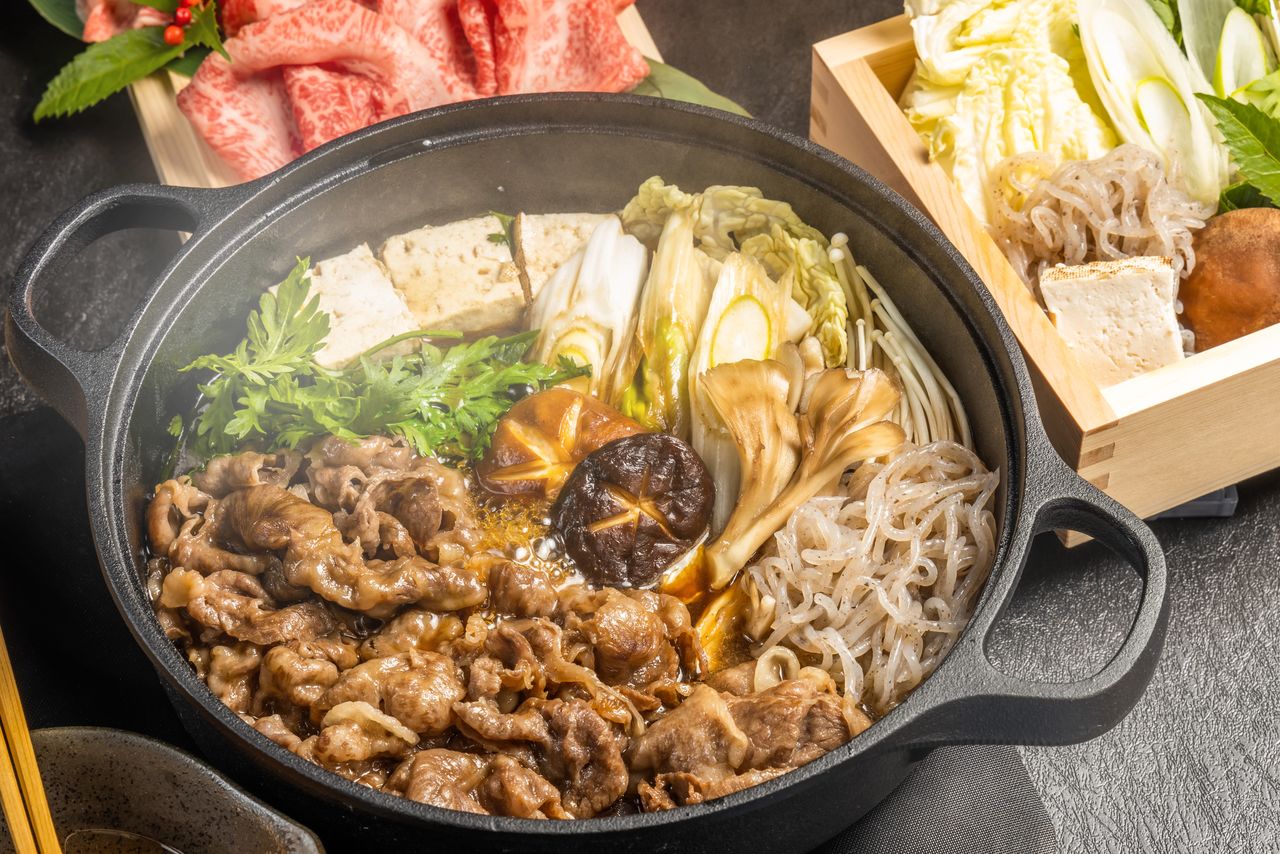
(© Pixta)
Related Content
Find out more about konnyaku in “Konnyaku: A Health Food Rich in Dietary Fiber and Super Low in Calories.”
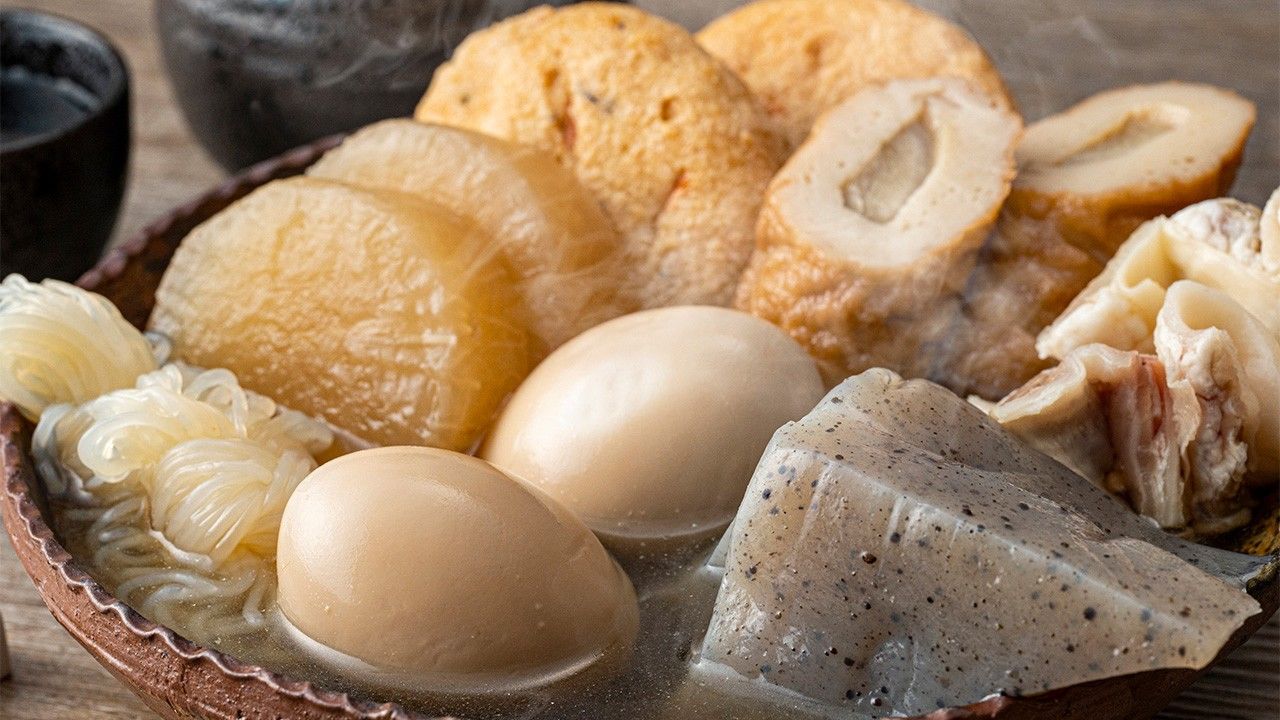
(Originally published in Japanese. Banner photo: Oden would not be complete without konnyaku shirataki. © Pixta.)