Building Blocks: The Basic Ingredients Behind Japan’s Flavors
Kuzu: An Ancient Root Starch, a Modern Focus on Health Benefits
Food and Drink Culture- English
- 日本語
- 简体字
- 繁體字
- Français
- Español
- العربية
- Русский
Kuzu, or kudzu (Pueraria montana), is a perennial vine in the pea family. It grows wild in mountainous areas and along riverbanks in warm areas of East Asia, including Japan, China, and the Korean Peninsula.
These days it is often thought of as an invasive weed due to its ability to grow rapidly, spreading over entire areas. However, back in the Nara period (710–94), it was so well-regarded that the Japanese poet Yamanoue no Okura wrote of it, naming it one of the seven autumn herbs. Indeed, up close, the spiky reddish-purple flowers that bloom from summer through early autumn have a grape-like aroma and a charming appearance.
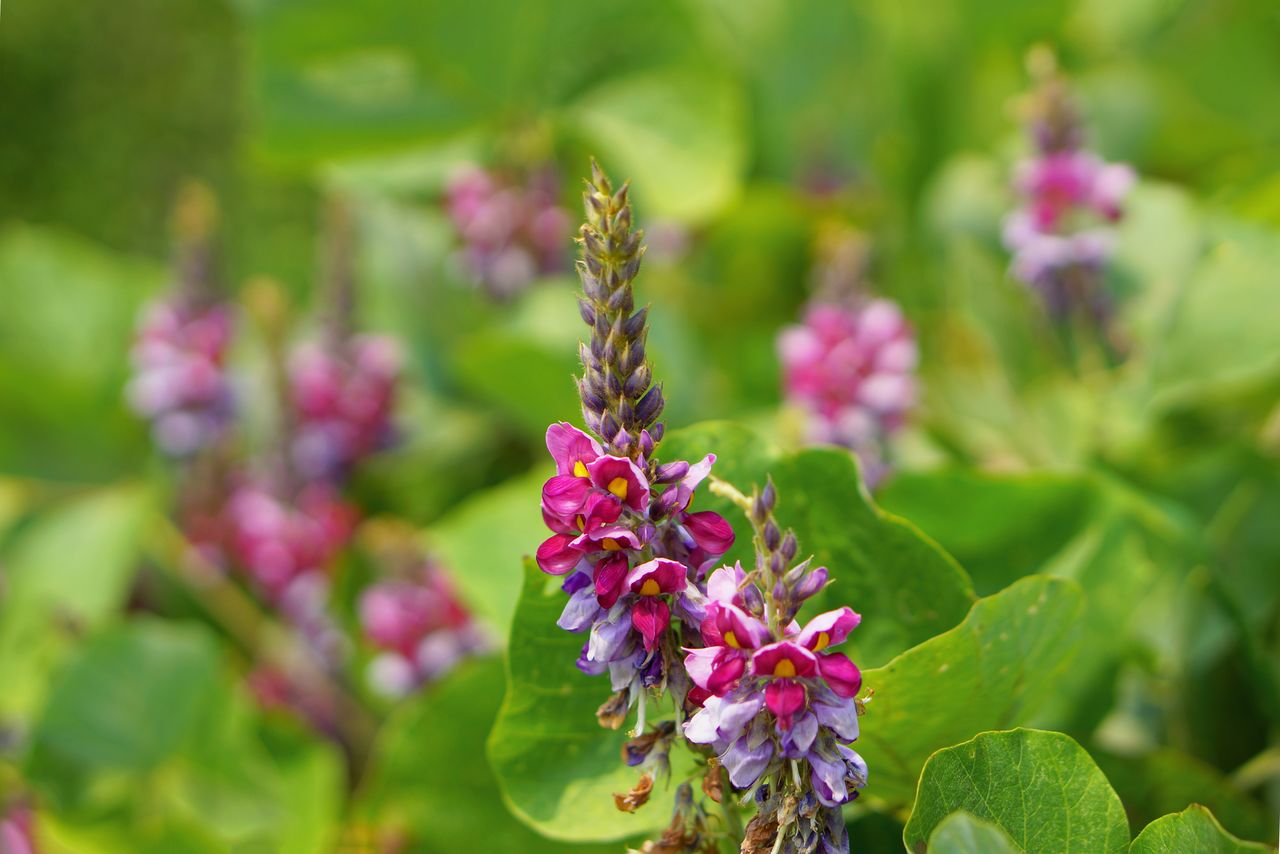
(© Pixta)
The edible part, extracted from the root, is kuzu starch. There is mention in the eighth century chronicle the Kojiki (Records of Ancient Matters) of people travelling around peddling kuzu roots. They came from Kuzu in the Yoshino region of what is now Nara Prefecture, so it is thought this is how the name came about.
The kuzu roots are dug up during deep winter, pounded into a fine powder, and repeatedly soaked in cold water to release the starch. This is then left to dry naturally and refined to produce a finely grained, pure white kuzu starch. The Yoshino region has an abundance of high-quality water sources and a cold climate, making it ideal for refining this product. Even today, Yoshino kuzu is renowned as a premium brand.
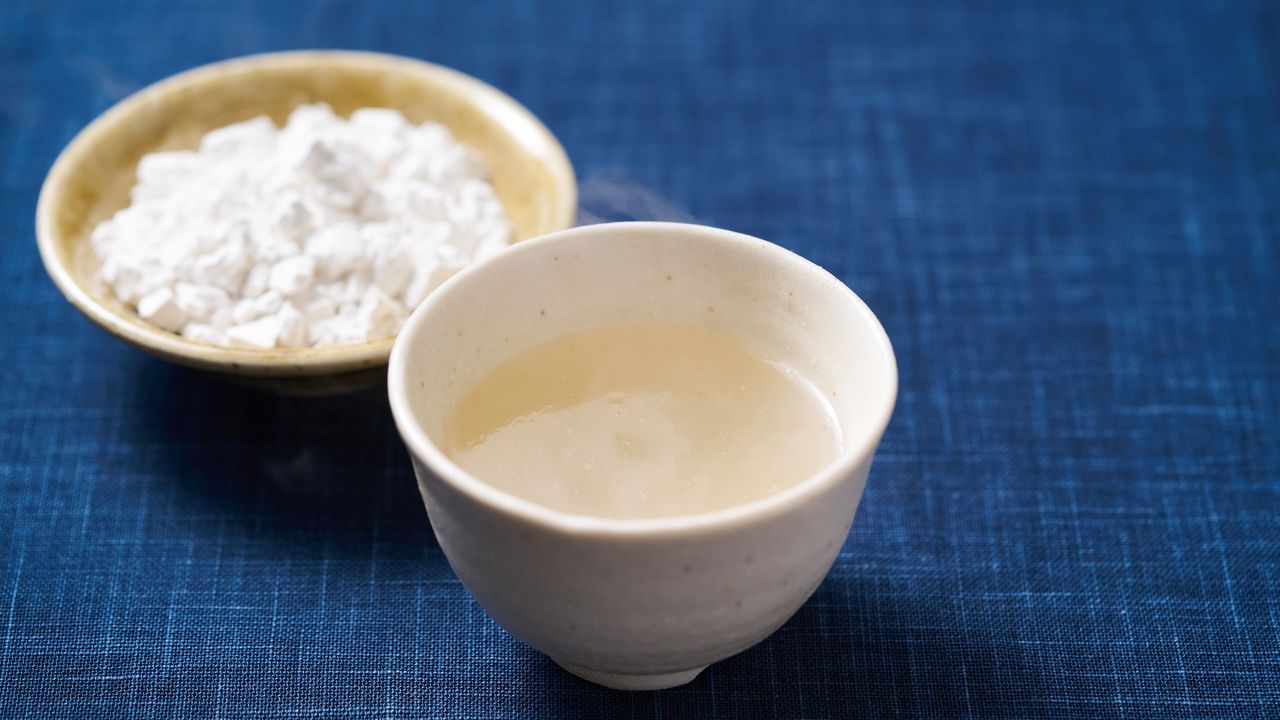
The starch is used to thicken dishes, such as the hot beverage kuzuyu, and is also often used in Japanese wagashi confectioneries. While katakuriko, or potato starch, is commonly used to thicken food, it is said that kuzu, part of the pea family, can improve blood circulation and warm the body.
Recognizing these properties, kuzu root is used as a medicinal plant in China. A classic example of this is the herbal medicine Kakkontō, widely recognized in Japan for its effectiveness in alleviating early cold symptoms like fever and headache.

(Originally published in Japanese. Text by Ecraft. Banner photo: Kuzu powder and kuzuyu. © Pixta.)